
Unit V The Interwar Years Revolution and Nationalism
- Slides: 28
Unit V The Interwar Years: Revolution and Nationalism 1919 -1939 Part 3
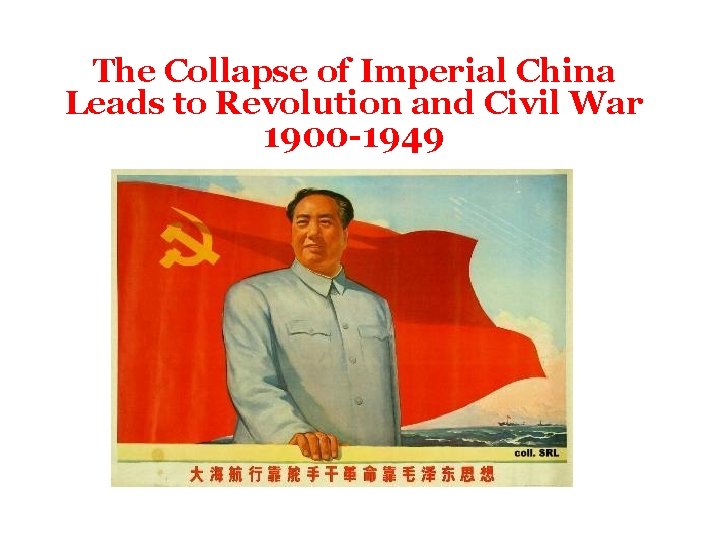
The Collapse of Imperial China Leads to Revolution and Civil War 1900 -1949
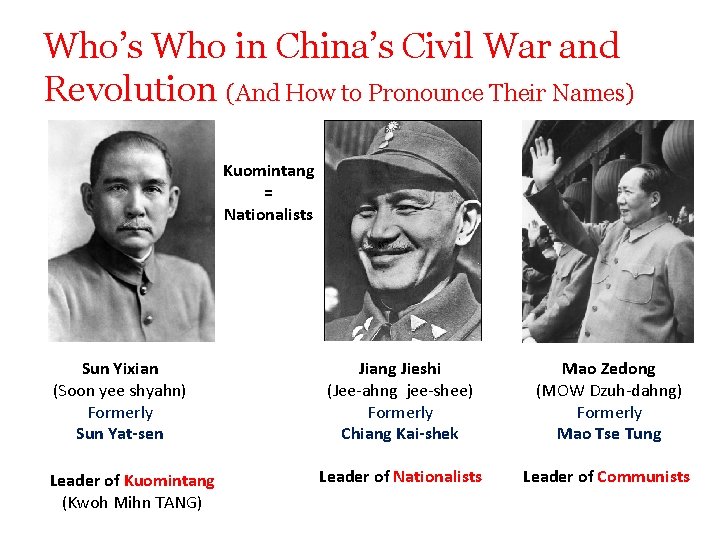
Who’s Who in China’s Civil War and Revolution (And How to Pronounce Their Names) Kuomintang = Nationalists Sun Yixian (Soon yee shyahn) Formerly Sun Yat-sen Leader of Kuomintang (Kwoh Mihn TANG) Jiang Jieshi (Jee-ahng jee-shee) Formerly Chiang Kai-shek Mao Zedong (MOW Dzuh-dahng) Formerly Mao Tse Tung Leader of Nationalists Leader of Communists
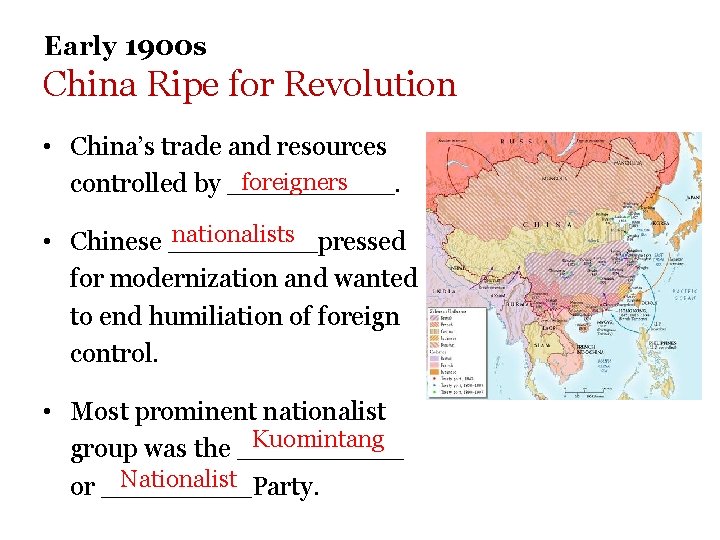
Early 1900 s China Ripe for Revolution • China’s trade and resources foreigners controlled by _____. nationalists • Chinese _____pressed for modernization and wanted to end humiliation of foreign control. • Most prominent nationalist Kuomintang group was the _____ Nationalist or _____Party.
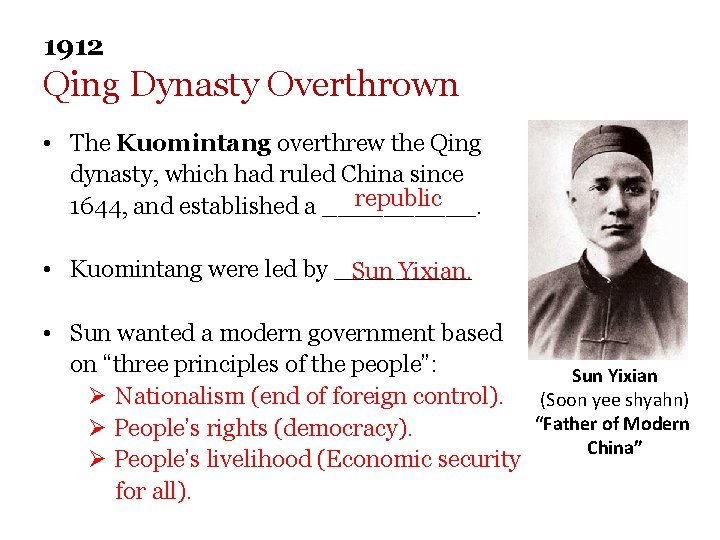
1912 Qing Dynasty Overthrown • The Kuomintang overthrew the Qing dynasty, which had ruled China since republic 1644, and established a _____. • Kuomintang were led by _____ Sun Yixian. • Sun wanted a modern government based on “three principles of the people”: Sun Yixian Ø Nationalism (end of foreign control). (Soon yee shyahn) “Father of Modern Ø People’s rights (democracy). China” Ø People’s livelihood (Economic security for all).
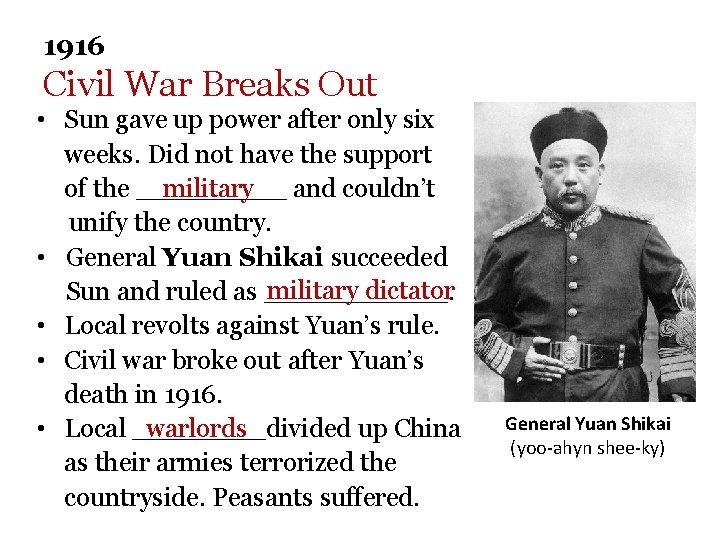
1916 Civil War Breaks Out • Sun gave up power after only six weeks. Did not have the support military and couldn’t of the _____ unify the country. • General Yuan Shikai succeeded military dictator Sun and ruled as ______. • Local revolts against Yuan’s rule. • Civil war broke out after Yuan’s death in 1916. warlords • Local ____divided up China as their armies terrorized the countryside. Peasants suffered. General Yuan Shikai (yoo-ahyn shee-ky)
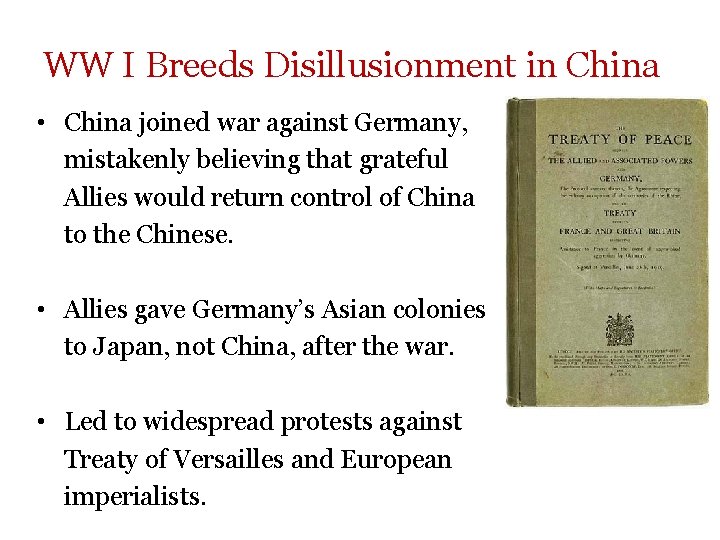
WW I Breeds Disillusionment in China • China joined war against Germany, mistakenly believing that grateful Allies would return control of China to the Chinese. • Allies gave Germany’s Asian colonies to Japan, not China, after the war. • Led to widespread protests against Treaty of Versailles and European imperialists.
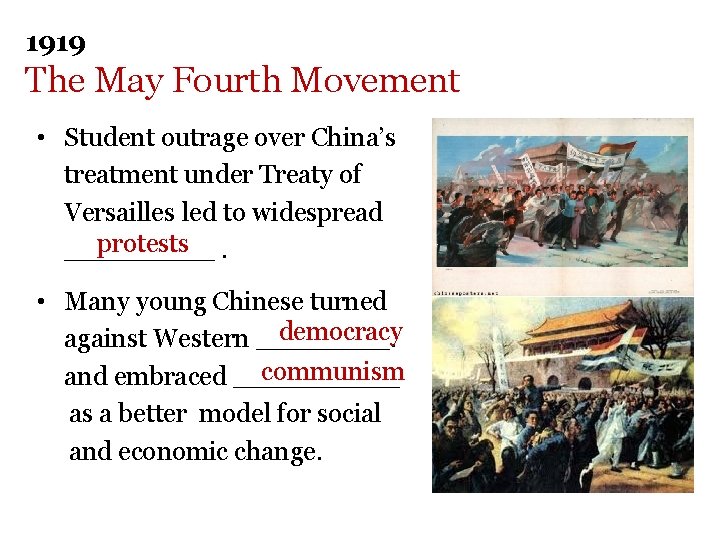
1919 The May Fourth Movement • Student outrage over China’s treatment under Treaty of Versailles led to widespread protests. _____ • Many young Chinese turned democracy against Western ____. communism and embraced _____ as a better model for social and economic change.
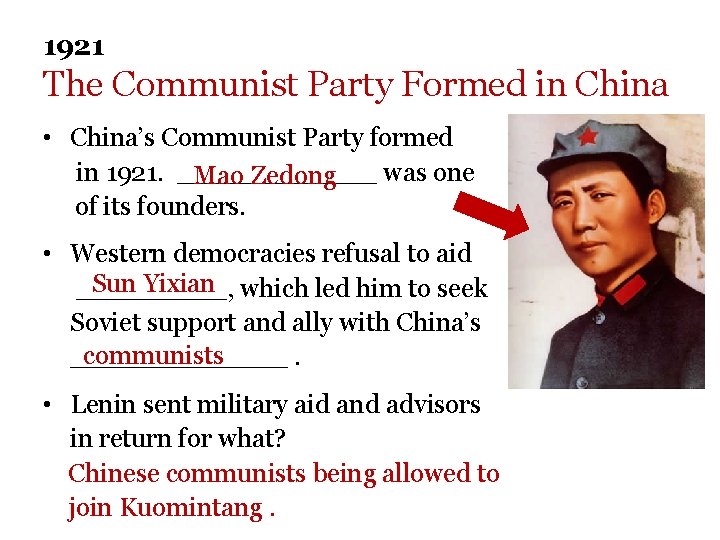
1921 The Communist Party Formed in China • China’s Communist Party formed in 1921. ______ was one Mao Zedong of its founders. • Western democracies refusal to aid Sun Yixian which led him to seek _____, Soviet support and ally with China’s communists _______. • Lenin sent military aid and advisors in return for what? Chinese communists being allowed to join Kuomintang.
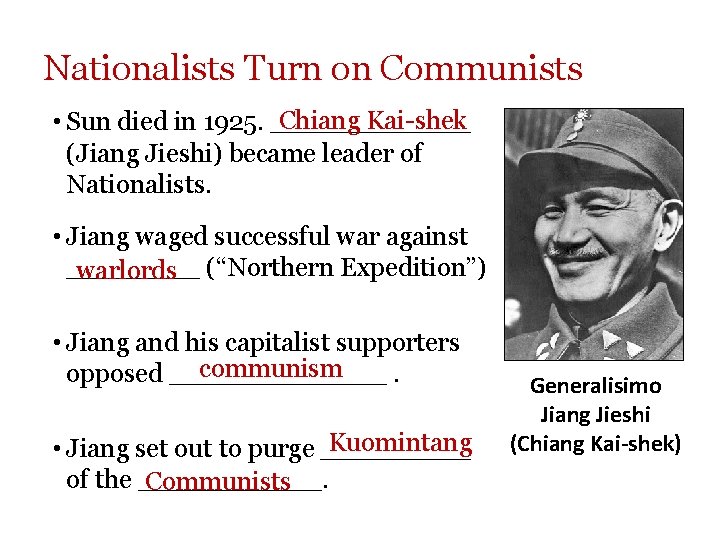
Nationalists Turn on Communists Chiang Kai-shek • Sun died in 1925. ______ (Jiang Jieshi) became leader of Nationalists. • Jiang waged successful war against ____ warlords (“Northern Expedition”) • Jiang and his capitalist supporters communism opposed _______. Kuomintang • Jiang set out to purge _____ of the ______. Communists Generalisimo Jiang Jieshi (Chiang Kai-shek)
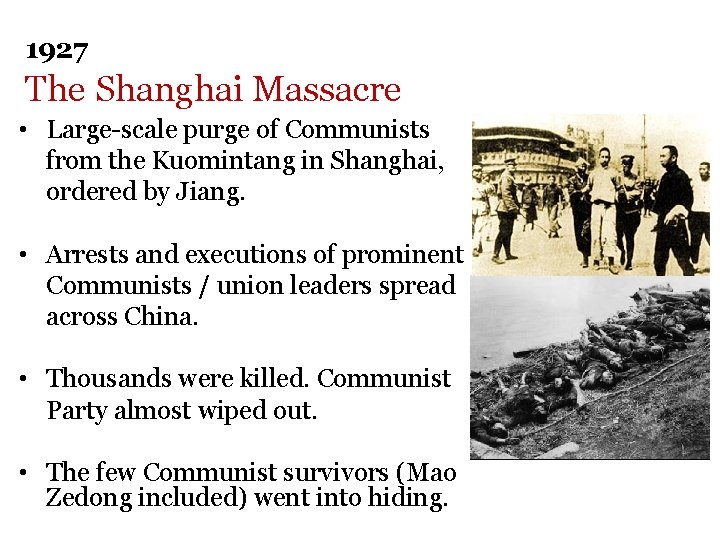
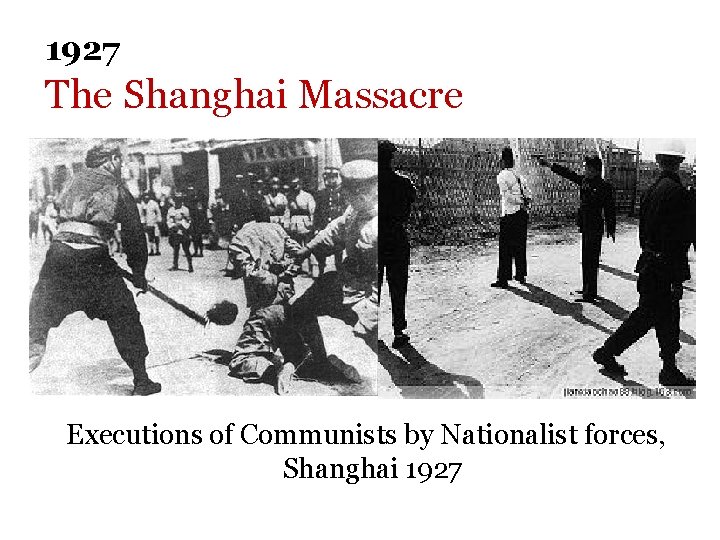
1927 The Shanghai Massacre • Large-scale purge of Communists from the Kuomintang in Shanghai, ordered by Jiang. • Arrests and executions of prominent Communists / union leaders spread across China. • Thousands were killed. Communist Party almost wiped out. • The few Communist survivors (Mao Zedong included) went into hiding.
1927 The Shanghai Massacre Executions of Communists by Nationalist forces, Shanghai 1927
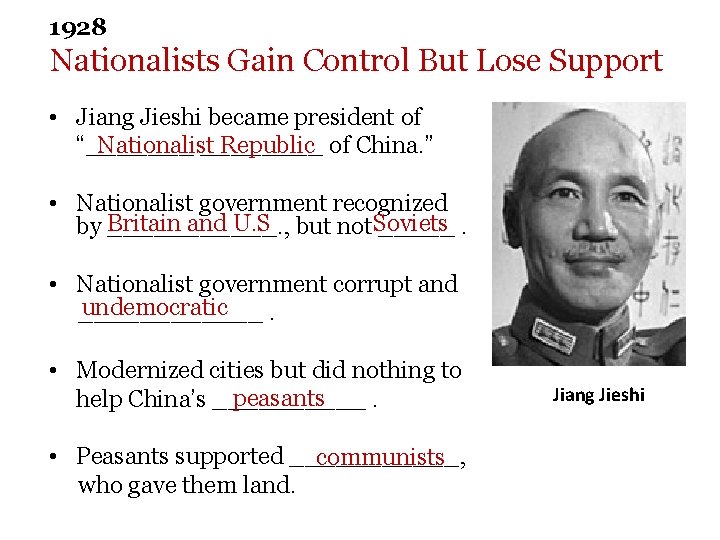
1928 Nationalists Gain Control But Lose Support • Jiang Jieshi became president of Nationalist Republic of China. ” “_______ • Nationalist government recognized and U. S but not Soviets by Britain ______. , _____. • Nationalist government corrupt and undemocratic ______. • Modernized cities but did nothing to peasants help China’s _____. • Peasants supported ______, communists who gave them land. Jiang Jieshi
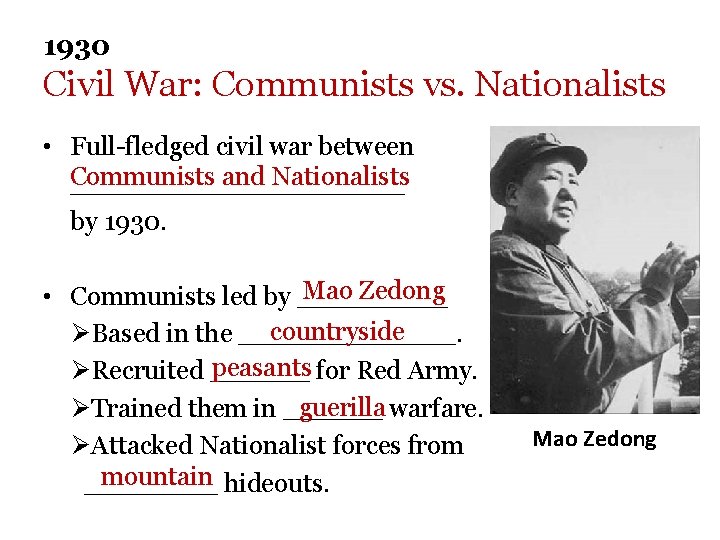
1930 Civil War: Communists vs. Nationalists • Full-fledged civil war between Communists and Nationalists __________ by 1930. Mao Zedong • Communists led by _____ countryside ØBased in the _______. peasants for Red Army. ØRecruited ______ guerilla warfare. ØTrained them in ______ ØAttacked Nationalist forces from mountain hideouts. ____ Mao Zedong
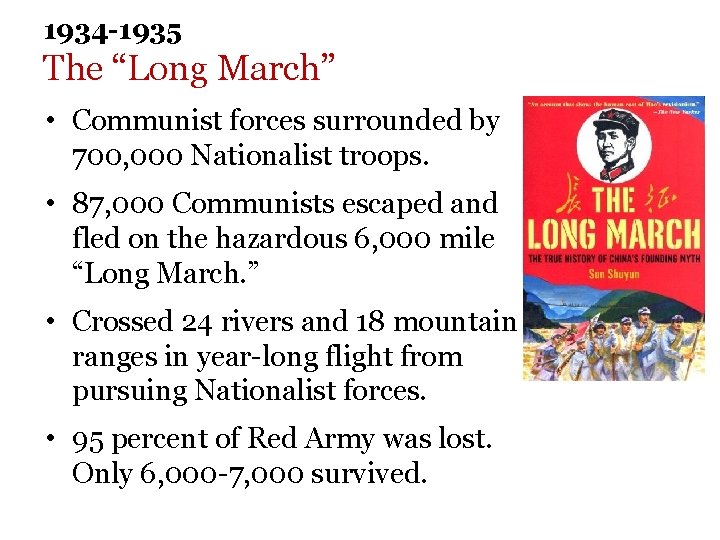
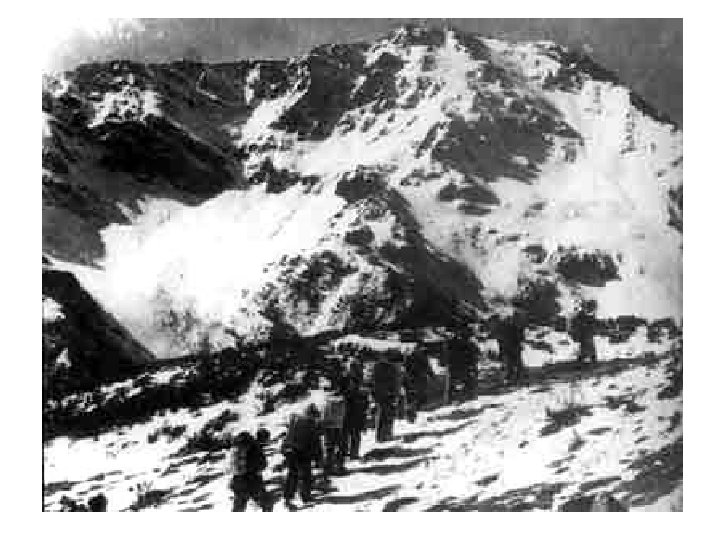
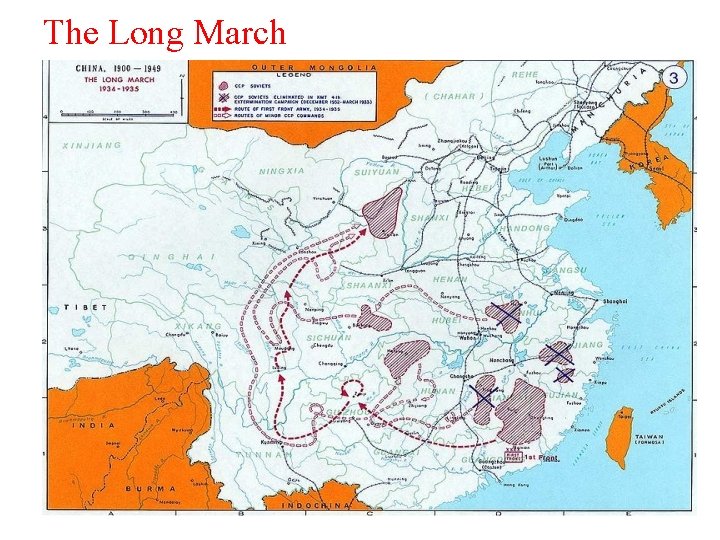
1934 -1935 The “Long March” • Communist forces surrounded by 700, 000 Nationalist troops. • 87, 000 Communists escaped and fled on the hazardous 6, 000 mile “Long March. ” • Crossed 24 rivers and 18 mountain ranges in year-long flight from pursuing Nationalist forces. • 95 percent of Red Army was lost. Only 6, 000 -7, 000 survived.
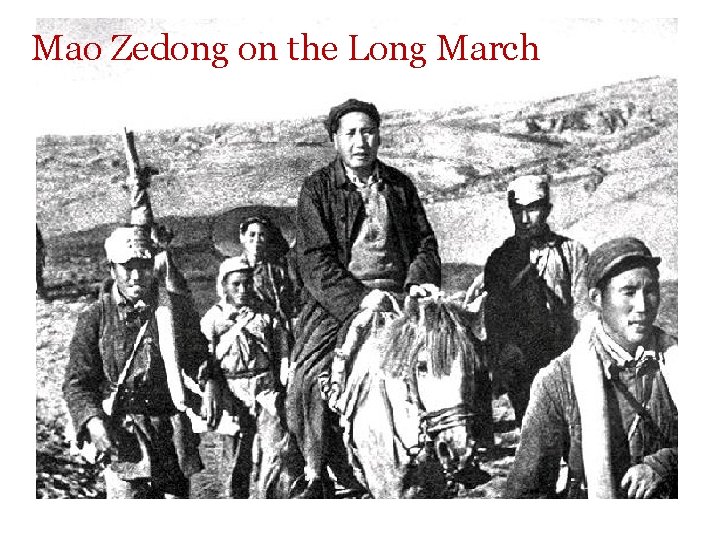
Mao Zedong on the Long March
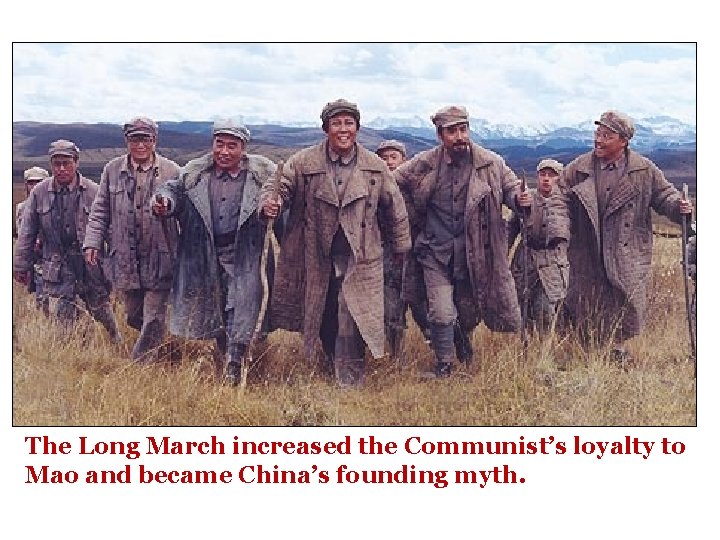
The Long March increased the Communist’s loyalty to Mao and became China’s founding myth.
The Long March
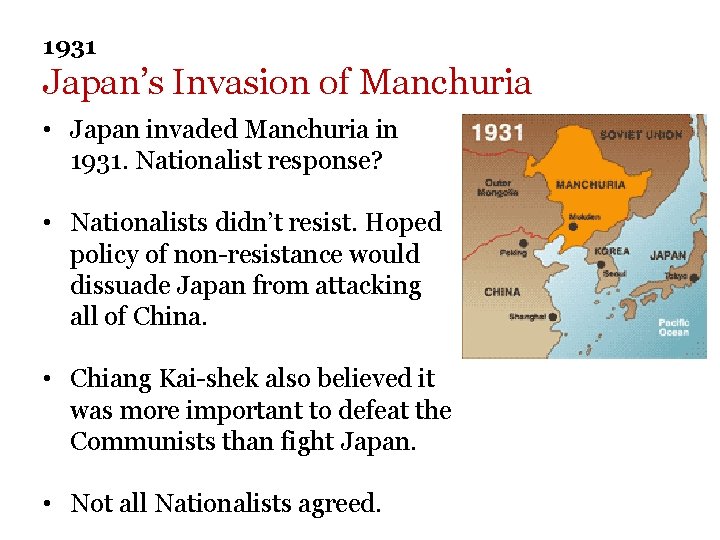
1931 Japan’s Invasion of Manchuria • Japan invaded Manchuria in 1931. Nationalist response? • Nationalists didn’t resist. Hoped policy of non-resistance would dissuade Japan from attacking all of China. • Chiang Kai-shek also believed it was more important to defeat the Communists than fight Japan. • Not all Nationalists agreed.
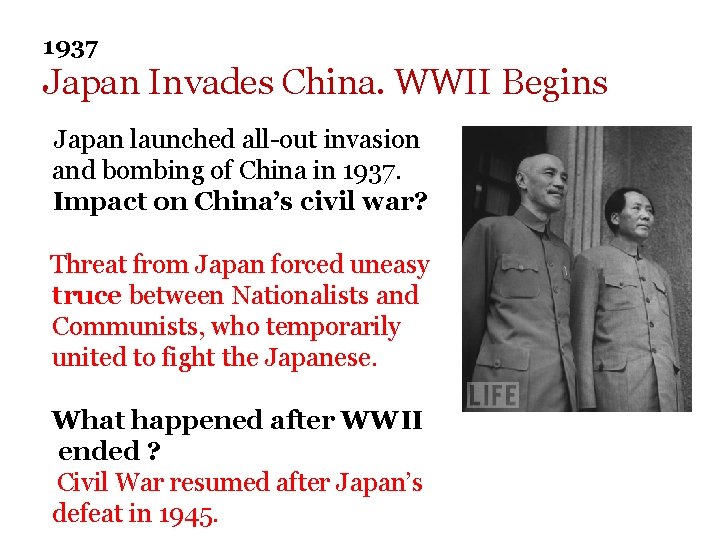
1937 Japan Invades China. WWII Begins Japan launched all-out invasion and bombing of China in 1937. Impact on China’s civil war? Threat from Japan forced uneasy truce between Nationalists and Communists, who temporarily united to fight the Japanese. What happened after WWII ended ? Civil War resumed after Japan’s defeat in 1945.
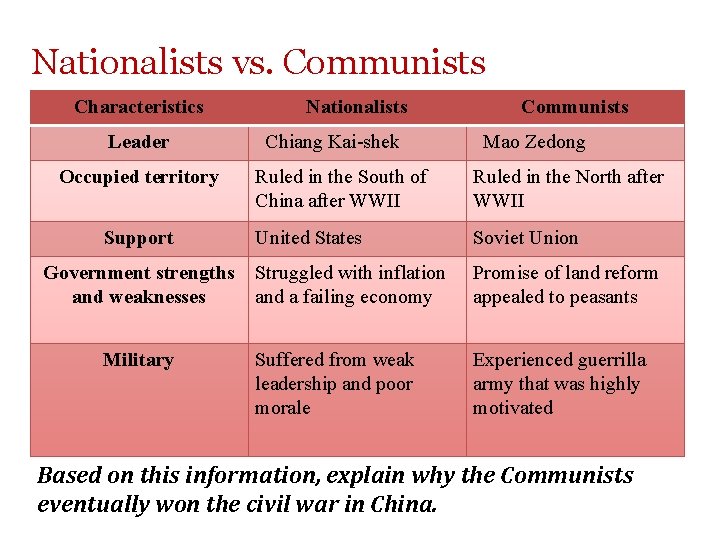
Nationalists vs. Communists Characteristics Leader Occupied territory Support Government strengths and weaknesses Military Nationalists Chiang Kai-shek Communists Mao Zedong Ruled in the South of China after WWII Ruled in the North after WWII United States Soviet Union Struggled with inflation and a failing economy Promise of land reform appealed to peasants Suffered from weak leadership and poor morale Experienced guerrilla army that was highly motivated Based on this information, explain why the Communists eventually won the civil war in China.
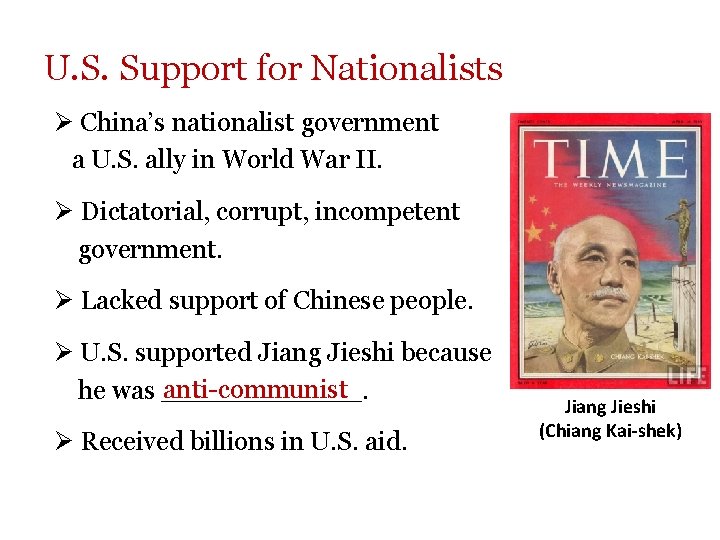
U. S. Support for Nationalists Ø China’s nationalist government a U. S. ally in World War II. Ø Dictatorial, corrupt, incompetent government. Ø Lacked support of Chinese people. Ø U. S. supported Jiang Jieshi because anti-communist he was ______. Ø Received billions in U. S. aid. Jiang Jieshi (Chiang Kai-shek)
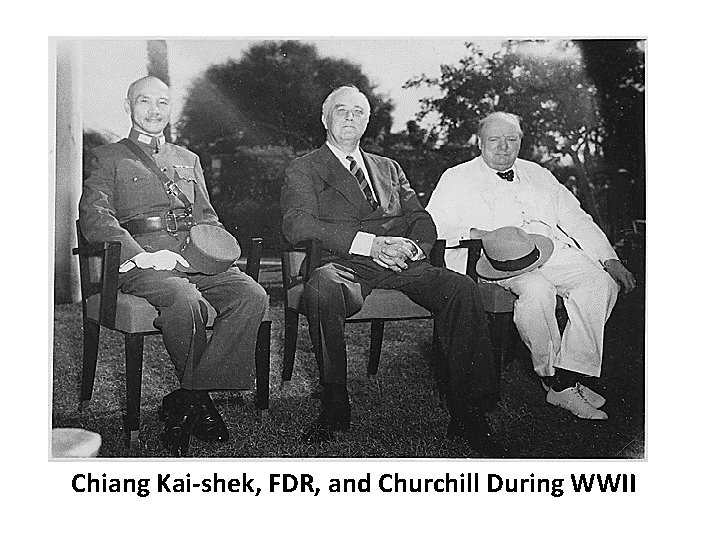
Chiang Kai-shek, FDR, and Churchill During WWII
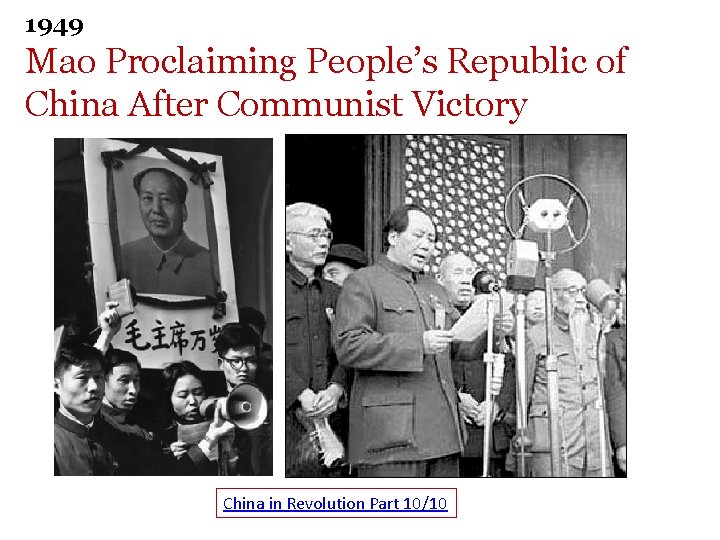
1949 Mao Proclaiming People’s Republic of China After Communist Victory China in Revolution Part 10/10
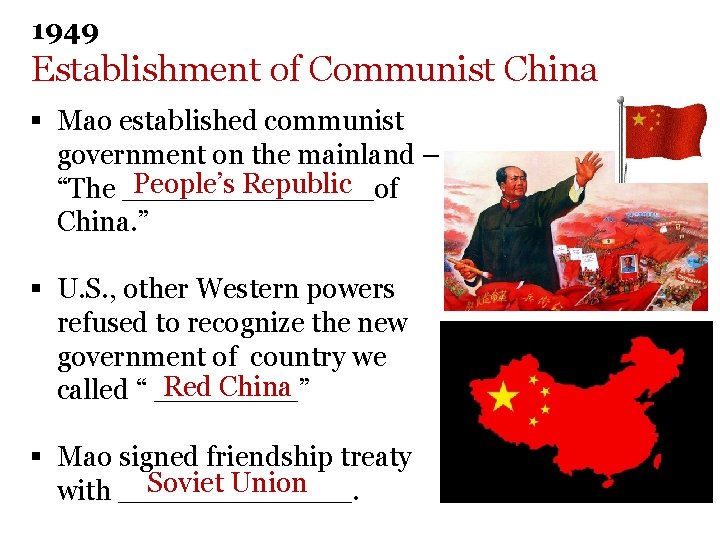
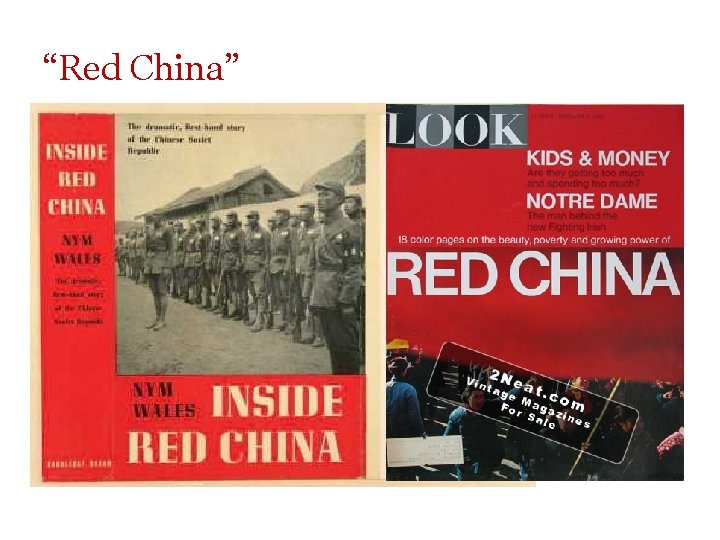
1949 Establishment of Communist China § Mao established communist government on the mainland – People’s Republic “The _______of China. ” § U. S. , other Western powers refused to recognize the new government of country we Red China called “ ____” § Mao signed friendship treaty Soviet Union with _______.
“Red China”
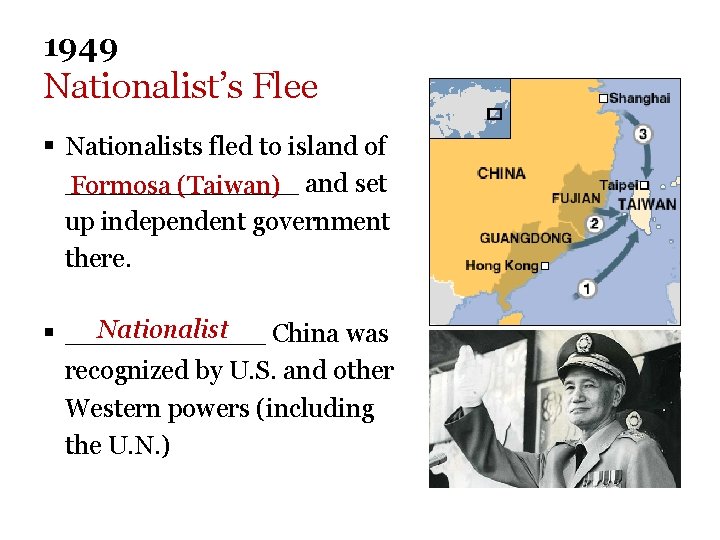
1949 Nationalist’s Flee § Nationalists fled to island of _______ Formosa (Taiwan) and set up independent government there. Nationalist § ______ China was recognized by U. S. and other Western powers (including the U. N. )