
UNIT V Small Signal Low Frequency Transistor Amplifier
![Common-Emitter h-Parameters [Formula 7. 28] [Formula 7. 29] 12](https://slidetodoc.com/presentation_image_h2/fd82bf03717ae4ae80cfe466ac2ae463/image-12.jpg "Common-Emitter h-Parameters [Formula 7. 28] [Formula 7. 29] 12")
![Common-Base h-Parameters [Formula 7. 30] [Formula 7. 31] 14](https://slidetodoc.com/presentation_image_h2/fd82bf03717ae4ae80cfe466ac2ae463/image-14.jpg "Common-Base h-Parameters [Formula 7. 30] [Formula 7. 31] 14")
- Slides: 40
UNIT- V Small Signal Low Frequency Transistor Amplifier Models:
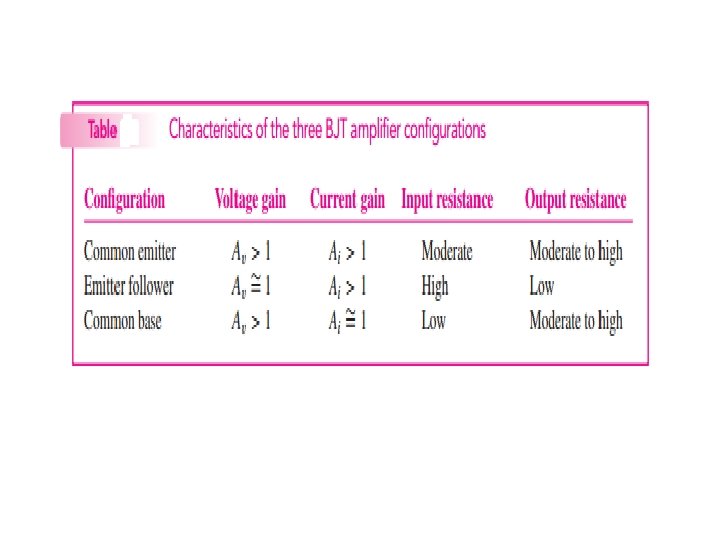
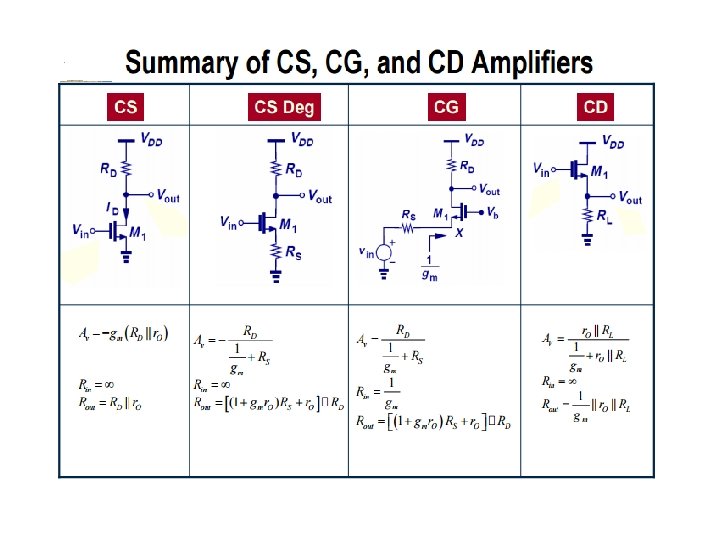
• BJT: Two port network, Transistor hybrid model, determination of h- parameters, conversion of h-parameters, generalized analysis of transistor amplifier model using hparameters, Analysis of CB, CE and CC amplifiers using exact and approximate analysis, Comparison of transistor amplifiers. • FET: Generalized analysis of small signal model, Analysis of CG, CS and CD amplifiers, comparison of FET amplifiers.
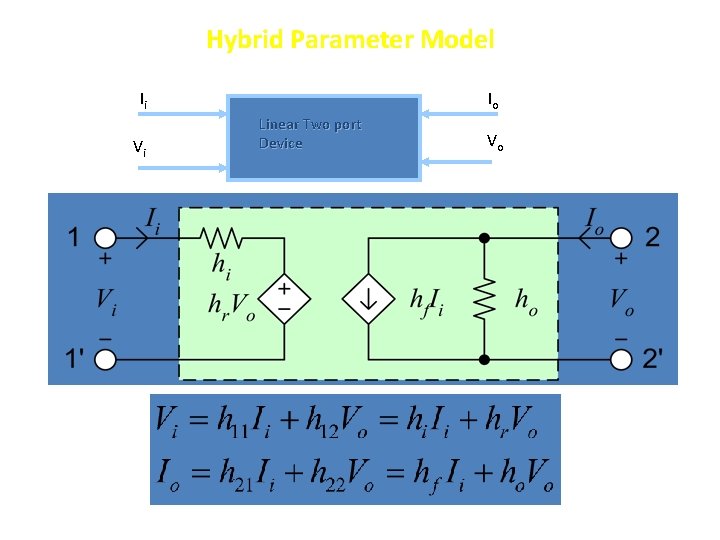
Hybrid Parameter Model Ii Vi Io Linear Two port Device Vo
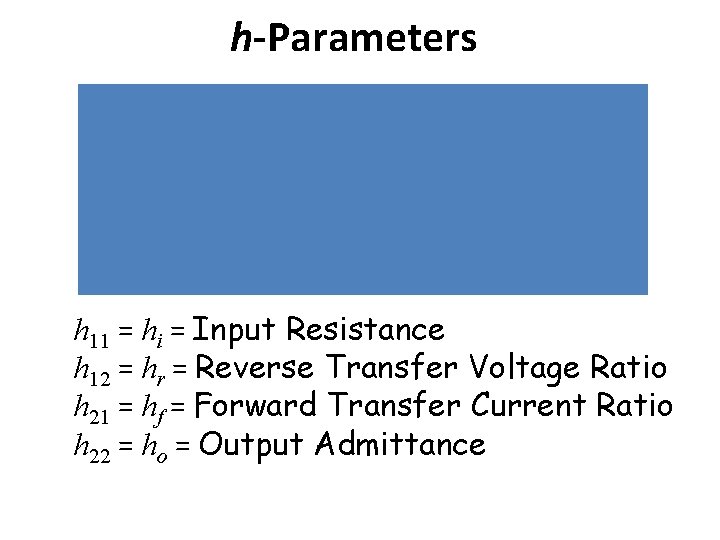
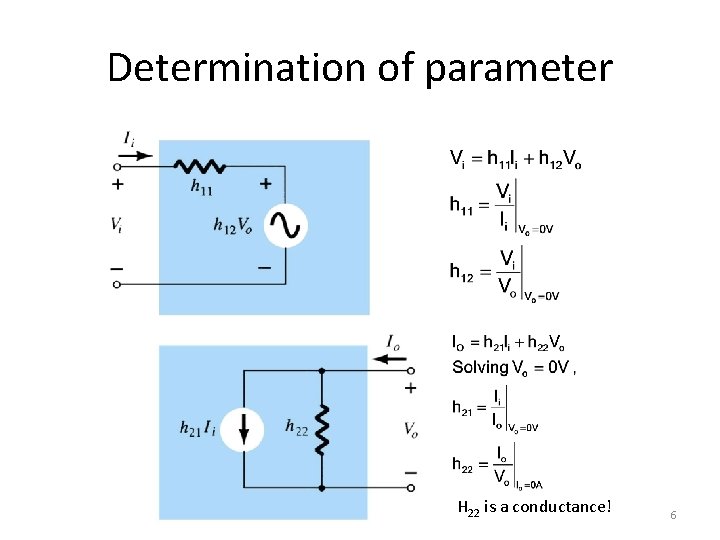
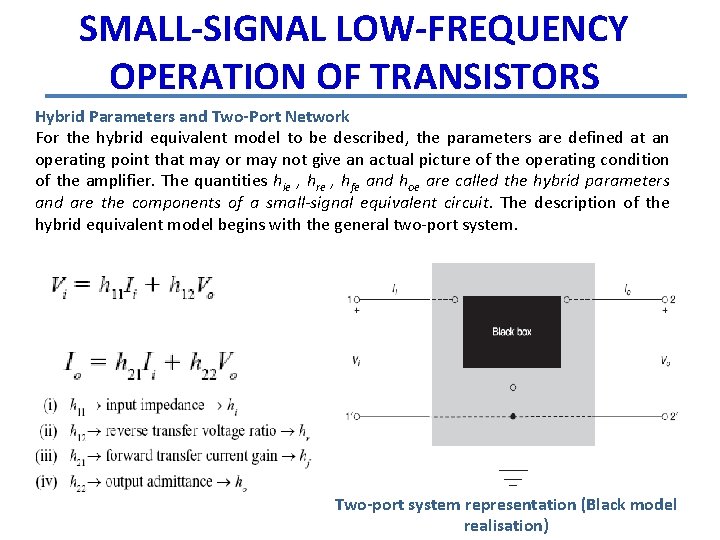
h-Parameters h 11 = hi = Input Resistance h 12 = hr = Reverse Transfer Voltage Ratio h 21 = hf = Forward Transfer Current Ratio h 22 = ho = Output Admittance
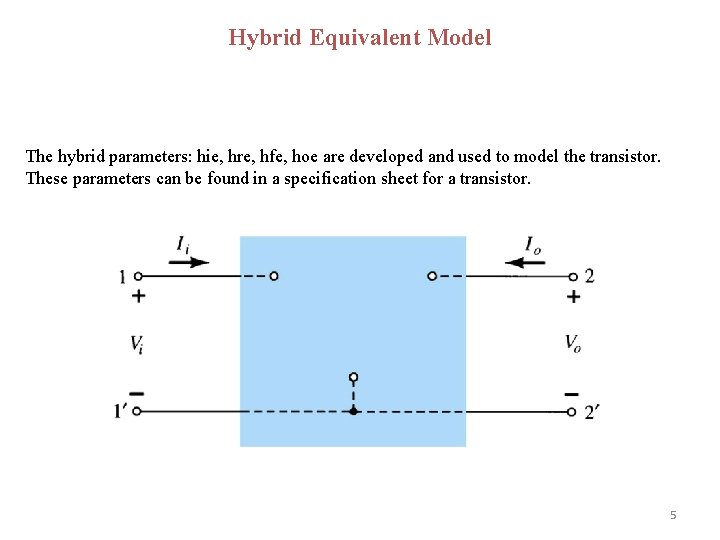
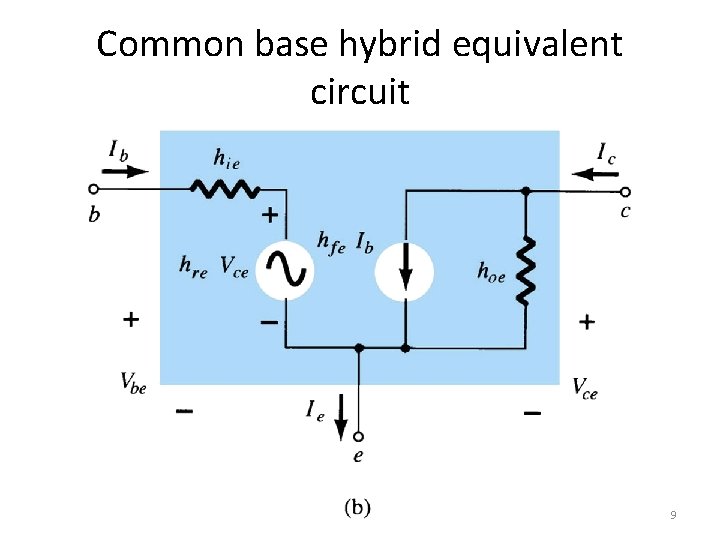
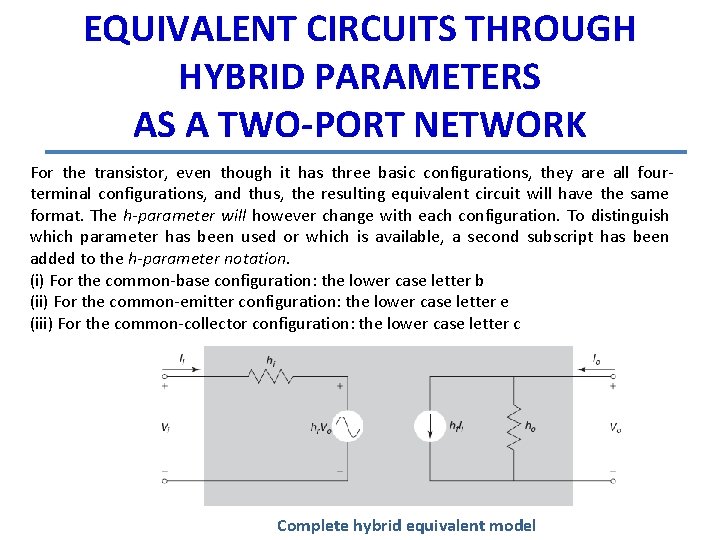
Hybrid Equivalent Model The hybrid parameters: hie, hre, hfe, hoe are developed and used to model the transistor. These parameters can be found in a specification sheet for a transistor. 5
Determination of parameter H 22 is a conductance! 6
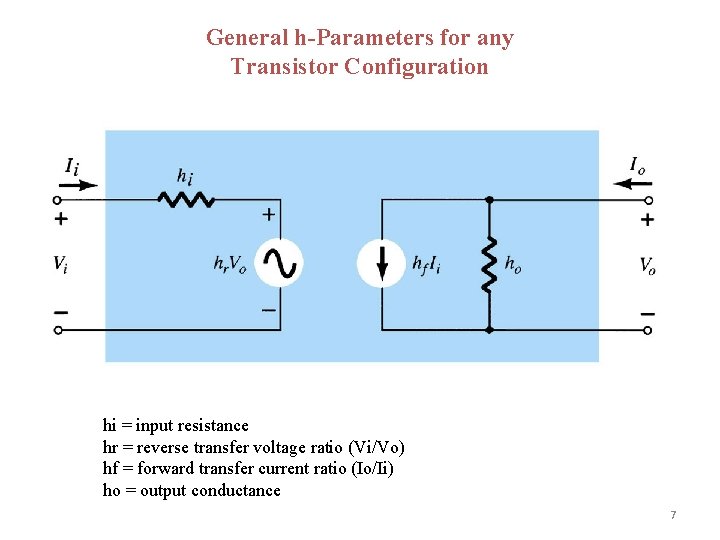
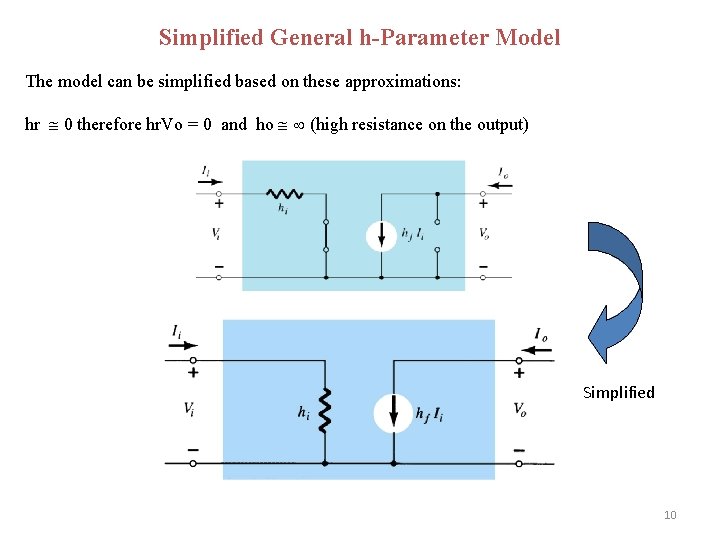
General h-Parameters for any Transistor Configuration hi = input resistance hr = reverse transfer voltage ratio (Vi/Vo) hf = forward transfer current ratio (Io/Ii) ho = output conductance 7
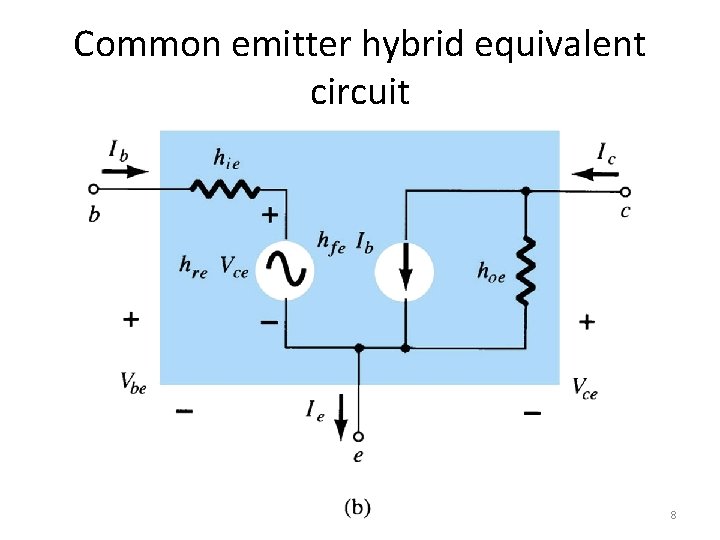
Common emitter hybrid equivalent circuit 8
Common base hybrid equivalent circuit 9
Simplified General h-Parameter Model The model can be simplified based on these approximations: hr 0 therefore hr. Vo = 0 and ho (high resistance on the output) Simplified 10
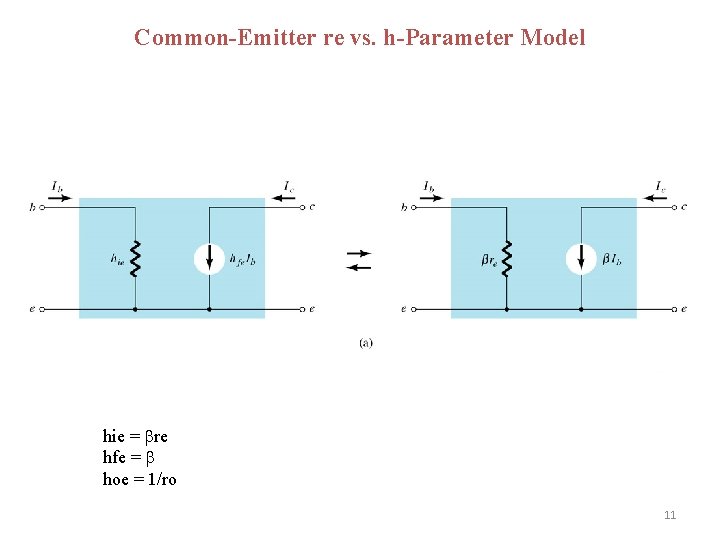
Common-Emitter re vs. h-Parameter Model hie = re hfe = hoe = 1/ro 11
Common-Emitter h-Parameters [Formula 7. 28] [Formula 7. 29] 12
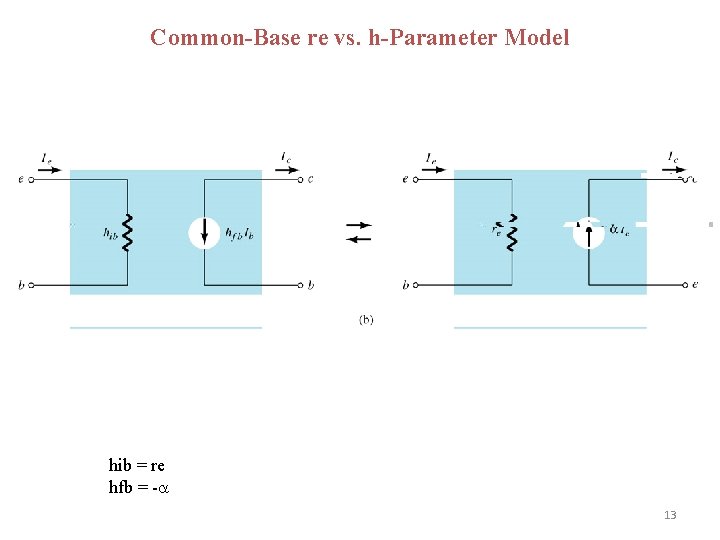
Common-Base re vs. h-Parameter Model hib = re hfb = - 13
Common-Base h-Parameters [Formula 7. 30] [Formula 7. 31] 14
SMALL-SIGNAL LOW-FREQUENCY OPERATION OF TRANSISTORS Hybrid Parameters and Two-Port Network For the hybrid equivalent model to be described, the parameters are defined at an operating point that may or may not give an actual picture of the operating condition of the amplifier. The quantities hie , hre , hfe and hoe are called the hybrid parameters and are the components of a small-signal equivalent circuit. The description of the hybrid equivalent model begins with the general two-port system. Two-port system representation (Black model realisation)
EQUIVALENT CIRCUITS THROUGH HYBRID PARAMETERS AS A TWO-PORT NETWORK For the transistor, even though it has three basic configurations, they are all fourterminal configurations, and thus, the resulting equivalent circuit will have the same format. The h-parameter will however change with each configuration. To distinguish which parameter has been used or which is available, a second subscript has been added to the h-parameter notation. (i) For the common-base configuration: the lower case letter b (ii) For the common-emitter configuration: the lower case letter e (iii) For the common-collector configuration: the lower case letter c Complete hybrid equivalent model
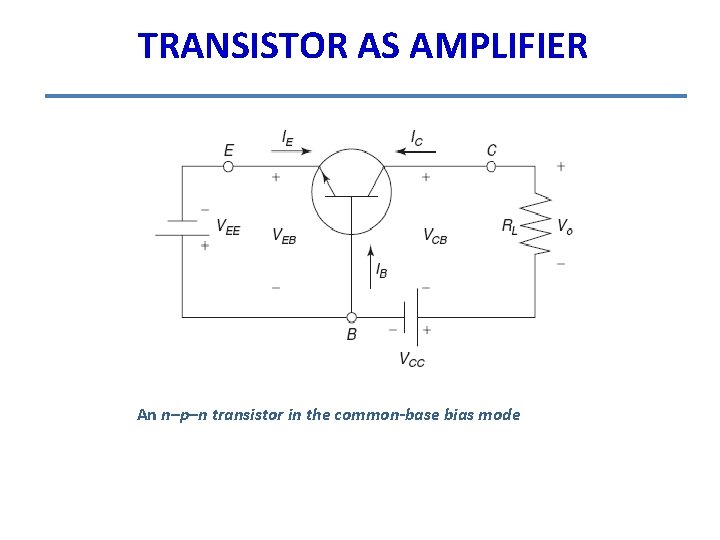
TRANSISTOR AS AMPLIFIER An n–p–n transistor in the common-base bias mode
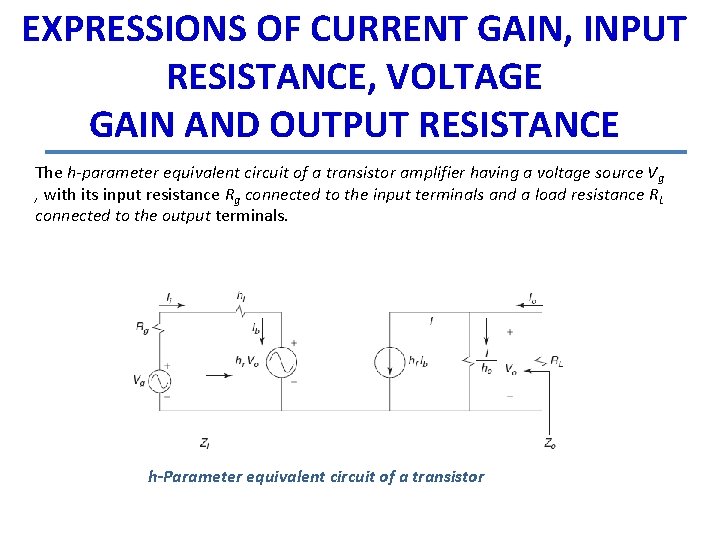
EXPRESSIONS OF CURRENT GAIN, INPUT RESISTANCE, VOLTAGE GAIN AND OUTPUT RESISTANCE The h-parameter equivalent circuit of a transistor amplifier having a voltage source Vg , with its input resistance Rg connected to the input terminals and a load resistance RL connected to the output terminals. h-Parameter equivalent circuit of a transistor
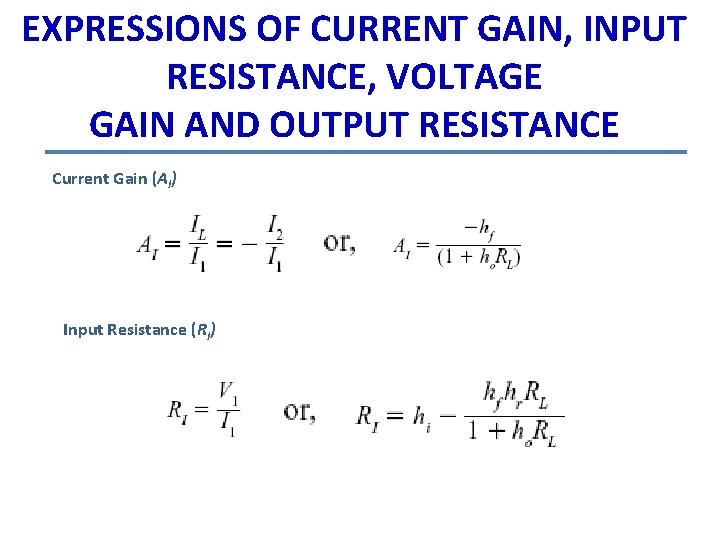
EXPRESSIONS OF CURRENT GAIN, INPUT RESISTANCE, VOLTAGE GAIN AND OUTPUT RESISTANCE Current Gain (AI) Input Resistance (RI)
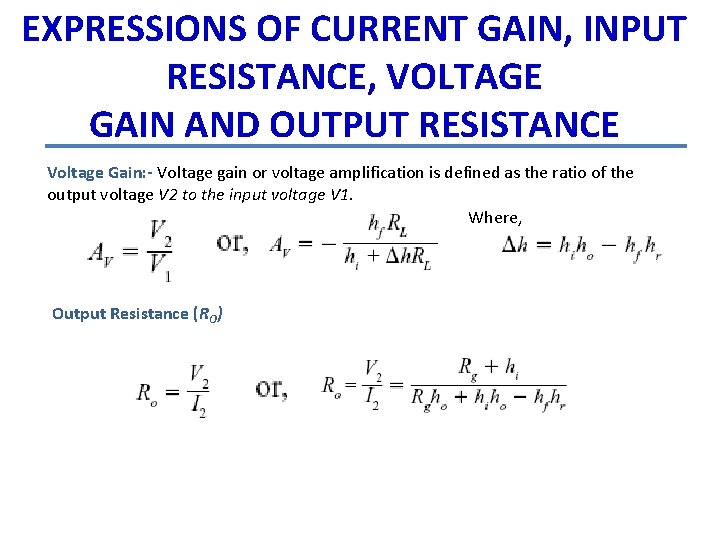
EXPRESSIONS OF CURRENT GAIN, INPUT RESISTANCE, VOLTAGE GAIN AND OUTPUT RESISTANCE Voltage Gain: - Voltage gain or voltage amplification is defined as the ratio of the output voltage V 2 to the input voltage V 1. Where, Output Resistance (RO)
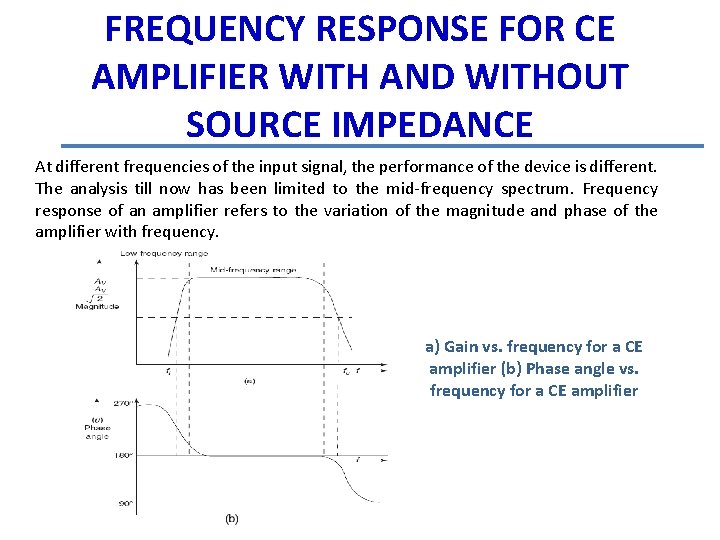
FREQUENCY RESPONSE FOR CE AMPLIFIER WITH AND WITHOUT SOURCE IMPEDANCE At different frequencies of the input signal, the performance of the device is different. The analysis till now has been limited to the mid-frequency spectrum. Frequency response of an amplifier refers to the variation of the magnitude and phase of the amplifier with frequency. a) Gain vs. frequency for a CE amplifier (b) Phase angle vs. frequency for a CE amplifier
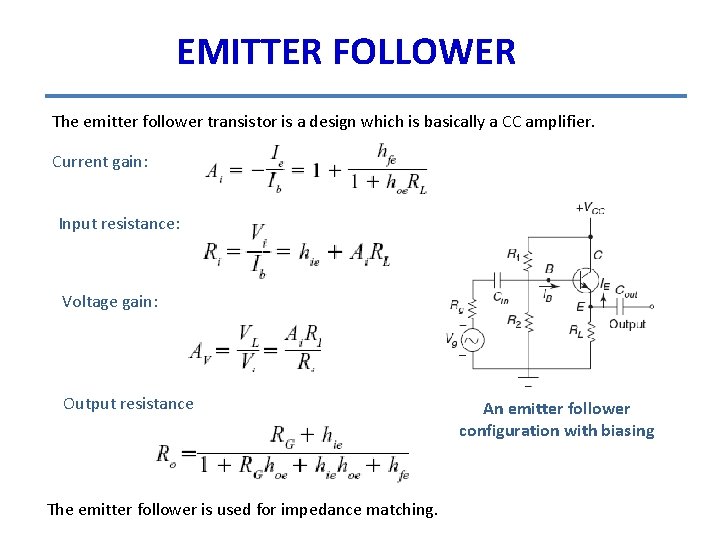
EMITTER FOLLOWER The emitter follower transistor is a design which is basically a CC amplifier. Current gain: Input resistance: Voltage gain: Output resistance The emitter follower is used for impedance matching. An emitter follower configuration with biasing
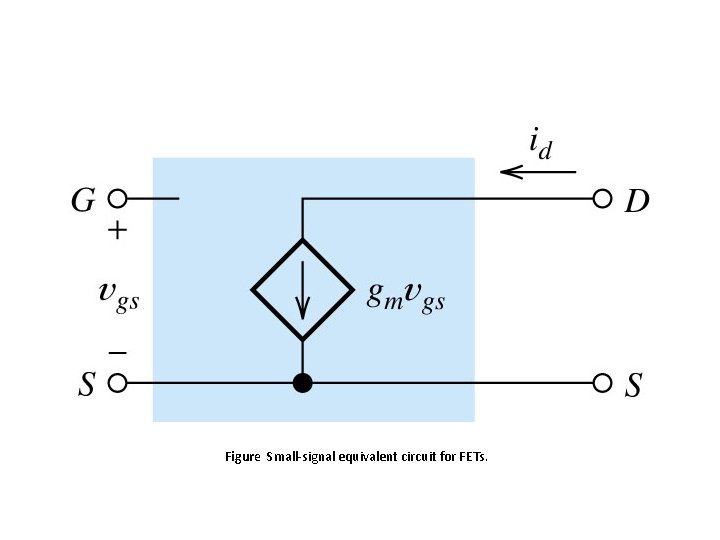
Figure Small-signal equivalent circuit for FETs.
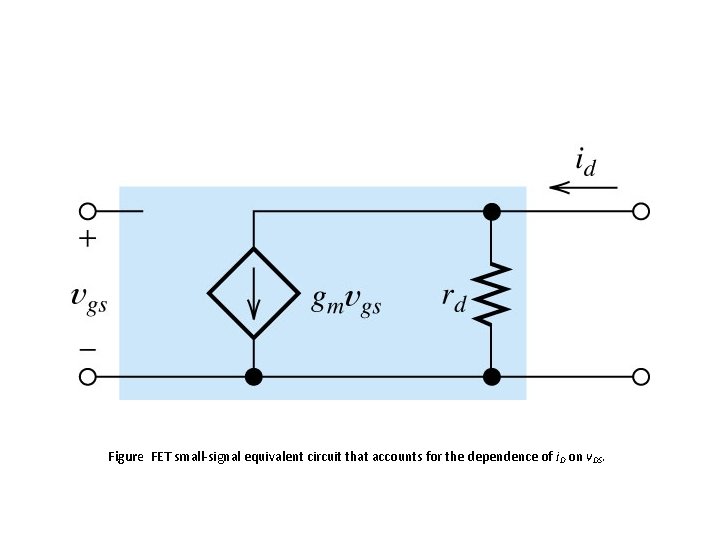
Figure FET small-signal equivalent circuit that accounts for the dependence of i. D on v. DS.
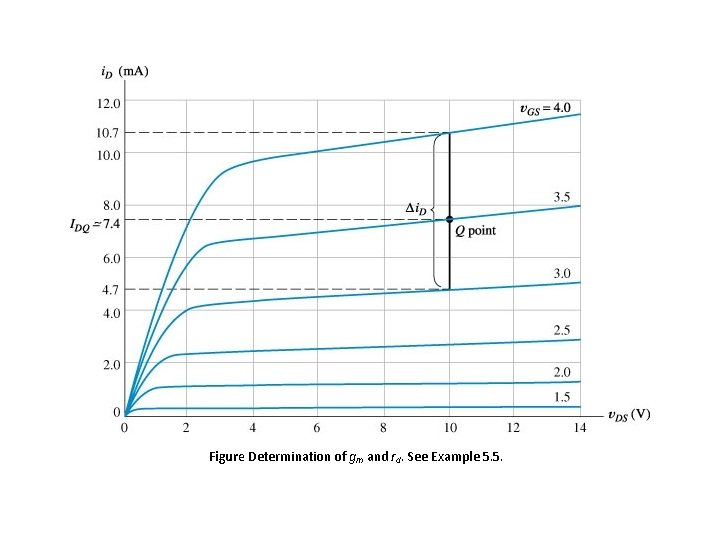
Figure Determination of gm and rd. See Example 5. 5.
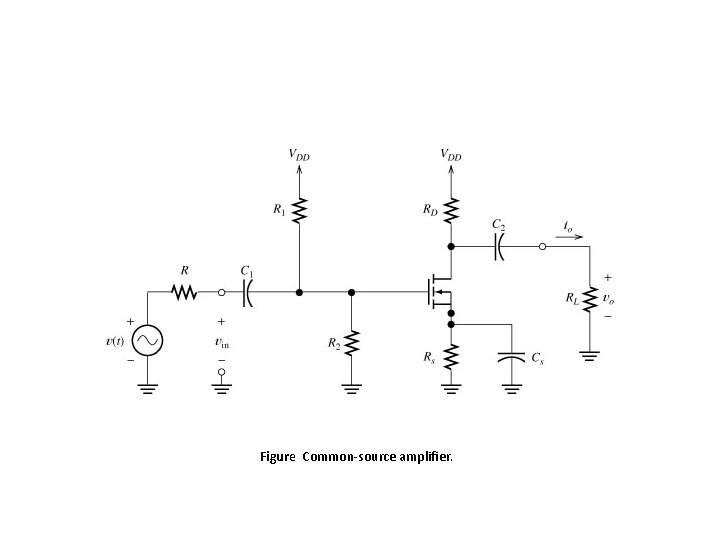
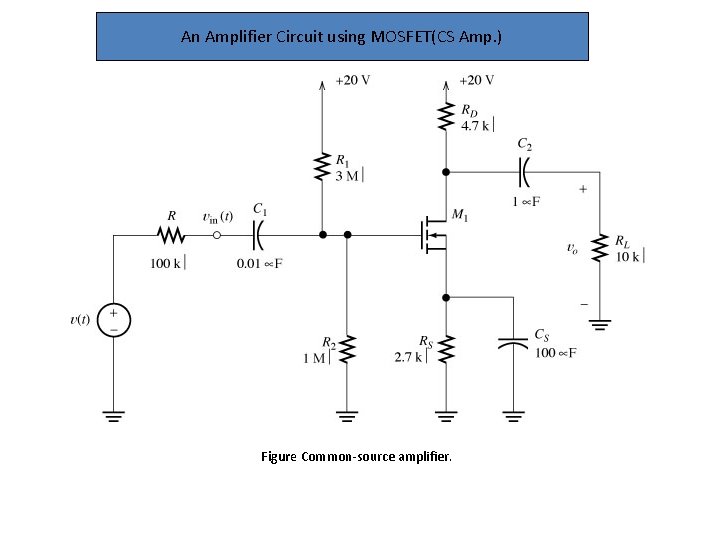
Figure Common-source amplifier.
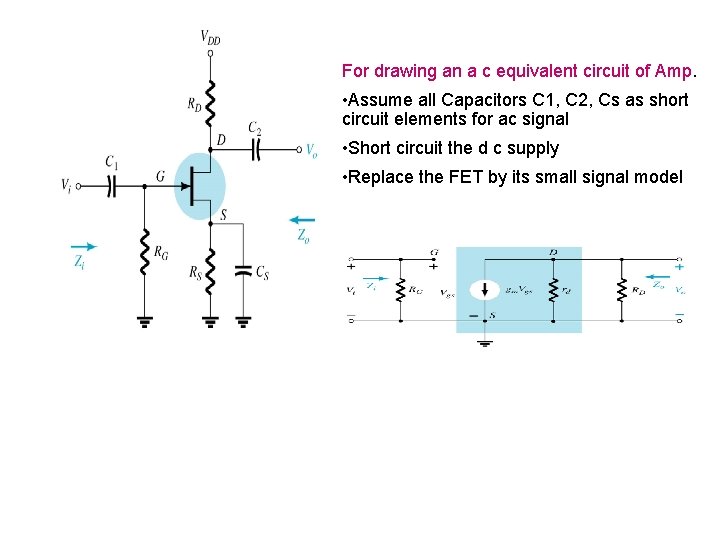
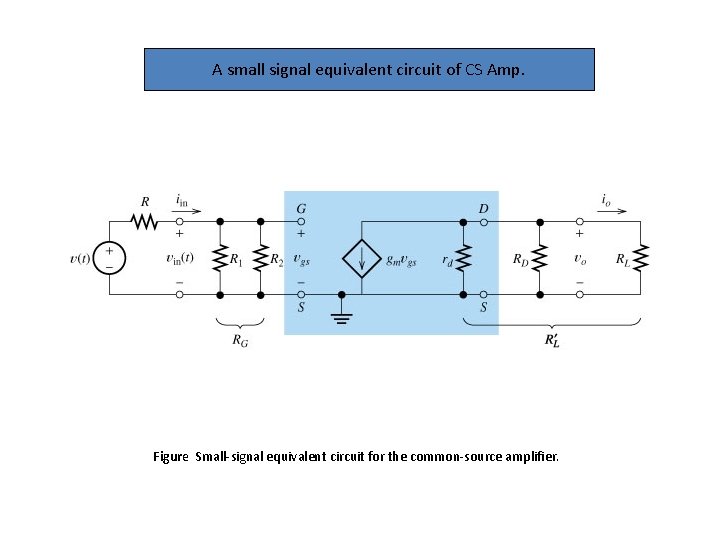
For drawing an a c equivalent circuit of Amp. • Assume all Capacitors C 1, C 2, Cs as short circuit elements for ac signal • Short circuit the d c supply • Replace the FET by its small signal model
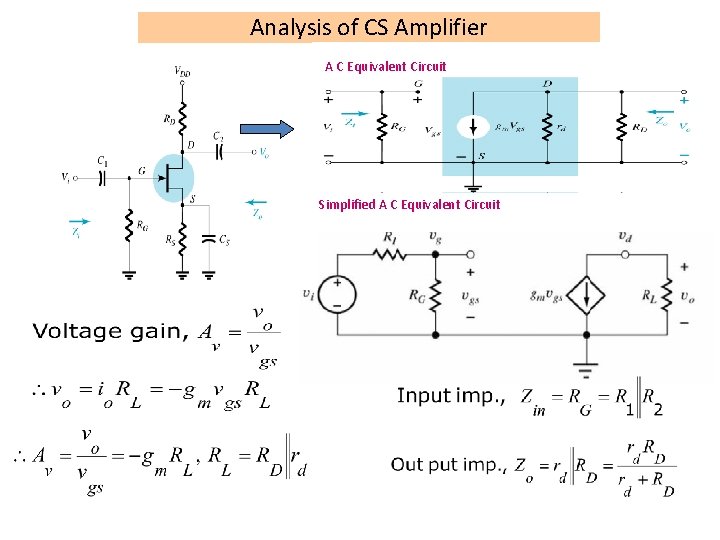
Analysis of CS Amplifier A C Equivalent Circuit Simplified A C Equivalent Circuit
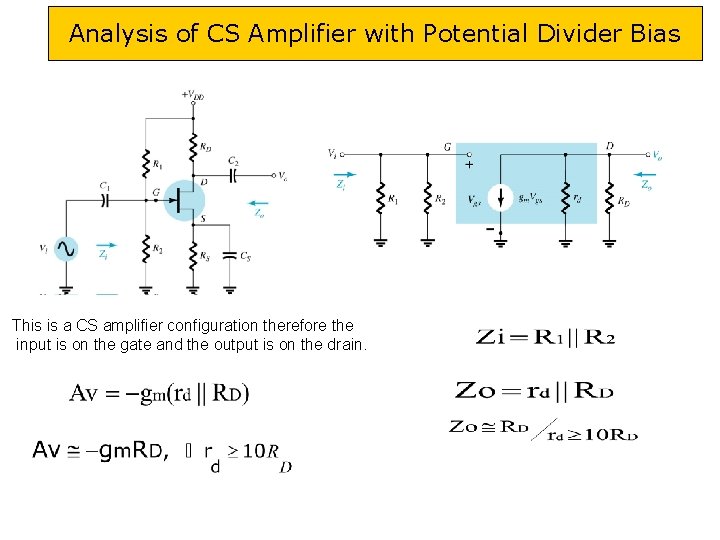
Analysis of CS Amplifier with Potential Divider Bias This is a CS amplifier configuration therefore the input is on the gate and the output is on the drain.
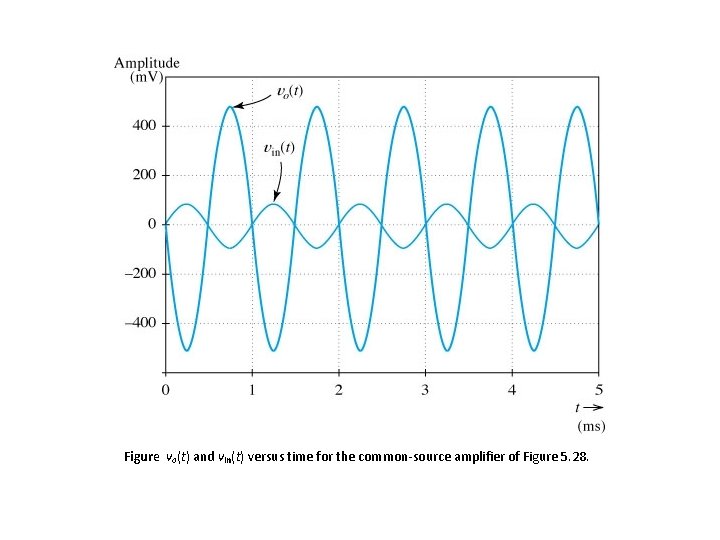
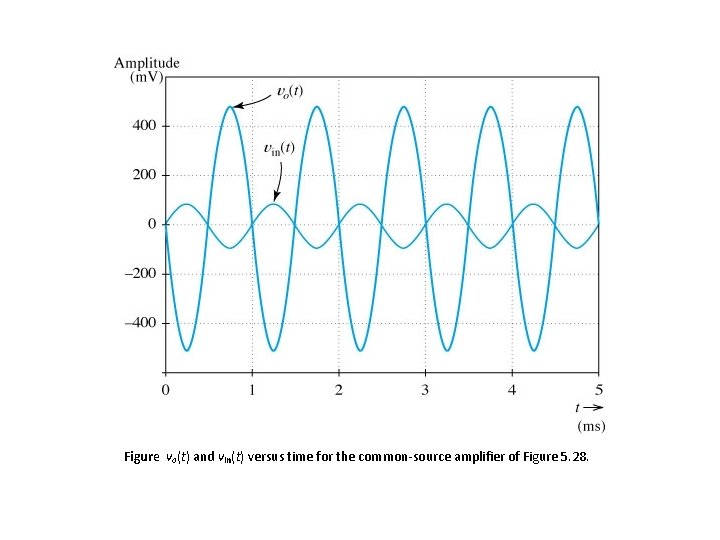
Figure vo(t) and vin(t) versus time for the common-source amplifier of Figure 5. 28.
An Amplifier Circuit using MOSFET(CS Amp. ) Figure Common-source amplifier.
A small signal equivalent circuit of CS Amp. Figure Small-signal equivalent circuit for the common-source amplifier.
Figure vo(t) and vin(t) versus time for the common-source amplifier of Figure 5. 28.
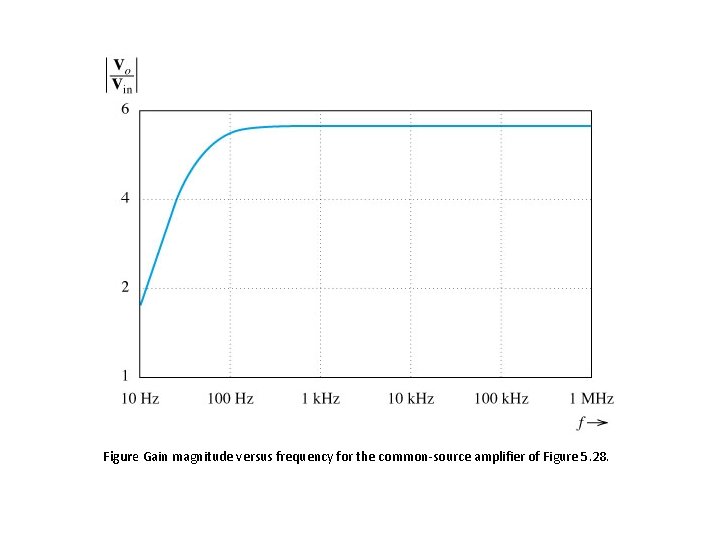
Figure Gain magnitude versus frequency for the common-source amplifier of Figure 5. 28.
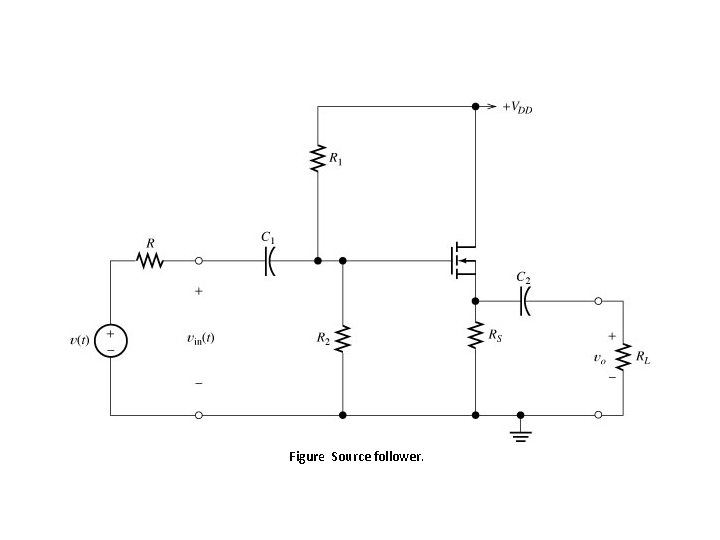
Figure Source follower.
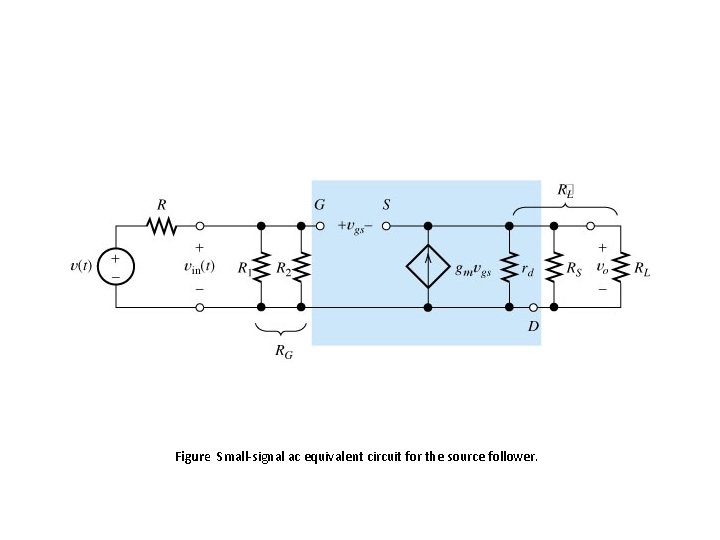
Figure Small-signal ac equivalent circuit for the source follower.
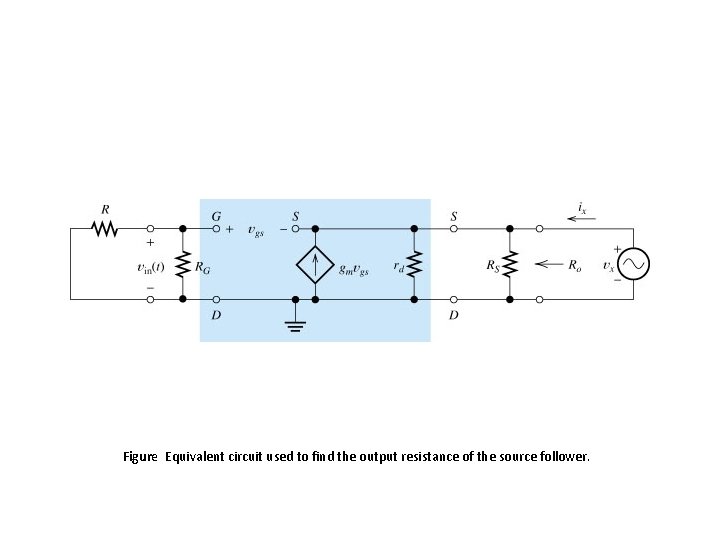
Figure Equivalent circuit used to find the output resistance of the source follower.
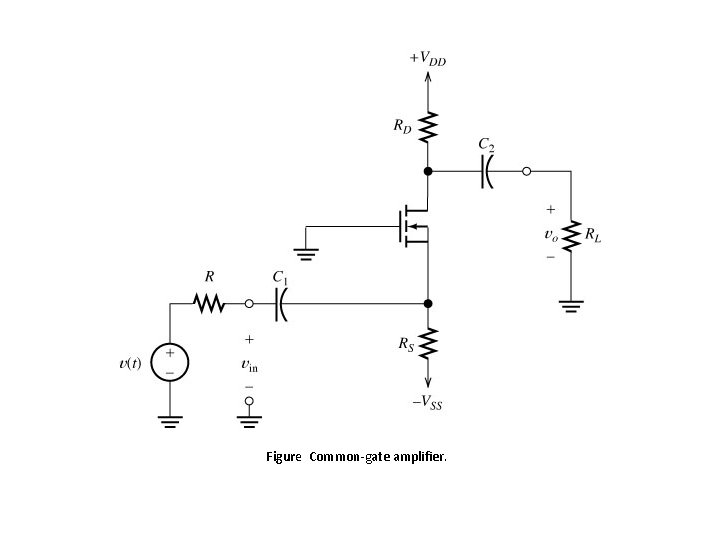
Figure Common-gate amplifier.