
Unit Topic The Human Skin Unit Subtopic Layers
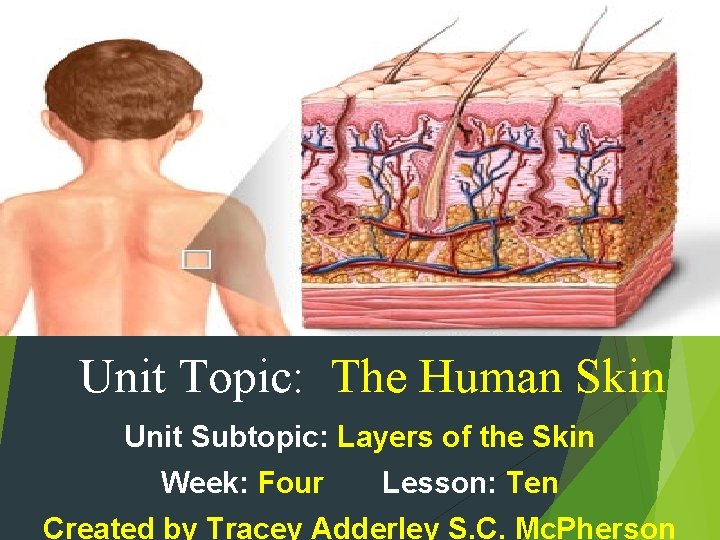
Unit Topic: The Human Skin Unit Subtopic: Layers of the Skin Week: Four Lesson: Ten Created by Tracey Adderley S. C. Mc. Pherson
Objectives State how many layers the human skin is divided into. 2) Label the layers of the human skin. 3) Locate and describe each layer of the human skin. 1)
The Human Skin q. Skin can be divided into THREE (3) layers. q. The three layers of the skin are: 1) Epidermis 2) Dermis 3) Fatty tissue
The Epidermis Layer q q 1) 2) q q q The epidermis is the THINNEST of all layers and is the outer section (outermost layer) of the skin. Even though this layer is thin it is TOUGH. It is the thickest outer section on: the palms of the hands and the soles of the feet. It is the thinnest outer section on the lips. You may find it surprising that the epidermis, the visible, outermost layer of your skin, is almost entirely made up of dead skin cells. As the dead skin cells on the surface slough off, room is made for the new cells that are formed in the layers below the epidermis. Through this process of regeneration, your skin essentially replaces itself every 35 days. It is also through this cell replacement that your skin heals injuries that occur on the outermost layer. If you were to cut yourself in this layer you will NOT bleed because it is a “superficial” layer made primarily of dead cells.
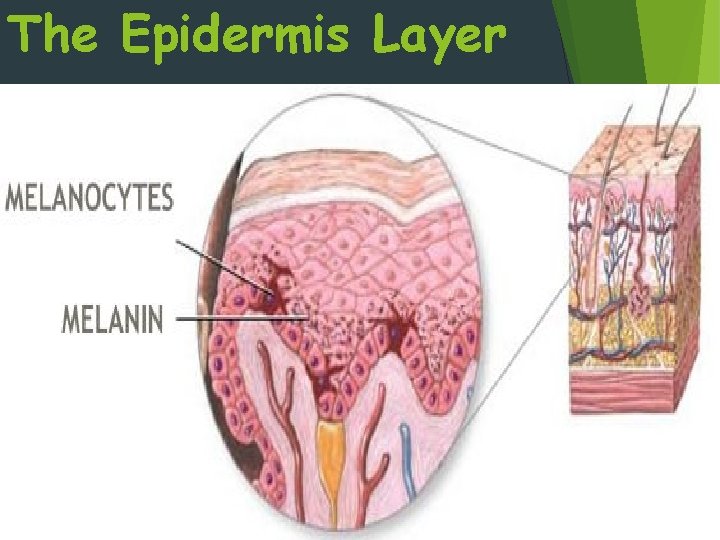
The Epidermis Layer
The Epidermis Layer- Cont’d q q q The epidermis layer is divided into several different layers one of which is the Malpighian layer. The Malpighian layer acts as a waterproof layer and protects the skin from the external (outside) environment. The epidermis has skin cells called melanocytes. Melanocytes found within the epidermis layer produces a brown pigment called melanin. If a person is deficient in the pigment melanin the person may suffer from a skin disorder called albinism. The person is referred to as an albino. Albinism is a complete or partial absence of pigment in the skin, hair and eyes.
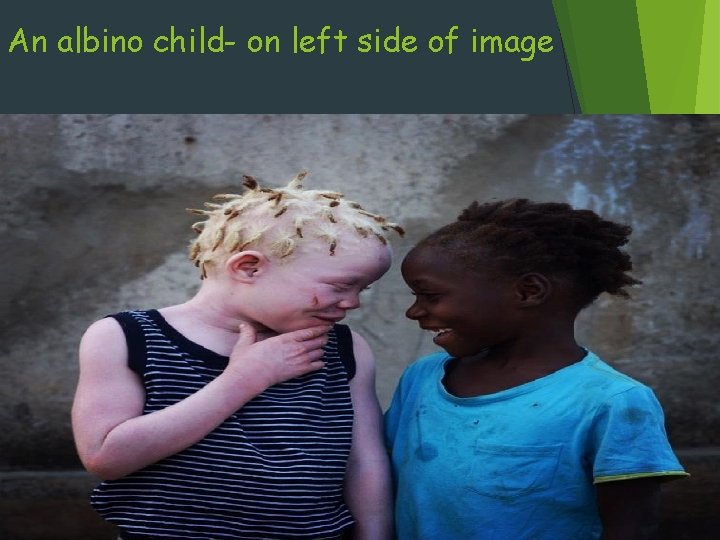
An albino child- on left side of image
The Epidermis Layer- Cont’d q. Melanin gives the skin, eyes and hair its color. q. The pigment melanin is produced by melanocytes found within the skin. q. The epidermis is a site (place) for the production of melanin and keratin. q. Keratin is a pigment that regulates (controls) the rigidness of the skin.
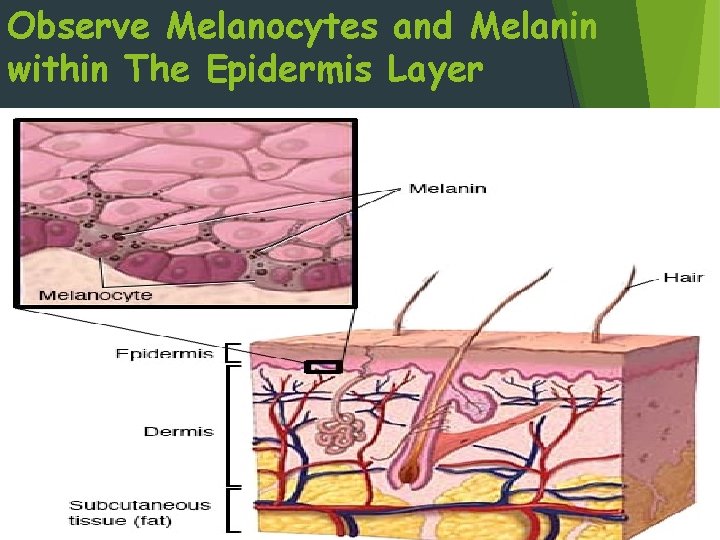
Observe Melanocytes and Melanin within The Epidermis Layer
The Dermis Layer q q q 1) 2) 3) 4) 5) 6) q q q The dermis is the inner section (inner layer) of the skin. The epidermis is the THICKEST of all layers, even though this inner layer is SOFT. This inner layer is made up of: sweat glands sebaceous glands (oil glands) blood vessels (arteries and veins) nerve endings hair follicles connective tissues Since the dermis layer contains all these structures it is the LIVNG part of the skin. The dermis gives skin elasticity and produces collagen. If you were to cut yourself and you bleed, the cut went deep enough to penetrate the epidermis layer compromising the dermis, the “living part” of the skin.

Observe Dermis Layer

Observe Connective Tissue within The Dermis Layer

The Fatty Tissue Layer q. The fatty tissue layer is the innermost section (innermost layer) of the skin. q. This layer is also referred to as subcutaneous fat or subcutaneous tissue or hypodermis. q. It is made up of mainly fat tissue, hence the name fatty tissue layer.
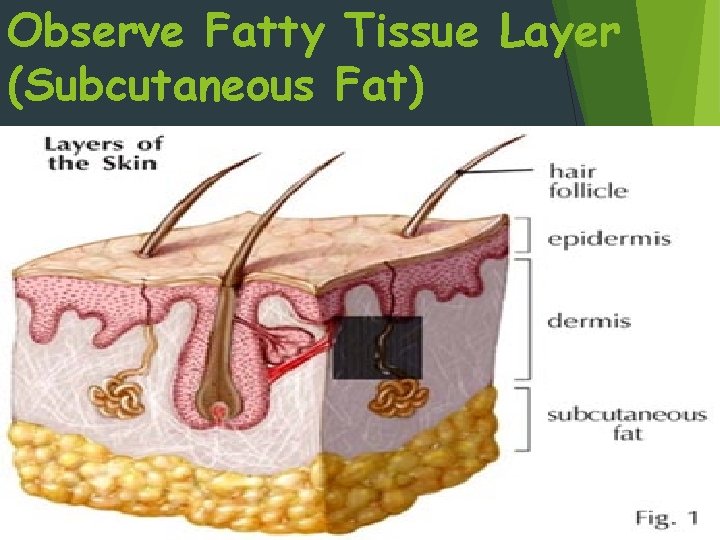
Observe Fatty Tissue Layer (Subcutaneous Fat)

The Fatty Tissue Layer- Cont’d q Fatty tissue can also be called adipose tissue. q There are fat cells in this layer called adipocytes. q Adipocytes found within the fatty tissue layer makes up adipose tissue. q Adipose tissue is specialized in storing energy as fat. q The fatty tissue layer stores fat which helps to insulate the skin (keeps the body warm). q This layer: 1. Protects the body from mechanical trauma (cushions the body from stress and strain). 2. Is a site for fat metabolism (breakdown of fats into energy).
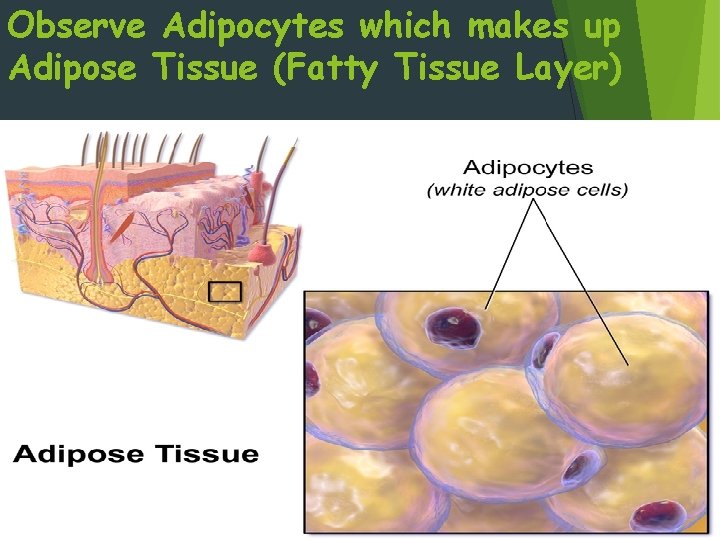
Observe Adipocytes which makes up Adipose Tissue (Fatty Tissue Layer)
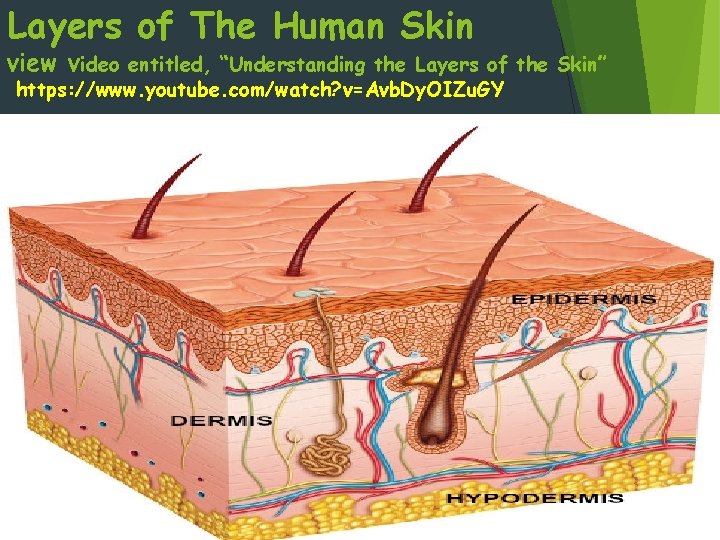
Layers of The Human Skin view video entitled, “Understanding the Layers of the Skin” https: //www. youtube. com/watch? v=Avb. Dy. OIZu. GY
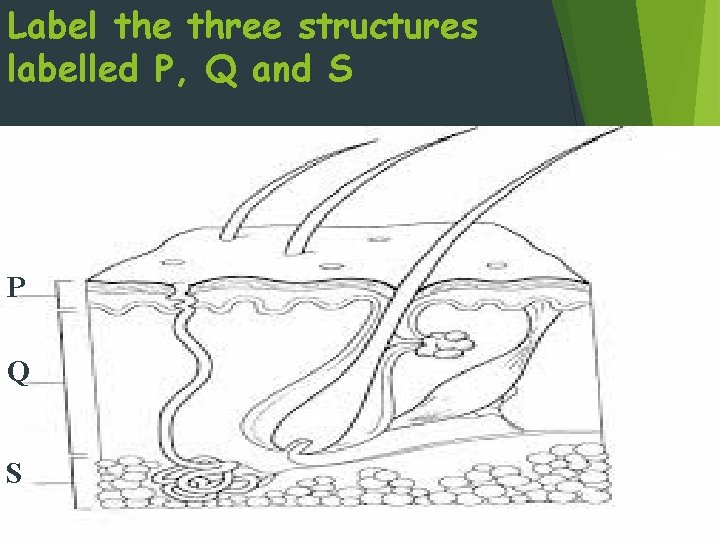
Label the three structures labelled P, Q and S P Q S
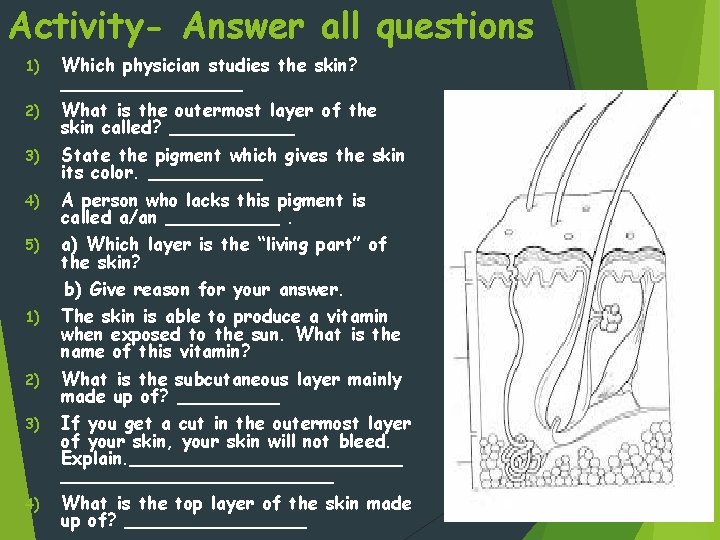
Activity- Answer all questions 1) Which physician studies the skin? ________ 2) What is the outermost layer of the skin called? ______ 3) State the pigment which gives the skin its color. _____ 4) A person who lacks this pigment is called a/an _____. 5) a) Which layer is the “living part” of the skin? b) Give reason for your answer. 1) The skin is able to produce a vitamin when exposed to the sun. What is the name of this vitamin? 2) What is the subcutaneous layer mainly made up of? _____ 3) If you get a cut in the outermost layer of your skin, your skin will not bleed. Explain. ________________________ 4) What is the top layer of the skin made up of? ________
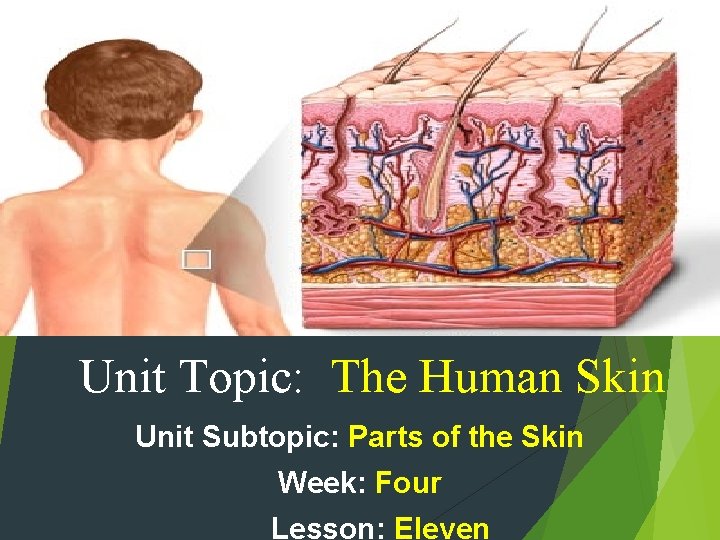
Unit Topic: The Human Skin Unit Subtopic: Parts of the Skin Week: Four Lesson: Eleven
Objectives Differentiate and describe (9) parts of the human skin. 2) Point out and label the nine parts of the human skin. 3) State the four sensations of the human skin. 1)
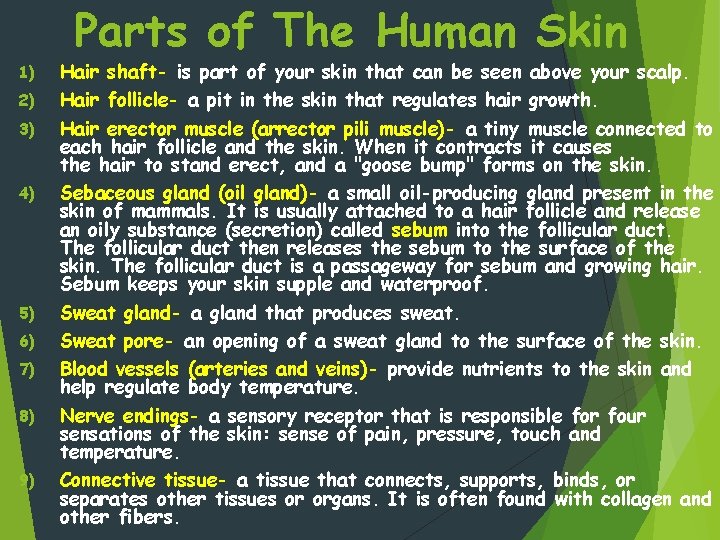
Parts of The Human Skin 1) 2) 3) 4) 5) 6) 7) 8) 9) Hair shaft- is part of your skin that can be seen above your scalp. Hair follicle- a pit in the skin that regulates hair growth. Hair erector muscle (arrector pili muscle)- a tiny muscle connected to each hair follicle and the skin. When it contracts it causes the hair to stand erect, and a "goose bump" forms on the skin. Sebaceous gland (oil gland)- a small oil-producing gland present in the skin of mammals. It is usually attached to a hair follicle and release an oily substance (secretion) called sebum into the follicular duct. The follicular duct then releases the sebum to the surface of the skin. The follicular duct is a passageway for sebum and growing hair. Sebum keeps your skin supple and waterproof. Sweat gland- a gland that produces sweat. Sweat pore- an opening of a sweat gland to the surface of the skin. Blood vessels (arteries and veins)- provide nutrients to the skin and help regulate body temperature. Nerve endings- a sensory receptor that is responsible for four sensations of the skin: sense of pain, pressure, touch and temperature. Connective tissue- a tissue that connects, supports, binds, or separates other tissues or organs. It is often found with collagen and other fibers.
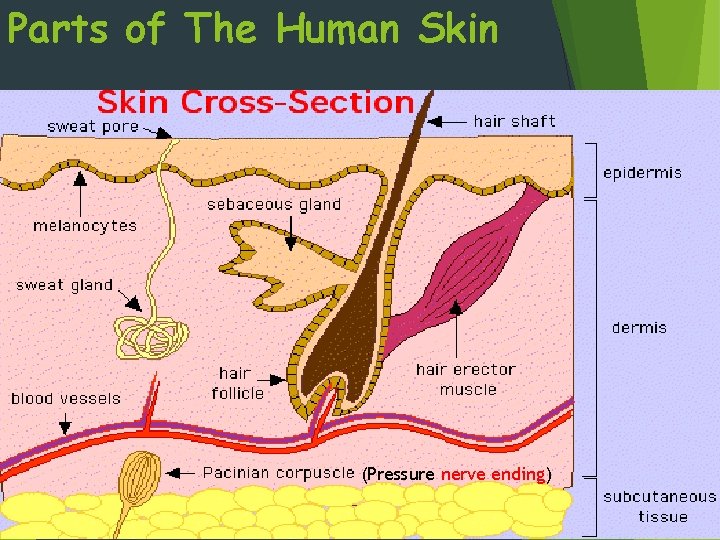
Parts of The Human Skin (Pressure nerve ending)
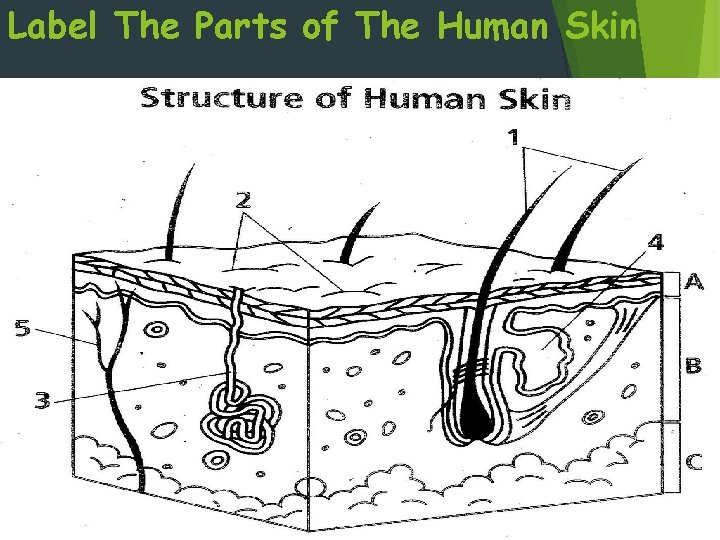
Label The Parts of The Human Skin
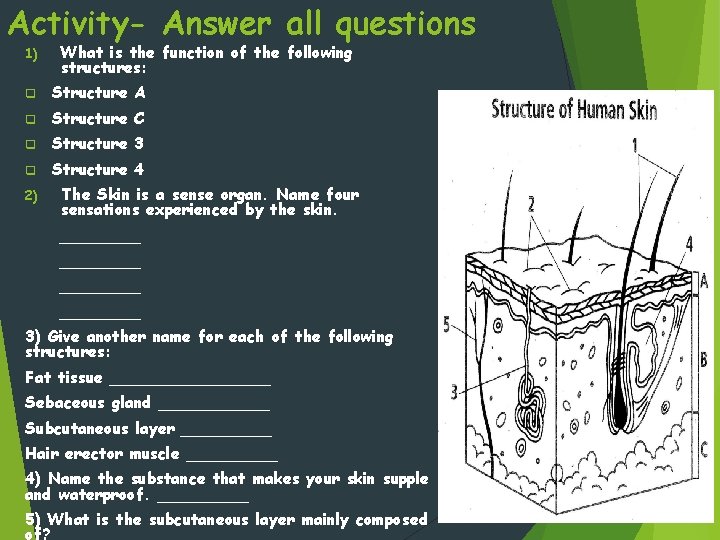
Activity- Answer all questions 1) What is the function of the following structures: q Structure A q Structure C q Structure 3 q Structure 4 2) The Skin is a sense organ. Name four sensations experienced by the skin. ________ 3) Give another name for each of the following structures: Fat tissue ________ Sebaceous gland ______ Subcutaneous layer _____ Hair erector muscle _____ 4) Name the substance that makes your skin supple and waterproof. _____ 5) What is the subcutaneous layer mainly composed
- Slides: 25