
Unit Three Cell Proliferation and Genetics The Genetic
- Slides: 14
Unit Three “Cell Proliferation and Genetics” “The Genetic Material”
DNA Discovery • Many scientists throughout history attempted to determine the mode of transmission of inheritable traits • In essence, what makes a species unique • The genetic material makes each species unique (either RNA or DNA) • James Watson and Francis Crick determined the exact structure of the genetic material, which for most species is DNA • https: //www. youtube. com/watch? v=Veg. LVn_1 o. CE
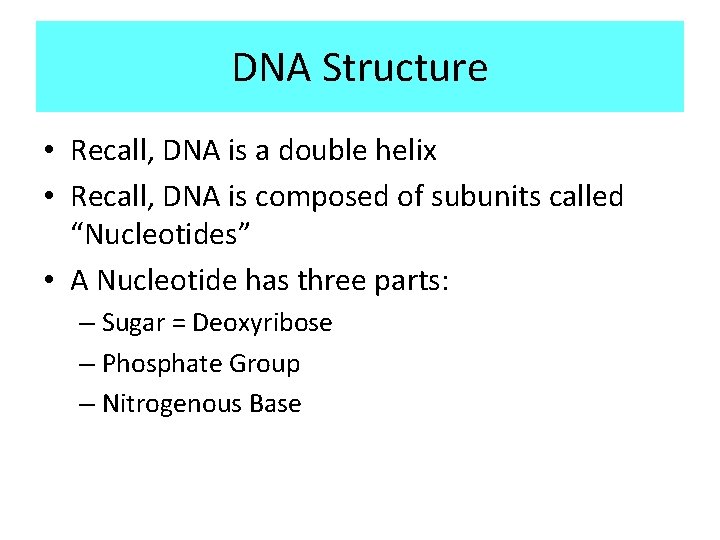
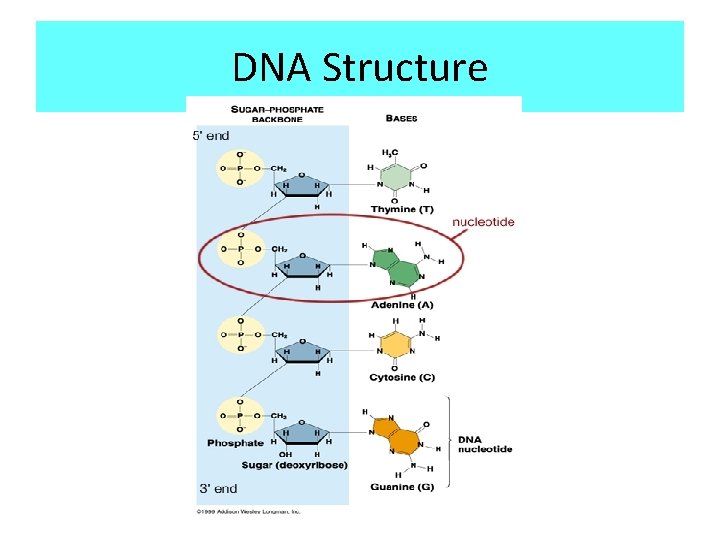
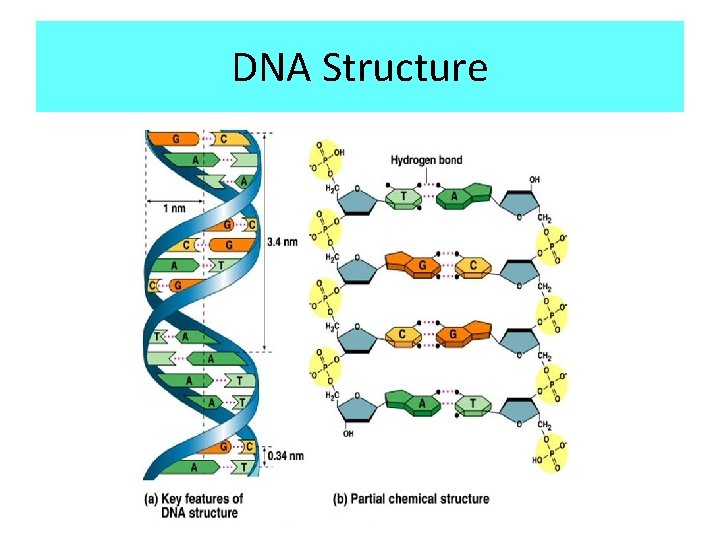
DNA Structure • Recall, DNA is a double helix • Recall, DNA is composed of subunits called “Nucleotides” • A Nucleotide has three parts: – Sugar = Deoxyribose – Phosphate Group – Nitrogenous Base
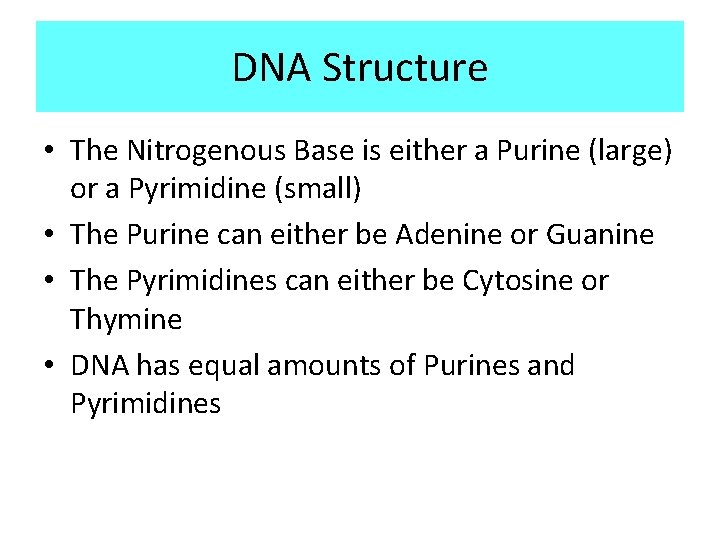
DNA Structure • The Nitrogenous Base is either a Purine (large) or a Pyrimidine (small) • The Purine can either be Adenine or Guanine • The Pyrimidines can either be Cytosine or Thymine • DNA has equal amounts of Purines and Pyrimidines
DNA Structure
DNA Structure
DNA Function • DNA is the blueprint for life; it contains all the chemical instructions to generate new individuals, and maintain those individuals throughout their lives • DNA = LIFE
DNA Replication • DNA Replication is the process by which the DNA in cells duplicate during the “S” phase of “Interphase”, in preparation for cell division • DNA Replication is constantly occurring to keep pace with the continual loss of cells within an organism’s body
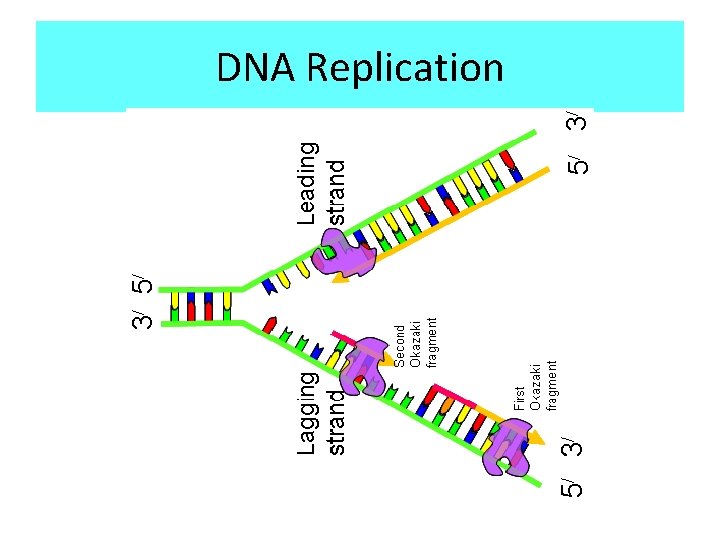
Steps of DNA Replication • 1. An enzyme called “Helicase” unwinds the DNA Double Helix • 2. Another enzyme, “DNA Polymerase” reads each single strand. Once each base is accurately deciphered, DNA Polymerase makes the appropriate complimentary base to bond the one just deciphered • 3. DNA Polymerase cannot start a new strand, but rather it can only add to an existing strand
Steps of DNA Replication • 4. To assist DNA Polymerase, another enzyme is able to begin a new strand with a “Primer” (a section of nucleic acids) • 5. Before the newly formed DNA molecules can wind back up into the double helix shape, the Primers are removed and the segments of DNA are sealed to each other (lagging strand) by another enzyme: “DNA Ligase”
Facts about DNA Replication • The top portion of unwound DNA is replicated in a continuous fashion and is called the “Leading Strand” • The bottom portion of unwound DNA is replicated in a discontinuous fashion and is called the “Lagging Strand” aka “Okasaki Fragments”
DNA Replication
DNA Replication and Mutations • Mutations are the result of one or more of the following scenarios: – 1. DNA Polymerase misreads a base(s) on a strand, and therefore places the wrong complimentary base across from the misread one – 2. The proofreading enzyme misses an error in the base parings and does not correct it **Random insertions, deletions, duplications, and inversions of the double helix can occur
DNA Replication Summary • https: //www. youtube. com/watch? v=8 k. K 2 zwj RV 0 M • https: //www. youtube. com/watch? v=27 Tx. Ko. F U 2 Nw