
Unit No 6 Energy Conversion Devices TYPES OF
- Slides: 26
Unit No. - 6 Energy Conversion Devices
TYPES OF ENERGY CONVERSION DEVICES Conversion of Heat Energy into Heat Ø Heat exchangers of all types. Conversion of Heat into Work Ø Steam Engine, I. C. Engines, etc. Conversion of Work into Heat Ø Friction Devices like Brakes, etc. Conversion of Work Energy into Work Ø Air Motor, Compressors, etc.
DEFINITIONS • Prime Movers Device which uses energy from natural resources and converts into Mechanical Energy. • Power Producing Devices Any device that operates on a cycle and produces Mechanical power output on the expense of energy supplied. • Power Absorbing Devices Any device which uses work energy from outside source to increase the energy of working fluid during a cycle.
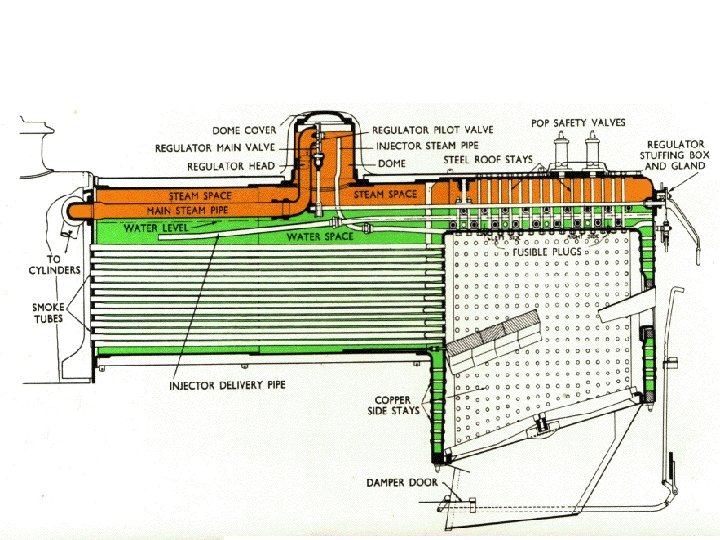
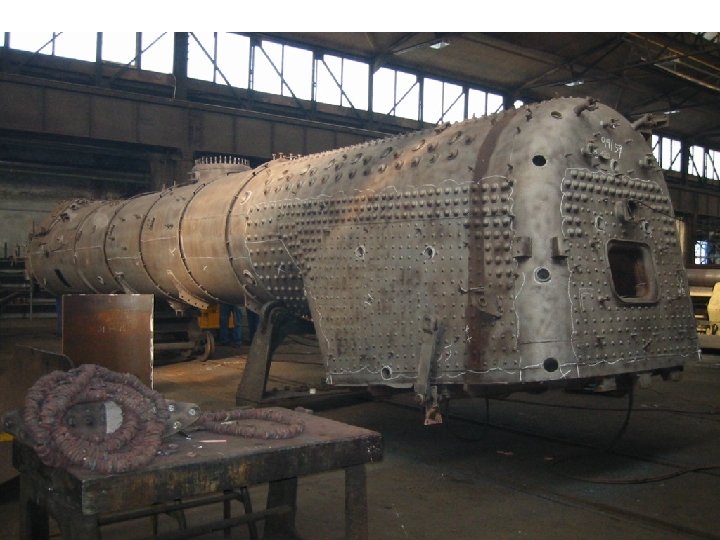
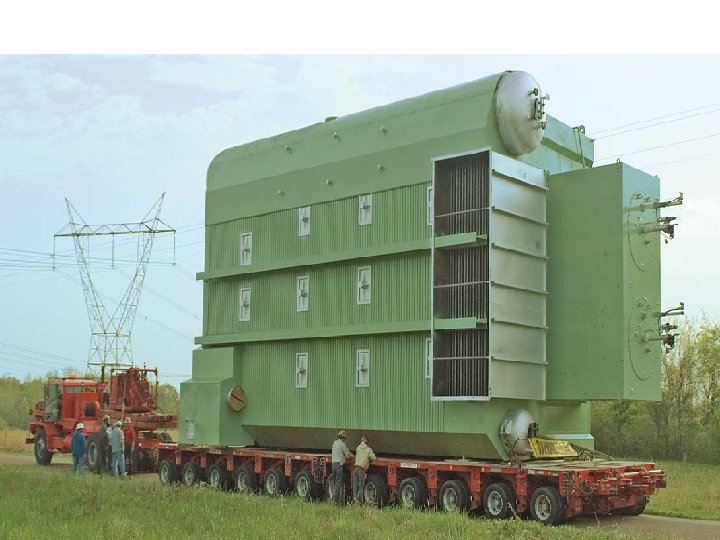
CONVERSION OF HEAT ENERGY INTO HEAT • Boilers or Steam Generators As per Indian Boiler Act 1923, it is a closed pressure vessel used for generation of steam under pressure. • Applications of Steam Generated: For generating power in steam engines or steam turbines. In process industries: For example in Sugar factory for heating of sugarcane juice. In textile industry for sizing and bleaching, etc.
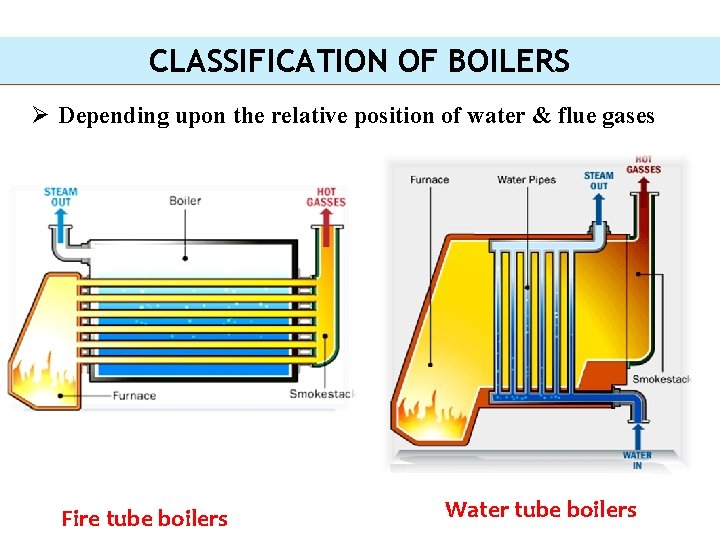
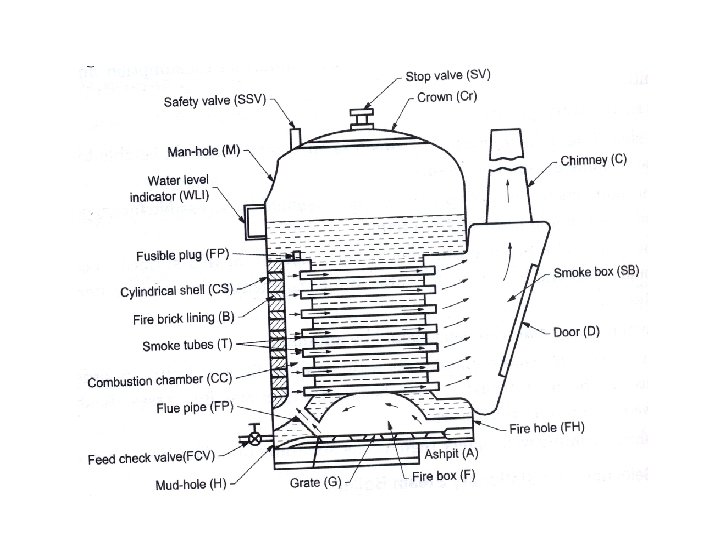
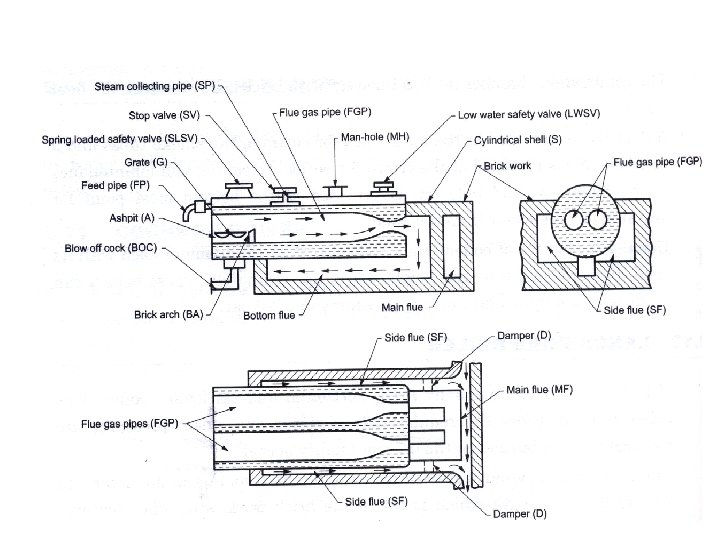
CLASSIFICATION OF BOILERS Ø Depending upon the relative position of water & flue gases Fire tube boilers Water tube boilers
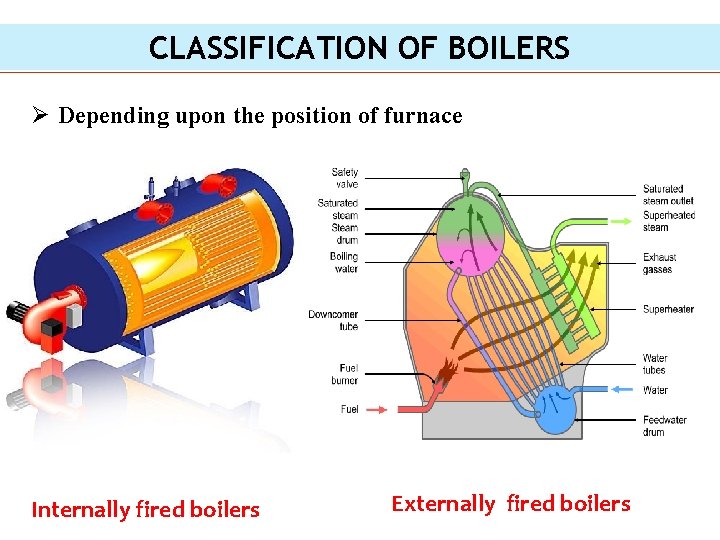
CLASSIFICATION OF BOILERS Ø Depending upon the position of furnace Internally fired boilers Externally fired boilers
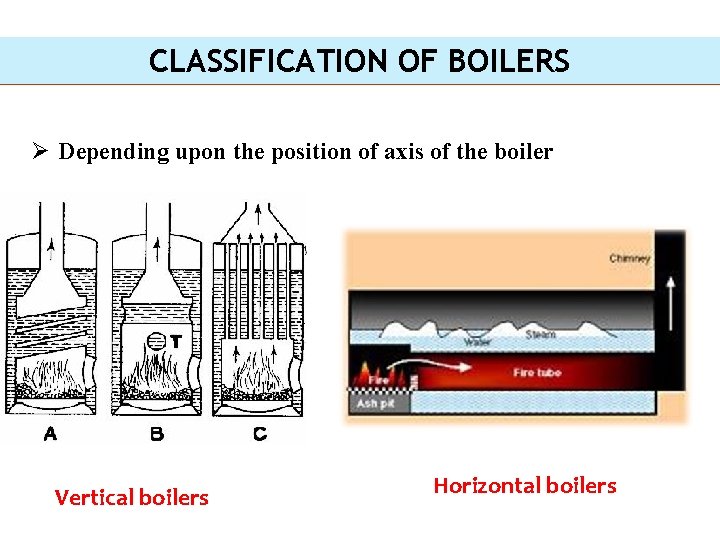
CLASSIFICATION OF BOILERS Ø Depending upon the position of axis of the boiler Vertical boilers Horizontal boilers
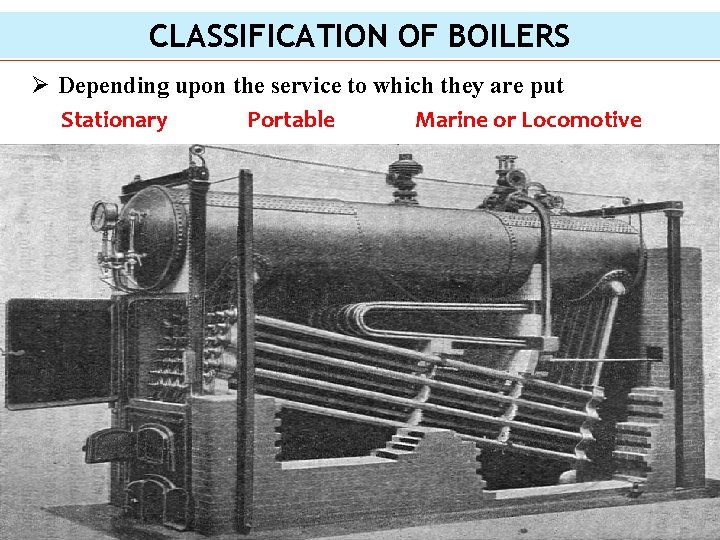
CLASSIFICATION OF BOILERS Ø Depending upon the service to which they are put Stationary Portable Marine or Locomotive
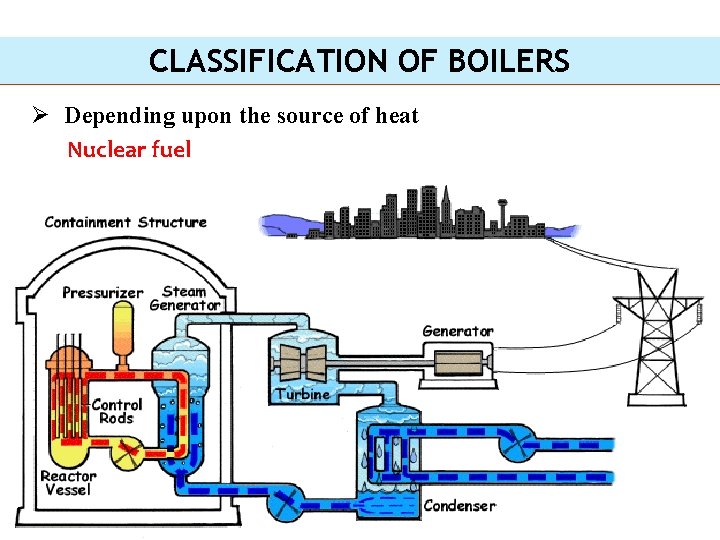
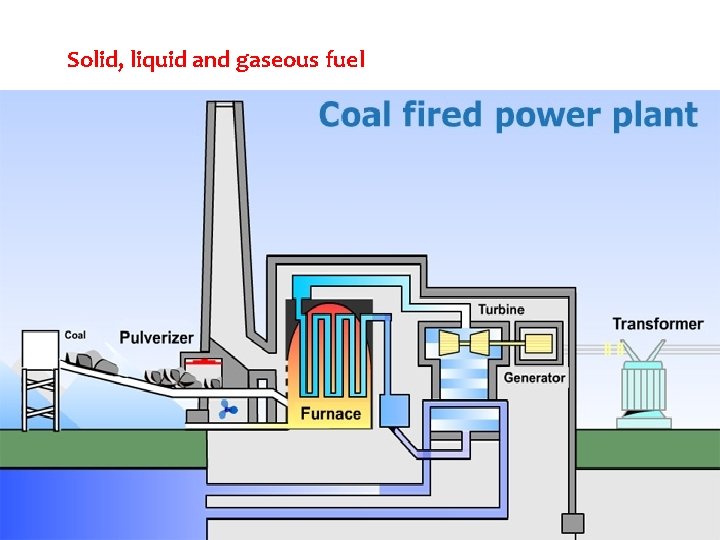
CLASSIFICATION OF BOILERS Ø Depending upon the source of heat Nuclear fuel
Solid, liquid and gaseous fuel
To Chimney Oil Burner
Solid, liquid and gaseous fuel
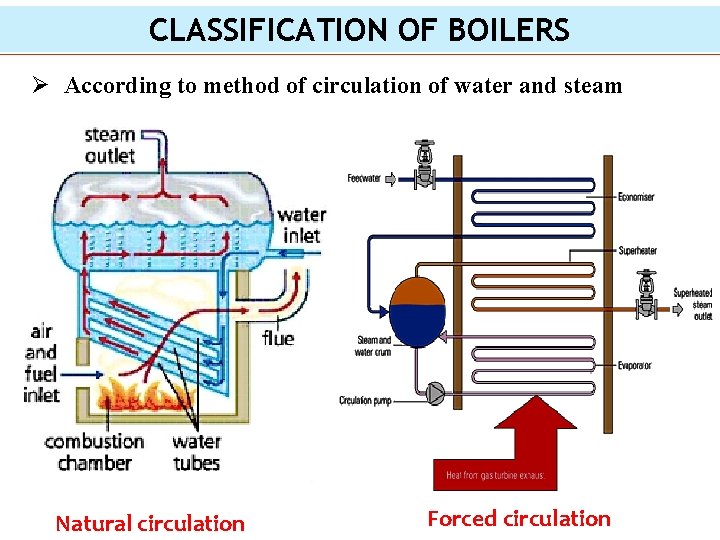
CLASSIFICATION OF BOILERS Ø According to method of circulation of water and steam Natural circulation Forced circulation
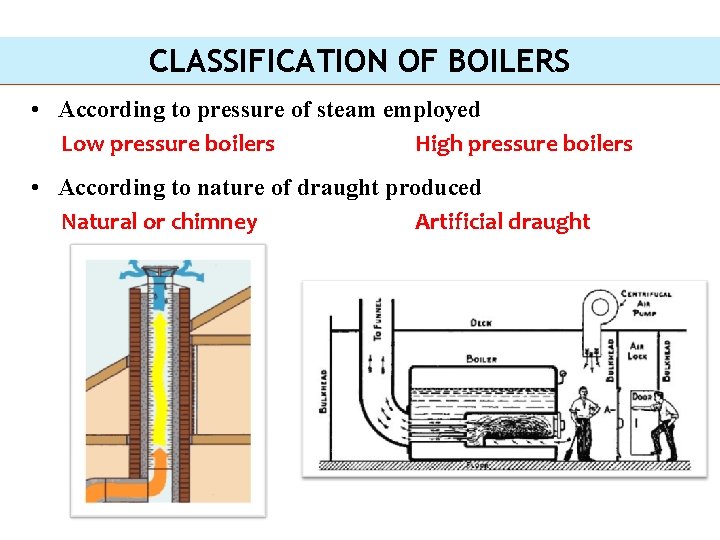
CLASSIFICATION OF BOILERS • According to pressure of steam employed Low pressure boilers High pressure boilers • According to nature of draught produced Natural or chimney Artificial draught
SELECTION OF A BOILER 1. Working pressure and quality of steam required. 2. Steam generation rate. 3. Floor area available. 4. Accessibility for repair and inspection. 5. Comparative initial cost. 6. Erection facilities. 7. The fuel and water available. 8. Operating and maintenance cost.
REQUIREMENTS OF A GOOD BOILER 1. The boiler should produce the maximum weight of the required quality of steam at minimum expenses. 2. It should be absolutely reliable. 3. It should be light in space & occupy minimum space. 4. It should start quickly. 5. Should have easy access for repairs and maintenance. 6. The installation should be simple. 7. It should be efficient.
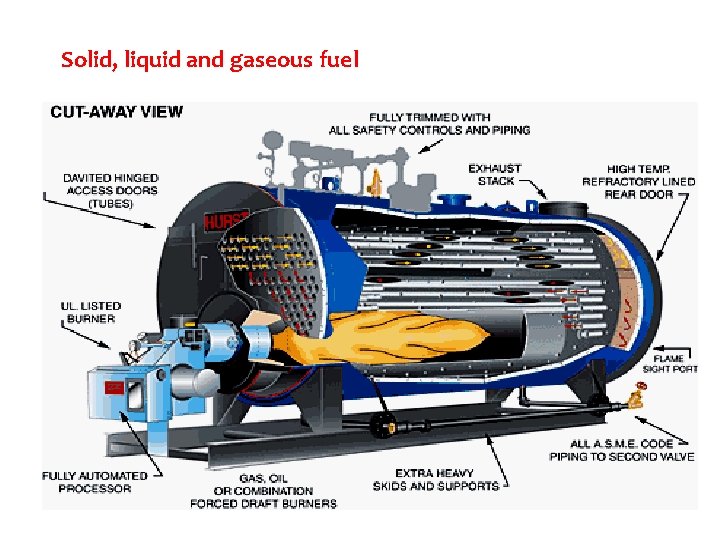
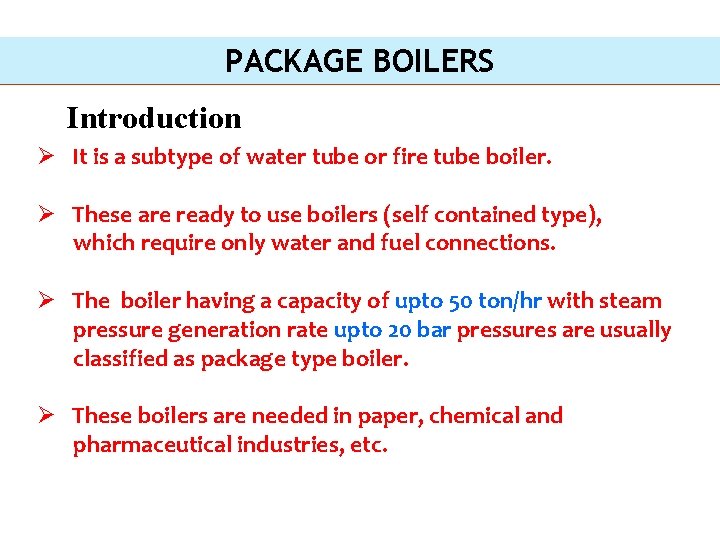
PACKAGE BOILERS Introduction Ø It is a subtype of water tube or fire tube boiler. Ø These are ready to use boilers (self contained type), which require only water and fuel connections. Ø The boiler having a capacity of upto 50 ton/hr with steam pressure generation rate upto 20 bar pressures are usually classified as package type boiler. Ø These boilers are needed in paper, chemical and pharmaceutical industries, etc.
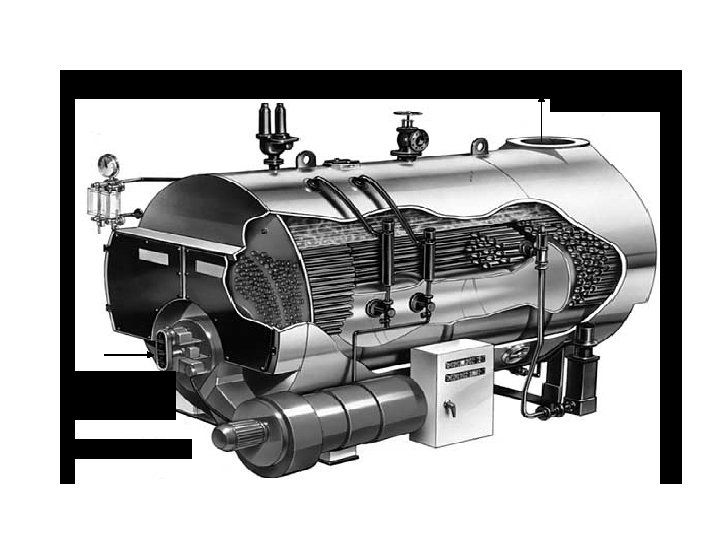
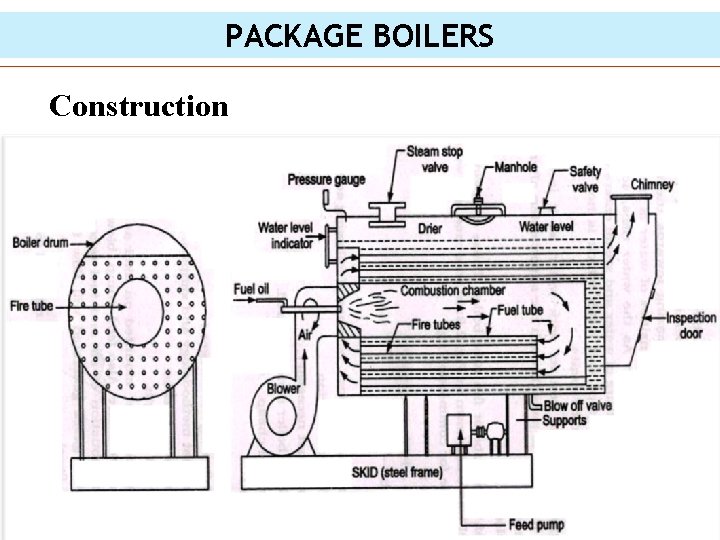
PACKAGE BOILERS Construction
PACKAGE BOILERS Ø It is an internally fired fire tube boiler. Ø It has necessary provision for fuel and water connections. Ø The air needed for burning is supplied by a blower. Ø The smoke tube is surrounded by water for heat exchange. Ø The flue gases travel towards the chimney & are exhausted. Ø In order to avoid heat losses the boiler shell is insulated. Ø All necessary mountings & accessories are installed.
PACKAGE BOILERS Advantages Ø They are highly compact & occupy less space. Ø They are efficient and reliable. Ø A short chimney is provided for disposal of flue gas. Ø They can be commissioned only by making water, fuel and chimney connections. Ø They are easy to operate and maintain.