
Unit IV Metamorphosis Metamorphosis There are many different
- Slides: 9
Unit IV Metamorphosis
Metamorphosis There are many different definitions for the term Metamorphosis, scientific and interpretative, but the word generally refers to a change. We should consider the following definitions, 1. a complete change of form, structure, or substance, as transformation by magic or witchcraft. 2. any complete change in appearance, character, circumstances, etc. We will be looking at the changes that occur, and result from various mythologies across the world (and time periods).
What are myths? Myths are ancient stories that teach some sort of moral lesson, or they can explain how something came to be. Characters is many myths can often be metaphorical. Metaphor: A figure of speech in which an implicit comparison is made between two unlike things that actually have something in common
How to read mythology; what should we look for? The moral lesson: Just what is the story trying to tell us? An explanation: Does it try to explain how something came to be? If it does, what is thing? Connections or relevance: Does this myth connect to anything in in modern day or our own lives?
Myths often pose the following questions to a reader…. . Who am I? What is the nature of the universe in which I live? How much control do I have over my own life? What must I do in order to survive? How can I lead a satisfying life? How can I balance my desires with responsibility in life? How can I make peace with the inevitable?
More on myths…. Myths often symbolize human experience and embody the spiritual values of a culture. Myths are an important way to understand ourselves and our connections to other people. They can often explain the relationships between cultures. Symbolism: The practice of representing things by means of symbols or of attributing symbolic meanings or significance to objects, events, or relationships.
The Hero myth (think of the hero archetype from Unit I) Hero myths often portray a hero that embodies all of the things that a culture wants us to be. Traditionally a hero is brave, honest, strong, attractive, intelligent, etc. These are all traits that are pushed upon us. Just think of Hollywood, and how each celebrity has a persona. Persona: The role that one assumes or displays in public or society; one's public image or personality, as distinguished from the inner self
Mythology in modern culture Just think of all the American cities that originate from mythology. There are dozens of American cities that sport names such as Athens, Troy, Sparta, Echo, Olympia, etc. . . All borrowed from Greek mythology.
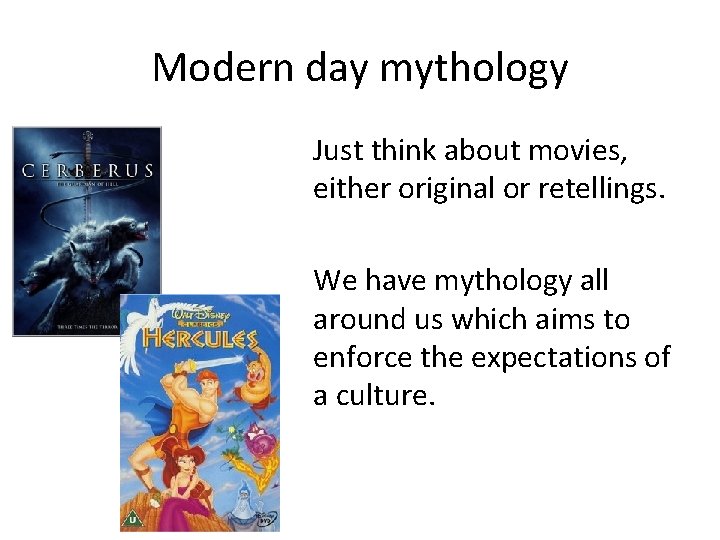
Modern day mythology Just think about movies, either original or retellings. We have mythology all around us which aims to enforce the expectations of a culture.