
Unit Inputs Systems and System Properties August 30


- Slides: 17
Unit Inputs, Systems, and System Properties August 30, 2000 EE 64, Section 1 ©Michael R. Gustafson II Pratt School of Engineering 1
Last Time • • Definition of a signal Signal energy and power Even and odd signals Even and odd parts of a signal 2
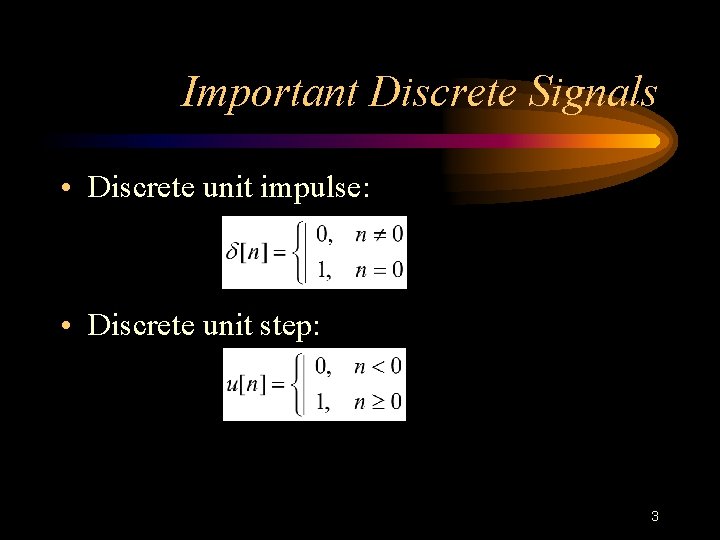
Important Discrete Signals • Discrete unit impulse: • Discrete unit step: 3
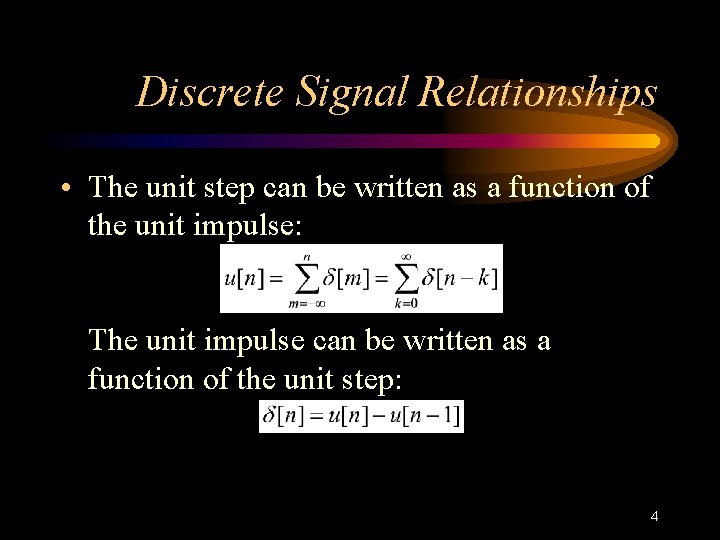
Discrete Signal Relationships • The unit step can be written as a function of the unit impulse: The unit impulse can be written as a function of the unit step: 4
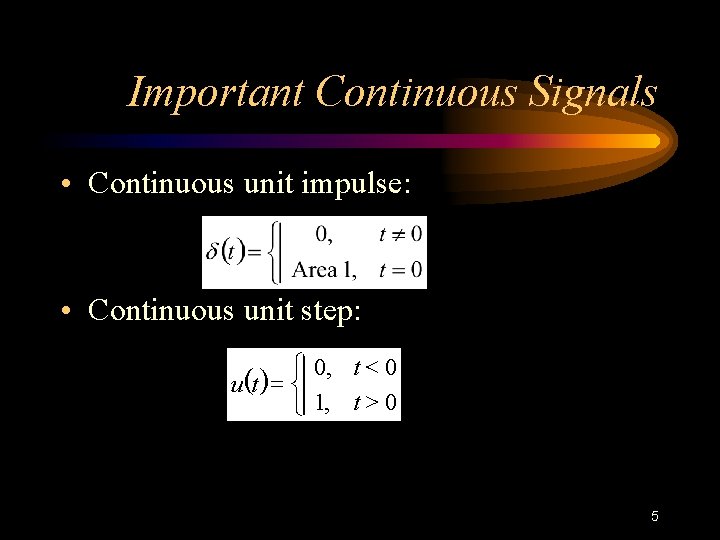
Important Continuous Signals • Continuous unit impulse: • Continuous unit step: ì 0, t < 0 u (t ) = í î 1, t > 0 5
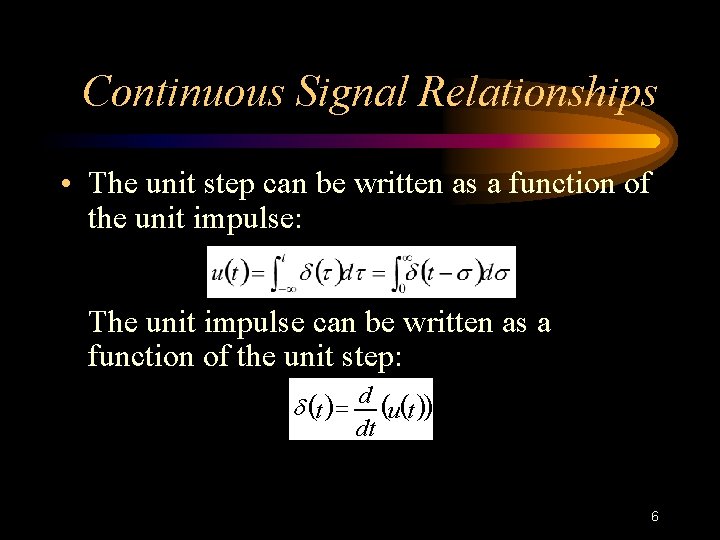
Continuous Signal Relationships • The unit step can be written as a function of the unit impulse: The unit impulse can be written as a function of the unit step: d (t ) = d (u(t )) dt 6
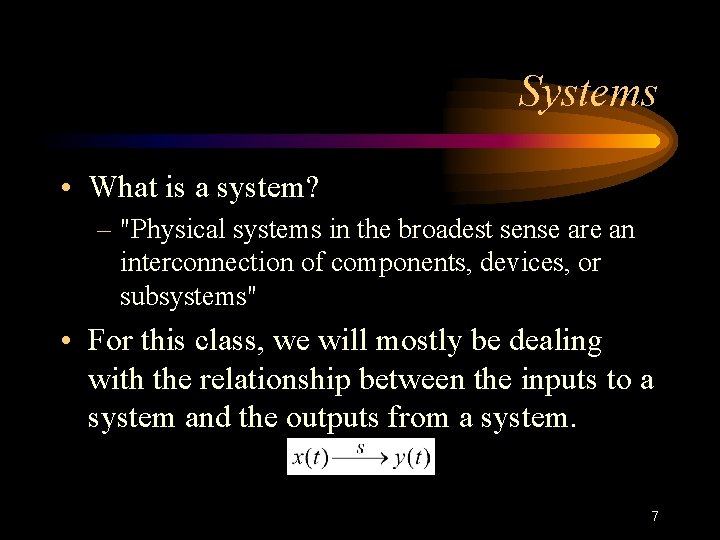
Systems • What is a system? – "Physical systems in the broadest sense are an interconnection of components, devices, or subsystems" • For this class, we will mostly be dealing with the relationship between the inputs to a system and the outputs from a system. 7
System Properties • There are several system properties that describe how the inputs and outputs interact: – – – Linearity Time Invariance Memory Causality Stability Invertibility 8
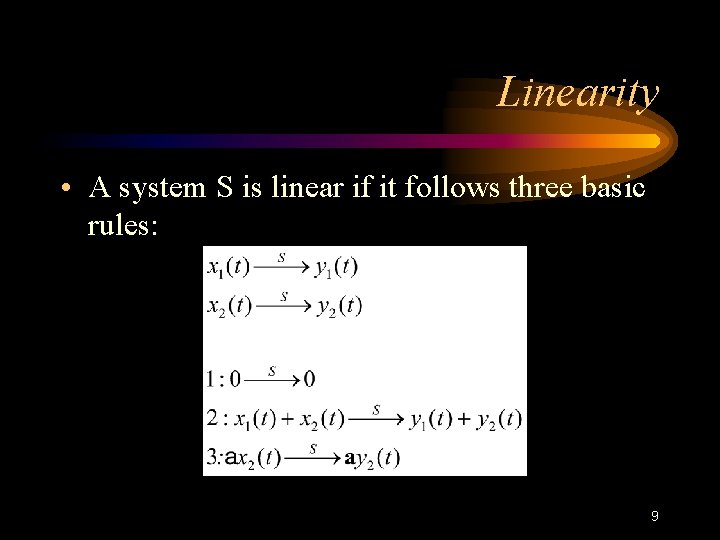
Linearity • A system S is linear if it follows three basic rules: 9
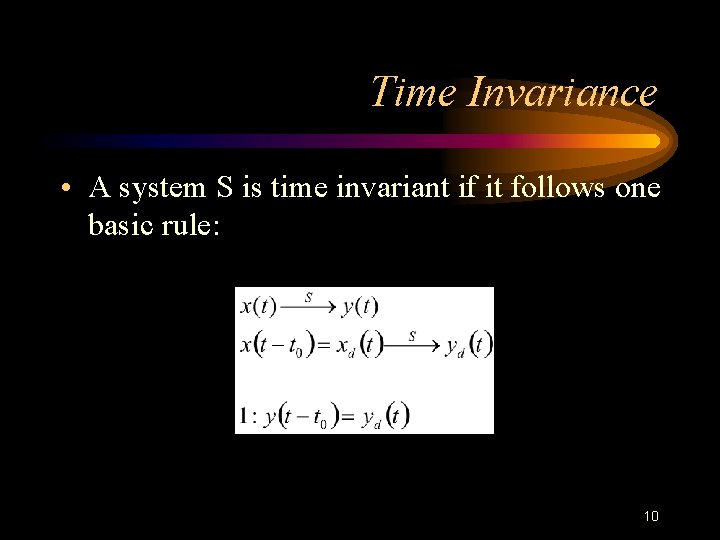
Time Invariance • A system S is time invariant if it follows one basic rule: 10
Other "Timing" Properties • Memoryless: a system S is memoryless if the output is dependent solely on the input at the present time. • Causal: a system S is causal if the output is dependent on the input at the present time or in the past but not in the future. – Can a physical system be non-causal? 11
Stability • A system S is stable if, for any bounded input, there is a bounded output. • Usually in this class, you will seek to disprove stability by example rather than to prove stability through rigorous arithmetic. 12
Invertibility • A system S is invertible if a distinct set of inputs leads to a distinct set of outputs. • Invertibility is not critical to this class -- but is very important for communications systems, especially encrypted ones. 13
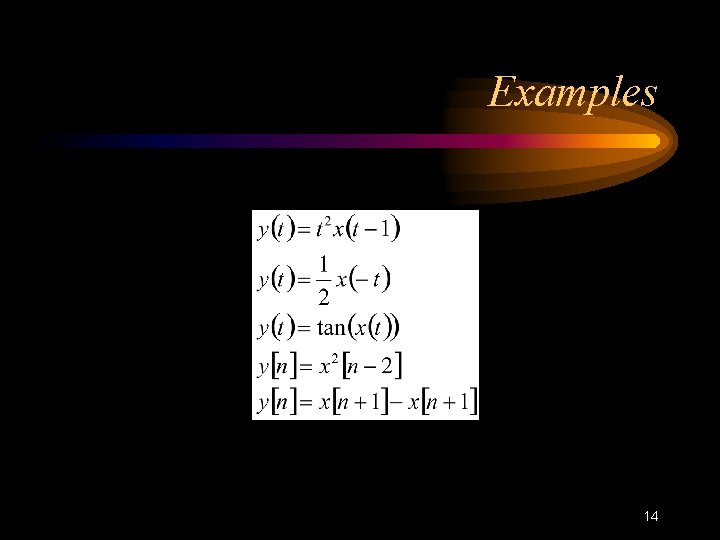
Examples 14
Assignment • Read Chapter 1 and skim Chapter 2 of OW. • Start the homework assignment. – The TA's will be available as listed in the email sent out last night 15
Next Time • Block diagram introduction • Review of Chapter 1 16
Questions ? 17