
UNIT II Respiratory system Respiratory system Asthma Chronic
- Slides: 17
UNIT II Respiratory system
• Respiratory system: – Asthma – Chronic obstructive airways diseases
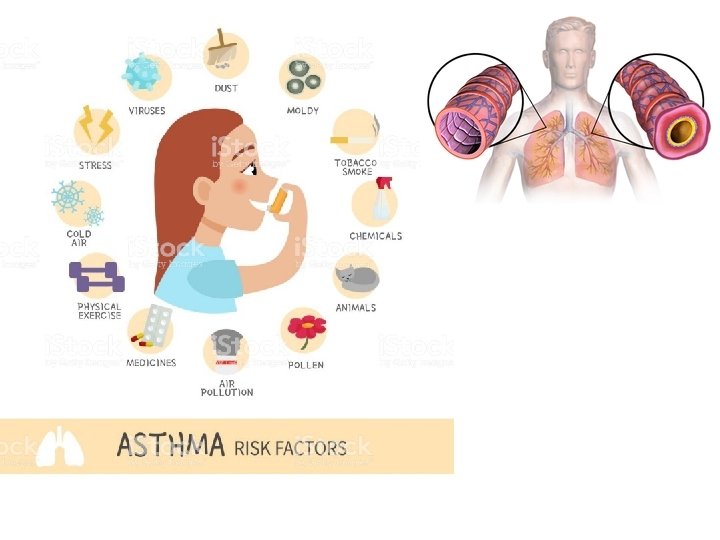
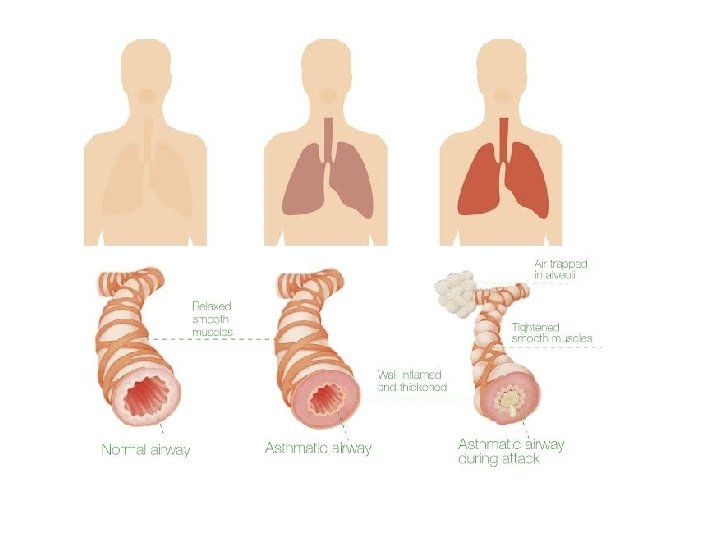
Bronchial Asthma • Disease of airways • Characterised by increased responsiveness of the tracheobronchial tree to a variety of stimuli resulting in widespread spasmodic narrowing of air passages – may be relieved spontaneously or by therapy. • Episodic disease manifested clinically by dyspnoea, cough and wheezing. • Occurs at all ages, nearly 50% of cases develop it before age of 10 years. • In adults, both sexes affected equally • In children, 2: 1 male female ratio.
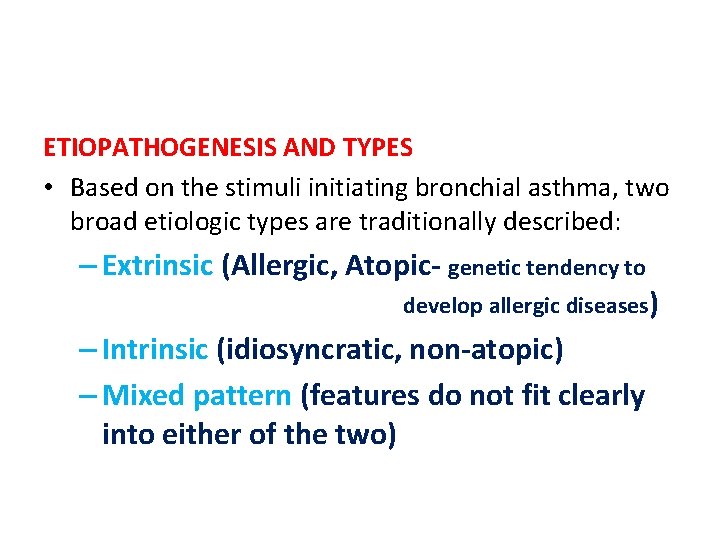
ETIOPATHOGENESIS AND TYPES • Based on the stimuli initiating bronchial asthma, two broad etiologic types are traditionally described: – Extrinsic (Allergic, Atopic- genetic tendency to develop allergic diseases) – Intrinsic (idiosyncratic, non-atopic) – Mixed pattern (features do not fit clearly into either of the two)
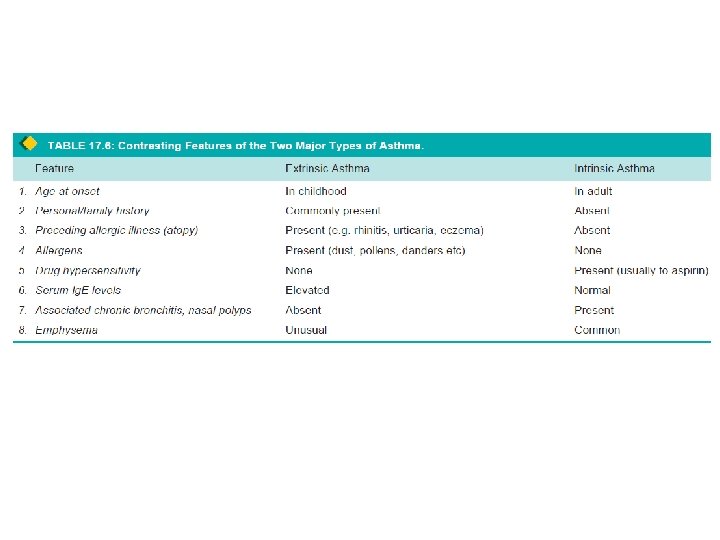
1. Extrinsic (atopic, allergic) asthma. most common • usually begins in childhood or in early adult life. • personal and/or family history of allergic diseases such as rhinitis, urticaria or infantile eczema. • Hypersensitivity to various extrinsic antigenic substances or ‘allergens’- causing ill-effects by inhalation e. g. house dust, pollens, occupational asthma (fumes, gases and organic and chemical dusts) • Increased levels of Ig. E in the serum and • positive skin test with specific offending inhaled antigen – Ig. E-mediated type I hypersensitivity reaction – includes an ‘acute immediate response’ and a ‘late phase reaction’
• Acute immediate response: initiated by Ig. E-sensitised mast cells (tissue counterparts of circulating basophils) on mucosal surface. • Mast cells on degranulation release mediators like histamine, leukotrienes, prostaglandins, platelet activating factor and chemotactic factors for eosinophils and neutrophils. • net effects of these mediators are bronchoconstriction, oedema, mucus hypersecretion and accumulation of eosinophils and neutrophils.
• Late phase reaction: follows the acute immediate response and • responsible for the prolonged manifestations of asthma. • caused by excessive mobilisation of blood leucocytes that include basophils besides eosinophils and neutrophils. • result in further release of mediators which accentuate above-mentioned effects. • inflammatory injury is caused by neutrophils and by major basic protein (MBP) of eosinophils.
2. Intrinsic (idiosyncratic, non-atopic) asthma. • This type of asthma develops later in adult life with negative personal or family history of allergy, negative skin test and normal serum levels of Ig. E. • Most of these patients develop typical symptomcomplex after an upper respiratory tract infection by viruses • Associated nasal polypi and chronic bronchitis • no recognisable allergens but about 10% of patients become hypersensitive to drugs, most notably to small doses of aspirin (aspirin-sensitive asthma).
3. Mixed type. • do not clearly fit into either of the above two categories and have mixed features of both. • Those patients who develop asthma in early life have strong allergic component, those who develop disease late, tend to be non-allergic. • Either type of asthma can be precipitated by cold, exercise and emotional stress.
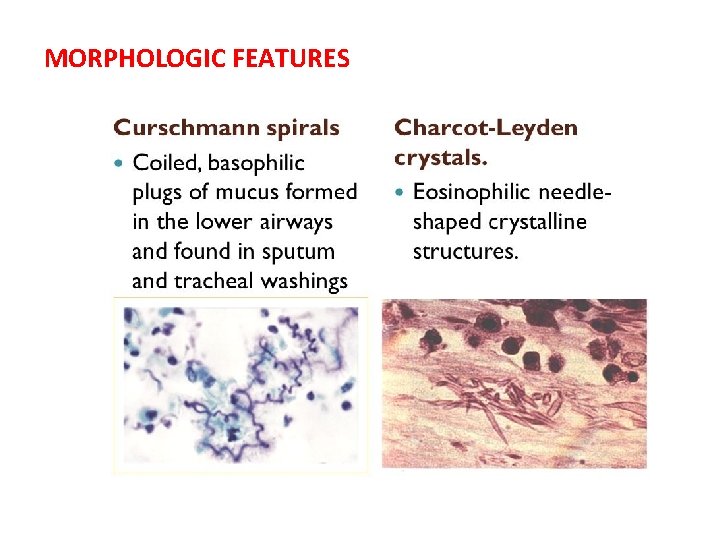
CLINICAL FEATURES. • Asthmatic patients suffer from episodes of acute exacerbations interspersed with symptom free periods. • Characteristic clinical features are paroxysms of dyspnoea, cough and wheezing • Most attacks typically last for a few minutes to hours. • If attacks occur continuously -may result in more serious condition called status asthmaticus. • clinical diagnosis - demonstration of circulation eosinophilia and sputum, demonstration of Curschmann’s spirals and Charcot-Leyden crystals. • More chronic cases may develop cor pulmonale.
MORPHOLOGIC FEATURES • Pathologic changes are similar in both major types of asthma • Grossly, the lungs are over distended due to over-inflation. • Cut surface shows characteristic occlusion of the bronchi and bronchioles by viscid mucus plugs • Microscopically, the following changes are observed : 1. mucus plugs contain normal or degenerated respiratory epithelium forming twisted strips called Curschmann’s spirals 2. sputum usually contains numerous eosinophils and diamond-shaped crystals derived from eosinophils called Charcot-Leyden crystals
MORPHOLOGIC FEATURES
3. bronchial wall shows thickened basement membrane of the bronchial epithelium, submucosal oedema and inflammatory infiltrate consisting of lymphocytes and plasma cells with many eosinophils 4. hypertrophy of submucosal glands as well as of the bronchial smooth muscle. 5. Changes of bronchitis and emphysema
• Reference: Robbins, Basic Pathology by Elsevier