
Unit II Behavior What controls it and how
Unit II Behavior: What controls it and how to change it
General Information Ø What is behavior? Any observable act Ø What are the two kinds of behavior? 1. Involuntary –reflex behavior 2. Voluntary –behaviors you select or choose
Normal vs Abnormal behavior Ø Normal behavior –any act that agrees with self concept and is not designed to hurt self or others physically or emotionally Ø Abnormal is the opposite of normal behavior
Abnormal Ø What to look for when evaluating abnormal behaviors?
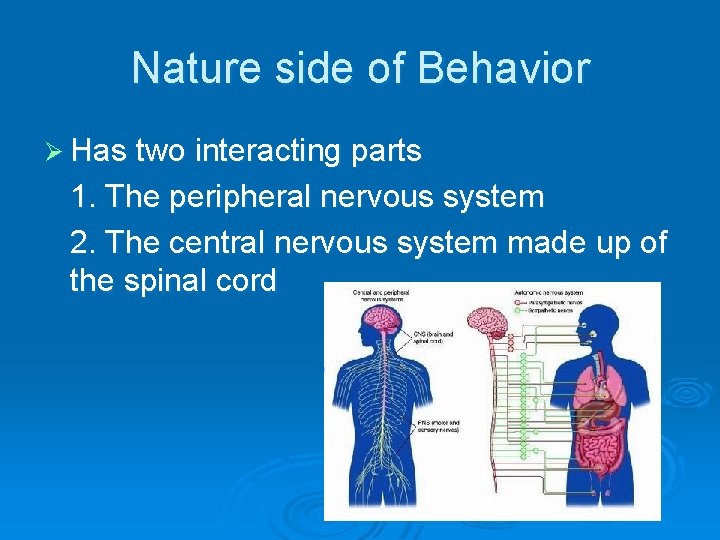
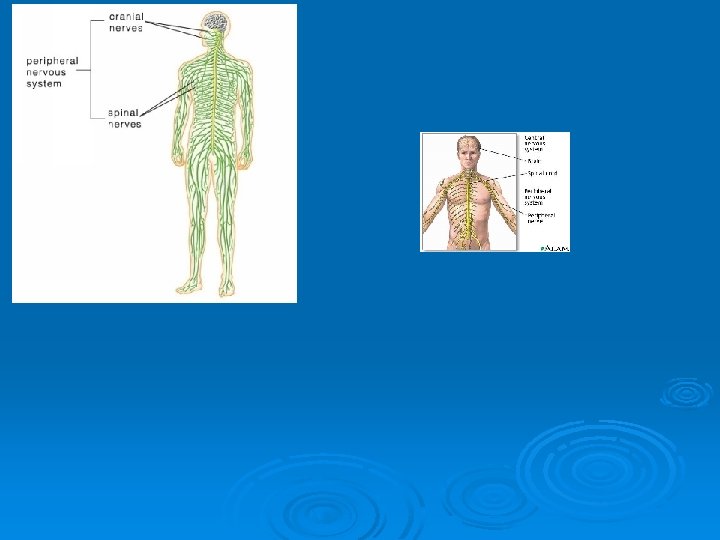
Nature side of Behavior Ø Has two interacting parts 1. The peripheral nervous system 2. The central nervous system made up of the spinal cord
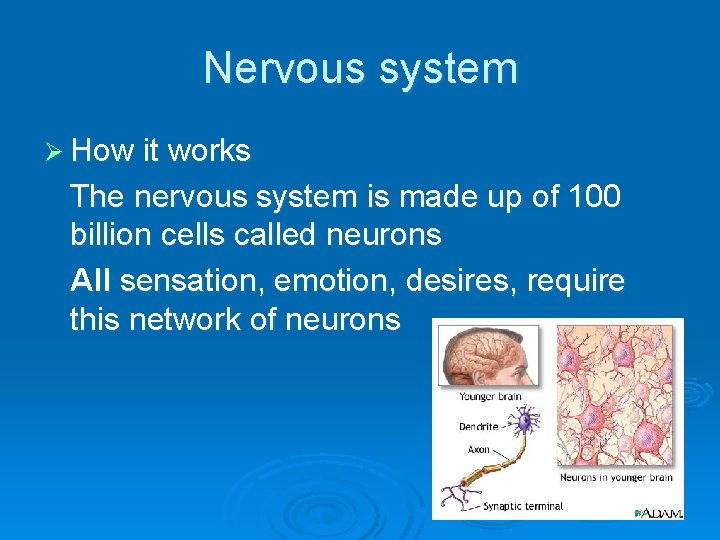
Nervous system Ø How it works The nervous system is made up of 100 billion cells called neurons All sensation, emotion, desires, require this network of neurons
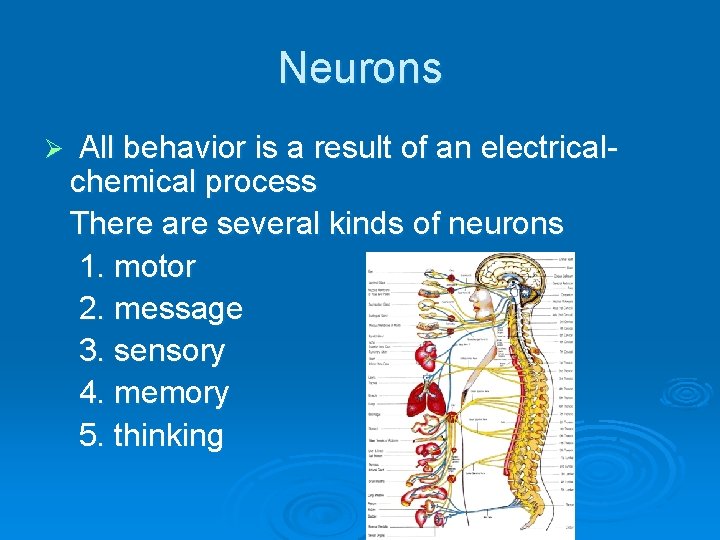
Neurons Ø All behavior is a result of an electricalchemical process There are several kinds of neurons 1. motor 2. message 3. sensory 4. memory 5. thinking
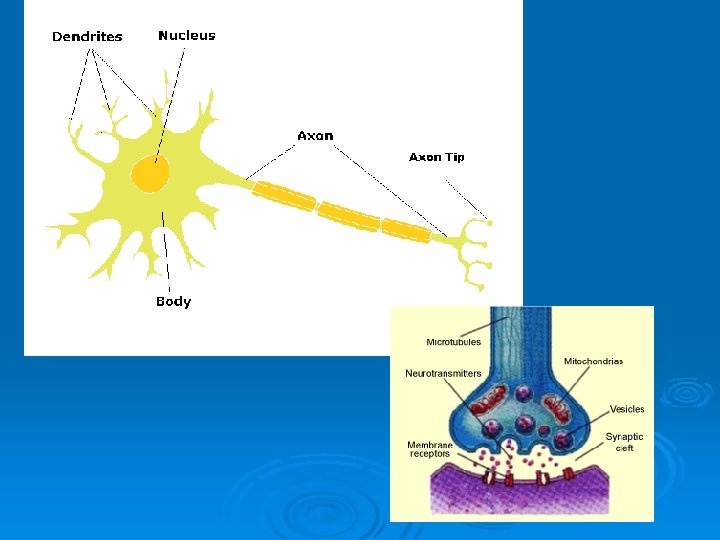
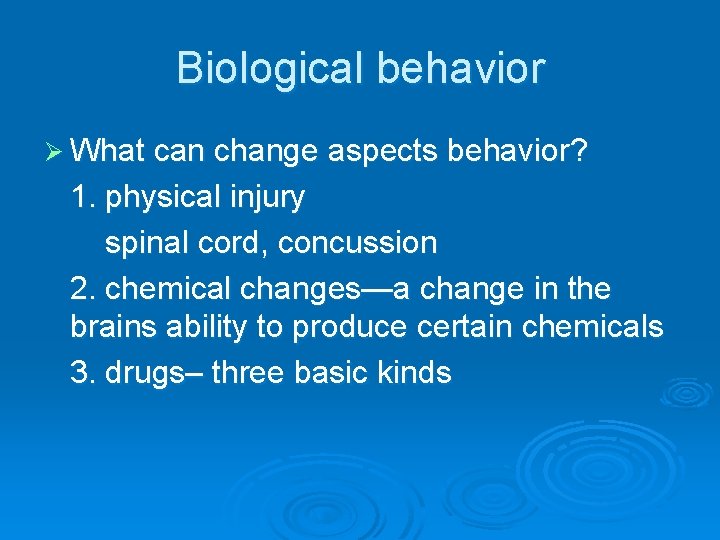
Neurons Ø Parts of neurons 1. Dendrites- The part of the neuron that receives the chemical message and turns it into an electrical signal. 2. Neuron sends signal to the correct axon 3. Axon is the part that sends a chemical signal to the next dendrite 4. Neurotransmitters is the chemical that crosses the synapse.
Biological behavior Ø What can change aspects behavior? 1. physical injury spinal cord, concussion 2. chemical changes—a change in the brains ability to produce certain chemicals 3. drugs– three basic kinds
Biological behavior changes 1. depressants slows process 2. stimulants speeds up process 3. hallucinogens wild process
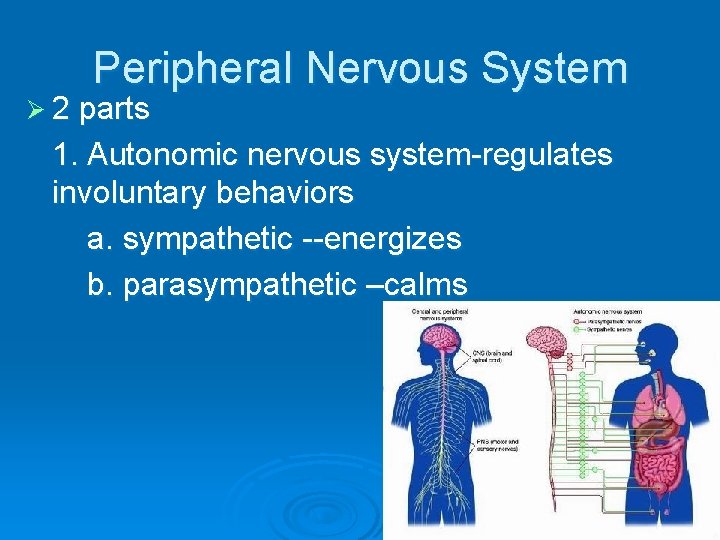
Peripheral Nervous System Ø 2 parts 1. Autonomic nervous system-regulates involuntary behaviors a. sympathetic --energizes b. parasympathetic –calms
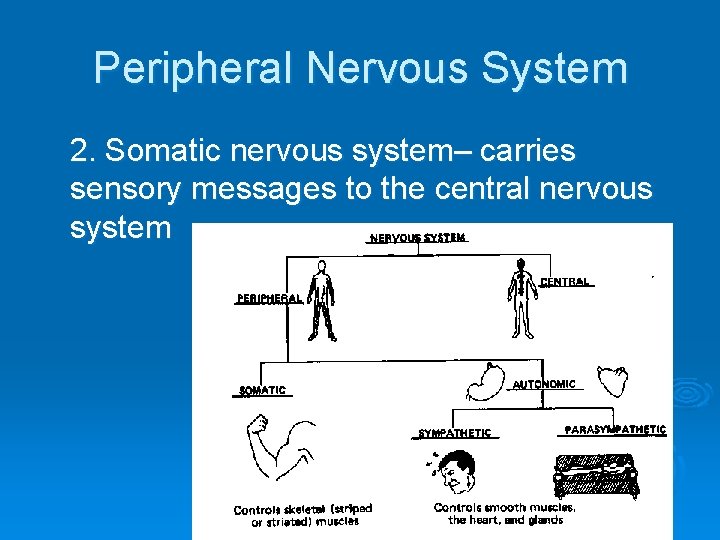
Peripheral Nervous System 2. Somatic nervous system– carries sensory messages to the central nervous system
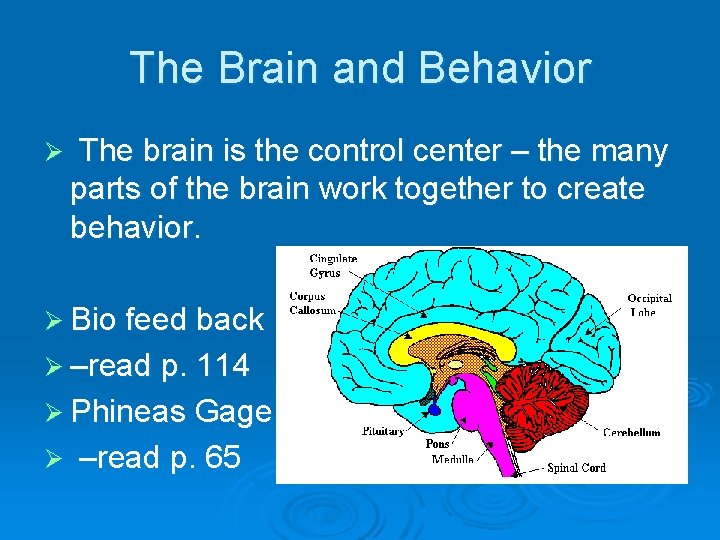
The Brain and Behavior Ø The brain is the control center – the many parts of the brain work together to create behavior. Ø Bio feed back Ø –read p. 114 Ø Phineas Gage Ø –read p. 65
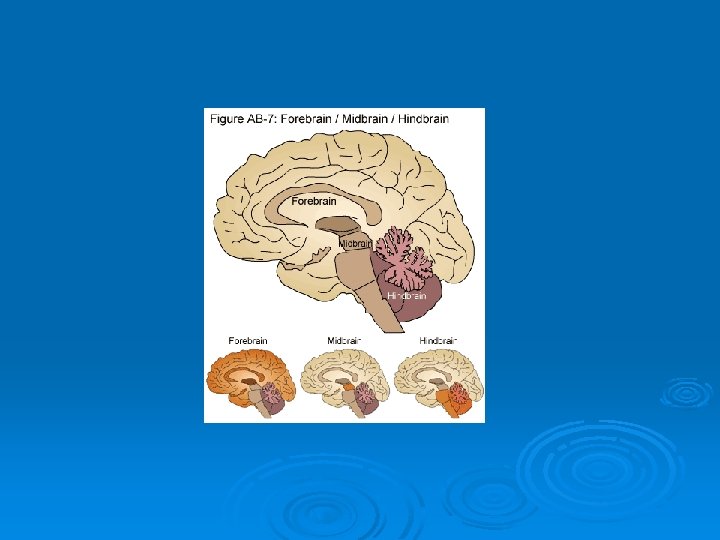
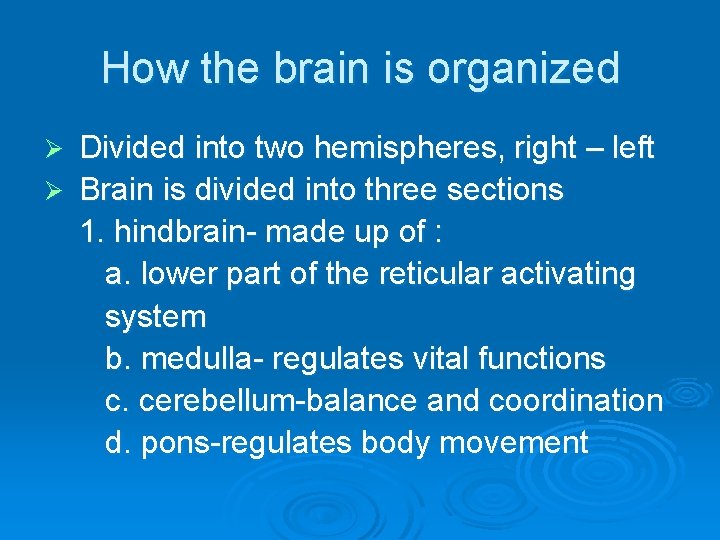
How the brain is organized Divided into two hemispheres, right – left Ø Brain is divided into three sections 1. hindbrain- made up of : a. lower part of the reticular activating system b. medulla- regulates vital functions c. cerebellum-balance and coordination d. pons-regulates body movement Ø
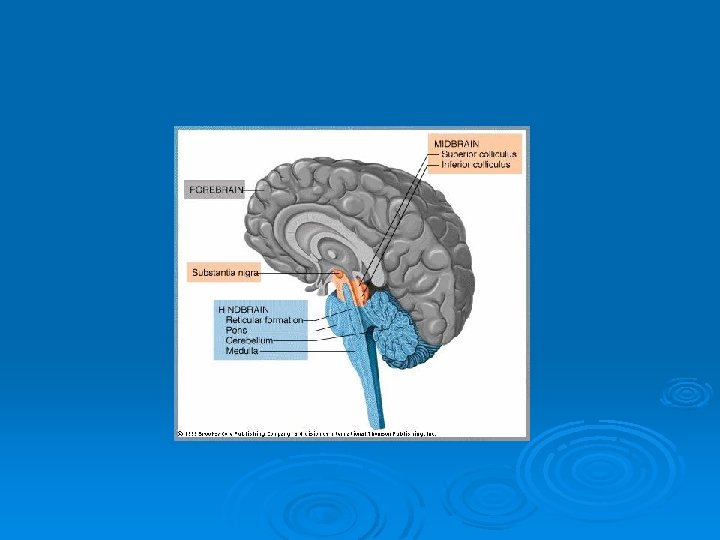
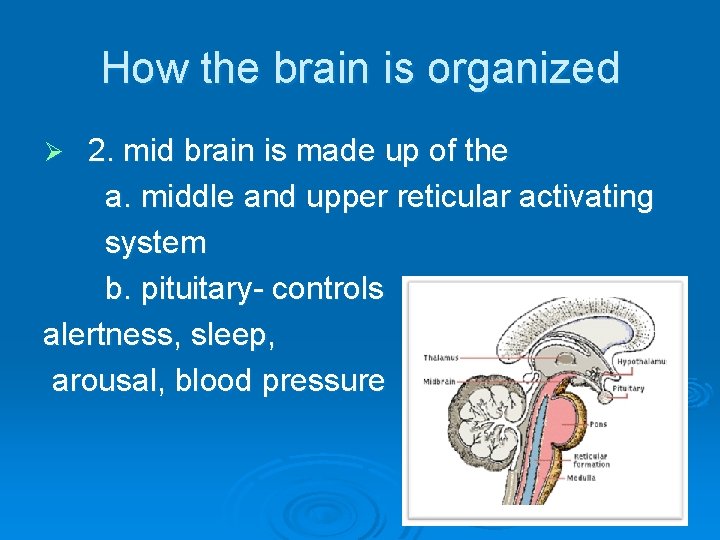
How the brain is organized 2. mid brain is made up of the a. middle and upper reticular activating system b. pituitary- controls alertness, sleep, arousal, blood pressure Ø
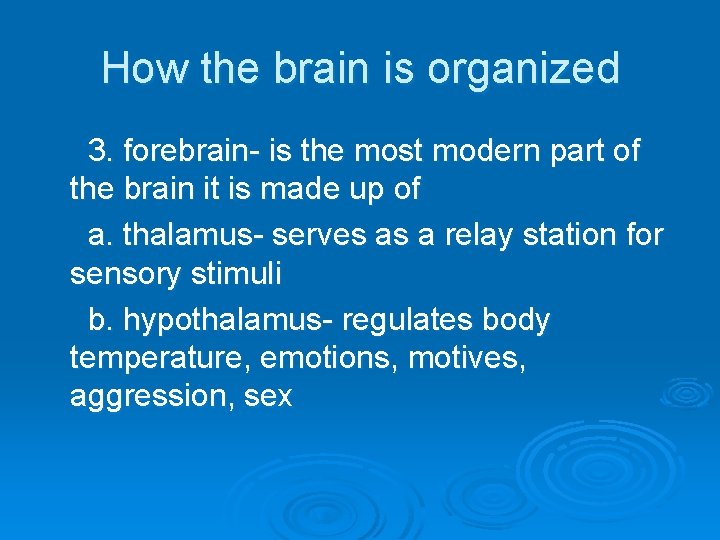
How the brain is organized 3. forebrain- is the most modern part of the brain it is made up of a. thalamus- serves as a relay station for sensory stimuli b. hypothalamus- regulates body temperature, emotions, motives, aggression, sex
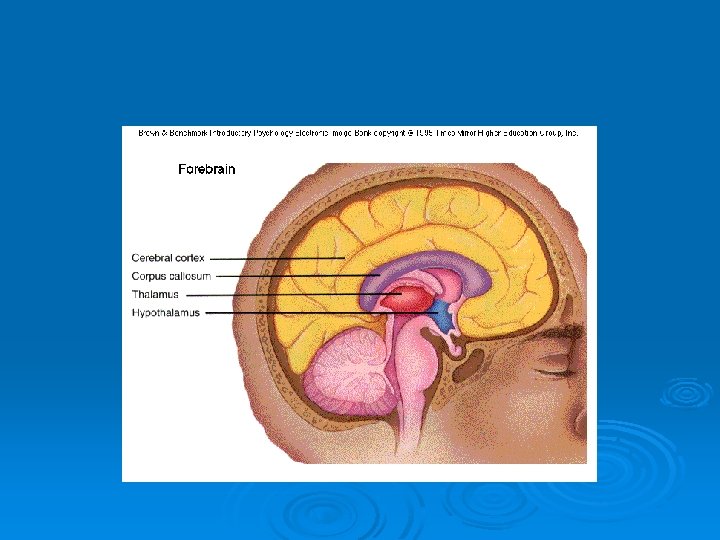
How the brain is organized c. limbic system –learning and memory emotions, sex, hunger d. cerebrum is connected to memory, language, emotions, perception, thinking
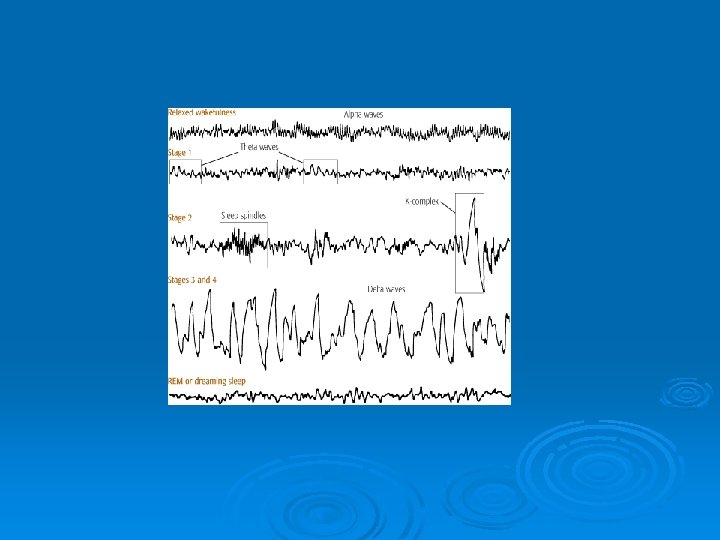
Brain Wave Patterns & Behaviors Ø 4 basic patterns 1. Beta 13 -28 -- alertness, learning, thinking 2. Alpha 8 -12– relaxation, daydreaming 3. Theta 4 -7– drowsiness, next to deep sleep 4. Delta 1 -3– deep sleep
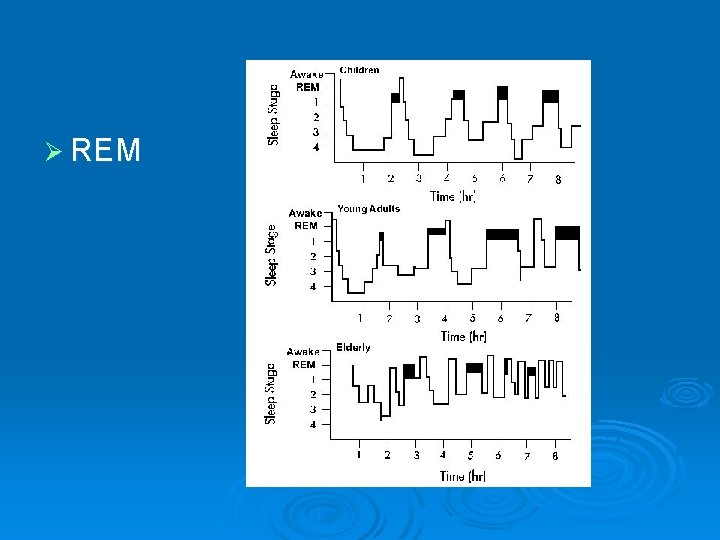
Ø REM
Brain Wave Patterns & Behaviors Ø REM Effects of loss of sleep and what can cause it. Ø Dreams Ø
Glands and Behavior Ø 2 kinds 1. Exocrine glands- secrete products ex. ? Theses glands may influence behaviors but will not alter behavior
Glands and Behavior 2. Endocrine glands –produce hormones directly into the blood stream ex. –adrenal This glands can alter behavior Biofeedback
The Nurture Side of Behavior Ø Learning is achieved through experience. Ø How are behaviors learned?
1. Classical conditioning– is a form of learning in response to an outside stimuli that involves automatic (not learned) or involuntary behaviors ---Read P. 336 –give your on opinion on which is right --Read p. 134 little Albert
Little Albert Ø 1. What were they trying accomplish in this study and what method did they use? Ø 2. Why is it unethical? Ø 3. Why is it important today? Ø 4. Where can the results of this study lead to future uses? Ø On 4. you can discuss the answer before writing it down
Learning Theory Three major school of Learning Theory 1. Classical Conditioning: I. Pavlov, J. Watson 2. Operant Conditioning: B. F. Skinner 3. Observational Learning: A. Bandura
Learning Theory Ø Major Assumption: All human behavior is the result of learning processes, as the organism responds to stimuli in its environment
Classical Conditioning Ø Key terms: 1. 2. 3. Stimulus: a physical event capable of affecting behavior Response: a behavioral reaction to stimulus Conditioning: the repeated pairing of stimuli to obtain a specific response
Classical Conditioning Ø Pavlov’s Classic Experiment: 1. Unconditioned Stimulus (UCS): naturally elicits a desired response 2. Unconditioned Response (UCR): Elicited by an unconditioned stimulus 3. Conditioned Stimulus (CS): Neutral until repeatedly paired with UCS 4. Conditioned Response (CR): Response to a conditioned stimulus
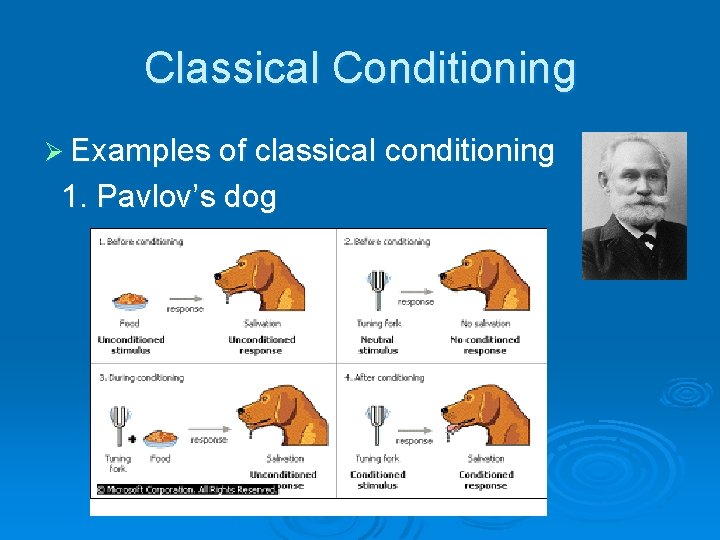
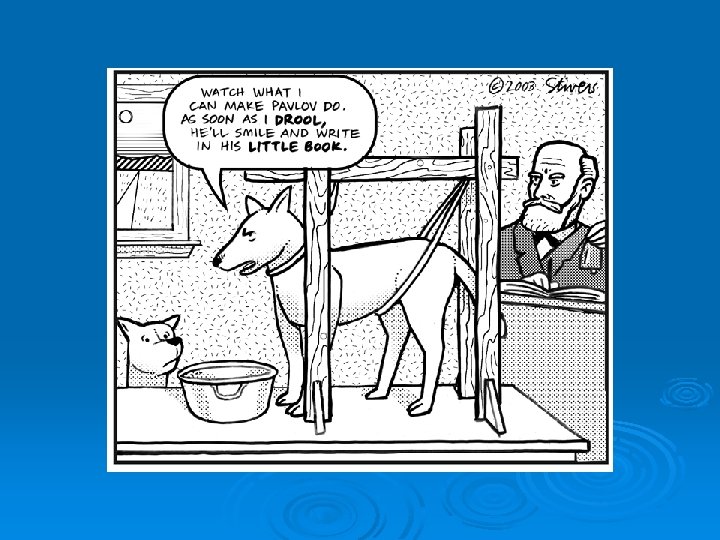
Classical Conditioning Ø Examples of classical conditioning 1. Pavlov’s dog
Basic Principles of Classical Conditioning 1. 2. 3. 4. 5. Acquisition: CR elicited by pairing UCS with CS Extinction: CR ceases after UCS & CS are no longer paired Spontaneous Recovery: Return of CR following extinction Stimulus Generalization: Similar stimuli to a CS elicit a CR Stimulus Discrimination: Differentiation between similar stimuli
Ø Avoidance conditioning or taste aversion 2. chili supper (avoidance) us--chili ur--ate chili got sick cs--chili (smell, word, taste) cr--didn’t feel well or won’t eat
Classical conditioning cont. 3. Involuntary behaviors can be learned and involuntary behaviors can be reduced to extinct to the same stimuli. Ex. Lightening storm us-lightening ---- ur-fear cs(camera’s picture)+us – ur+cr(pictures) Repeat cs + cr ---- cr (pictures/no fear)
Classical conditioning cont. Conclusions 1. Classical conditioning can solve specific problems 2. Involuntary responses can become extinct. 3. Extinct responses may reoccur. 4. Responses to stimuli can be generalized Ø
Classical conditioning. Cont. 5. Desensitization may help people adjust 6. Many behaviors are learned through classical conditioning. Commercial examples
Homework Watch 5 commercials For each: 1. Write down who the commercial is targeting. 2. What ways are used to get people to want their product? 3. List the CS, CR 4. Why should you buy this product, what ultimately are they selling you?
Operant Conditioning B. F. Skinner -Major Assumption: The probability that a given behavior (response) will occur depends upon the consequences that follow it. -Organisms learn to repeat behaviors that are associated with positive outcomes and avoid behaviors associated with negative outcomes.
Operant conditioning Terms used with Operant conditioning A. Reinforcers- Stimuli designed to increase the strength of a response 1. Positive reinforcement-Strengthens responses preceding them when applied (add) 2. Negative reinforcement-Strengthens responses preceding them when withdrawn. (take away)
Operant conditioning Basic Concepts B. Premack principle-Using a more preferred activity to reinforce a less preferred activity C. Punishment-designed to decrease the strength of a response. (positive or negative) D. Shaping-Reinforcing successive approximation of a desired response or behavior ---difference between negative reinforcement and punishment
Operant Conditioning Schedule of Reinforcement- designed to acquire and maintain responses 1. Continuous Reinforcement: A response is reinforced each time it is produced 2. Partial (Intermittent) Reinforcement: A response is reinforced based on a ratio or interval schedule
Schedule of Reinforcement Four types of partial reinforcement schedules 1. Fixed interval schedule: reinforcement occurs at a fixed time between responses 2. Variable interval schedule: reinforcement occurs at a variable time between responses 3. Fixed ratio schedule: reinforcement occurs at a fixed number of responses 4. Variable ratio schedule: reinforcement occurs at a variable number of responses
Operant conditioning cont. examples of Operant Conditioning Label these correctly 1. Skinners box-rat + bar pressing=food 2. Cleaning room=$ 3. Share toy= ice-cream 4. Help with siblings-reduce chores
Operant Conditioning cont. 5. Dog jump the fence-stun collar 6. Smoking cigarettes-pill to make you sick 7. Boy hitting sister-more attention to sister
Operant Conditioning cont. 8. Dog digs in yard-hit dog 9. Curfew violation-grounded 10. Touch things in store-slap hand 11. Talk back to your parents-lose phone Bribery!!
Operant Conditioning Ø Conclusions from Operant Conditioning 1. voluntary behaviors are learned as a consequence of behavior 2. positive reinforcements build behaviors 3. punishment leads to avoidance of punishment not building desired behaviors 4. learned behaviors can become extinct
Shaping Ø Shaping teaches complex behaviors using the same process as in O. C. -- examples teaching a dog to play fetch and circus acts.
Observational Learning Ø Learning through observing the world and people. Ø Bandura—Bobo doll experiment
Motives and behavior Ø Motive-is the reason for behavior-drive may be internal or external. Ø ----ALL behavior has a motive behind it. Ø There are 3 --physiological, mixed, psychological
Motives-physiological Ø Physiological –those motives that are mostly ruled by the body and the nervous system. Ø --example-hunger externalØ internal-
Motives-psychological Ø Psychological motives that are learned example –religion-- external Ø -- internal Ø
Motives-mixed Ø Mixed are motives that are both physiological and psychological. Ø example— Ø pain-- internalØ -- external-
Emotions and behavior Ø Ø 1. 2. 3. 4. Emotions are psychological feelings that affect your mind and body. How emotions affect mind. Stages Distort reality Panic attacks Phobias (phobias ws) Psychosomatic illness
Ø Review abnormal behaviors Ø Multiple personalities
Emotions cont. Ø How emotions affect the body 1. heart rate increases 2. blood pressure increases 3. sugar content in blood stream increases 4. digestion slows down 5. body produces adrenaline (fight or flight)
Emotions cont Ø How emotions can help you 1. prepares for action 2. helps you communicate 3. breaks monotony of life 4. helps you gain goals 5. helps you to self actualize
Emotions cont. Ø Negative emotions that are most dangerous 1. fear: an emotional response to danger 2. anxiety: is a diffused or unexplained fear 3. frustration: an emotional response when your goals are blocked
Negative emotions cont. 4. stress: an emotional response when one’s welfare or safety is at stake. 5. anger: an emotional response related to disagreement
Negative emotions cont. How to handle negative emotions. 1. Remember goals before you respond 2. Evaluate source 3. Form coping strategies (classical conditioning) 4. Release emotions do not bottle them up inside. 5. Do not displace (take emotions out on someone innocent)
- Slides: 69