
UNIT I History Timeline CHRONOLOGY Lustrum 5 Years





- Slides: 25
UNIT I
History Timeline
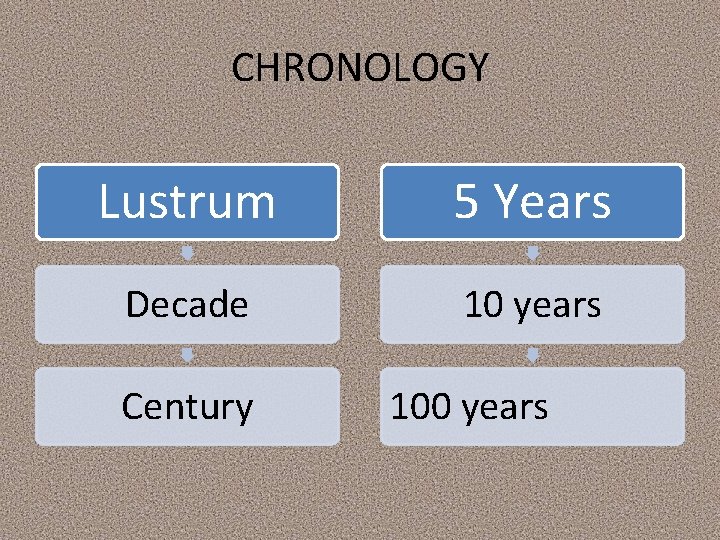
CHRONOLOGY Lustrum 5 Years Decade 10 years Century 100 years
Prehistory
Objectives • Recognise the evolution of the human species. • Identify the social, economic and cultural characteristics of the Paleolithic communities. • Organise the main periods of Prehistory in chronological order.
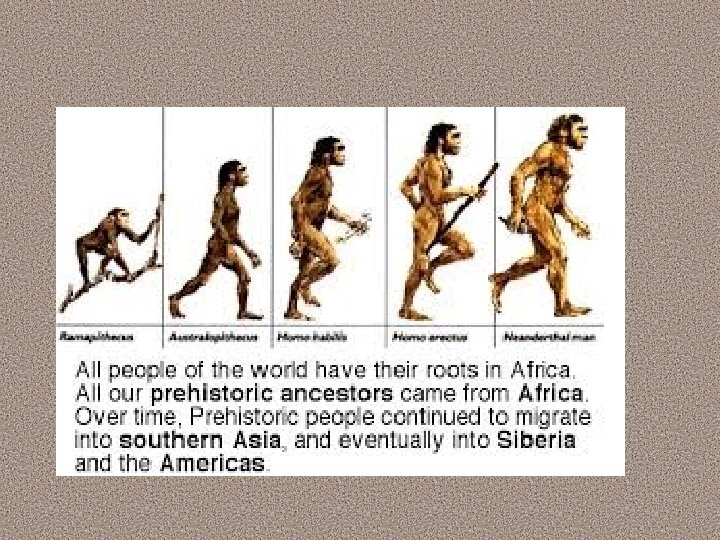
PROCESS OF HOMINISATION • Gorillas, chimpanzees and human beings belong to a group of mammals called primates. • Thet descend from a common ancestor.
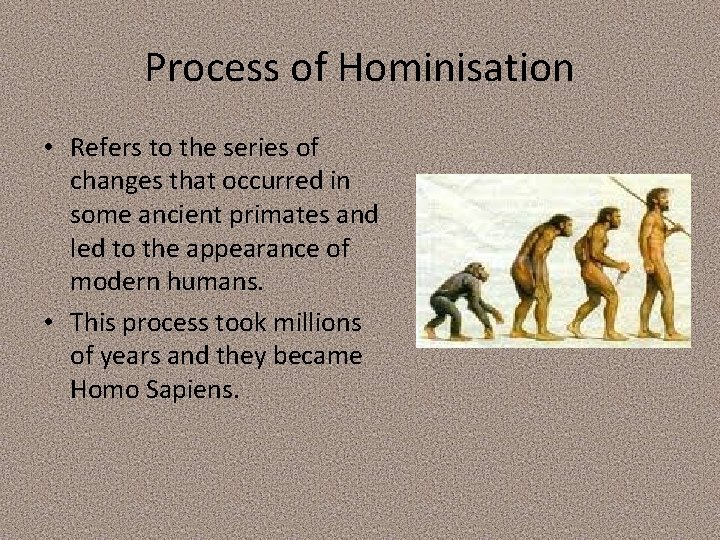
Process of Hominisation • Refers to the series of changes that occurred in some ancient primates and led to the appearance of modern humans. • This process took millions of years and they became Homo Sapiens.
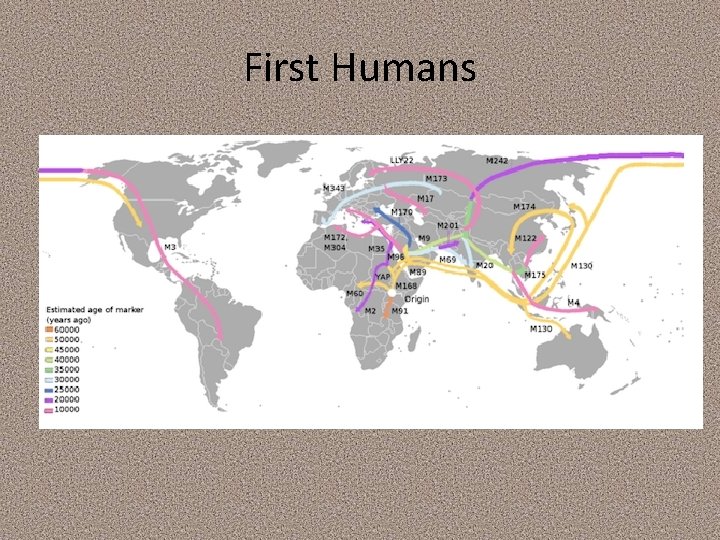
First Humans
Prehistory • Is the beginning of the history of the human race. • It began with the apperance of the first human beings and ended with the discovery of writing 3 500 bc. • Is divided into:
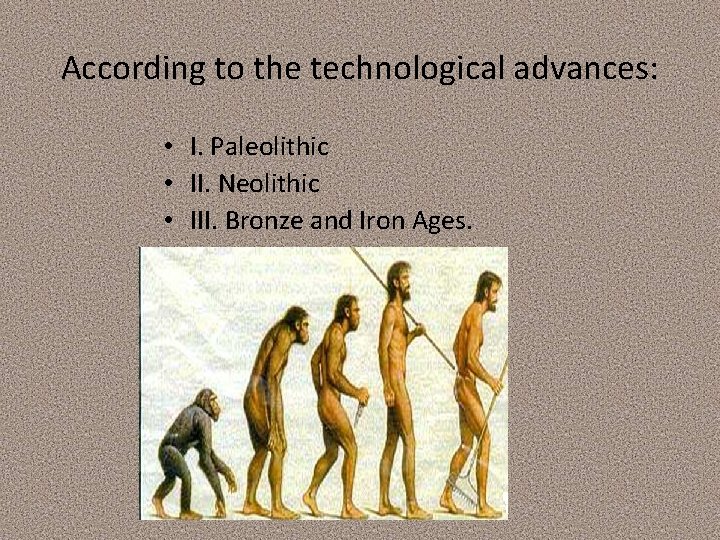
According to the technological advances: • I. Paleolithic • II. Neolithic • III. Bronze and Iron Ages.
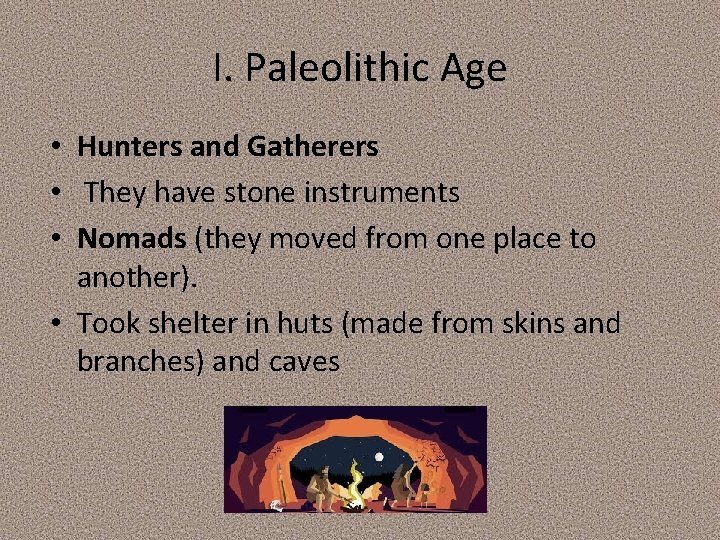
I. Paleolithic Age • Hunters and Gatherers • They have stone instruments • Nomads (they moved from one place to another). • Took shelter in huts (made from skins and branches) and caves
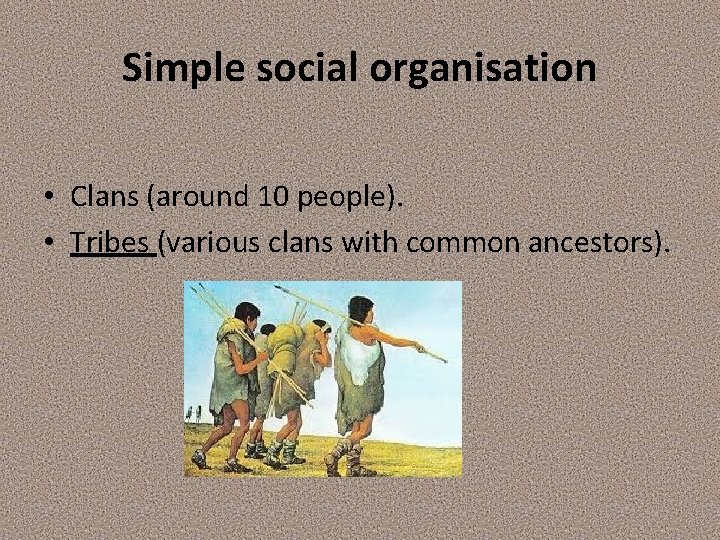
Simple social organisation • Clans (around 10 people). • Tribes (various clans with common ancestors).
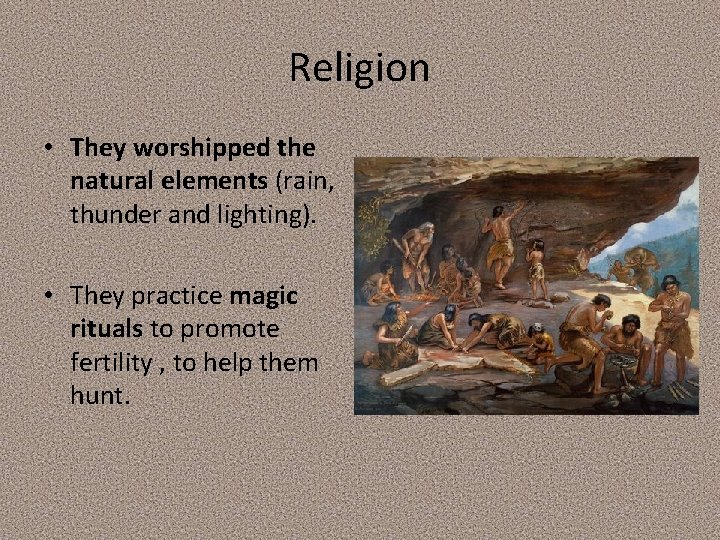
Religion • They worshipped the natural elements (rain, thunder and lighting). • They practice magic rituals to promote fertility , to help them hunt.
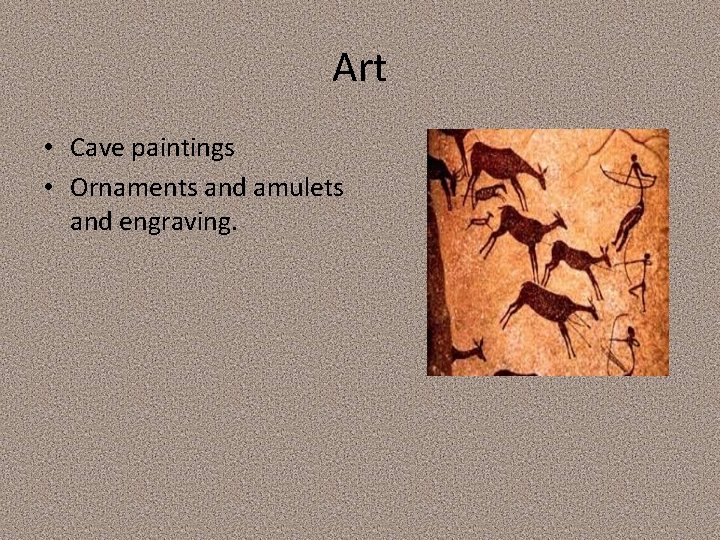
Art • Cave paintings • Ornaments and amulets and engraving.
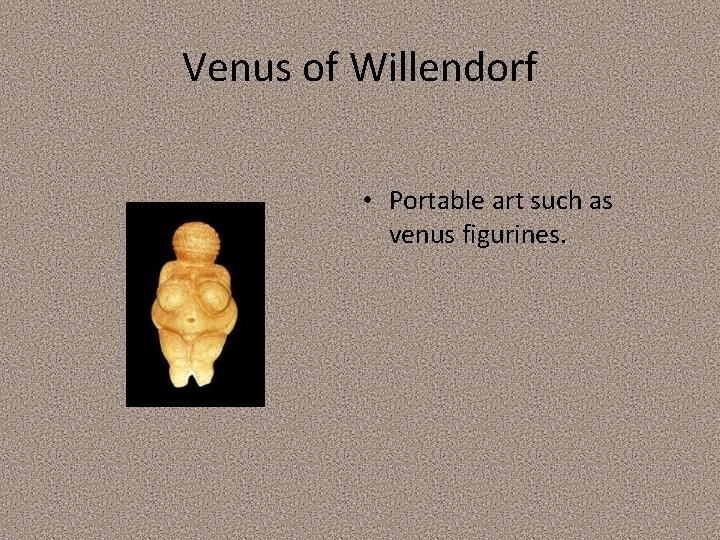
Venus of Willendorf • Portable art such as venus figurines.
II. Neolithic Age • Began around 7000 BC and lasted aprox. 3500 BC, when the written word appeared and history began. • In Spain this period began around 5500 BC. • We call this era the Neolithic Revolution because of the important economic and social changes that occurred.
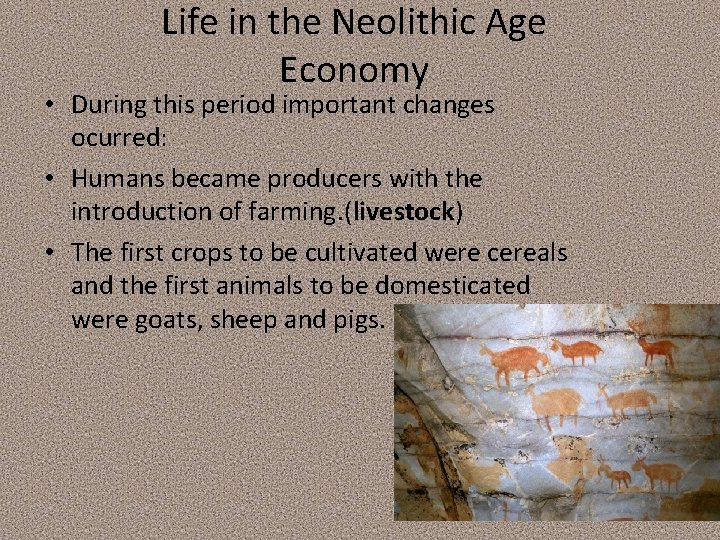
Life in the Neolithic Age Economy • During this period important changes ocurred: • Humans became producers with the introduction of farming. (livestock) • The first crops to be cultivated were cereals and the first animals to be domesticated were goats, sheep and pigs.
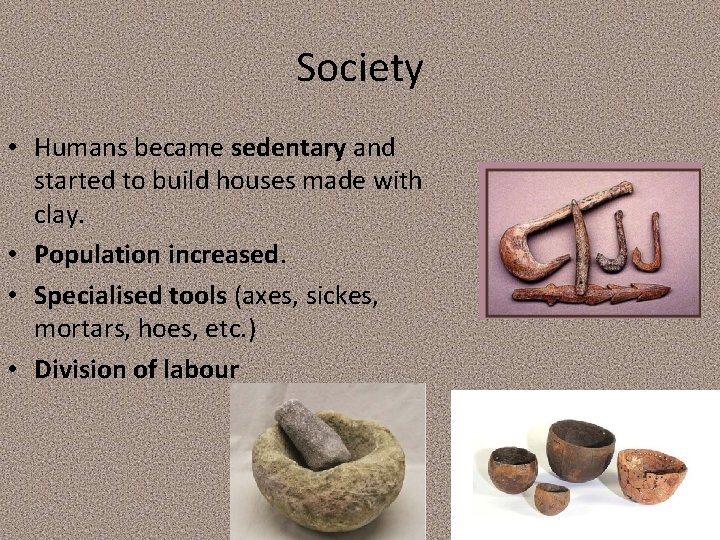
Society • Humans became sedentary and started to build houses made with clay. • Population increased. • Specialised tools (axes, sickes, mortars, hoes, etc. ) • Division of labour
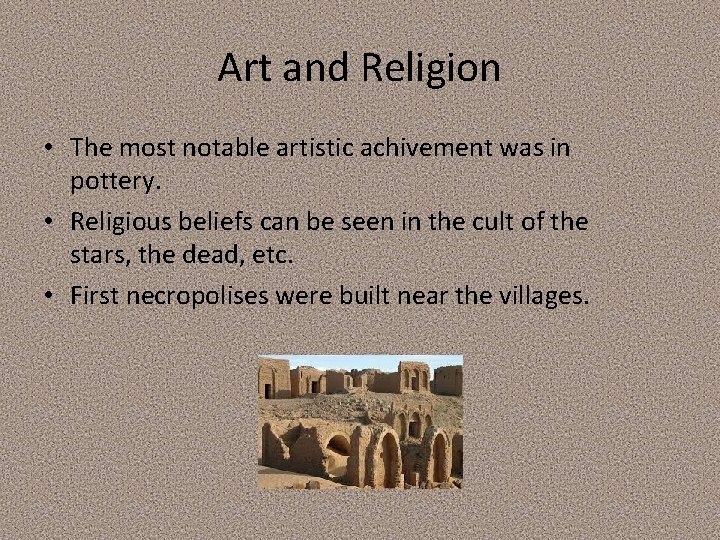
Art and Religion • The most notable artistic achivement was in pottery. • Religious beliefs can be seen in the cult of the stars, the dead, etc. • First necropolises were built near the villages.
III. Bronze and Iron Ages • Began when metallurgy was discovered around 4000 BC. • Metallurgy is a technique that consists of heating metals to high temperaturas in order to shape them into objects (weapons, adornments and tools). • The Bronze and Iron Ages divided into three periods: • Cooper Age • Bronze Age • Iron Age
Society • Due to the prosperity created by trade, the populations of the villages grew and they became towns. • Division of labour. • Adobe (sun dried earth) and Stone are basic materials for cosntruction.
Economy
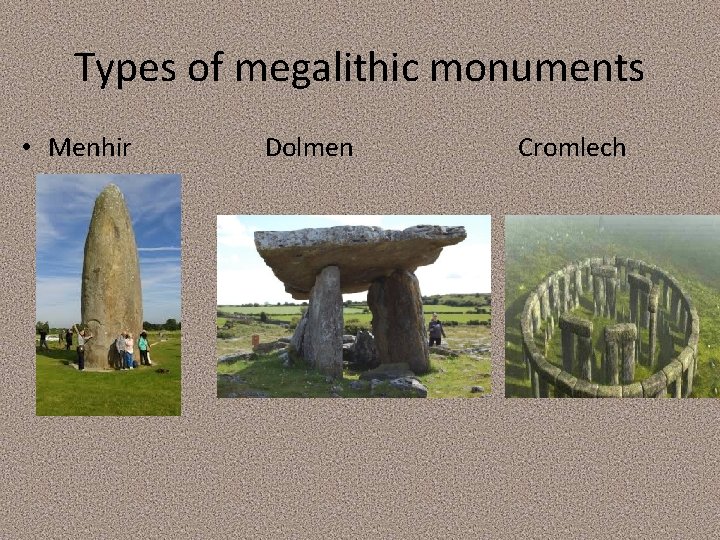
Types of megalithic monuments • Menhir Dolmen Cromlech
Culture