
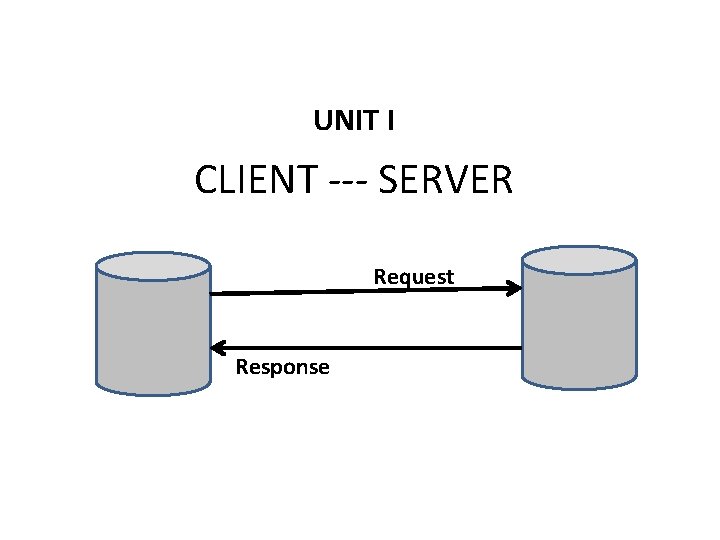
UNIT I CLIENT SERVER Request Response Client Server

- Slides: 18
UNIT I CLIENT --- SERVER Request Response
Client- Server • A network is set up between client system and server system to communicate with each other is called client/server network. • The computer requesting information is called a client. • The computer responding to the request is called a server. • The individual computers is called clients.
• The splitting of an application into tasks performed on separate computers connected over a network. • The “client” is a desktop computing device (e. g. , a PC) or a program “served” by another networked computing device (i. e. , the “server”).
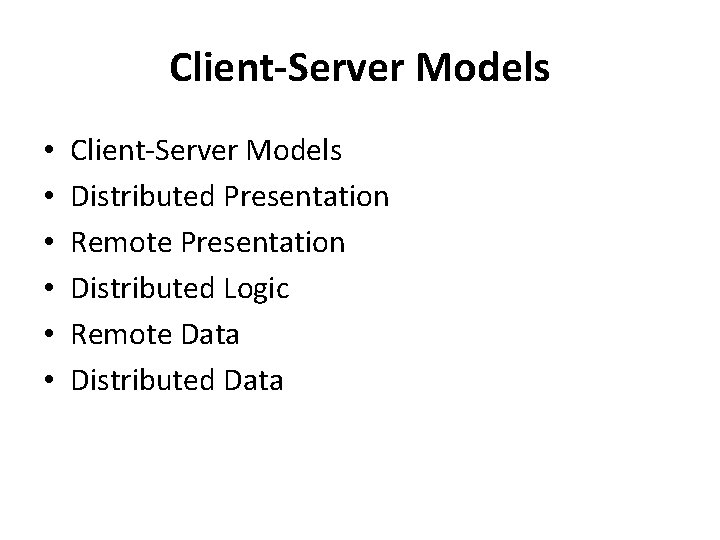
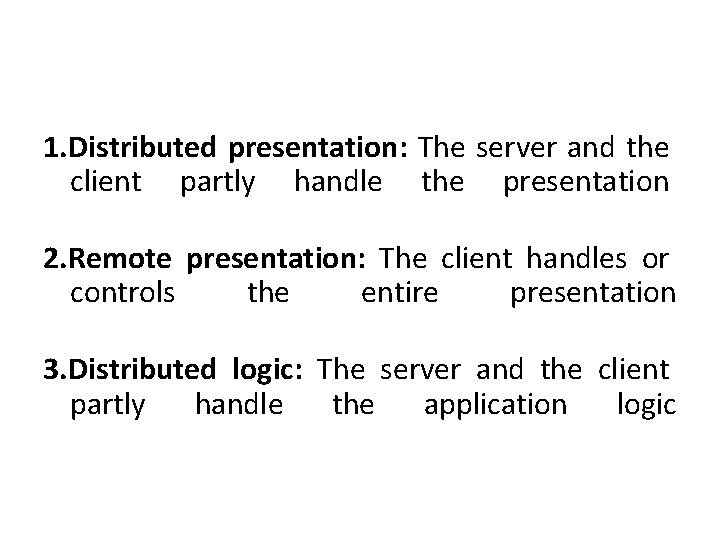
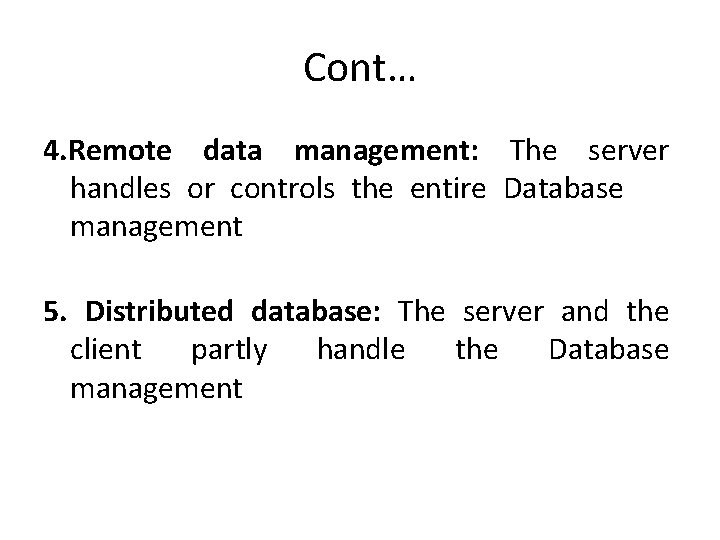
Client-Server Models • • • Client-Server Models Distributed Presentation Remote Presentation Distributed Logic Remote Data Distributed Data
1. Distributed presentation: The server and the client partly handle the presentation 2. Remote presentation: The client handles or controls the entire presentation 3. Distributed logic: The server and the client partly handle the application logic
Cont… 4. Remote data management: The server handles or controls the entire Database management 5. Distributed database: The server and the client partly handle the Database management
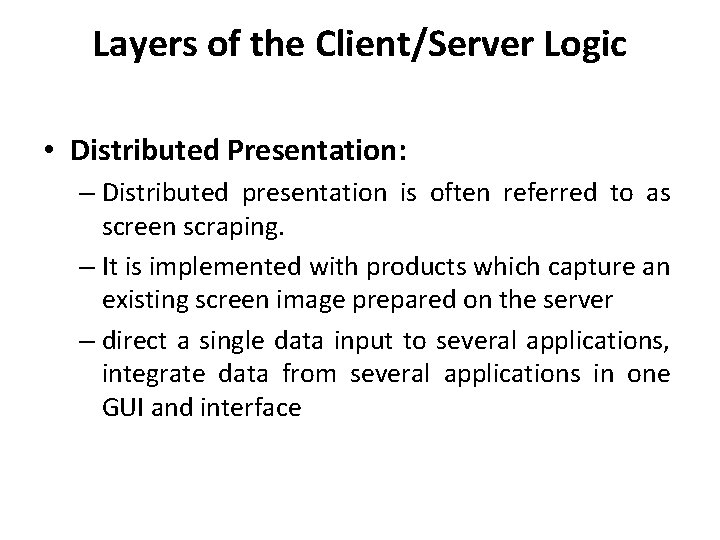
Layers of the Client/Server Logic • Distributed Presentation: – Distributed presentation is often referred to as screen scraping. – It is implemented with products which capture an existing screen image prepared on the server – direct a single data input to several applications, integrate data from several applications in one GUI and interface
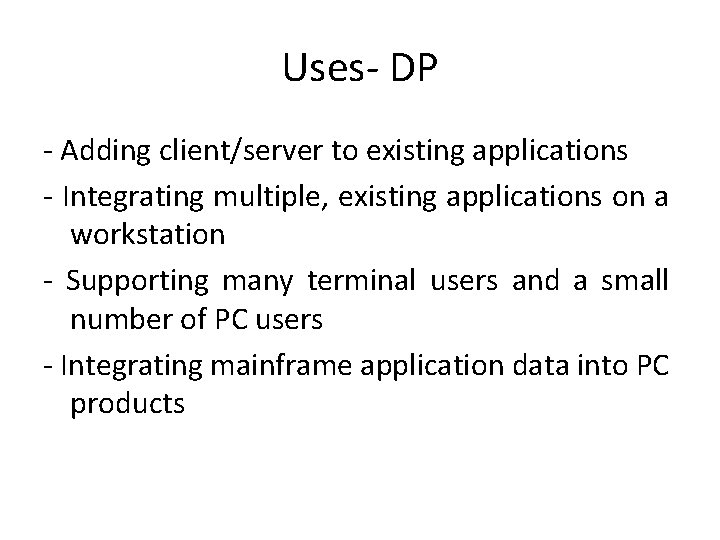
Uses- DP - Adding client/server to existing applications - Integrating multiple, existing applications on a workstation - Supporting many terminal users and a small number of PC users - Integrating mainframe application data into PC products
Remote Presentation • Remote presentation involves the presentation component running on the client and all of the processing taking place on the server. • This architecture is often employed where there are diverse platforms for client workstations.
Uses- RP - Multiple operating system environments for client workstations - Highly data centered processing - Low powered client PCs - Simple transaction processing
Distributed Function • This is perhaps the most complex environment to implement due to the need to synchronize processes running on both client and server. USES -Mix of data and presentation level processing - Highly complex processing demands - Downsizing existing mainframe application
Remote Data Management • The remote data management architecture has all of the application running on the client but the data remains on the server. USES - Powerful workstation - Presentation oriented processing - Shared access to data - Upsizing of existing PC application
Distributed Database • In the distributed database architecture, the data is stored on several servers or it may be split across the client and the server. Use - Naturally segmented database and discrete usage - Simple (single location, single table) updates
CLIENT/ SERVER ARCHITECTURE
• A network architecture in which each computer or process on the network is either a client or a server. • Servers are powerful computers or processes dedicated to managing disk drives (file servers), printers (print servers), or network traffic (network servers ).
• Another type of network architecture is known as a peer-to-peer architecture because each node has equivalent responsibilities. • Both client/server and peer-to-peer architectures are widely used, and each has unique advantages and disadvantages.
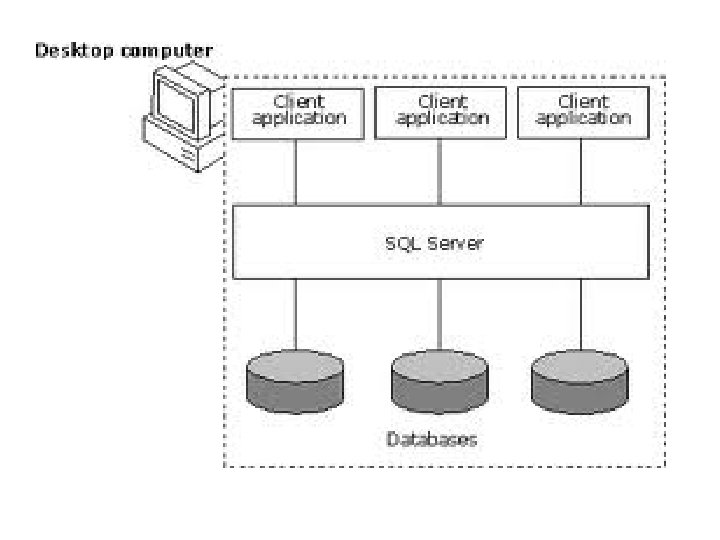
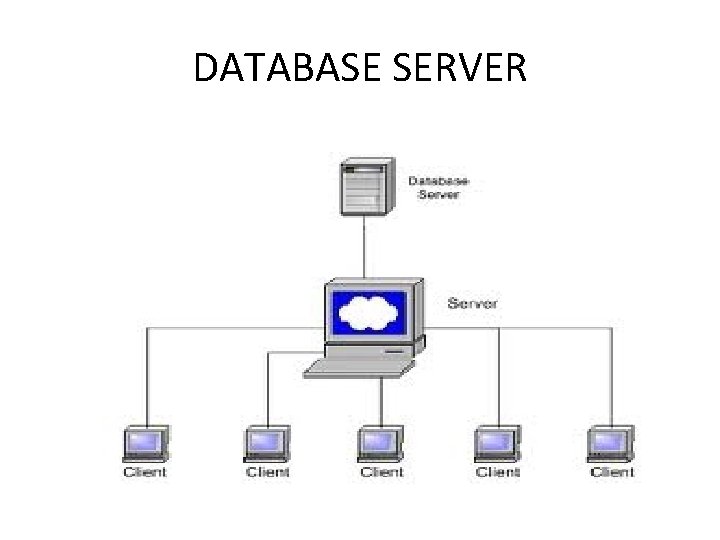
DATABASE SERVER