
Unit Four Evolution Natural Selection Adaptation Plants Terrestrial
- Slides: 28
Unit Four “Evolution, Natural Selection, & Adaptation” “Plants”
Terrestrial Living n n Most plants live on land acquire their energy via Photosynthesis Plants are Autotrophs/Producers There an estimated 263, 500 species of plants on the Earth Terrestrial plants are thought to have evolved from aquatic life, most probably green algae
Plant Life Cycle Requirements n Plants need the following substances from the surrounding environment in order to survive: n n Water (enters via roots and leaves via stomata) Carbon Dioxide (stomata in leaves absorb gas) Minerals (N, K, Ca, P, Mg, & S absorption via roots) Soil in which to root themselves (soil contains minerals and water); there are exceptions (Epiphytes)
Plant Reproduction n n In order to produce sexually while living on land, plants must pass gametes on from one plant to another (pollination); this is difficult because of plants sessile nature “Alternation of Generations” is a term used to signify there are haploid and diploid portions of a plant’s life cycle that alternate in their existence “Gametophyte” – haploid generation; forms haploid gametes by mitosis “Sporophyte” – diploid generation; forms haploid spores by meiosis
Plant Evolution n n Once plants made the leap onto land they gradually developed other features that aided their evolutionary success in this new environment There are four key innovations that led to the great variation in plant structure, function, and abiotic requirements seen today
Plant Evolution n The four key evolutionary innovations are: n n 1. Alternation of generations – haploid and diploid phases of cells 2. Vascular tissue – series of tunnels that transports water and nutrients throughout the plant; also aids in structural support 3. Seeds – protective coating that also supplies nutrients to the embryo (similar to egg) 4. Flowers and fruits – they play role in sexual reproduction, and protect egg and embryo from the environment (only found in “Angiosperms)
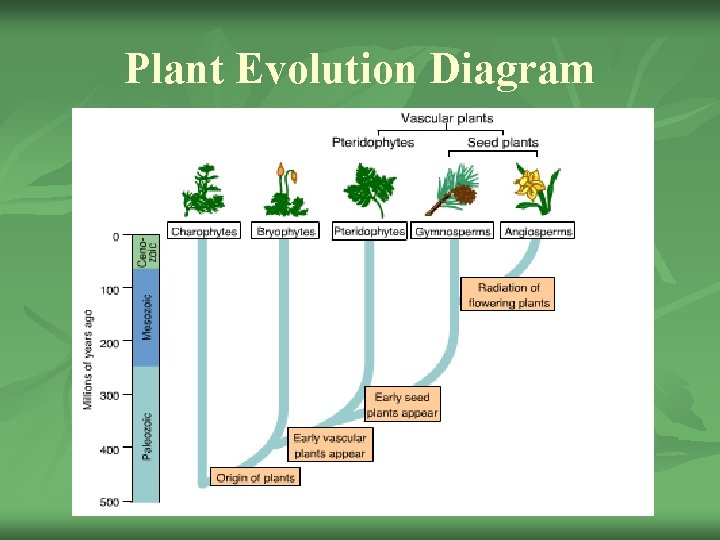
Plant Evolution Diagram
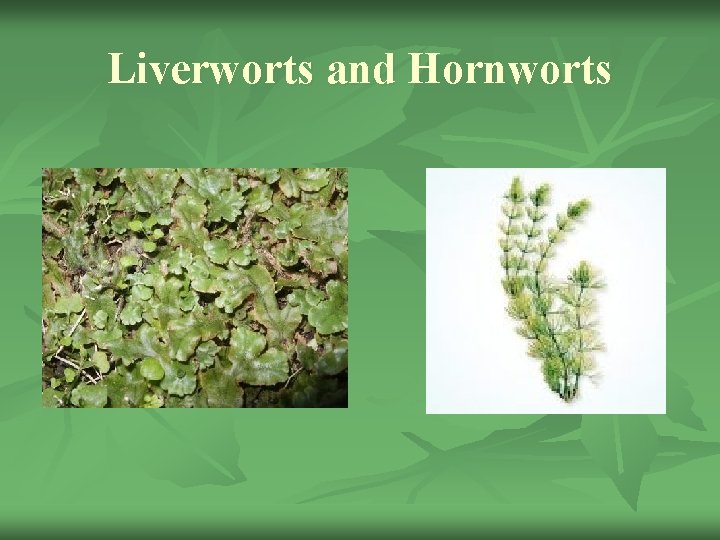
Nonvascular plants n Liverworts and Hornworts n n Above are the only two phyla that lack vascular systems Liverworts are the simplest group of plants with 6, 000 species still extant There a 100 species of Hornworts still extant Both groups prefer to grow in moist places with reduced sunlight
Liverworts and Hornworts
Life Cycle of a Nonvascular Plant https: //www. youtube. com/watch? v=i. Wa. X 97 p 6 y 9 U
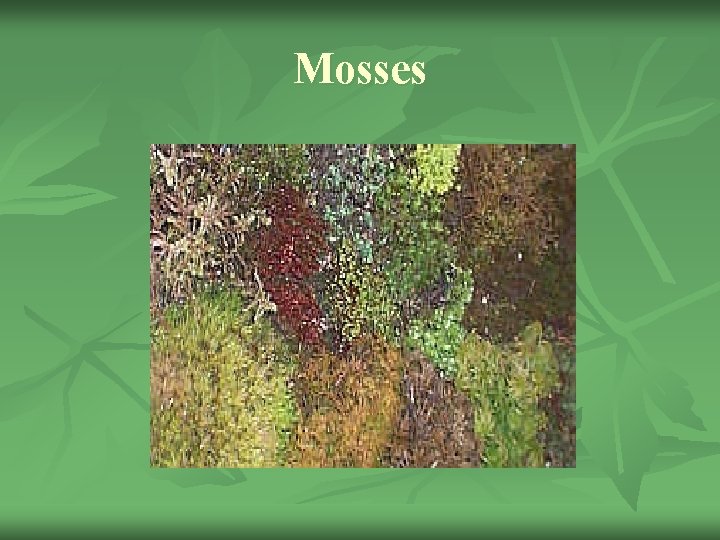
Quasi-vascular plants n Mosses n n First to evolve strands of specialized cells that conduct water and carbohydrates up the stem The cells that enable the transport of water and carbohydrates do not have “wall thickening” structures therefore they cannot move those items very high in the plant There are 9, 500 species of mosses still extant Mosses also prefer to grow in moist shaded areas
Mosses
The Rise Of Vascular Plants n n Seven phyla of vascular plants Advancement from previous plant species is the ability of the plant to move water and nutrients up through entire body Early vascular plants participated in “Primary Growth”: grow by cell division at the tips of stems and roots (vertical growth but no periphery growth) Later vascular plants participated in “Secondary Growth”: grow by cellular division at the tips of stems and roots and around the periphery; secondary growth gives rise to bark and a tree trunk
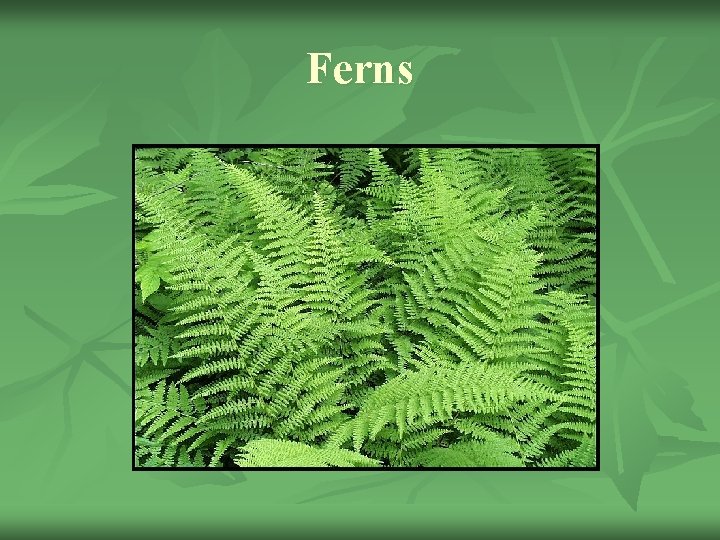
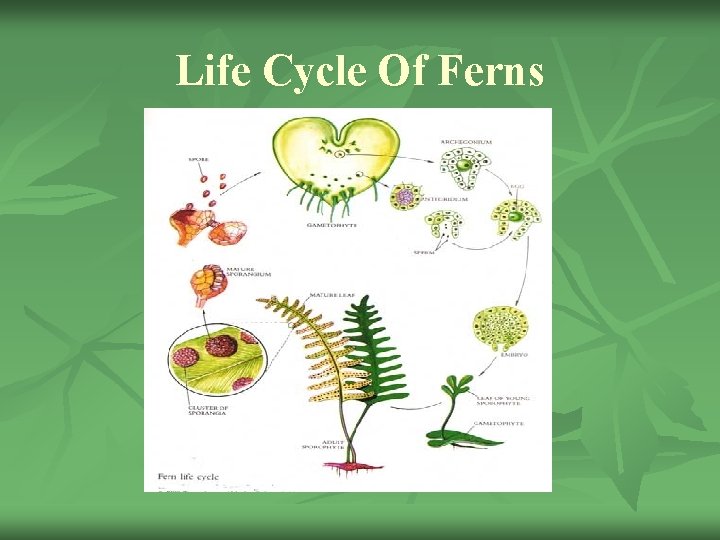
Seedless Vascular Plants n n n Most abundant seedless vascular plants are the Ferns 11, 000 extant species of Ferns They are most abundant in warm, moist climates where there is ample shade Ferns can be very small (3 cm in diameter), but can also grow to be quite large (79 feet tall) Their reproductive process produces two types of individuals that are different in shape and size n n Fern Gametophyte – small heart-shaped plant Fern Sporophyte – large and more complex with leaves called “Fronds”
Ferns
Life Cycle Of Ferns
Vascular Plants With Seeds n n n Seed plants favor the sporophyte generation (diploid) Seed plants produce male and female gametophytes Male gametophytes = pollen grains Female gametophyte = egg in the ovule “Pollination” is the process by which pollen grains are transferred to an ovule by insects, wind, or other agents
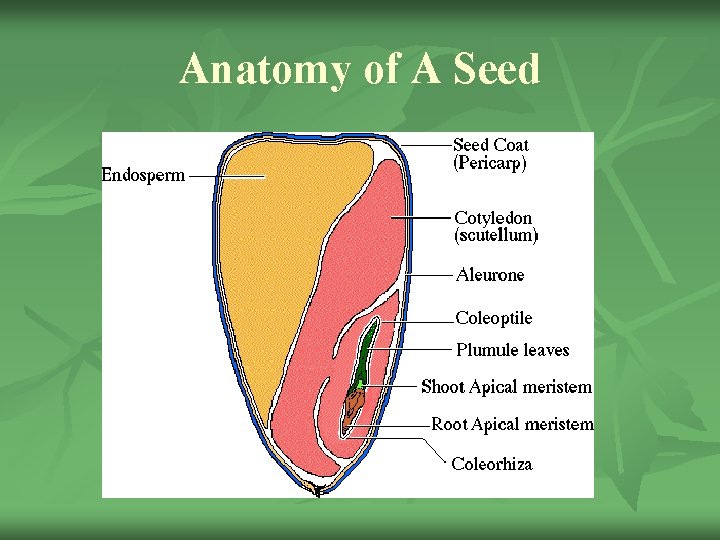
Anatomy of A Seed
The Importance Of Seeds n n n As stated earlier, a seed contains an embryo, a food source for the developing embryo (endosperm), and a protective barrier to the outside world Seeds enable new individual plants to grow in a new location separate and apart from the parent plant Seeds can remain dormant until the environmental conditions are optimal for them to begin the process of “Germinating” (sprouting and growing)
The Importance Of Seeds n Seeds have greatly enhanced the ability of plants to live on land in four ways: n n 1. Dispersal 2. Dormancy 3. Germination 4. Nourishment
Gymnosperms n “Gymnosperms” consist of Conifers, Cycads, Gnetophytes, and Ginkgo n n 1. Conifers (cone-bearing) – 550 extant species; Sequoias (328 feet tall and 3, 000 years old) and Long Leaf Pines (native to Florida) are examples 2. Cycads – short stems and palm-like leaves; found in the tropics; were abundant in the Jurassic Period (213 to 144 mya) 3. Gnetophyta – 3 extant species 4. Ginkgo – 1 extant species: Maidenhair Tree
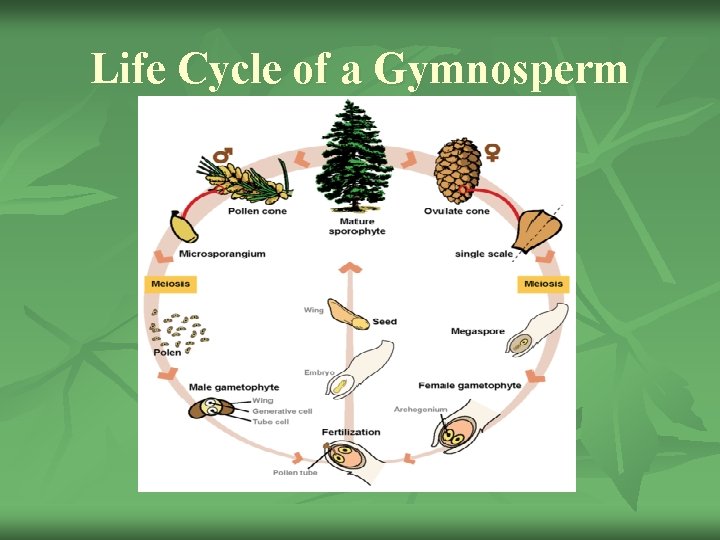
Life Cycle of a Gymnosperm
Life Cycle of a Gymnosperm https: //www. youtube. com/watch? v=t. J 72 K 1 w. Tkc c
Angiosperms n n n These plants ovules are completely enclosed by sporophyte tissue when fertilized They are the most successful group of plants: 90% of extant plants are Angiosperms 90% of all living plants = 235, 000 species Angiosperms consist of trees, shrubs, herbs, grasses, vegetables, and grains Angiosperms revolutionary advancement is the presence of bright colored flowers that have nectar to induce insects to visit
Angiosperms n Angiosperms utilize a variety of factors to entice mainly insects to land on the flower: n n n Bright coloration of the flower Scent of the flower Nectar (nutrients) within the flower
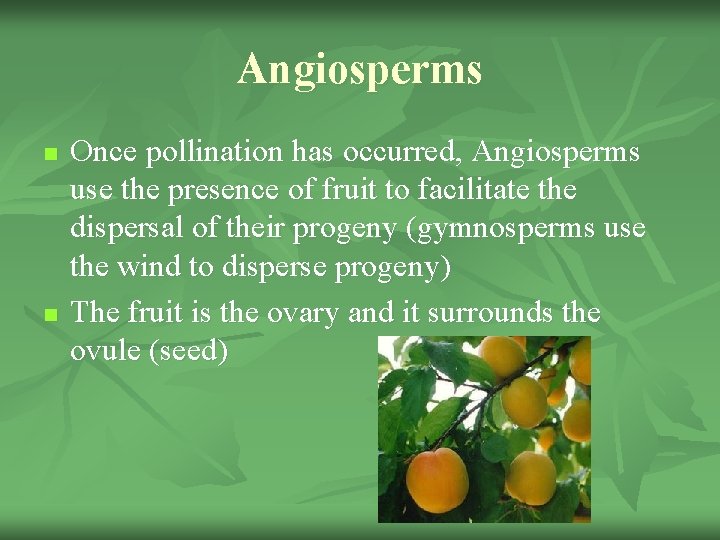
Angiosperms n n Once pollination has occurred, Angiosperms use the presence of fruit to facilitate the dispersal of their progeny (gymnosperms use the wind to disperse progeny) The fruit is the ovary and it surrounds the ovule (seed)
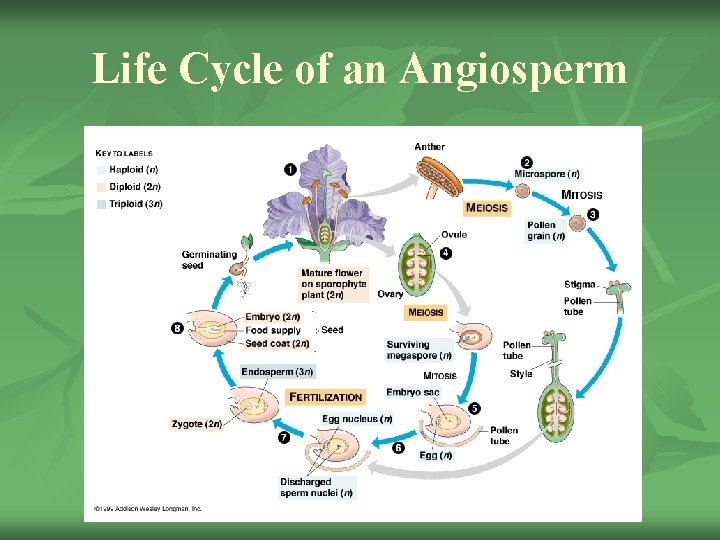
Life Cycle of an Angiosperm
Life Cycle of an Angiosperm https: //www. youtube. com/watch? v=H_Uy. Dtaa 8 Ow