
Unit Essential Question How did feudalism the manor




- Slides: 41
Unit Essential Question: How did feudalism, the manor economy, and the Church shape life in Western Europe as the region slowly developed a Aim: Whatculture? happened to Western Europe new medieval after the collapse of the Western Roman Empire? Do Now: What do you already know about the Middle Ages?
The Early Middle Ages c. 500 -1000 After the collapse of Rome, Western Europe entered a period of social, political & economic decline. Largely cut off from advanced civilizations in the Middle East, China & India. Do you think that other civilizations used the same term for that period? Why or why not? Medieval civilization = Latin words for “middle age” Dark Ages or not? “Dark Ages” Period of intellectual darkness that occurred in Europe following the collapse of the Western Roman Empire
Dark Ages http: //www. history. com/topics/middleages/videos/dark-ages-barbarians-ii---the-saxons -camelot-begins List evidence of the ‘dark ages’ from this clip.
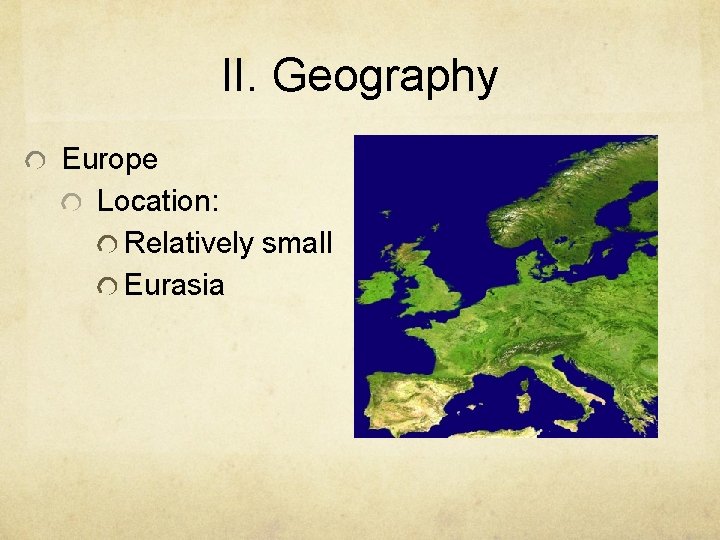
II. Geography Europe Location: Relatively small Eurasia
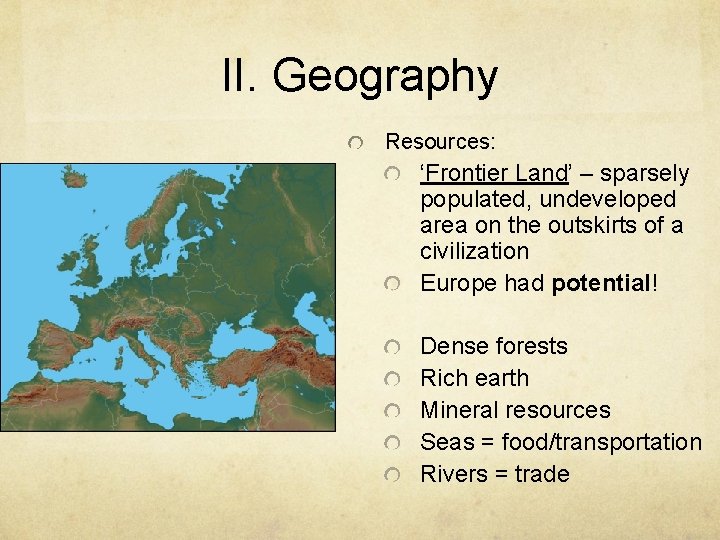
II. Geography Resources: ‘Frontier Land’ – sparsely populated, undeveloped area on the outskirts of a civilization Europe had potential! Dense forests Rich earth Mineral resources Seas = food/transportation Rivers = trade
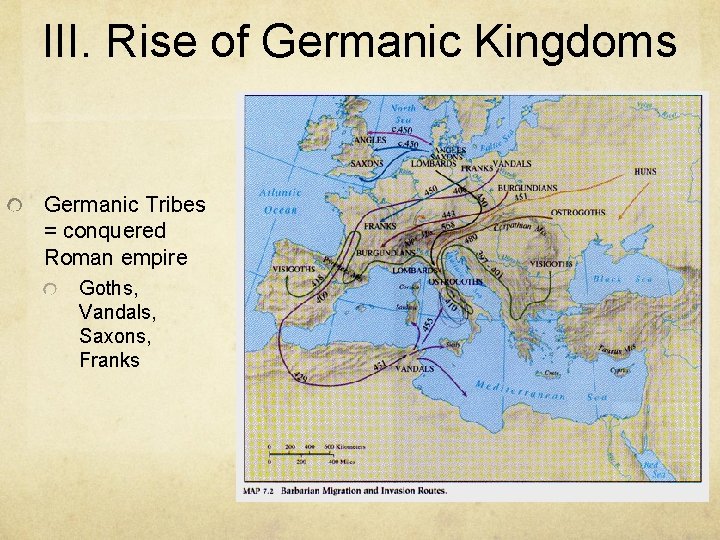
III. Rise of Germanic Kingdoms Germanic Tribes = conquered Roman empire Goths, Vandals, Saxons, Franks
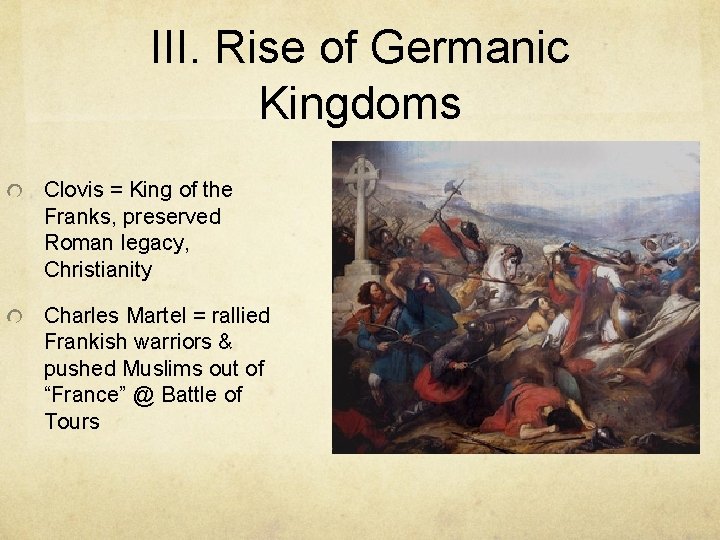
III. Rise of Germanic Kingdoms Clovis = King of the Franks, preserved Roman legacy, Christianity Charles Martel = rallied Frankish warriors & pushed Muslims out of “France” @ Battle of Tours
Germanic Groups http: //www. history. com/topics/middleages/videos/who-were-thevikings? m=528 e 394 da 93 ae&s=undefined&f=1&fr ee=false What image do the barbarians paint of Germanic tribes? http: //www. history. com/topics/middleages/videos/charles-martel-repels-themoors? m=528 e 394 da 93 ae&s=undefined&f=1&fr ee=false What would have happened if Charles Martel was not successful at the Battle of Tours?
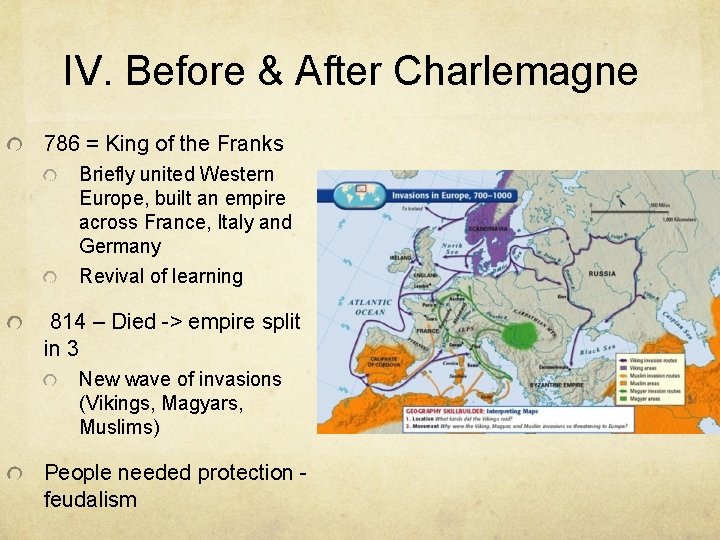
IV. Before & After Charlemagne 786 = King of the Franks Briefly united Western Europe, built an empire across France, Italy and Germany Revival of learning 814 – Died -> empire split in 3 New wave of invasions (Vikings, Magyars, Muslims) People needed protection - feudalism
Charlemagne http: //www. history. com/topics/charlemagne/video s/the-reign-of-charlemagne List the accomplishments of Charlemagne. Which do you think had the most lasting importance? Why?
Group Work Directions: Look at your event and fill out graphic organizer.
Let’s Summarize! Based on today’s lesson and your introduction to the Middle Ages, do you believe the Medieval Era was a period of darkness?
Aim: How did feudalism and the manor economy emerge and shape medieval life? Do Now: Describe loyalty, and describe a situation in which it is important for someone to be loyal.
EXPERIENCING EUROPEAN FEUDALISM
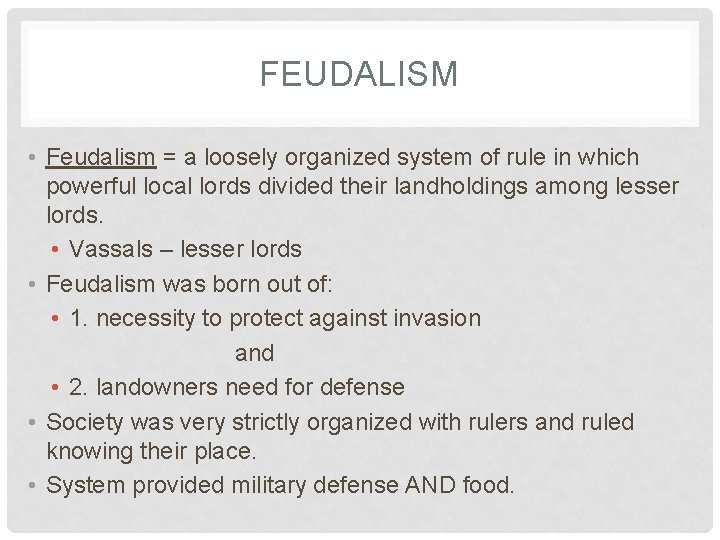
FEUDALISM • Feudalism = a loosely organized system of rule in which powerful local lords divided their landholdings among lesser lords. • Vassals – lesser lords • Feudalism was born out of: • 1. necessity to protect against invasion and • 2. landowners need for defense • Society was very strictly organized with rulers and ruled knowing their place. • System provided military defense AND food.
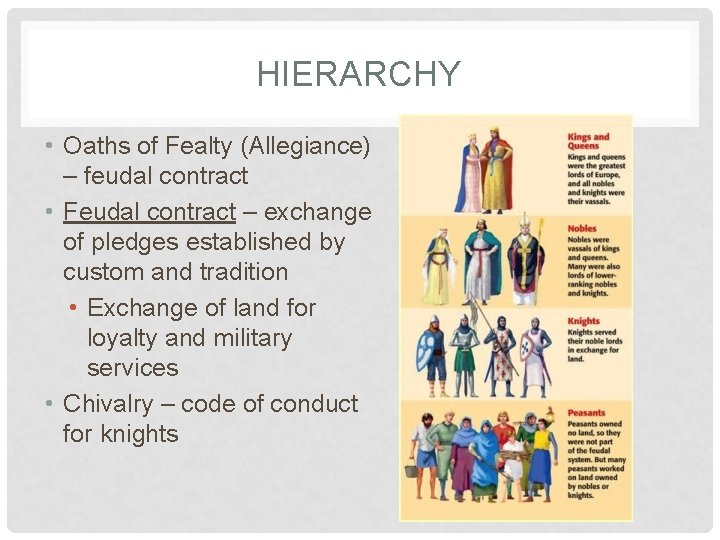
HIERARCHY • Oaths of Fealty (Allegiance) – feudal contract • Feudal contract – exchange of pledges established by custom and tradition • Exchange of land for loyalty and military services • Chivalry – code of conduct for knights
FIEF = ESTATE
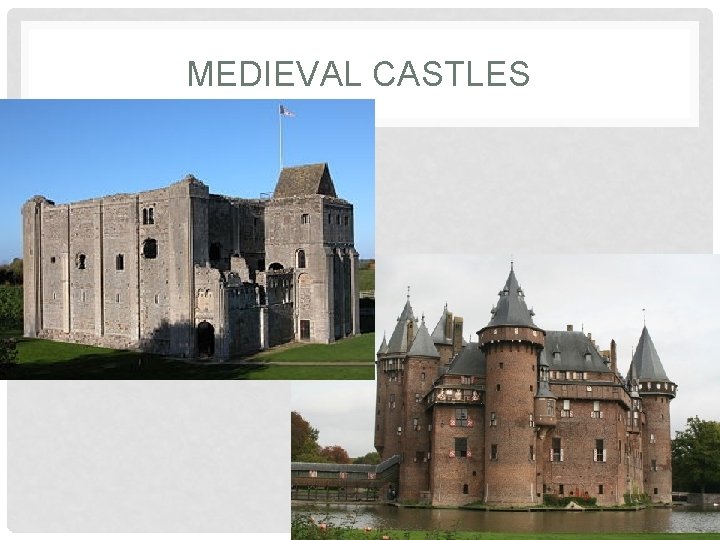
MEDIEVAL CASTLES
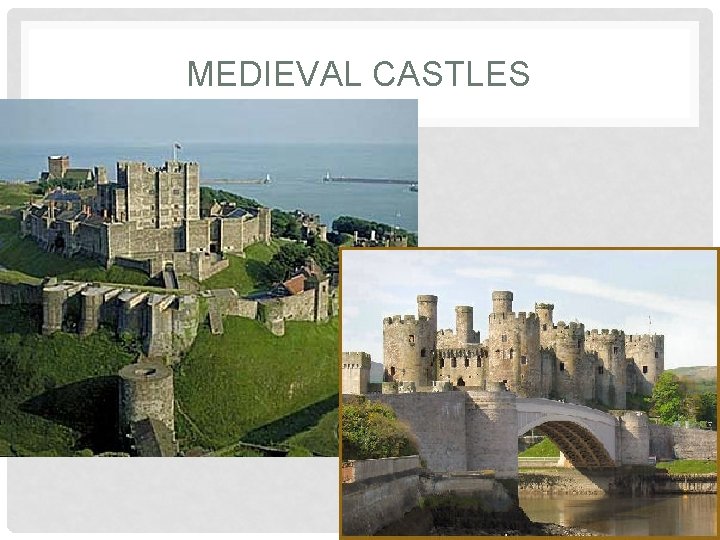
MEDIEVAL CASTLES
MANORIALISM: THE ECONOMIC BASE OF FEUDALISM *Manors are SELFSUFFICIEN T
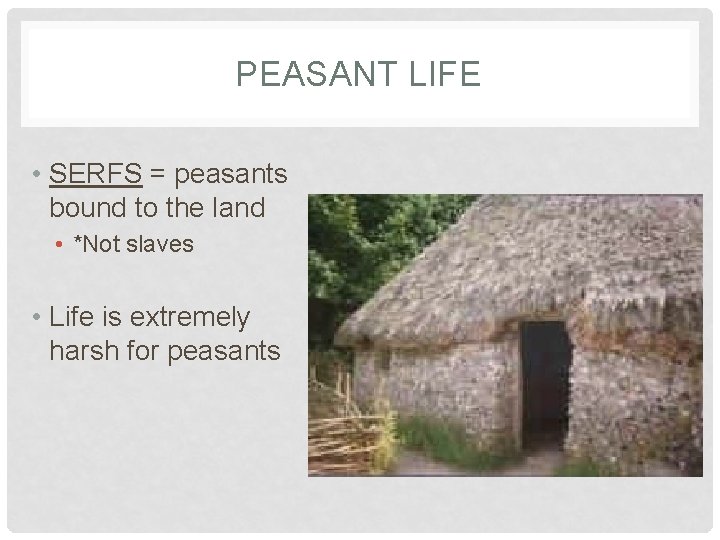
PEASANT LIFE • SERFS = peasants bound to the land • *Not slaves • Life is extremely harsh for peasants
Aim: How did the Church shape Medieval life? Do Now: Can the church replace the role of the government? Has it ever tried? Was it successful?
CHRISTIANITY IN THE MIDDLE AGES
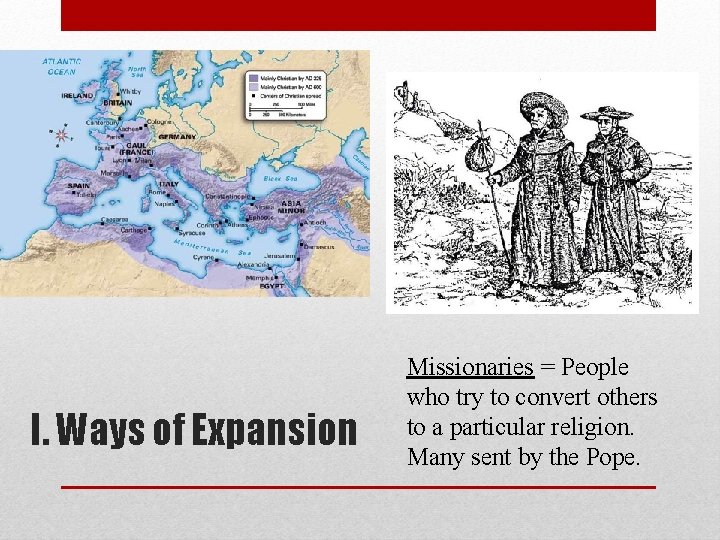
I. Ways of Expansion Missionaries = People who try to convert others to a particular religion. Many sent by the Pope.
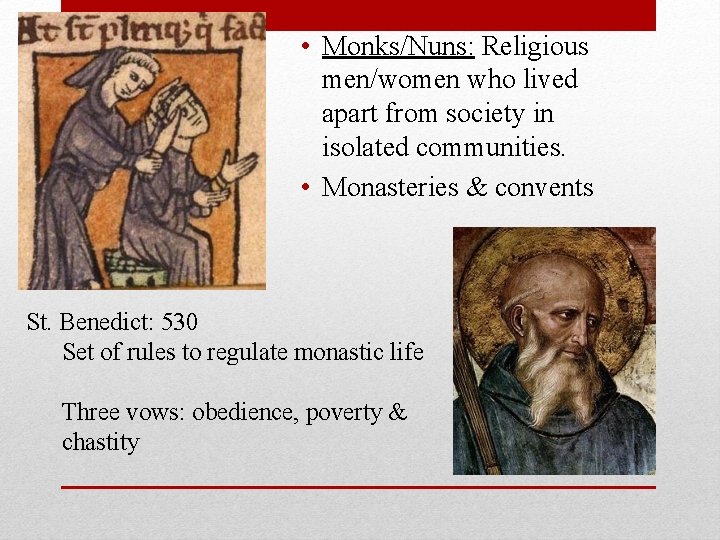
• Monks/Nuns: Religious men/women who lived apart from society in isolated communities. • Monasteries & convents St. Benedict: 530 Set of rules to regulate monastic life Three vows: obedience, poverty & chastity
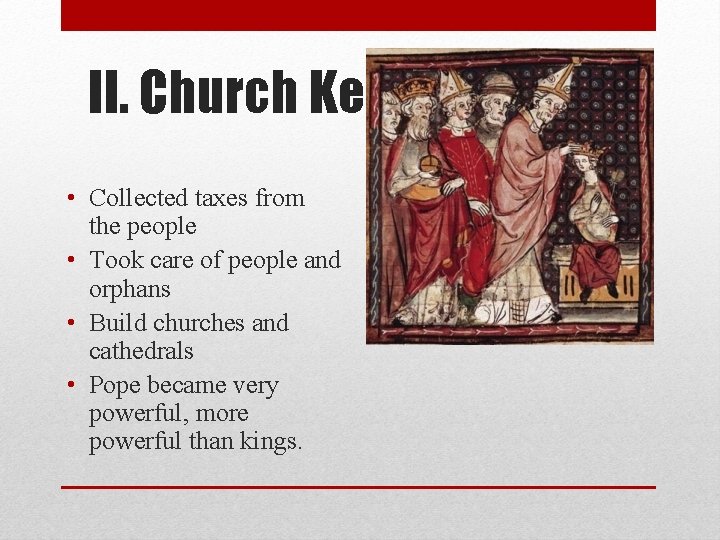
II. Church Keeps Order • Collected taxes from the people • Took care of people and orphans • Build churches and cathedrals • Pope became very powerful, more powerful than kings.
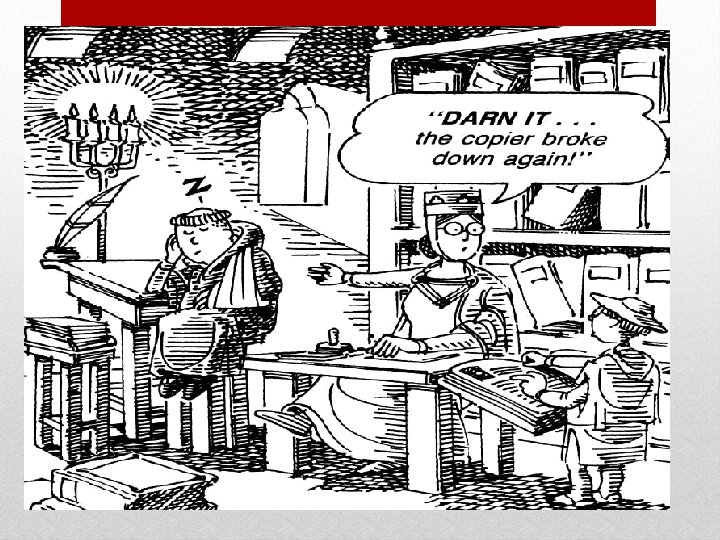
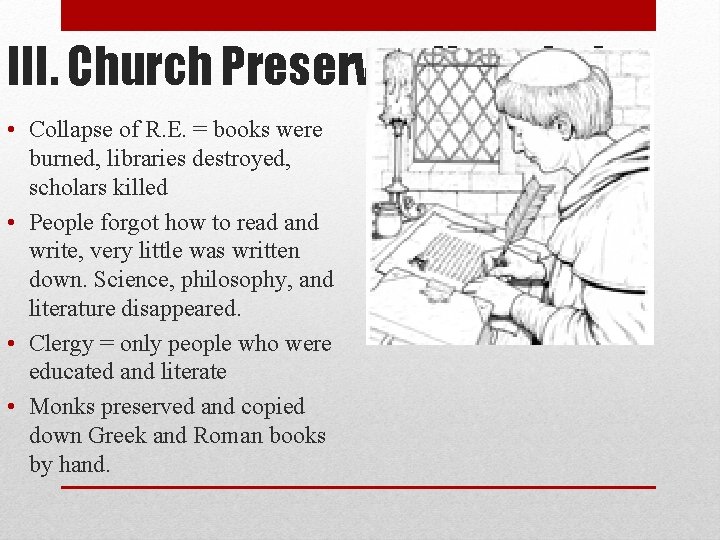
III. Church Preserves Knowledge • Collapse of R. E. = books were burned, libraries destroyed, scholars killed • People forgot how to read and write, very little was written down. Science, philosophy, and literature disappeared. • Clergy = only people who were educated and literate • Monks preserved and copied down Greek and Roman books by hand.
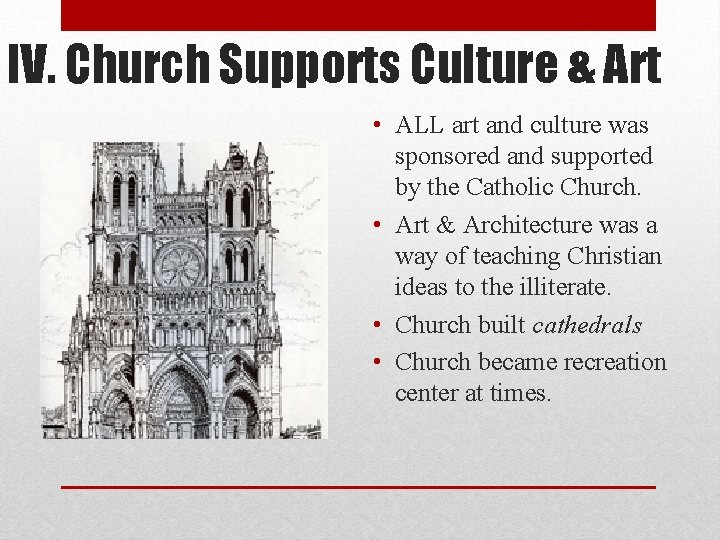
IV. Church Supports Culture & Art • ALL art and culture was sponsored and supported by the Catholic Church. • Art & Architecture was a way of teaching Christian ideas to the illiterate. • Church built cathedrals • Church became recreation center at times.
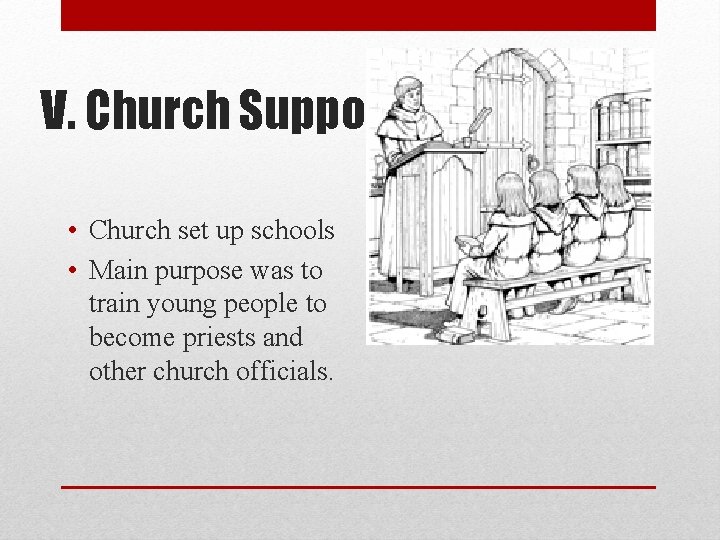
V. Church Supports Education • Church set up schools • Main purpose was to train young people to become priests and other church officials.
TURN & TALK Should the Church have this much power and influence over daily life?
INDEPENDENT READING ACTIVITY QUIETLY!!!!! read AND annotate the Christianity in the Middle Ages handout. Then, complete graphic organizer.
EXIT: Based on today’s lesson and your introduction to the Middle Ages, do you believe the Medieval Era was a period of darkness? Is there a better title?
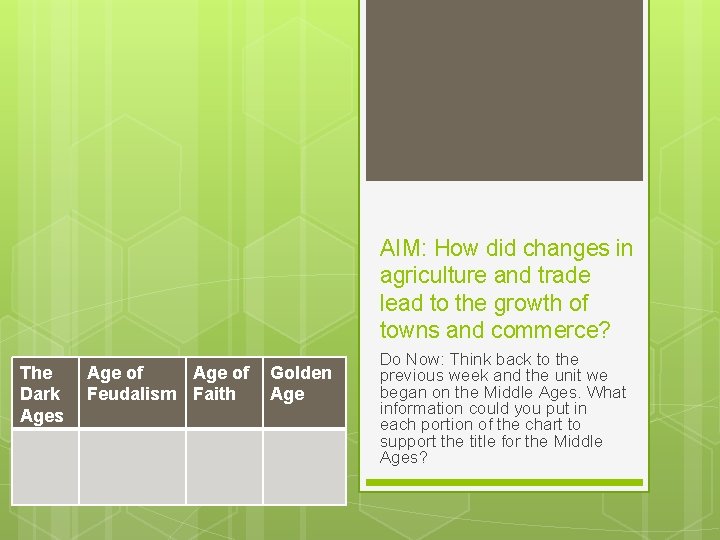
AIM: How did changes in agriculture and trade lead to the growth of towns and commerce? The Dark Ages Age of Feudalism Faith Golden Age Do Now: Think back to the previous week and the unit we began on the Middle Ages. What information could you put in each portion of the chart to support the title for the Middle Ages?
The Canterbury Tales by Geoffrey Chaucer The Canterbury Tales is the world's weirdest road trip! It tells the story of a group of pilgrims (fancy word for travelers) on their way to Canterbury, who engage in a tale-telling contest to pass the time. What does the prologue of The Canterbury Tales tell us about the changes that happen in the middle of Medieval Times?
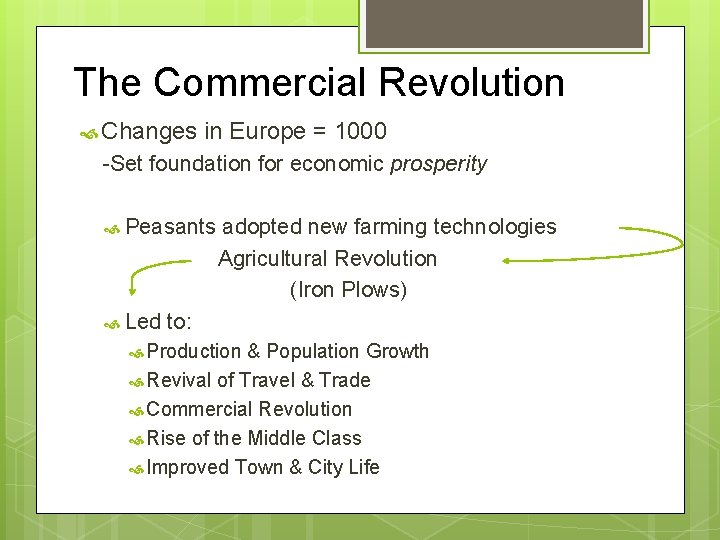
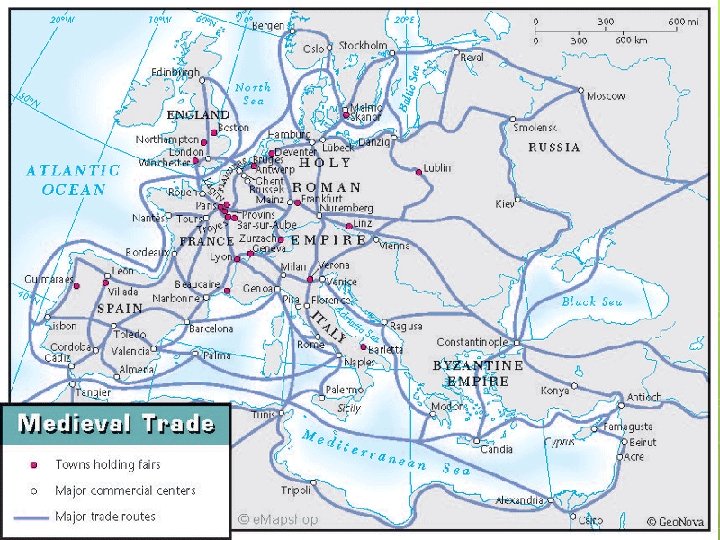
The Commercial Revolution Changes in Europe = 1000 -Set foundation for economic prosperity Peasants adopted new farming technologies Agricultural Revolution (Iron Plows) Led to: Production & Population Growth Revival of Travel & Trade Commercial Revolution Rise of the Middle Class Improved Town & City Life
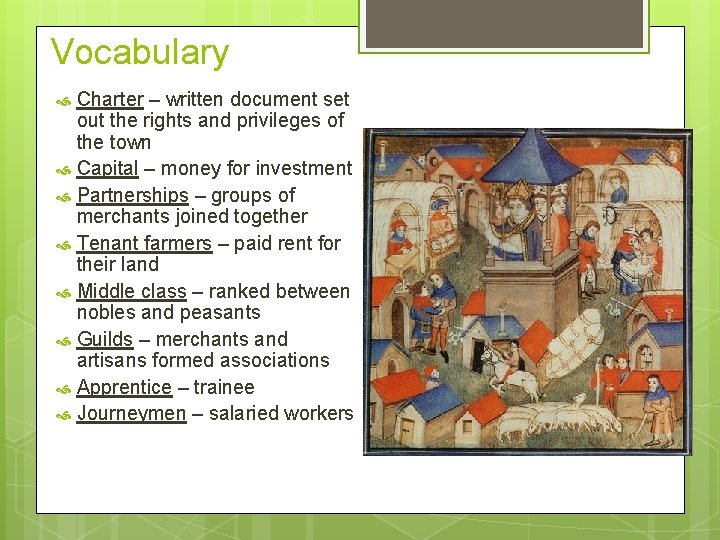
Vocabulary Charter – written document set out the rights and privileges of the town Capital – money for investment Partnerships – groups of merchants joined together Tenant farmers – paid rent for their land Middle class – ranked between nobles and peasants Guilds – merchants and artisans formed associations Apprentice – trainee Journeymen – salaried workers
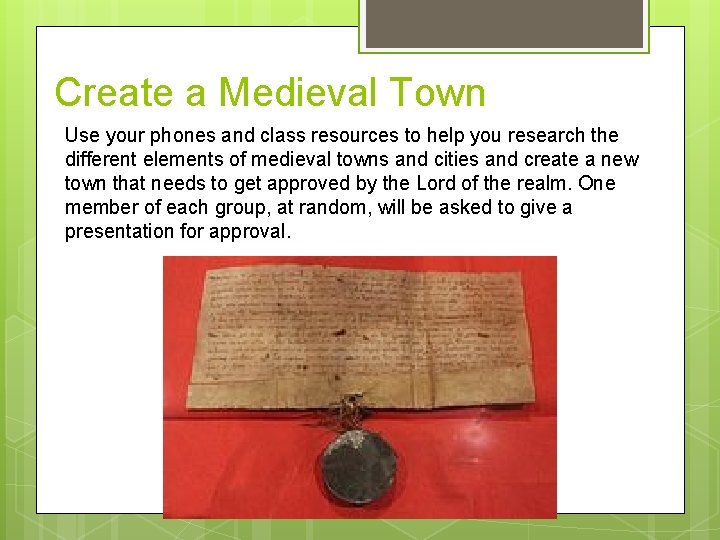
Create a Medieval Town Use your phones and class resources to help you research the different elements of medieval towns and cities and create a new town that needs to get approved by the Lord of the realm. One member of each group, at random, will be asked to give a presentation for approval.
Exit: Based on today’s lesson and your introduction to the Middle Ages, do you believe the Medieval Era was a period of darkness? Is there a better title?