
Unit ECOLOGY AIM How are ecosystems organized Unit

- Slides: 57
Unit: ECOLOGY AIM: How are ecosystems organized? Unit QUIZ: Friday May 5 Unit EXAM: Thursday May 18
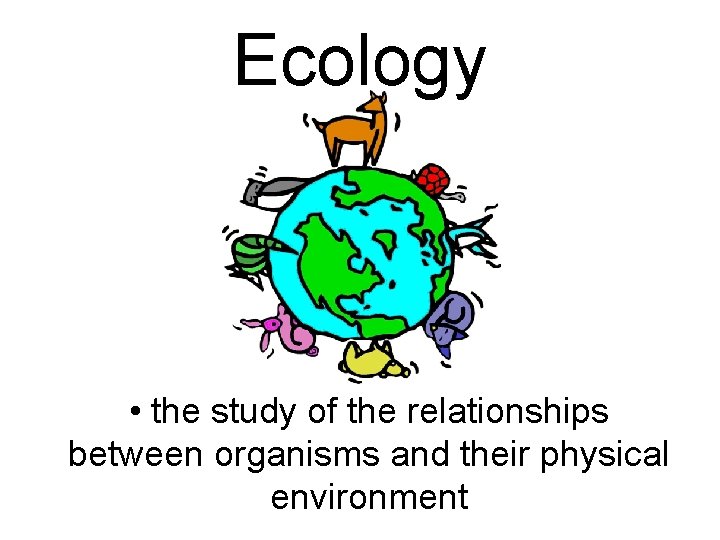
Ecology • the study of the relationships between organisms and their physical environment
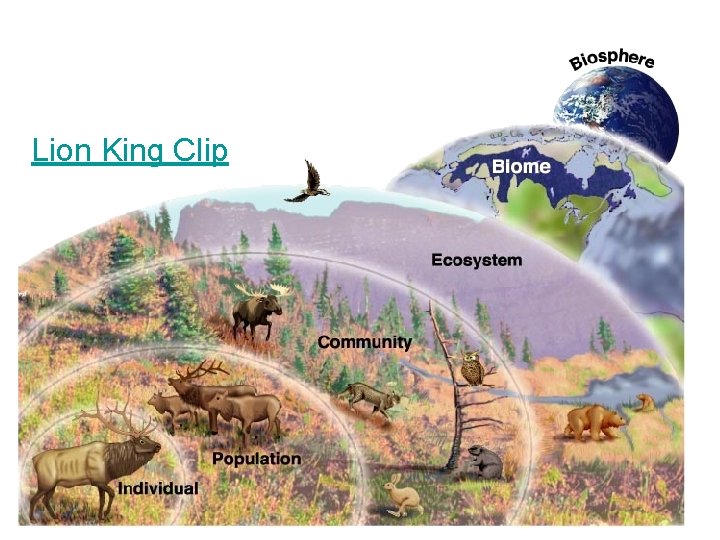
Lion King Clip
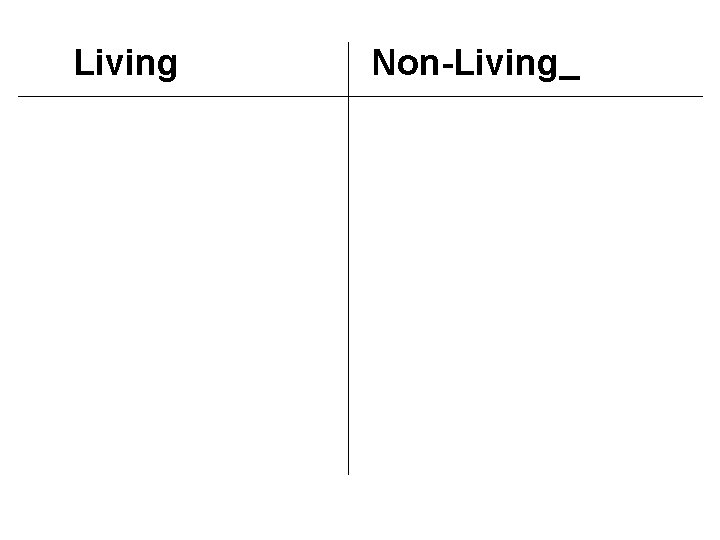
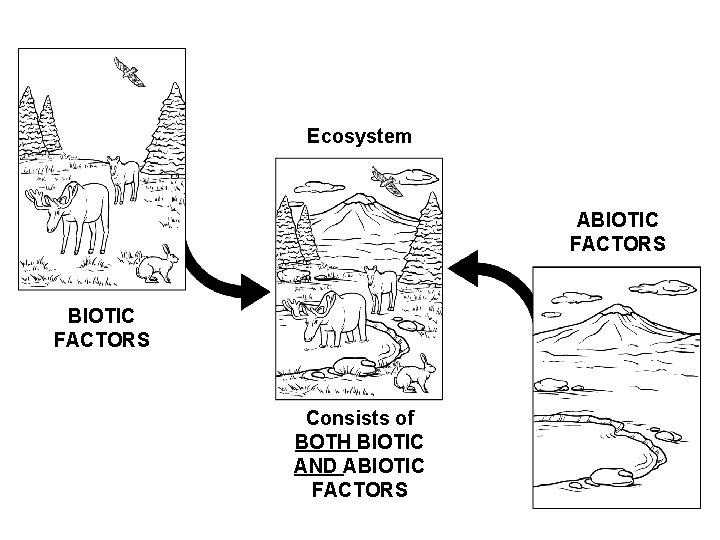
Living Non-Living
Ecosystem ABIOTIC FACTORS Consists of BOTH BIOTIC AND ABIOTIC FACTORS
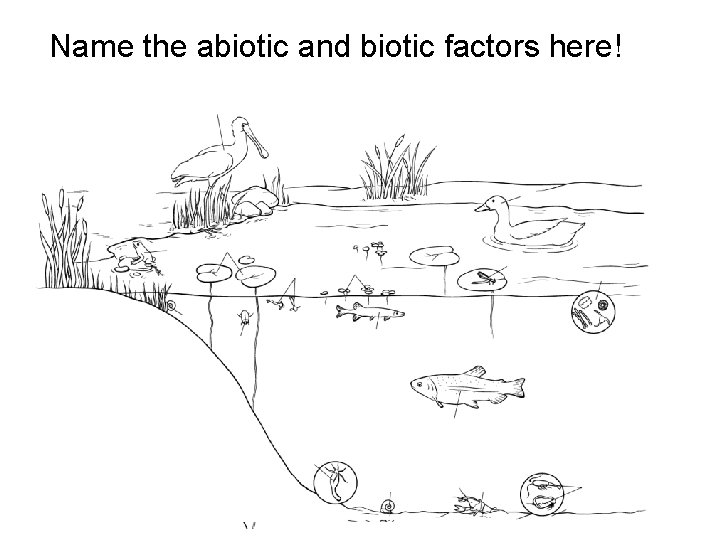
Name the abiotic and biotic factors here!
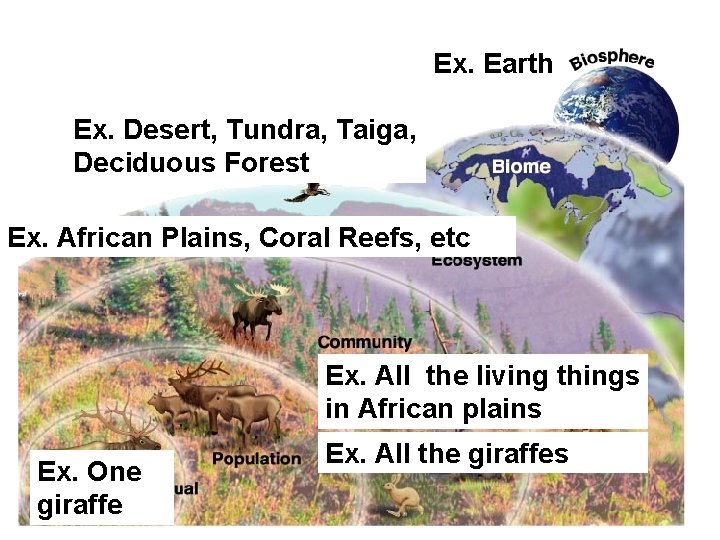
Ex. Earth Ex. Desert, Tundra, Taiga, Deciduous Forest Ex. African Plains, Coral Reefs, etc Ex. All the living things in African plains Ex. One giraffe Ex. All the giraffes
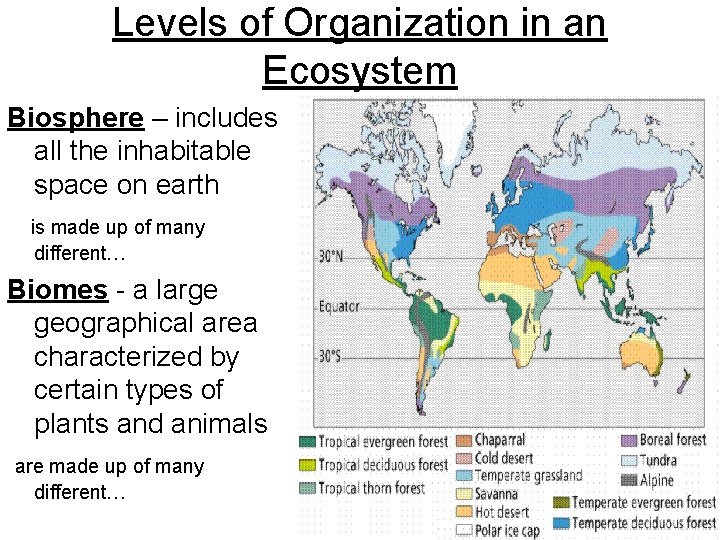
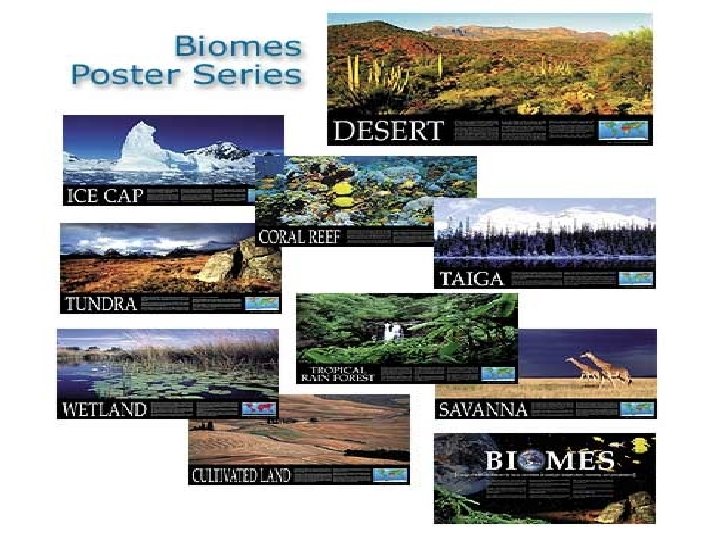
Levels of Organization in an Ecosystem Biosphere – includes all the inhabitable space on earth is made up of many different… Biomes - a large geographical area characterized by certain types of plants and animals are made up of many different…
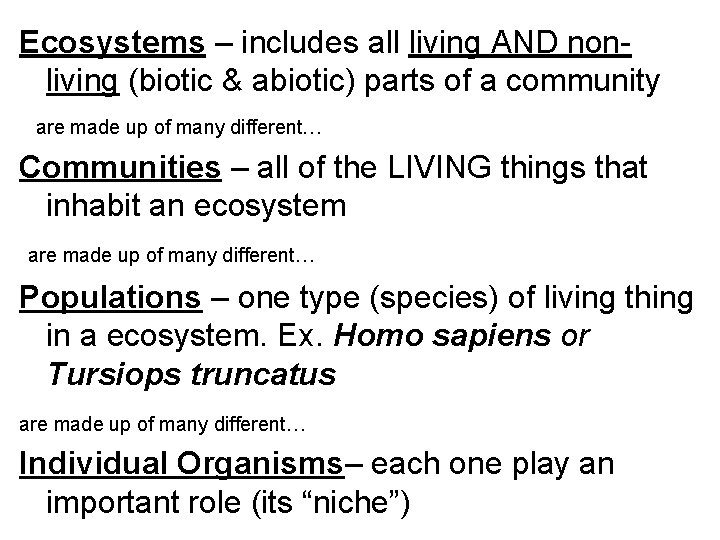
Ecosystems – includes all living AND nonliving (biotic & abiotic) parts of a community are made up of many different… Communities – all of the LIVING things that inhabit an ecosystem are made up of many different… Populations – one type (species) of living thing in a ecosystem. Ex. Homo sapiens or Tursiops truncatus are made up of many different… Individual Organisms– each one play an important role (its “niche”)
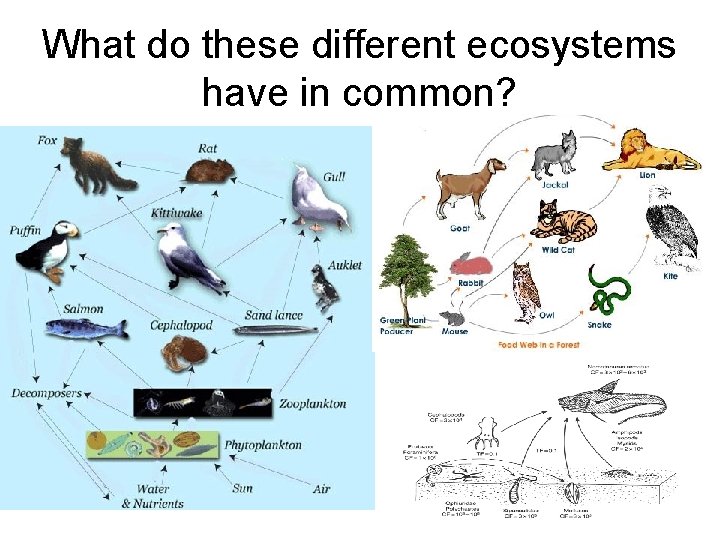
What do these different ecosystems have in common?
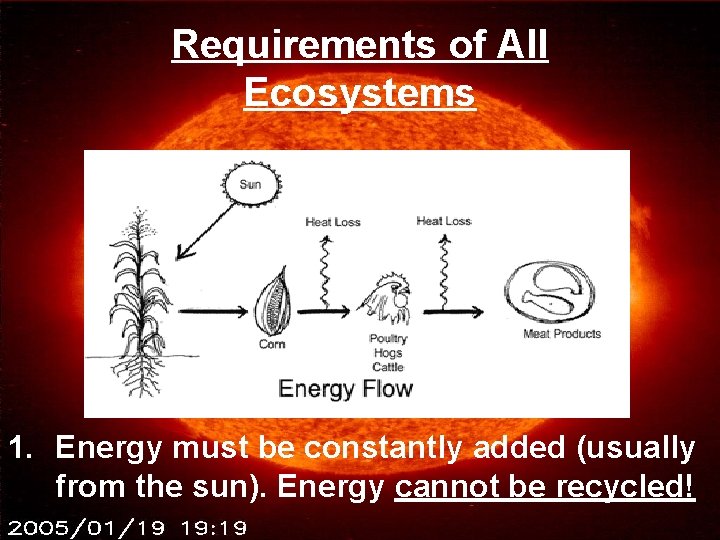
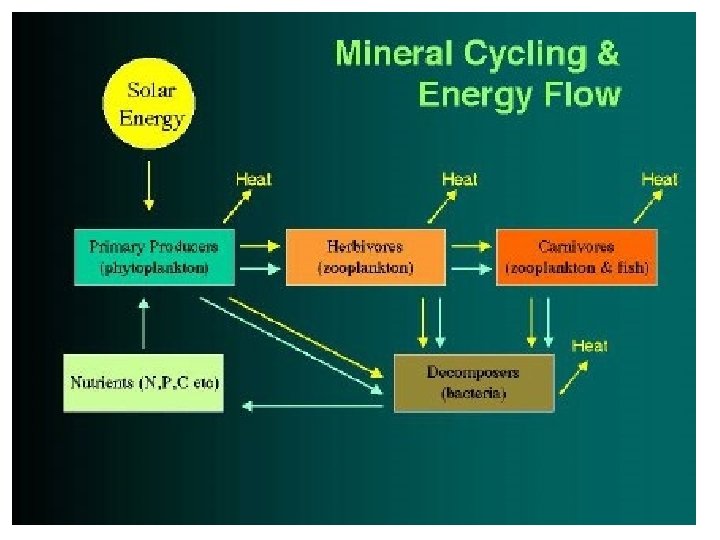
Requirements of All Ecosystems 1. Energy must be constantly added (usually from the sun). Energy cannot be recycled!
2. Cycling of Materials like minerals, CO 2, nitrogen, & H 20. These are recycled (used over and over) between the living and nonliving things in an ecosystem
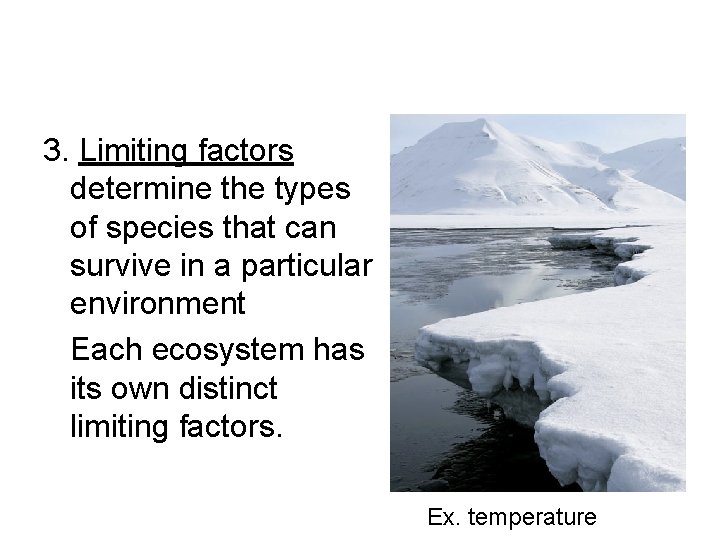
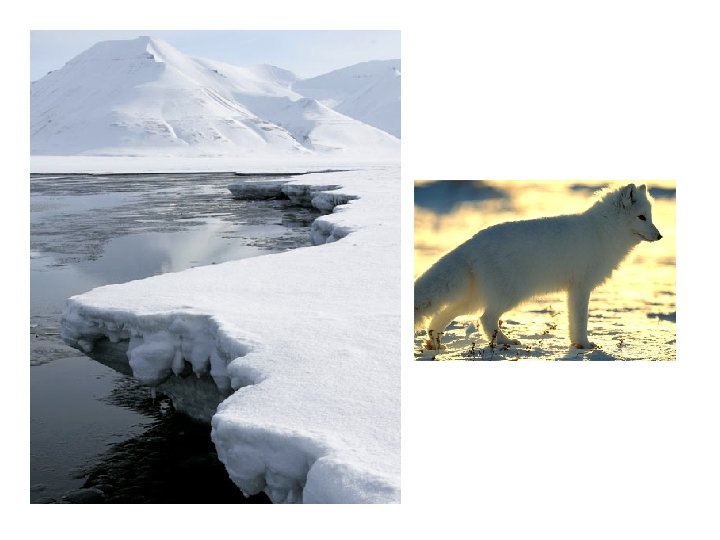
3. Limiting factors determine the types of species that can survive in a particular environment Each ecosystem has its own distinct limiting factors. Ex. temperature
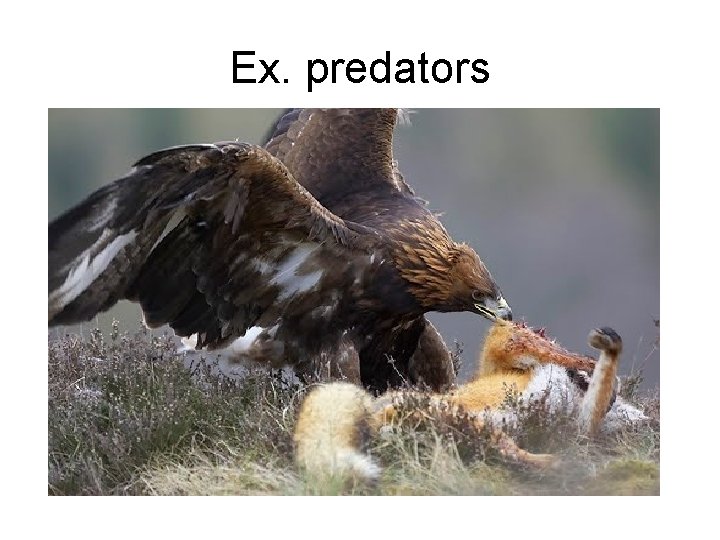
Ex. predators
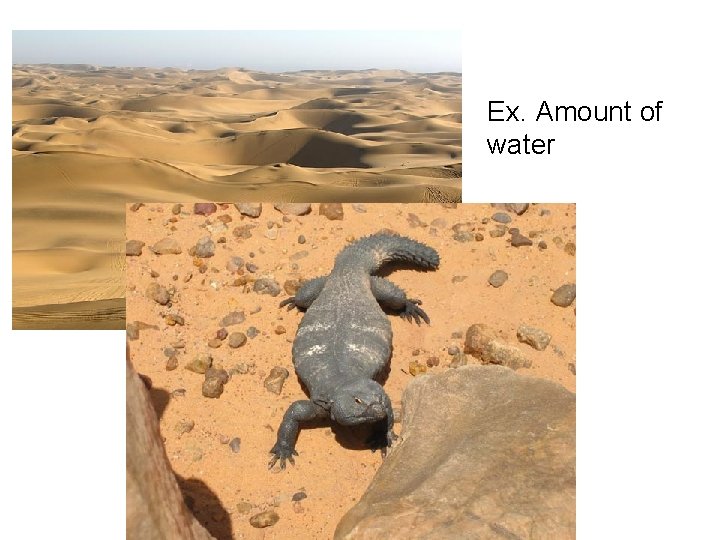
Ex. Amount of water
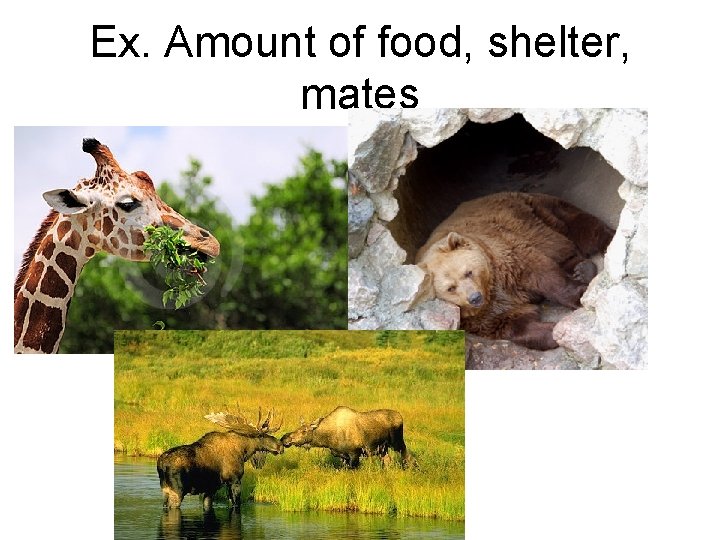
Ex. Amount of food, shelter, mates
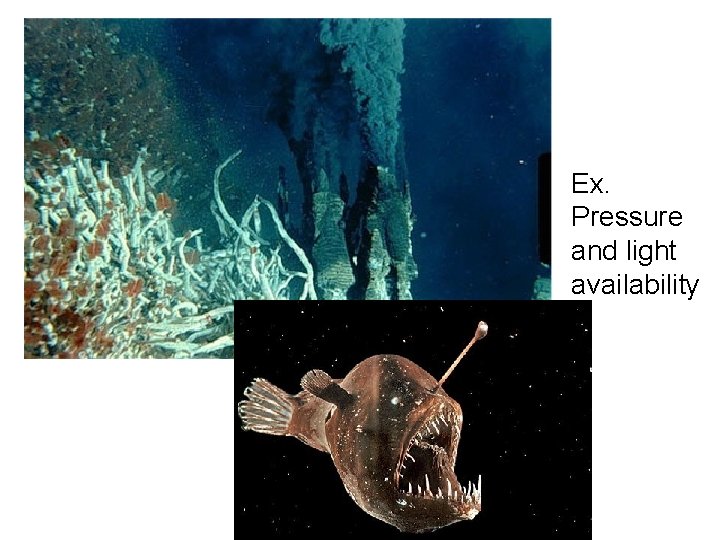
Ex. Pressure and light availability
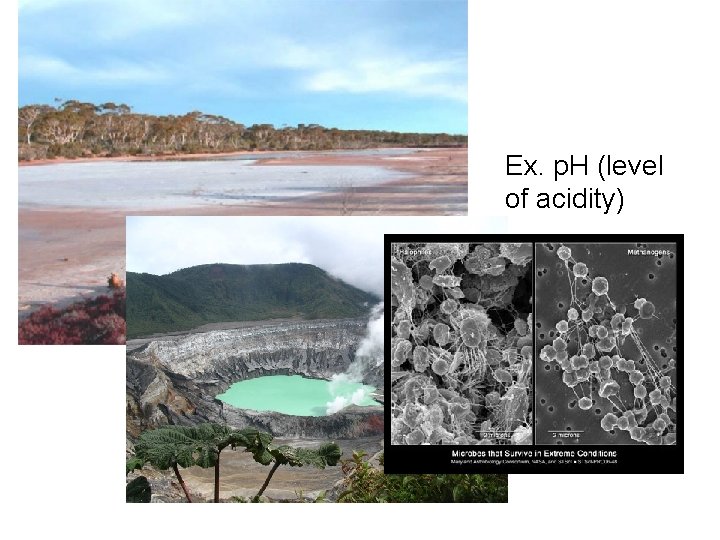
Ex. p. H (level of acidity)
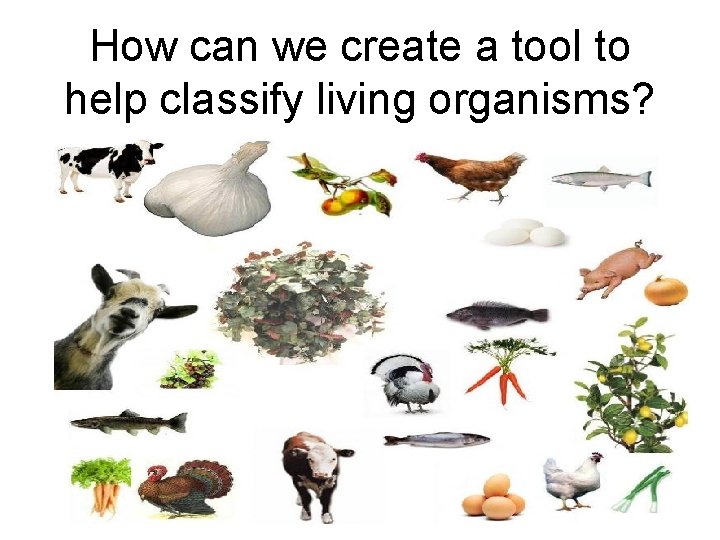
How can we create a tool to help classify living organisms?
Think about… • How do we determine relatedness between species today? • How did Darwin organize the animals he observed?
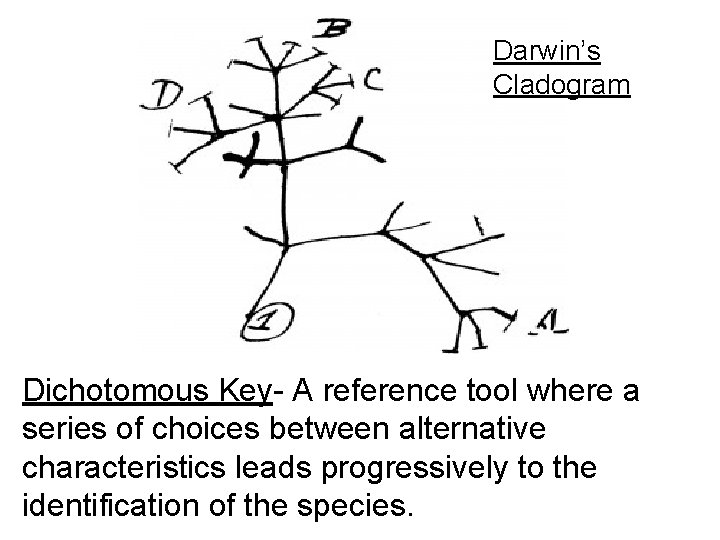
Darwin’s Cladogram Dichotomous Key- A reference tool where a series of choices between alternative characteristics leads progressively to the identification of the species.
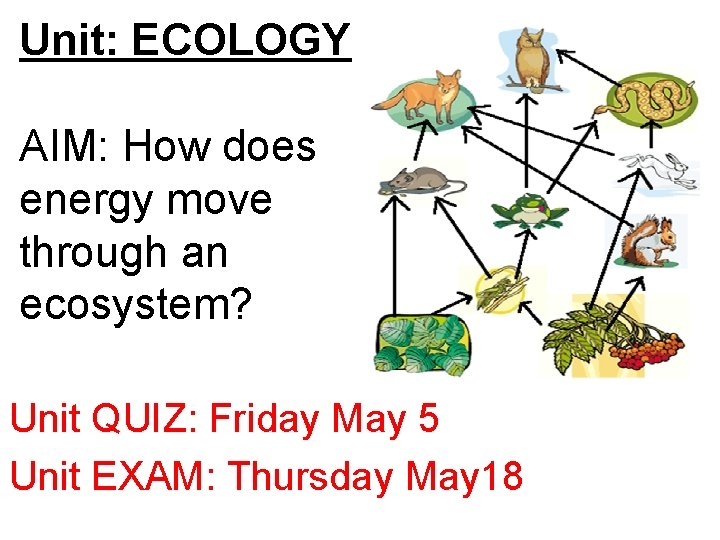
Unit: ECOLOGY AIM: How does energy move through an ecosystem? Unit QUIZ: Friday May 5 Unit EXAM: Thursday May 18
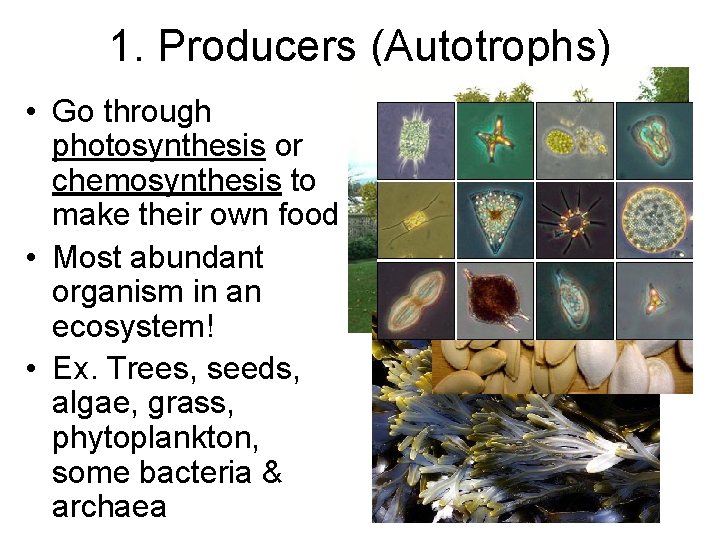
1. Producers (Autotrophs) • Go through photosynthesis or chemosynthesis to make their own food • Most abundant organism in an ecosystem! • Ex. Trees, seeds, algae, grass, phytoplankton, some bacteria & archaea
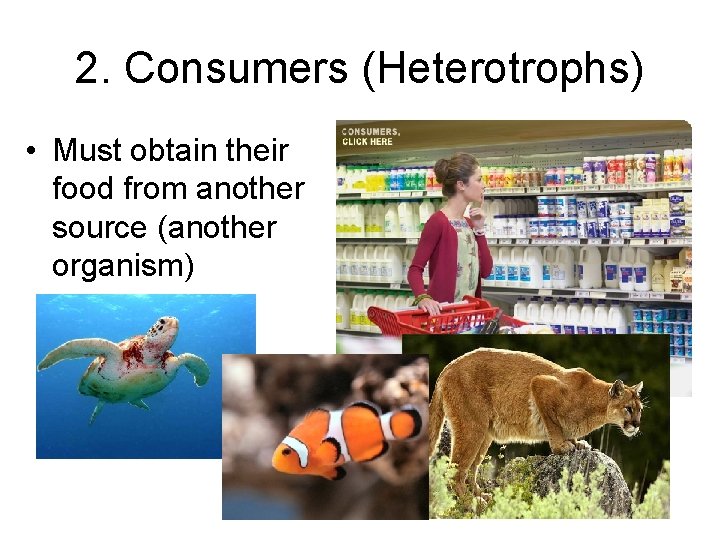
2. Consumers (Heterotrophs) • Must obtain their food from another source (another organism)
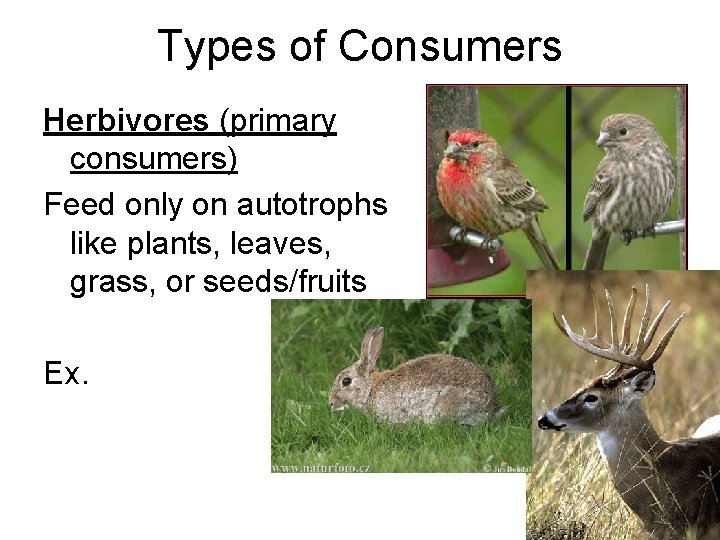
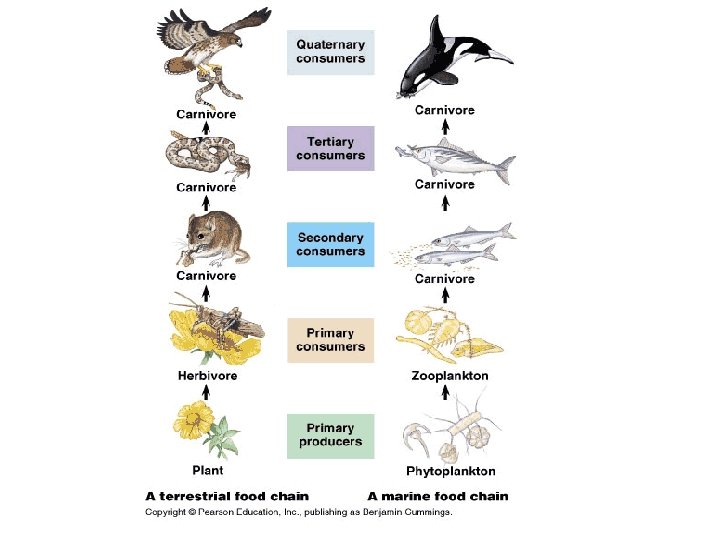
Types of Consumers Herbivores (primary consumers) Feed only on autotrophs like plants, leaves, grass, or seeds/fruits Ex.
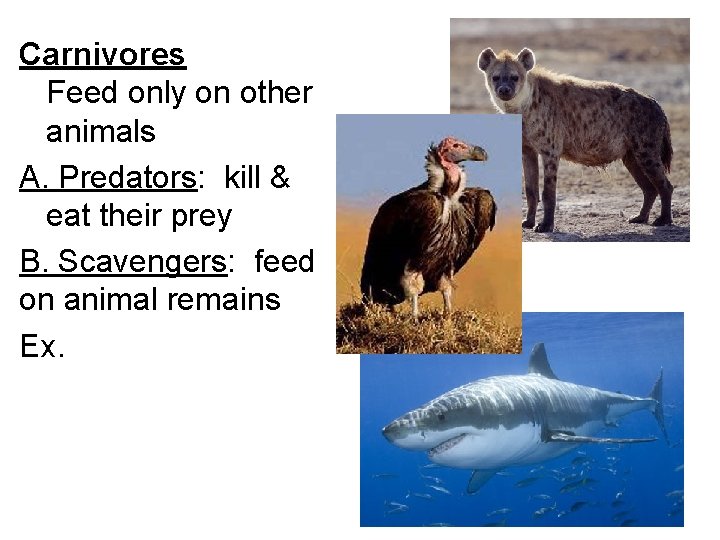
Carnivores Feed only on other animals A. Predators: kill & eat their prey B. Scavengers: feed on animal remains Ex.
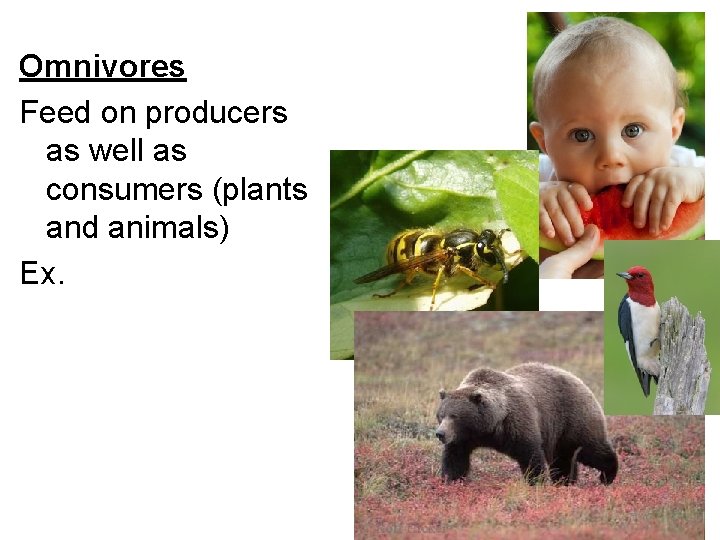
Omnivores Feed on producers as well as consumers (plants and animals) Ex.
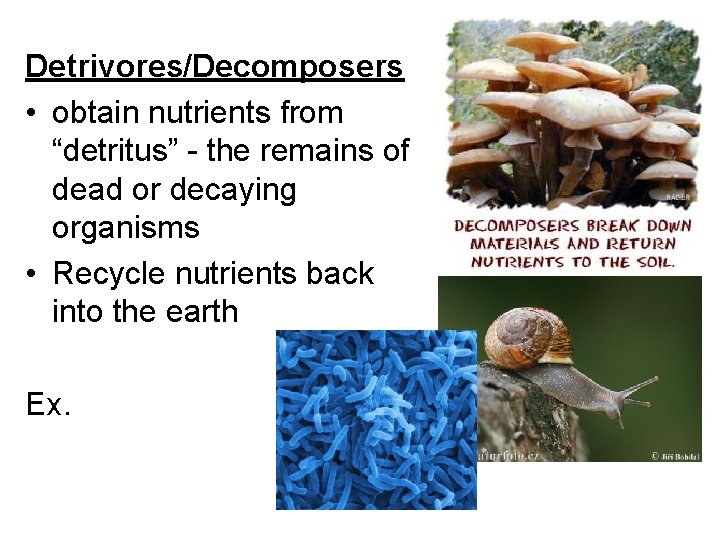
Detrivores/Decomposers • obtain nutrients from “detritus” - the remains of dead or decaying organisms • Recycle nutrients back into the earth Ex.
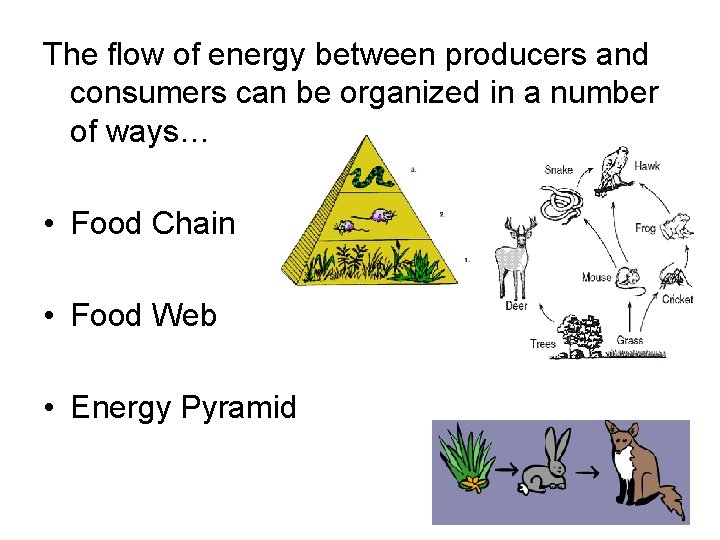
The flow of energy between producers and consumers can be organized in a number of ways… • Food Chain • Food Web • Energy Pyramid
Food Chains • Diagram showing one chain of energy existing between organisms in an ecosystem • Arrows point in the direction of energy flow! • Ex.
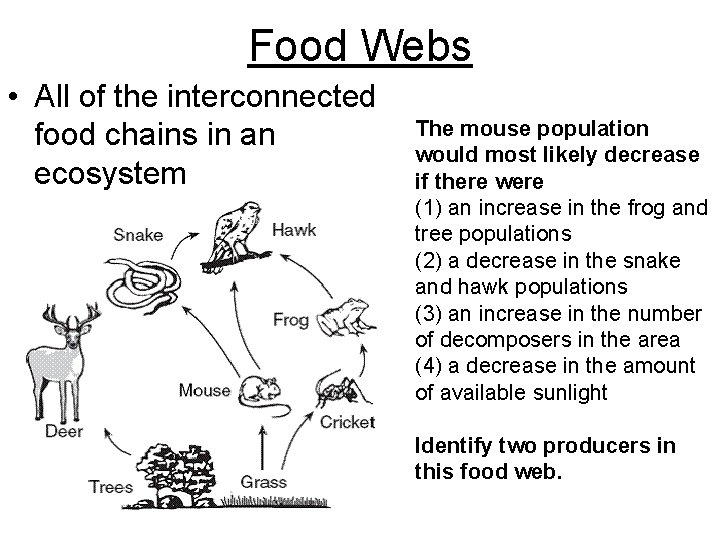
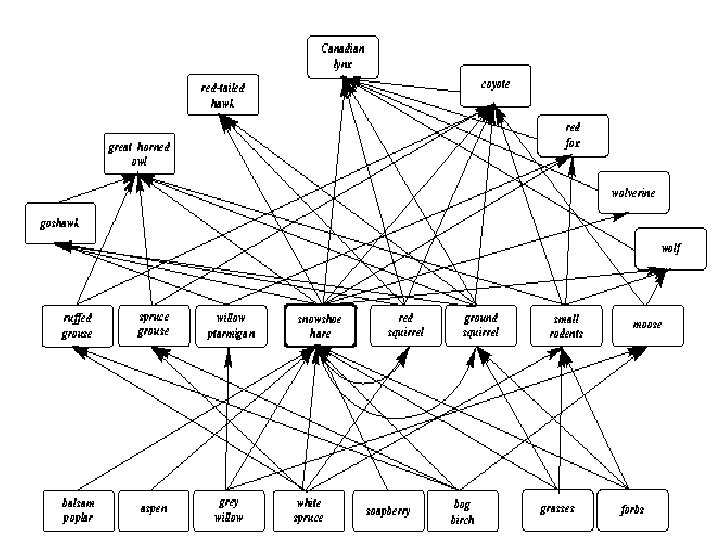
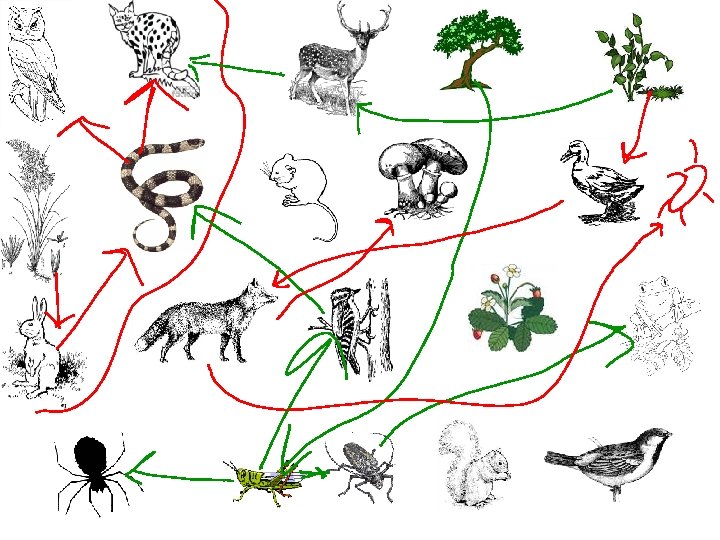
Food Webs • All of the interconnected food chains in an ecosystem The mouse population would most likely decrease if there were (1) an increase in the frog and tree populations (2) a decrease in the snake and hawk populations (3) an increase in the number of decomposers in the area (4) a decrease in the amount of available sunlight Identify two producers in this food web.
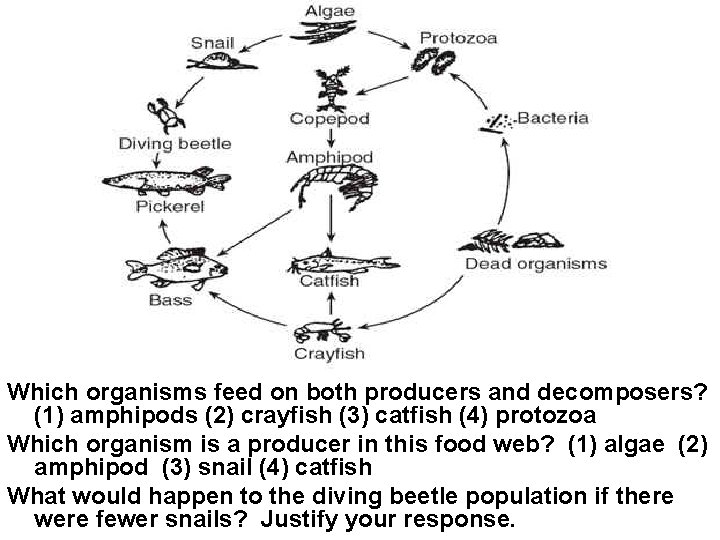
Which organisms feed on both producers and decomposers? (1) amphipods (2) crayfish (3) catfish (4) protozoa Which organism is a producer in this food web? (1) algae (2) amphipod (3) snail (4) catfish What would happen to the diving beetle population if there were fewer snails? Justify your response.
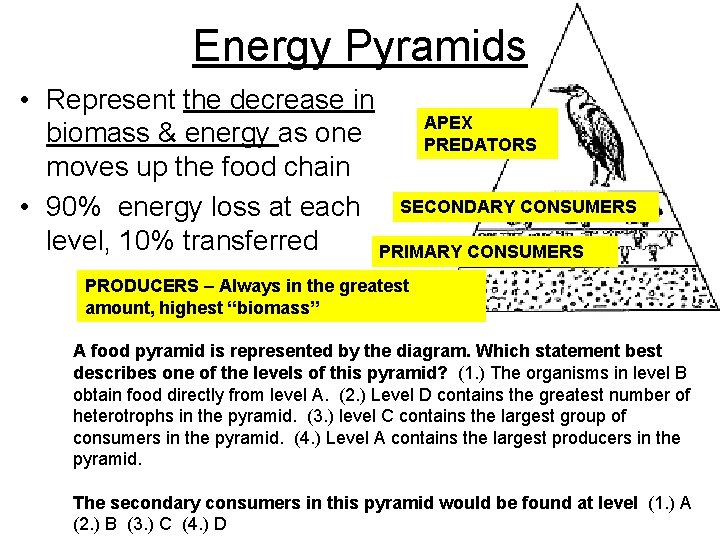
Energy Pyramids • Represent the decrease in APEX biomass & energy as one PREDATORS moves up the food chain • 90% energy loss at each SECONDARY CONSUMERS level, 10% transferred PRIMARY CONSUMERS PRODUCERS – Always in the greatest amount, highest “biomass” A food pyramid is represented by the diagram. Which statement best describes one of the levels of this pyramid? (1. ) The organisms in level B obtain food directly from level A. (2. ) Level D contains the greatest number of heterotrophs in the pyramid. (3. ) level C contains the largest group of consumers in the pyramid. (4. ) Level A contains the largest producers in the pyramid. The secondary consumers in this pyramid would be found at level (1. ) A (2. ) B (3. ) C (4. ) D
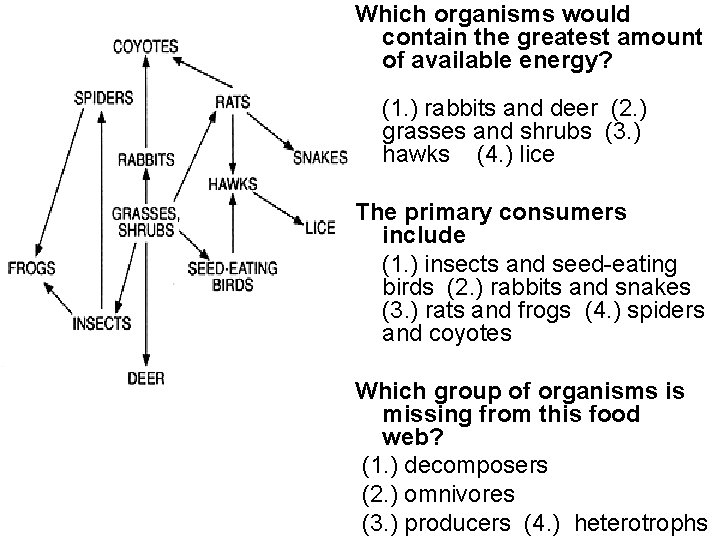
Which organisms would contain the greatest amount of available energy? (1. ) rabbits and deer (2. ) grasses and shrubs (3. ) hawks (4. ) lice The primary consumers include (1. ) insects and seed-eating birds (2. ) rabbits and snakes (3. ) rats and frogs (4. ) spiders and coyotes Which group of organisms is missing from this food web? (1. ) decomposers (2. ) omnivores (3. ) producers (4. ) heterotrophs
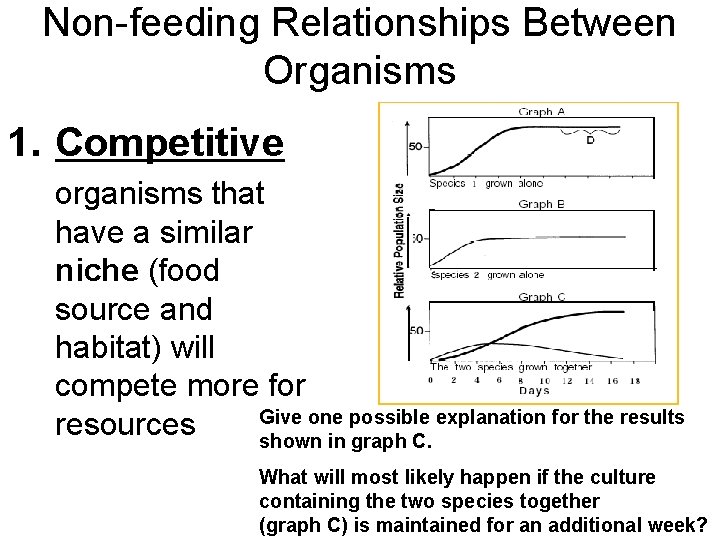
Non-feeding Relationships Between Organisms 1. Competitive organisms that have a similar niche (food source and habitat) will compete more for Give one possible explanation for the results resources shown in graph C. What will most likely happen if the culture containing the two species together (graph C) is maintained for an additional week?
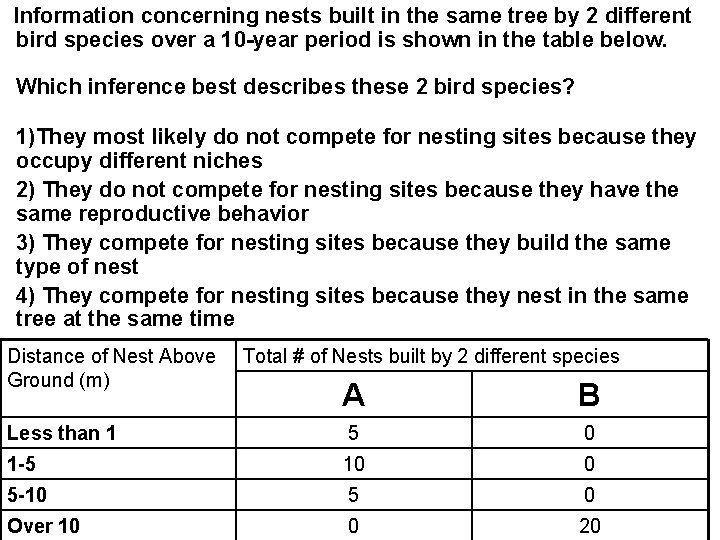
Information concerning nests built in the same tree by 2 different bird species over a 10 -year period is shown in the table below. Which inference best describes these 2 bird species? 1)They most likely do not compete for nesting sites because they occupy different niches 2) They do not compete for nesting sites because they have the same reproductive behavior 3) They compete for nesting sites because they build the same type of nest 4) They compete for nesting sites because they nest in the same tree at the same time Distance of Nest Above Ground (m) Total # of Nests built by 2 different species A B Less than 1 5 0 1 -5 10 0 5 -10 5 0 Over 10 0 20
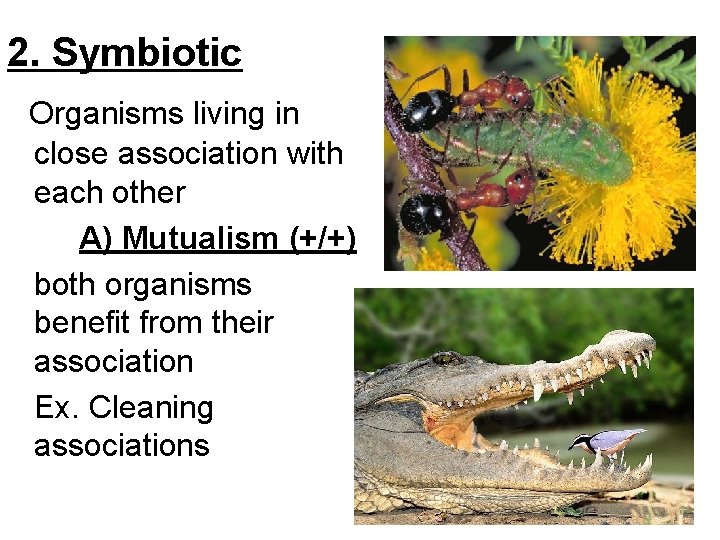
2. Symbiotic Organisms living in close association with each other A) Mutualism (+/+) both organisms benefit from their association Ex. Cleaning associations
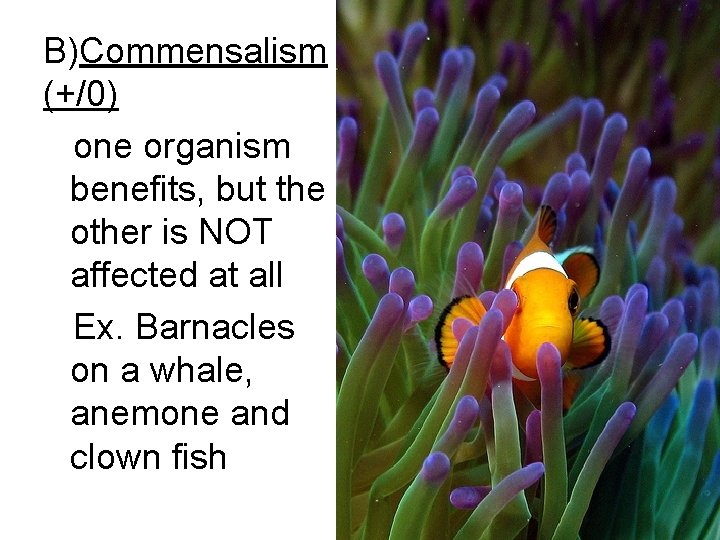
B)Commensalism (+/0) one organism benefits, but the other is NOT affected at all Ex. Barnacles on a whale, anemone and clown fish
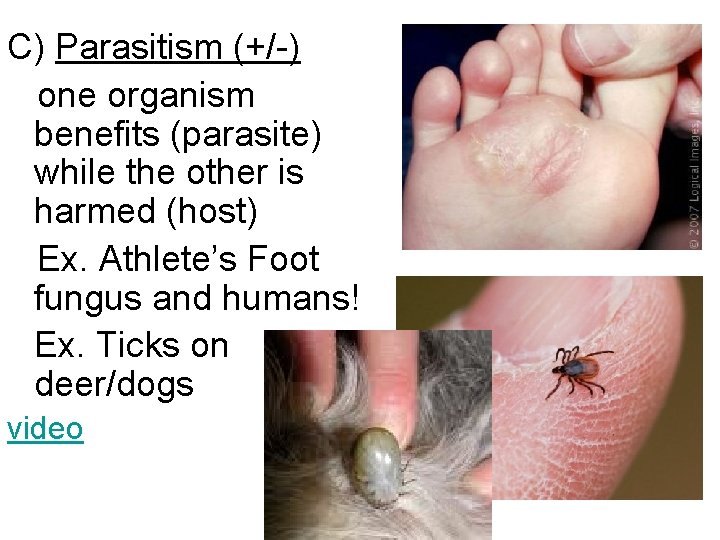
C) Parasitism (+/-) one organism benefits (parasite) while the other is harmed (host) Ex. Athlete’s Foot fungus and humans! Ex. Ticks on deer/dogs video
Symbiosis Video 10 & 9 • 2: 01 • 6: 51 8 (1: 00) 6 4&3 2&1
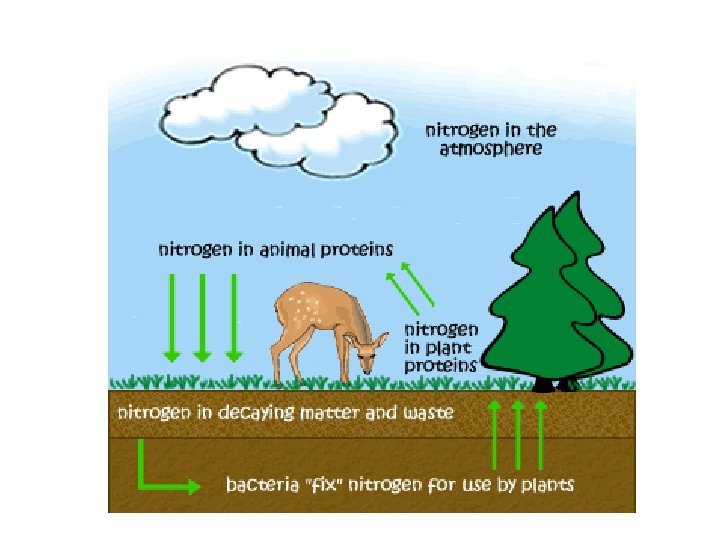
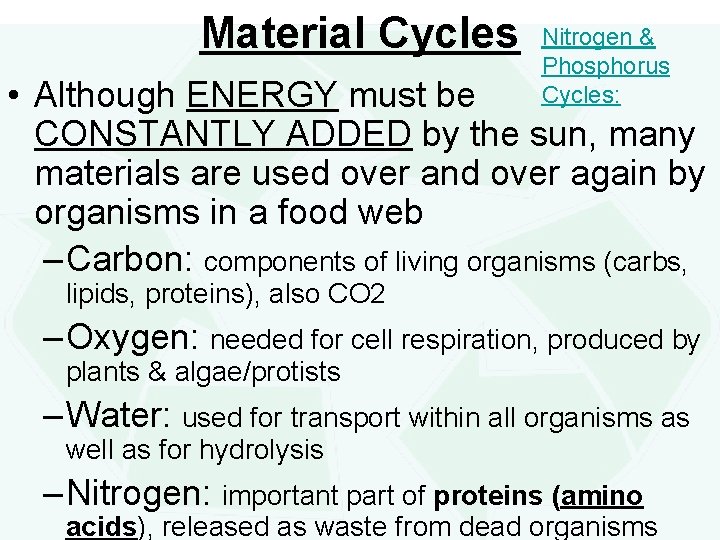
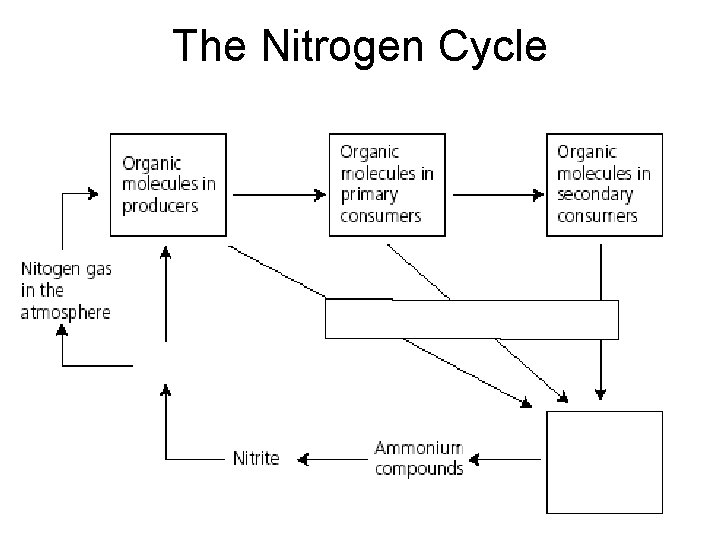
Material Cycles Nitrogen & Phosphorus Cycles: • Although ENERGY must be CONSTANTLY ADDED by the sun, many materials are used over and over again by organisms in a food web – Carbon: components of living organisms (carbs, lipids, proteins), also CO 2 – Oxygen: needed for cell respiration, produced by plants & algae/protists – Water: used for transport within all organisms as well as for hydrolysis – Nitrogen: important part of proteins (amino acids), released as waste from dead organisms
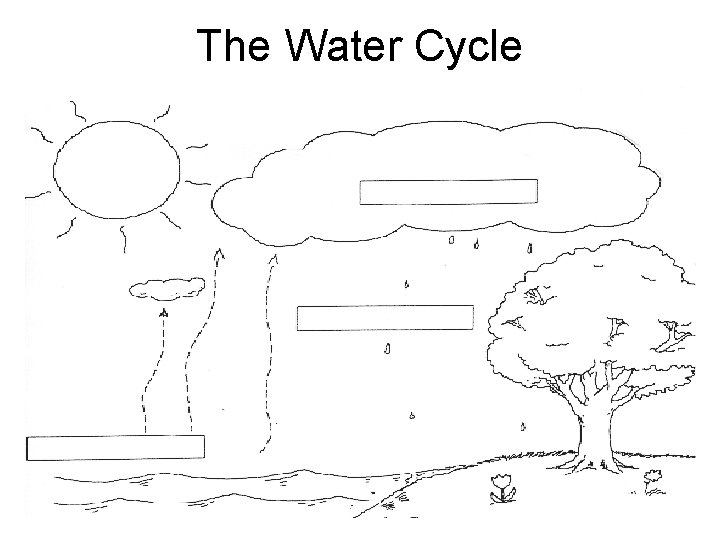
The Water Cycle
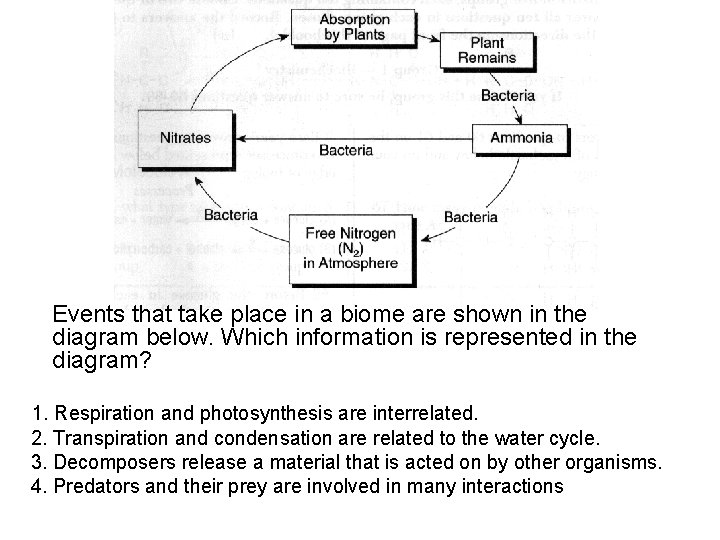
The Nitrogen Cycle
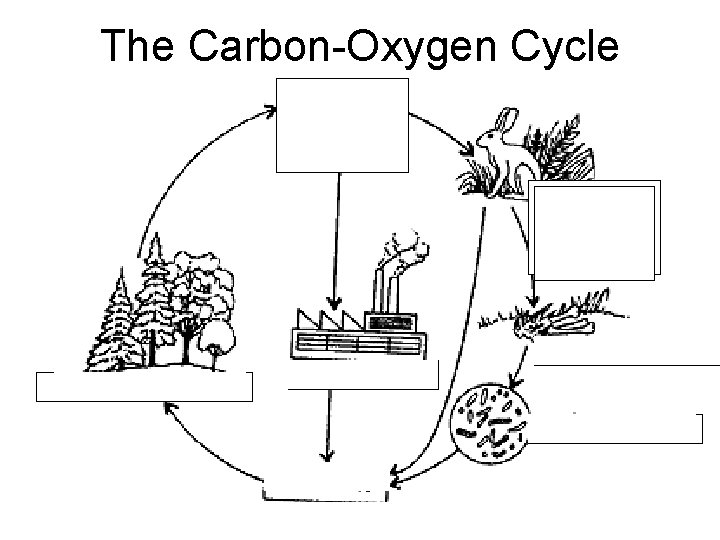
The Carbon-Oxygen Cycle OXYGEN Respiration in Plants and Animals Photosynthesis Combustion Dead Organisms Decomposition
Events that take place in a biome are shown in the diagram below. Which information is represented in the diagram? 1. Respiration and photosynthesis are interrelated. 2. Transpiration and condensation are related to the water cycle. 3. Decomposers release a material that is acted on by other organisms. 4. Predators and their prey are involved in many interactions
An ecosystem, such as an aquarium, is selfsustaining if it involves the interaction between organisms, a flow of energy, and the presence of 1. equal numbers of plants and animals 2. more animals than plants 3. materials cycles 4. pioneer organisms Brainpop
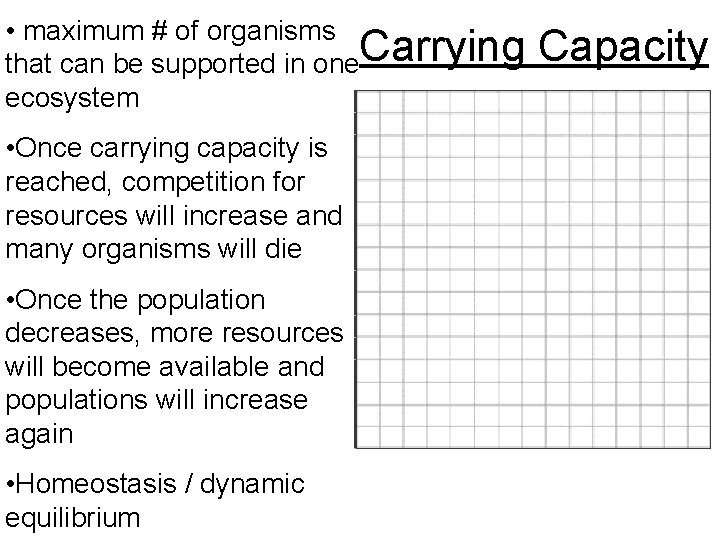
• maximum # of organisms that can be supported in one. Carrying ecosystem • Once carrying capacity is reached, competition for resources will increase and many organisms will die • Once the population decreases, more resources will become available and populations will increase again • Homeostasis / dynamic equilibrium Capacity
Extra Credit – Answer ALL 1. All of the following are true of protista EXCEPT A) all are heterotrophs B) all are eukaryotes C) include ameoba, paramecium, & euglena D) they include the widest variety of any kingdom Choose from…A) Platyhelminthes B) Nematodes C) Cnidarians D) Echinoderms 2. Includes the sea stars and sea urchins 3. Organisms in this phyla contain stinging cells 4. Roundworms and are parasitic!