
Unit D Section 4 0 The use of
- Slides: 28
Unit D Section 4. 0 The use of electrical energy affects society and the environment
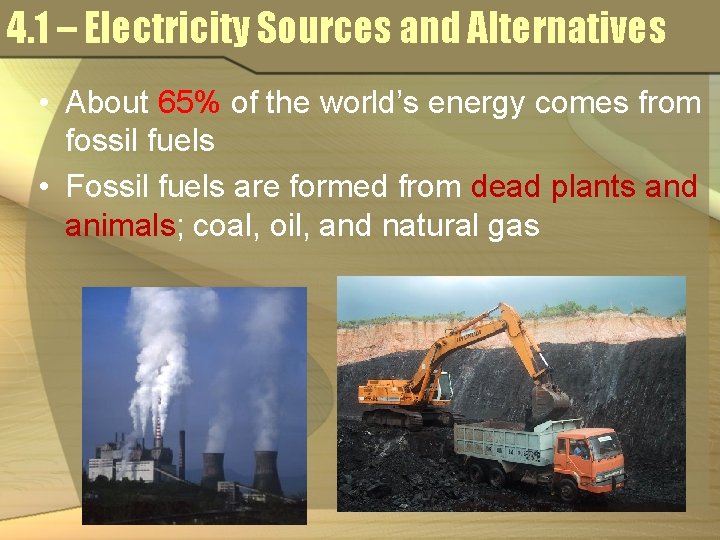
4. 1 – Electricity Sources and Alternatives • About 65% of the world’s energy comes from fossil fuels • Fossil fuels are formed from dead plants and animals; coal, oil, and natural gas
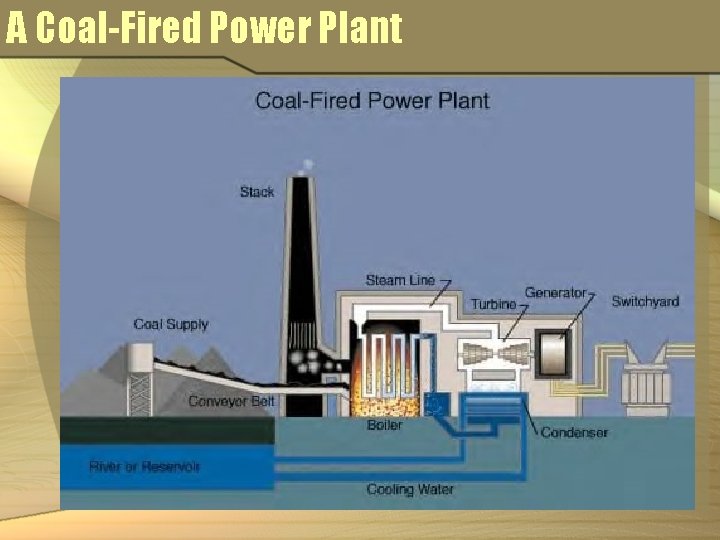
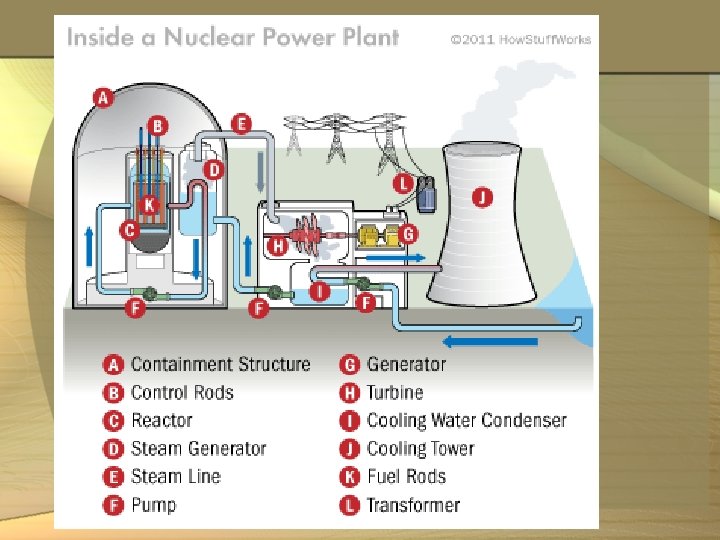
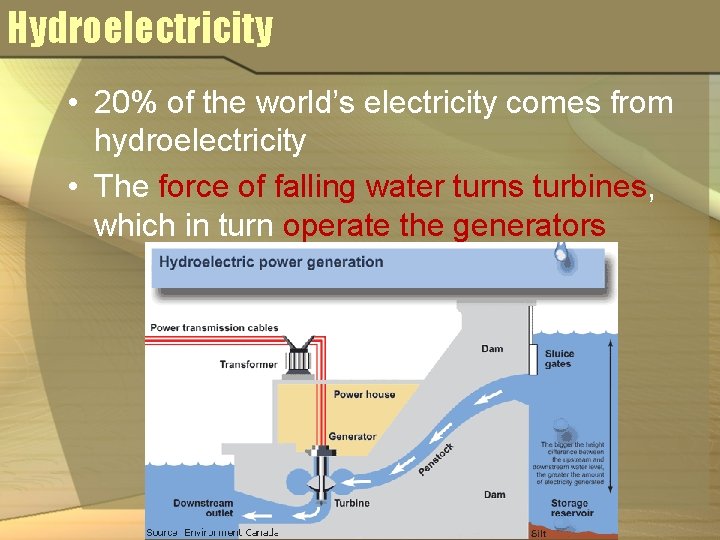
Producing Electricity from Heat • Fossil fuel power and nuclear power both produce heat that is used to make steam • This high-pressure steam then turns a turbine • The turbine then turns a generator, which produces electrical energy
A Coal-Fired Power Plant
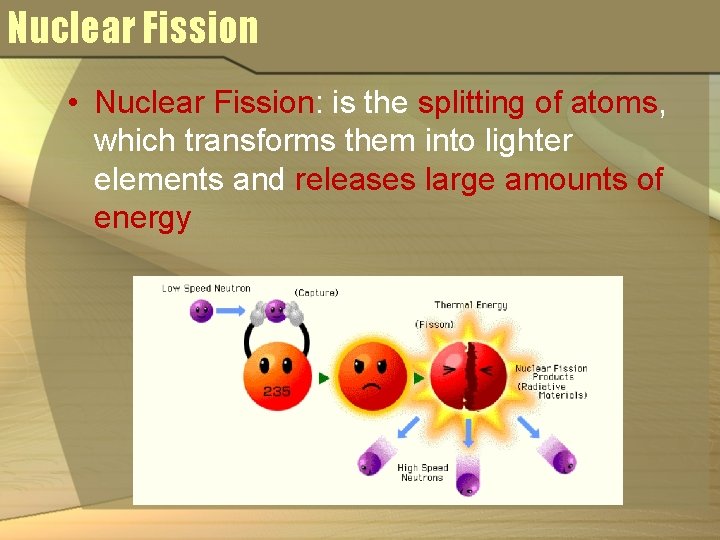
Nuclear Fission • Nuclear Fission: is the splitting of atoms, which transforms them into lighter elements and releases large amounts of energy
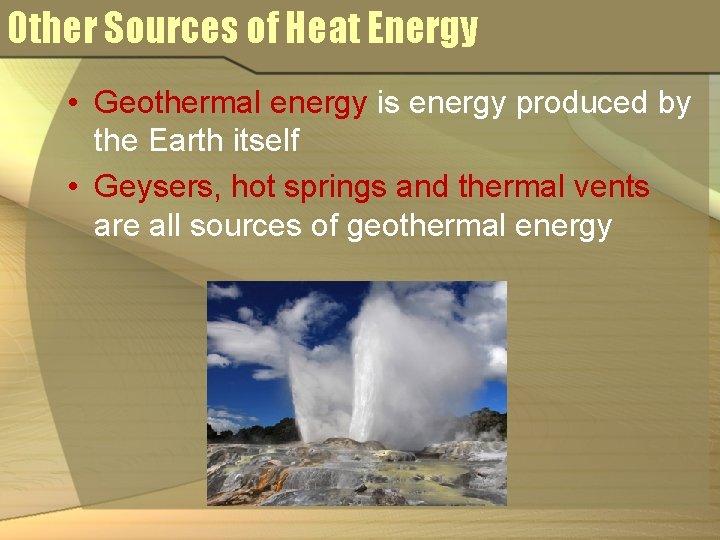
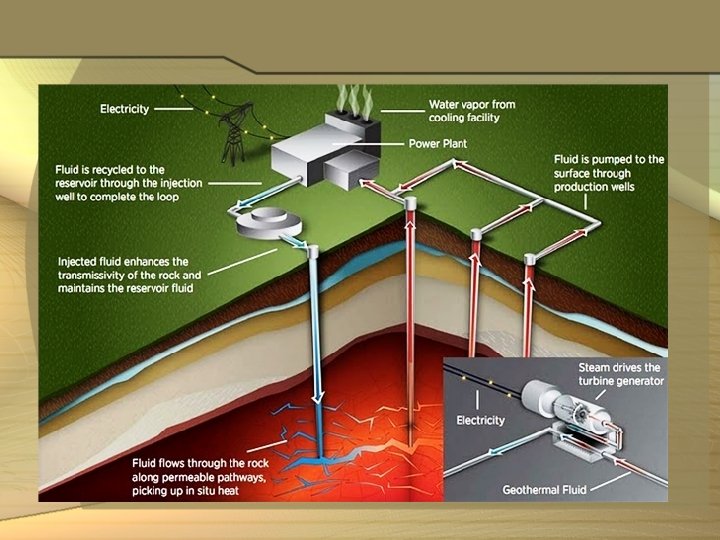
Other Sources of Heat Energy • Geothermal energy is energy produced by the Earth itself • Geysers, hot springs and thermal vents are all sources of geothermal energy
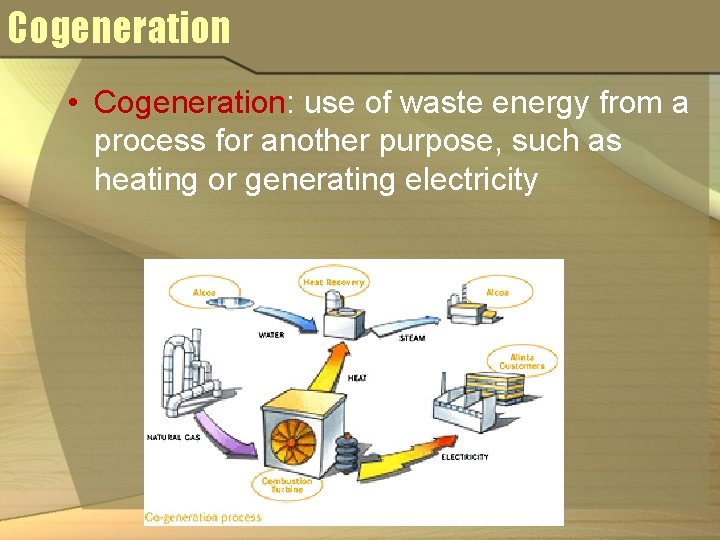
Cogeneration • Cogeneration: use of waste energy from a process for another purpose, such as heating or generating electricity
Hydroelectricity • 20% of the world’s electricity comes from hydroelectricity • The force of falling water turns turbines, which in turn operate the generators
Renewable vs Non-Renewable Energy • Renewable Energy: resource such as water or wind energy that is continually replenished and therefore can be used indefinitely • Non-Renewable Energy: a resource, such as coal or natural gas, that cannot be replenished
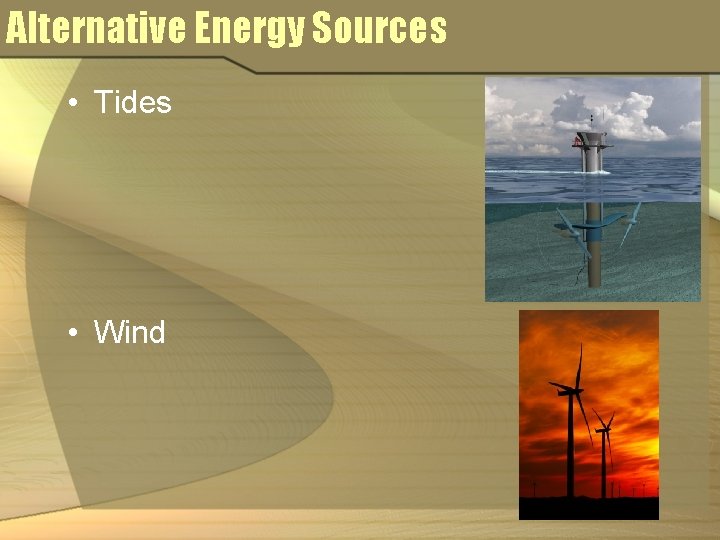
Alternative Energy Sources • Tides • Wind
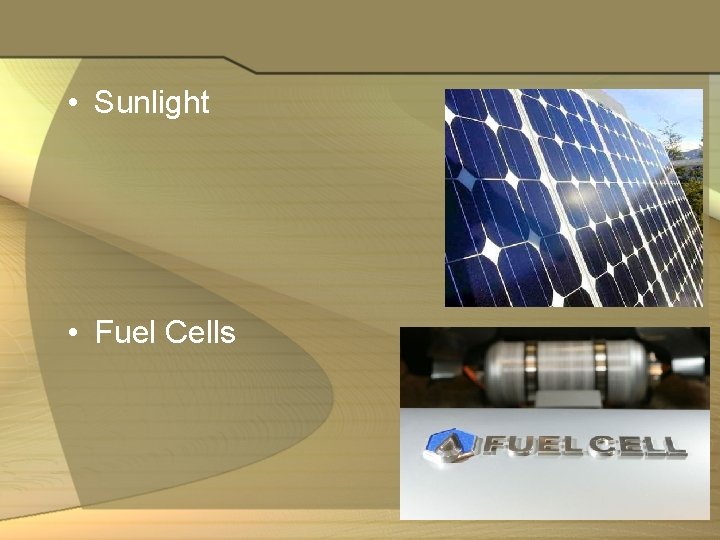
• Sunlight • Fuel Cells
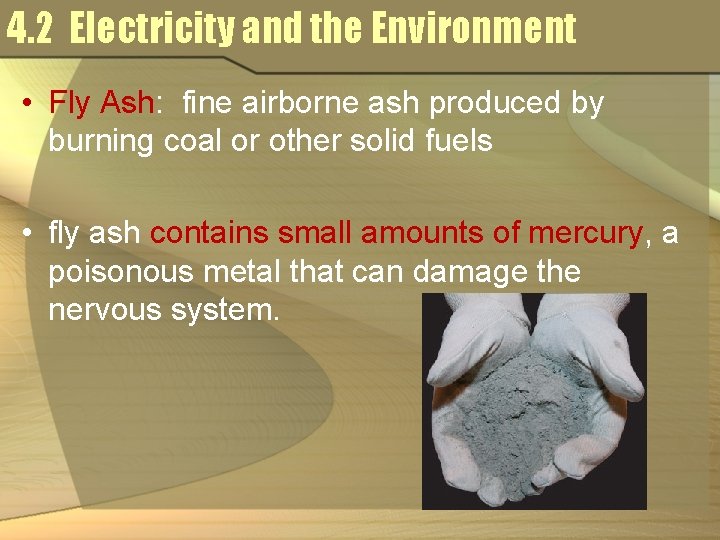
4. 2 Electricity and the Environment • Fly Ash: fine airborne ash produced by burning coal or other solid fuels • fly ash contains small amounts of mercury, a poisonous metal that can damage the nervous system.
Sustainability • If energy is conserved, then less energy is required • This puts less of a strain on energy sources • As well, a greater demand for fuels and energy drives up prices • Therefore, conservation not only reduces environmental impacts, but it also reduces energy demands and the price of energy
Sustainability • Ultimately, we should hope achieve sustainable energy use • (use of resources at a rate that can be maintained indefinitely without depleting the resources or harming the environment) • This may involve making compromises regarding how we use energy in the future
4. 3 – Electrical Technology and Society • Electrical communication originated in 1844 when Samuel Morse sent the first telegraph message • Since then, electrical technologies have continually developed and evolved to meet the needs of our society
Benefits of Electrical Technologies • Speed and convenience
Drawbacks of Electrical Technologies • Makes sustainability difficult • Increase in solid waste materials • Expensive for developing countries to adopt
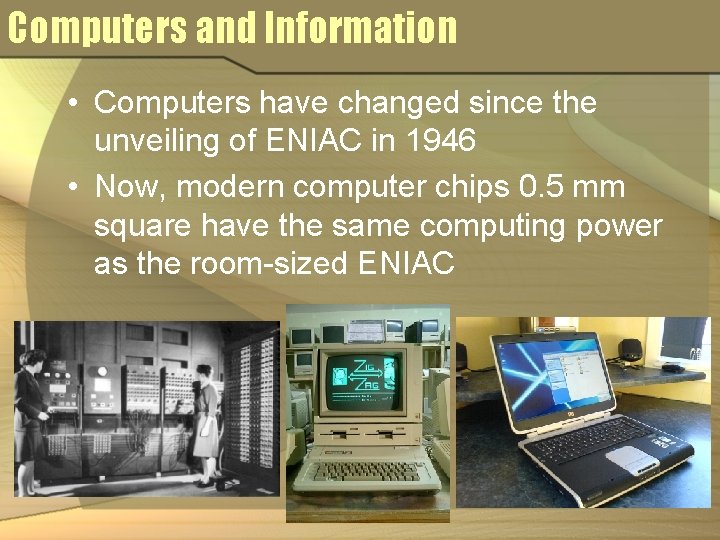
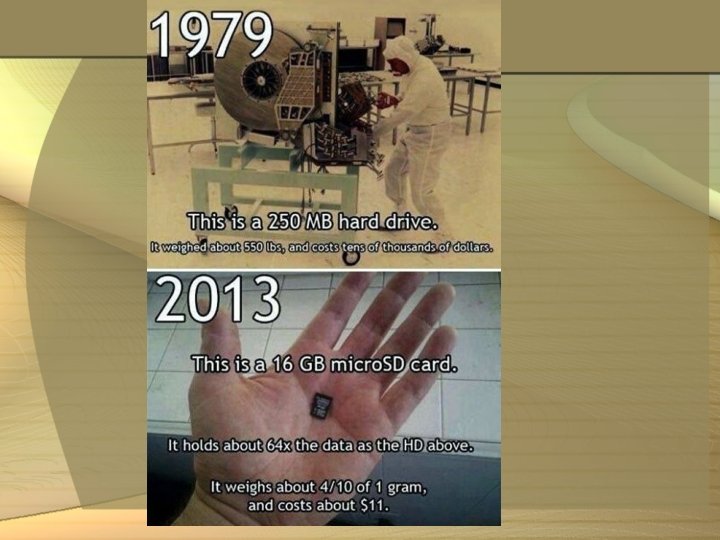
Computers and Information • Computers have changed since the unveiling of ENIAC in 1946 • Now, modern computer chips 0. 5 mm square have the same computing power as the room-sized ENIAC
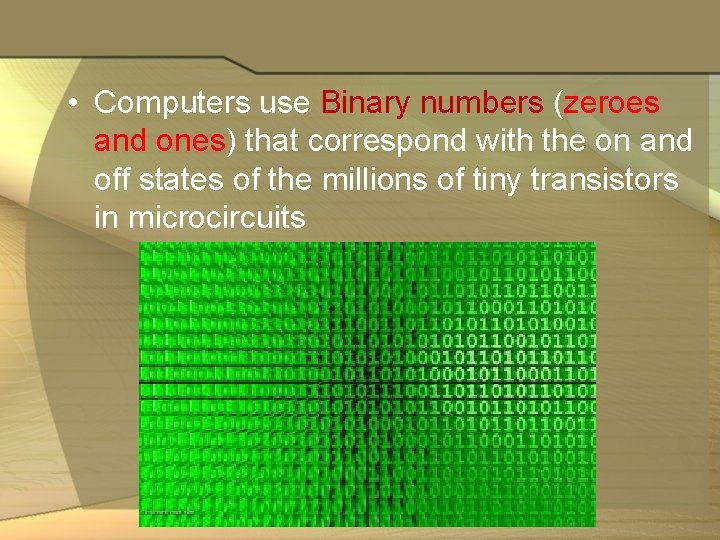
• Computers use Binary numbers (zeroes and ones) that correspond with the on and off states of the millions of tiny transistors in microcircuits
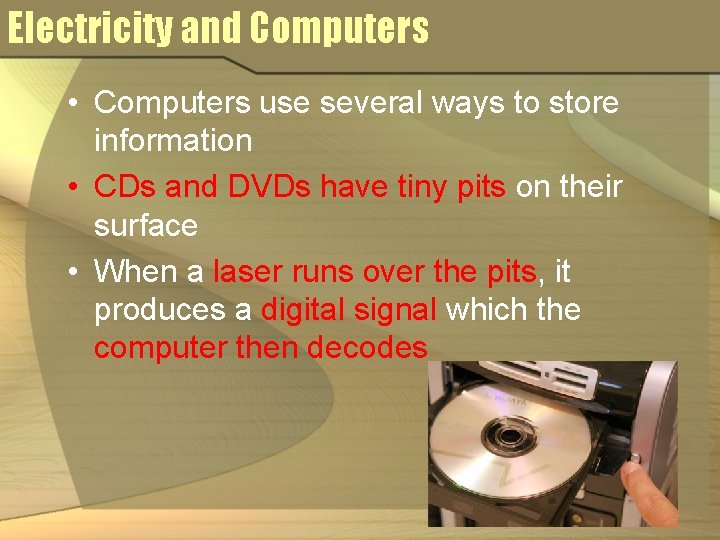
Electricity and Computers • Computers use several ways to store information • CDs and DVDs have tiny pits on their surface • When a laser runs over the pits, it produces a digital signal which the computer then decodes
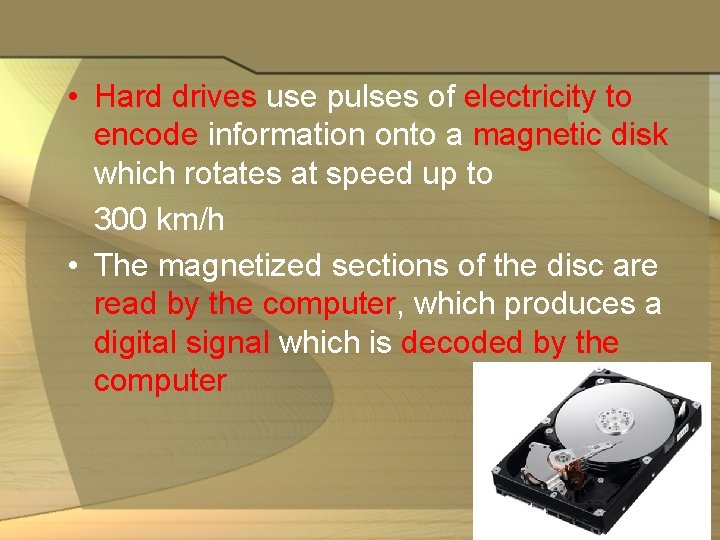
• Hard drives use pulses of electricity to encode information onto a magnetic disk which rotates at speed up to 300 km/h • The magnetized sections of the disc are read by the computer, which produces a digital signal which is decoded by the computer
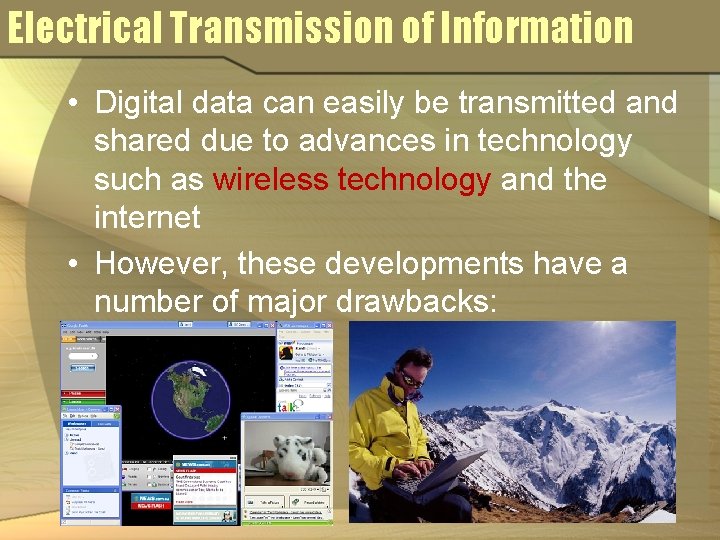
Electrical Transmission of Information • Digital data can easily be transmitted and shared due to advances in technology such as wireless technology and the internet • However, these developments have a number of major drawbacks:
Privacy and Security • Identity Theft: • Private Information:
Validity of Information • Information Sources: • Propaganda:
Information Overload • Searching for Information: