
UNIT BIOCHEMISTRY WHAT ARE THE STRUCTURES AND FUNCTIONS
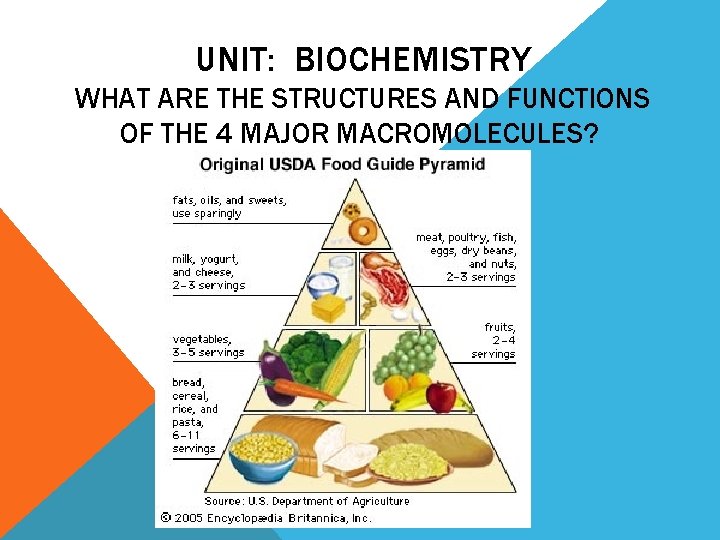
UNIT: BIOCHEMISTRY WHAT ARE THE STRUCTURES AND FUNCTIONS OF THE 4 MAJOR MACROMOLECULES?
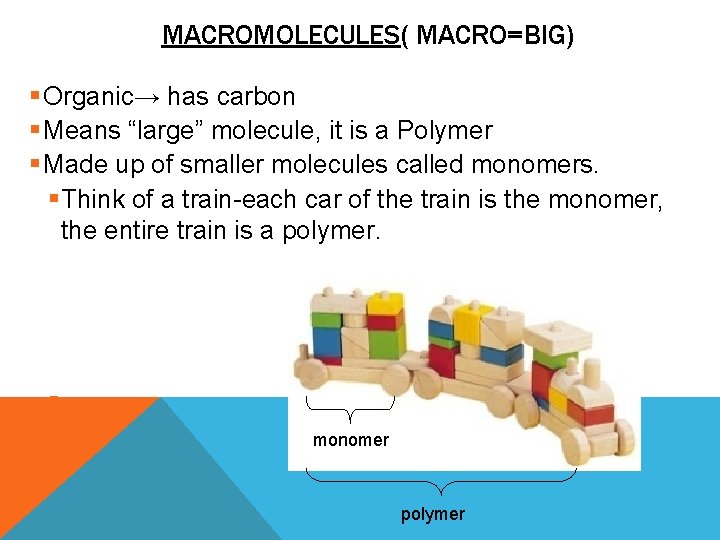
MACROMOLECULES( MACRO=BIG) § Organic→ has carbon § Means “large” molecule, it is a Polymer § Made up of smaller molecules called monomers. § Think of a train-each car of the train is the monomer, the entire train is a polymer. § monomer polymer
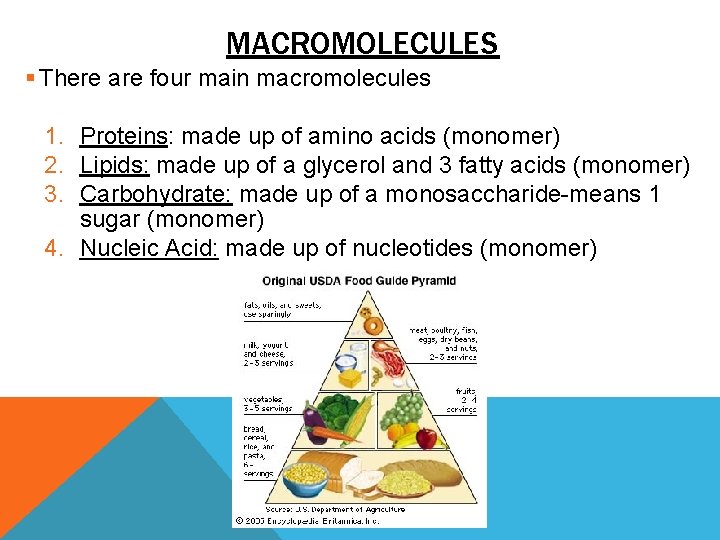
MACROMOLECULES § There are four main macromolecules 1. Proteins: made up of amino acids (monomer) 2. Lipids: made up of a glycerol and 3 fatty acids (monomer) 3. Carbohydrate: made up of a monosaccharide-means 1 sugar (monomer) 4. Nucleic Acid: made up of nucleotides (monomer)
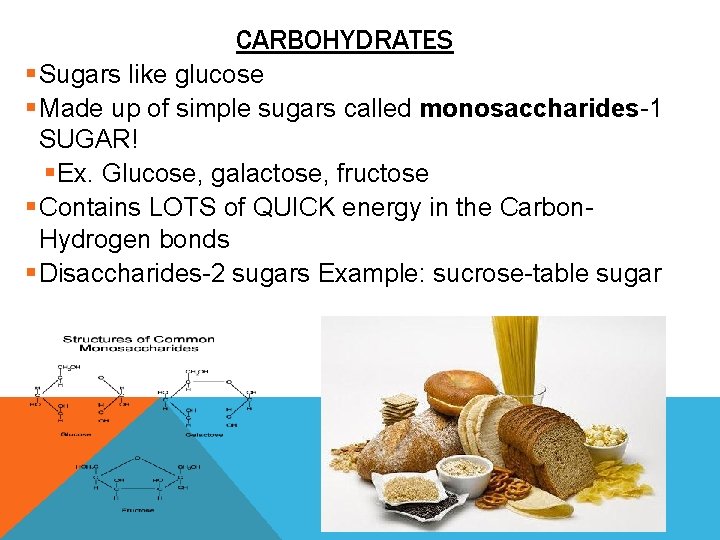
CARBOHYDRATES § Sugars like glucose § Made up of simple sugars called monosaccharides-1 SUGAR! § Ex. Glucose, galactose, fructose § Contains LOTS of QUICK energy in the Carbon. Hydrogen bonds § Disaccharides-2 sugars Example: sucrose-table sugar
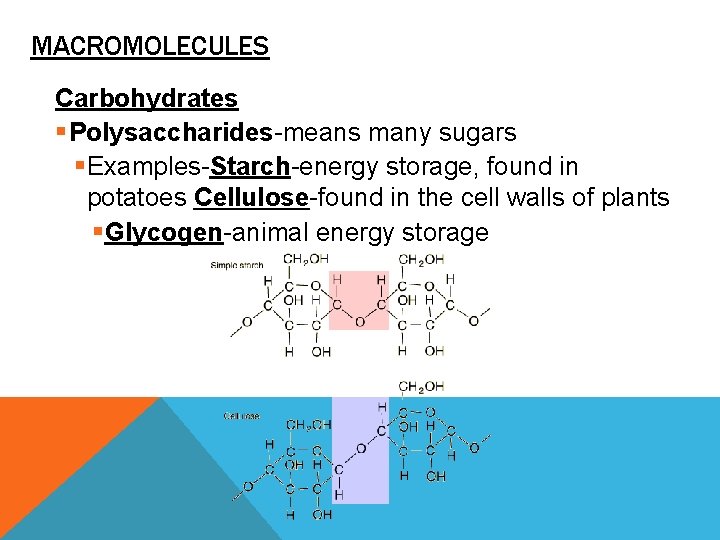
MACROMOLECULES Carbohydrates § Polysaccharides-means many sugars § Examples-Starch-energy storage, found in potatoes Cellulose-found in the cell walls of plants § Glycogen-animal energy storage

MACROMOLECULES Lipids-Fats a. Waxes, cholesterol, oils and fats b. 3 major roles in living things 1. Store energy in carbon-hydrogen bonds 2. form CELL membranes (phospholipid bilayer) 3. chemical messengers (steroid hormones)
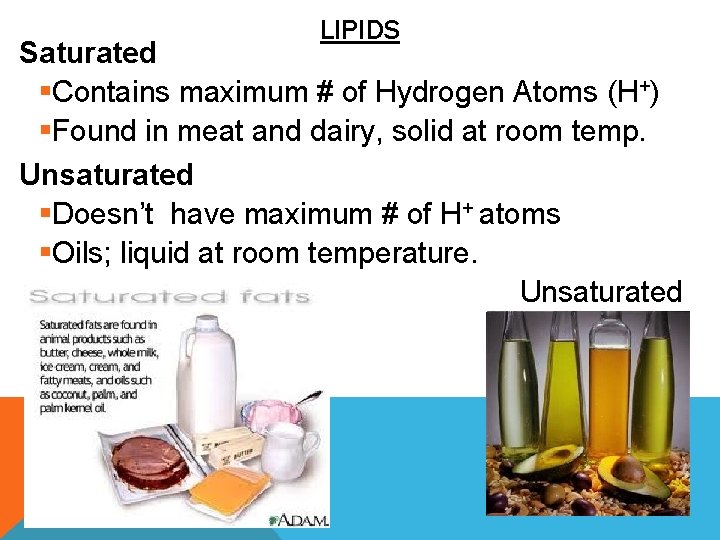
LIPIDS Saturated §Contains maximum # of Hydrogen Atoms (H+) §Found in meat and dairy, solid at room temp. Unsaturated §Doesn’t have maximum # of H+ atoms §Oils; liquid at room temperature. Unsaturated fats
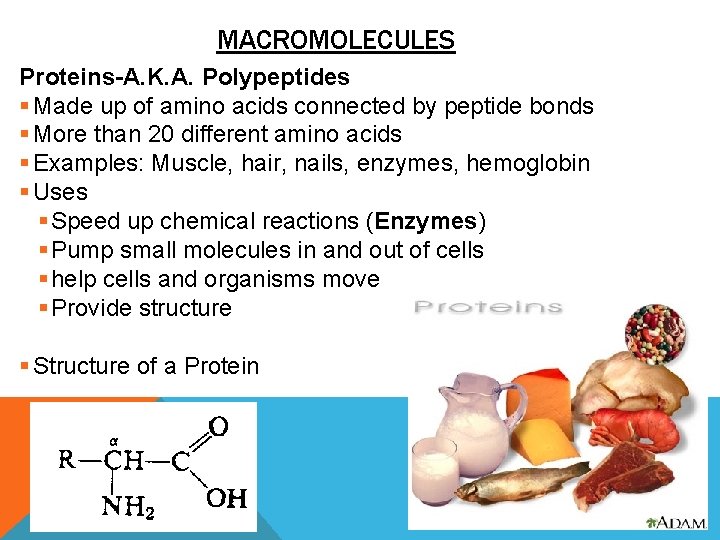
MACROMOLECULES Proteins-A. K. A. Polypeptides § Made up of amino acids connected by peptide bonds § More than 20 different amino acids § Examples: Muscle, hair, nails, enzymes, hemoglobin § Uses § Speed up chemical reactions (Enzymes) § Pump small molecules in and out of cells § help cells and organisms move § Provide structure § Structure of a Protein
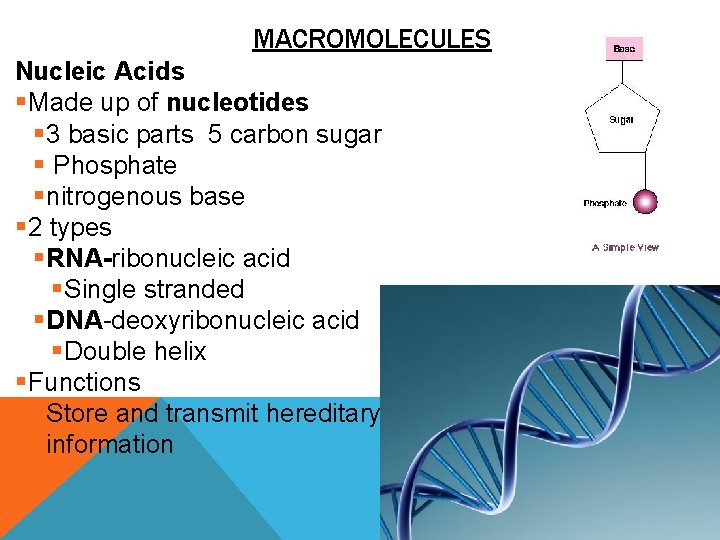
MACROMOLECULES Nucleic Acids § Made up of nucleotides § 3 basic parts 5 carbon sugar § Phosphate § nitrogenous base § 2 types § RNA-ribonucleic acid § Single stranded § DNA-deoxyribonucleic acid § Double helix § Functions § Store and transmit hereditary § information
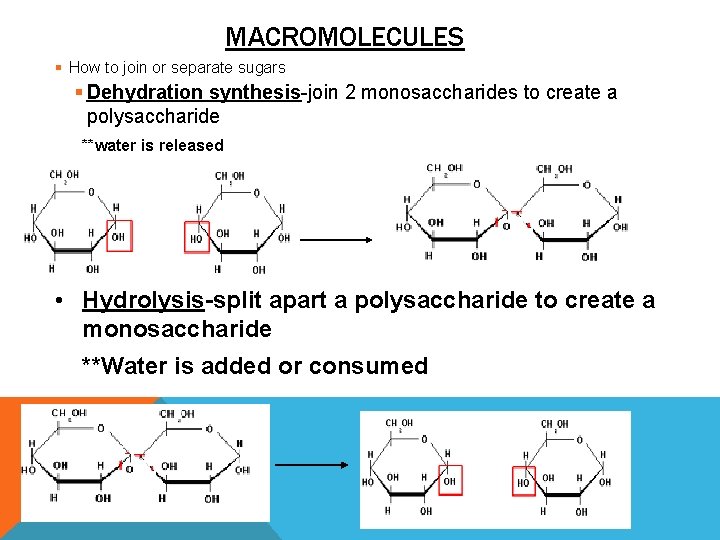
MACROMOLECULES § How to join or separate sugars § Dehydration synthesis-join 2 monosaccharides to create a polysaccharide **water is released • Hydrolysis-split apart a polysaccharide to create a monosaccharide **Water is added or consumed
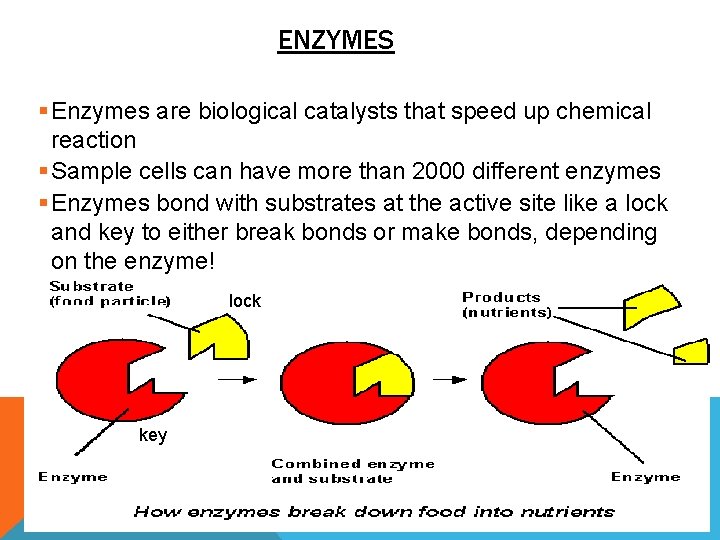
ENZYMES § Enzymes are biological catalysts that speed up chemical reaction § Sample cells can have more than 2000 different enzymes § Enzymes bond with substrates at the active site like a lock and key to either break bonds or make bonds, depending on the enzyme! lock key
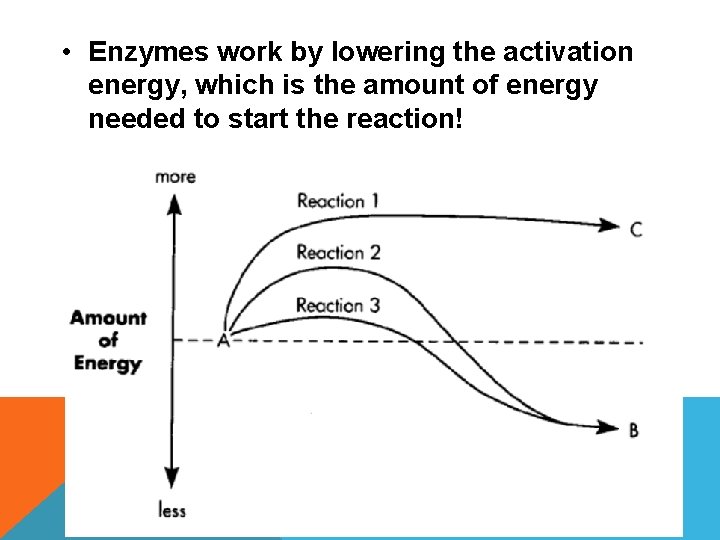
• Enzymes work by lowering the activation energy, which is the amount of energy needed to start the reaction!
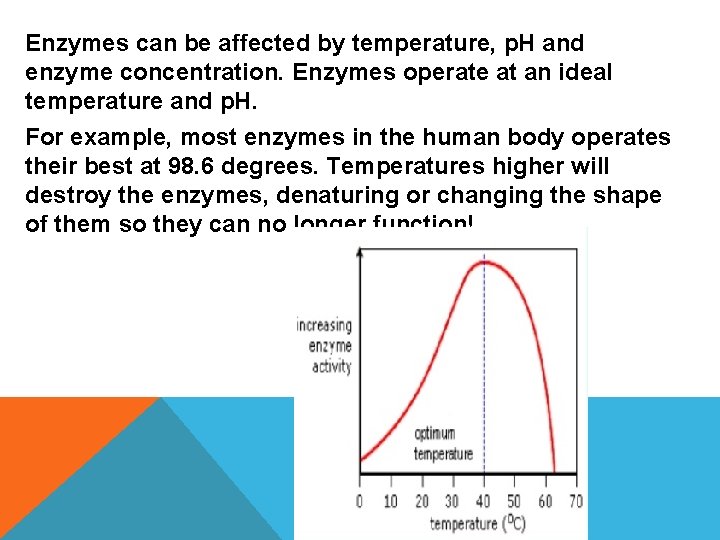
Enzymes can be affected by temperature, p. H and enzyme concentration. Enzymes operate at an ideal temperature and p. H. For example, most enzymes in the human body operates their best at 98. 6 degrees. Temperatures higher will destroy the enzymes, denaturing or changing the shape of them so they can no longer function!
- Slides: 13