
UNIT B Chapter 13 Urinary System Disorders of
UNIT B Chapter 13: Urinary System Disorders of the Kidneys The kidneys are essential to life. • Kidney disease: nephrons tend to be damaged, resulting in decreased glomerular filtration rate, and, eventually, kidney failure • If nephrons are destroyed, urea and waste products accumulate in the blood (uremia) • Retention of water and salts, which causes accumulation of fluids in the body tissues (edema) o Imbalances in ion concentration can lead to loss of consciousness and heart failure TO PREVIOUS SLIDE Section 13. 4
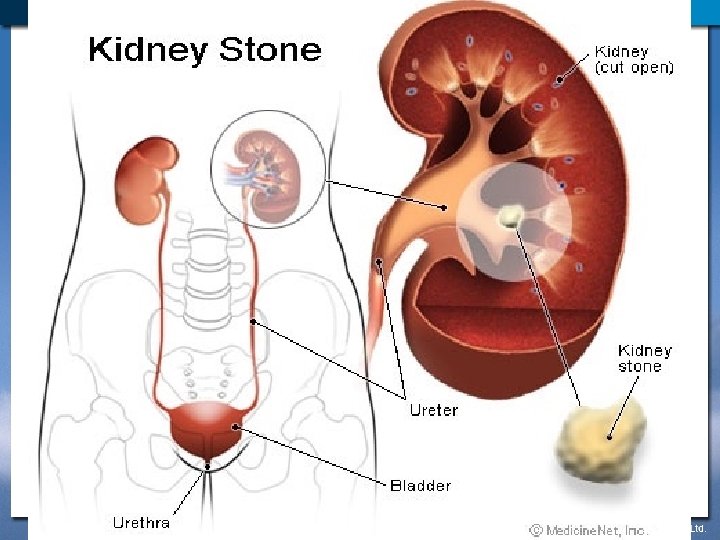
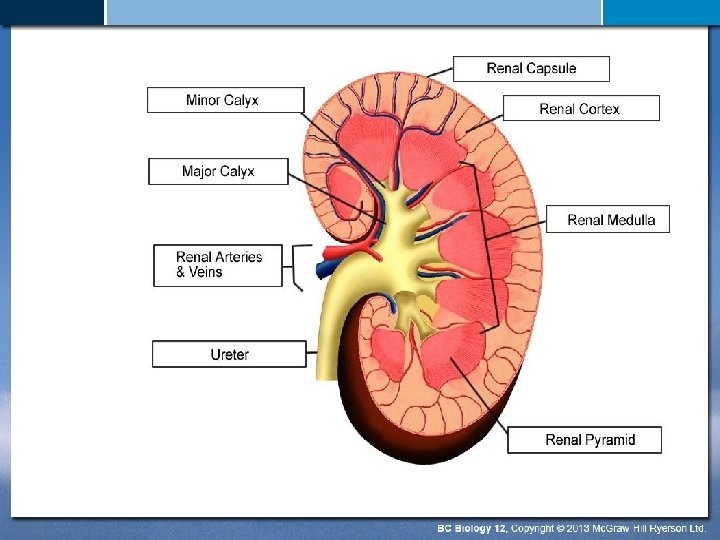
UNIT B Chapter 13: Urinary System Section 13. 4 Pyelonephritis • Infection of the kidneys that usually results from infections of the bladder that have spread via the ureter • Treatable with antibiotics if diagnosed promptly Kidney stones • Hard granules composed of various materials (calcium phosphate, uric acid, protein) that form in the renal pelvis • A diet high in animal protein contributes to their formation • Can be passed in the urine if small • Large stones can block the renal pelvis, which causes a pressure build-up that can destroy nephrons o Can be broken up by lithotripsy (ultrasound waves that TO PREVIOUS shatter stones) SLIDE
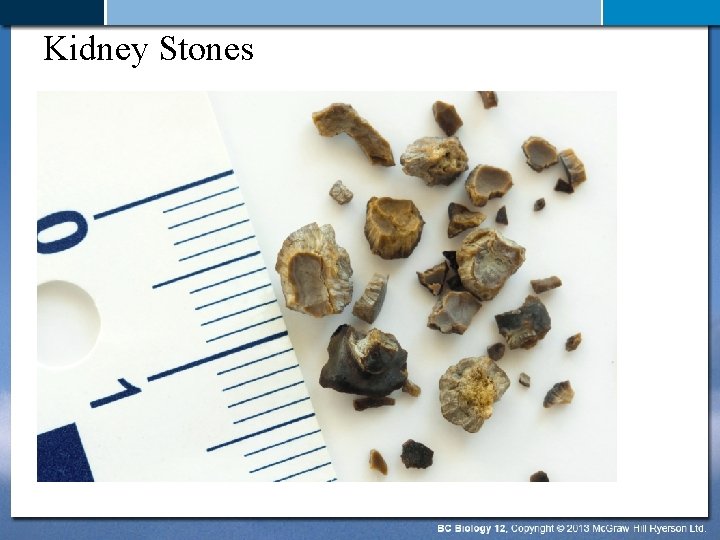
Kidney Stones
Symptoms of Kidney Stones • • • Intense and sudden pain Sweating, fever, disorientated, nausea, vomiting More common in males Lower to mid-back pain that may move to pelvic region Blood in urine or abnormal urine colour
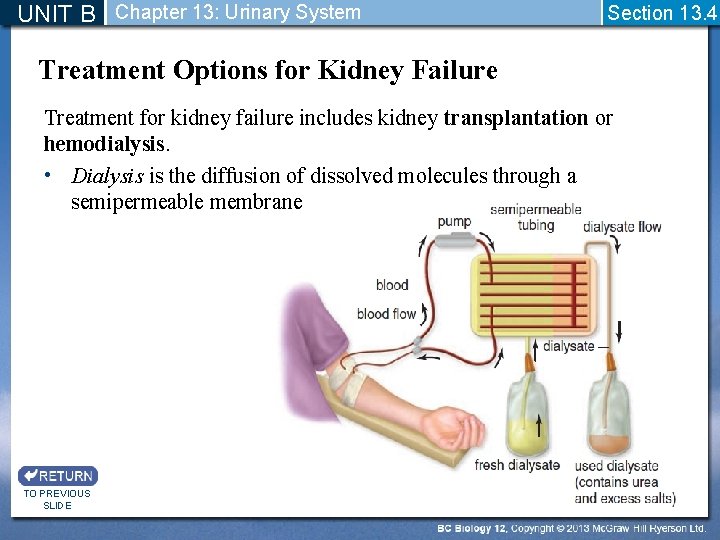
UNIT B Chapter 13: Urinary System Section 13. 4 Treatment Options for Kidney Failure Treatment for kidney failure includes kidney transplantation or hemodialysis. • Dialysis is the diffusion of dissolved molecules through a semipermeable membrane TO PREVIOUS SLIDE
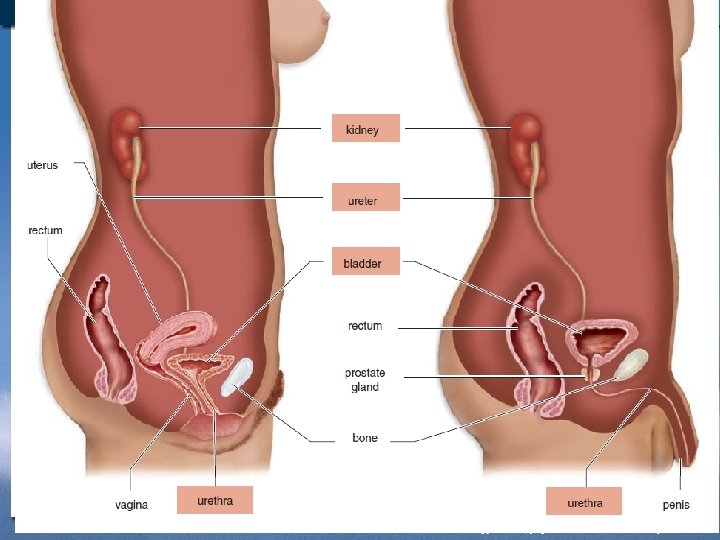
UNIT B Chapter 13: Urinary System Section 13. 4 Disorders of the Urinary Bladder and Urethra Infections • Most common cause of problems in the bladder and urethra • Urine leaving the kidneys is free of bacteria o Urine flow is usually one-way from bladder to urethra o Harmful bacteria from the urethra can sometimes gain access to the bladder (especially in females, who have a shorter and broader urethra) • Usually result in inflammation of the bladder (cystitis) • Can be treated with antibiotics TO PREVIOUS SLIDE
UNIT B Chapter 13: Urinary System TO PREVIOUS SLIDE Section 13. 4
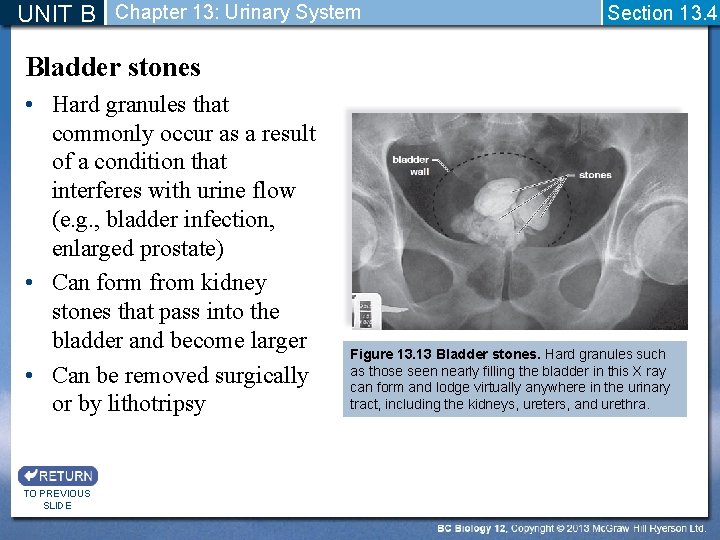
UNIT B Chapter 13: Urinary System Section 13. 4 Bladder stones • Hard granules that commonly occur as a result of a condition that interferes with urine flow (e. g. , bladder infection, enlarged prostate) • Can form from kidney stones that pass into the bladder and become larger • Can be removed surgically or by lithotripsy TO PREVIOUS SLIDE Figure 13. 13 Bladder stones. Hard granules such as those seen nearly filling the bladder in this X ray can form and lodge virtually anywhere in the urinary tract, including the kidneys, ureters, and urethra.
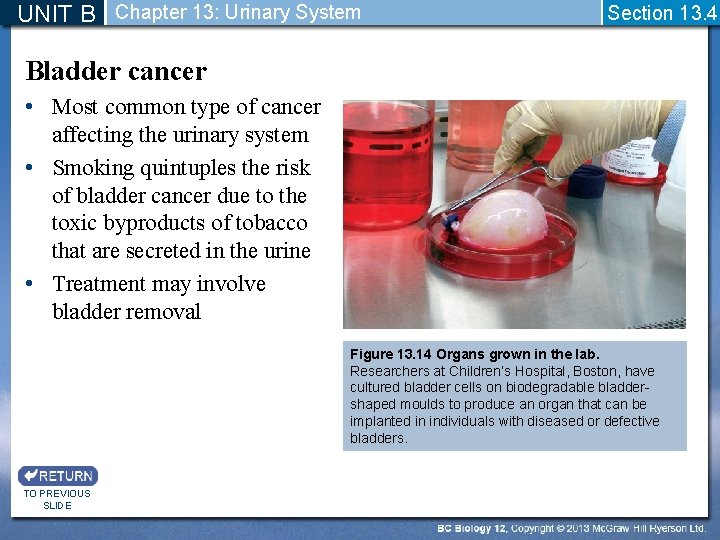
UNIT B Chapter 13: Urinary System Section 13. 4 Bladder cancer • Most common type of cancer affecting the urinary system • Smoking quintuples the risk of bladder cancer due to the toxic byproducts of tobacco that are secreted in the urine • Treatment may involve bladder removal Figure 13. 14 Organs grown in the lab. Researchers at Children’s Hospital, Boston, have cultured bladder cells on biodegradable bladdershaped moulds to produce an organ that can be implanted in individuals with diseased or defective bladders. TO PREVIOUS SLIDE
- Slides: 12