
Unit 9 The Atmosphere Vocabulary Hydrosphere Geosphere Biosphere
Unit 9: The Atmosphere
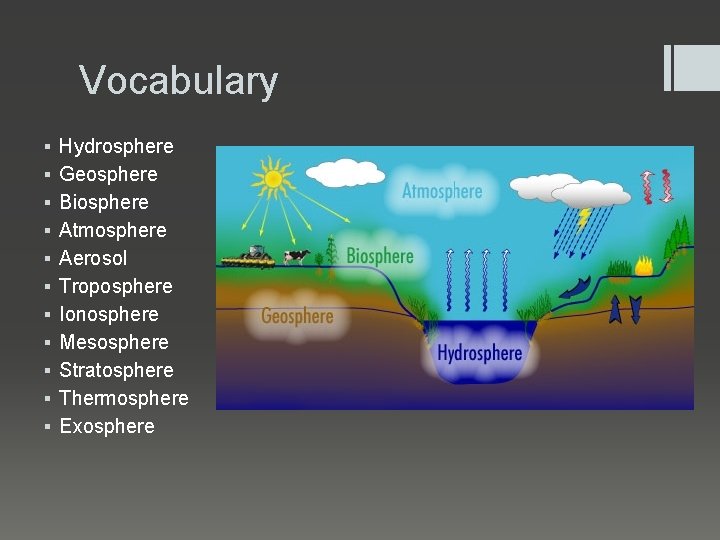
Vocabulary ▪ ▪ ▪ Hydrosphere Geosphere Biosphere Atmosphere Aerosol Troposphere Ionosphere Mesosphere Stratosphere Thermosphere Exosphere
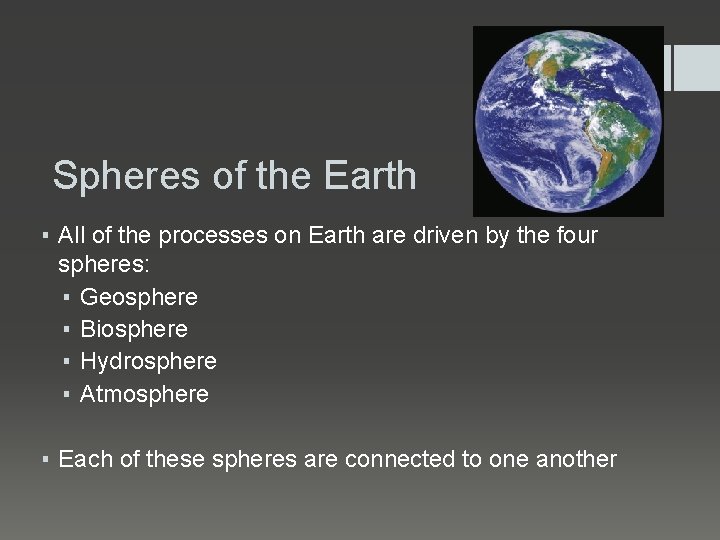
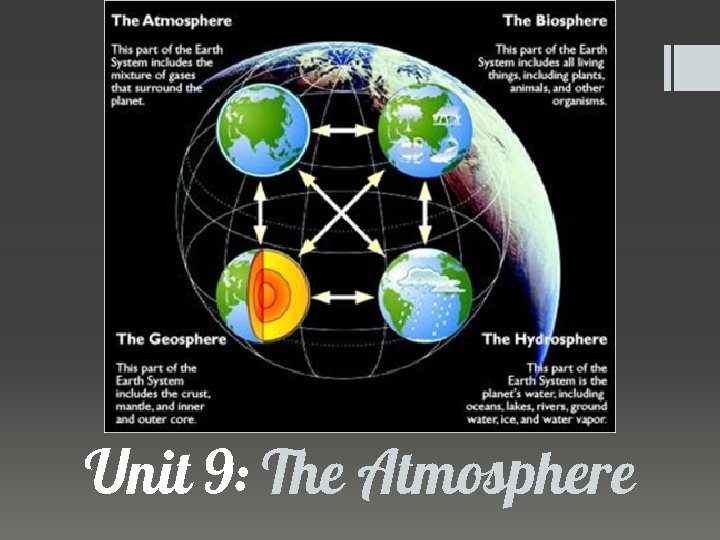
Spheres of the Earth ▪ All of the processes on Earth are driven by the four spheres: ▪ Geosphere ▪ Biosphere ▪ Hydrosphere ▪ Atmosphere ▪ Each of these spheres are connected to one another
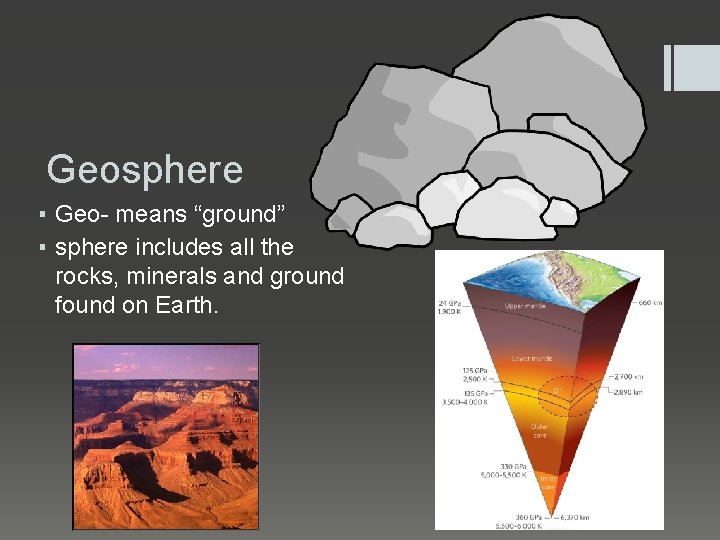
Geosphere ▪ Geo- means “ground” ▪ sphere includes all the rocks, minerals and ground found on Earth.
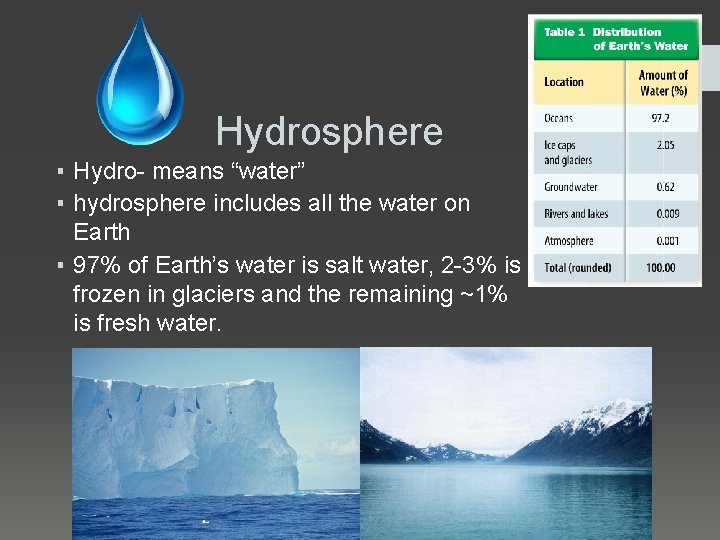
Hydrosphere ▪ Hydro- means “water” ▪ hydrosphere includes all the water on Earth ▪ 97% of Earth’s water is salt water, 2 -3% is frozen in glaciers and the remaining ~1% is fresh water.
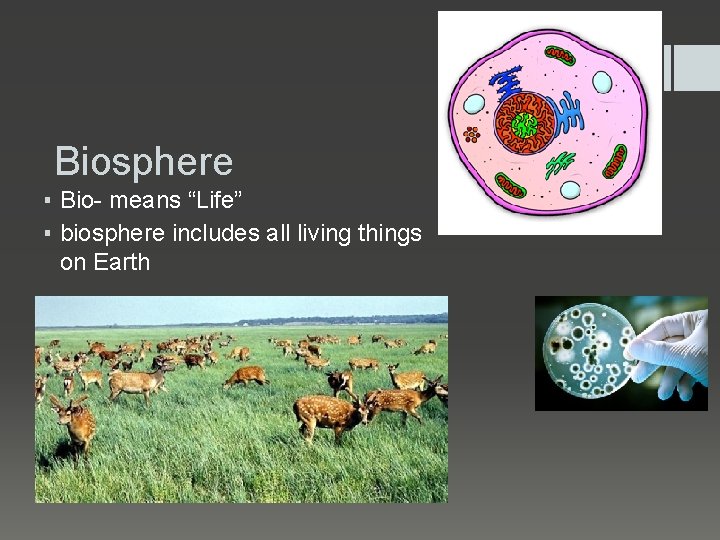
Biosphere ▪ Bio- means “Life” ▪ biosphere includes all living things on Earth
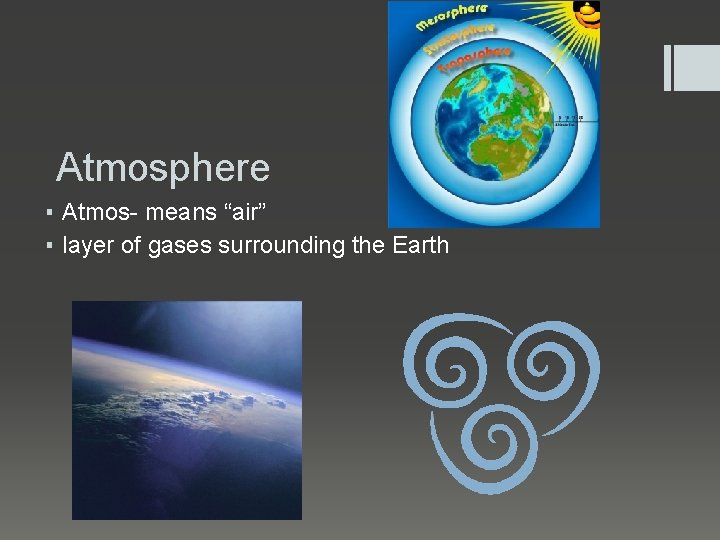
Atmosphere ▪ Atmos- means “air” ▪ layer of gases surrounding the Earth
Galileo Galilei (1564 – 1642) ▪ Was an Italian astronomer and physicist. ▪ Weighed a flask filled with air and concluded that air must have weight, therefore it must have matter. ▪ Today, we know that air in the atmosphere is able to store and release heat, hold moisture, and can exert pressure ▪ All of these properties, plus the energy from the Sun create our daily weather.
Composition of Atmosphere ▪ Gravity is what keeps the atmosphere of Earth from floating off into space. ▪ The atmosphere of the Earth is composed of: ▪ 78% Nitrogen ▪ 21% Oxygen- necessary for human life ▪ 0. 93% Argon ▪ 0. 03% Carbon dioxide- needed for plants to make food, also keeps the Earth warm by absorbing and releasing heat. ▪ 0. 0 -0. 04% Water vapor- critical to weather and the water cycle ▪ And many other gases including ozone, methane and hydrogen
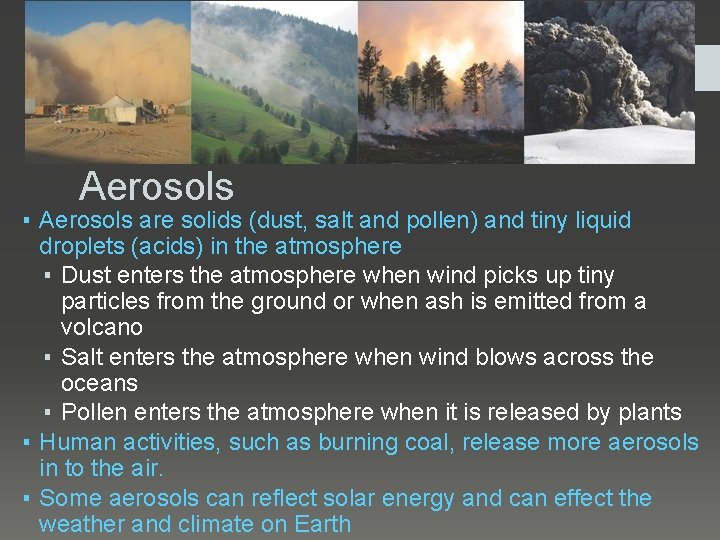
Aerosols ▪ Aerosols are solids (dust, salt and pollen) and tiny liquid droplets (acids) in the atmosphere ▪ Dust enters the atmosphere when wind picks up tiny particles from the ground or when ash is emitted from a volcano ▪ Salt enters the atmosphere when wind blows across the oceans ▪ Pollen enters the atmosphere when it is released by plants ▪ Human activities, such as burning coal, release more aerosols in to the air. ▪ Some aerosols can reflect solar energy and can effect the weather and climate on Earth
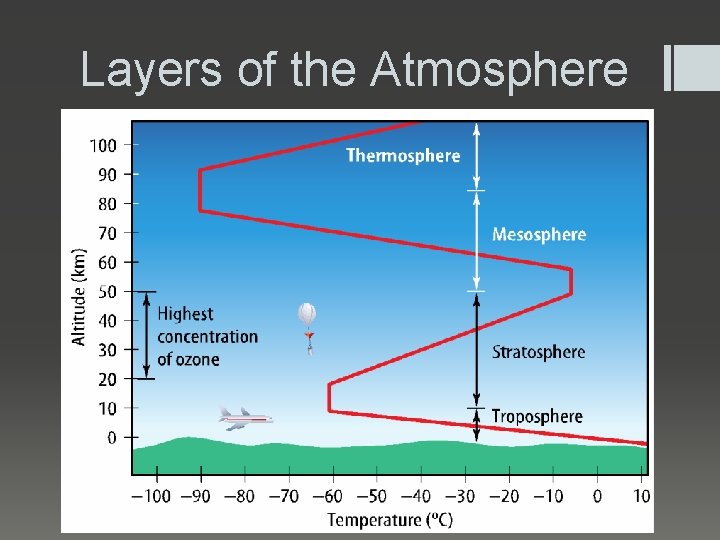
Layers of the Atmosphere
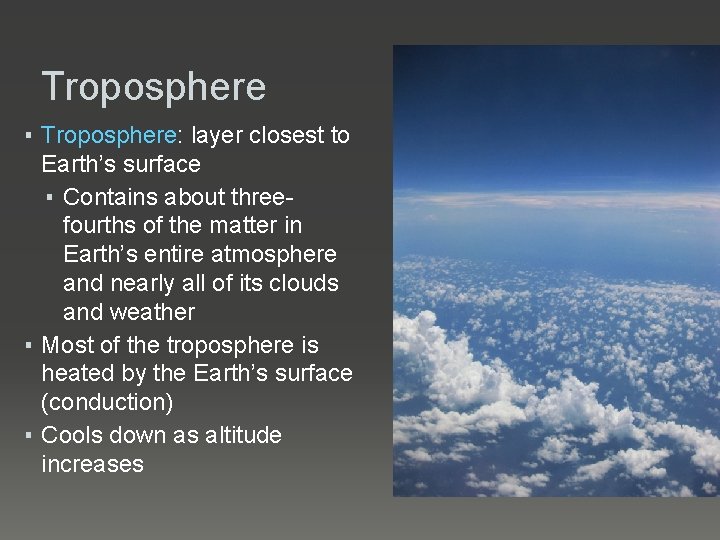
Troposphere ▪ Troposphere: layer closest to Earth’s surface ▪ Contains about threefourths of the matter in Earth’s entire atmosphere and nearly all of its clouds and weather ▪ Most of the troposphere is heated by the Earth’s surface (conduction) ▪ Cools down as altitude increases
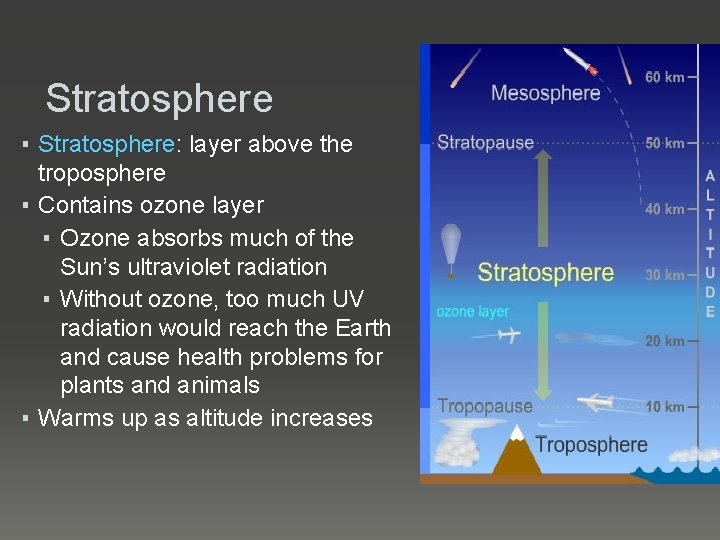
Stratosphere ▪ Stratosphere: layer above the troposphere ▪ Contains ozone layer ▪ Ozone absorbs much of the Sun’s ultraviolet radiation ▪ Without ozone, too much UV radiation would reach the Earth and cause health problems for plants and animals ▪ Warms up as altitude increases
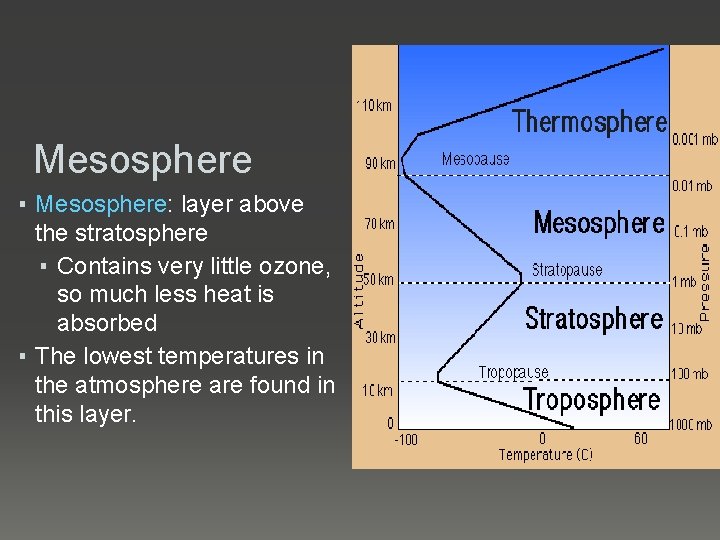
Mesosphere ▪ Mesosphere: layer above the stratosphere ▪ Contains very little ozone, so much less heat is absorbed ▪ The lowest temperatures in the atmosphere are found in this layer.
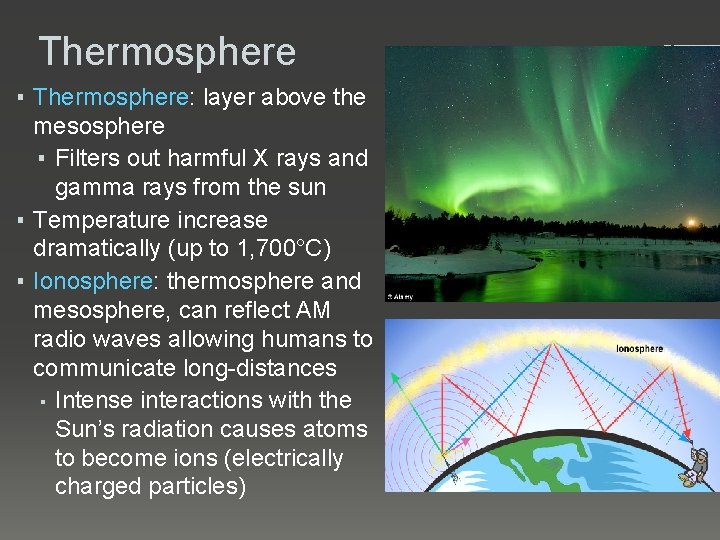
Thermosphere ▪ Thermosphere: layer above the mesosphere ▪ Filters out harmful X rays and gamma rays from the sun ▪ Temperature increase dramatically (up to 1, 700°C) ▪ Ionosphere: thermosphere and mesosphere, can reflect AM radio waves allowing humans to communicate long-distances ▪ Intense interactions with the Sun’s radiation causes atoms to become ions (electrically charged particles)
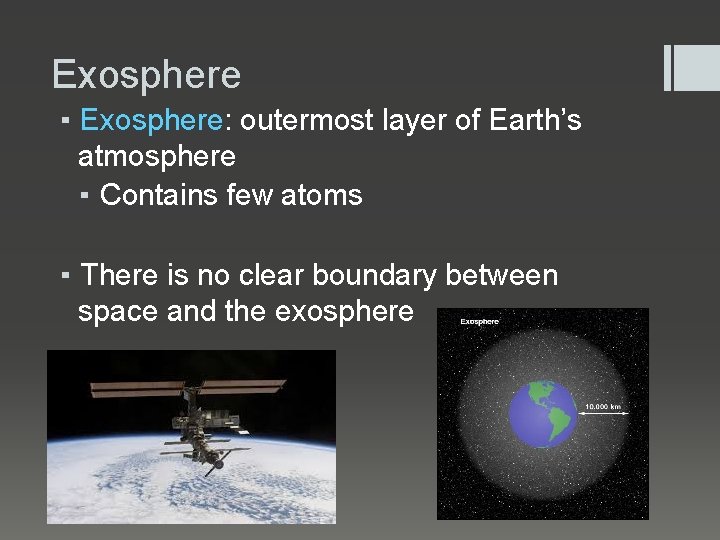
Exosphere ▪ Exosphere: outermost layer of Earth’s atmosphere ▪ Contains few atoms ▪ There is no clear boundary between space and the exosphere

Video ▪ https: //www. youtube. com/watch? v=fyf. N 9 t_E 0 w 8
References ▪ http: //study. com/academy/lesson/the-four-spheres-of-earthgeosphere-hydrosphere-biosphere-and-atmosphere. html ▪ Google Images ▪ Florida Science Grade 6, Glencoe Science & Mc. Graw Hill Publishing
- Slides: 18