
Unit 9 Reproduction and Development How are humans

- Slides: 24
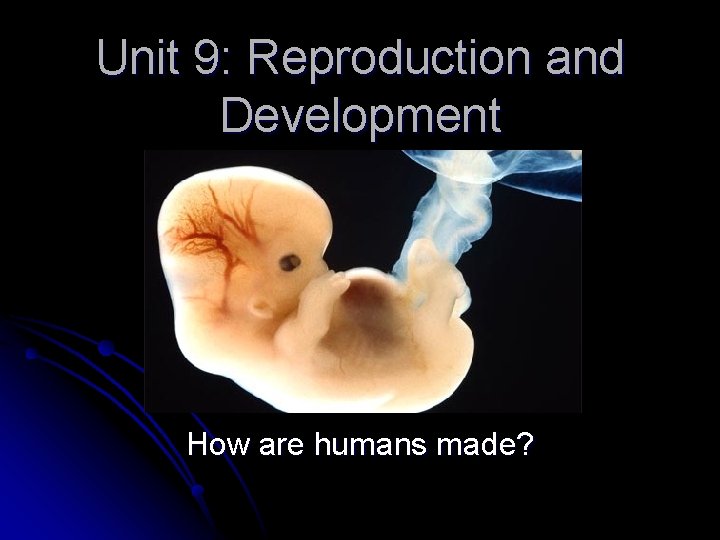
Unit 9: Reproduction and Development How are humans made?
A. Sexual Reproduction ____________ offspring are a ______ of parental genes 1. Advantages for Sexual Reproduction - _____ allows for adaptation to new environments - ____________________
2. Meiosis and Gamete Formation - _________ - Reduction Division - _____ - in humans this means the cell goes from ___ to ____ chromosomes a) Definitions: - _____ = process of cell division to make _______ cells and _____ cell (______) - ____= 2 n the cell has two sets of chromosomes in humans the diploid number is 46 23 chromosomes from _______ and 23 chromosomes from ______ - _________ = n the cell has one set of chromosomes ___________ are haploid they only have 23 chromosomes
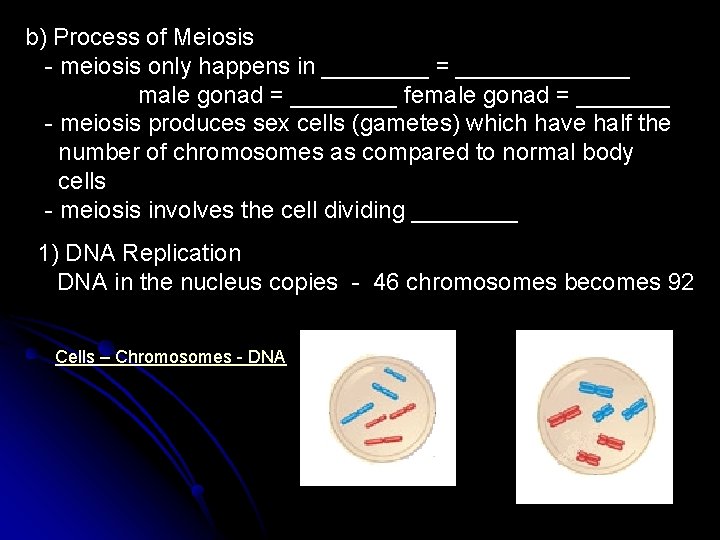
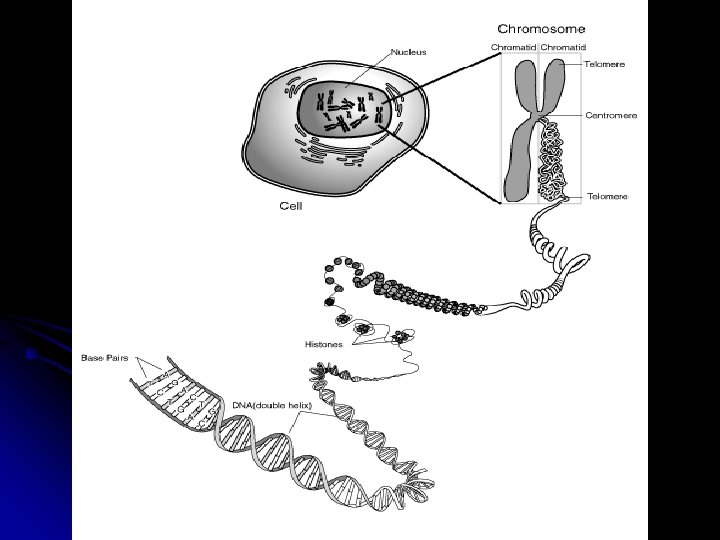
b) Process of Meiosis - meiosis only happens in ____ = _______ male gonad = ____ female gonad = _______ - meiosis produces sex cells (gametes) which have half the number of chromosomes as compared to normal body cells - meiosis involves the cell dividing ____ 1) DNA Replication DNA in the nucleus copies - 46 chromosomes becomes 92 Cells – Chromosomes - DNA
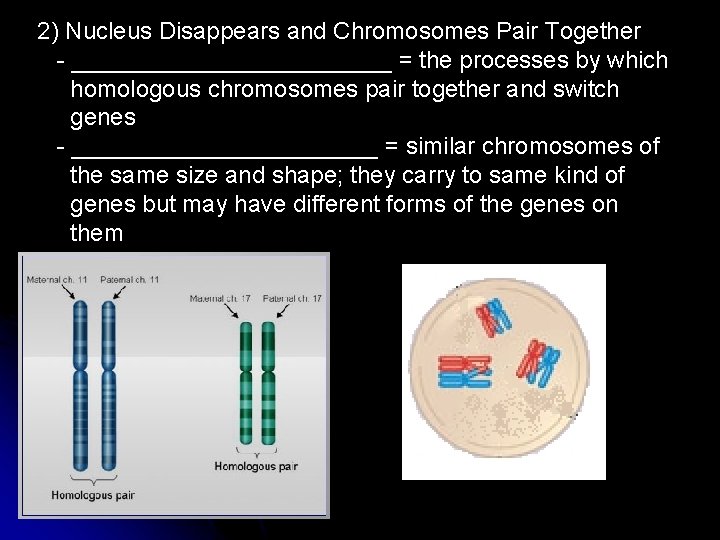
2) Nucleus Disappears and Chromosomes Pair Together - ____________ = the processes by which homologous chromosomes pair together and switch genes - ____________ = similar chromosomes of the same size and shape; they carry to same kind of genes but may have different forms of the genes on them
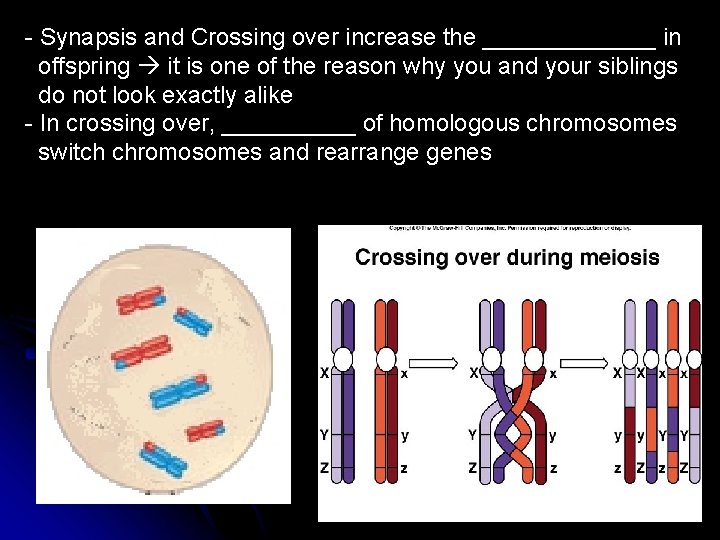
- Synapsis and Crossing over increase the _______ in offspring it is one of the reason why you and your siblings do not look exactly alike - In crossing over, _____ of homologous chromosomes switch chromosomes and rearrange genes
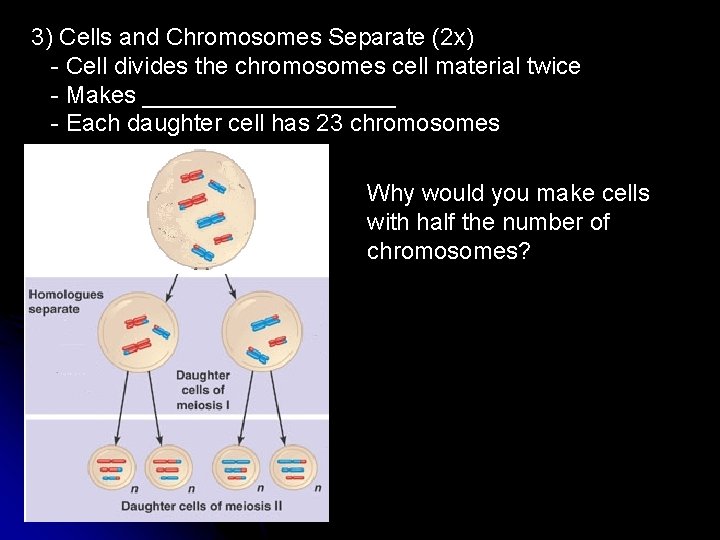
3) Cells and Chromosomes Separate (2 x) - Cell divides the chromosomes cell material twice - Makes __________ - Each daughter cell has 23 chromosomes Why would you make cells with half the number of chromosomes?
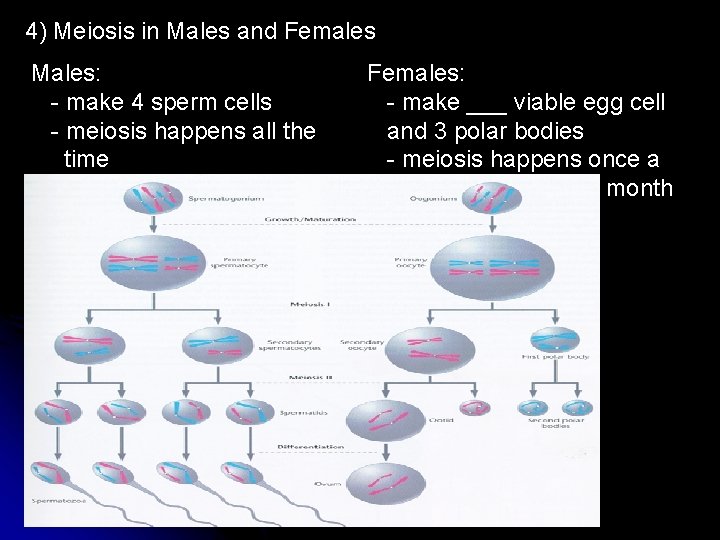
4) Meiosis in Males and Females Males: - make 4 sperm cells - meiosis happens all the time Females: - make ___ viable egg cell and 3 polar bodies - meiosis happens once a month
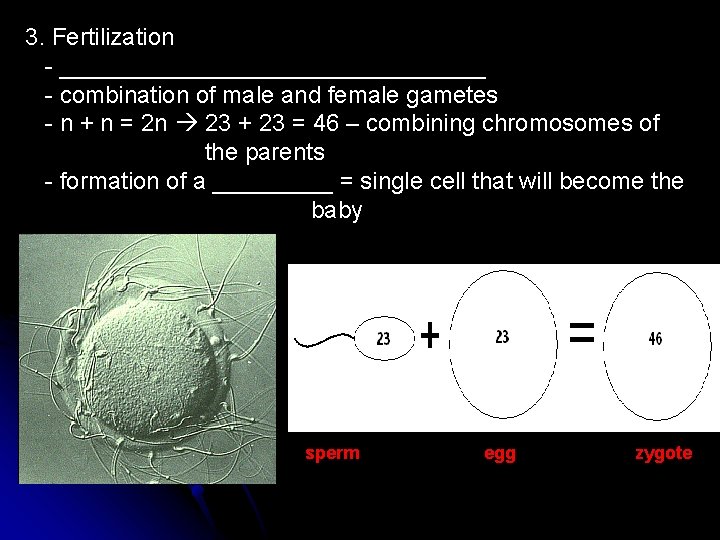
3. Fertilization - ________________ - combination of male and female gametes - n + n = 2 n 23 + 23 = 46 – combining chromosomes of the parents - formation of a _____ = single cell that will become the baby sperm egg zygote
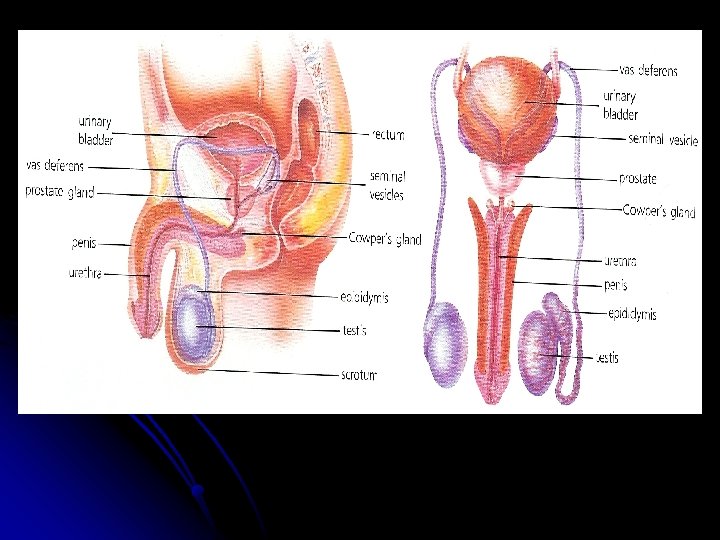
4. Human Reproduction a) Male Reproductive System 1) _____ - make and store sperm - Produce the hormone __________ - Scrotum - saclike pouch which houses the testes for proper sperm production the scrotum is _____ celsius below normal body temperature - Seminiferous tubules - carries/stores sperm from the testes 2) ______ - temporary storage organ for sperm at the beginning of the Vas Deferens 3) ________ - tube which carries the sperm past 3 lubricating glands - _______ - removal or tie up of the Vas Deferens Stops sperm from being released from the body
4) Cowpers gland, Seminal Vesicle, Prostate Gland – - 3 lubricating glands - prostate produces an alkaline fluid which neutralizes the urine in the urethra - ________ kills many over 70 males - treated with radiation and estrogen 5) _____ - tube through the penis 6) ____ - releases the semen inside the female - ______ - liquid loaded with sperm - ______ - the release of semen
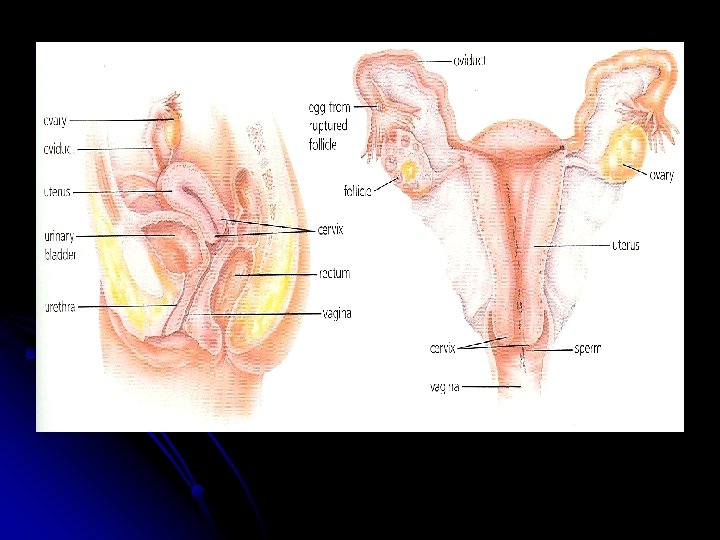
b) Female Reproductive System - functional from puberty until menopause 1) _______ – produce ovum = egg cells - Usually one egg is released at a time 2) ___________ - muscular contractions of the oviduct and beating of its cilia draw ovum into the oviduct - Normally fertilization and initial cleavage occurs in fallopian tubes 3) _______ - spongy bed in which the zygote will become implanted and develop - embryonic development occurs here 4) _____ - narrow neck of the uterus - Cancer of the cervix is common ______ 5) ______ – birth canal and opening to the outside of the body - site where sperm are deposited
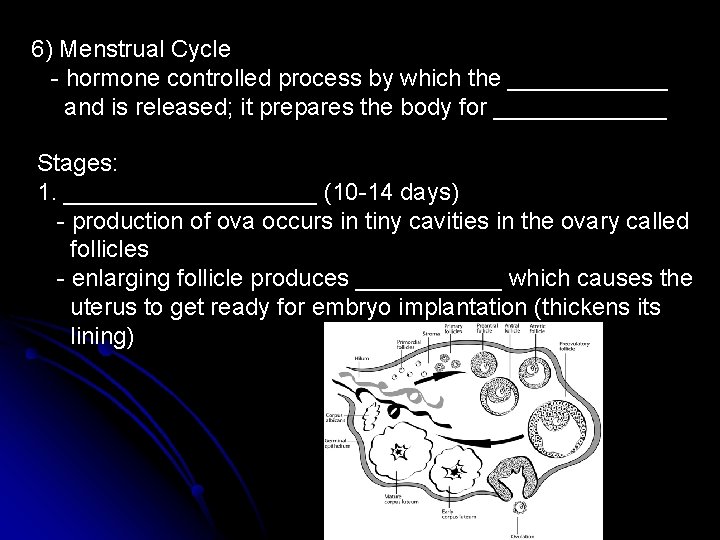
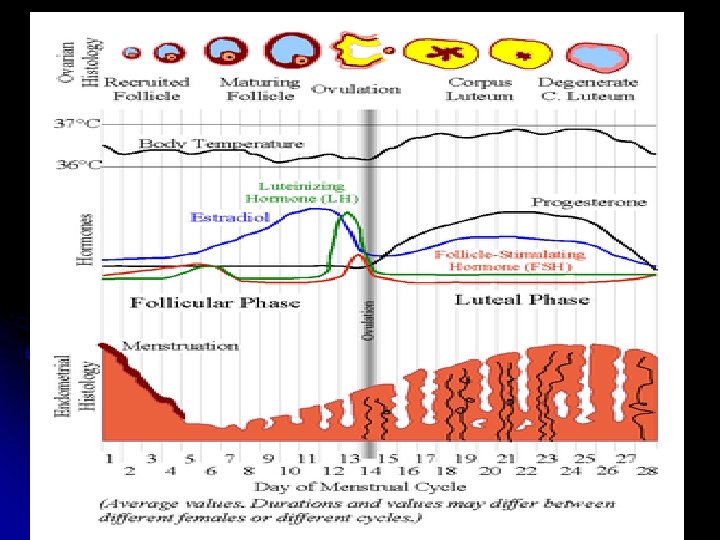
6) Menstrual Cycle - hormone controlled process by which the ______ and is released; it prepares the body for _______ Stages: 1. __________ (10 -14 days) - production of ova occurs in tiny cavities in the ovary called follicles - enlarging follicle produces ______ which causes the uterus to get ready for embryo implantation (thickens its lining)
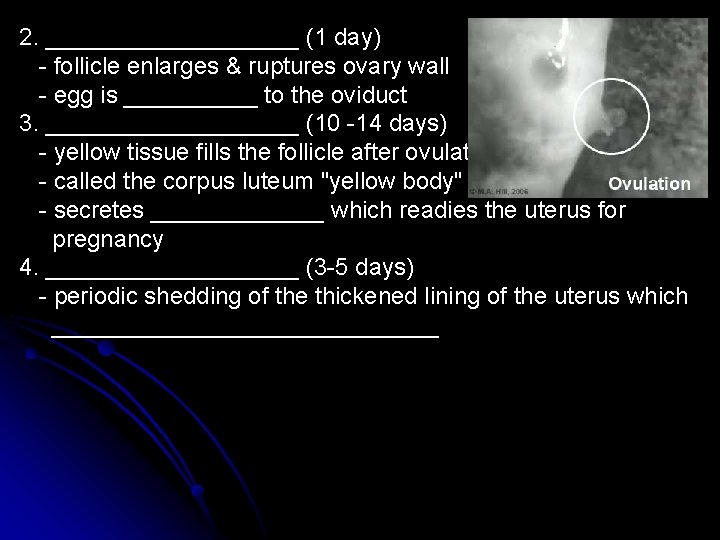
2. __________ (1 day) - follicle enlarges & ruptures ovary wall - egg is _____ to the oviduct 3. __________ (10 -14 days) - yellow tissue fills the follicle after ovulation - called the corpus luteum "yellow body" - secretes _______ which readies the uterus for pregnancy 4. __________ (3 -5 days) - periodic shedding of the thickened lining of the uterus which _______________
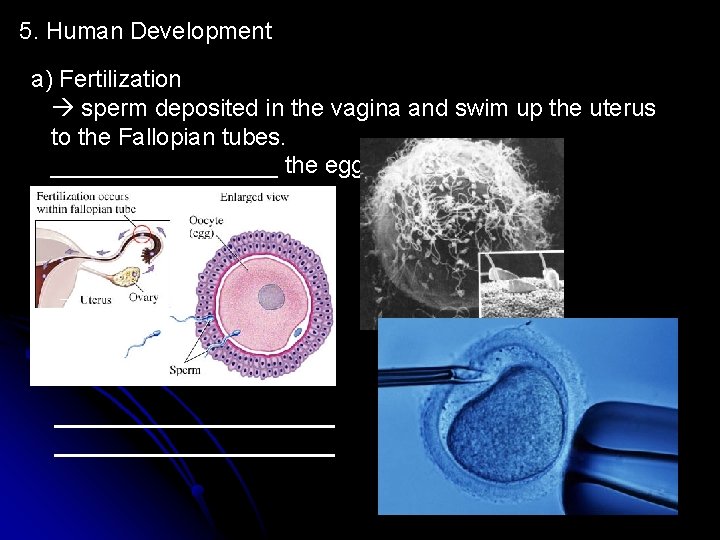
5. Human Development a) Fertilization sperm deposited in the vagina and swim up the uterus to the Fallopian tubes. _________ the egg _____________________
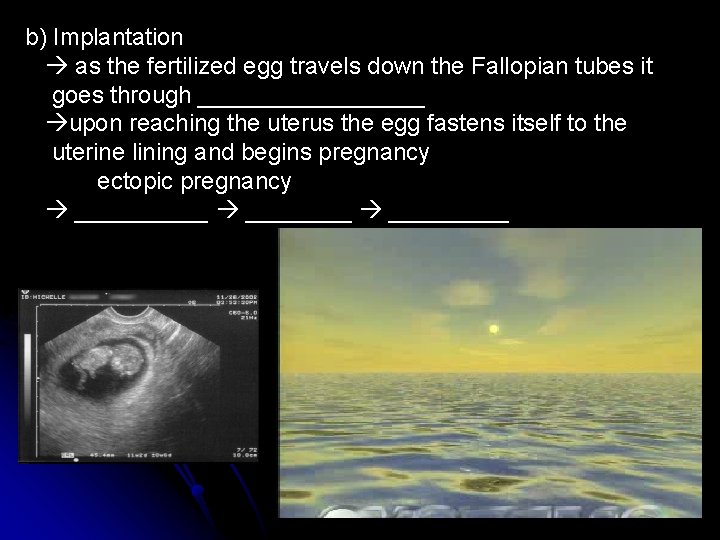
b) Implantation as the fertilized egg travels down the Fallopian tubes it goes through _________ upon reaching the uterus the egg fastens itself to the uterine lining and begins pregnancy ectopic pregnancy _________
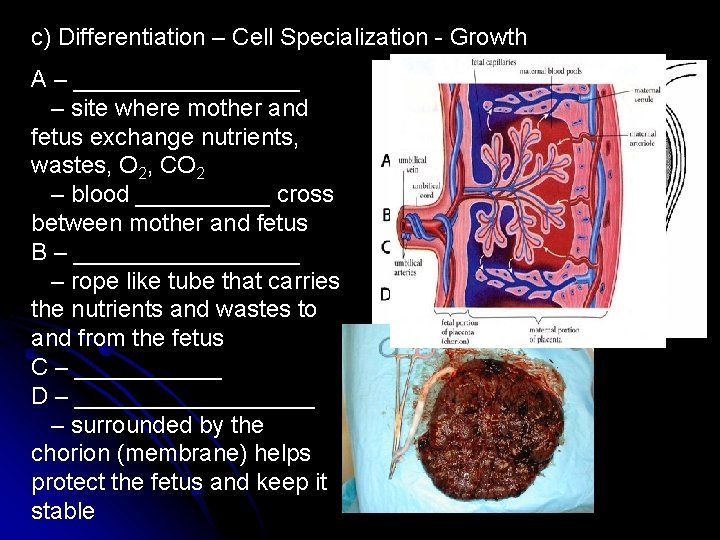
c) Differentiation – Cell Specialization - Growth A – _________ – site where mother and fetus exchange nutrients, wastes, O 2, CO 2 – blood _____ cross between mother and fetus B – _________ – rope like tube that carries the nutrients and wastes to and from the fetus C – ______ D – _________ – surrounded by the chorion (membrane) helps protect the fetus and keep it stable
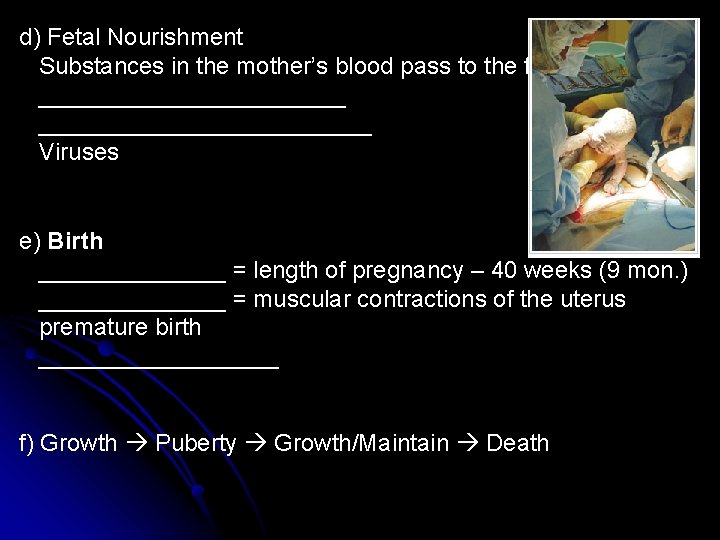
d) Fetal Nourishment Substances in the mother’s blood pass to the fetus _________________________ Viruses e) Birth _______ = length of pregnancy – 40 weeks (9 mon. ) _______ = muscular contractions of the uterus premature birth _________ f) Growth Puberty Growth/Maintain Death