
Unit 9 Global Interdependence EQ What is globalization
Unit 9 Global Interdependence
EQ: What is globalization?
the increasing interaction of people, states, or countries through the growth of the international flow of money, ideas, and culture. Globalization is primarily an economic process of integration that has social and cultural aspects.


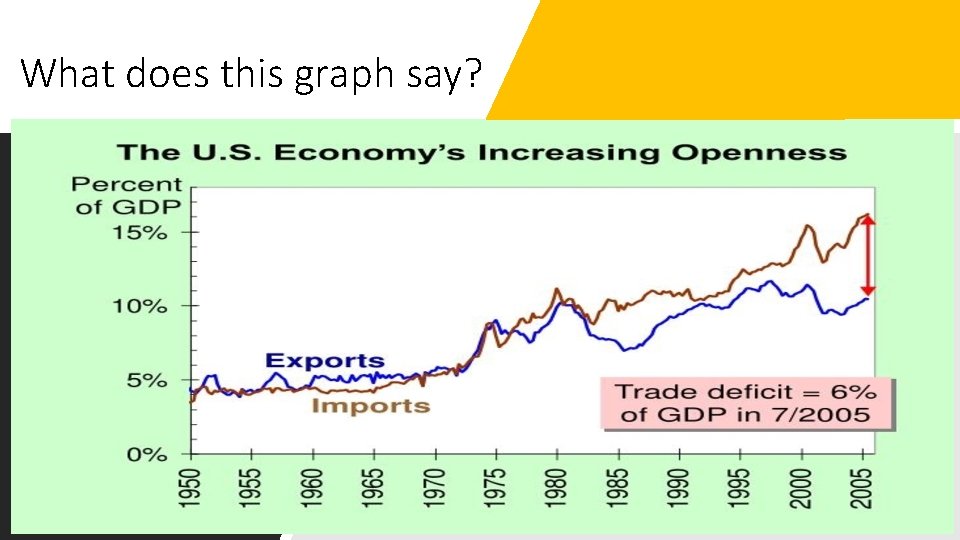
What does this graph say?
Absolute Advantage • when we think about being "better" at producing something. • only considers productivity and doesn't consider cost • Ex: Michael Jordan has an absolute advantage in playing basketball than he does being an office assistant. Does that mean Jordan can’t type or file something in alphabetical order? • Ex: Zambia is a country in Africa that has an absolute advantage over other countries with copper production. This is because of a natural abundance and the world’s largest reserves of copper also known as Bauxite.

Absolute Advantage
• Able to produce something at a lower cost (more efficiently) than anyone else. • Provides beneficial trade between countries. • Comparative advantage factors opportunity cost for production. Comparative Advantage Ex: What is lost by a country producing certain goods or services? • In other words: If a country has an advantage over other countries in the production of certain goods and services, it should limit itself in producing these goods and services only and should import other goods and services in which the country is inefficient.
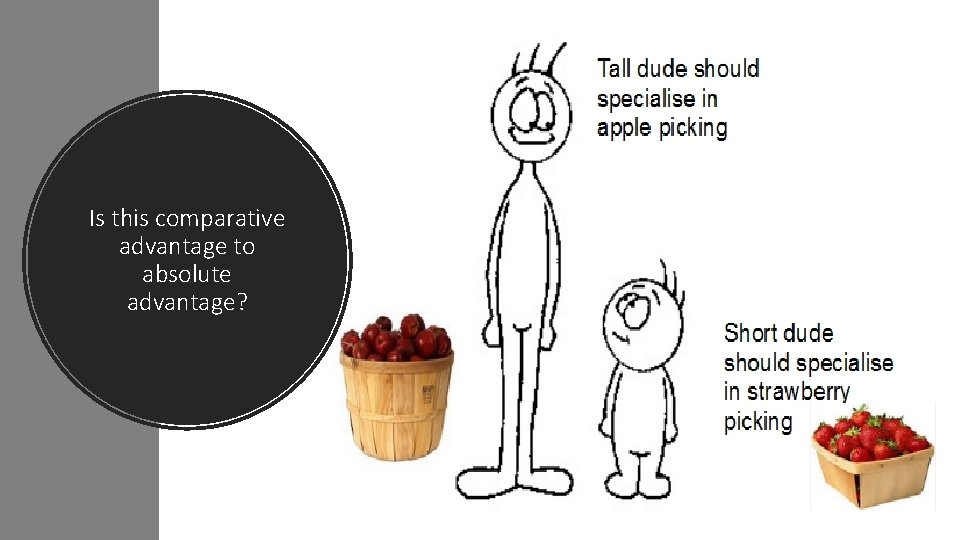
Is this comparative advantage to absolute advantage?
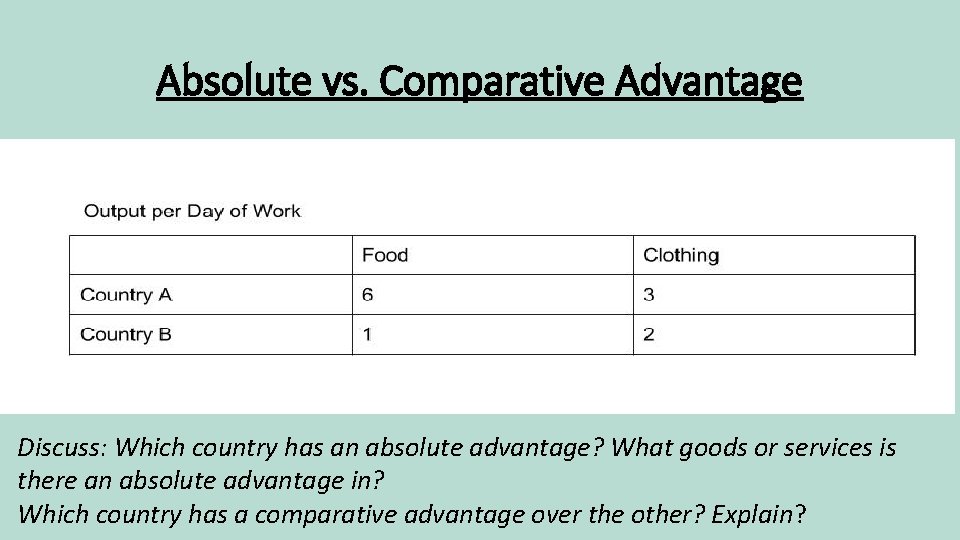
Absolute vs. Comparative Advantage Discuss: Which country has an absolute advantage? What goods or services is there an absolute advantage in? Which country has a comparative advantage over the other? Explain?
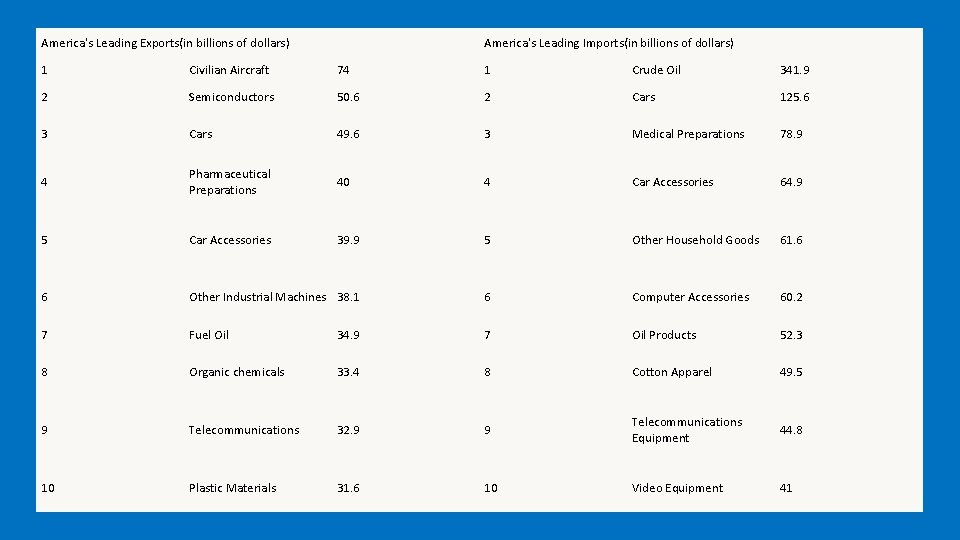
America's Leading Exports(in billions of dollars) America's Leading Imports(in billions of dollars) 1 Civilian Aircraft 74 1 Crude Oil 341. 9 2 Semiconductors 50. 6 2 Cars 125. 6 3 Cars 49. 6 3 Medical Preparations 78. 9 4 Pharmaceutical Preparations 40 4 Car Accessories 64. 9 5 Car Accessories 39. 9 5 Other Household Goods 61. 6 6 Other Industrial Machines 38. 1 6 Computer Accessories 60. 2 7 Fuel Oil 34. 9 7 Oil Products 52. 3 8 Organic chemicals 33. 4 8 Cotton Apparel 49. 5 9 Telecommunications 32. 9 9 Telecommunications Equipment 44. 8 10 Plastic Materials 31. 6 10 Video Equipment 41
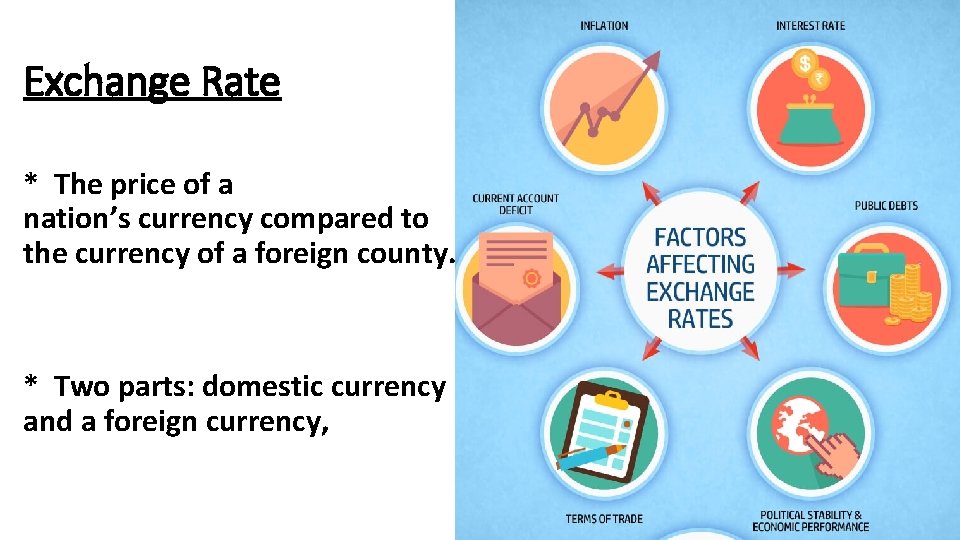
Exchange Rate * The price of a nation’s currency compared to the currency of a foreign county. * Two parts: domestic currency and a foreign currency,
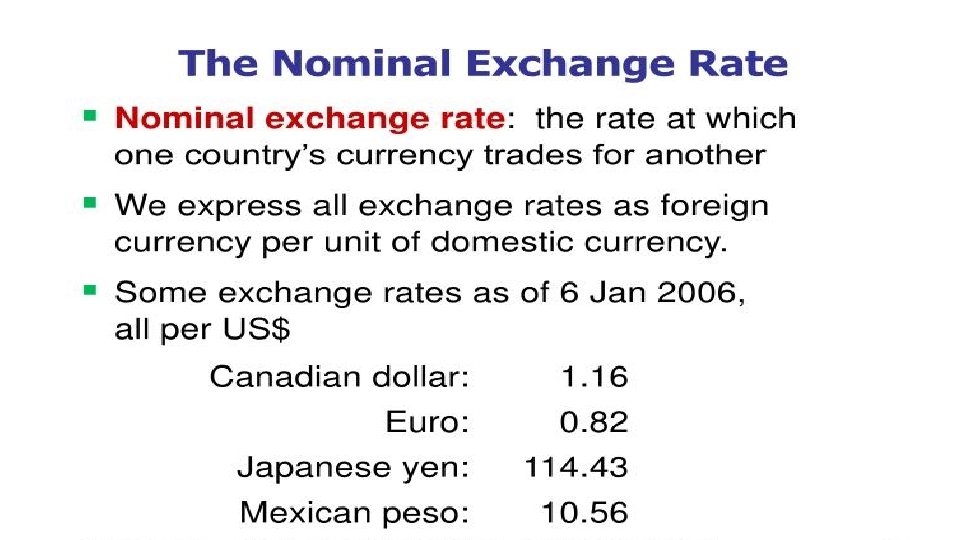
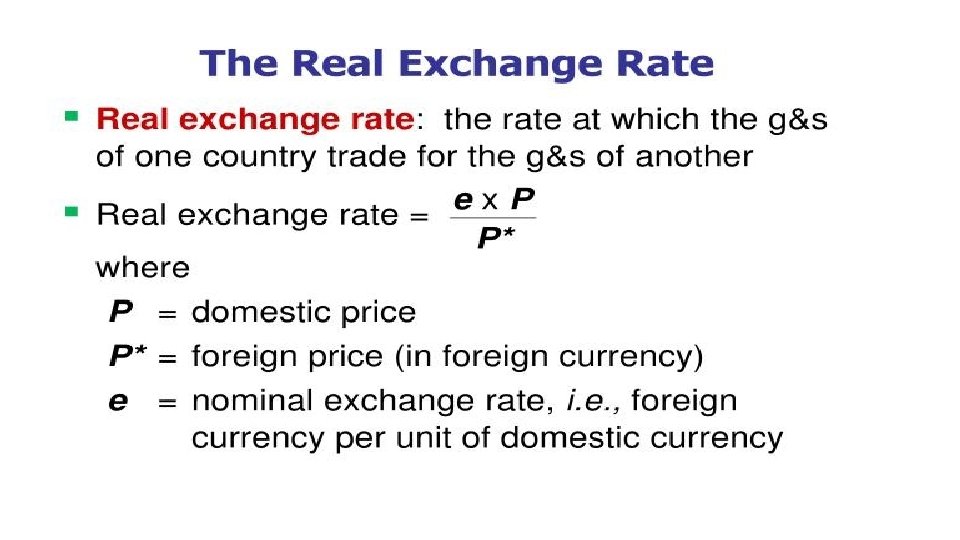
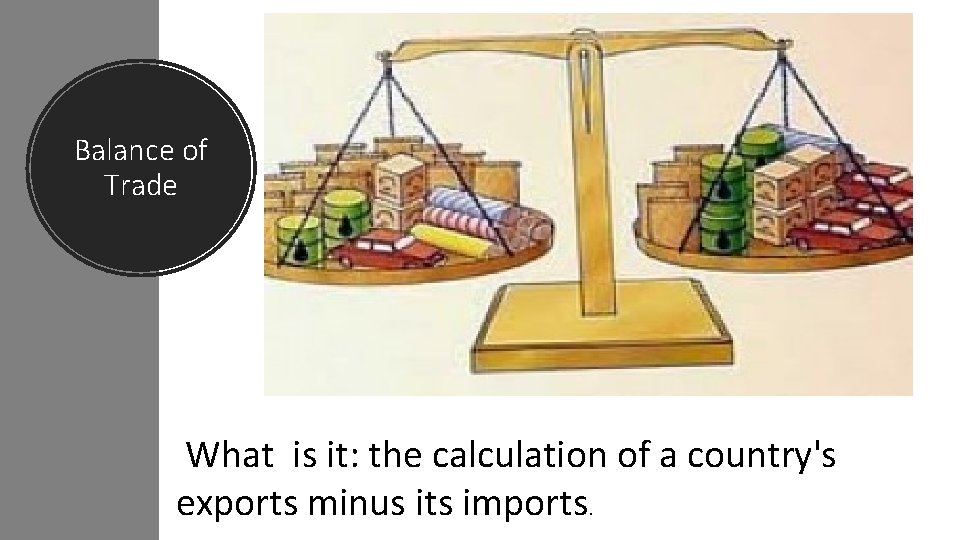
Balance of Trade What is it: the calculation of a country's exports minus its imports.
What is a trade deficit and a trade surplus? • When a country imports more than it exports, the resulting negative number is called a trade deficit. When the opposite is true, a country has a trade surplus.
Why does balance of trade matter? • The trade balance helps economists understand the strength of a country's economy compared to other countries. • A country with a large trade deficit is borrowing money to purchase goods and services • A country with a large trade surplus is lending money to deficit countries. • Balance of trade is an indicator of a country's political and economic stability
Impact of Government Policy on Global Trade
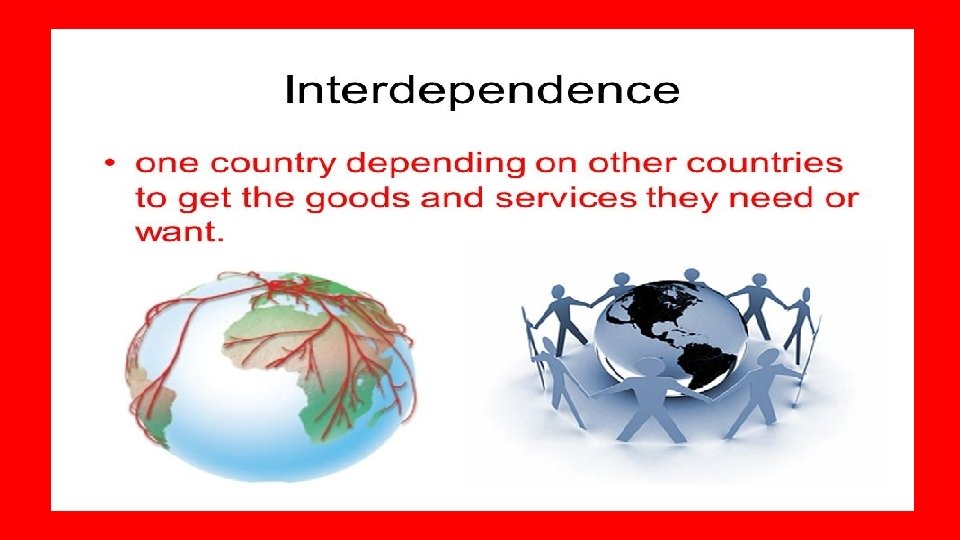
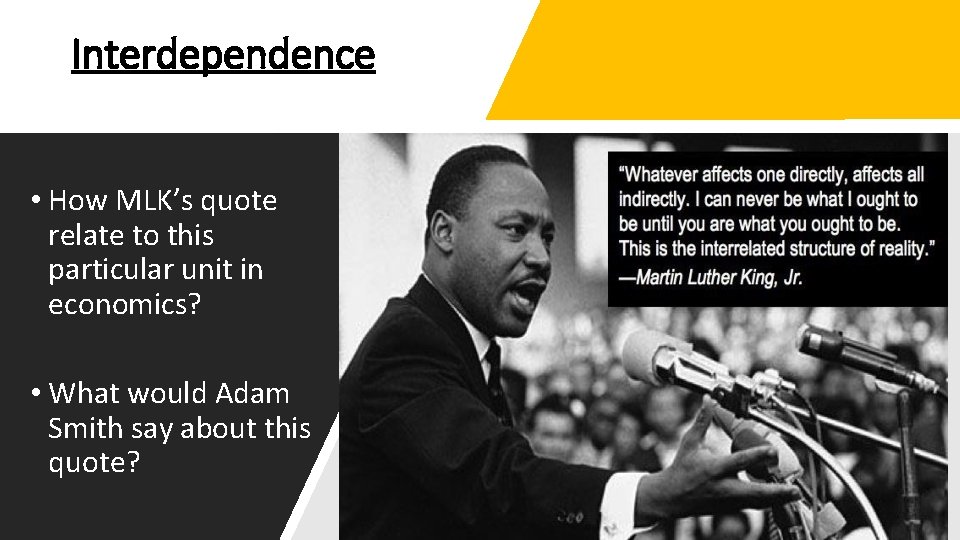
Interdependence • How MLK’s quote relate to this particular unit in economics? • What would Adam Smith say about this quote?

Interdependence • Write down five traits that you possess that can benefit the world in some way.
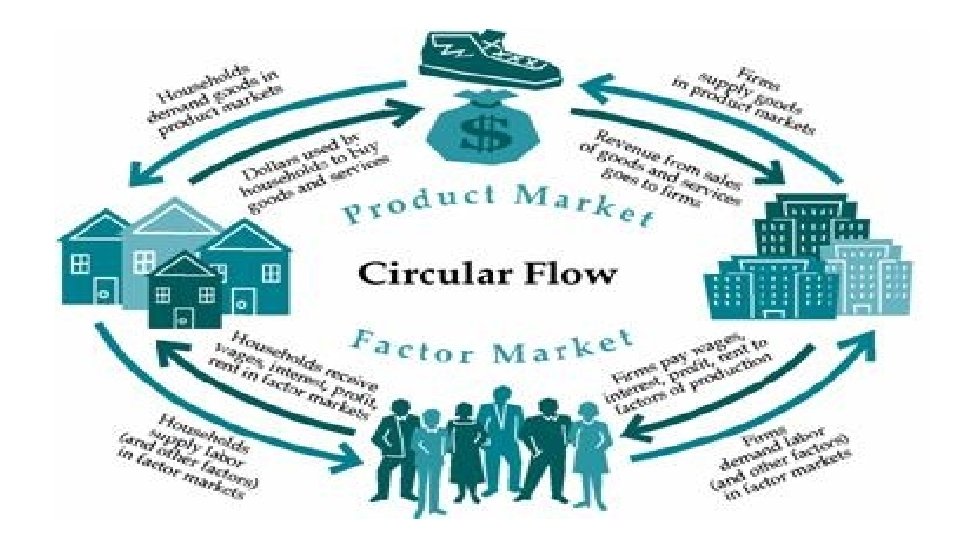
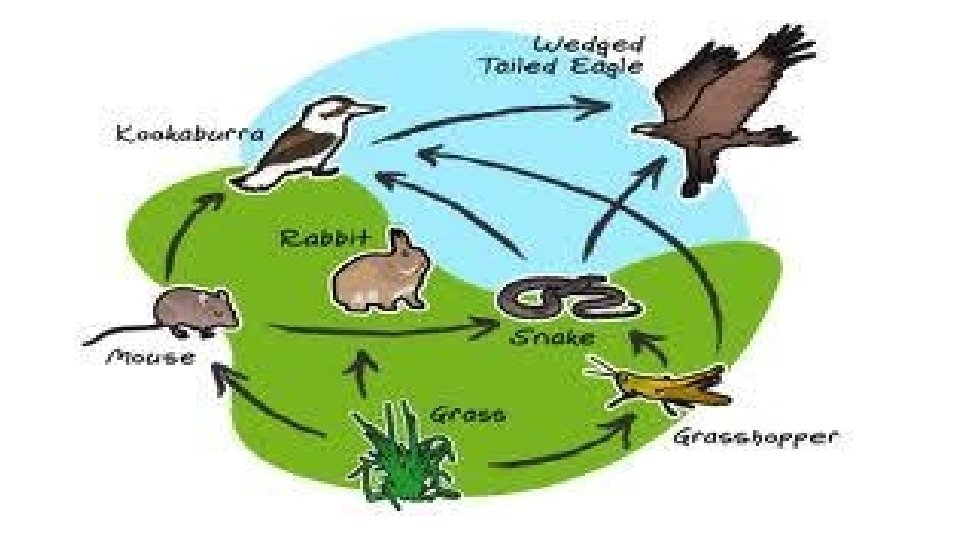

Voluntary, international trade without tariffs, quotas, restrictions, or regulations Free Trade
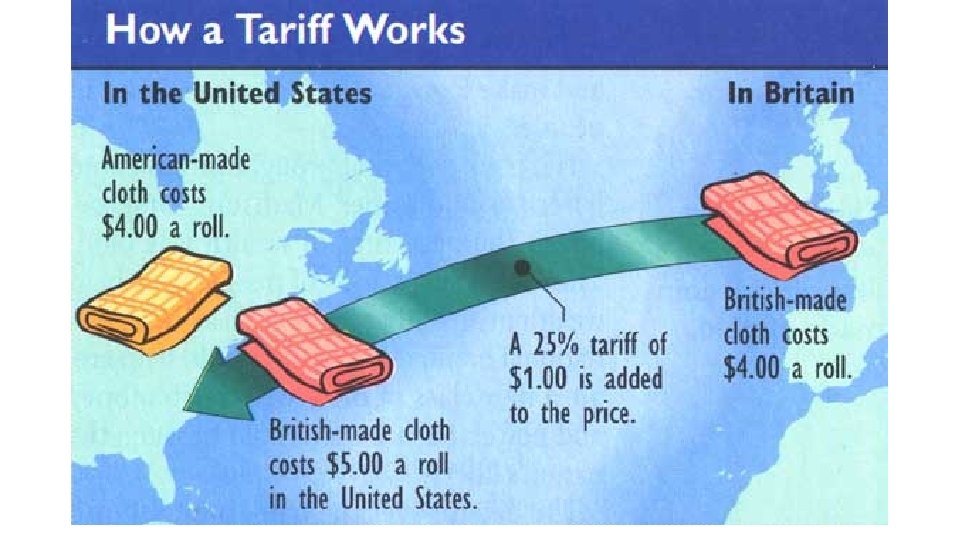
Tariff • Tax on goods and services from foreign countries
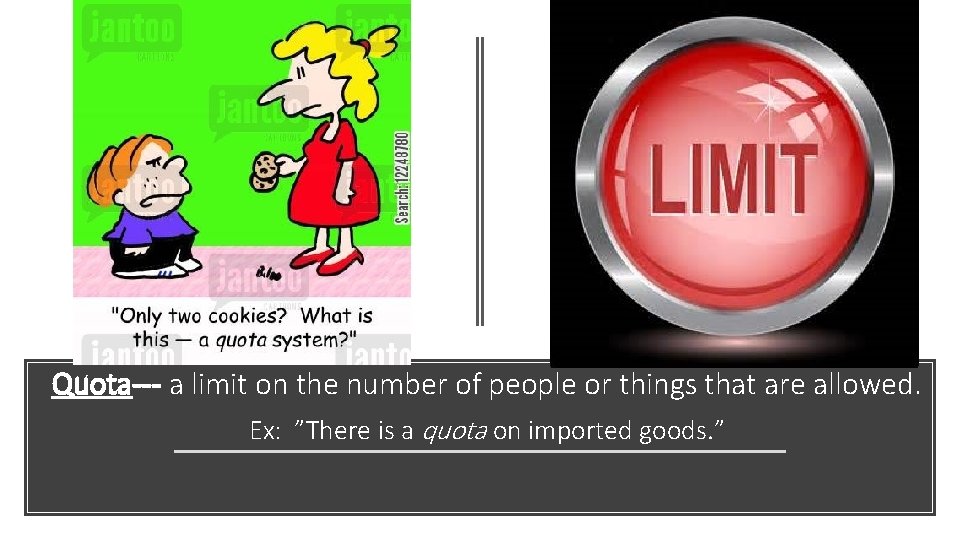
Quota--- a limit on the number of people or things that are allowed. Ex: ”There is a quota on imported goods. ”
Sanction • an action (as the ending of financial aid) taken by one or more nations to make another nation comply with a law or rule
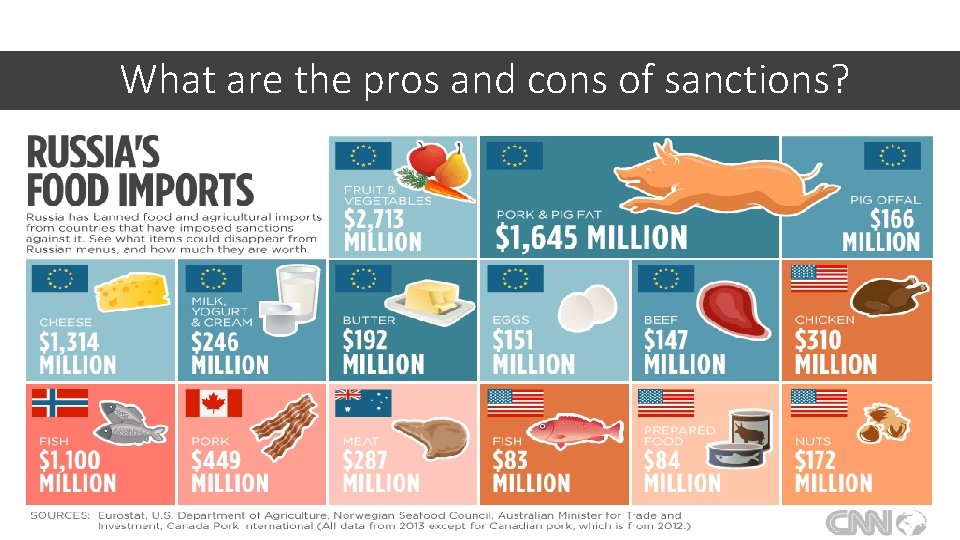
What are the pros and cons of sanctions?
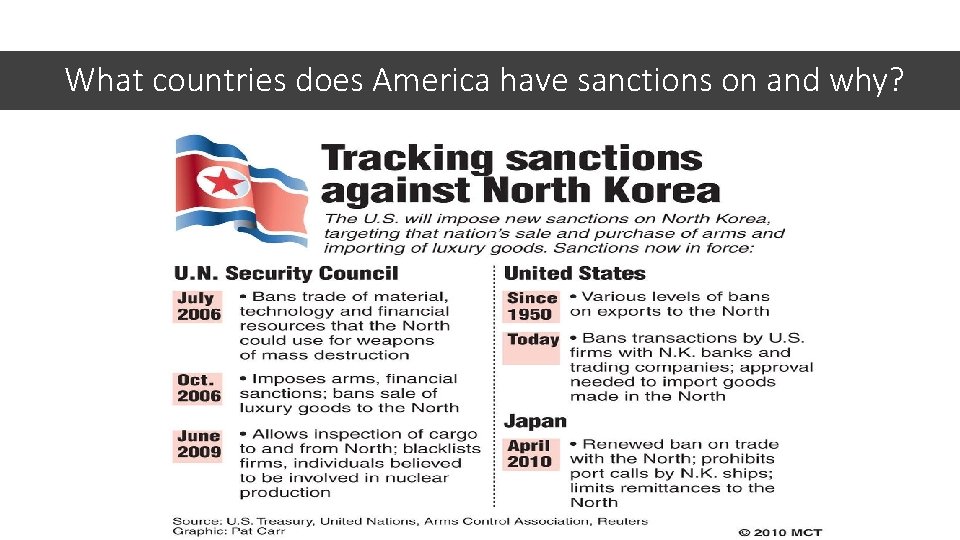
What countries does America have sanctions on and why?
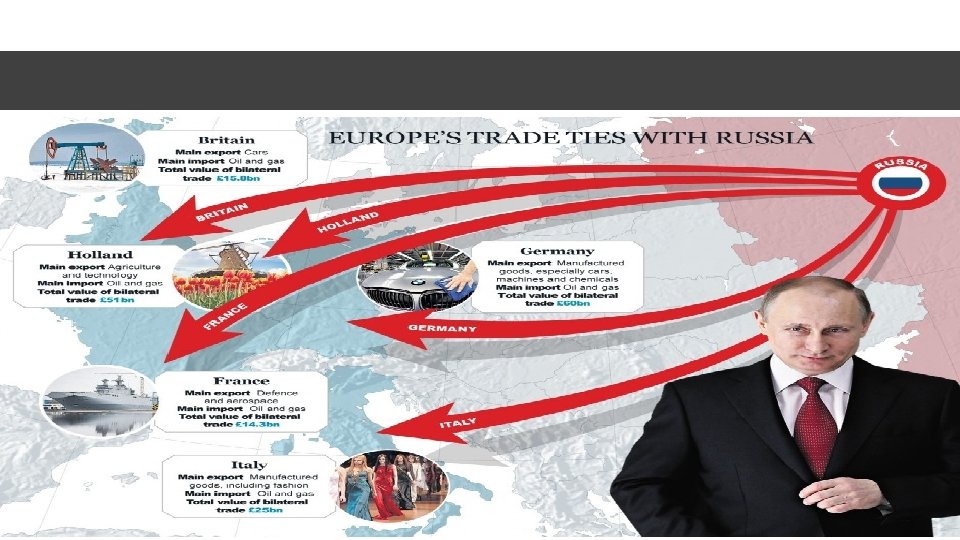
Embargo • embargo is a govt order that restricts trade and exchange with a specific country or trade of specific goods. • usually created because of unfavorable political or economic circumstances between nations.

What is the impact of restricted and unrestricted trade among countries?
Create! • Foldable with four flaps • 1. EU --- European Union • 2. NAFTA --- North American Free Trade Agreement • 3. WTO --- World Trade Organization • 4. TPP --- Trans-Pacific Partnership • Title---International Trade Agreement • Outside cover flaps --- What the acronym stands for, symbolic image. • Inside--- ten bullet points to summarize the trade agreement? • Back---Summarize which agreement you think is/was best for all parties involved.
Analyze the role of NC and the US in the world economy.
What does someone who is healthy look like? • What are some indicators of good health?
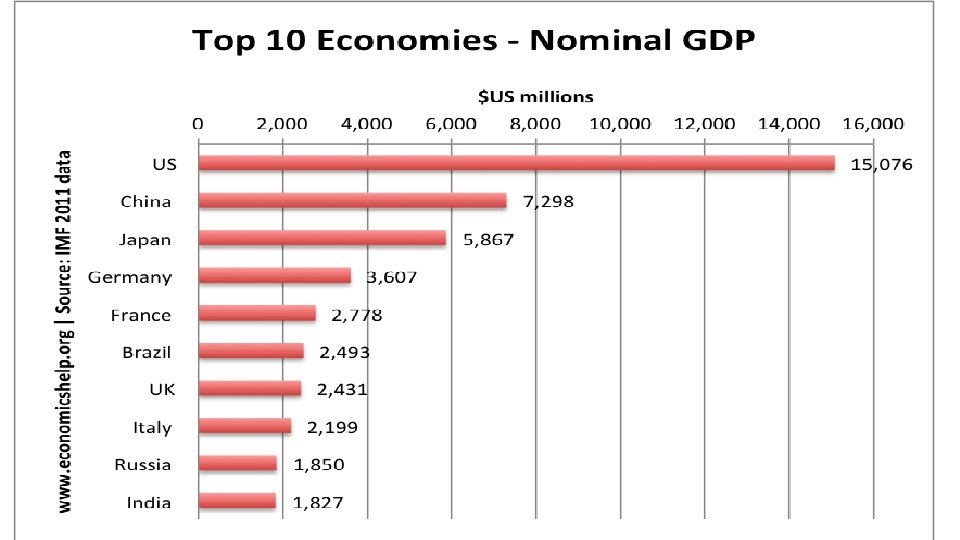
Macroeconomic Indicators • GDP – Gross Domestic Product---how much a country produces in a year • Per Capita GDP – How much a country makes person • Standard of Living – income of people, health care, education, quality of housing, etc. • Consumer Price Indexes – show inflation rates and costs of goods/resources • National Debt--- amount owed by the federal government of the US to others • Stock Market--- where stocks and bonds are "traded" – meaning bought and sold.
Go to tradingeconomics. com and choose six countries to research.
Go to tradingeconomics. com and choose six countries to research. Choose ten of the following economic indicators to compare. Some information won’t be available for certain countries: • • • • • GDP – how much a country produces in a year Per Capita GDP – How much a country makes person Unemployment Rate Interest Rate Inflation Rate Private Debt to GDP Government Debt to GDP Bankruptcies Consumer Confidence Homeownership Rate Population Minimum Wage Balance of Trade Gold Reserves Personal Savings Tourism Revenues Consumer Price Indexes – show inflation rates and costs of goods/resources National Debt--Stock Market---
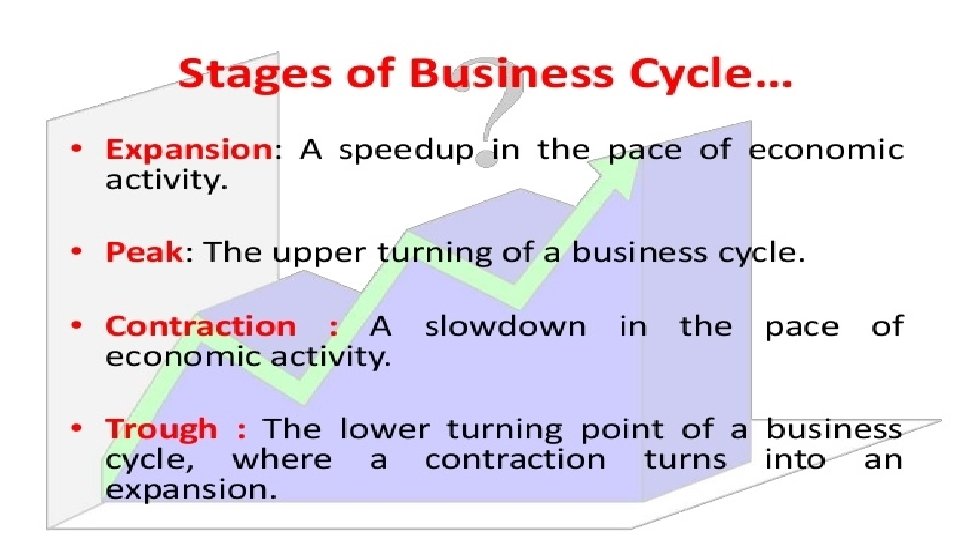
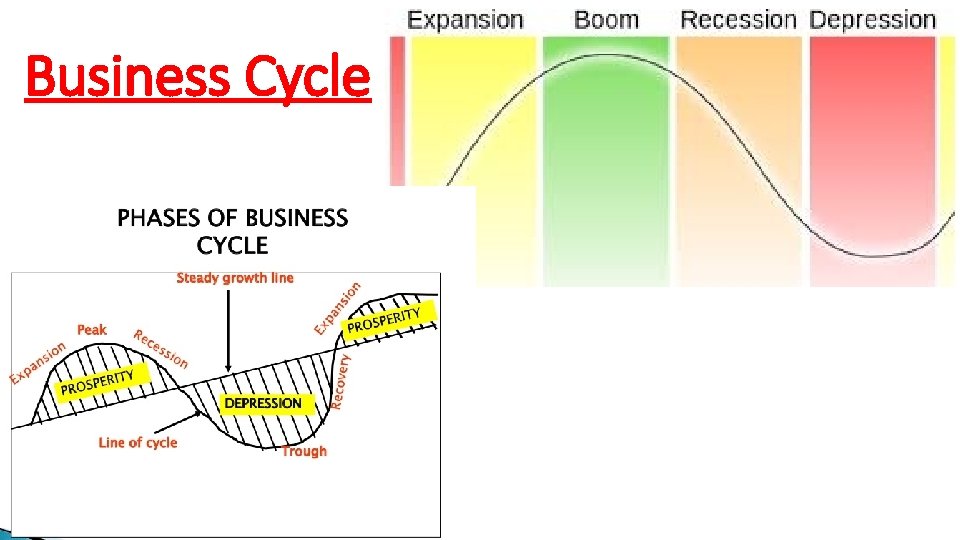
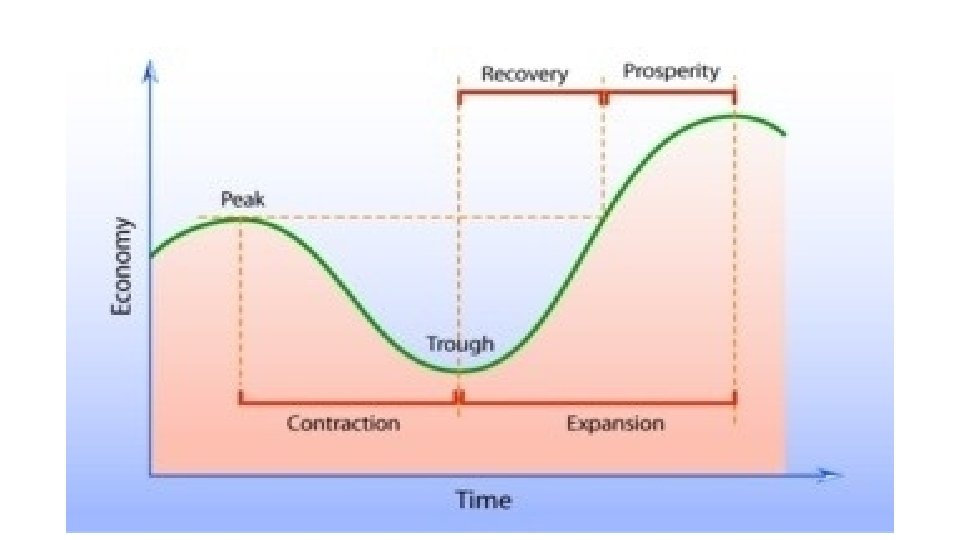
Business Cycle
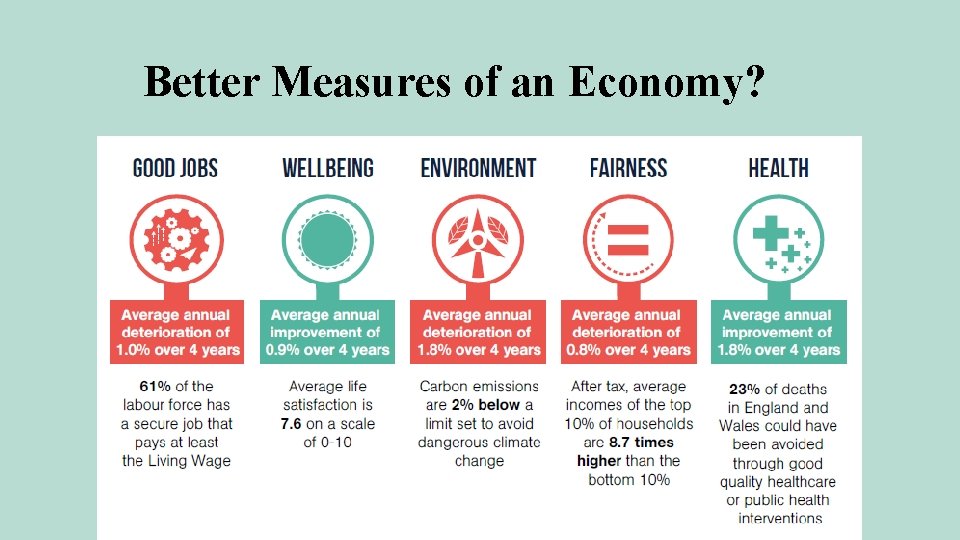
Better Measures of an Economy?
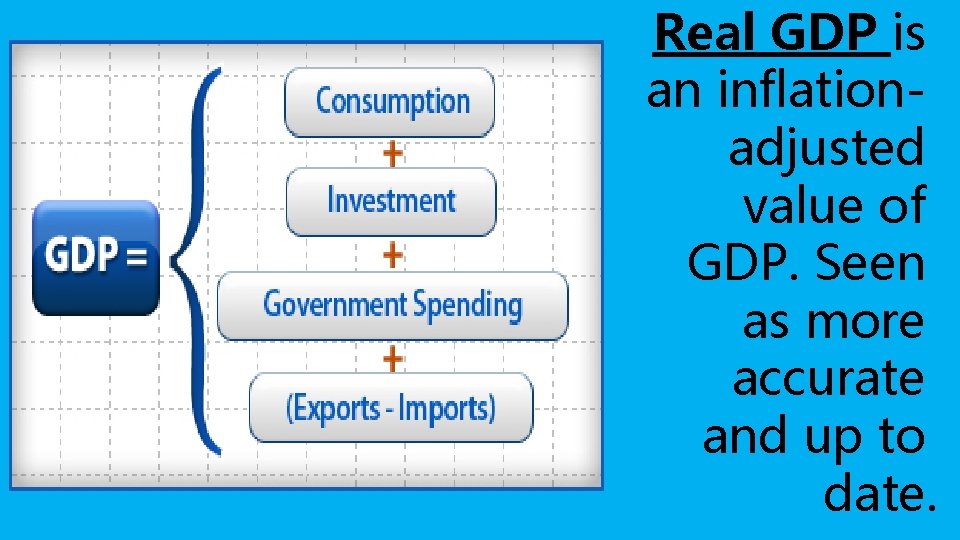
Real GDP is an inflationadjusted value of GDP. Seen as more accurate and up to date.
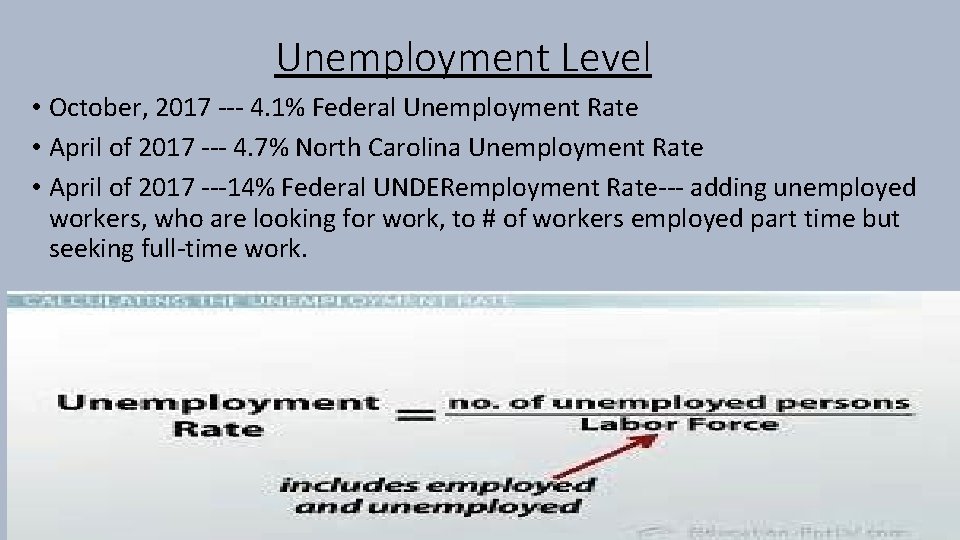
Unemployment Level • October, 2017 --- 4. 1% Federal Unemployment Rate • April of 2017 --- 4. 7% North Carolina Unemployment Rate • April of 2017 ---14% Federal UNDERemployment Rate--- adding unemployed workers, who are looking for work, to # of workers employed part time but seeking full-time work.
Consumer Price Index • The (CPI) is a measure of average change over time in prices paid by consumers for basic needs and wants. A macroeconomic indicator that helps determines inflation.
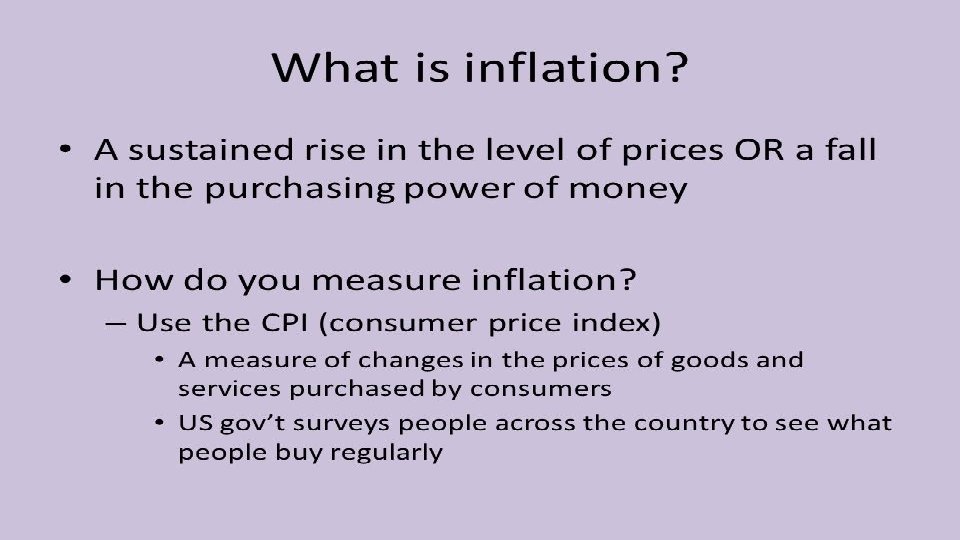
Inflation increase in prices and fall in the purchasing value of money.
Purchasing Power --- financial ability to buy products and services
Stock Market • Federal Govt- Executive Branch Securities and Exchange Commission (SEC) is the regulatory agency to oversee the Stock Market • Stockbroker --- Licensed representatives to help you buy/sell shares (pieces of companies)
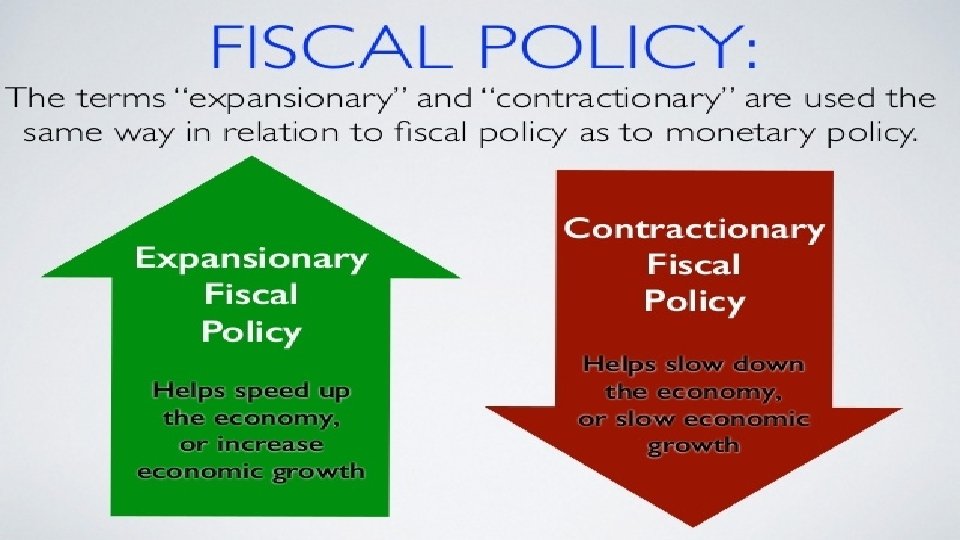
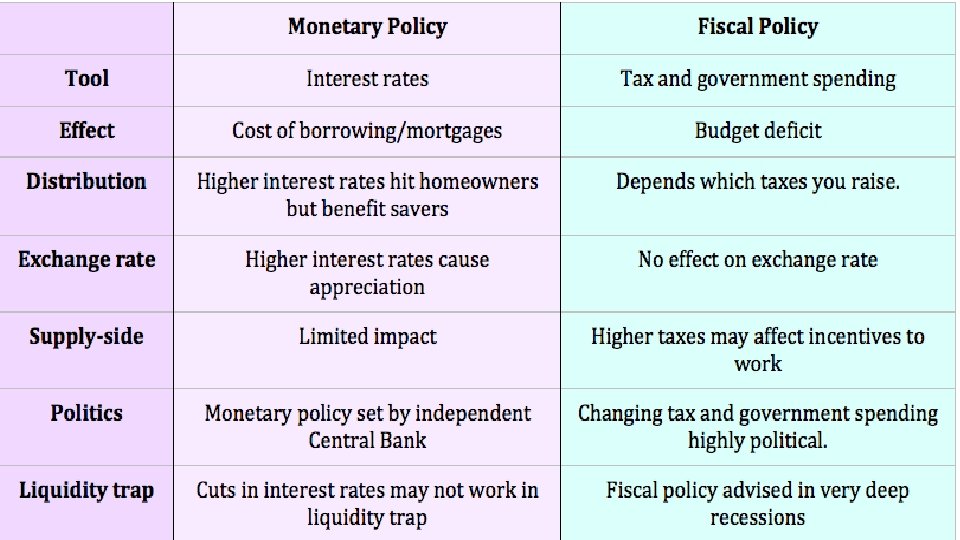
Fiscal Policy • The US government adjusts spending levels and tax rates to monitor and influence a nation's economy. Goal: Raise revenue through taxation and reducing spending.
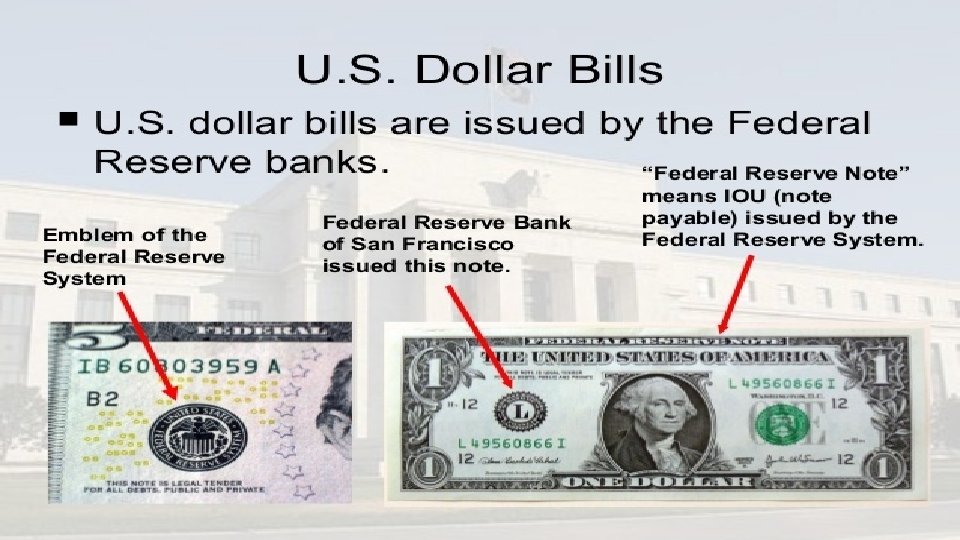
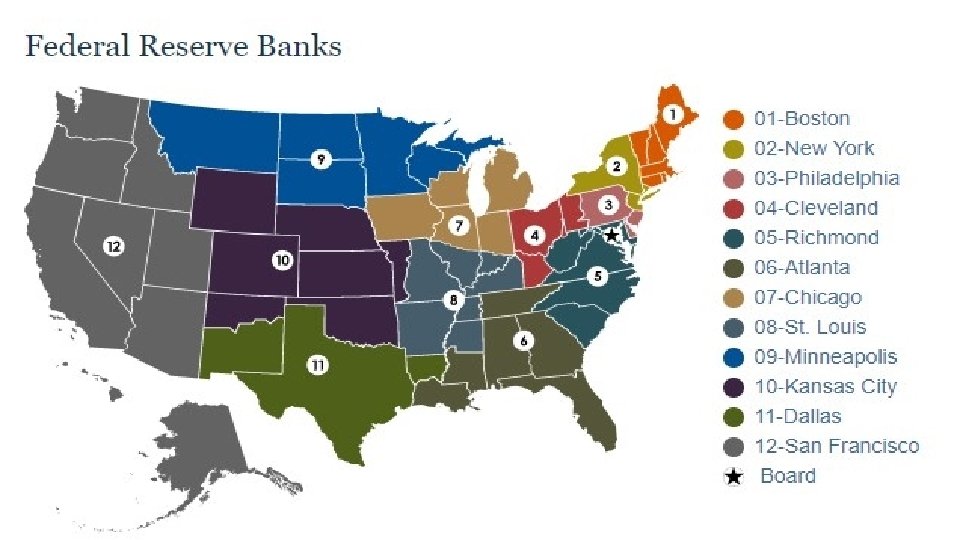
Federal Reserve • Background: In the early 1900’s, the nation's banking system had frequent widespread financial panic. As scared consumers withdrew their money in record numbers, these banks began to fail one after another. The Federal Reserve Act, (President Woodrow Wilson-1913), was designed to end financial crisis by promoting a more stable and fairly regulated economy. • The Federal Reserve Banks operate as the Central Banking System of the US • 12 Regional Banks (divided by Census numbers of population) make up the Federal Reserve
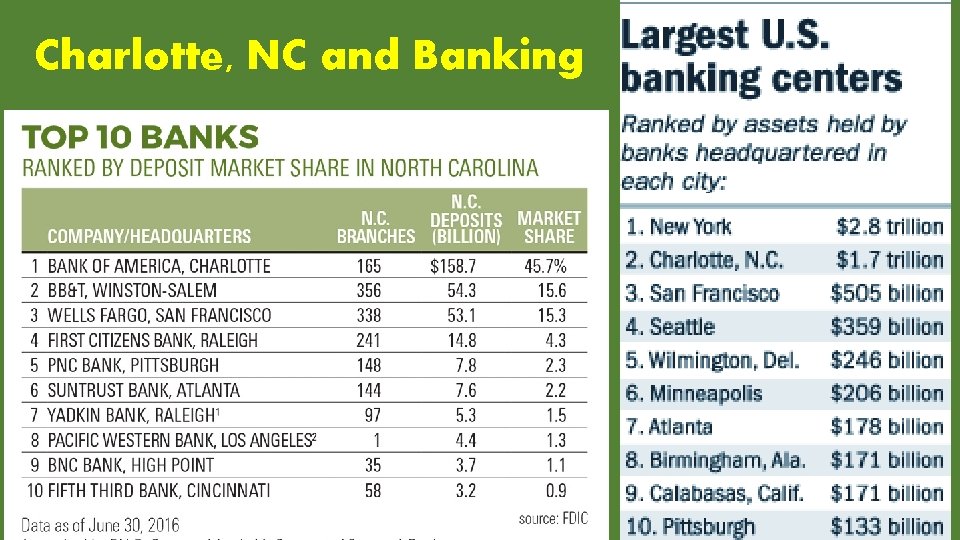
Charlotte, NC and Banking
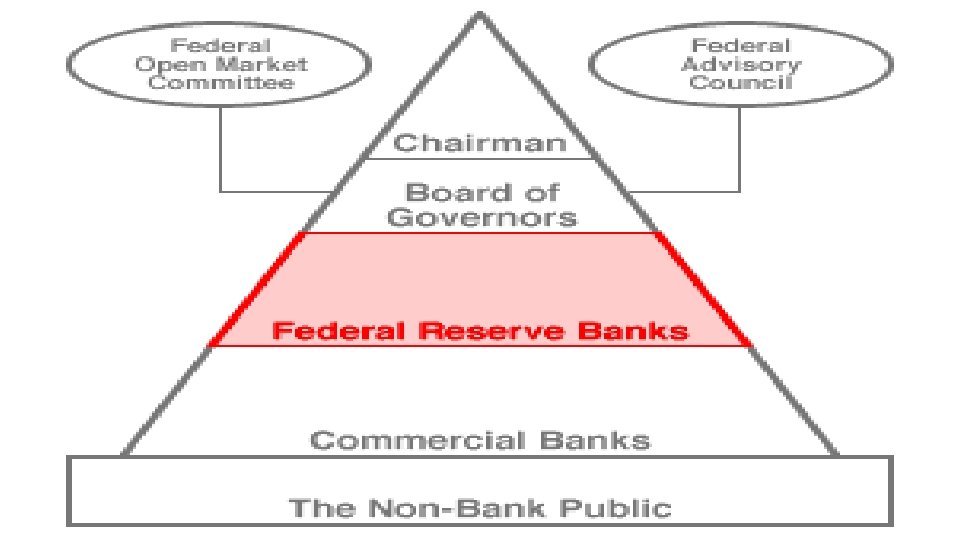
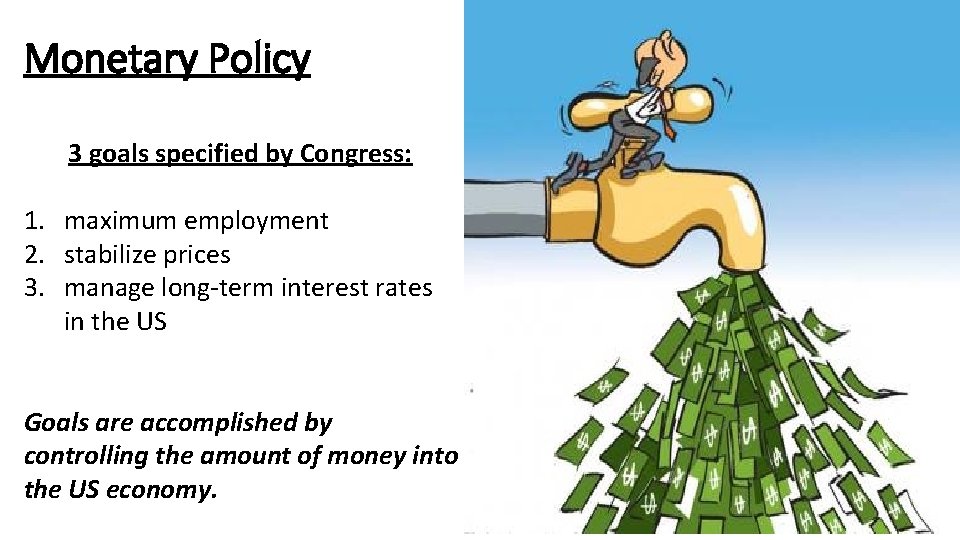
Monetary Policy 3 goals specified by Congress: 1. maximum employment 2. stabilize prices 3. manage long-term interest rates in the US Goals are accomplished by controlling the amount of money into the US economy.
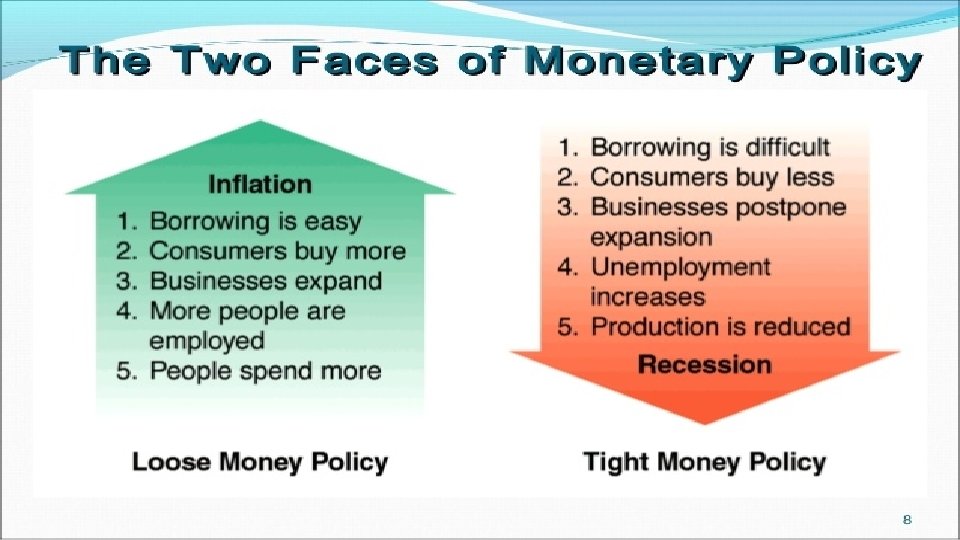
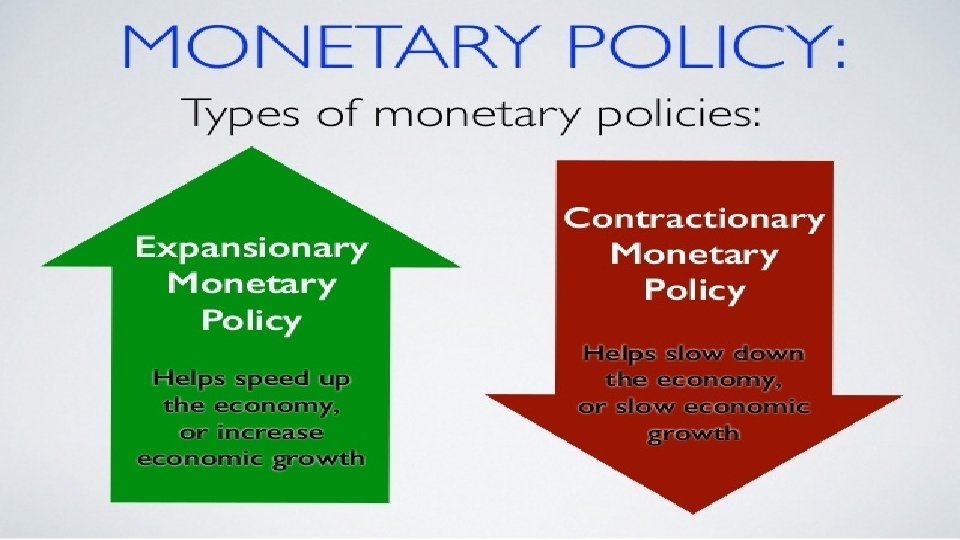
Monetary Policy
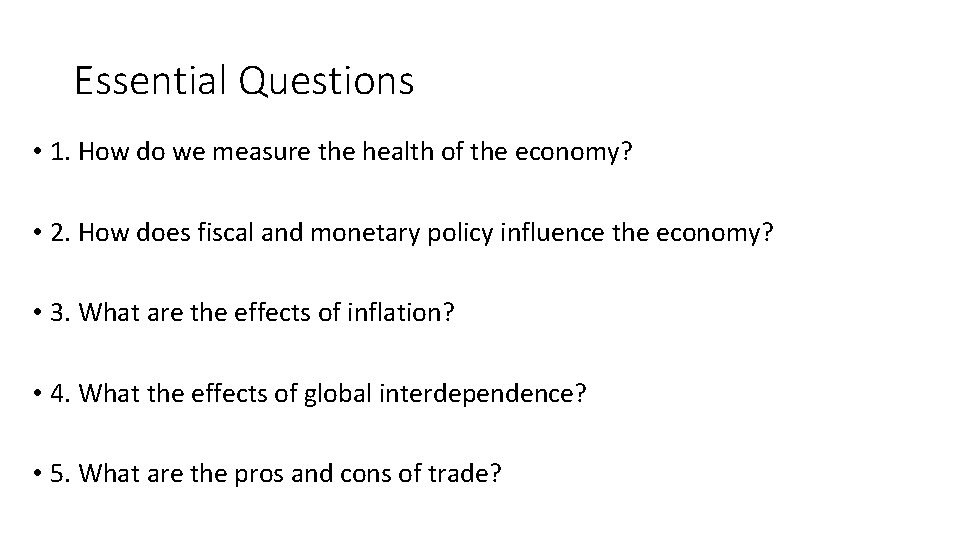
Essential Questions • 1. How do we measure the health of the economy? • 2. How does fiscal and monetary policy influence the economy? • 3. What are the effects of inflation? • 4. What the effects of global interdependence? • 5. What are the pros and cons of trade?
- Slides: 65