
UNIT 9 ELECTROSTATICS Chapter 18 TYPES OF ELECTRIC
- Slides: 35
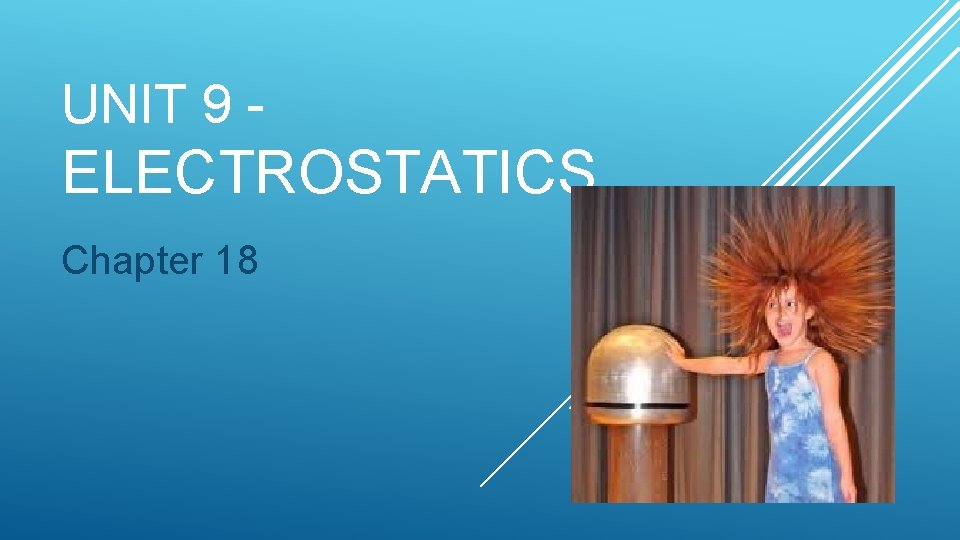
UNIT 9 - ELECTROSTATICS Chapter 18
TYPES OF ELECTRIC CHARGE Static (Unit 9) Charge at rest Collection of charge static electricity Dynamic (Unit 10) Charge in motion : current Such as in electrical circuits
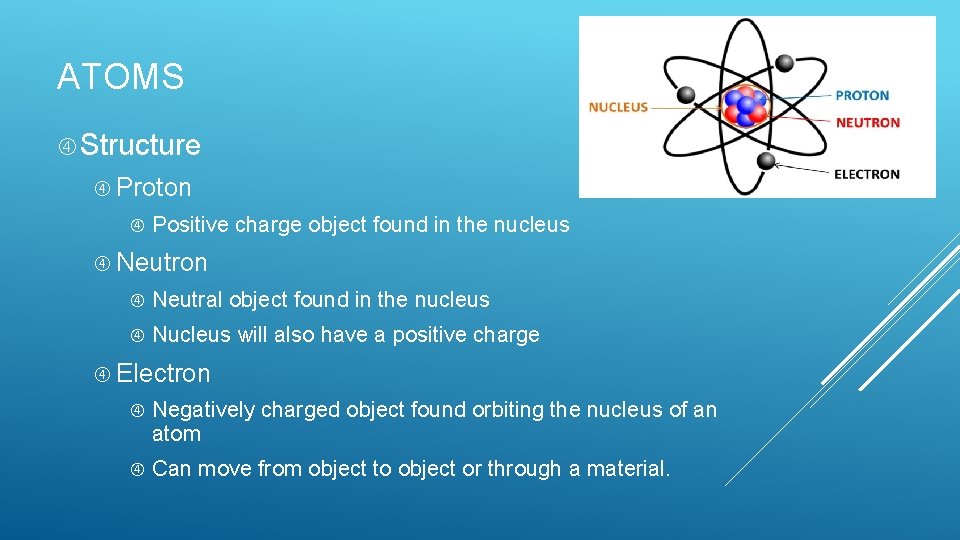
ATOMS Structure Proton Positive charge object found in the nucleus Neutron Neutral object found in the nucleus Nucleus will also have a positive charge Electron Negatively charged object found orbiting the nucleus of an atom Can move from object to object or through a material.
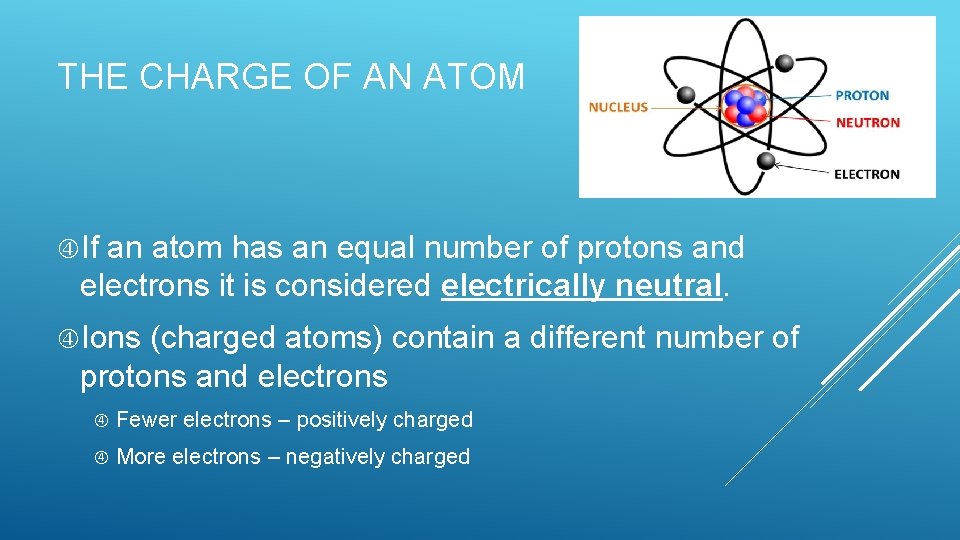
THE CHARGE OF AN ATOM If an atom has an equal number of protons and electrons it is considered electrically neutral. Ions (charged atoms) contain a different number of protons and electrons Fewer electrons – positively charged More electrons – negatively charged
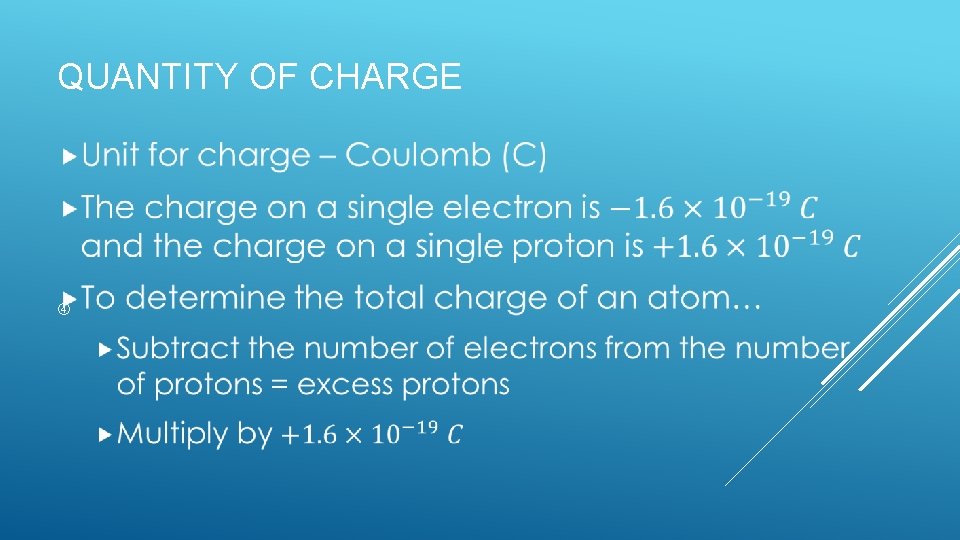
QUANTITY OF CHARGE
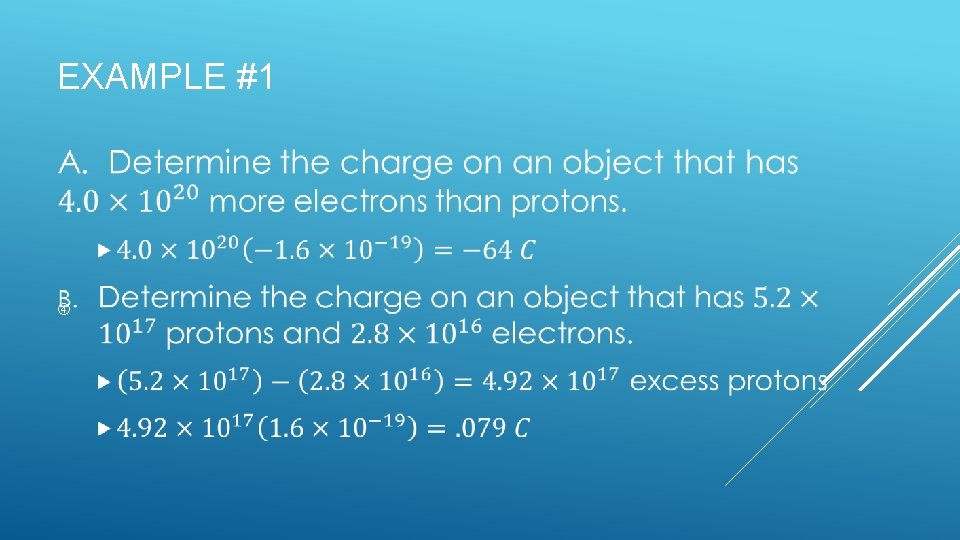
EXAMPLE #1
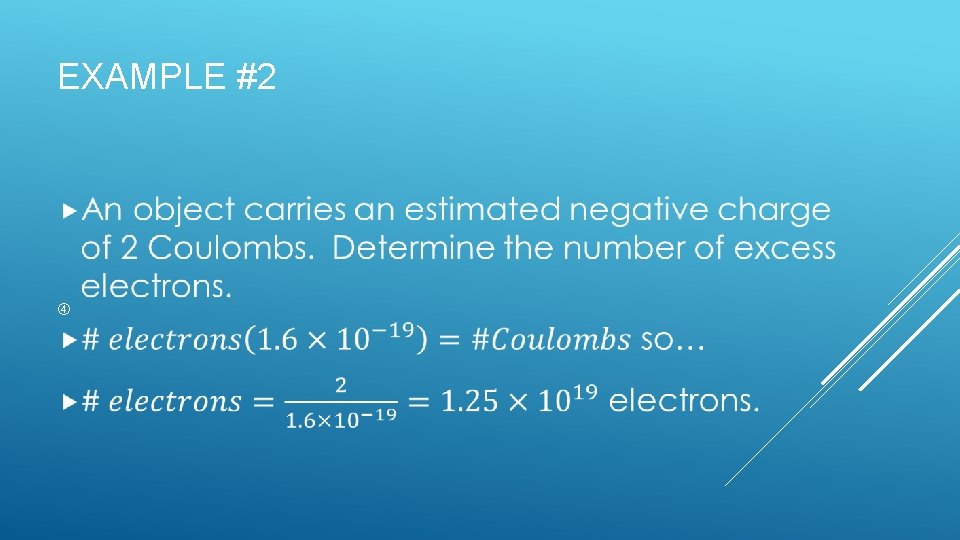
EXAMPLE #2
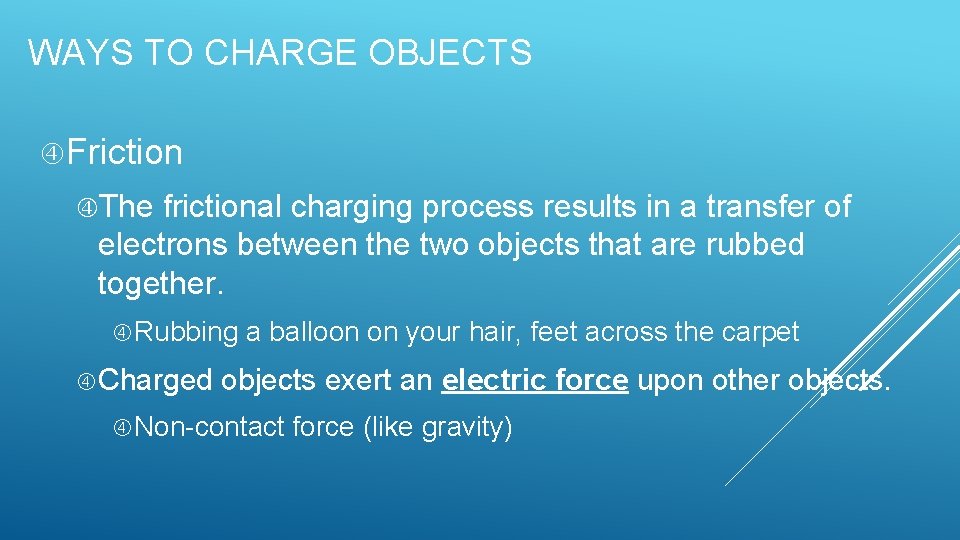
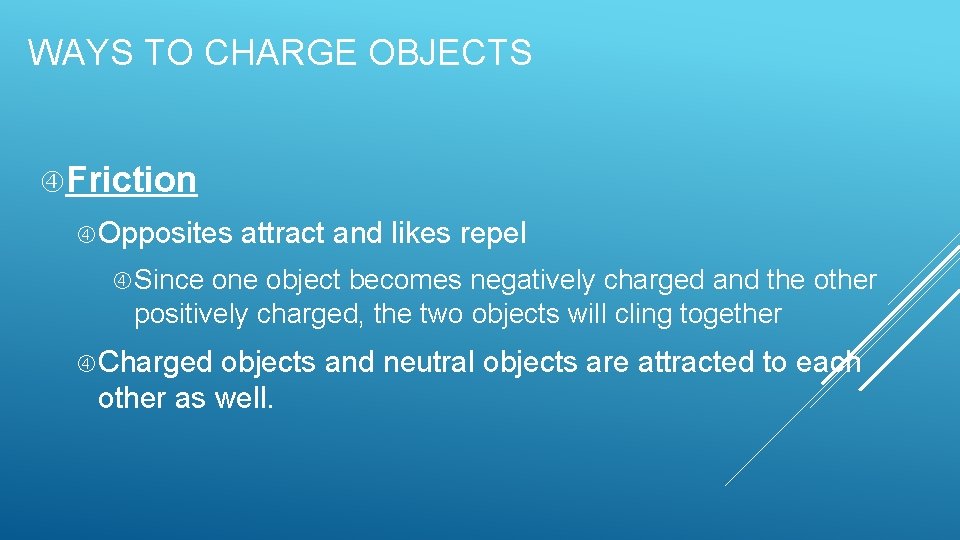
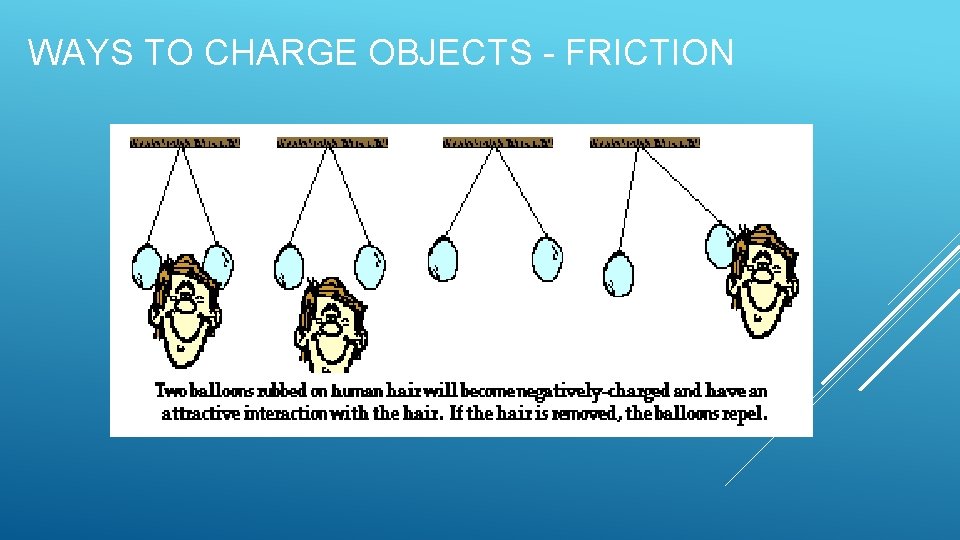
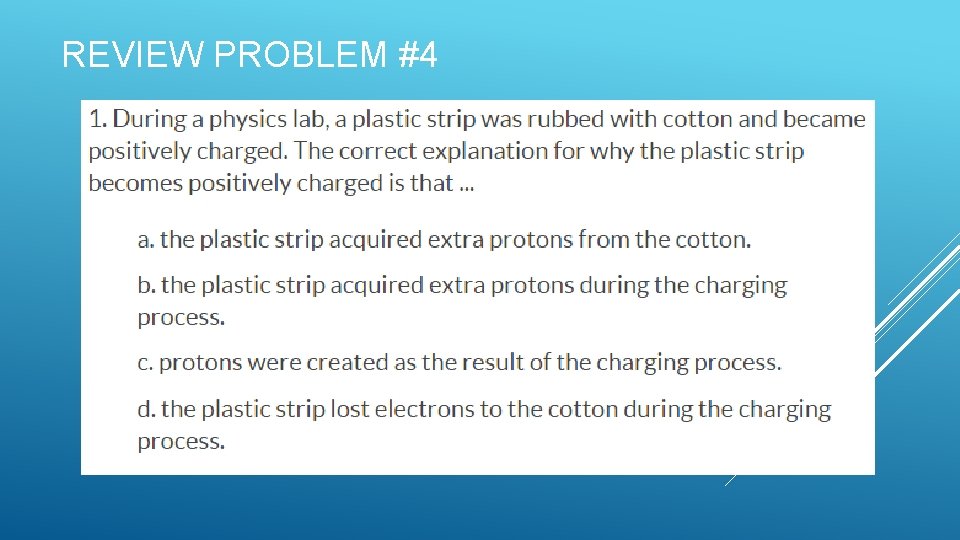
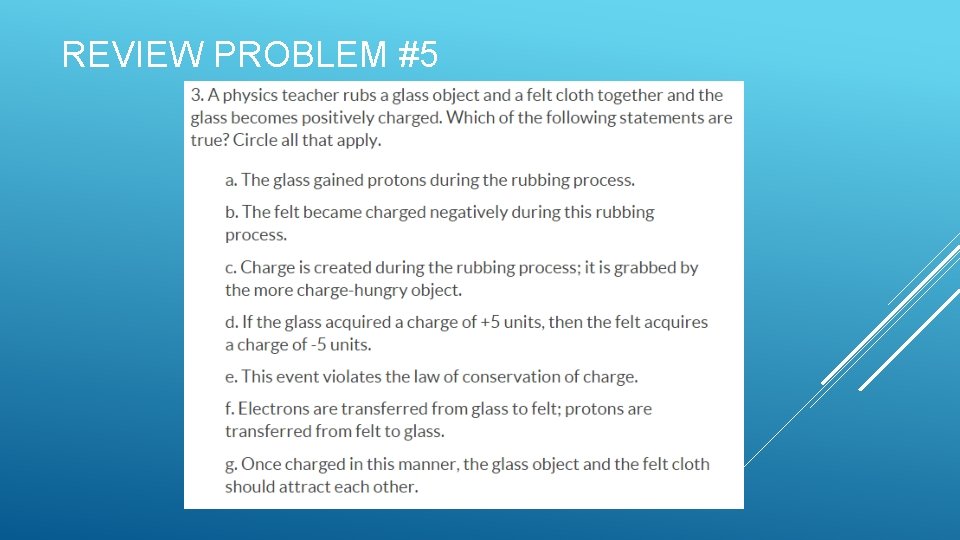
WAYS TO CHARGE OBJECTS Friction The frictional charging process results in a transfer of electrons between the two objects that are rubbed together. Rubbing a balloon on your hair, feet across the carpet Charged objects exert an electric Non-contact force (like gravity) force upon other objects.
WAYS TO CHARGE OBJECTS Friction Opposites attract and likes repel Since one object becomes negatively charged and the other positively charged, the two objects will cling together Charged objects and neutral objects are attracted to each other as well.
WAYS TO CHARGE OBJECTS - FRICTION
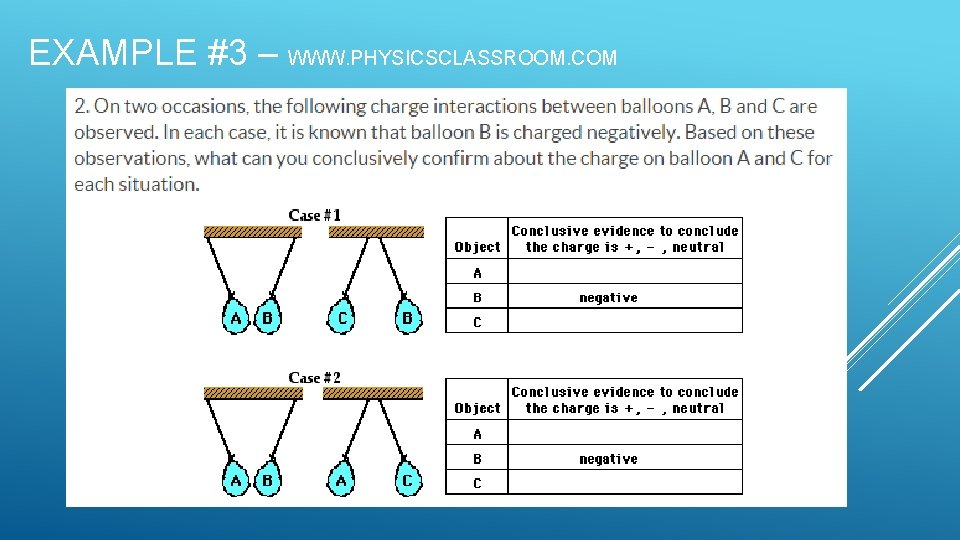
EXAMPLE #3 – WWW. PHYSICSCLASSROOM. COM
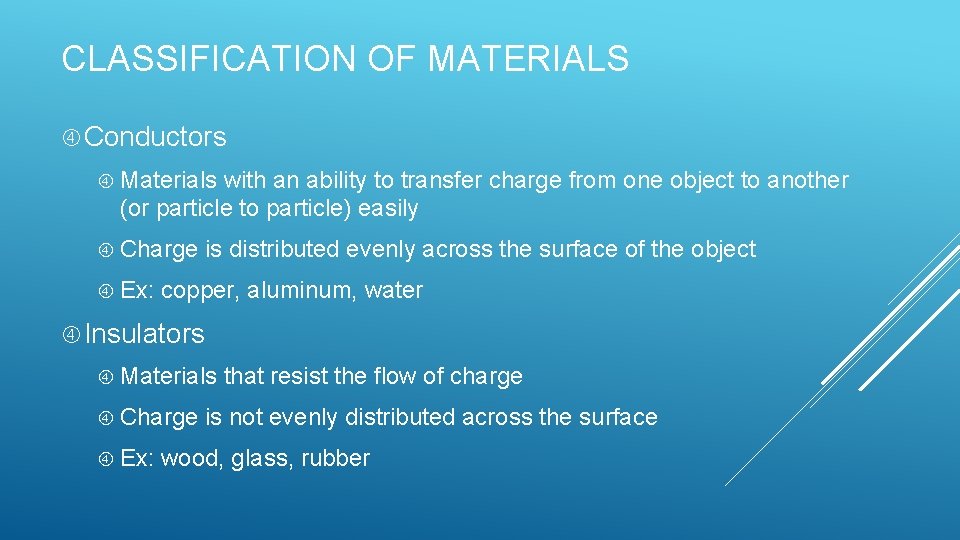
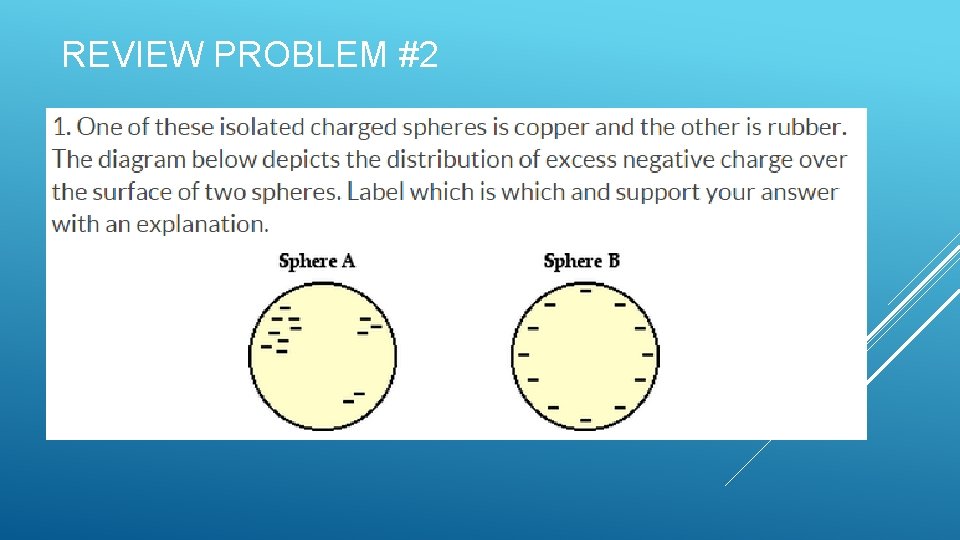
CLASSIFICATION OF MATERIALS Conductors Materials with an ability to transfer charge from one object to another (or particle to particle) easily Charge is distributed evenly across the surface of the object Ex: copper, aluminum, water Insulators Materials that resist the flow of charge Charge is not evenly distributed across the surface Ex: wood, glass, rubber
CLASSIFICATION OF MATERIALS Semiconductors Materials intermediate in the ability to carry charge Often times based on temperature Exactly 4 valance electrons Ex: silicon, germanium
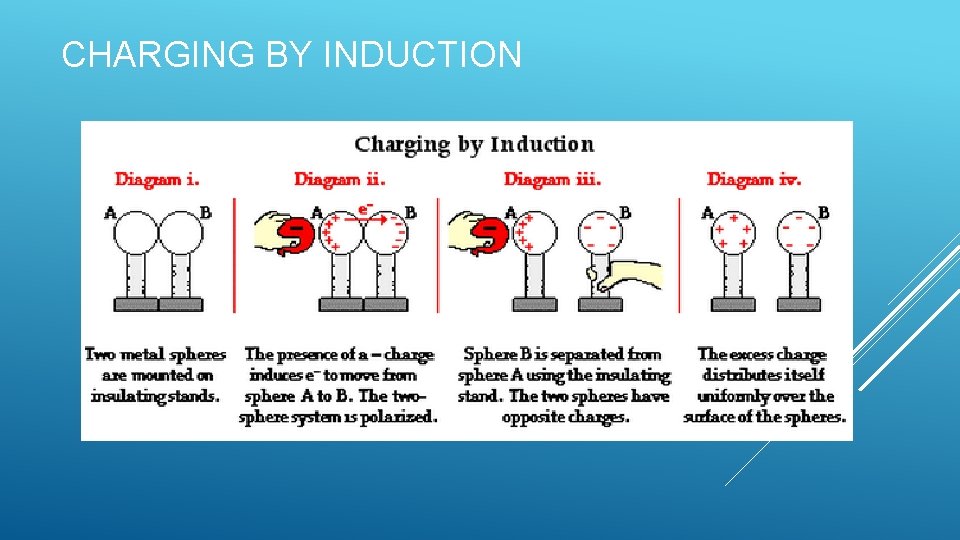
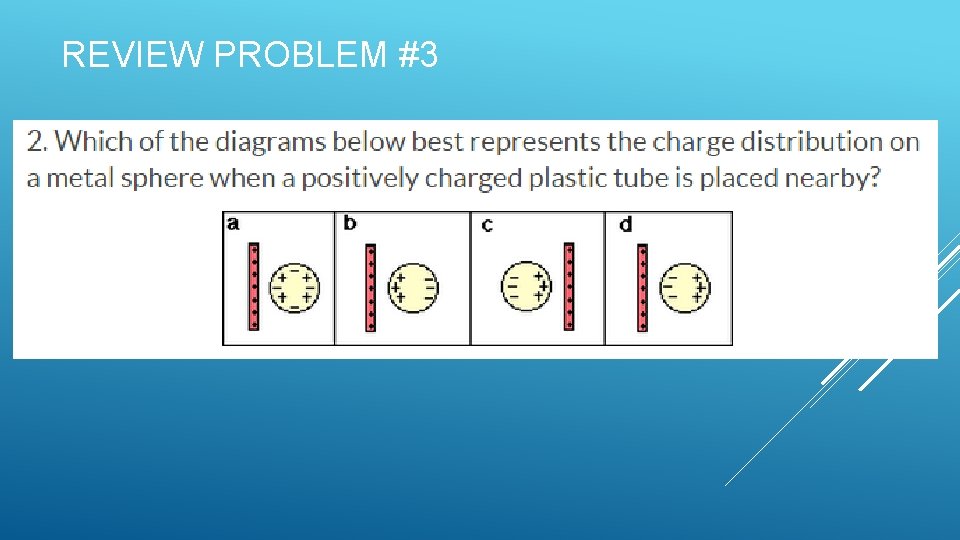
CHARGING BY INDUCTION Induction Redistribution of charge due to the presence of nearby charged objects. Charging without contact between objects Polarization – the positive and negative charges separate from each other. Law of Conservation of Charge – the overall charge in the system is the same before and after the charging process.
CHARGING BY INDUCTION
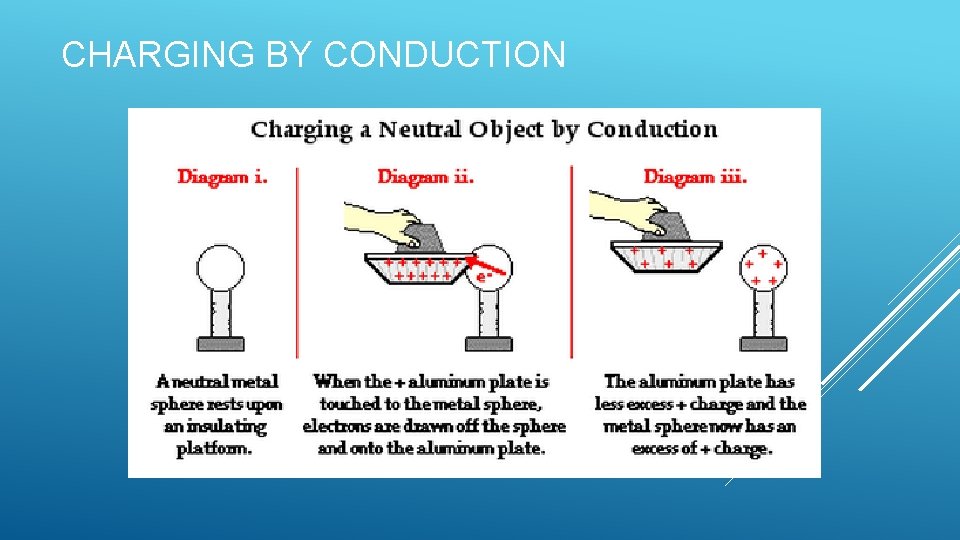
CHARGING BY CONDUCTION Conduction Charging by contact Van de Graaff generator Polarization – the positive and negative charges separate from each other. Law of Conservation of Charge – the overall charge in the system is the same before and after the charging process.
CHARGING BY CONDUCTION
ELECTRIC FORCE AND COLOUMB’S LAW The interaction between charged objects is a non- contact force that acts over some distance of separation. Depends on the two charges and the distance between them. Electric force is a vector quantity with both magnitude and direction.
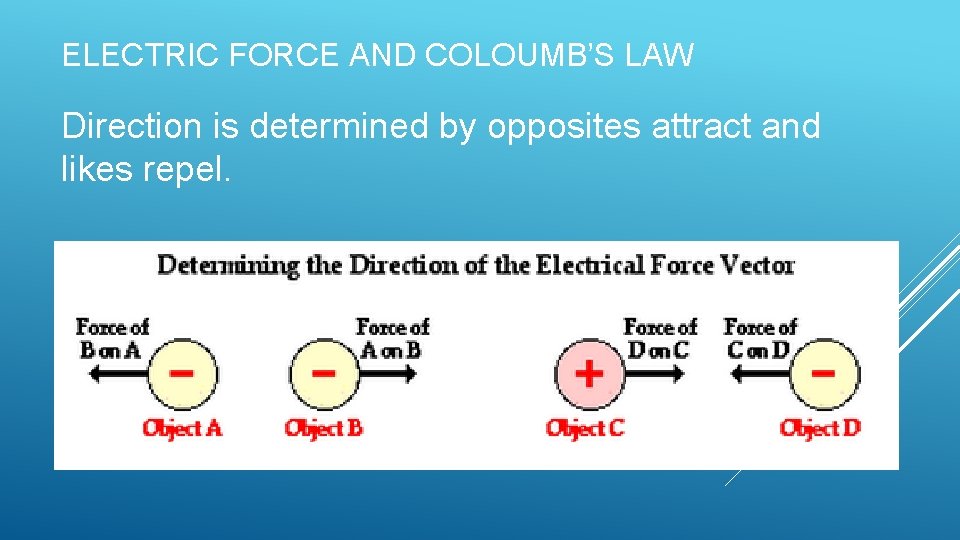
ELECTRIC FORCE AND COLOUMB’S LAW Direction is determined by opposites attract and likes repel.
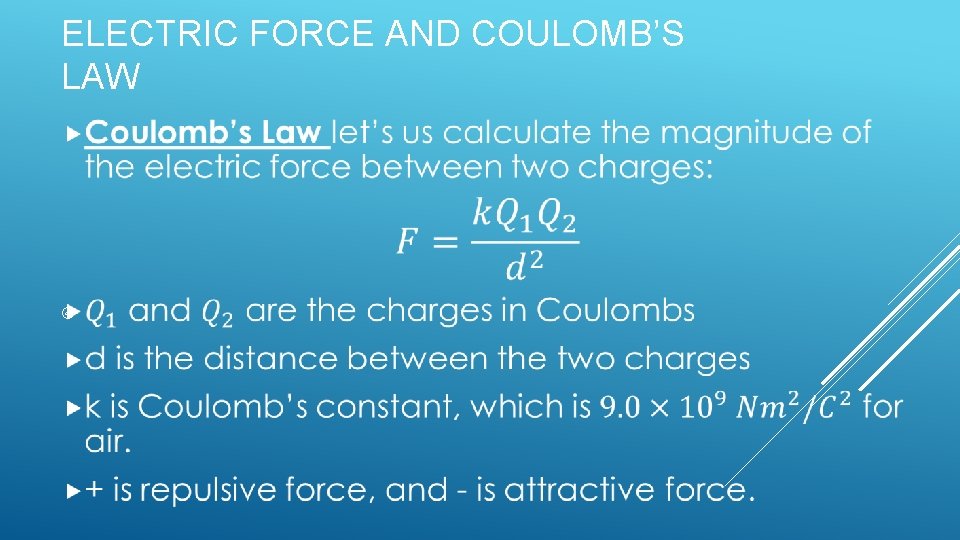
ELECTRIC FORCE AND COULOMB’S LAW
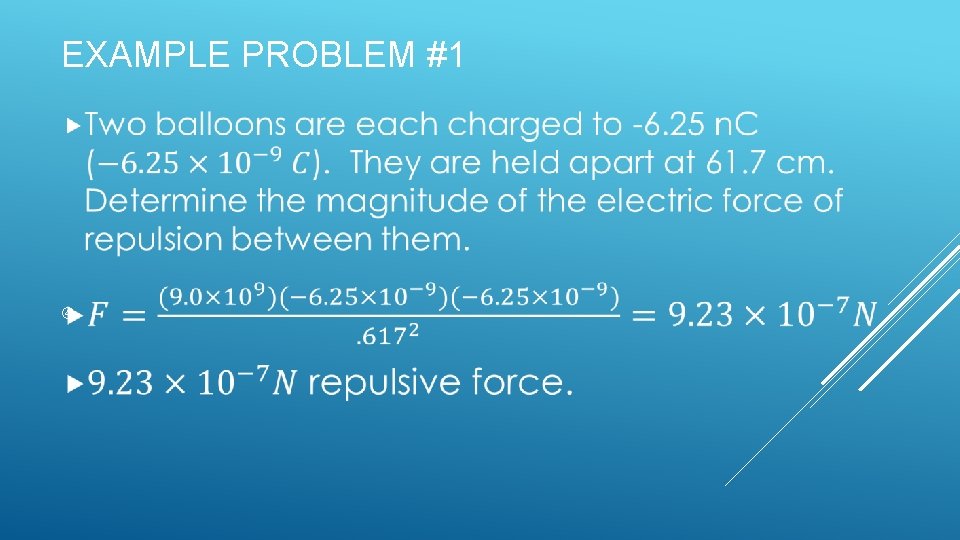
EXAMPLE PROBLEM #1
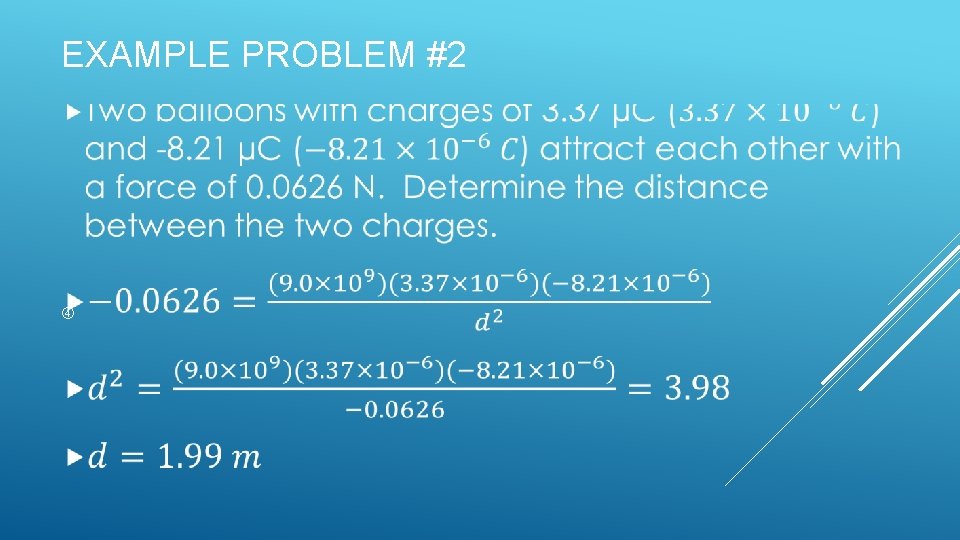
EXAMPLE PROBLEM #2
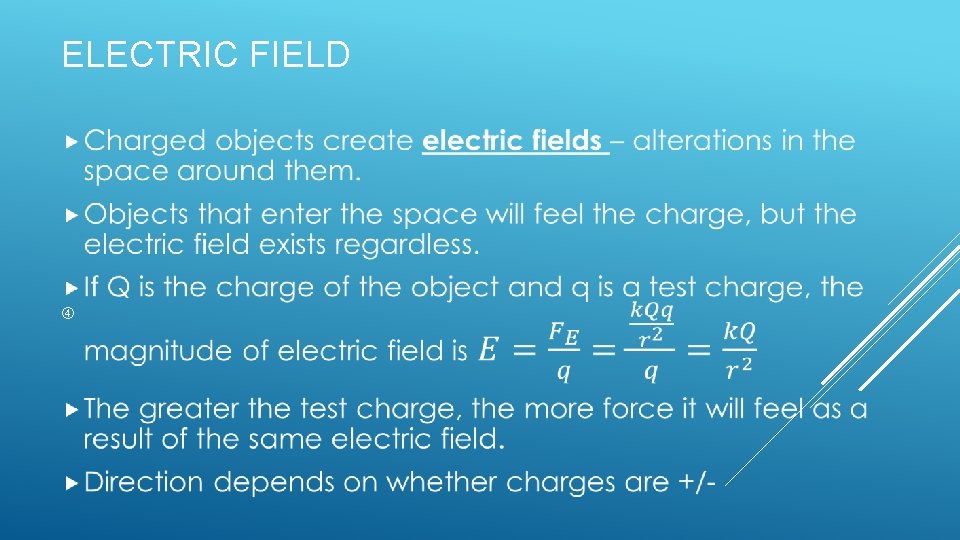
ELECTRIC FIELD
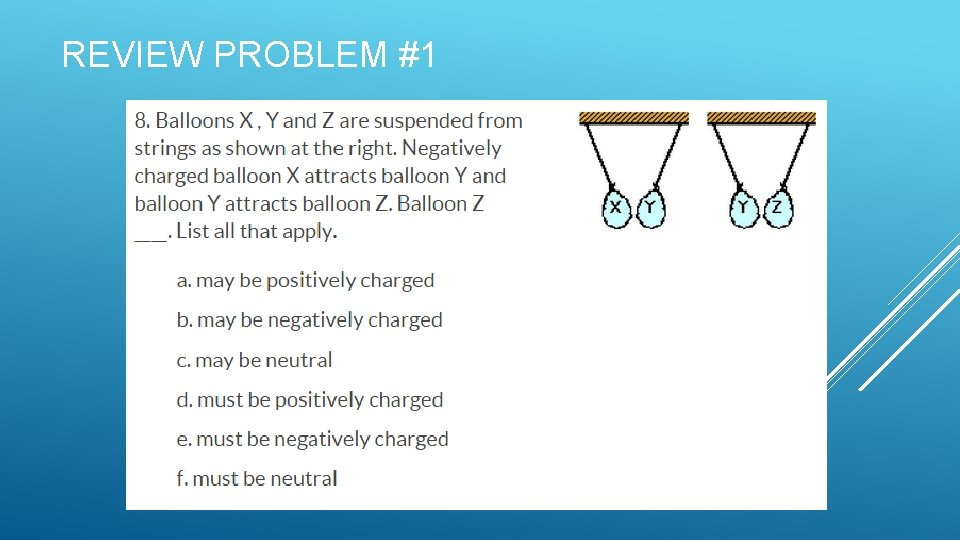
REVIEW PROBLEM #1
REVIEW PROBLEM #2
REVIEW PROBLEM #3
REVIEW PROBLEM #4
REVIEW PROBLEM #5
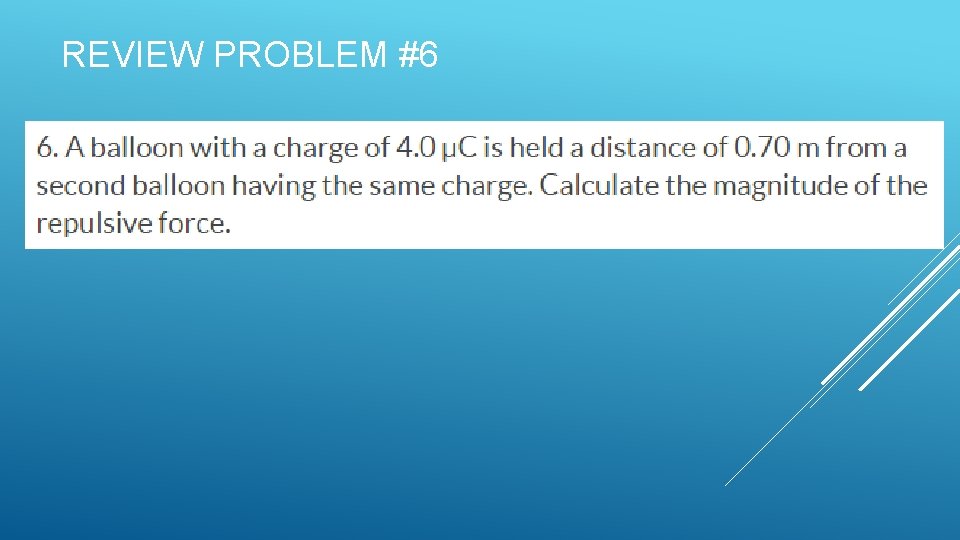
REVIEW PROBLEM #6
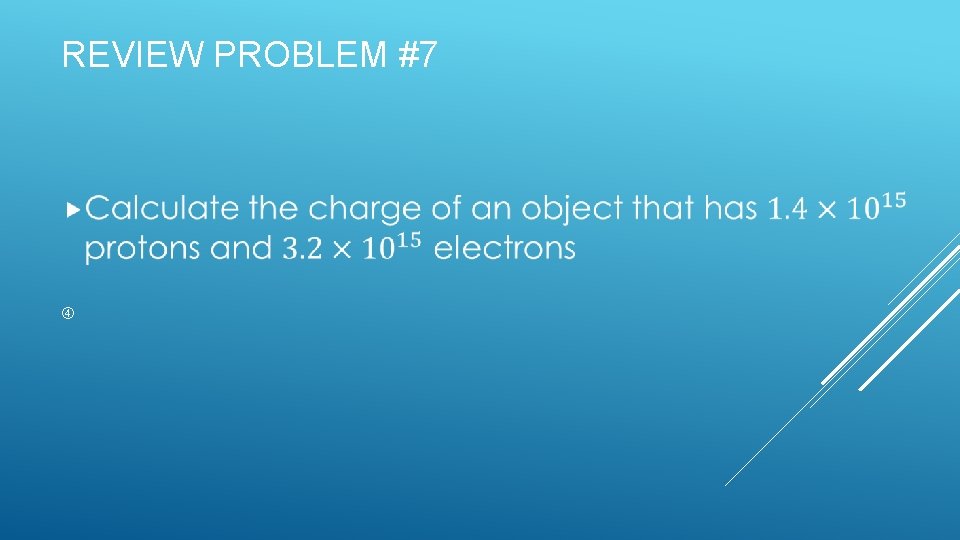
REVIEW PROBLEM #7
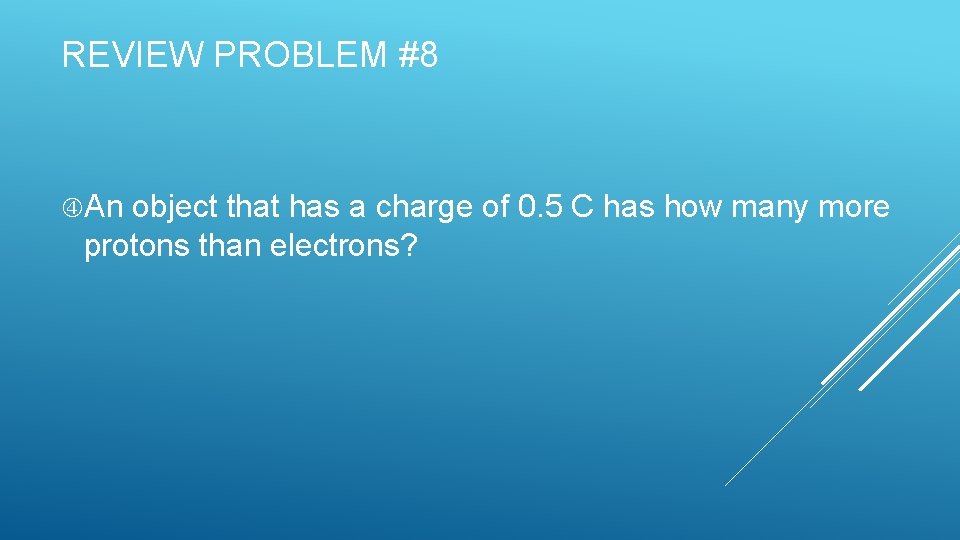
REVIEW PROBLEM #8 An object that has a charge of 0. 5 C has how many more protons than electrons?
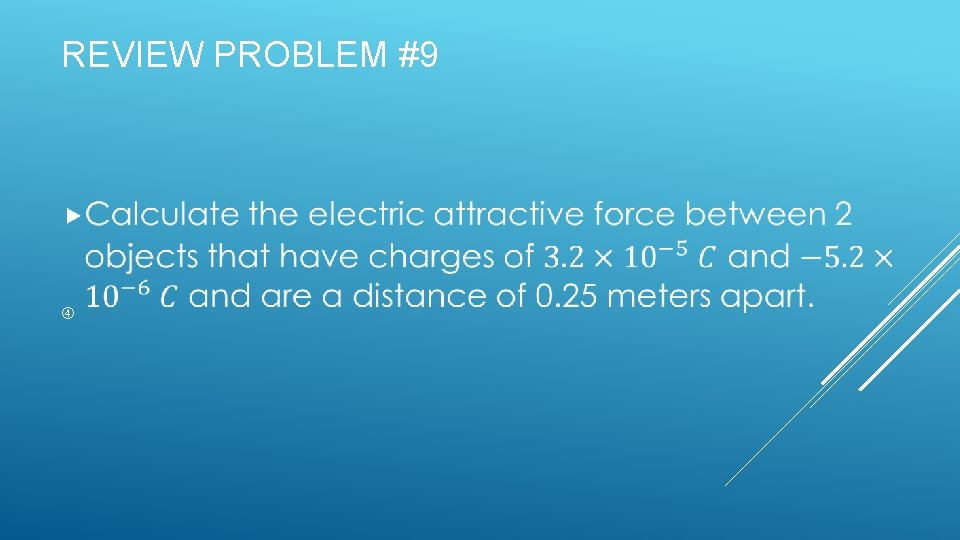
REVIEW PROBLEM #9
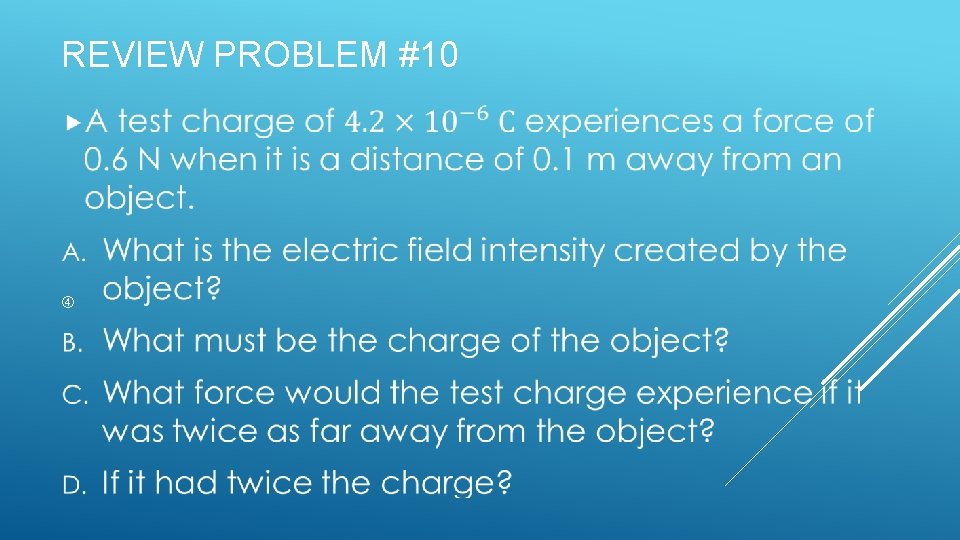
REVIEW PROBLEM #10
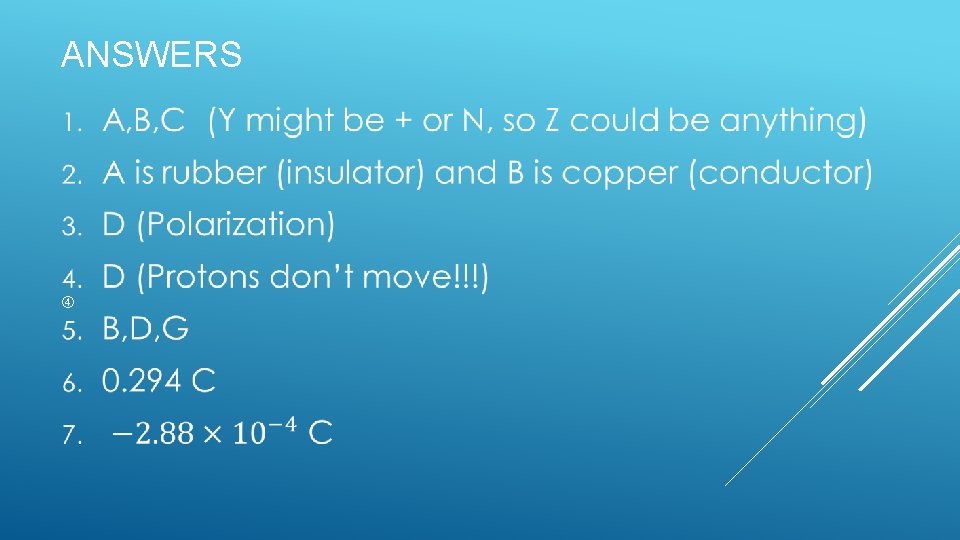
ANSWERS
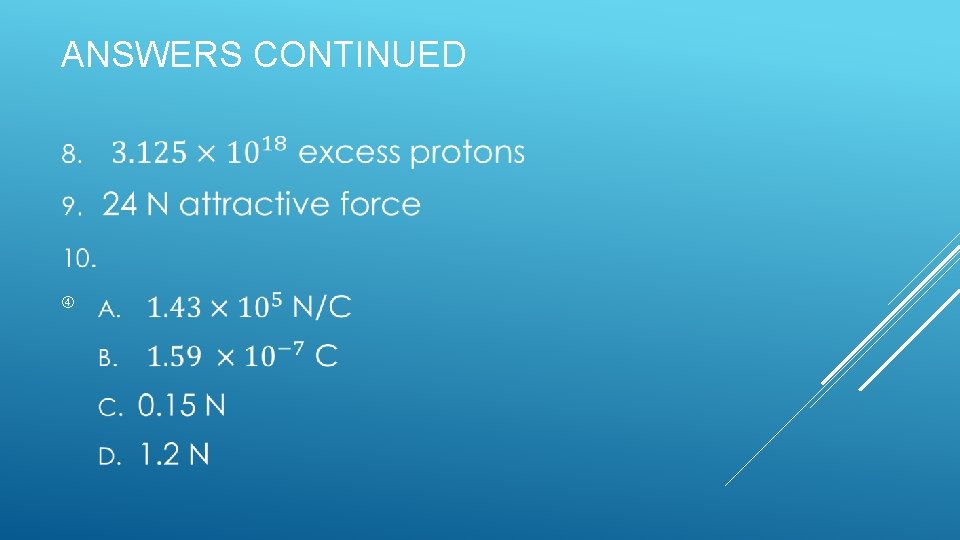
ANSWERS CONTINUED