
Unit 9 Classification Grouping of different types of
- Slides: 10
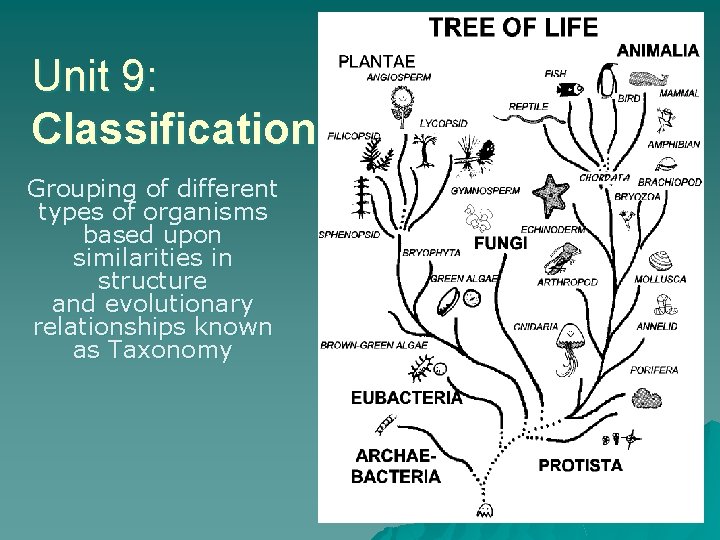
Unit 9: Classification Grouping of different types of organisms based upon similarities in structure and evolutionary relationships known as Taxonomy
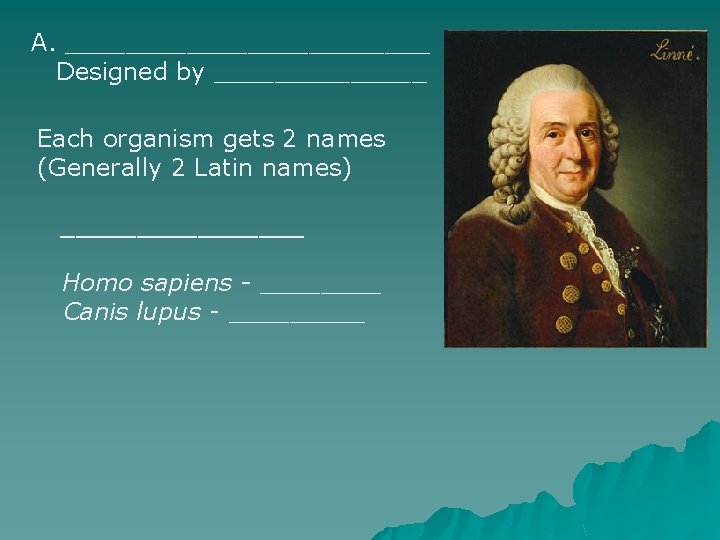
A. ____________ Designed by _______ Each organism gets 2 names (Generally 2 Latin names) ________ Homo sapiens - ____ Canis lupus - _____
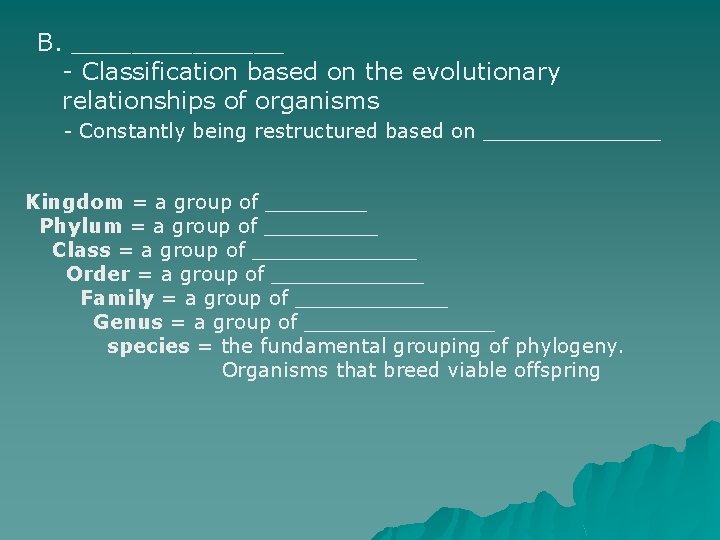
B. _______ - Classification based on the evolutionary relationships of organisms - Constantly being restructured based on _______ Kingdom = a group of ____ Phylum = a group of _____ Class = a group of _______ Order = a group of ______ Family = a group of ______ Genus = a group of ________ species = the fundamental grouping of phylogeny. Organisms that breed viable offspring
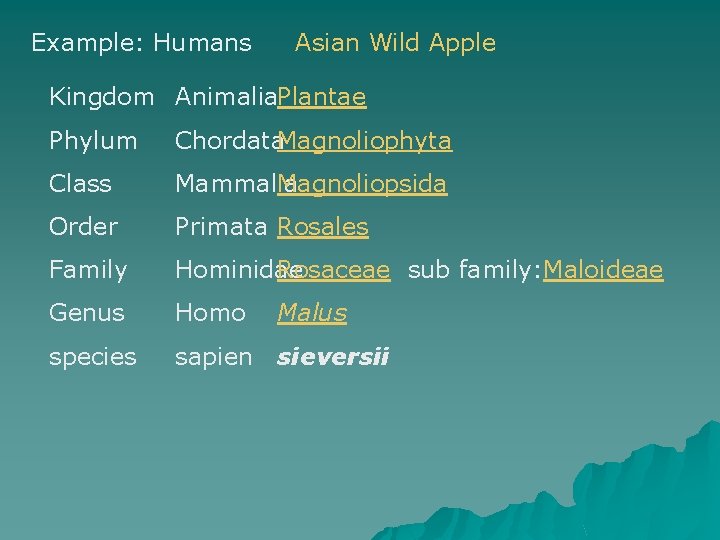
Example: Humans Asian Wild Apple Kingdom Animalia. Plantae Phylum Chordata. Magnoliophyta Class Mammalia Magnoliopsida Order Primata Rosales Family Hominidae Rosaceae sub family: Maloideae Genus Homo Malus species sapien sieversii
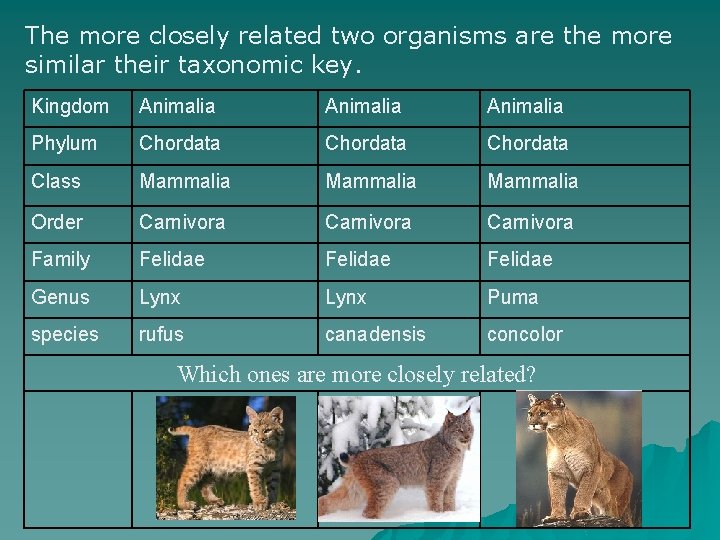
The more closely related two organisms are the more similar their taxonomic key. Kingdom Animalia Phylum Chordata Class Mammalia Order Carnivora Family Felidae Genus Lynx Puma species rufus canadensis concolor Which ones are more closely related?
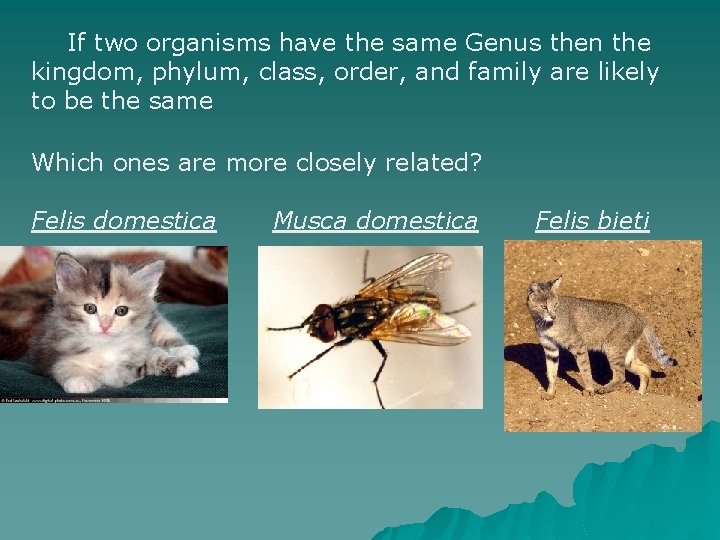
If two organisms have the same Genus then the kingdom, phylum, class, order, and family are likely to be the same Which ones are more closely related? Felis domestica Musca domestica Felis bieti
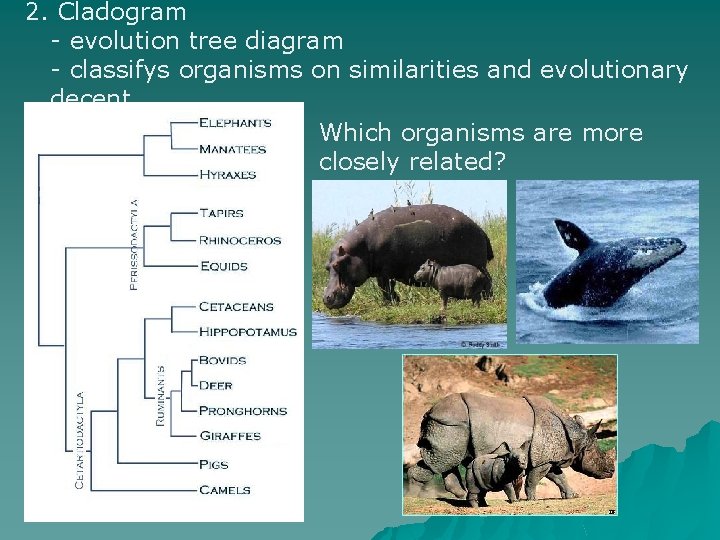
2. Cladogram - evolution tree diagram - classifys organisms on similarities and evolutionary decent Which organisms are more closely related?
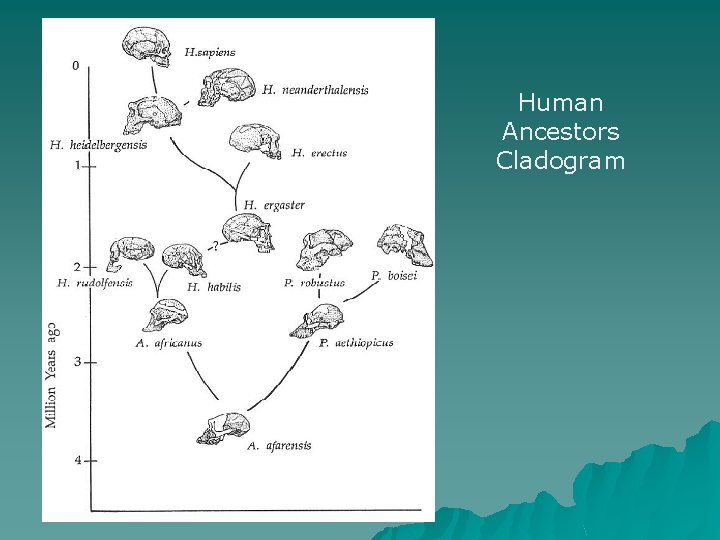
Human Ancestors Cladogram
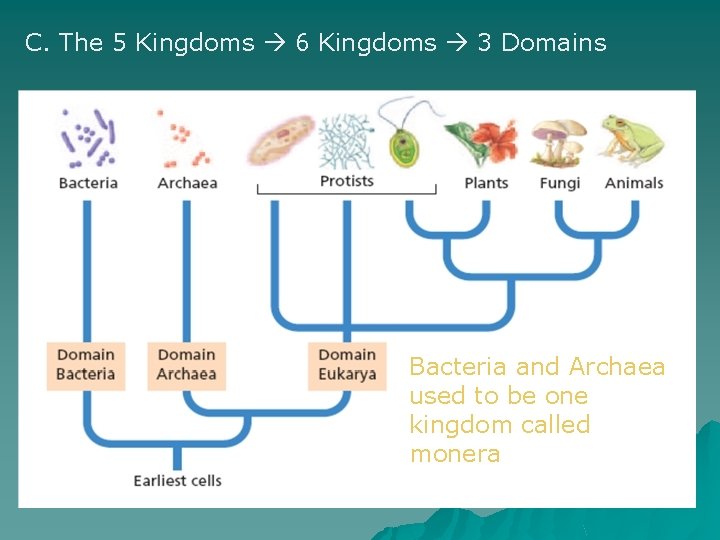
C. The 5 Kingdoms 6 Kingdoms 3 Domains Bacteria and Archaea used to be one kingdom called monera
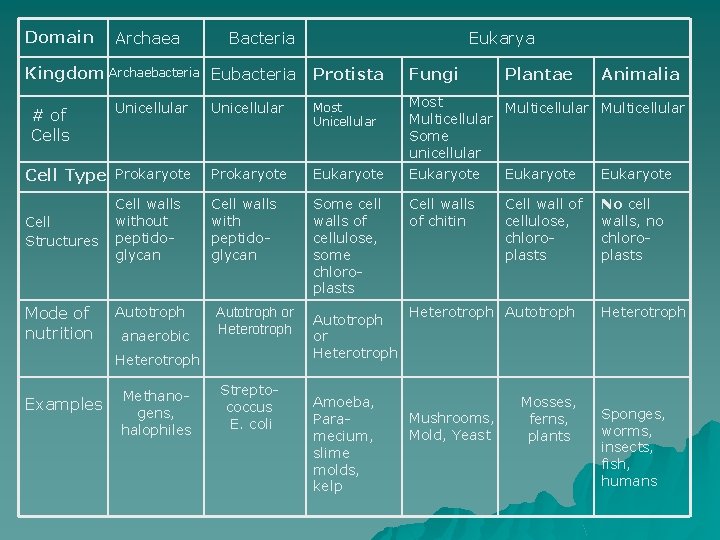
Domain Archaea Bacteria Kingdom Archaebacteria Eukarya Protista Fungi Plantae Animalia Most Multicellular Some unicellular Unicellular Most Unicellular Cell Type Prokaryote Eukaryote Cell walls with peptidoglycan Some cell walls of cellulose, some chloroplasts Cell walls of chitin Cell wall of cellulose, chloroplasts No cell walls, no chloroplasts # of Cells Cell Structures Mode of nutrition Cell walls without peptidoglycan Autotroph anaerobic Autotroph or Heterotroph Examples Methanogens, halophiles Streptococcus E. coli Autotroph or Heterotroph Amoeba, Paramecium, slime molds, kelp Heterotroph Autotroph Mushrooms, Mold, Yeast Mosses, ferns, plants Heterotroph Sponges, worms, insects, fish, humans