
Unit 9 2 Fuels Simple animations Oil extraction
- Slides: 4
Unit 9. 2 Fuels Simple animations: Oil extraction; fractionating column; hydrogen fuel cell
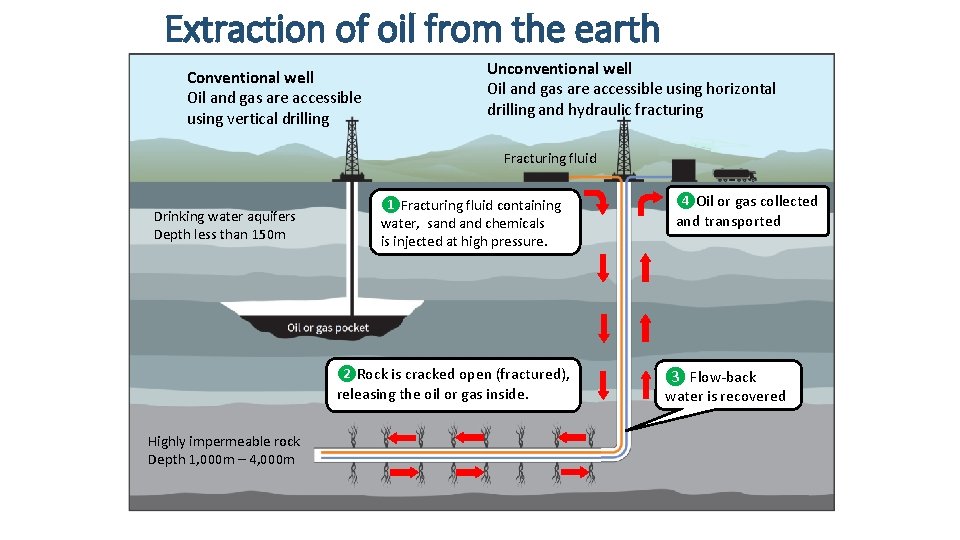
Extraction of oil from the earth Conventional well Oil and gas are accessible using vertical drilling Unconventional well Oil and gas are accessible using horizontal drilling and hydraulic fracturing Fracturing fluid Drinking water aquifers Depth less than 150 m ❶Fracturing fluid containing water, sand chemicals is injected at high pressure. ❷Rock is cracked open (fractured), releasing the oil or gas inside. Highly impermeable rock Depth 1, 000 m – 4, 000 m ❹Oil or gas collected and transported ❸ Flow-back water is recovered
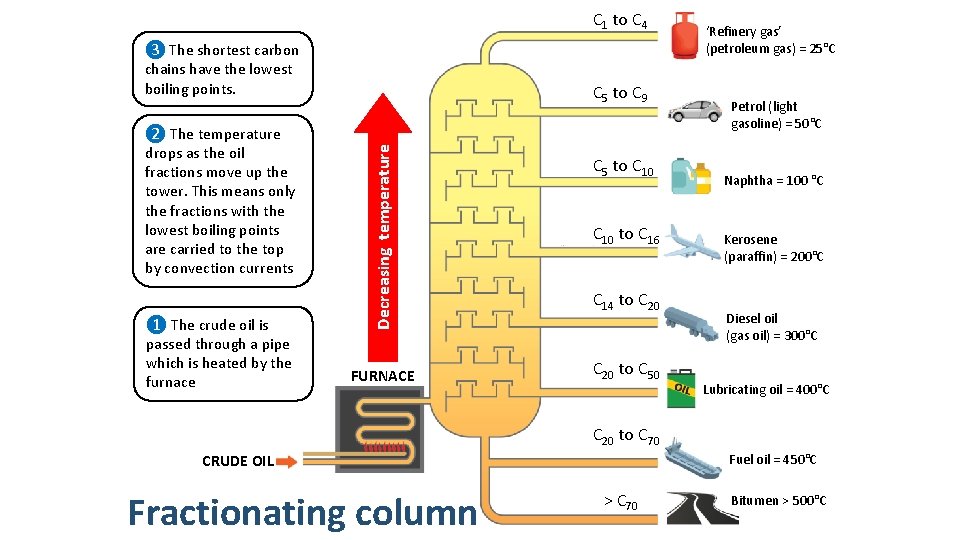
C 1 to C 4 ❸ The shortest carbon chains have the lowest boiling points. ❶ The crude oil is passed through a pipe which is heated by the furnace Decreasing temperature ❷ The temperature drops as the oil fractions move up the tower. This means only the fractions with the lowest boiling points are carried to the top by convection currents C 5 to C 9 FURNACE C 5 to C 10 to C 16 C 14 to C 20 to C 50 ‘Refinery gas’ (petroleum gas) = 25°C Petrol (light gasoline) = 50°C Naphtha = 100 °C Kerosene (paraffin) = 200°C Diesel oil (gas oil) = 300°C Lubricating oil = 400°C C 20 to C 70 CRUDE OIL Fractionating column Fuel oil = 450°C > C 70 Bitumen > 500°C
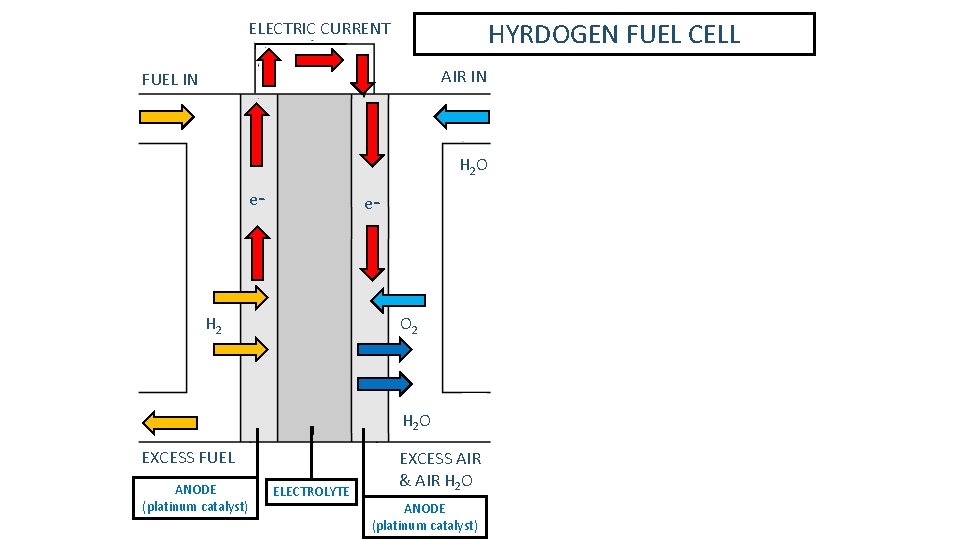
HYRDOGEN FUEL CELL ELECTRIC CURRENT AIR IN FUEL IN H 2 O e- e- H 2 O 2 H 2 O EXCESS FUEL ANODE (platinum catalyst) ELECTROLYTE EXCESS AIR & AIR H 2 O ANODE (platinum catalyst)