
Unit 8 Physiology of Human Body Systems This
Unit 8: Physiology of Human Body Systems This is an internally assessed unit and you will be required to carry out three assignments to complete the unit.
Unit 8: Physiology of Human Body Systems In this unit you will learn about the physiology of three human body systems: • Musculoskeletal • Lymphatic • Digestive You need to develop your knowledge and understanding of the three systems, the implications when they are not working properly and the corrective treatments that are available. Lesson 8 B 1
Unit 8: Physiology of Human Body Systems Lesson 8 B. 1 Structure and function of the Lymphatic system
Unit 8: Physiology of Human Body Systems Learning Aim B Understand the impact of disorder on the physiology of the lymphatic system and the associated corrective treatment Task 1: Please take a few minutes to complete the prior learning Activity sheet 8. 6 for the unit. . Up load on class charts and email to Mrs Smith as part of lesson 8 B. 1. by the deadline set Lesson 8 B 1
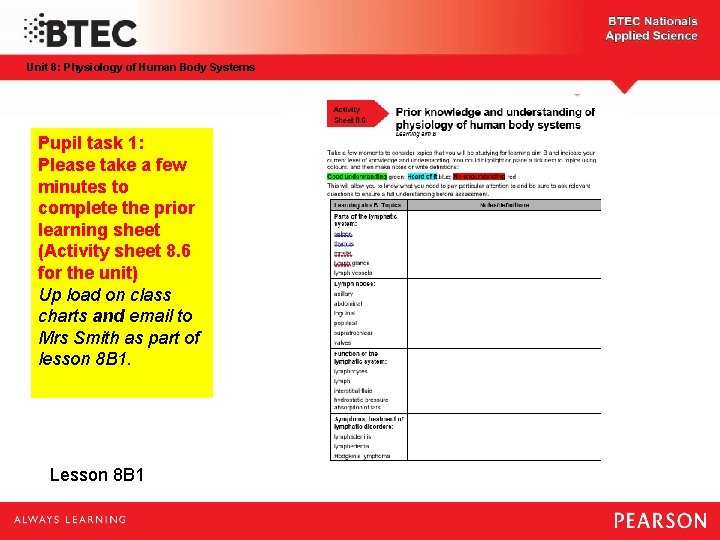
Unit 8: Physiology of Human Body Systems Pupil task 1: Please take a few minutes to complete the prior learning sheet (Activity sheet 8. 6 for the unit) Up load on class charts and email to Mrs Smith as part of lesson 8 B 1. Lesson 8 B 1
Unit 8: Physiology of Human Body Systems For this learning aim you need to: Investigate the composition and locate the component parts of the lymphatic system: • Spleen, thymus, tonsils, lymph gland, vessels, valves, lymph nodes. Understand the three main functions and normal working of the lymphatic system: • Return of interstitial fluid/hydrostatic pressure • defence against disease • absorption of fats from digestive system Understand the impact of dysfunction of the system and associated treatments. Lesson 8 B 1
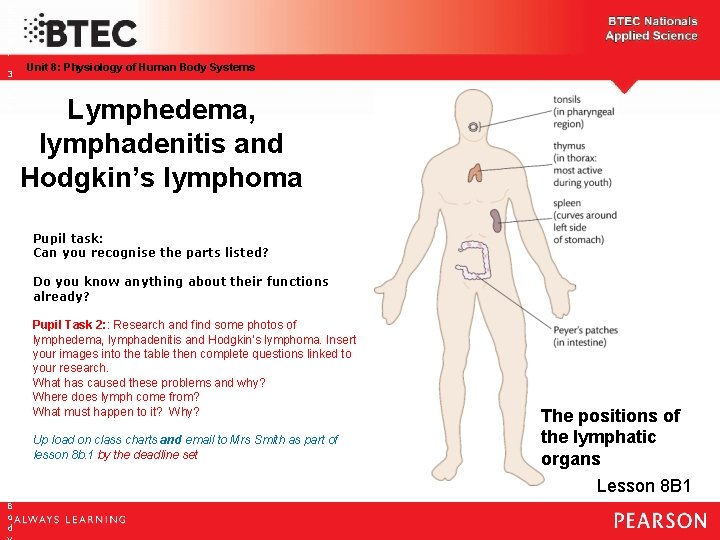
7 L e v e l 3 N a t i o n a l s U n i t Unit 8: Physiology of Human Body Systems Lymphedema, lymphadenitis and Hodgkin’s lymphoma Pupil task: Can you recognise the parts listed? 8 P h y s i o l o g y o f H u m a n B o d Do you know anything about their functions already? Pupil Task 2: : Research and find some photos of lymphedema, lymphadenitis and Hodgkin’s lymphoma. Insert your images into the table then complete questions linked to your research. What has caused these problems and why? Where does lymph come from? What must happen to it? Why? Up load on class charts and email to Mrs Smith as part of lesson 8 b. 1 by the deadline set The positions of the lymphatic organs Lesson 8 B 1
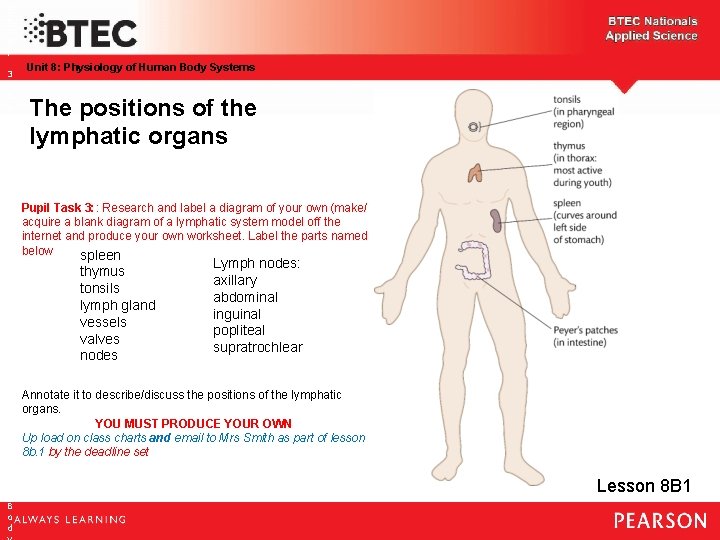
8 L e v e l 3 N a t i o n a l s U n i t 8 P h y s i o l o g y o f H u m a n B o d Unit 8: Physiology of Human Body Systems The positions of the lymphatic organs Pupil Task 3: : Research and label a diagram of your own (make/ acquire a blank diagram of a lymphatic system model off the internet and produce your own worksheet. Label the parts named below spleen thymus tonsils lymph gland vessels valves nodes Lymph nodes: axillary abdominal inguinal popliteal supratrochlear Annotate it to describe/discuss the positions of the lymphatic organs. YOU MUST PRODUCE YOUR OWN Up load on class charts and email to Mrs Smith as part of lesson 8 b. 1 by the deadline set Lesson 8 B 1
Unit 8: Physiology of Human Body Systems Structures of the lymphatic system to be described: • • spleen thymus tonsils lymph gland vessels valves nodes Lymph nodes: • axillary • abdominal • inguinal • popliteal • supratrochlear Lesson 8 B 1
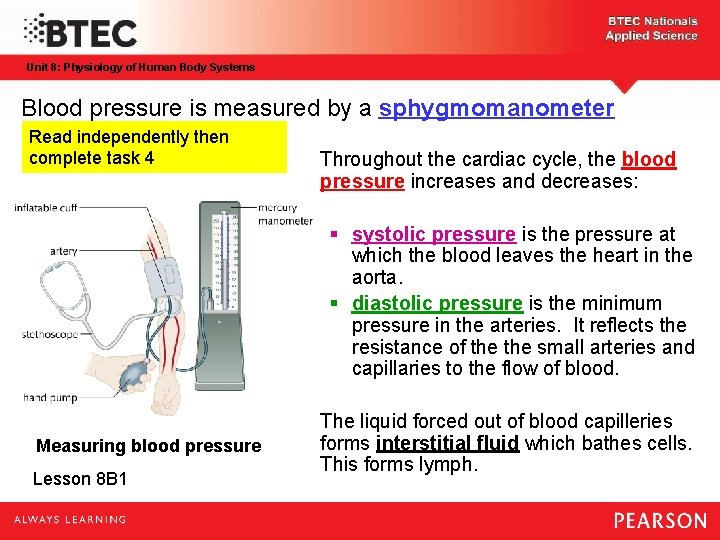
Unit 8: Physiology of Human Body Systems Blood pressure is measured by a sphygmomanometer Read independently then complete task 4 Throughout the cardiac cycle, the blood pressure increases and decreases: § systolic pressure is the pressure at which the blood leaves the heart in the aorta. § diastolic pressure is the minimum pressure in the arteries. It reflects the resistance of the small arteries and capillaries to the flow of blood. Measuring blood pressure Lesson 8 B 1 The liquid forced out of blood capilleries forms interstitial fluid which bathes cells. This forms lymph.
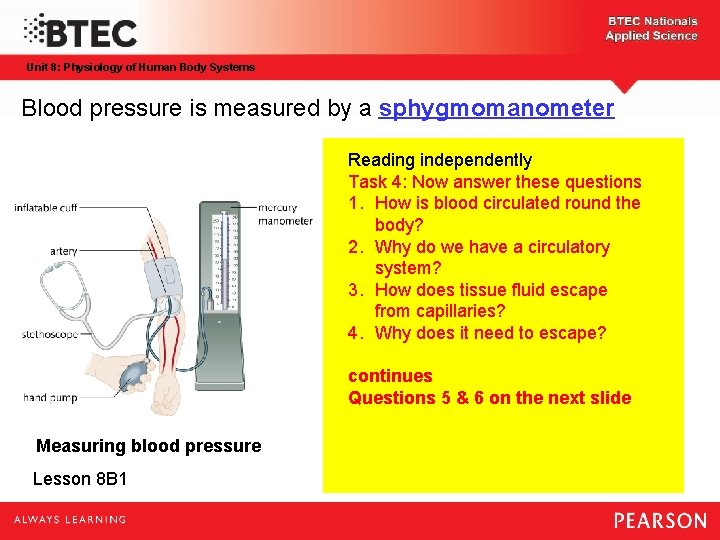
Unit 8: Physiology of Human Body Systems Blood pressure is measured by a sphygmomanometer Reading independently Task 4: Now answer these questions 1. How is blood circulated round the body? 2. Why do we have a circulatory system? 3. How does tissue fluid escape from capillaries? 4. Why does it need to escape? continues Questions 5 & 6 on the next slide Measuring blood pressure Lesson 8 B 1
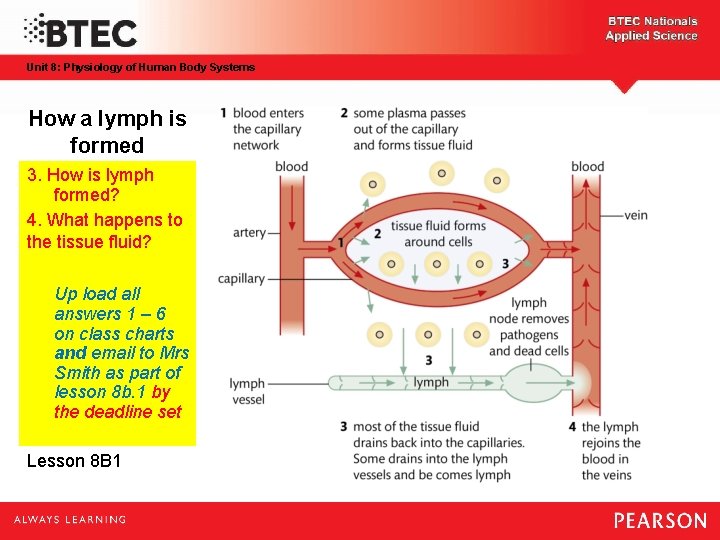
Unit 8: Physiology of Human Body Systems How a lymph is formed 3. How is lymph formed? 4. What happens to the tissue fluid? Up load all answers 1 – 6 on class charts and email to Mrs Smith as part of lesson 8 b. 1 by the deadline set Lesson 8 B 1
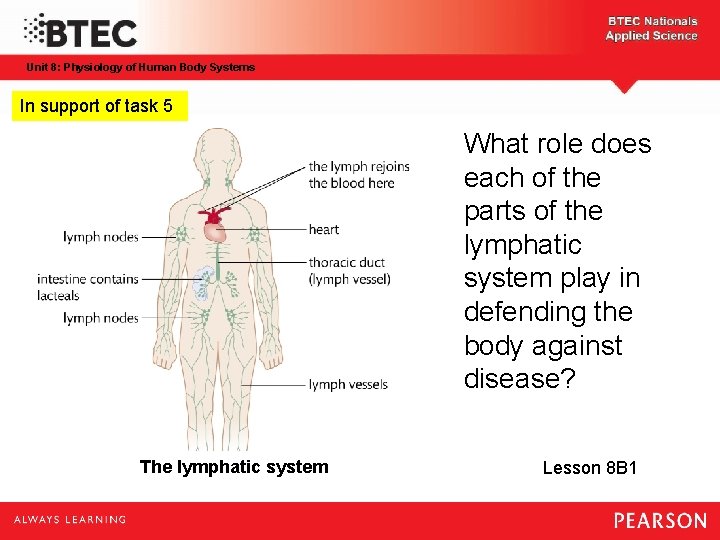
Unit 8: Physiology of Human Body Systems In support of task 5 What role does each of the parts of the lymphatic system play in defending the body against disease? The lymphatic system Lesson 8 B 1
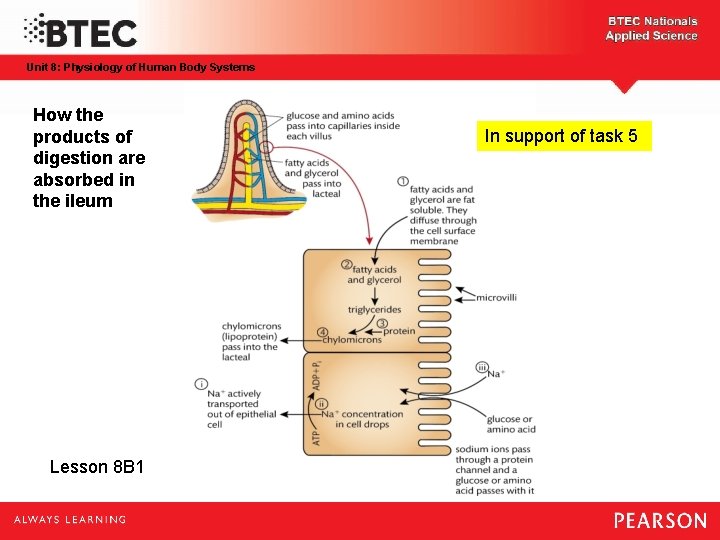
Unit 8: Physiology of Human Body Systems How the products of digestion are absorbed in the ileum Lesson 8 B 1 In support of task 5
Unit 8: Physiology of Human Body Systems Summary then Task 5 The main functions of the lymphatic system: § returns interstitial fluid § defence against disease (formation and transport of lymphocytes) Lesson 8 B 1 § maintenance of hydrostatic pressure § absorption of fats from digestive system. Pupil task 5: Research and make notes to explain the normal functioning of the lymphatic system. The main focus should be on the return of interstitial fluid – normal functioning. Roughly half a page on each function Up load on class charts and email to Mrs Smith as part of lesson 8 B 1.
- Slides: 15