
Unit 8 Part 3 Notes Chromosomal Genetics AP

- Slides: 10
Unit 8, Part 3 Notes: Chromosomal Genetics AP Biology, Mrs. Jensen
Law of Segregation and Independent Assortment Images
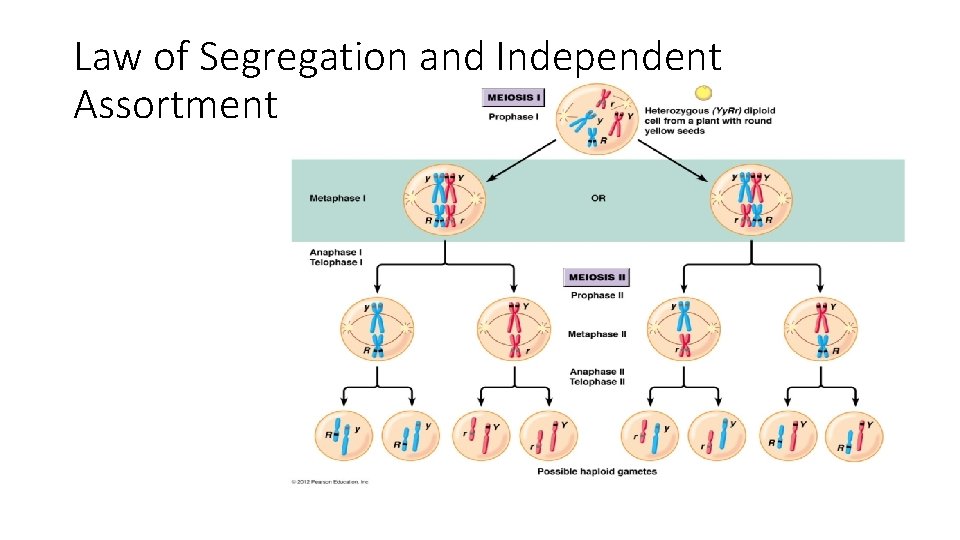
• In the image of independent assortment we annotated (on the front of the first page of your notes), the plant could make four possible combinations of paternal and maternal chromosomes and therefore alleles in its gametes (R/Y = round/yellow, R/y = round/green, r/Y = wrinkled/yellow, and r/y = wrinkled/green) • We can find out the number of possible combinations in the gametes by doing the following calculation, 2 Number of homologous chromosome pairs • For the plant example, there are two pairs of homologous chromosomes, so the calculation would be 22 = 4 combinations • In human cells, there are 23 pairs of homologous chromosomes, so the calculation would be 223 = 8, 388, 608 possible combinations • Independent assortment is one of the reasons that no two sperm created by the same man contain the same genetic information and no two eggs created by the same woman contain the same genetic information… so this is one of the reasons you look different from your siblings (you were created from two different sperm and eggs!)
Law of Segregation Alternate Definitions • (aka principle of segregation)… two alleles must separate into gametes during formation of eggs and sperm • Each allele in a pair separates into a different gamete during gamete formation • The members of each pair of genes on homologous chromosomes end up in different gametes during meiosis
Law of Independent Assortment Alternate Definitions • (principle of independent assortment) Alleles of different genes are transmitted independently of one another • Each pair of alleles segregates independently during gamete formation… applies when genes for two traits are located on different pairs of homologous chromosomes • During meiosis, members of a pair of genes on homologous chromosomes tend to be distributed into gametes independently of other gene pairs
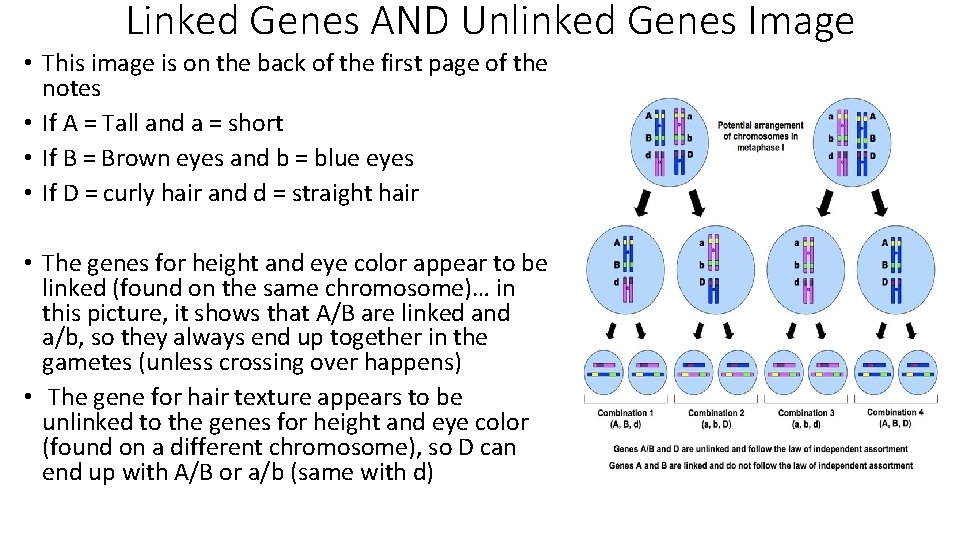
Linked Genes AND Unlinked Genes Image • This image is on the back of the first page of the notes • If A = Tall and a = short • If B = Brown eyes and b = blue eyes • If D = curly hair and d = straight hair • The genes for height and eye color appear to be linked (found on the same chromosome)… in this picture, it shows that A/B are linked and a/b, so they always end up together in the gametes (unless crossing over happens) • The gene for hair texture appears to be unlinked to the genes for height and eye color (found on a different chromosome), so D can end up with A/B or a/b (same with d)
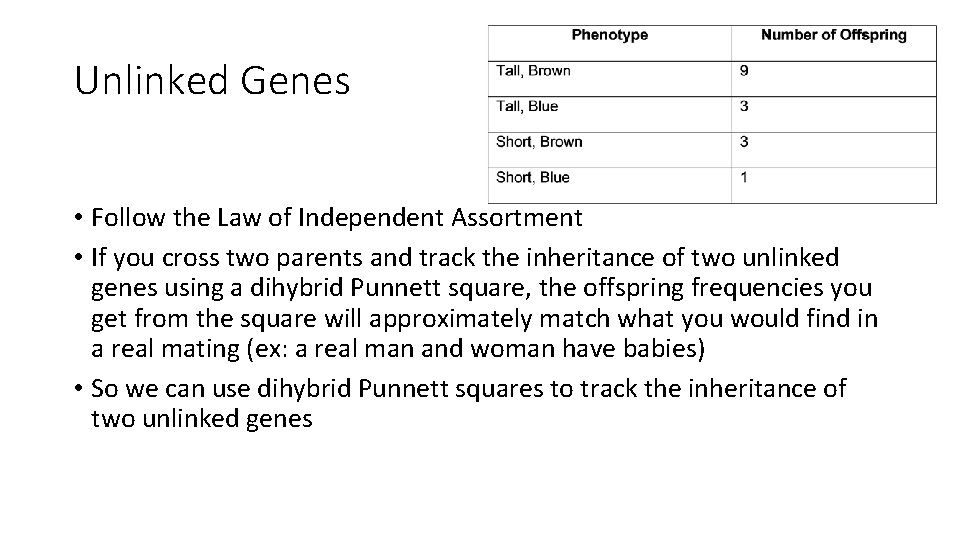
Unlinked Genes • Follow the Law of Independent Assortment • If you cross two parents and track the inheritance of two unlinked genes using a dihybrid Punnett square, the offspring frequencies you get from the square will approximately match what you would find in a real mating (ex: a real man and woman have babies) • So we can use dihybrid Punnett squares to track the inheritance of two unlinked genes
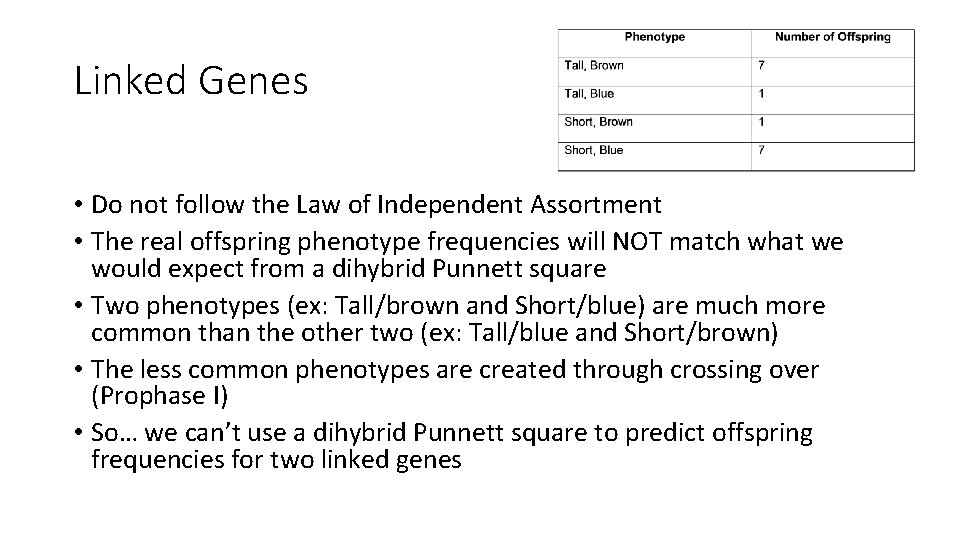
Linked Genes • Do not follow the Law of Independent Assortment • The real offspring phenotype frequencies will NOT match what we would expect from a dihybrid Punnett square • Two phenotypes (ex: Tall/brown and Short/blue) are much more common than the other two (ex: Tall/blue and Short/brown) • The less common phenotypes are created through crossing over (Prophase I) • So… we can’t use a dihybrid Punnett square to predict offspring frequencies for two linked genes
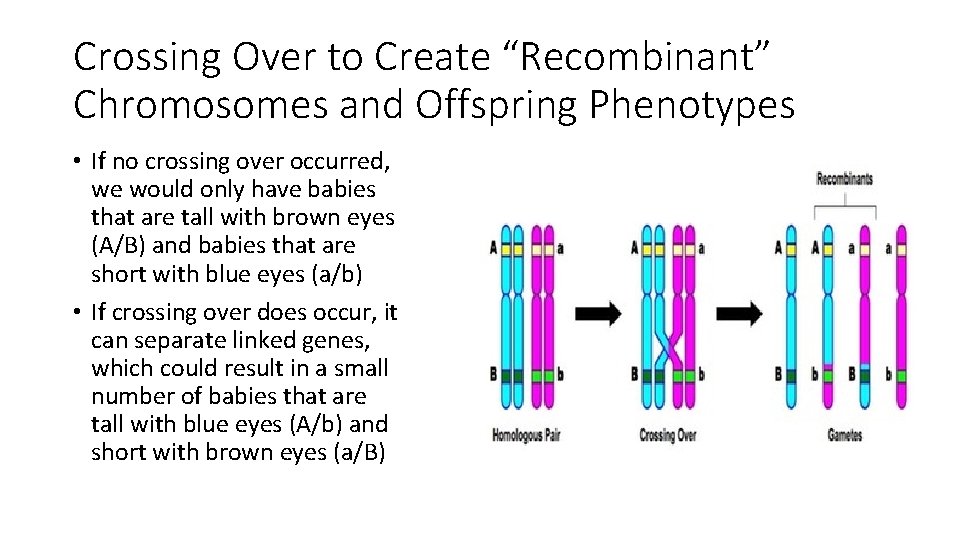
Crossing Over to Create “Recombinant” Chromosomes and Offspring Phenotypes • If no crossing over occurred, we would only have babies that are tall with brown eyes (A/B) and babies that are short with blue eyes (a/b) • If crossing over does occur, it can separate linked genes, which could result in a small number of babies that are tall with blue eyes (A/b) and short with brown eyes (a/B)
For an example of linked vs. unlinked genes in rabbits… • Please view the image posted to the Wiki page