
UNIT 8 HUMAN BODY SYSTEMS Nervous system and
UNIT 8 - HUMAN BODY SYSTEMS • Nervous system and parts of the brain • Human reproductive systems • Human embryonic and fetal development • Circulatory system and blood vessels • Human immune system • Compare structure and function of different animals.
• IMMUNE SYSTEM TO FOLLOW
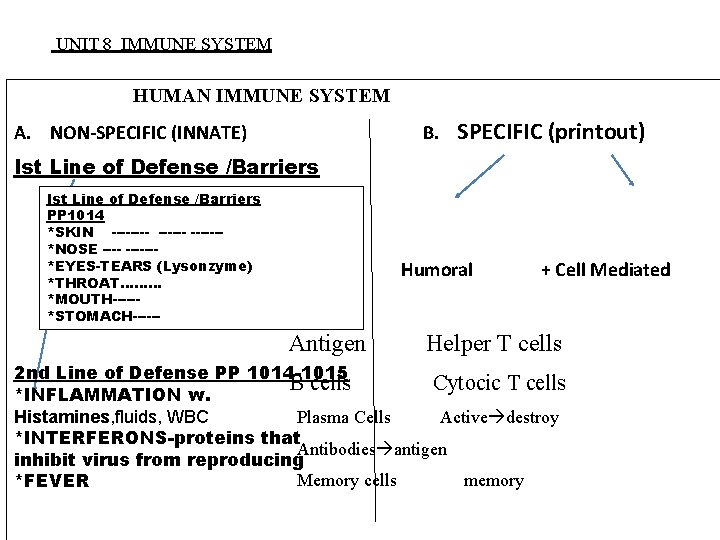
UNIT 8 IMMUNE SYSTEM HUMAN IMMUNE SYSTEM A. NON-SPECIFIC (INNATE) B. SPECIFIC (printout) Ist Line of Defense /Barriers PP 1014 *SKIN ------*NOSE ------*EYES-TEARS (Lysonzyme) *THROAT……… *MOUTH-----*STOMACH------ Humoral Antigen + Cell Mediated Helper T cells 2 nd Line of Defense PP 1014 -1015 B cells Cytocic T cells *INFLAMMATION w. Plasma Cells Active destroy Histamines, fluids, WBC *INTERFERONS-proteins that Antibodies antigen inhibit virus from reproducing Memory cells memory *FEVER
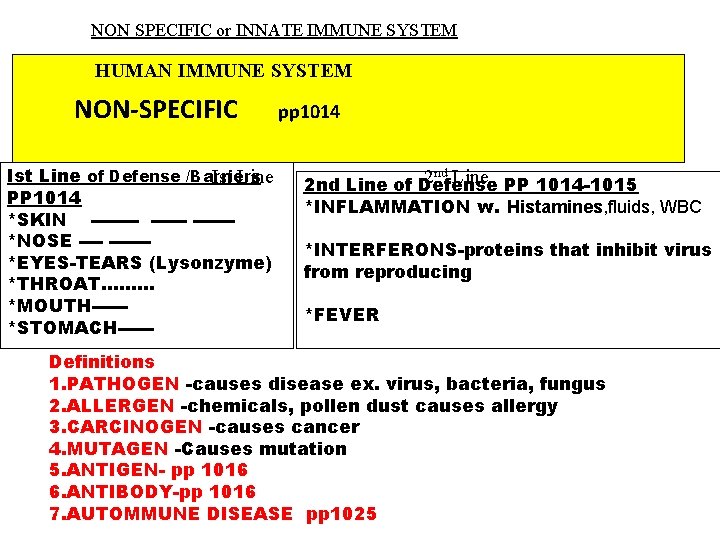
NON SPECIFIC or INNATE IMMUNE SYSTEM HUMAN IMMUNE SYSTEM NON-SPECIFIC Ist Line of Defense /Barriers Ist Line PP 1014 *SKIN ------*NOSE ------*EYES-TEARS (Lysonzyme) *THROAT……… *MOUTH-----*STOMACH------ pp 1014 2 Line PP 1014 -1015 2 nd Line of Defense *INFLAMMATION w. Histamines, fluids, WBC nd *INTERFERONS-proteins that inhibit virus from reproducing *FEVER Definitions 1. PATHOGEN -causes disease ex. virus, bacteria, fungus 2. ALLERGEN -chemicals, pollen dust causes allergy 3. CARCINOGEN -causes cancer 4. MUTAGEN -Causes mutation 5. ANTIGEN- pp 1016 6. ANTIBODY-pp 1016 7. AUTOMMUNE DISEASE pp 1025
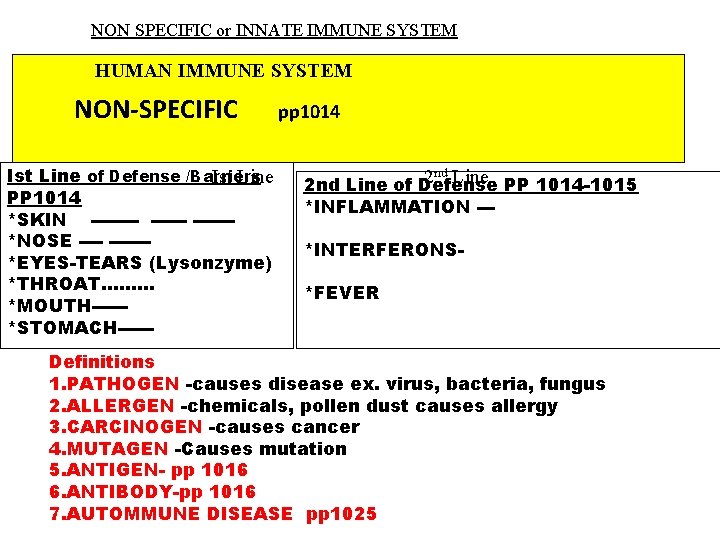
NON SPECIFIC or INNATE IMMUNE SYSTEM HUMAN IMMUNE SYSTEM NON-SPECIFIC Ist Line of Defense /Barriers Ist Line PP 1014 *SKIN ------*NOSE ------*EYES-TEARS (Lysonzyme) *THROAT……… *MOUTH-----*STOMACH------ pp 1014 2 Line PP 1014 -1015 2 nd Line of Defense *INFLAMMATION --nd *INTERFERONS*FEVER Definitions 1. PATHOGEN -causes disease ex. virus, bacteria, fungus 2. ALLERGEN -chemicals, pollen dust causes allergy 3. CARCINOGEN -causes cancer 4. MUTAGEN -Causes mutation 5. ANTIGEN- pp 1016 6. ANTIBODY-pp 1016 7. AUTOMMUNE DISEASE pp 1025
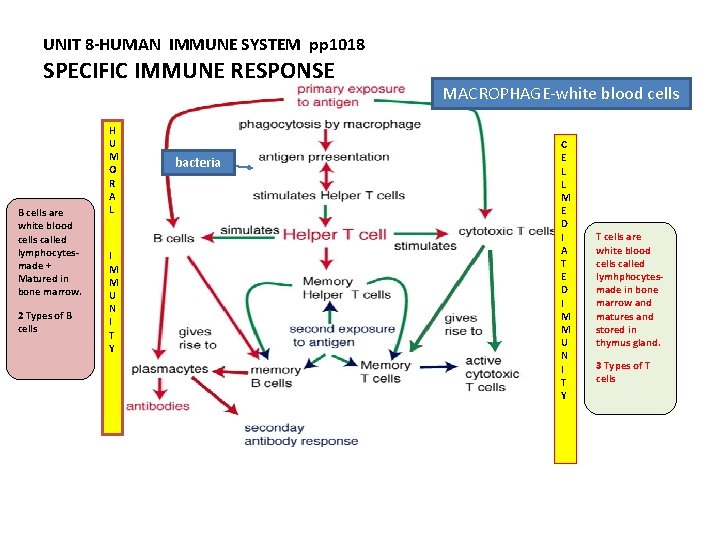
UNIT 8 -HUMAN IMMUNE SYSTEM pp 1018 SPECIFIC IMMUNE RESPONSE B cells are white blood cells called lymphocytesmade + Matured in bone marrow. 2 Types of B cells H U M O R A L I M M U N I T Y bacteria MACROPHAGE-white blood cells C E L L M E D I A T E D I M M U N I T Y T cells are white blood cells called lymhphocytesmade in bone marrow and matures and stored in thymus gland. 3 Types of T cells
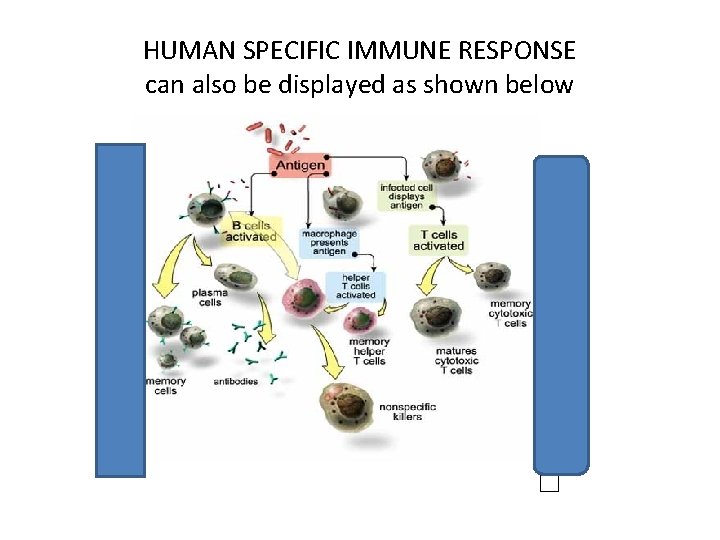
HUMAN SPECIFIC IMMUNE RESPONSE can also be displayed as shown below H U M O R A L I M M U N I T Y C E L L M E D I A T E D I M M U N I T Y
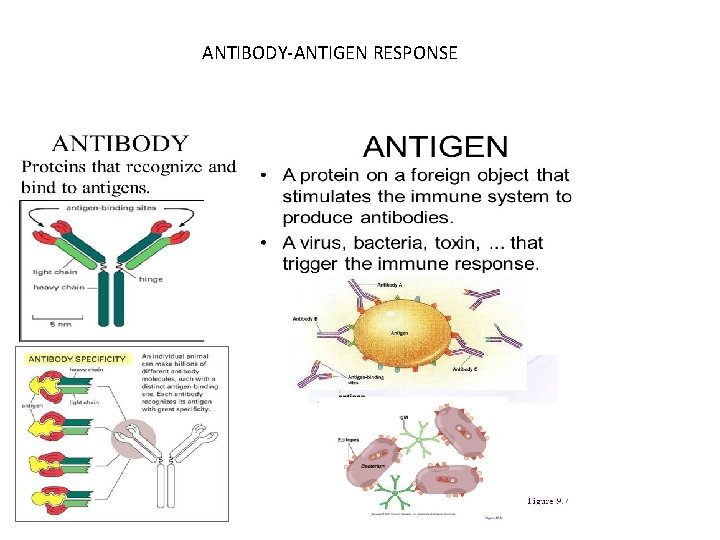
ANTIBODY-ANTIGEN RESPONSE
ASSIGNMENTS A. Explain in about 2 sentences the antigen-antibody response pp 1016 -17. See slide below (mention the antigen, where is it found, Y shape of antibody, its sites and its role in destroying antigen, specificity of antibody) ----------------------------------------------- B. Page 1026 Red-Summarize AIDS Write 2 sentences for each of 1, 2, 3. 1. What is AIDS and its Cause 2. Effect…how is it related to the Immune System and T cells 3. Transmission ----------------------------------------------- C. Explain the following 1. What is a Vaccination pp 1020 Red 2. Differentiate between Acquired Immunity vs Innate Immunity- give 2 examples pp 1031 +1035 Blue 3. Differentiate between Passive vs Active immunity -give 2 examples p 1020 Red 4. Infectious + Contagious disease-Blue 1023 5. Explain the term Antibiotic pp 1021 Red 6. Explain how Resistance strains of bacteria may develop (1022 Red last paragraph) 7. List the ways the government can help to educe the spread of disease (pp 1021 Par. 2 )
VOCAB WORDS • INNATE IMMUNITY- at birth • ACQUIRED IMMUNITY PASSIVE –like mothers milk ( from outside) ACTIVE-vaccine *INTERFERONS-protein that stops virus from growing *ANTIGENS-produces a response in the immune system ANTIBODY-attacks pathogen mainly bacteria and kills it—B cell system PATHOGEN-any organisms disease READ RED BOOKS-pp 1021 +1022 -Bold print.
AIDs-HIV Virus Read Page 1024 -1027 Summarize AIDS *Cause *Effect…how is it related to the Immune System *Transmission
• NERVOUS SYSTEM-BRAIN TO FOLLOW
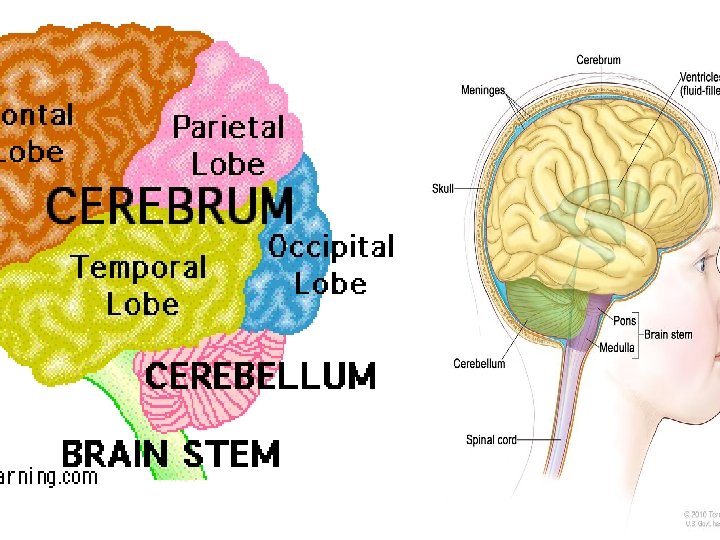
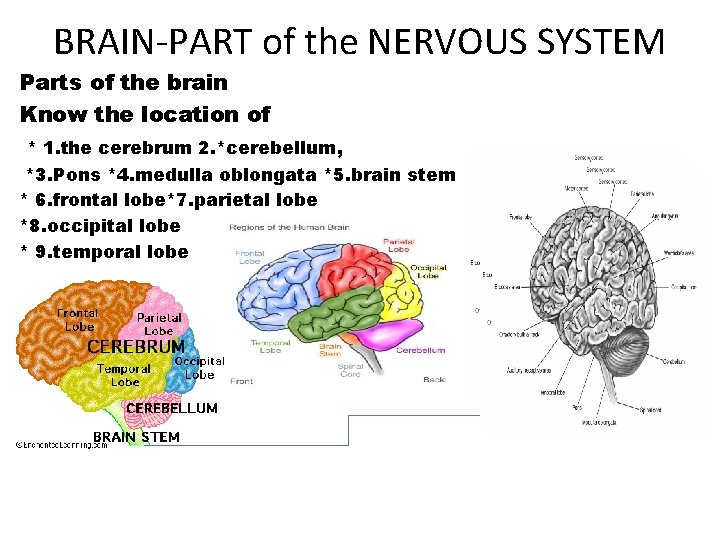
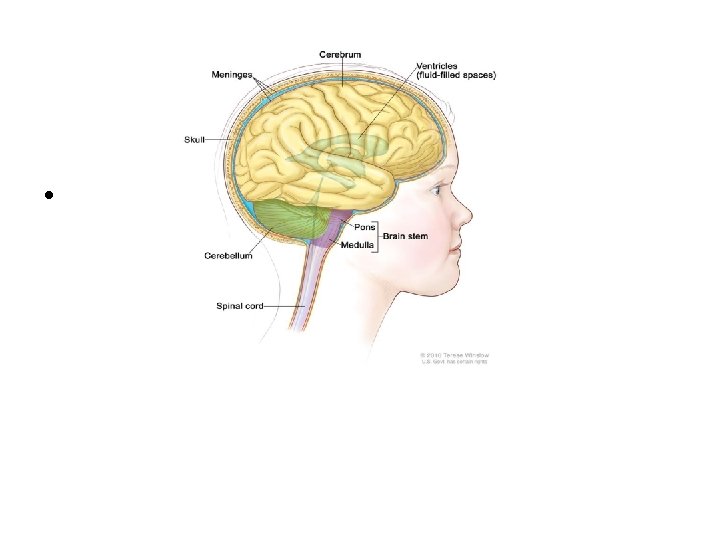
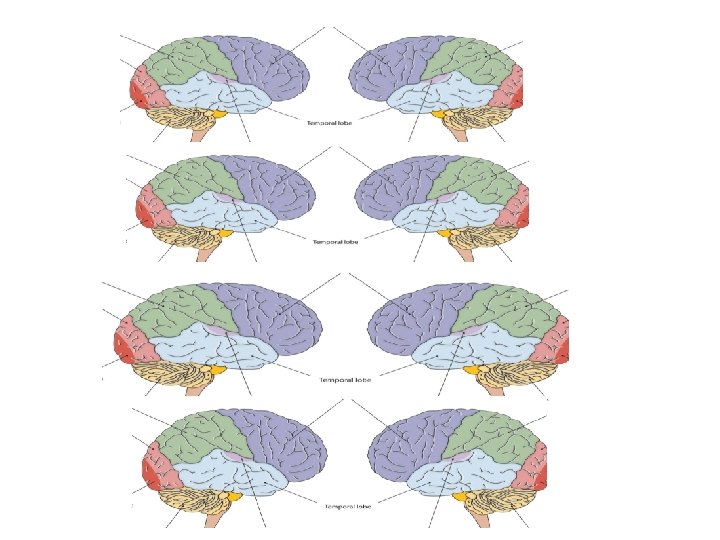
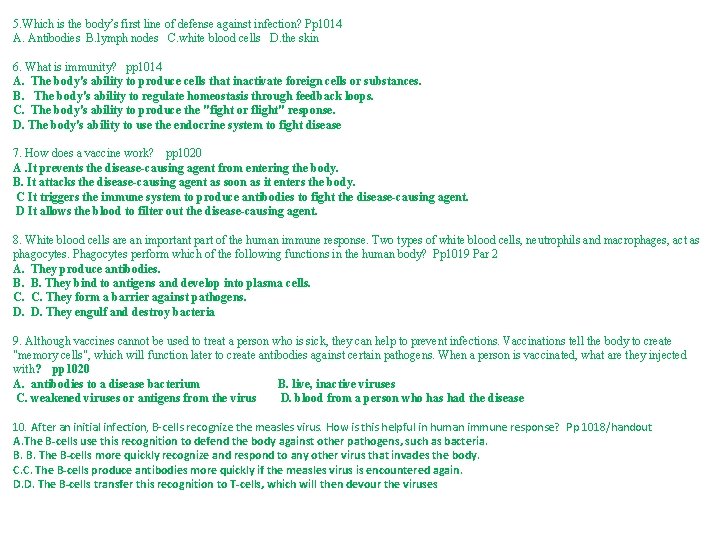
BRAIN-PART of the NERVOUS SYSTEM Parts of the brain Know the location of * 1. the cerebrum 2. *cerebellum, *3. Pons *4. medulla oblongata *5. brain stem * 6. frontal lobe*7. parietal lobe *8. occipital lobe * 9. temporal lobe
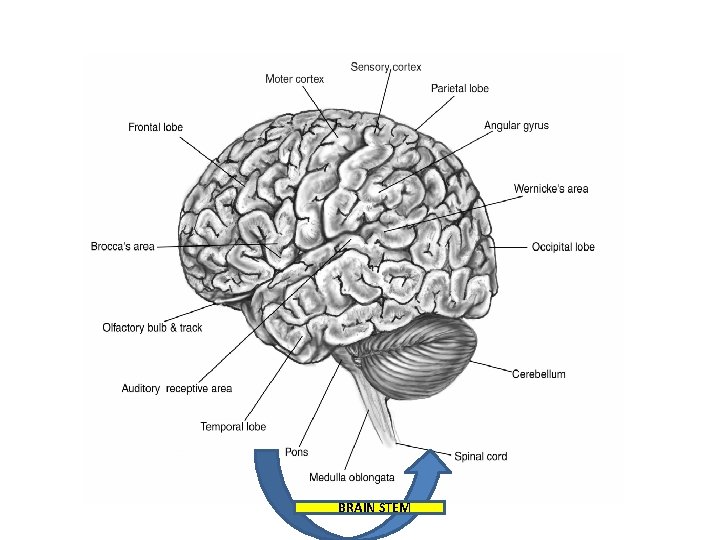
BRAIN STEM
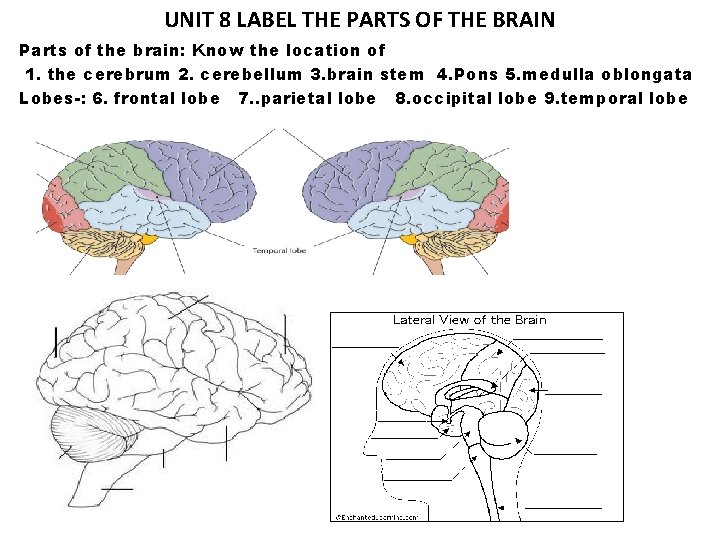
UNIT 8 LABEL THE PARTS OF THE BRAIN Parts of the brain: Know the location of 1. the cerebrum 2. cerebellum 3. brain stem 4. Pons 5. medulla oblongata Lobes-: 6. frontal lobe 7. . parietal lobe 8. occipital lobe 9. temporal lobe
• REPRODUCTION to FOLLOW
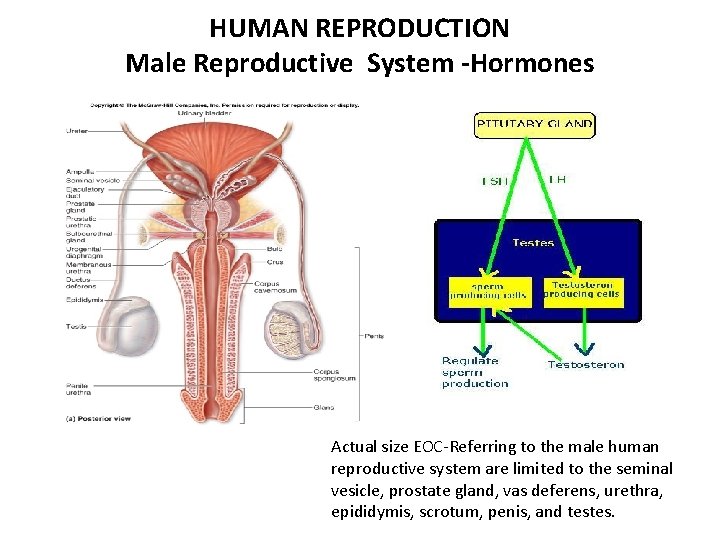
HUMAN REPRODUCTION Male Reproductive System -Hormones Actual size EOC-Referring to the male human reproductive system are limited to the seminal vesicle, prostate gland, vas deferens, urethra, epididymis, scrotum, penis, and testes.
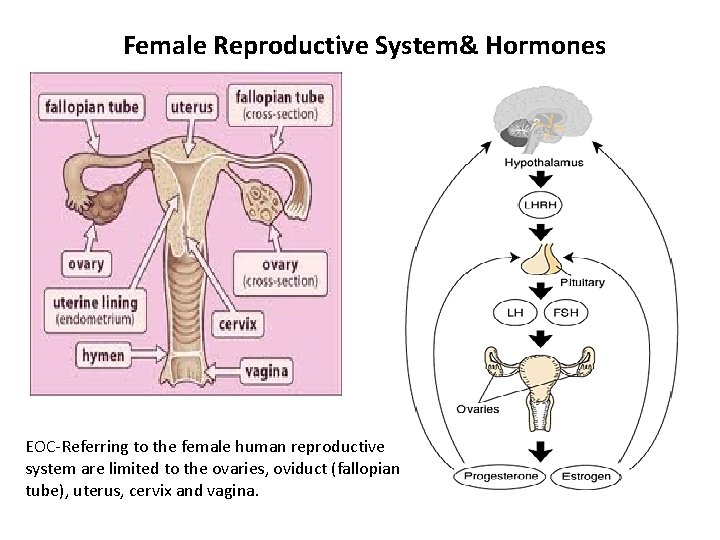
Female Reproductive System& Hormones EOC-Referring to the female human reproductive system are limited to the ovaries, oviduct (fallopian tube), uterus, cervix and vagina.
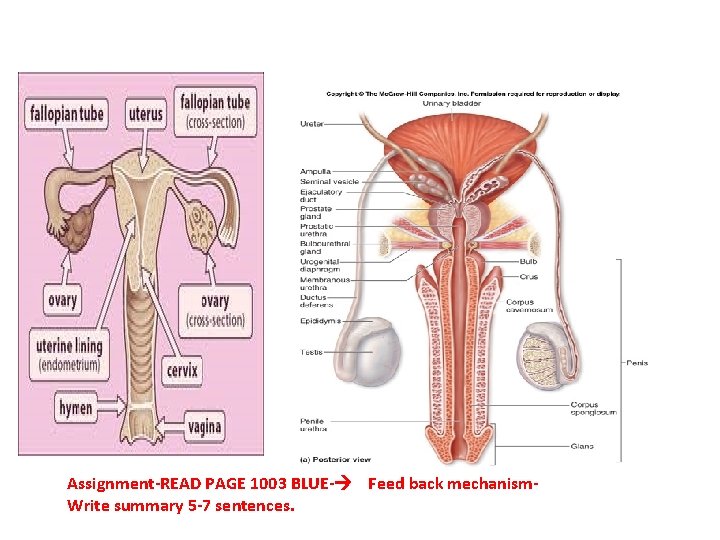
Assignment-READ PAGE 1003 BLUE- Feed back mechanism. Write summary 5 -7 sentences.
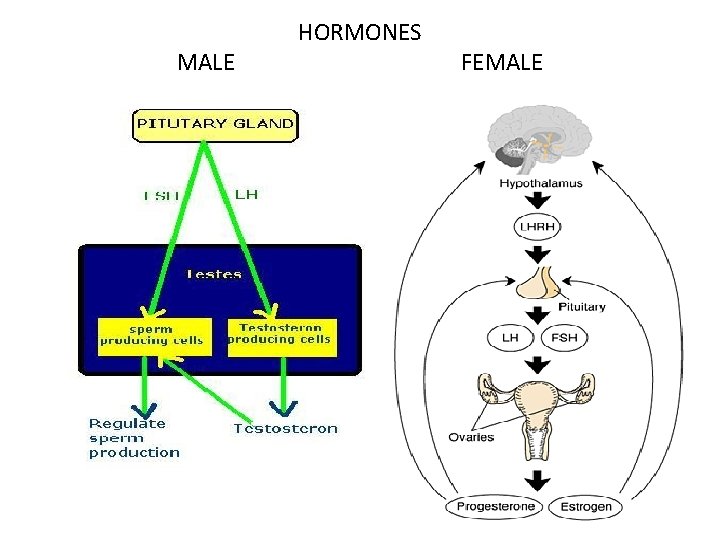
MALE HORMONES FEMALE
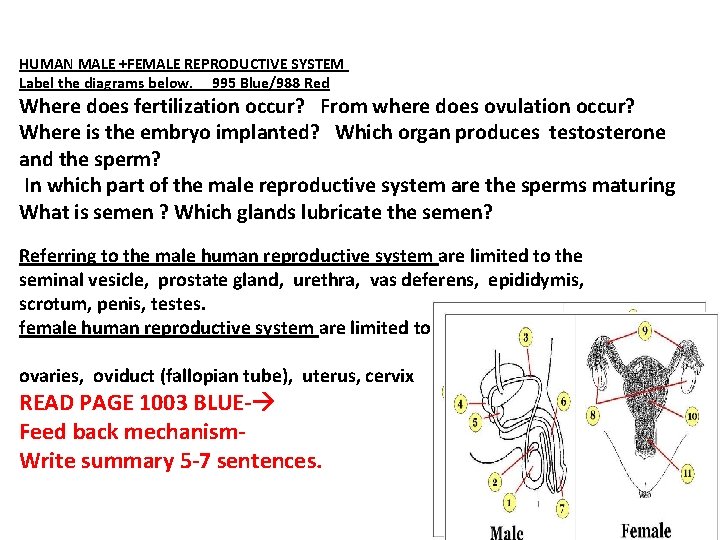
HUMAN MALE +FEMALE REPRODUCTIVE SYSTEM Label the diagrams below. 995 Blue/988 Red Where does fertilization occur? From where does ovulation occur? Where is the embryo implanted? Which organ produces testosterone and the sperm? In which part of the male reproductive system are the sperms maturing What is semen ? Which glands lubricate the semen? Referring to the male human reproductive system are limited to the seminal vesicle, prostate gland, urethra, vas deferens, epididymis, scrotum, penis, testes. female human reproductive system are limited to the ovaries, oviduct (fallopian tube), uterus, cervix READ PAGE 1003 BLUE- Feed back mechanism. Write summary 5 -7 sentences.
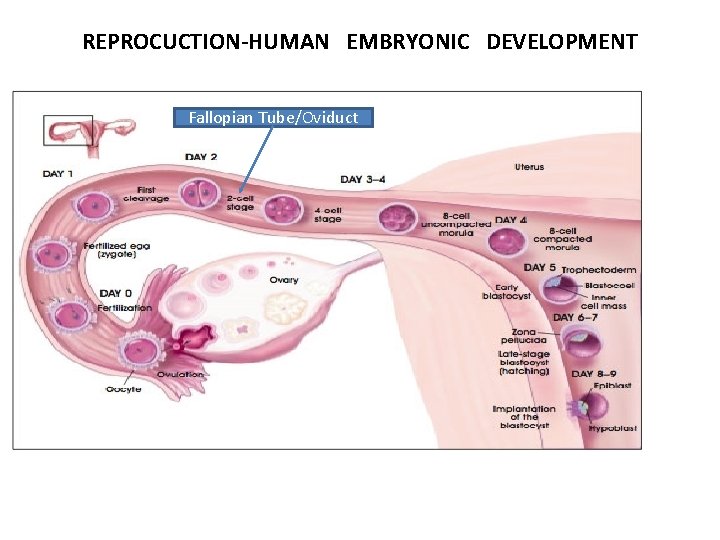
REPROCUCTION-HUMAN EMBRYONIC DEVELOPMENT Fallopian Tube/Oviduct
Websites for reproduction • Videos 1. From Fertilization to implantation 1. http: //www. youtube. com/watch? v=ARERGD 0 ne. MI 2. Placenta Formation http: //www. pennmedicine. org/encyclopedia/em_Display. Animation. aspx? gcid=000101&ptid=17 3. gastrulation + Neuralation http: //wps. aw. com/bc_goodenough_boh_3/104/26722/6840911. cw/content/index. html 4. http: //www. dnatube. com/video/5425/Fertilization-and-Fetal-Development
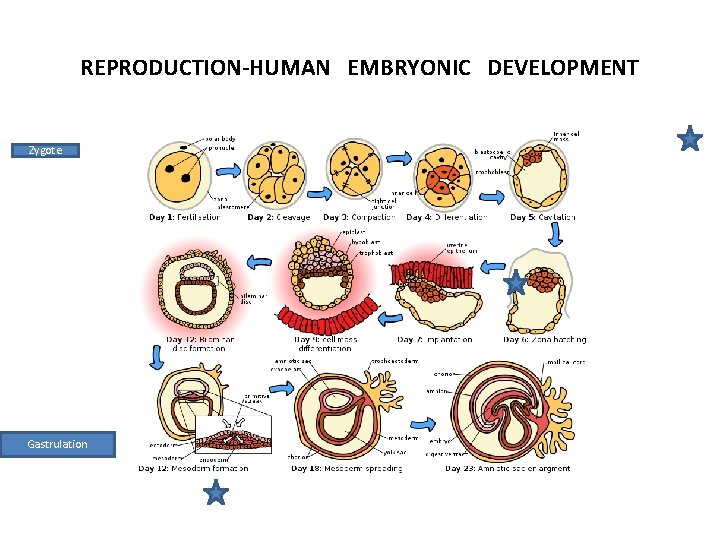
REPRODUCTION-HUMAN EMBRYONIC DEVELOPMENT Zygote Gastrulation
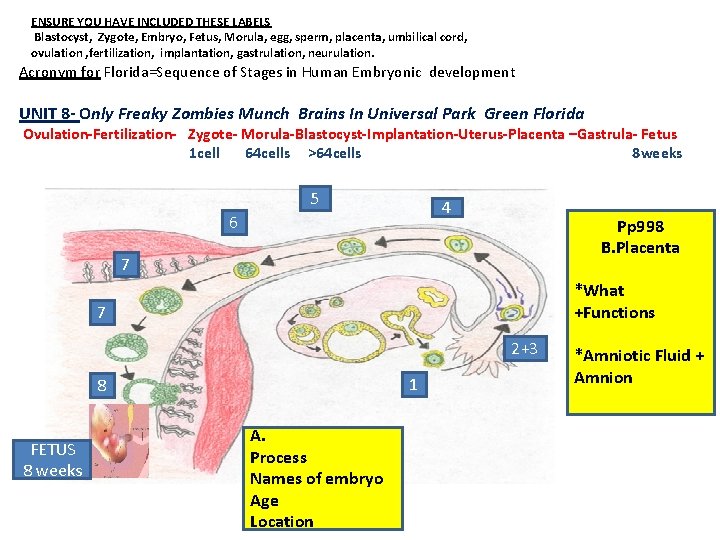
ENSURE YOU HAVE INCLUDED THESE LABELS Blastocyst, Zygote, Embryo, Fetus, Morula, egg, sperm, placenta, umbilical cord, ovulation , fertilization, implantation, gastrulation, neurulation. Acronym for Florida=Sequence of Stages in Human Embryonic development UNIT 8 - Only Freaky Zombies Munch Brains In Universal Park Green Florida Ovulation-Fertilization- Zygote- Morula-Blastocyst-Implantation-Uterus-Placenta –Gastrula- Fetus 1 cell 64 cells >64 cells 8 weeks 5 4 6 Pp 998 B. Placenta 7 *What +Functions 7 2+3 1 8 FETUS 8 weeks A. Process Names of embryo Age Location *Amniotic Fluid + Amnion
• UNIT 8 - FERTILIZATION-+IMPLANTATION (pp 996 -pp 999) HUMAN EMBRYONIC DEVELOPMENT • Trimester 1 All from previous diam Gastrulation Neurulation Placenta-functions ---------------------------------------- • Trimester 2 • • ----------------------------------------Trimester 3 • Ovulation-release of egg from ovary • • •
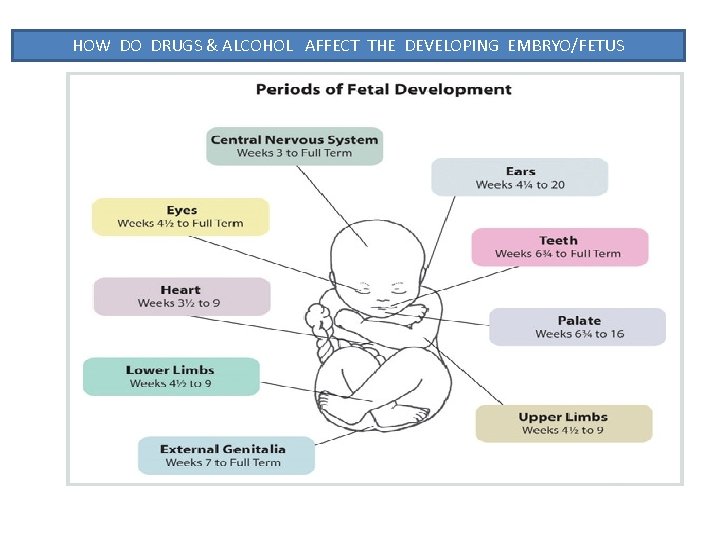
HOW DO DRUGS & ALCOHOL AFFECT THE DEVELOPING EMBRYO/FETUS
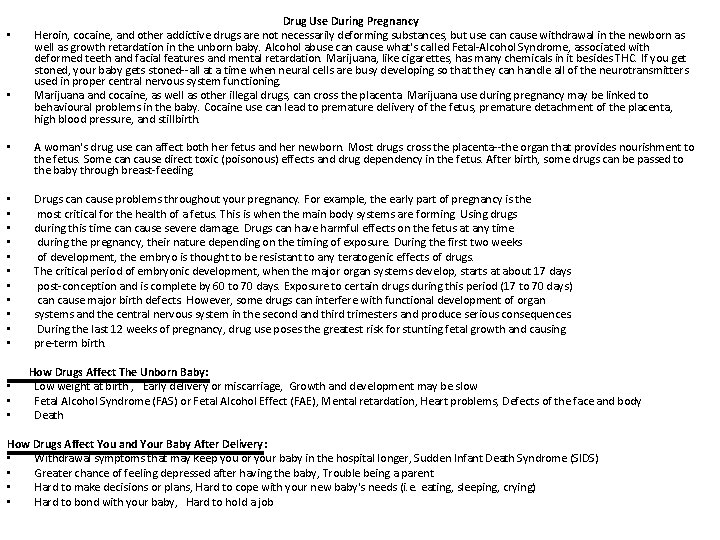
• • Drug Use During Pregnancy Heroin, cocaine, and other addictive drugs are not necessarily deforming substances, but use can cause withdrawal in the newborn as well as growth retardation in the unborn baby. Alcohol abuse can cause what's called Fetal-Alcohol Syndrome, associated with deformed teeth and facial features and mental retardation. Marijuana, like cigarettes, has many chemicals in it besides THC. If you get stoned, your baby gets stoned--all at a time when neural cells are busy developing so that they can handle all of the neurotransmitters used in proper central nervous system functioning. Marijuana and cocaine, as well as other illegal drugs, can cross the placenta. Marijuana use during pregnancy may be linked to behavioural problems in the baby. Cocaine use can lead to premature delivery of the fetus, premature detachment of the placenta, high blood pressure, and stillbirth. • A woman's drug use can affect both her fetus and her newborn. Most drugs cross the placenta--the organ that provides nourishment to the fetus. Some can cause direct toxic (poisonous) effects and drug dependency in the fetus. After birth, some drugs can be passed to the baby through breast-feeding. • • • Drugs can cause problems throughout your pregnancy. For example, the early part of pregnancy is the most critical for the health of a fetus. This is when the main body systems are forming. Using drugs during this time can cause severe damage. Drugs can have harmful effects on the fetus at any time during the pregnancy, their nature depending on the timing of exposure. During the first two weeks of development, the embryo is thought to be resistant to any teratogenic effects of drugs. The critical period of embryonic development, when the major organ systems develop, starts at about 17 days post-conception and is complete by 60 to 70 days. Exposure to certain drugs during this period (17 to 70 days) can cause major birth defects. However, some drugs can interfere with functional development of organ systems and the central nervous system in the second and third trimesters and produce serious consequences. During the last 12 weeks of pregnancy, drug use poses the greatest risk for stunting fetal growth and causing pre-term birth. • • • How Drugs Affect The Unborn Baby: Low weight at birth , Early delivery or miscarriage, Growth and development may be slow Fetal Alcohol Syndrome (FAS) or Fetal Alcohol Effect (FAE), Mental retardation, Heart problems, Defects of the face and body Death How Drugs Affect You and Your Baby After Delivery: • Withdrawal symptoms that may keep you or your baby in the hospital longer, Sudden Infant Death Syndrome (SIDS) • Greater chance of feeling depressed after having the baby, Trouble being a parent • Hard to make decisions or plans, Hard to cope with your new baby's needs (i. e. eating, sleeping, crying) • Hard to bond with your baby, Hard to hold a job
• CIRCULATION and HEART to FOLLOW
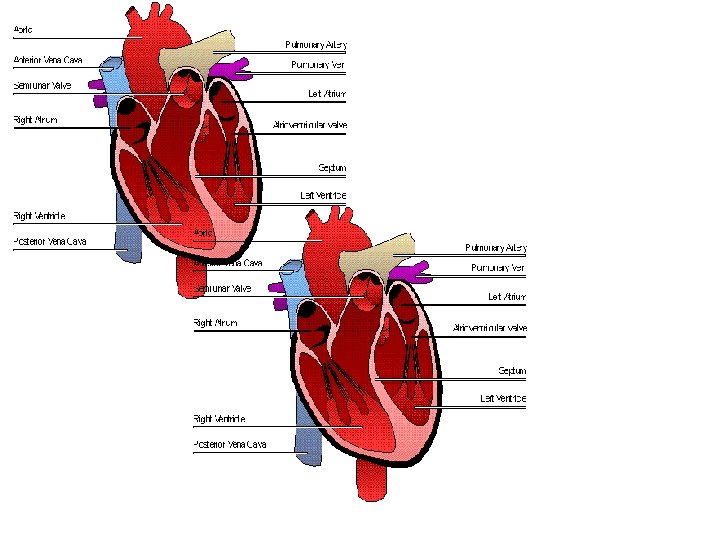
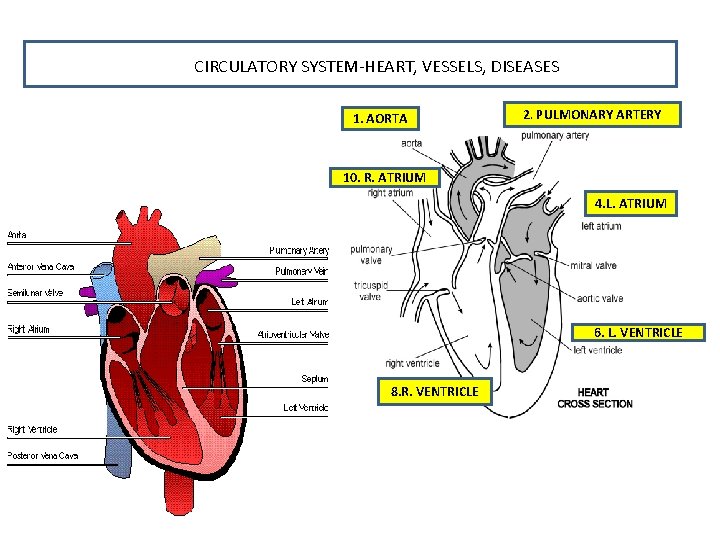
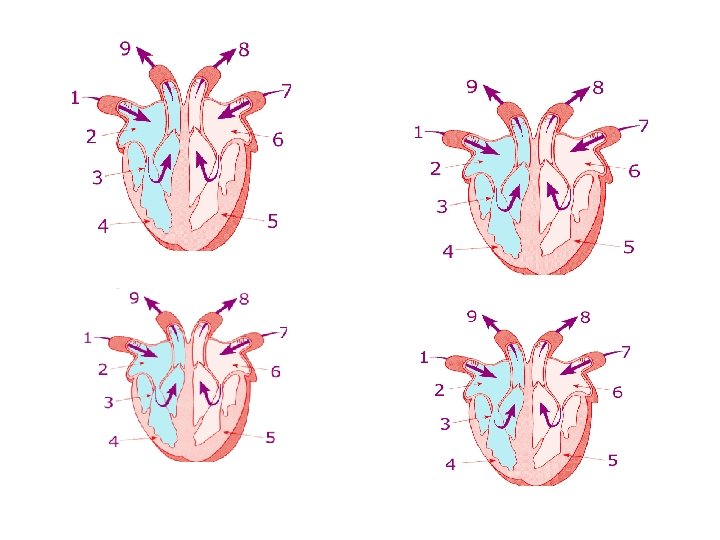
CIRCULATORY SYSTEM-HEART, VESSELS, DISEASES 1. AORTA 2. PULMONARY ARTERY 10. R. ATRIUM 4. L. ATRIUM 6. L. VENTRICLE 8. R. VENTRICLE
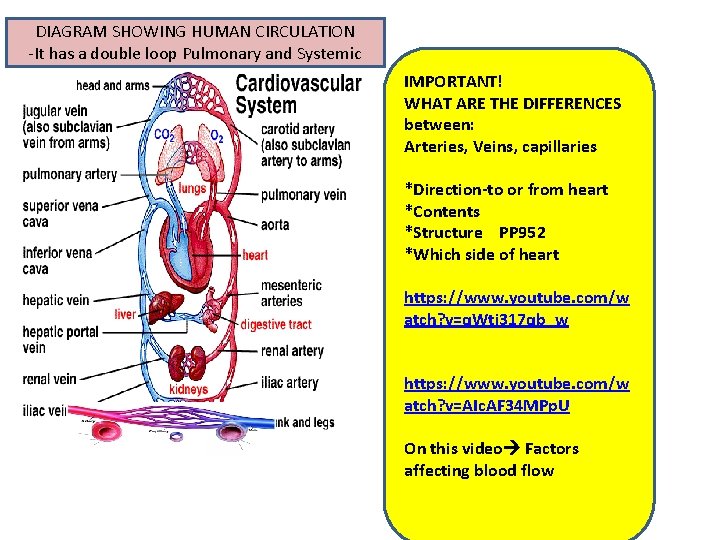
DIAGRAM SHOWING HUMAN CIRCULATION -It has a double loop Pulmonary and Systemic IMPORTANT! WHAT ARE THE DIFFERENCES between: Arteries, Veins, capillaries *Direction-to or from heart *Contents *Structure PP 952 *Which side of heart https: //www. youtube. com/w atch? v=q. Wti 317 qb_w https: //www. youtube. com/w atch? v=AIc. AF 34 MPp. U On this video Factors affecting blood flow
What factors affect the blood flow in mammals? Blood flow is affected by various factors, such as: ▪ blood pressure ▪ blood volume ▪ resistance ▪ viscosity ▪ disease ▪ exercise
• What factors affect the bllod flow in mammals? FACTORS THAT AFFECT BLOOD FLOW –: * blood pressure include cardiac output *blood volume, *viscosity of blood (thickness) *resistance (working against) * elasticity of arteries. DISEASES-Circulatory System Read pp 957 -959 Red Book *diseases of heart- ex. stroke, atherosclerosis, high blood pressure 957 -960 HOW CAN WE REDUCE THE CHANCES OF HEART DISEASES? *Exercise *Diet *Weight monitor *Cholesterol level monitor *Monitor Pressure, * Monitor Diabetes *Monitor Smoking, alcohol *Monitor Stress https: //www. youtube. com/watch? v=q. Wti 317 qb_w
Unit 8 Objectives • • Students will: Describe similarities and differences in the structure and function of the nervous system in various representative animal phyla. (SC. 912. L. 15. 7) • Analyze how nerve impulses are transmitted within the nervous system. (SC. 912. L. 14. 22) • Identify the major structures of the human nervous system and their functions. (SC. 912. L. 14. 21) • Diagram the major parts of the human brain and describe their functions. (SC. 912. L. 14. 26) • • • Explain the role of circulatory systems in animals and how they are used in the classification of various representative animal phyla. (SC. 912. L. 15. 4, SC. 912. L. 15. 7) Describe the basic anatomy and physiology of the human cardiovascular system. (SC. 912. L. 14. 36) Trace the flow of blood through the cardiovascular system. (SC. 912. L. 14. 36) Identify factors affecting blood flow through the cardiovascular system. (SC. 912. L. 14. 36) • Compare and contrast reproductive systems and strategies among representative animal phyla. • • • Relate the processes of sexual and asexual reproduction to their consequences for genetic variation. (SC. 912. L. 16. 17) • Describe the basic anatomy and physiology of the human reproductive system. (SC. 912. L. 16. 13, SC. 912. L. 14. 33) • Summarize the process of human development from fertilization to birth. (SC. 912. L. 16. 13) • Identify major changes that occur in each trimester of pregnancy. (SC. 912. L. 16. 13) • Identify the stages of cell differentiation in the embryonic development of animals. (SC. 912. L. 15. 1, SC. 912. L. 16. 13) • • Summarize the basic structure and function of the human immune system. (SC. 912. L. 14. 52) Describe various lines of protection and immune response in humans to pathogens. • (SC. 912. L. 15. 7/SC. 912. L. 16. 17)
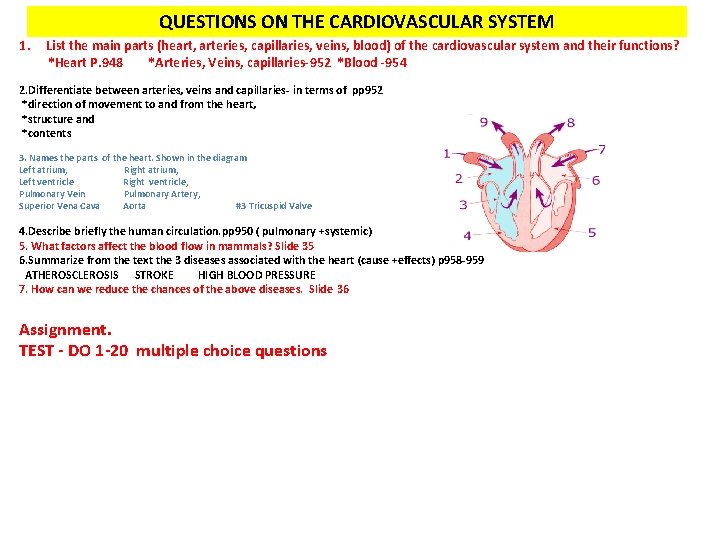
QUESTIONS ON THE CARDIOVASCULAR SYSTEM 1. List the main parts (heart, arteries, capillaries, veins, blood) of the cardiovascular system and their functions? *Heart P. 948 *Arteries, Veins, capillaries-952 *Blood -954 2. Differentiate between arteries, veins and capillaries- in terms of pp 952 *direction of movement to and from the heart, *structure and *contents 3. Names the parts of the heart. Shown in the diagram Left atrium, Right atrium, Left ventricle Right ventricle, Pulmonary Vein Pulmonary Artery, Superior Vena Cava Aorta #3 Tricuspid Valve 4. Describe briefly the human circulation. pp 950 ( pulmonary +systemic) 5. What factors affect the blood flow in mammals? Slide 35 6. Summarize from the text the 3 diseases associated with the heart (cause +effects) p 958 -959 ATHEROSCLEROSIS STROKE HIGH BLOOD PRESSURE 7. How can we reduce the chances of the above diseases. Slide 36 Assignment. TEST - DO 1 -20 multiple choice questions
Cardiovascular System 1. List the main parts (heart, arteries, capillaries, veins, blood) of the cardiovascular system and their functions? *Heart P. 948 *Arteries, Veins, capillaries-952 *Blood -954 2. Differentiate between arteries, veins and capillaries- in terms of pp 952 *direction of movement to and from the heart, *structure and *contents 3. Names the parts of the heart. Shown in the diagram Left atrium, Right atrium, Left ventricle Right ventricle, Pulmonary Vein Pulmonary Artery, Superior Vena Cava Aorta #3 Tricuspid Valve 4. Describe briefly the human circulation. pp 950 ( pulmonary +systemic) 5. What factors affect the blood flow in mammals? Slide 35 6. Summarize from the text the 3 diseases associated with the heart (cause +effects) p 958 -959 ATHEROSCLEROSIS STROKE HIGH BLOOD PRESSURE 7. How can we reduce the chances of the above diseases. Slide 36 Assignment. -TEST - DO 1 -20 multiple choice questions
• • • • • • • • • • Cardiovascular System 1. List the main parts (heart, arteries, capillaries, veins, blood) of the cardiovascular system and their functions? *Heart P. 948 *Arteries, Veins, capillaries-952 *Blood -954 2. Differentiate between arteries, veins and capillaries- in terms of pp 952 *direction of movement to and from the heart, *structure and *contents 3. Names the parts of the heart. Shown in the diagram Left atrium, Right atrium, Left ventricle Right ventricle, Pulmonary Vein Pulmonary Artery, Superior Vena Cava Aorta #3 Tricuspid Valve 4. Describe briefly the human circulation. pp 950 ( pulmonary +systemic) 5. What factors affect the blood flow in mammals? Slide 35 6. Summarize from the text the 3 diseases associated with the heart (cause +effects) p 958 -959 ATHEROSCLEROSIS STROKE HIGH BLOOD PRESSURE 7. How can we reduce the chances of the above diseases. Slide 36 Assignment. -TEST - DO 1 -20 multiple choice questions
Objectives Unit 8 • • Unit Learning Objectives-Students will: • Describe similarities and differences in the structure and function of the nervous system in various representative animal phyla. (SC. 912. L. 15. 7) • Analyze how nerve impulses are transmitted within the nervous system. (SC. 912. L. 14. 22) • Identify the major structures of the human nervous system and their functions. (SC. 912. L. 14. 21) • • Diagram the major parts of the human brain and describe their functions. (SC. 912. L. 14. 26) • • • Explain the role of circulatory systems in animals and how they are used in the classification of various representative animal phyla. (SC. 912. L. 15. 4, SC. 912. L. 15. 7) • Describe the basic anatomy and physiology of the human cardiovascular system. (SC. 912. L. 14. 36) • Trace the flow of blood through the cardiovascular system. (SC. 912. L. 14. 36) • Identify factors affecting blood flow through the cardiovascular system. (SC. 912. L. 14. 36) • • • • Compare and contrast reproductive systems and strategies among representative animal phyla. (SC. 912. L. 15. 7; 16: 17 • Relate the processes of sexual and asexual reproduction to their consequences for genetic variation. (SC. 912. L. 16. 17) • Describe the basic anatomy and physiology of the human reproductive system. (SC. 912. L. 16. 13, SC. 912. L. 14. 33) • Summarize the process of human development from fertilization to birth. (SC. 912. L. 16. 13) • Identify major changes that occur in each trimester of pregnancy. (SC. 912. L. 16. 13) • Identify the stages of cell differentiation in the embryonic development of animals. (SC. 912. L. 15. 1, SC. 912. L. 16. 13) • • • Summarize the basic structure and function of the human immune system. (SC. 912. L. 14. 52) • Describe various lines of protection and immune response in humans to pathogens.
• Unit 8 Vocabulary • • Axon- Neuron –Dendrite - Peripheral nervous system -Synapse Closed circulatory system Open circulatory system • Temporal Cerebellum Medulla Oblongata Pons Frontal Occipital Parietal Cerebrum • • Blood pressure Cardiovascular disease Blood flow Blood volume Central nervous system Asexual reproduction Embryo • • Fetus Testes Vas deferens Prostate gland Amniotic fluid Ovaries Oviduct Blastocyst Placenta Umbilical cord Zygote Urethra • • • Antibiotic Macrophage Nonspecific defense Antibody Pathogen Lymphocyte Vaccine Immunity Antigen Chronic disease Communicable disease
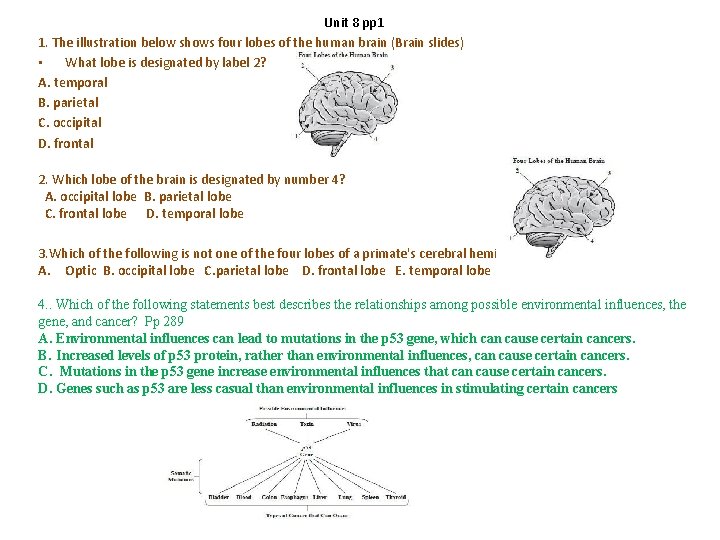
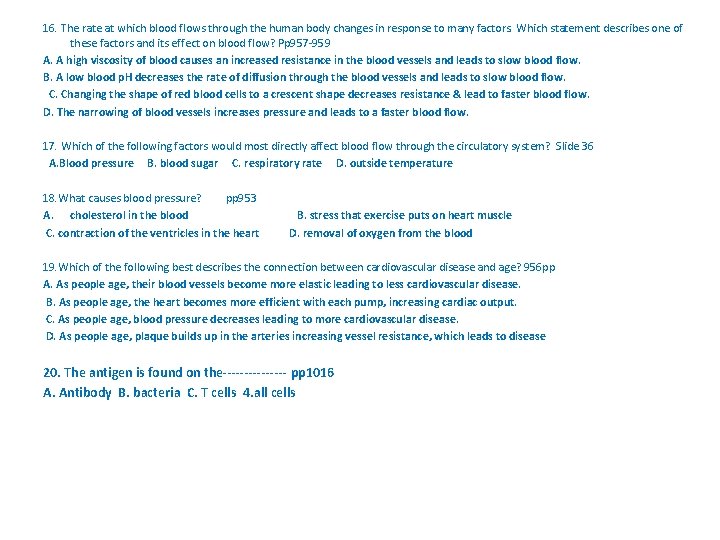
Unit 8 pp 1 1. The illustration below shows four lobes of the human brain (Brain slides) • What lobe is designated by label 2? A. temporal B. parietal C. occipital D. frontal 2. Which lobe of the brain is designated by number 4? A. occipital lobe B. parietal lobe C. frontal lobe D. temporal lobe 3. Which of the following is not one of the four lobes of a primate's cerebral hemisphere? A. Optic B. occipital lobe C. parietal lobe D. frontal lobe E. temporal lobe 4. . Which of the following statements best describes the relationships among possible environmental influences, the gene, and cancer? Pp 289 A. Environmental influences can lead to mutations in the p 53 gene, which can cause certain cancers. B. Increased levels of p 53 protein, rather than environmental influences, can cause certain cancers. C. Mutations in the p 53 gene increase environmental influences that can cause certain cancers. D. Genes such as p 53 are less casual than environmental influences in stimulating certain cancers
5. Which is the body’s first line of defense against infection? Pp 1014 A. Antibodies B. lymph nodes C. white blood cells D. the skin 6. What is immunity? pp 1014 A. The body's ability to produce cells that inactivate foreign cells or substances. B. The body's ability to regulate homeostasis through feedback loops. C. The body's ability to produce the "fight or flight" response. D. The body's ability to use the endocrine system to fight disease 7. How does a vaccine work? pp 1020 A. It prevents the disease-causing agent from entering the body. B. It attacks the disease-causing agent as soon as it enters the body. C It triggers the immune system to produce antibodies to fight the disease-causing agent. D It allows the blood to filter out the disease-causing agent. 8. White blood cells are an important part of the human immune response. Two types of white blood cells, neutrophils and macrophages, act as phagocytes. Phagocytes perform which of the following functions in the human body? Pp 1019 Par 2 A. They produce antibodies. B. B. They bind to antigens and develop into plasma cells. C. C. They form a barrier against pathogens. D. D. They engulf and destroy bacteria 9. Although vaccines cannot be used to treat a person who is sick, they can help to prevent infections. Vaccinations tell the body to create "memory cells", which will function later to create antibodies against certain pathogens. When a person is vaccinated, what are they injected with? pp 1020 A. antibodies to a disease bacterium B. live, inactive viruses C. weakened viruses or antigens from the virus D. blood from a person who has had the disease 10. After an initial infection, B-cells recognize the measles virus. How is this helpful in human immune response? Pp 1018/handout A. The B-cells use this recognition to defend the body against other pathogens, such as bacteria. B. B. The B-cells more quickly recognize and respond to any other virus that invades the body. C. C. The B-cells produce antibodies more quickly if the measles virus is encountered again. D. D. The B-cells transfer this recognition to T-cells, which will then devour the viruses
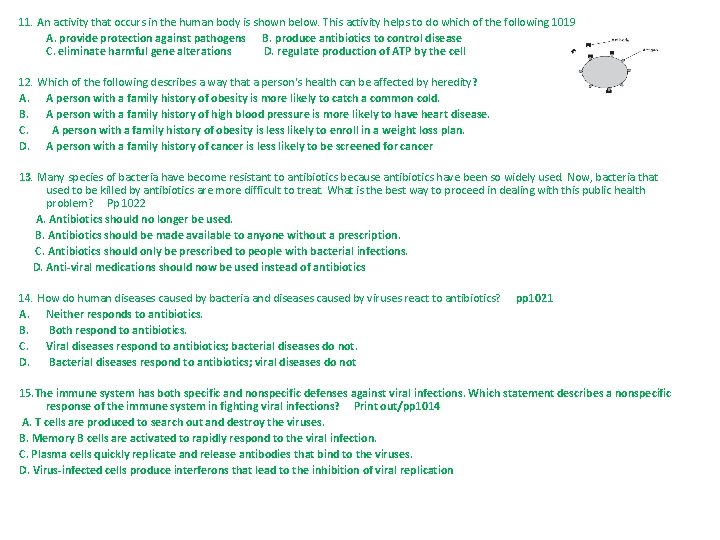
11. An activity that occurs in the human body is shown below. This activity helps to do which of the following 1019 A. provide protection against pathogens B. produce antibiotics to control disease C. eliminate harmful gene alterations D. regulate production of ATP by the cell 12. Which of the following describes a way that a person's health can be affected by heredity? A. A person with a family history of obesity is more likely to catch a common cold. B. A person with a family history of high blood pressure is more likely to have heart disease. C. A person with a family history of obesity is less likely to enroll in a weight loss plan. D. A person with a family history of cancer is less likely to be screened for cancer 13. Many species of bacteria have become resistant to antibiotics because antibiotics have been so widely used. Now, bacteria that used to be killed by antibiotics are more difficult to treat. What is the best way to proceed in dealing with this public health problem? Pp 1022 A. Antibiotics should no longer be used. B. Antibiotics should be made available to anyone without a prescription. C. Antibiotics should only be prescribed to people with bacterial infections. D. Anti-viral medications should now be used instead of antibiotics 14. How do human diseases caused by bacteria and diseases caused by viruses react to antibiotics? A. Neither responds to antibiotics. B. Both respond to antibiotics. C. Viral diseases respond to antibiotics; bacterial diseases do not. D. Bacterial diseases respond to antibiotics; viral diseases do not pp 1021 15. The immune system has both specific and nonspecific defenses against viral infections. Which statement describes a nonspecific response of the immune system in fighting viral infections? Print out/pp 1014 A. T cells are produced to search out and destroy the viruses. B. Memory B cells are activated to rapidly respond to the viral infection. C. Plasma cells quickly replicate and release antibodies that bind to the viruses. D. Virus-infected cells produce interferons that lead to the inhibition of viral replication
16. The rate at which blood flows through the human body changes in response to many factors. Which statement describes one of these factors and its effect on blood flow? Pp 957 -959 A. A high viscosity of blood causes an increased resistance in the blood vessels and leads to slow blood flow. B. A low blood p. H decreases the rate of diffusion through the blood vessels and leads to slow blood flow. C. Changing the shape of red blood cells to a crescent shape decreases resistance & lead to faster blood flow. D. The narrowing of blood vessels increases pressure and leads to a faster blood flow. 17. Which of the following factors would most directly affect blood flow through the circulatory system? Slide 36 A. Blood pressure B. blood sugar C. respiratory rate D. outside temperature 18. What causes blood pressure? pp 953 A. cholesterol in the blood C. contraction of the ventricles in the heart B. stress that exercise puts on heart muscle D. removal of oxygen from the blood 19. Which of the following best describes the connection between cardiovascular disease and age? 956 pp A. As people age, their blood vessels become more elastic leading to less cardiovascular disease. B. As people age, the heart becomes more efficient with each pump, increasing cardiac output. C. As people age, blood pressure decreases leading to more cardiovascular disease. D. As people age, plaque builds up in the arteries increasing vessel resistance, which leads to disease 20. The antigen is found on the-------- pp 1016 A. Antibody B. bacteria C. T cells 4. all cells
21. A fertilized egg undergoes several stages before it is successfully implanted. . In which of the following structures of the female human reproductive system is the blastocyst implanted during normal human development? Pp 996 A. Ovary B. uterus C. vagina D. amniotic sac 22. The drinking of alcoholic beverages by a pregnant woman is harmful to the development of her fetus. This is most damaging early in a pregnancy because during this time pp 1001 A. the lungs of the fetus become functional. B. alcohol can easily enter the mouth of the fetus. C. many of the essential organs of the fetus are forming. D. the fetus cannot excrete wastes 23. Sperm are created through meiosis in an area of the testes called the seminiferous tubules. Through which structure do the sperm travel to exit the testes? Pp 988 -991 A. vas deferens B. seminiferous tubules C. scrotum D. epididymis 24. Which of the following is true of a zygote? Pp 995 -996 A. It forms into a blastocyst B. It is an unfertilized egg C. It produces haploid male gametophytes D. It is made up of only one cell 25. Which of the following describes fertilization? Pp 995 -996 A. cell differentiation to form a blastula B. formation of germ layers in a deuterostome C. a sperm joining an egg to form a zygote D. sperm and egg production 26. Below is a diagram of the male reproductive system. Which structure is represented by the letter D? Pp 988 -991 Scrotum B. testes C. prostate gland D. epididymus 27. Abnormalities present in the cells that line the uterus may prevent the production of offspring by directly interfering with which process? Pp 995 -996 A. the development of the embryo B. the differentiation of gametes into zygotes C. the secretion of estrogen by the ovary D. the production and release of egg cells 28. What is the human embryo called after the eighth week of development? A. a zygote B. an infant C. a fetus D. a morula Pp 995 -996
• Photosynthesis • Osmosis • Phagocytosis-Pinocytosis • Respiration • Ovulation Fertilization Implantation • vaccination
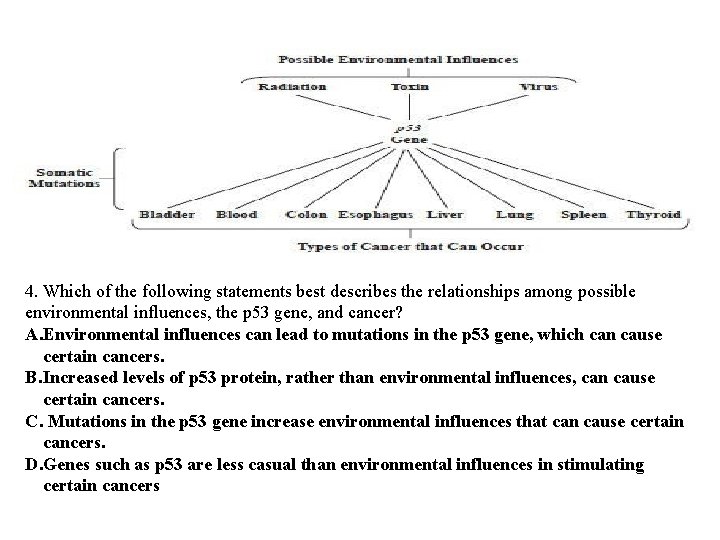
4. Which of the following statements best describes the relationships among possible environmental influences, the p 53 gene, and cancer? A. Environmental influences can lead to mutations in the p 53 gene, which can cause certain cancers. B. Increased levels of p 53 protein, rather than environmental influences, can cause certain cancers. C. Mutations in the p 53 gene increase environmental influences that can cause certain cancers. D. Genes such as p 53 are less casual than environmental influences in stimulating certain cancers
- Slides: 51