
Unit 7 Waves Lesson 6 Wind Instruments Air


- Slides: 12
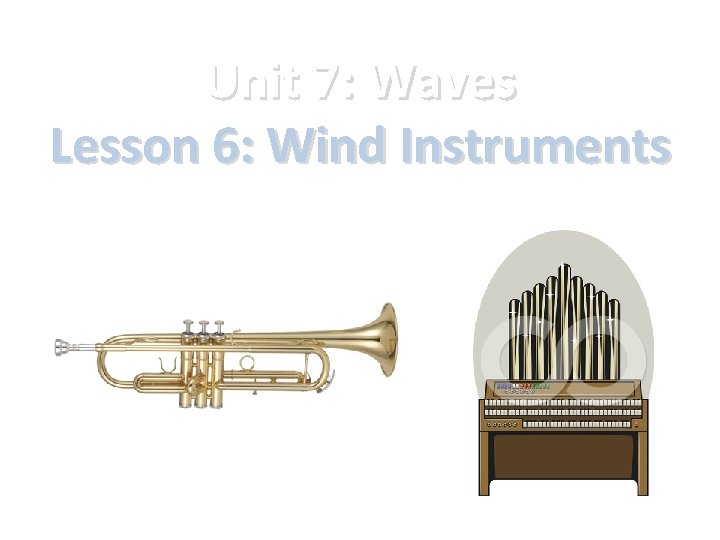
Unit 7: Waves Lesson 6: Wind Instruments
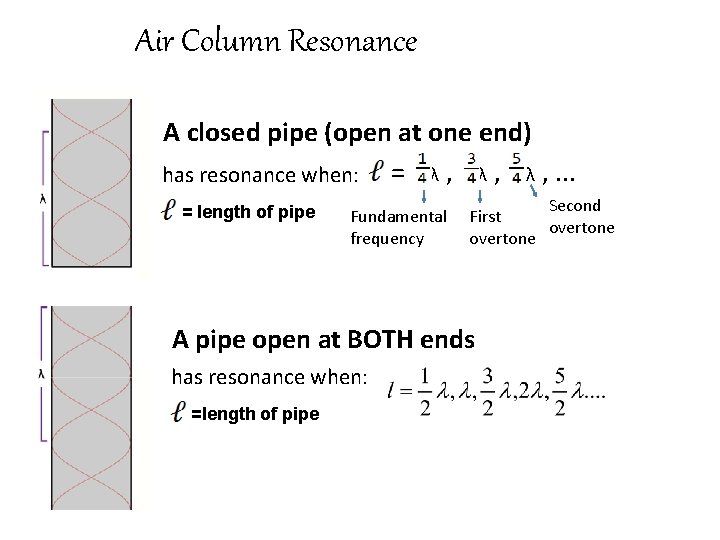
Air Column Resonance A closed pipe (open at one end) has resonance when: = λ , λ , . . . = length of pipe Fundamental frequency Second First overtone A pipe open at BOTH ends has resonance when: =length of pipe
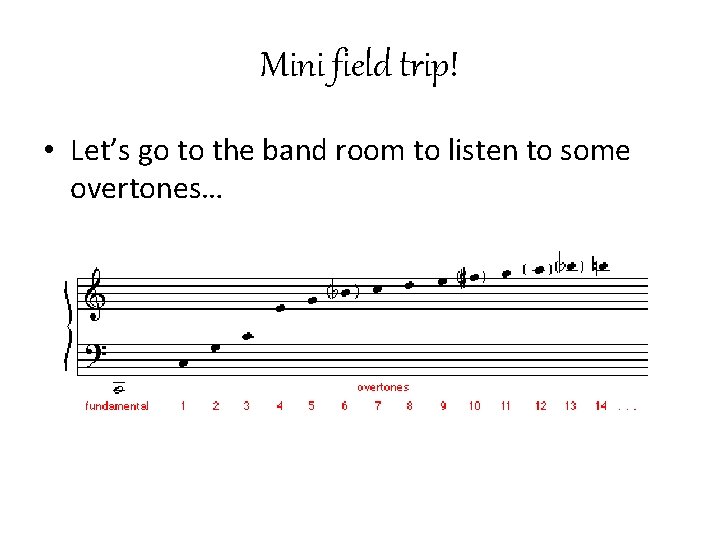
Mini field trip! • Let’s go to the band room to listen to some overtones…
Brain Break!
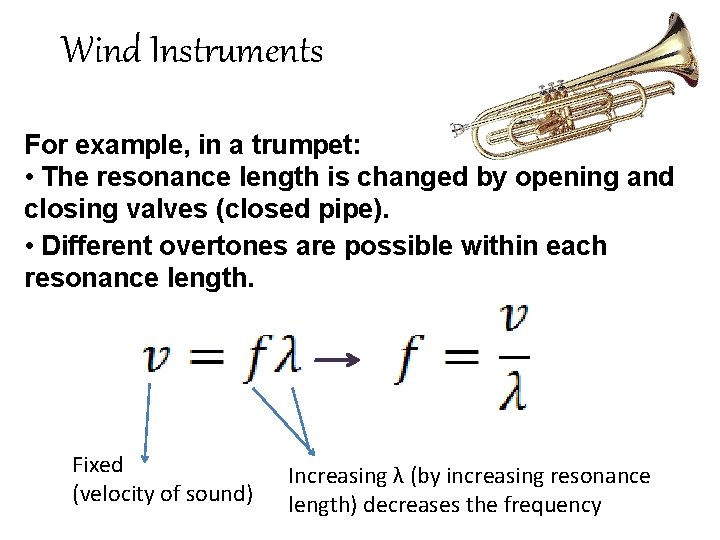
Wind Instruments For example, in a trumpet: • The resonance length is changed by opening and closing valves (closed pipe). • Different overtones are possible within each resonance length. Fixed (velocity of sound) Increasing λ (by increasing resonance length) decreases the frequency
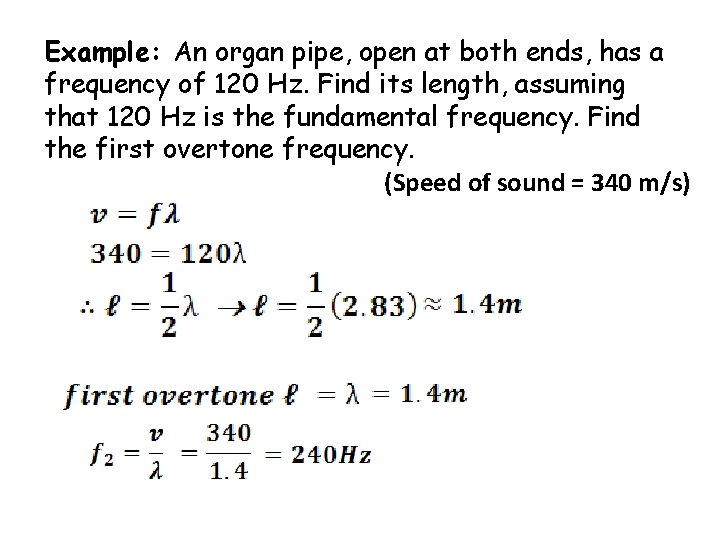
Example: An organ pipe, open at both ends, has a frequency of 120 Hz. Find its length, assuming that 120 Hz is the fundamental frequency. Find the first overtone frequency. (Speed of sound = 340 m/s)
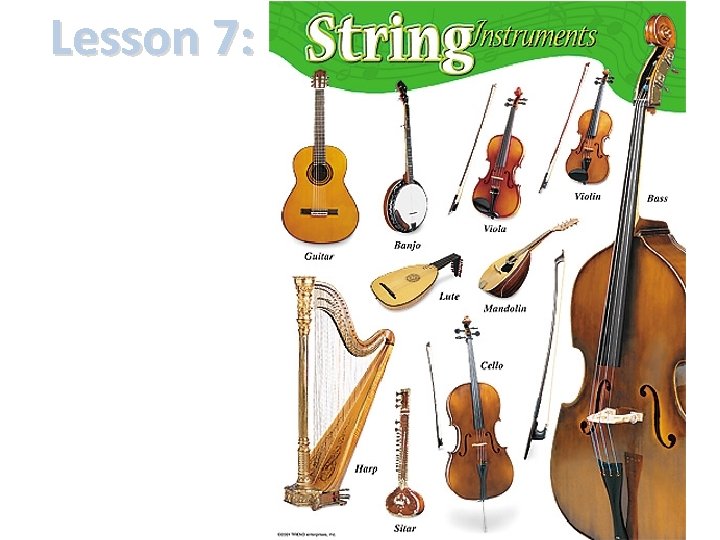
Lesson 7:
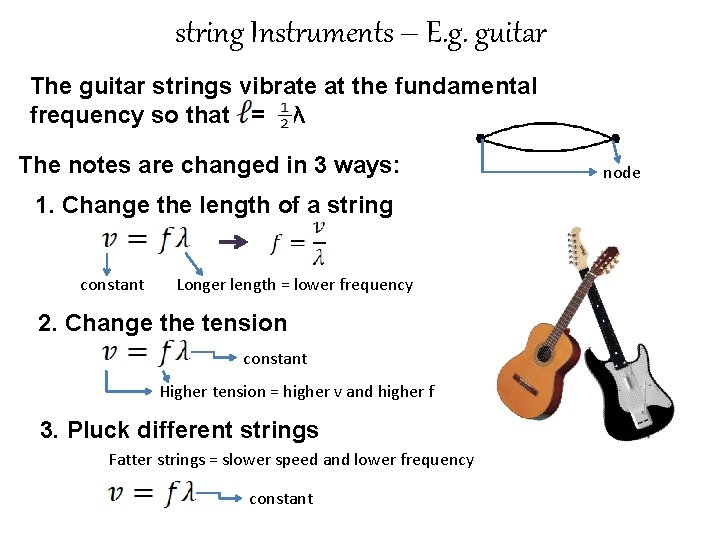
string Instruments – E. g. guitar The guitar strings vibrate at the fundamental frequency so that = λ The notes are changed in 3 ways: 1. Change the length of a string constant Longer length = lower frequency 2. Change the tension constant Higher tension = higher v and higher f 3. Pluck different strings Fatter strings = slower speed and lower frequency constant node
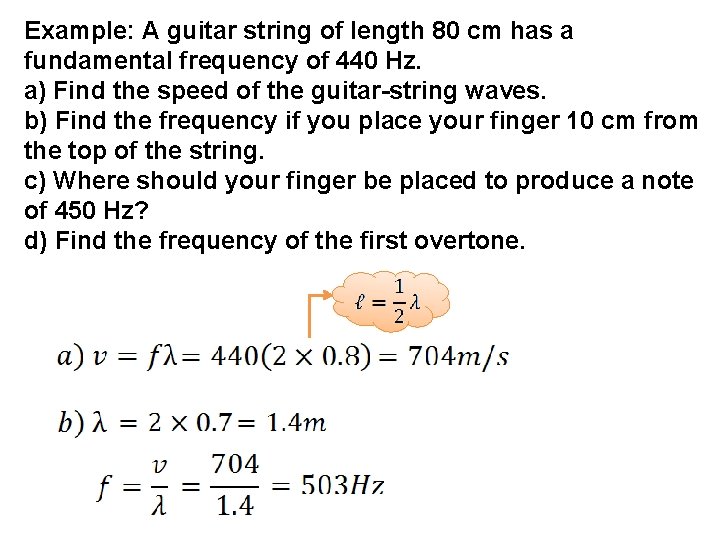
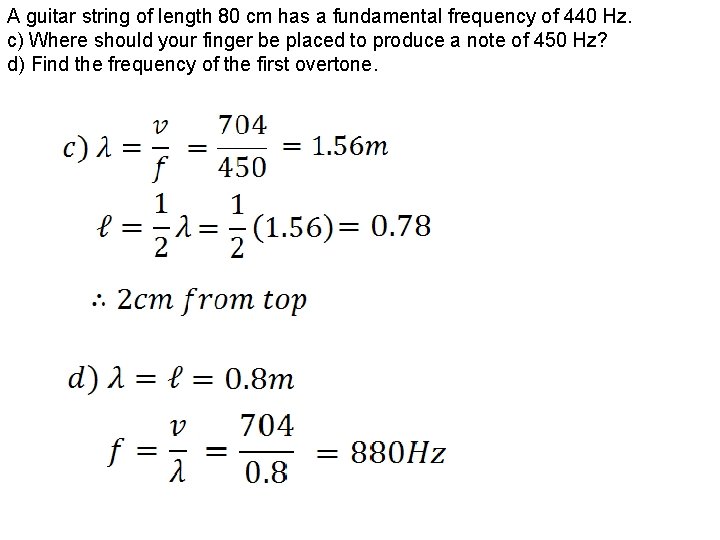
Example: A guitar string of length 80 cm has a fundamental frequency of 440 Hz. a) Find the speed of the guitar-string waves. b) Find the frequency if you place your finger 10 cm from the top of the string. c) Where should your finger be placed to produce a note of 450 Hz? d) Find the frequency of the first overtone.
A guitar string of length 80 cm has a fundamental frequency of 440 Hz. c) Where should your finger be placed to produce a note of 450 Hz? d) Find the frequency of the first overtone.
Brain Break!
Practice: • Resonance Problem Set (all)