
Unit 7 The Kinetic Molecular Theory of Matter
- Slides: 8
Unit 7: The Kinetic Molecular Theory of Matter
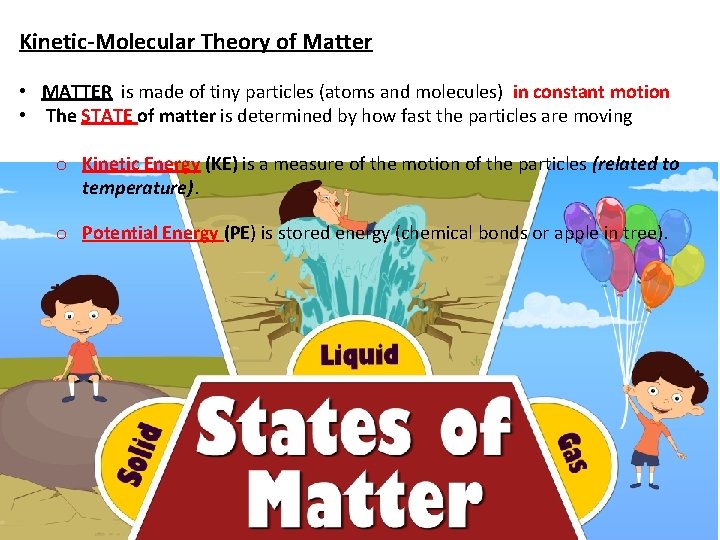
Kinetic-Molecular Theory of Matter • MATTER is made of tiny particles (atoms and molecules) in constant motion • The STATE of matter is determined by how fast the particles are moving o Kinetic Energy (KE) is a measure of the motion of the particles (related to temperature). o Potential Energy (PE) is stored energy (chemical bonds or apple in tree).
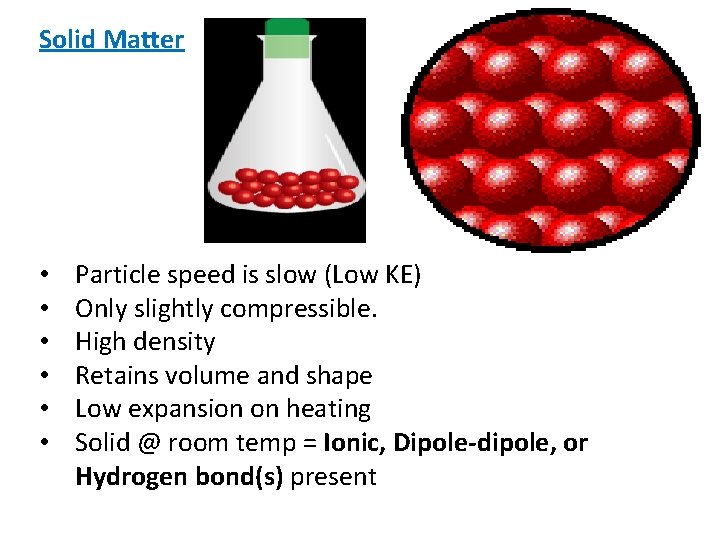
Solid Matter • • • Particle speed is slow (Low KE) Only slightly compressible. High density Retains volume and shape Low expansion on heating Solid @ room temp = Ionic, Dipole-dipole, or Hydrogen bond(s) present
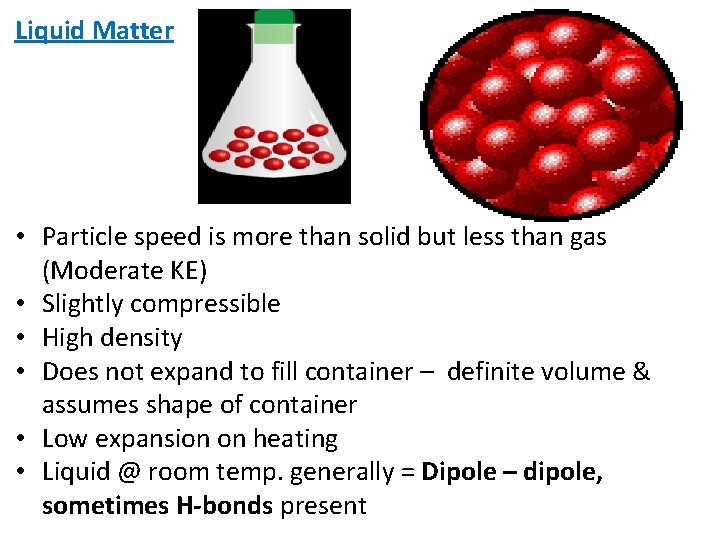
Liquid Matter • Particle speed is more than solid but less than gas (Moderate KE) • Slightly compressible • High density • Does not expand to fill container – definite volume & assumes shape of container • Low expansion on heating • Liquid @ room temp. generally = Dipole – dipole, sometimes H-bonds present
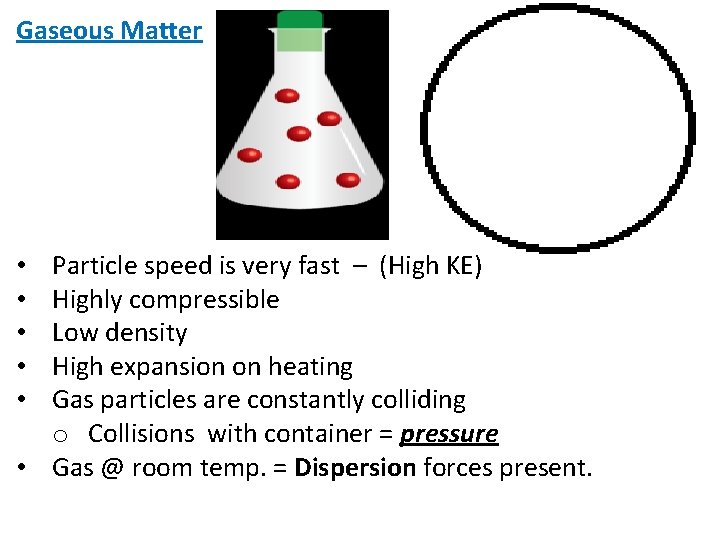
Gaseous Matter Particle speed is very fast – (High KE) Highly compressible Low density High expansion on heating Gas particles are constantly colliding o Collisions with container = pressure • Gas @ room temp. = Dispersion forces present. • • •
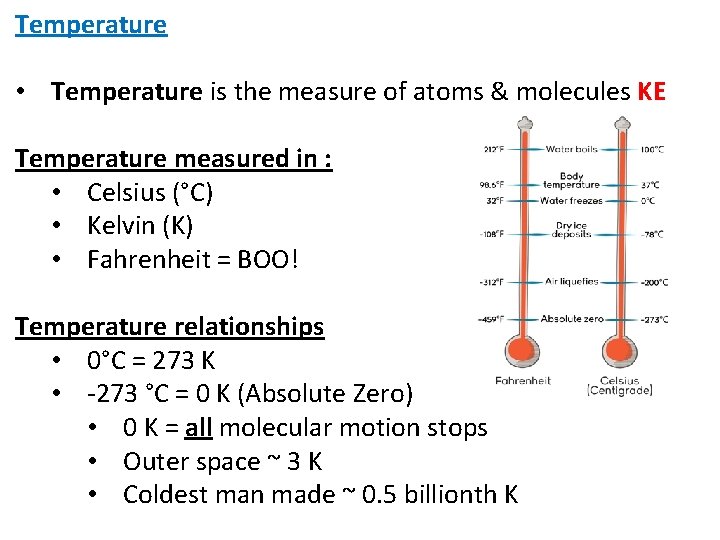
Temperature • Temperature is the measure of atoms & molecules KE Temperature measured in : • Celsius (°C) • Kelvin (K) • Fahrenheit = BOO! Temperature relationships • 0°C = 273 K • -273 °C = 0 K (Absolute Zero) • 0 K = all molecular motion stops • Outer space ~ 3 K • Coldest man made ~ 0. 5 billionth K
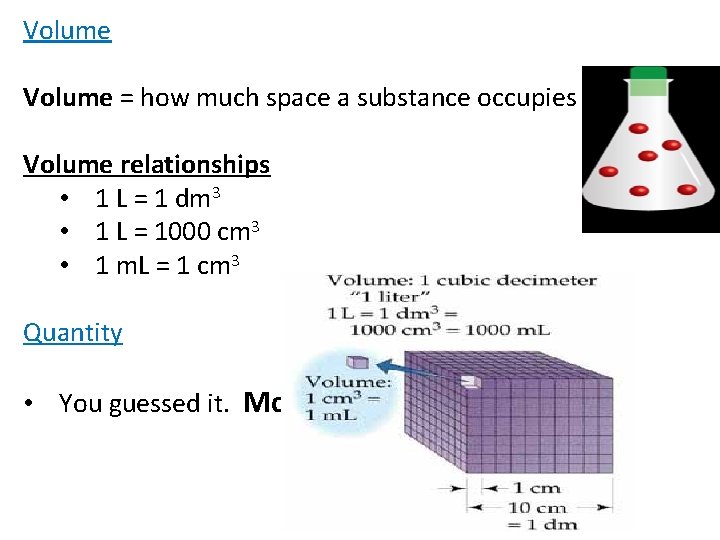
Volume = how much space a substance occupies Volume relationships • 1 L = 1 dm 3 • 1 L = 1000 cm 3 • 1 m. L = 1 cm 3 Quantity • You guessed it. Moles!