
Unit 7 Lesson D Factors Affecting Climate Goals
- Slides: 18
Unit 7 – Lesson D Factors Affecting Climate Goals: 1. I can explain how an area’s climate is determined. 2. I can use factors such as latitude, elevation, topography, distance from water, global winds, and ocean currents to determine the climate at a given location.
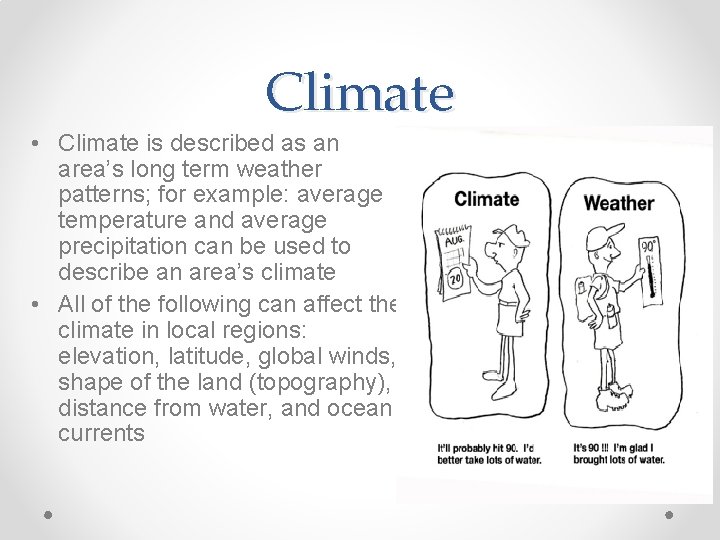
Climate • Climate is described as an area’s long term weather patterns; for example: average temperature and average precipitation can be used to describe an area’s climate • All of the following can affect the climate in local regions: elevation, latitude, global winds, shape of the land (topography), distance from water, and ocean currents
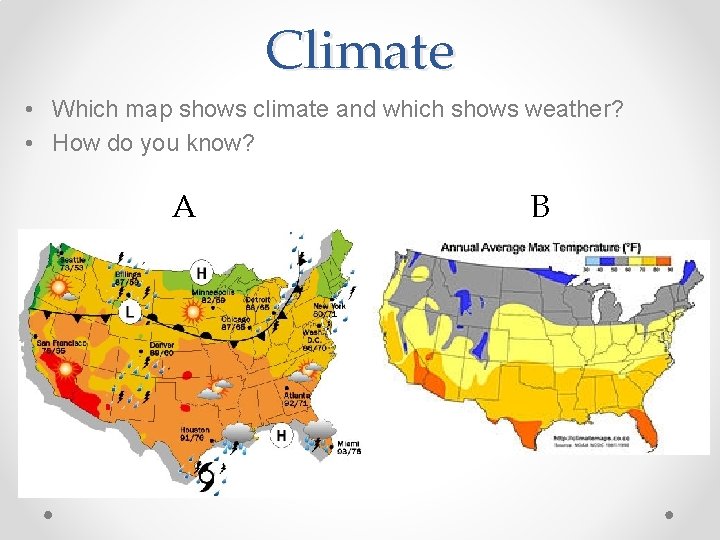
Climate • Which map shows climate and which shows weather? • How do you know? A B
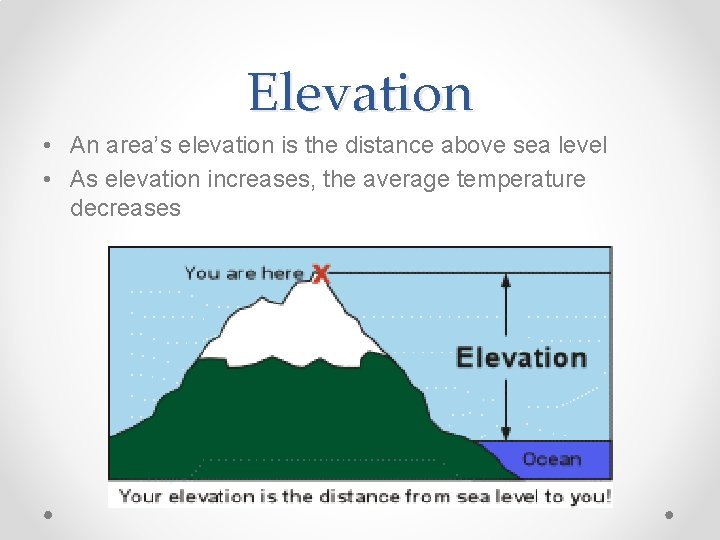
Elevation • An area’s elevation is the distance above sea level • As elevation increases, the average temperature decreases
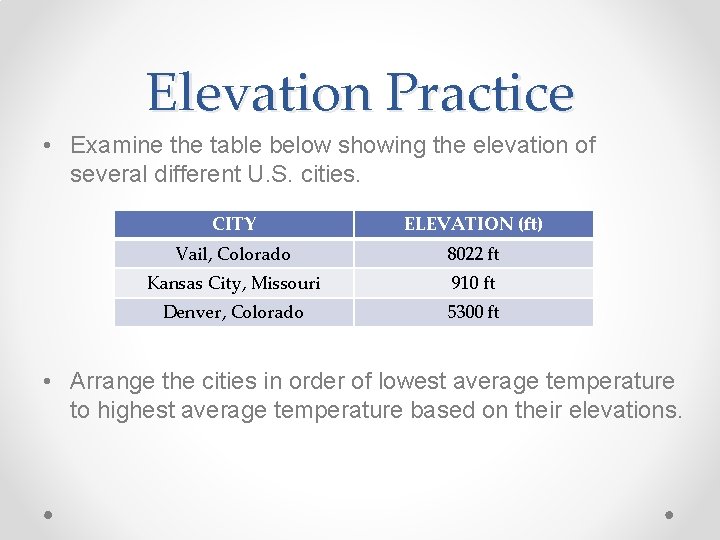
Elevation Practice • Examine the table below showing the elevation of several different U. S. cities. CITY ELEVATION (ft) Vail, Colorado 8022 ft Kansas City, Missouri 910 ft Denver, Colorado 5300 ft • Arrange the cities in order of lowest average temperature to highest average temperature based on their elevations.
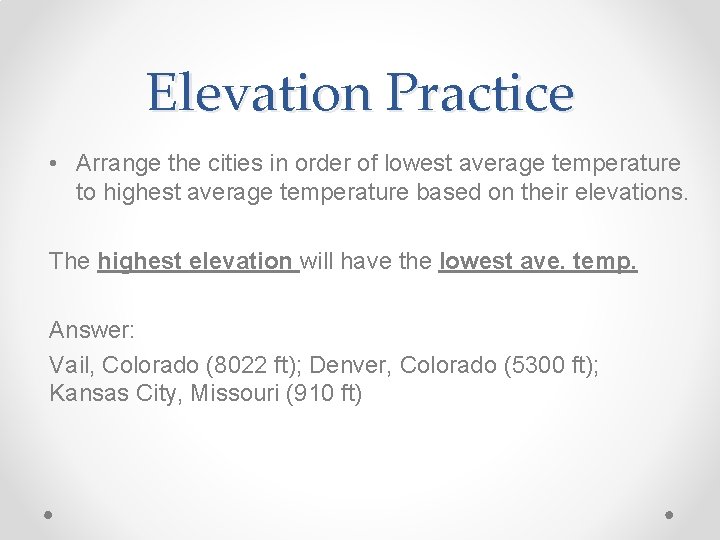
Elevation Practice • Arrange the cities in order of lowest average temperature to highest average temperature based on their elevations. The highest elevation will have the lowest ave. temp. Answer: Vail, Colorado (8022 ft); Denver, Colorado (5300 ft); Kansas City, Missouri (910 ft)
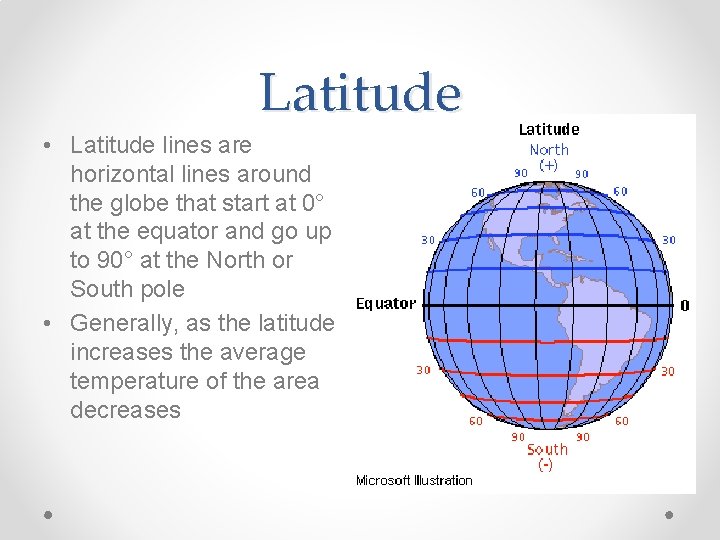
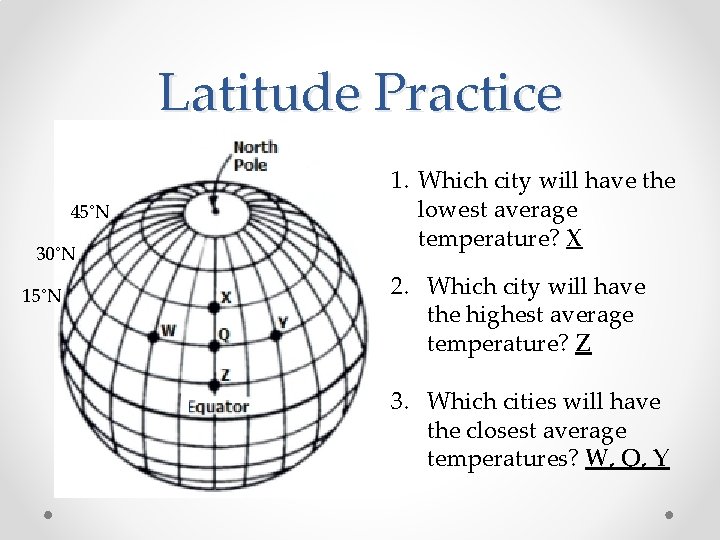
Latitude • Latitude lines are horizontal lines around the globe that start at 0° at the equator and go up to 90° at the North or South pole • Generally, as the latitude increases the average temperature of the area decreases
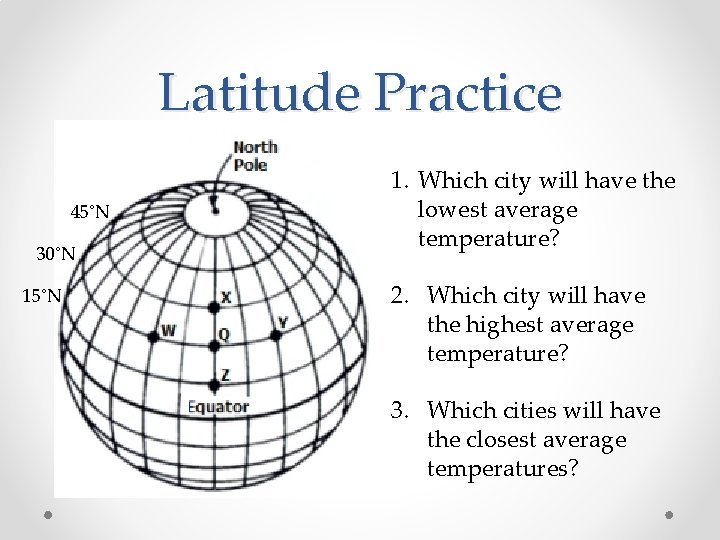
Latitude Practice 45˚N 30˚N 15˚N 1. Which city will have the lowest average temperature? 2. Which city will have the highest average temperature? 3. Which cities will have the closest average temperatures?
Latitude Practice 45˚N 30˚N 15˚N 1. Which city will have the lowest average temperature? X 2. Which city will have the highest average temperature? Z 3. Which cities will have the closest average temperatures? W, Q, Y
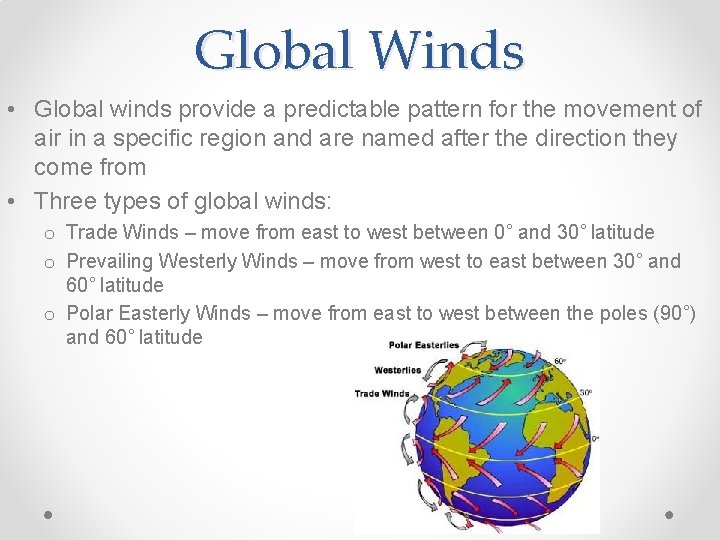
Global Winds • Global winds provide a predictable pattern for the movement of air in a specific region and are named after the direction they come from • Three types of global winds: o Trade Winds – move from east to west between 0˚ and 30˚ latitude o Prevailing Westerly Winds – move from west to east between 30˚ and 60˚ latitude o Polar Easterly Winds – move from east to west between the poles (90˚) and 60˚ latitude
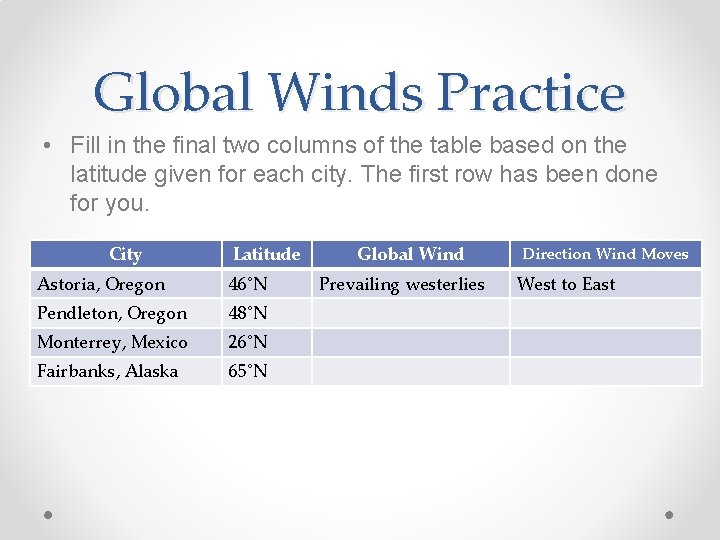
Global Winds Practice • Fill in the final two columns of the table based on the latitude given for each city. The first row has been done for you. City Latitude Astoria, Oregon 46˚N Pendleton, Oregon 48˚N Monterrey, Mexico 26˚N Fairbanks, Alaska 65˚N Global Wind Prevailing westerlies Direction Wind Moves West to East
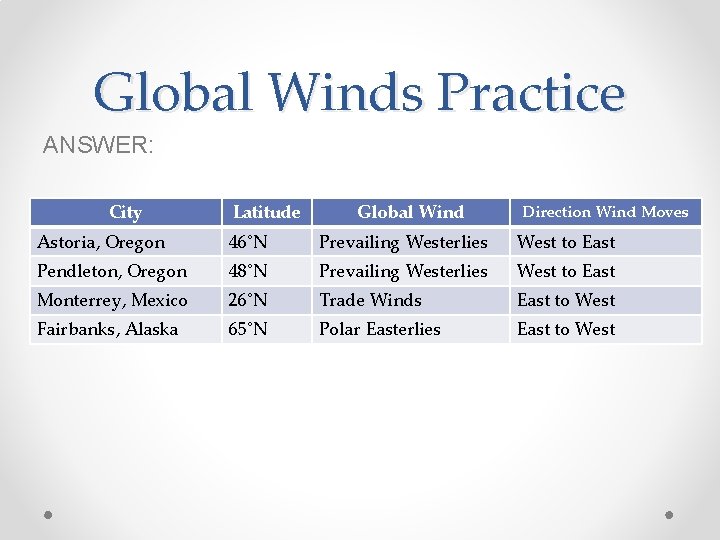
Global Winds Practice ANSWER: City Latitude Global Wind Direction Wind Moves Astoria, Oregon 46˚N Prevailing Westerlies West to East Pendleton, Oregon 48˚N Prevailing Westerlies West to East Monterrey, Mexico 26˚N Trade Winds East to West Fairbanks, Alaska 65˚N Polar Easterlies East to West
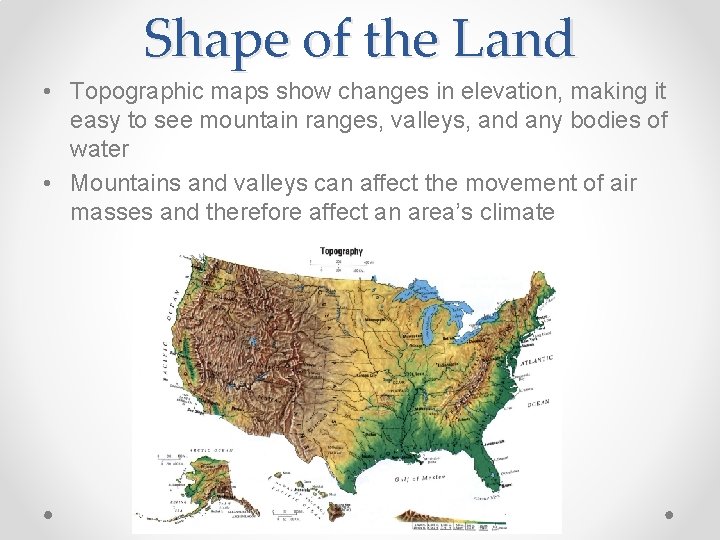
Shape of the Land • Topographic maps show changes in elevation, making it easy to see mountain ranges, valleys, and any bodies of water • Mountains and valleys can affect the movement of air masses and therefore affect an area’s climate
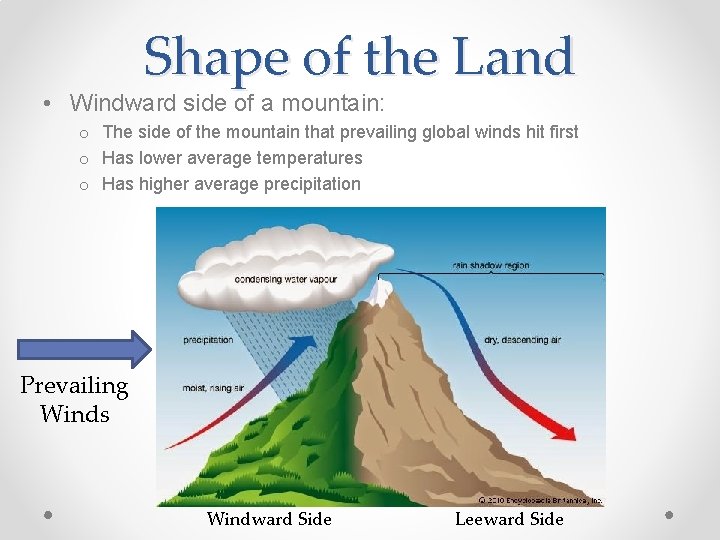
Shape of the Land • Windward side of a mountain: o The side of the mountain that prevailing global winds hit first o Has lower average temperatures o Has higher average precipitation Prevailing Winds Windward Side Leeward Side
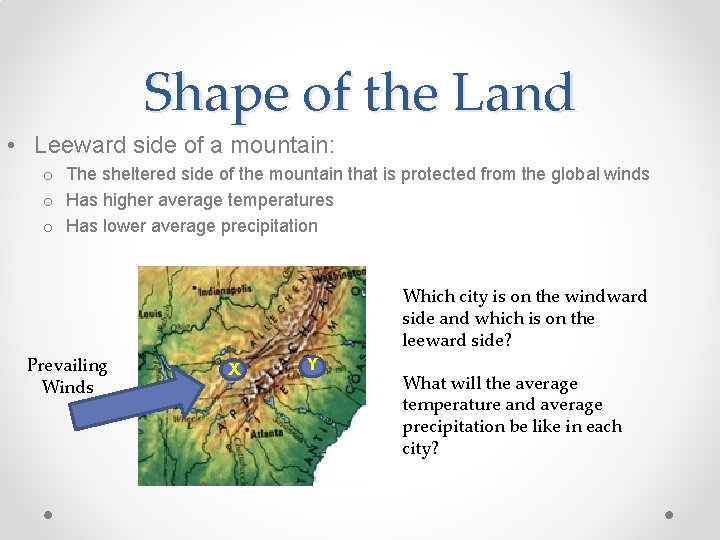
Shape of the Land • Leeward side of a mountain: o The sheltered side of the mountain that is protected from the global winds o Has higher average temperatures o Has lower average precipitation Which city is on the windward side and which is on the leeward side? Prevailing Winds X Y What will the average temperature and average precipitation be like in each city?
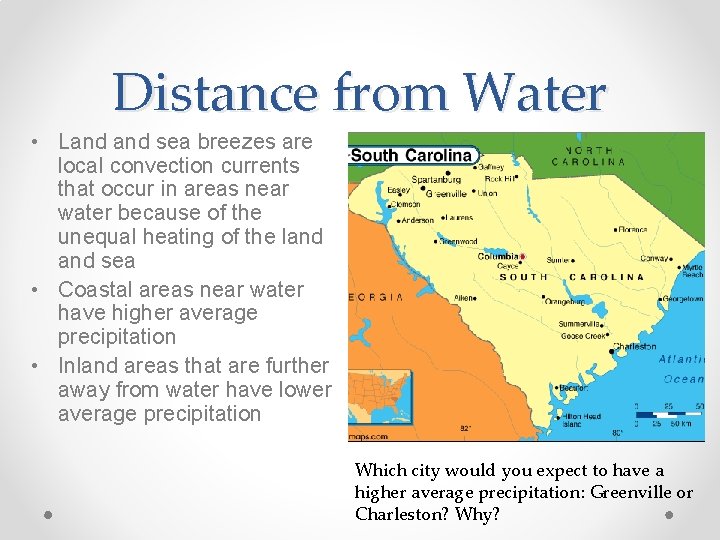
Distance from Water • Land sea breezes are local convection currents that occur in areas near water because of the unequal heating of the land sea • Coastal areas near water have higher average precipitation • Inland areas that are further away from water have lower average precipitation Which city would you expect to have a higher average precipitation: Greenville or Charleston? Why?
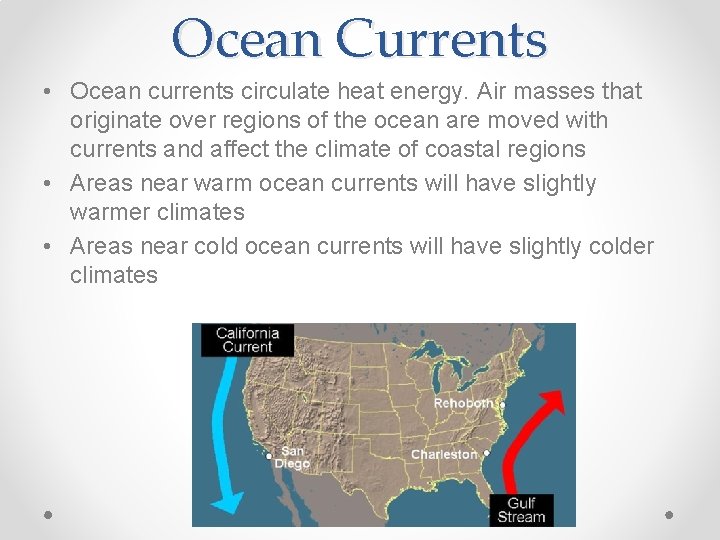
Ocean Currents • Ocean currents circulate heat energy. Air masses that originate over regions of the ocean are moved with currents and affect the climate of coastal regions • Areas near warm ocean currents will have slightly warmer climates • Areas near cold ocean currents will have slightly colder climates
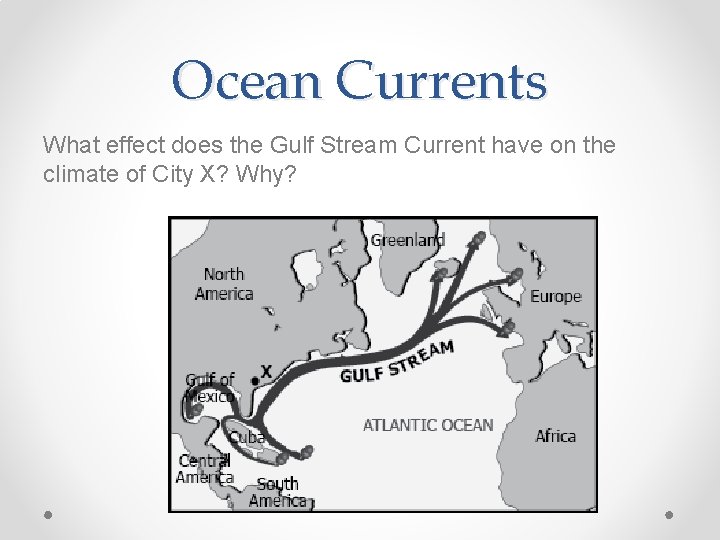
Ocean Currents What effect does the Gulf Stream Current have on the climate of City X? Why?