
UNIT 7 ELECTION PROCESS CIVIC RESPONSIBILITY American Government
UNIT 7: ELECTION PROCESS & CIVIC RESPONSIBILITY American Government
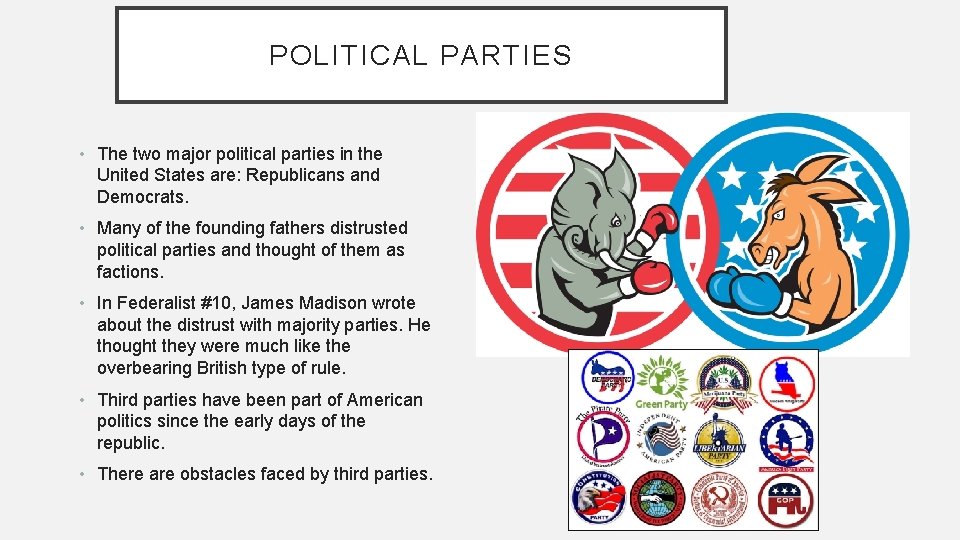
POLITICAL PARTIES • The two major political parties in the United States are: Republicans and Democrats. • Many of the founding fathers distrusted political parties and thought of them as factions. • In Federalist #10, James Madison wrote about the distrust with majority parties. He thought they were much like the overbearing British type of rule. • Third parties have been part of American politics since the early days of the republic. • There are obstacles faced by third parties.
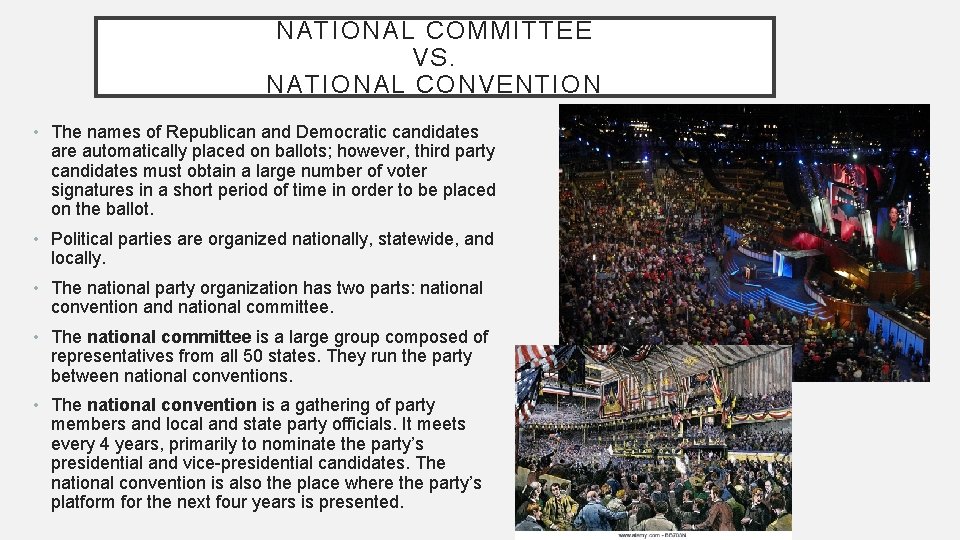
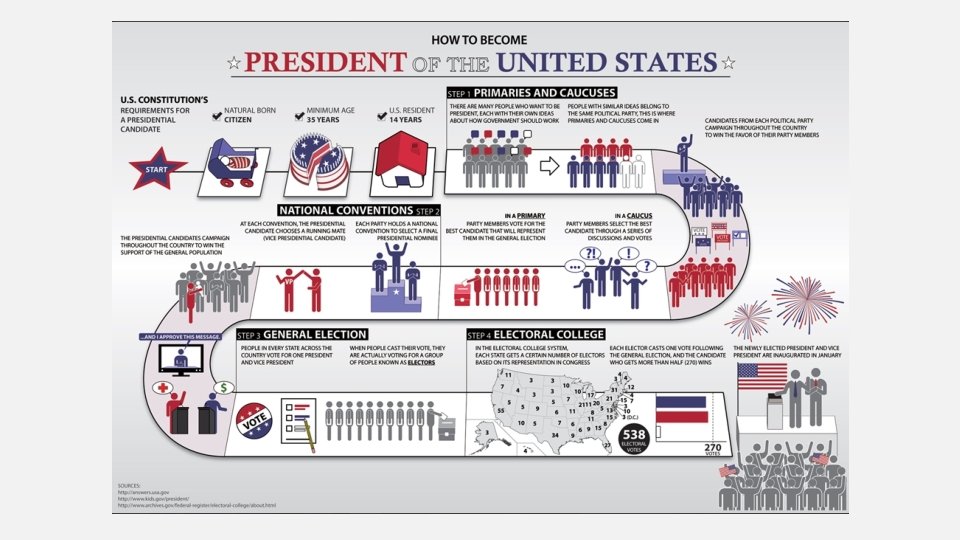
NATIONAL COMMITTEE VS. NATIONAL CONVENTION • The names of Republican and Democratic candidates are automatically placed on ballots; however, third party candidates must obtain a large number of voter signatures in a short period of time in order to be placed on the ballot. • Political parties are organized nationally, statewide, and locally. • The national party organization has two parts: national convention and national committee. • The national committee is a large group composed of representatives from all 50 states. They run the party between national conventions. • The national convention is a gathering of party members and local and state party officials. It meets every 4 years, primarily to nominate the party’s presidential and vice-presidential candidates. The national convention is also the place where the party’s platform for the next four years is presented.

NATIONAL CONVENTION • The national convention takes place in the summer of the year of a presidential election. • The conventions (one for Republicans and one for Democrats) take place in major cities. • The conventions last approximately one week and are televised to millions of American viewers. • Typically, the last night of the convention is reserved for the formal party nomination of its’ candidates for President and VP.
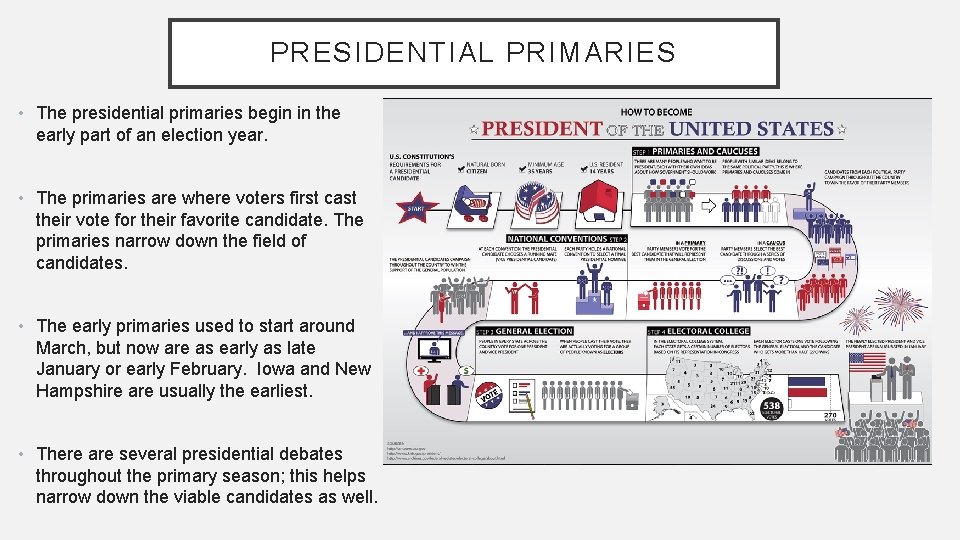
PRESIDENTIAL PRIMARIES • The presidential primaries begin in the early part of an election year. • The primaries are where voters first cast their vote for their favorite candidate. The primaries narrow down the field of candidates. • The early primaries used to start around March, but now are as early as late January or early February. Iowa and New Hampshire are usually the earliest. • There are several presidential debates throughout the primary season; this helps narrow down the viable candidates as well.
NOTES
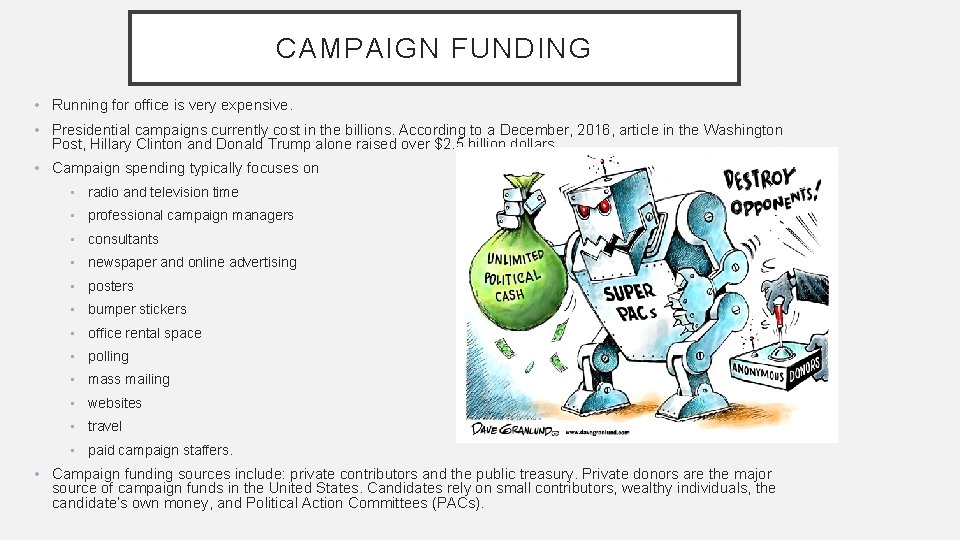
CAMPAIGN FUNDING • Running for office is very expensive. • Presidential campaigns currently cost in the billions. According to a December, 2016, article in the Washington Post, Hillary Clinton and Donald Trump alone raised over $2. 5 billion dollars. • Campaign spending typically focuses on • radio and television time • professional campaign managers • consultants • newspaper and online advertising • posters • bumper stickers • office rental space • polling • mass mailing • websites • travel • paid campaign staffers. • Campaign funding sources include: private contributors and the public treasury. Private donors are the major source of campaign funds in the United States. Candidates rely on small contributors, wealthy individuals, the candidate’s own money, and Political Action Committees (PACs).

CAMPAIGN FUNDING • PACs are organizations that pools campaign contributions from members and then donates those pooled funds to campaign for or against a candidate. • PACs usually have a vested interest in the outcome of the election; they may represent special interest groups or other groups who want to influence legislation. • Super PAC does not make any contributions to candidates or political parties. Instead, Super PACs make expenditures in federal races for running campaign ads for or against a candidate. Their messages specifically advocate for the election or defeat of a particular candidate.
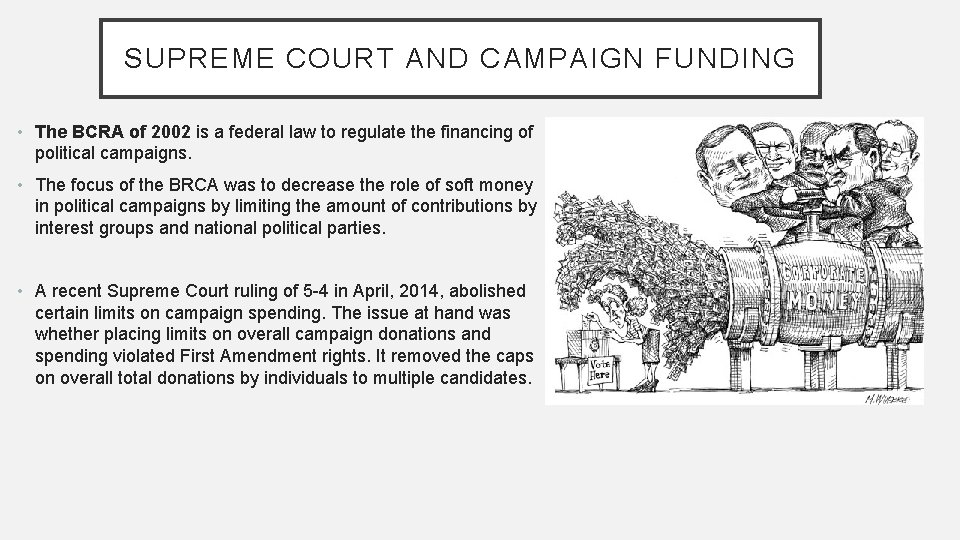
SUPREME COURT AND CAMPAIGN FUNDING • The BCRA of 2002 is a federal law to regulate the financing of political campaigns. • The focus of the BRCA was to decrease the role of soft money in political campaigns by limiting the amount of contributions by interest groups and national political parties. • A recent Supreme Court ruling of 5 -4 in April, 2014, abolished certain limits on campaign spending. The issue at hand was whether placing limits on overall campaign donations and spending violated First Amendment rights. It removed the caps on overall total donations by individuals to multiple candidates.
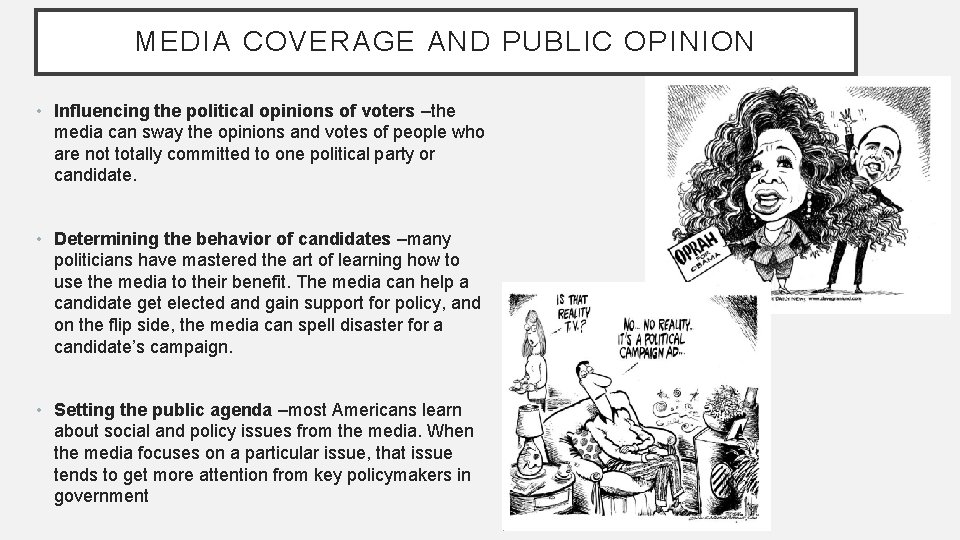
MEDIA COVERAGE AND PUBLIC OPINION • Influencing the political opinions of voters –the media can sway the opinions and votes of people who are not totally committed to one political party or candidate. • Determining the behavior of candidates –many politicians have mastered the art of learning how to use the media to their benefit. The media can help a candidate get elected and gain support for policy, and on the flip side, the media can spell disaster for a candidate’s campaign. • Setting the public agenda –most Americans learn about social and policy issues from the media. When the media focuses on a particular issue, that issue tends to get more attention from key policymakers in government
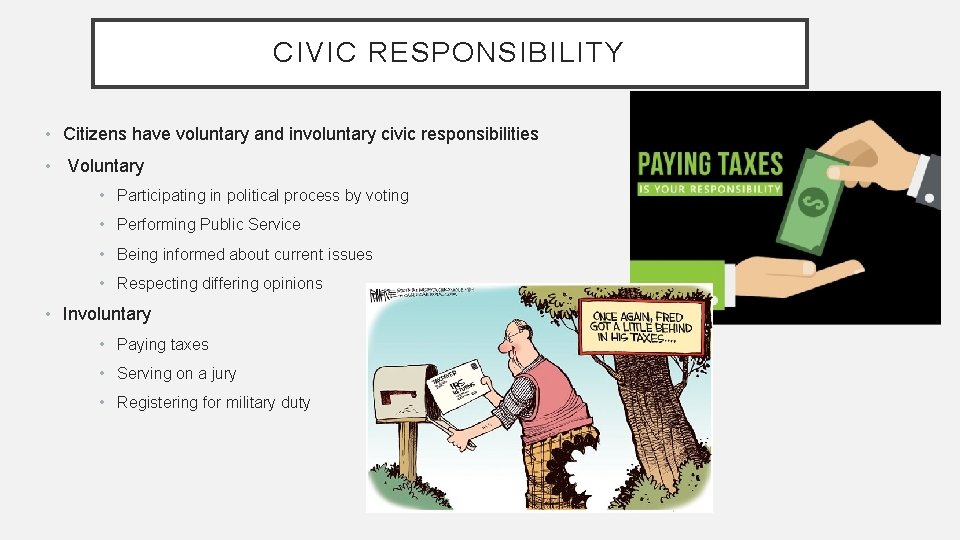
CIVIC RESPONSIBILITY • Citizens have voluntary and involuntary civic responsibilities • Voluntary • Participating in political process by voting • Performing Public Service • Being informed about current issues • Respecting differing opinions • Involuntary • Paying taxes • Serving on a jury • Registering for military duty
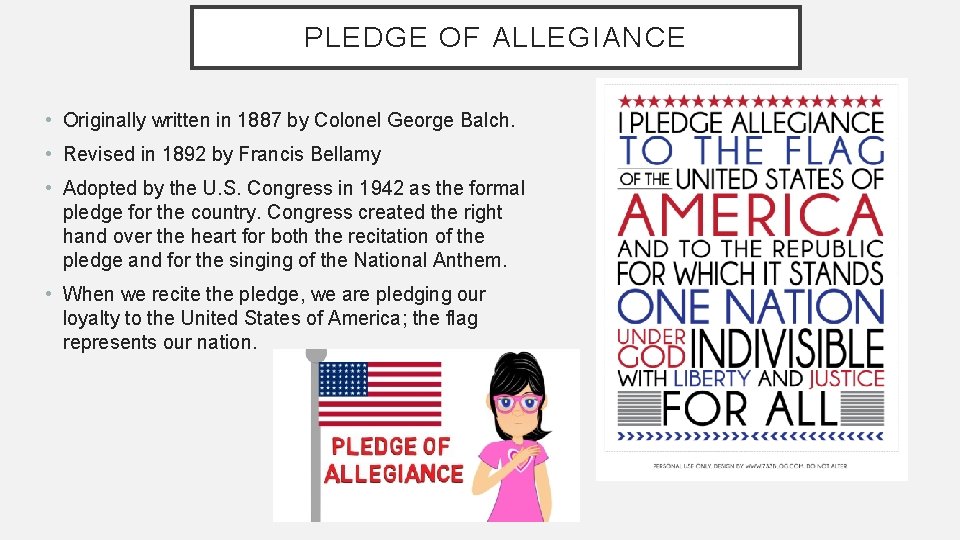
PLEDGE OF ALLEGIANCE • Originally written in 1887 by Colonel George Balch. • Revised in 1892 by Francis Bellamy • Adopted by the U. S. Congress in 1942 as the formal pledge for the country. Congress created the right hand over the heart for both the recitation of the pledge and for the singing of the National Anthem. • When we recite the pledge, we are pledging our loyalty to the United States of America; the flag represents our nation.
- Slides: 12