
Unit 7 Earth and Space Big Bang Theory
Unit 7 Earth and Space
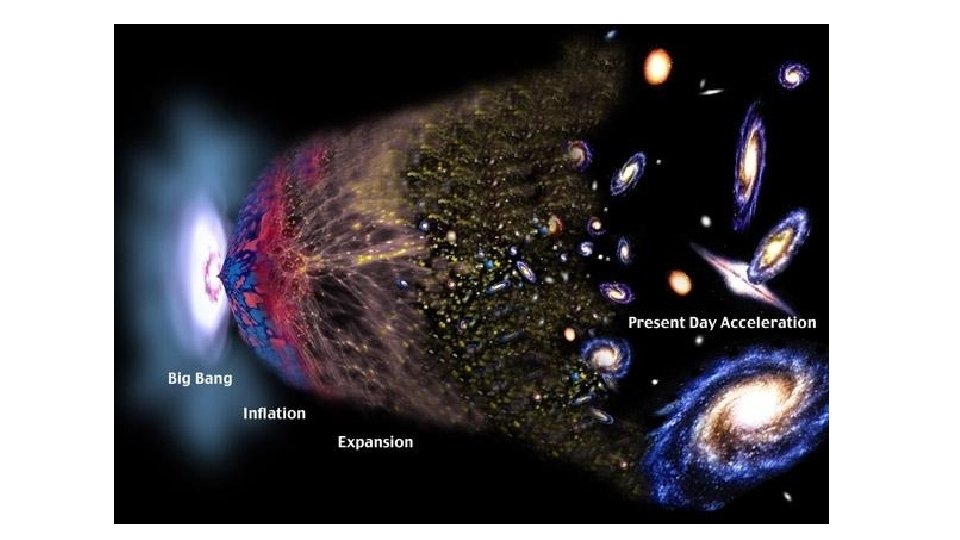
Big Bang Theory that the universe formed in an instant, billions of yrs. ago, in an enormous explosion
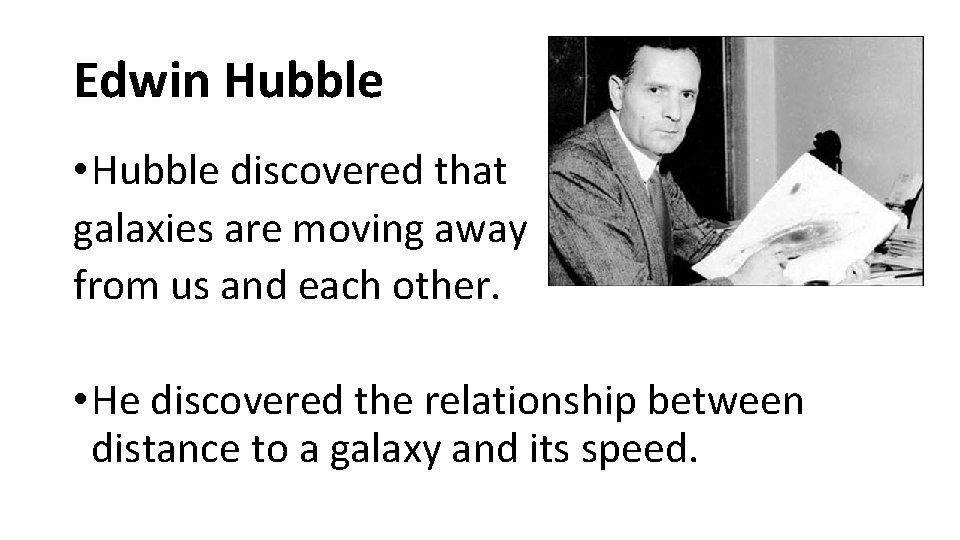
Edwin Hubble • Hubble discovered that galaxies are moving away from us and each other. • He discovered the relationship between distance to a galaxy and its speed.
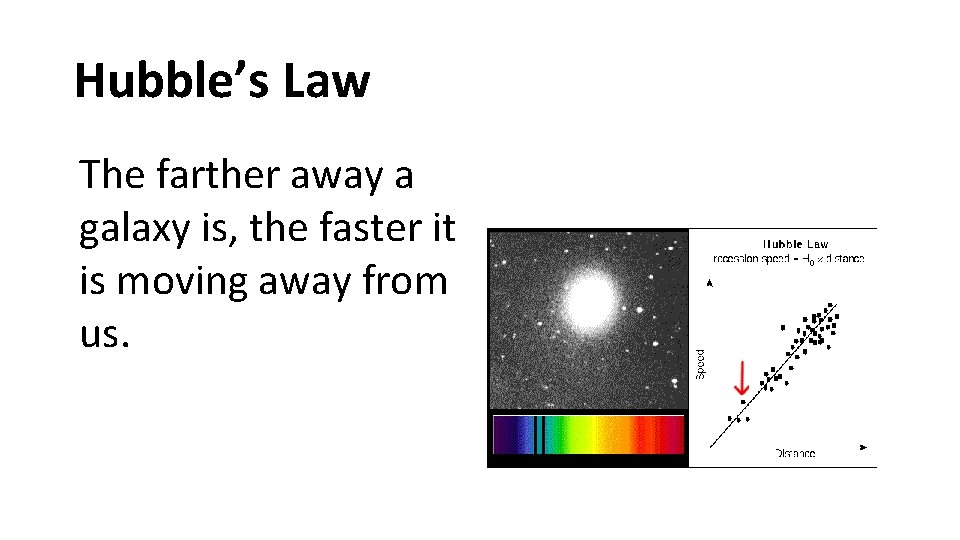
Hubble’s Law The farther away a galaxy is, the faster it is moving away from us.

Hubble’s Revolution Video http: //www. discovery. com/tv-shows/other-shows/videos/how-the-universe-works-hubbles-revolution/
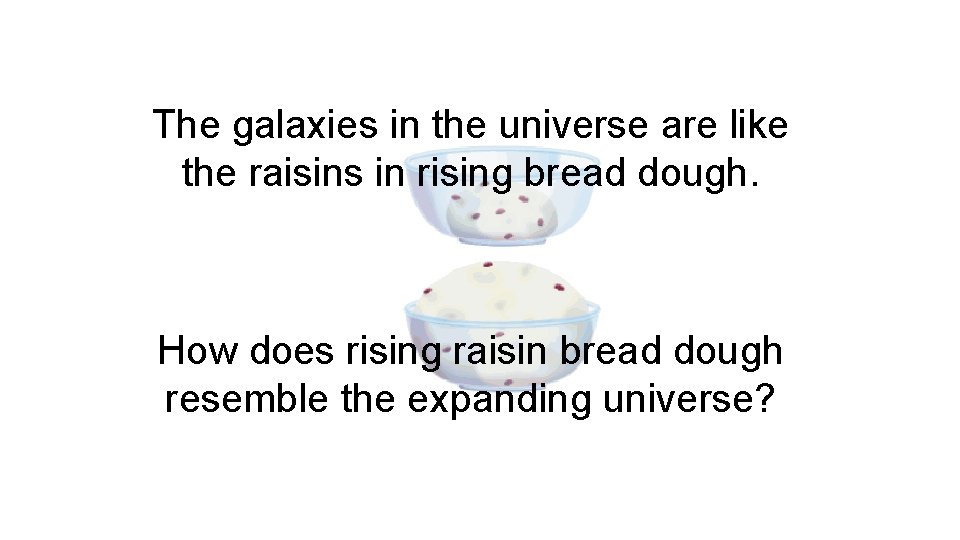
The galaxies in the universe are like the raisins in rising bread dough. How does rising raisin bread dough resemble the expanding universe?
Proof of Hubble’s Law • Cosmic Background Radiation – faint radiation glow that comes from all directions in space • This is leftover thermal radiation from the Big Bang.
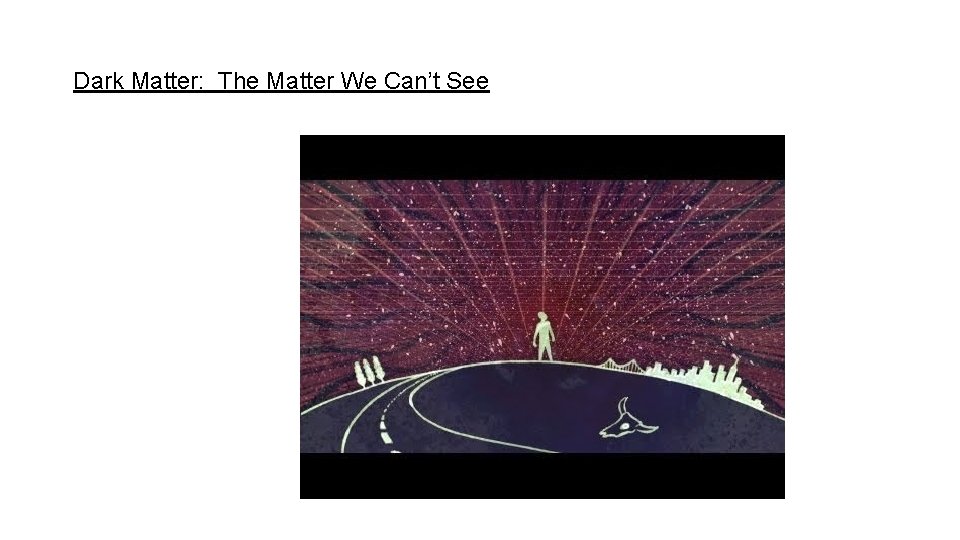
Dark Matter: The Matter We Can’t See
Proof of Hubble’s Law • Dark Matter • Matter that DOES NOT give off electromagnetic radiation. • You cannot see it. It’s presence is inferred by the effect of its gravity on visible objects. • Dark Energy • Force causing expansion of the universe to accelerate
The Electromagnetic Spectrum • The entire range of wavelengths or frequencies of electromagnetic radiation extending from Gamma Rays to the longest Radio Waves. • Includes Visible Light.
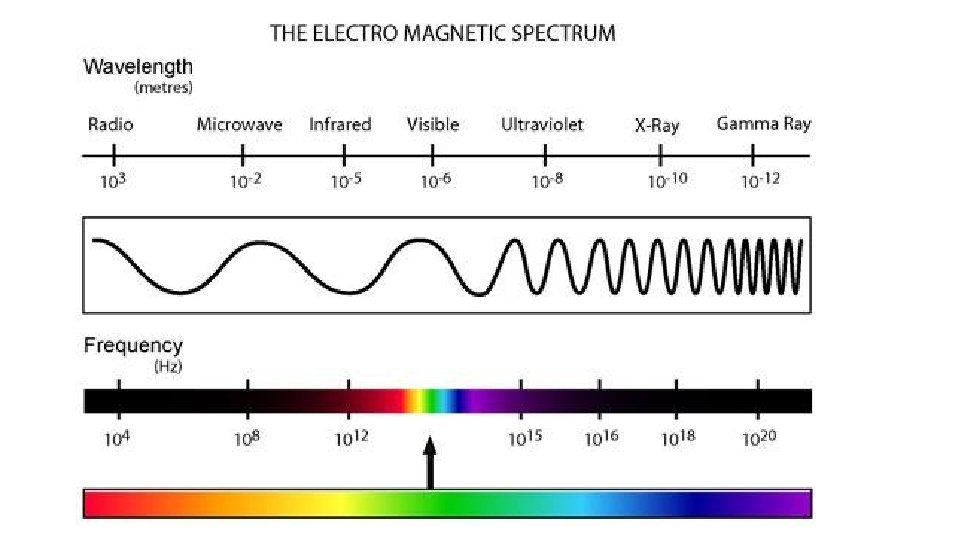
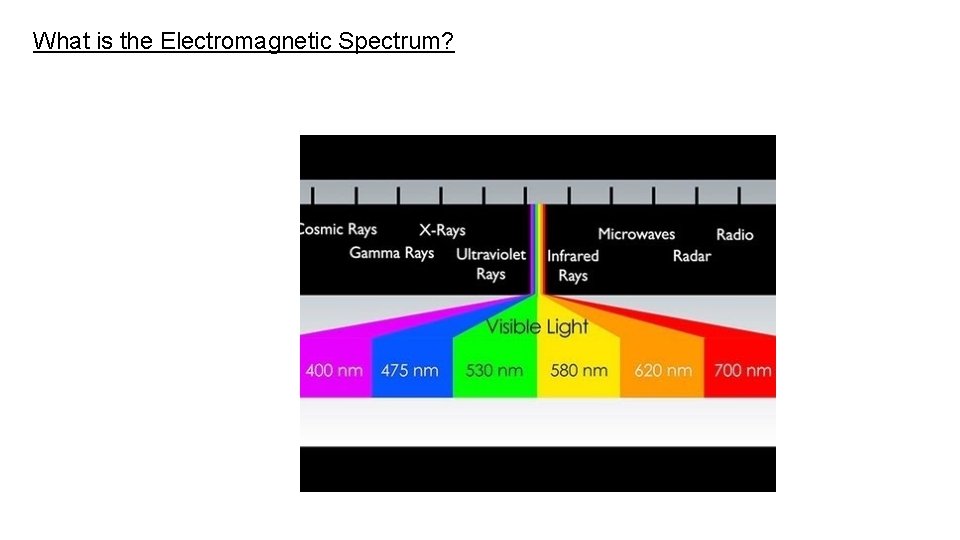
What is the Electromagnetic Spectrum?
What can we use visible light for? ? • Galaxies, stars, or other objects are either moving toward or away from us. • We use the visible light spectrum to help us determine what direction things are moving.
RED SHIFT • When an object is moving AWAY, the light is shifted to the RED end of the spectrum. • The wavelength gets longer.
BLUE SHIFT • When an object is moving CLOSER, the light is shifted to the BLUE and of the spectrum. • The wavelength gets shorter. • This phenomenon is called the Doppler Effect.
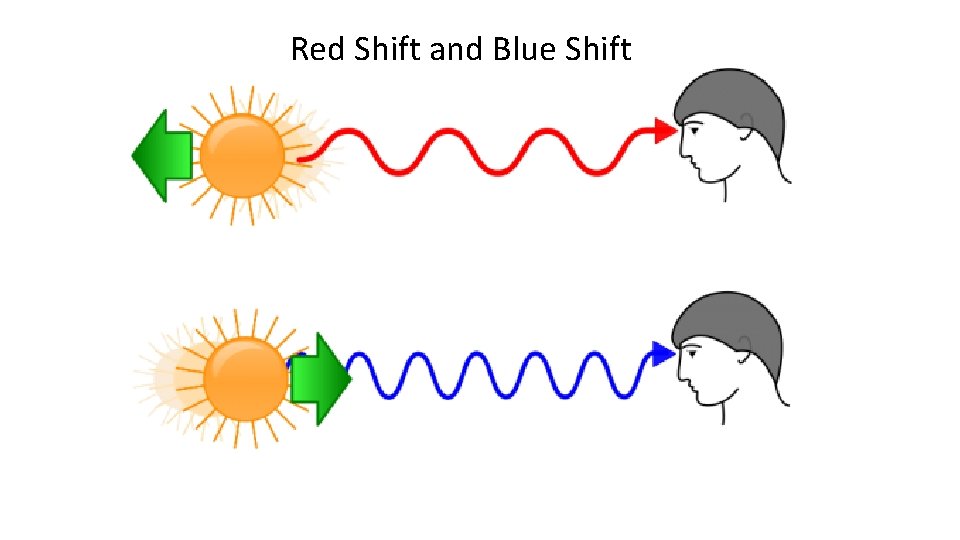
Red Shift and Blue Shift
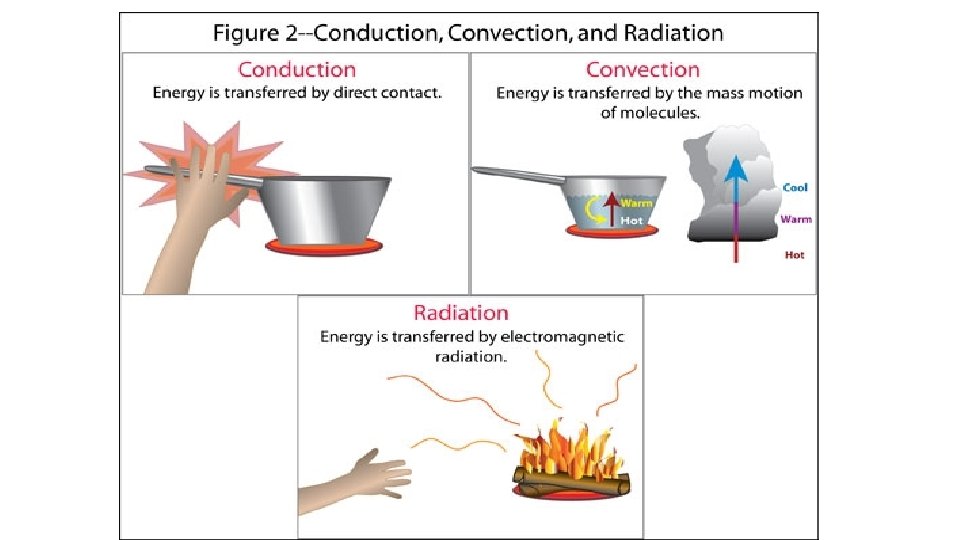
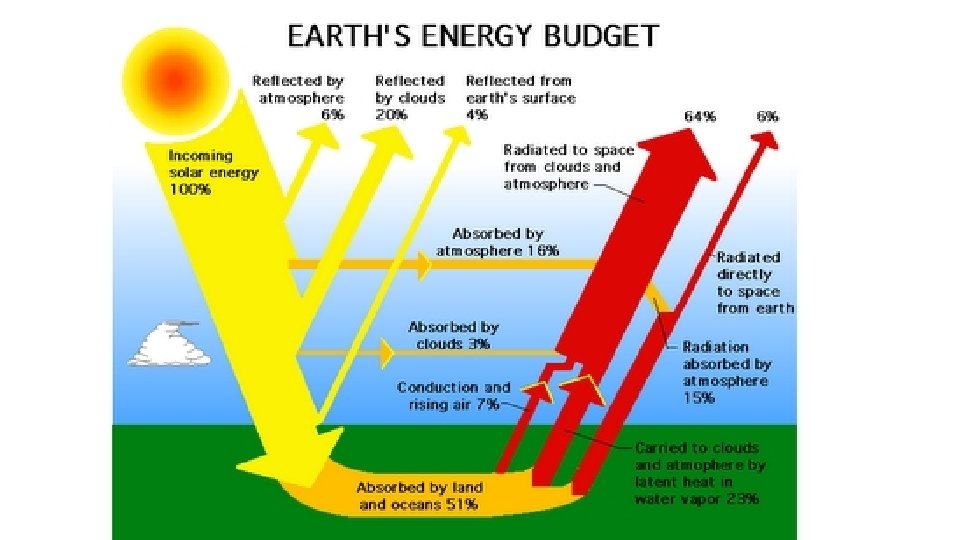
Types of Heat Transfer • Conduction – Direct contact between two materials • Ex. Stove and pot • Convection – Interaction of molecules • Usually fluids or gases • Radiation – movement of heat waves. • This is how we get heat from the sun.
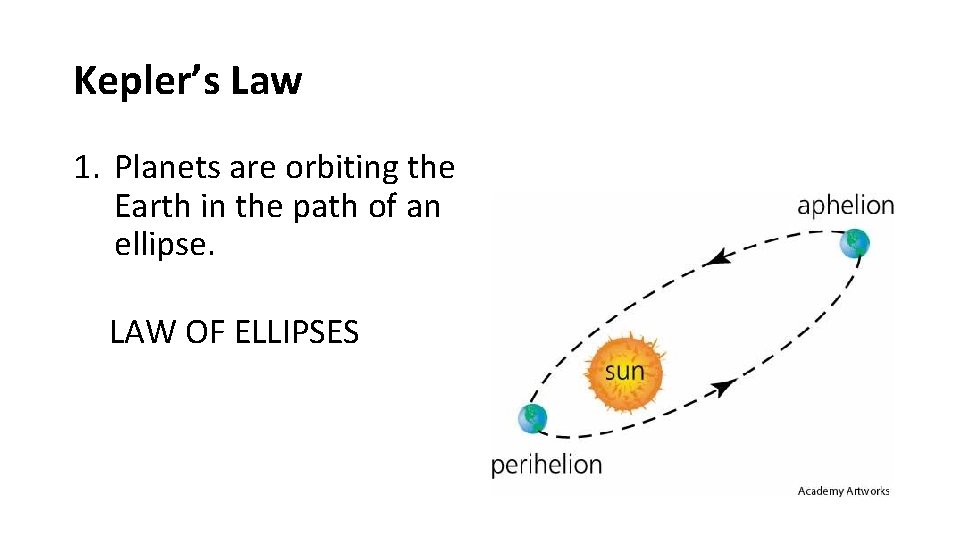
Kepler’s Law 1. Planets are orbiting the Earth in the path of an ellipse. LAW OF ELLIPSES
Kepler’s Law 2. Planets move faster when they are closer to the sun and slower when they are farther away. LAW OF EQUAL AREAS
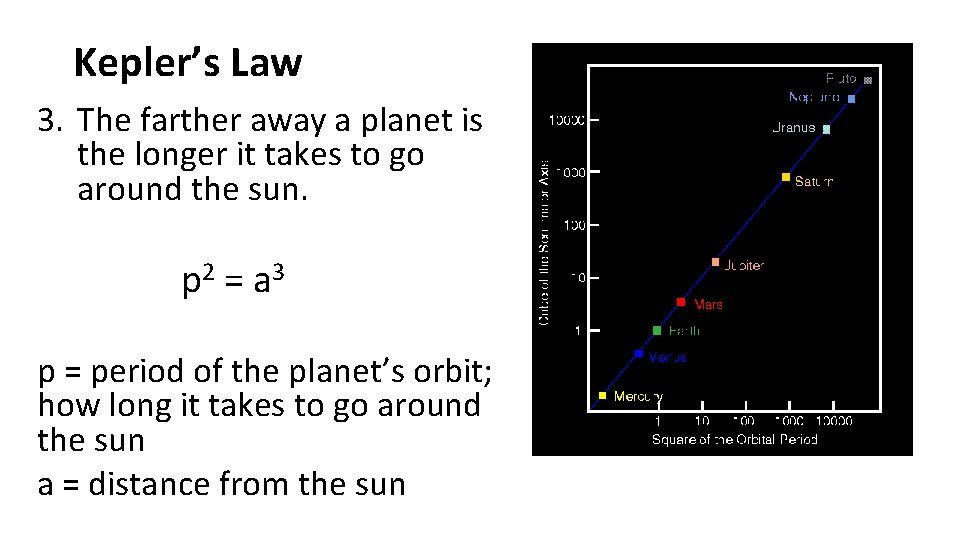
Kepler’s Law 3. The farther away a planet is the longer it takes to go around the sun. p 2 = a 3 p = period of the planet’s orbit; how long it takes to go around the sun a = distance from the sun
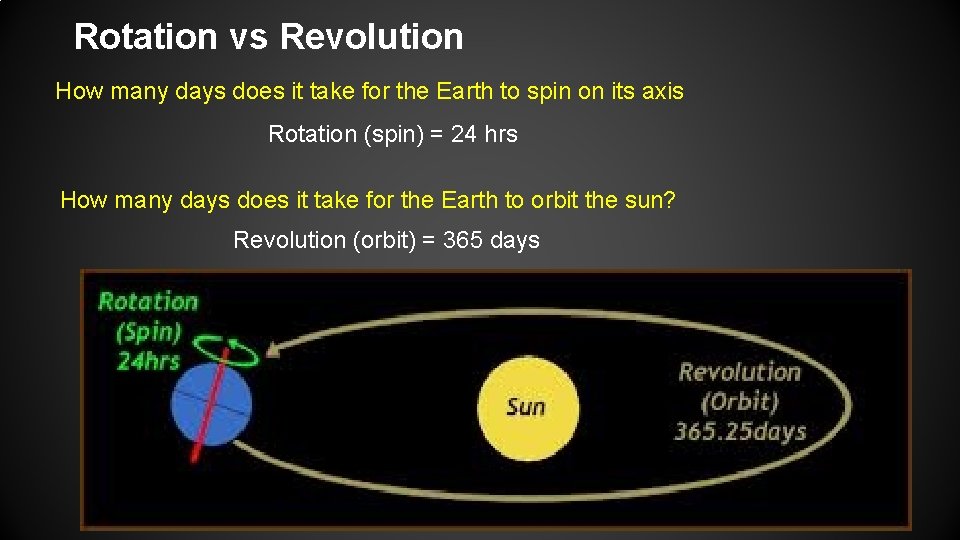
Rotation vs Revolution How many days does it take for the Earth to spin on its axis Rotation (spin) = 24 hrs How many days does it take for the Earth to orbit the sun? Revolution (orbit) = 365 days
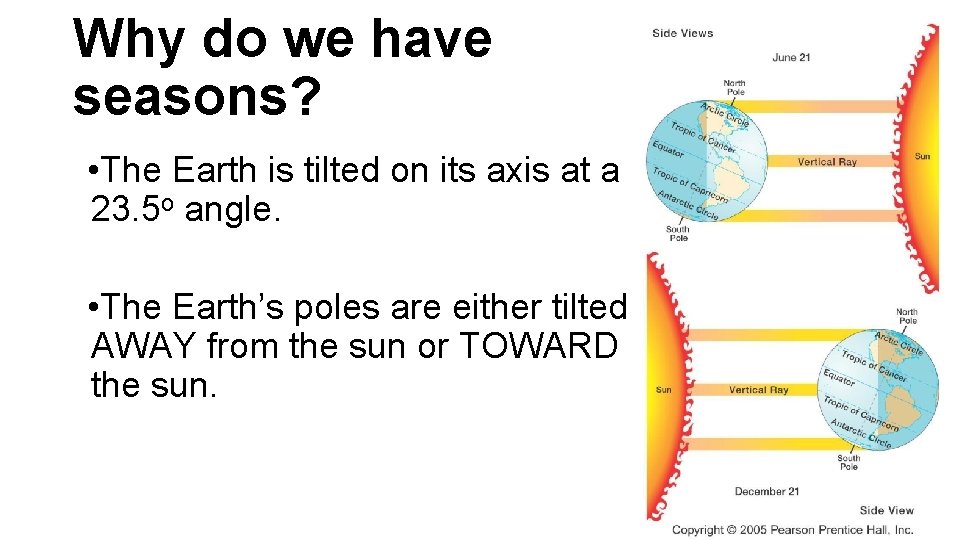
Why do we have seasons? • The Earth is tilted on its axis at a 23. 5 o angle. • The Earth’s poles are either tilted AWAY from the sun or TOWARD the sun.
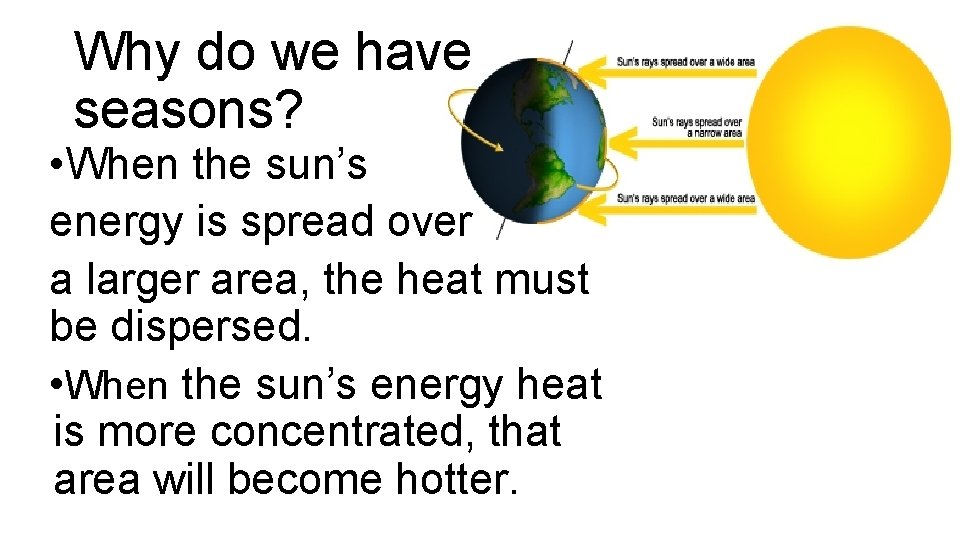
Why do we have seasons? • When the sun’s energy is spread over a larger area, the heat must be dispersed. • When the sun’s energy heat is more concentrated, that area will become hotter.
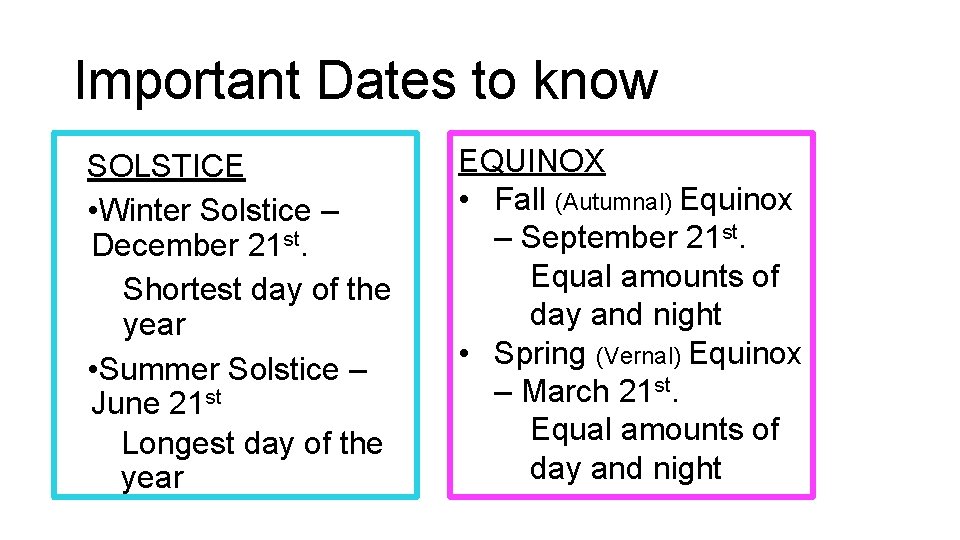
Important Dates to know SOLSTICE • Winter Solstice – December 21 st. Shortest day of the year • Summer Solstice – June 21 st Longest day of the year EQUINOX • Fall (Autumnal) Equinox – September 21 st. Equal amounts of day and night • Spring (Vernal) Equinox – March 21 st. Equal amounts of day and night
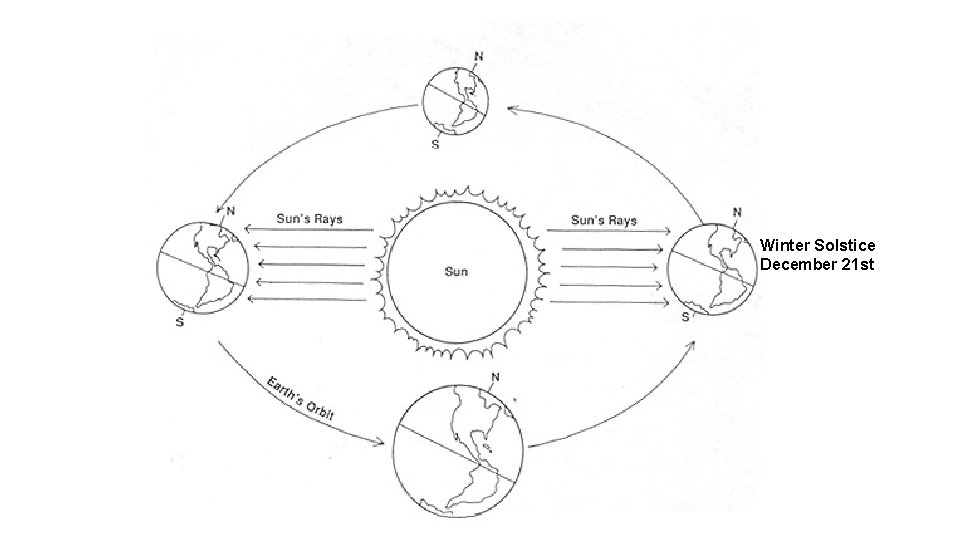
Winter Solstice December 21 st
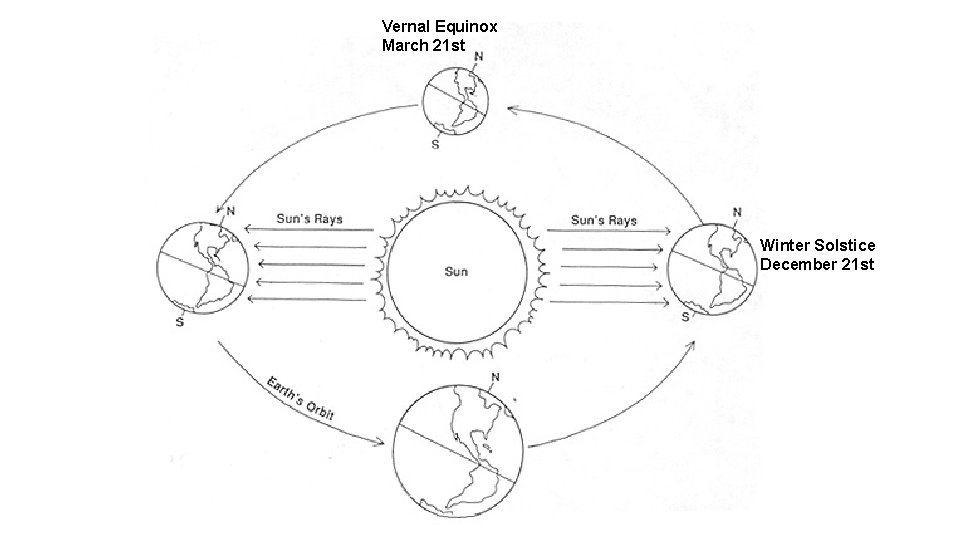
Vernal Equinox March 21 st Winter Solstice December 21 st
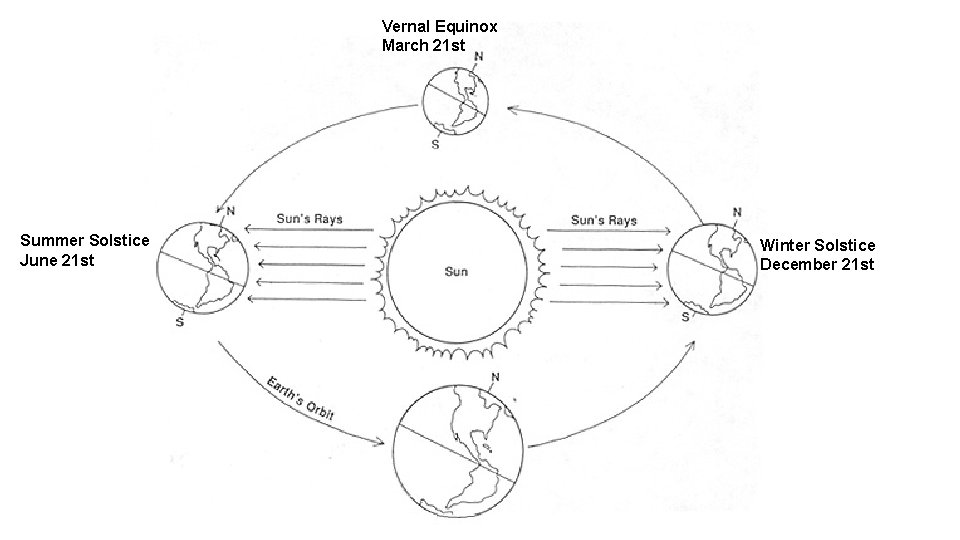
Vernal Equinox March 21 st Summer Solstice June 21 st Winter Solstice December 21 st
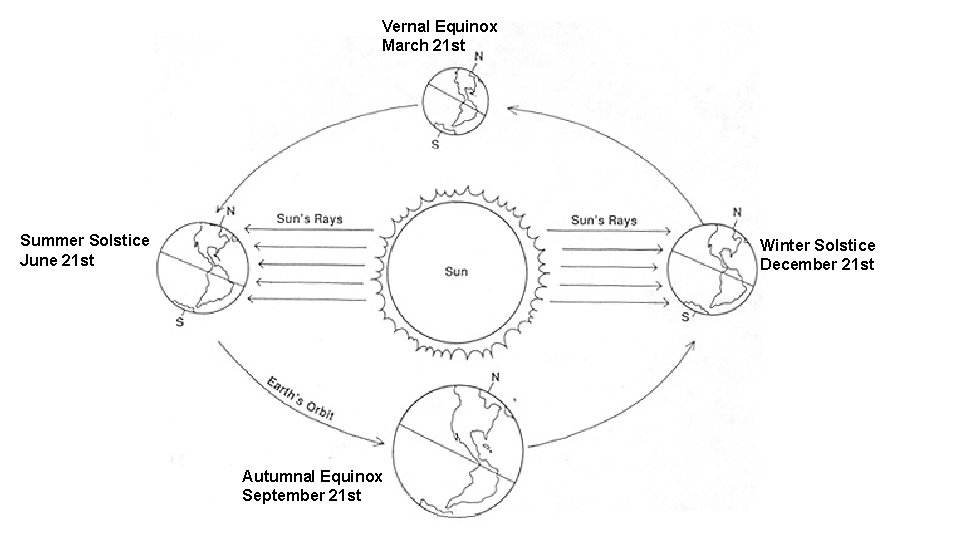
Vernal Equinox March 21 st Summer Solstice June 21 st Winter Solstice December 21 st Autumnal Equinox September 21 st
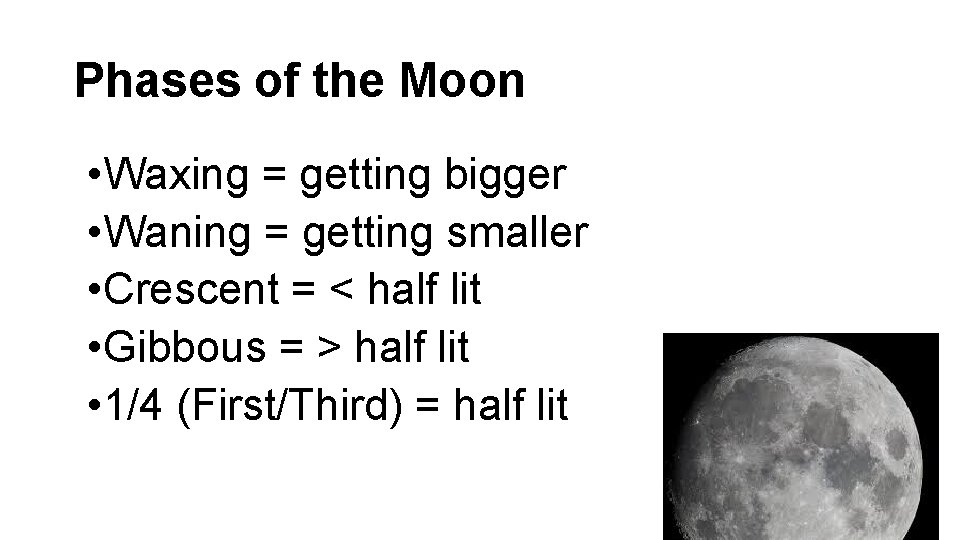
Phases of the Moon • Waxing = getting bigger • Waning = getting smaller • Crescent = < half lit • Gibbous = > half lit • 1/4 (First/Third) = half lit
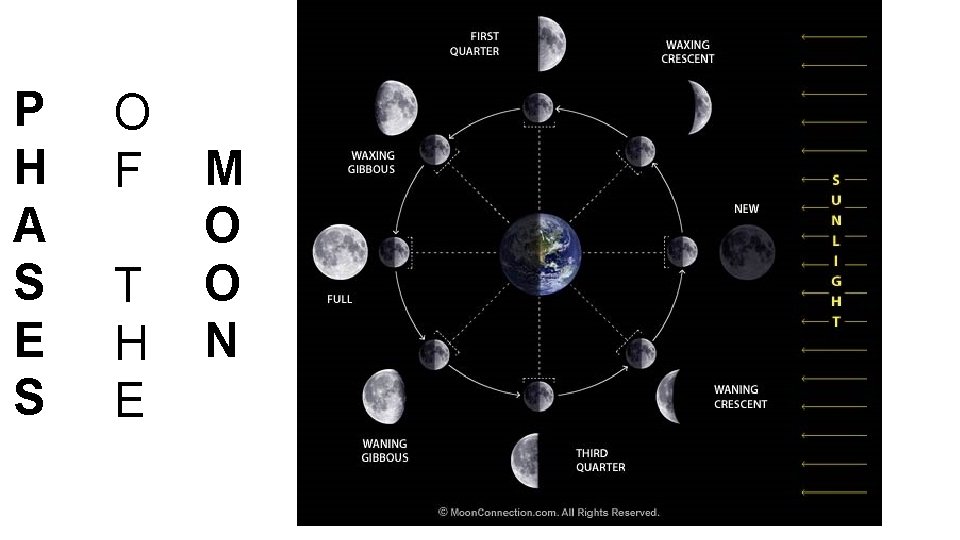
P H A S E S O F T H E M O O N
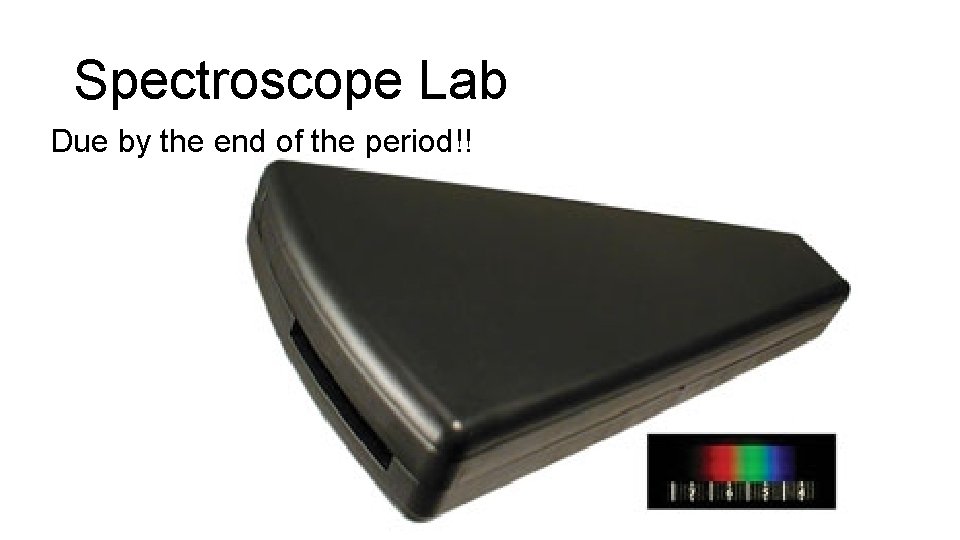
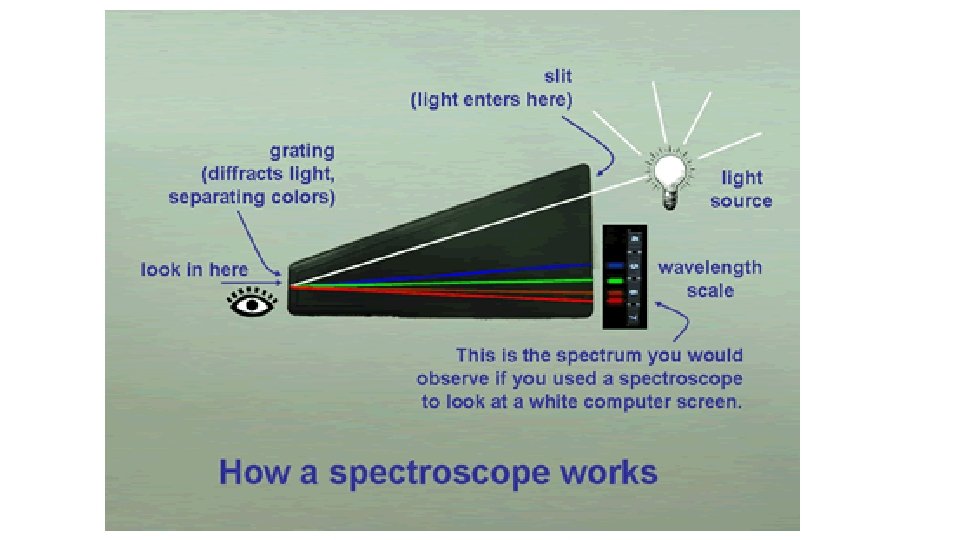
Spectroscope Lab Due by the end of the period!!
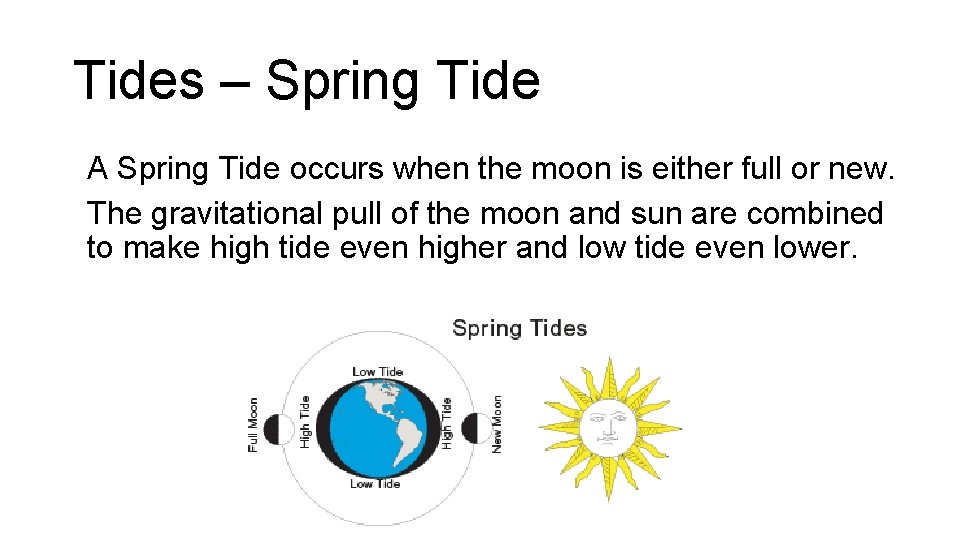
Tides – Spring Tide A Spring Tide occurs when the moon is either full or new. The gravitational pull of the moon and sun are combined to make high tide even higher and low tide even lower.
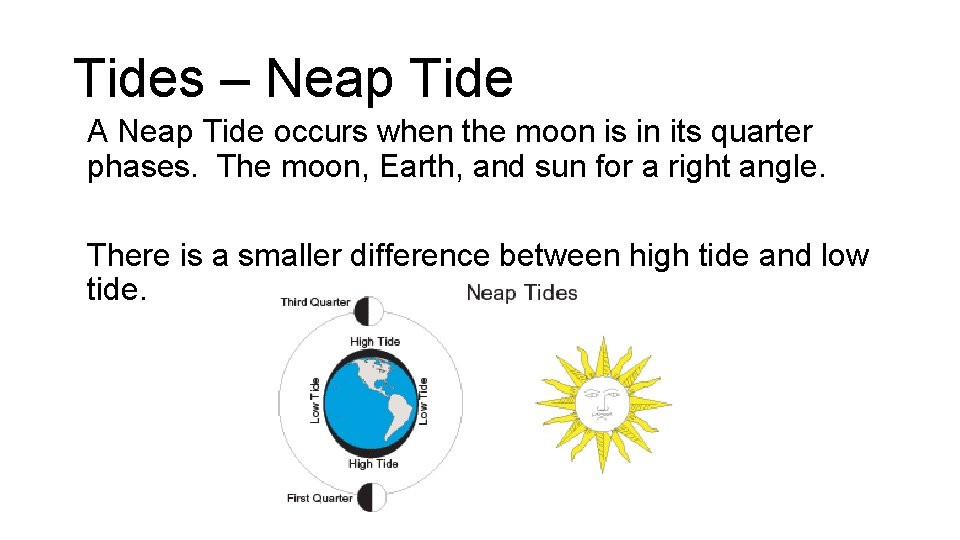
Tides – Neap Tide A Neap Tide occurs when the moon is in its quarter phases. The moon, Earth, and sun for a right angle. There is a smaller difference between high tide and low tide.
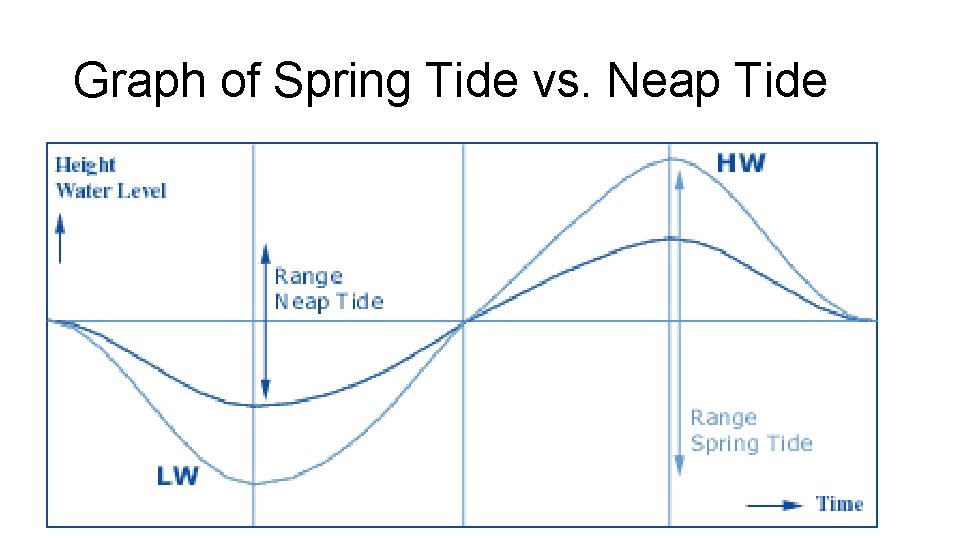
Graph of Spring Tide vs. Neap Tide
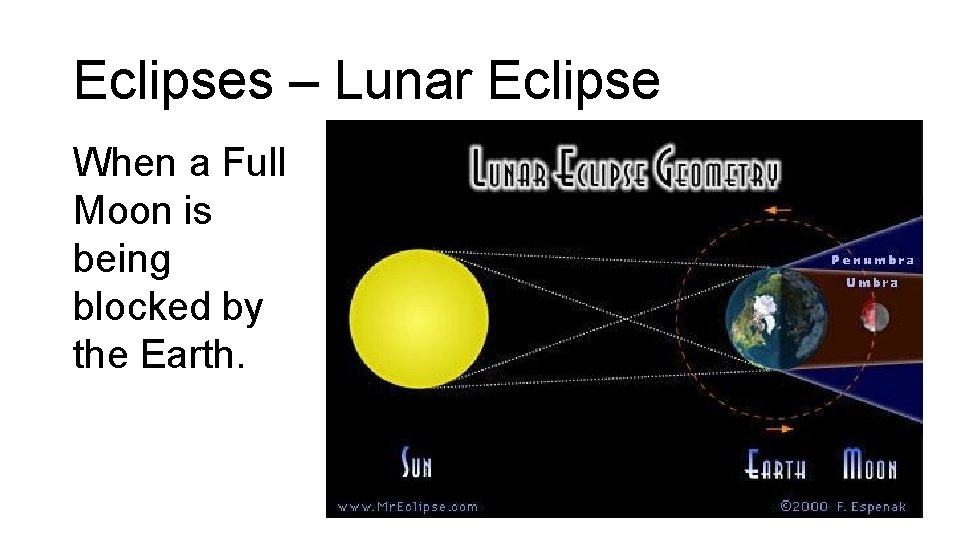
Eclipses – Lunar Eclipse When a Full Moon is being blocked by the Earth.
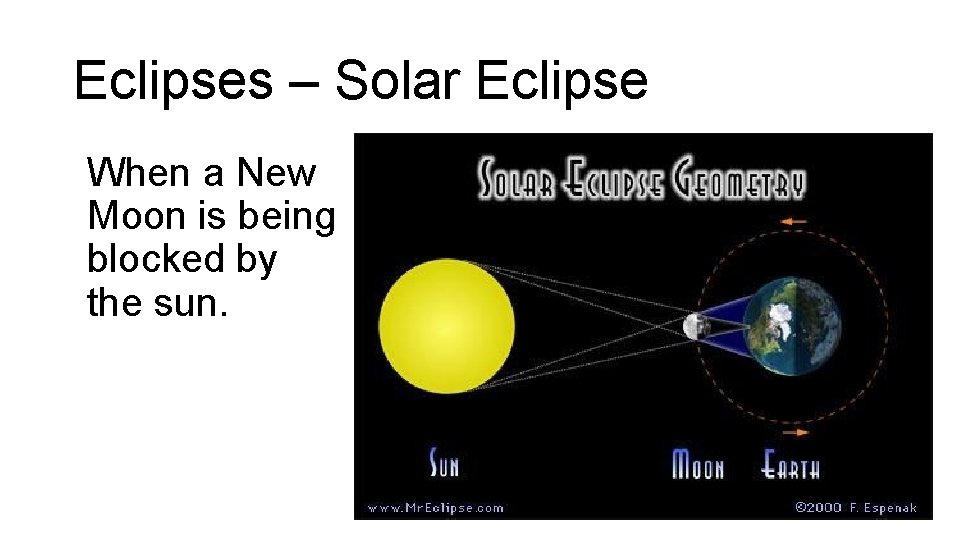
Eclipses – Solar Eclipse When a New Moon is being blocked by the sun.
- Slides: 43