
Unit 7 Demobilization Transfer of Command and Closeout
Unit 7: Demobilization, Transfer of Command, and Closeout
Unit Objectives (1 of 2) § § Describe the importance of demobilization planning. Identify the impact of agency specific policies, procedures, and agreements upon demobilization planning. Identify the ICS titles of personnel who have responsibilities in developing and implementing the demobilization plan and list their duties. List the major sections in a demobilization plan. Unit 7: Demobilization, Transfer of Command, and Closeout Visual 7. 2
Unit Objectives (2 of 2) § § Identify the need for transfer of command or closeout. Identify the process involved in a closeout meeting. Unit 7: Demobilization, Transfer of Command, and Closeout Visual 7. 3
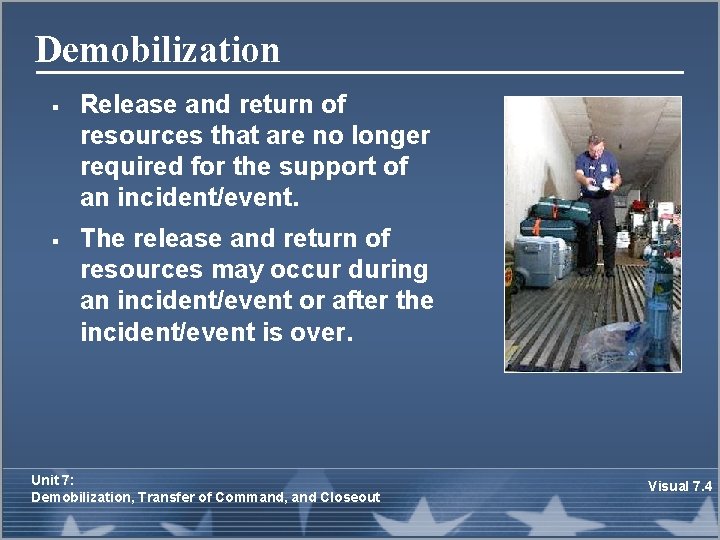
Demobilization § § Release and return of resources that are no longer required for the support of an incident/event. The release and return of resources may occur during an incident/event or after the incident/event is over. Unit 7: Demobilization, Transfer of Command, and Closeout Visual 7. 4
Demobilization Challenges What challenges are related to demobilization? Unit 7: Demobilization, Transfer of Command, and Closeout Visual 7. 5
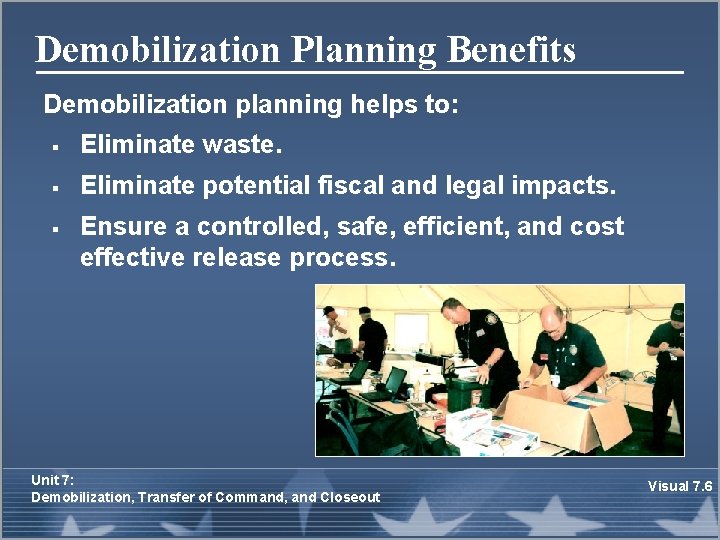
Demobilization Planning Benefits Demobilization planning helps to: § Eliminate waste. § Eliminate potential fiscal and legal impacts. § Ensure a controlled, safe, efficient, and cost effective release process. Unit 7: Demobilization, Transfer of Command, and Closeout Visual 7. 6
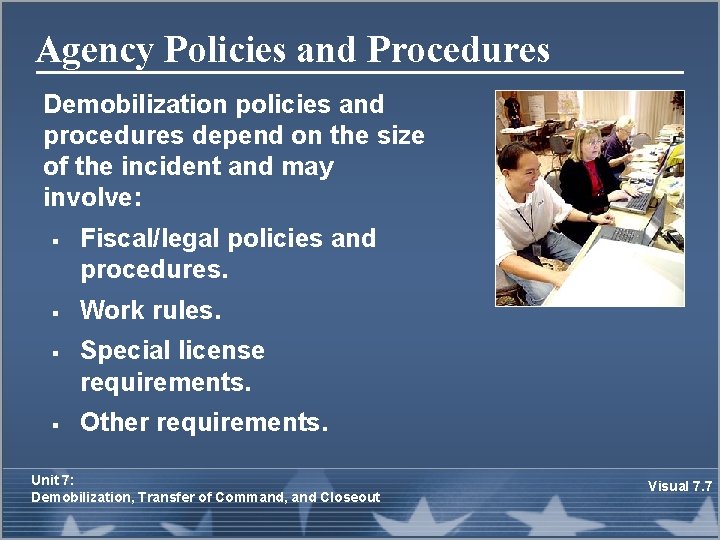
Agency Policies and Procedures Demobilization policies and procedures depend on the size of the incident and may involve: § § Fiscal/legal policies and procedures. Work rules. Special license requirements. Other requirements. Unit 7: Demobilization, Transfer of Command, and Closeout Visual 7. 7
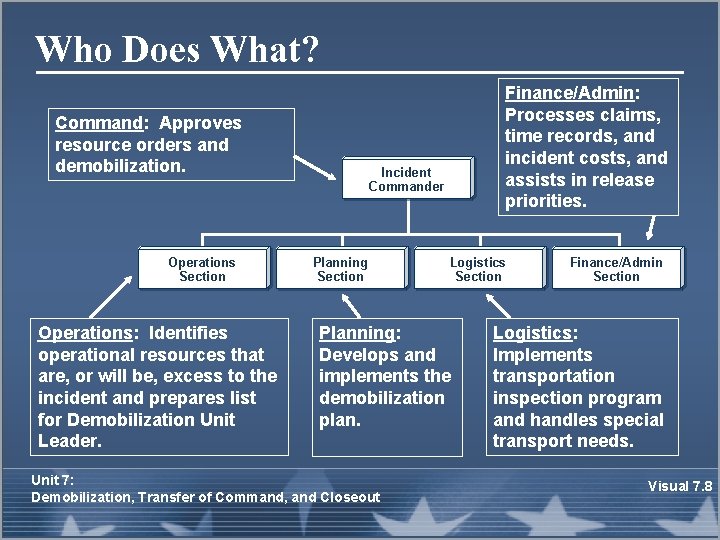
Who Does What? Command: Approves resource orders and demobilization. Operations Section Operations: Identifies operational resources that are, or will be, excess to the incident and prepares list for Demobilization Unit Leader. Finance/Admin: Processes claims, time records, and incident costs, and assists in release priorities. Incident Commander Planning Section Logistics Section Planning: Develops and implements the demobilization plan. Unit 7: Demobilization, Transfer of Command, and Closeout Finance/Admin Section Logistics: Implements transportation inspection program and handles special transport needs. Visual 7. 8
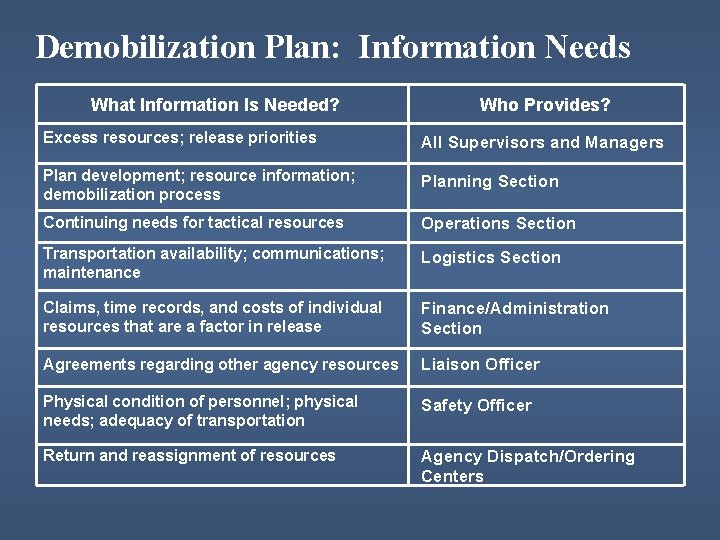
Demobilization Plan: Information Needs What Information Is Needed? Who Provides? Excess resources; release priorities All Supervisors and Managers Plan development; resource information; demobilization process Planning Section Continuing needs for tactical resources Operations Section Transportation availability; communications; maintenance Logistics Section Claims, time records, and costs of individual resources that are a factor in release Finance/Administration Section Agreements regarding other agency resources Liaison Officer Physical condition of personnel; physical needs; adequacy of transportation Safety Officer Return and reassignment of resources Agency Dispatch/Ordering Centers
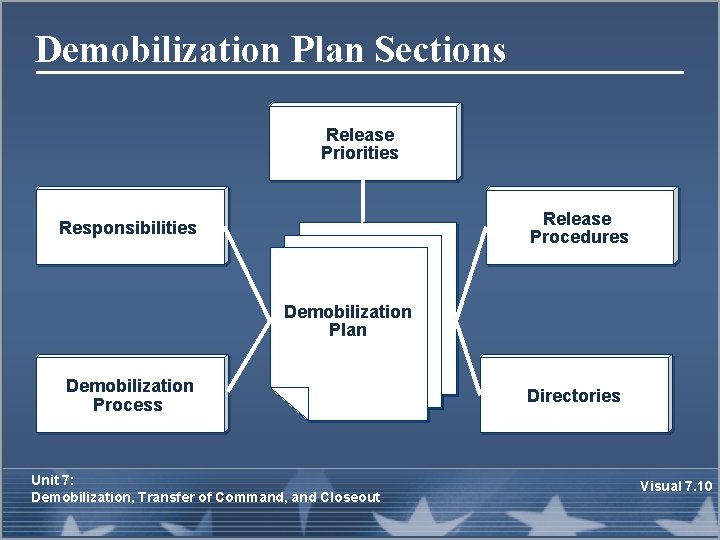
Demobilization Plan Sections Release Priorities Release Procedures Responsibilities Demobilization Plan Demobilization Process Unit 7: Demobilization, Transfer of Command, and Closeout Directories Visual 7. 10
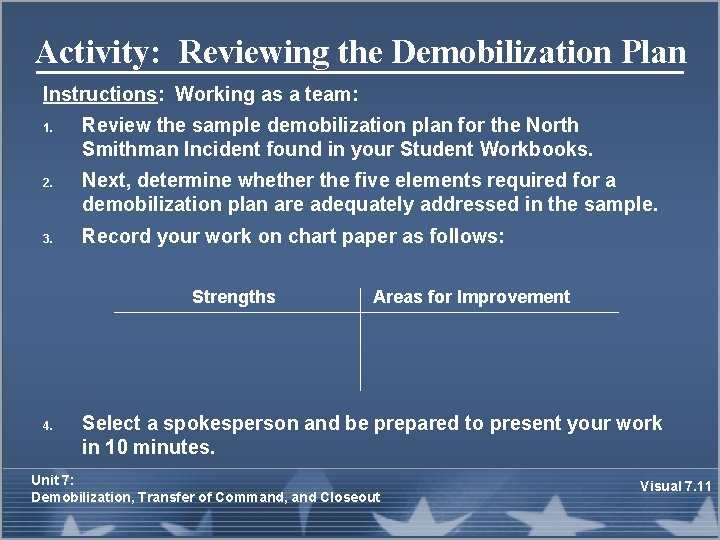
Activity: Reviewing the Demobilization Plan Instructions: Working as a team: 1. 2. 3. Review the sample demobilization plan for the North Smithman Incident found in your Student Workbooks. Next, determine whether the five elements required for a demobilization plan are adequately addressed in the sample. Record your work on chart paper as follows: Strengths 4. Areas for Improvement Select a spokesperson and be prepared to present your work in 10 minutes. Unit 7: Demobilization, Transfer of Command, and Closeout Visual 7. 11
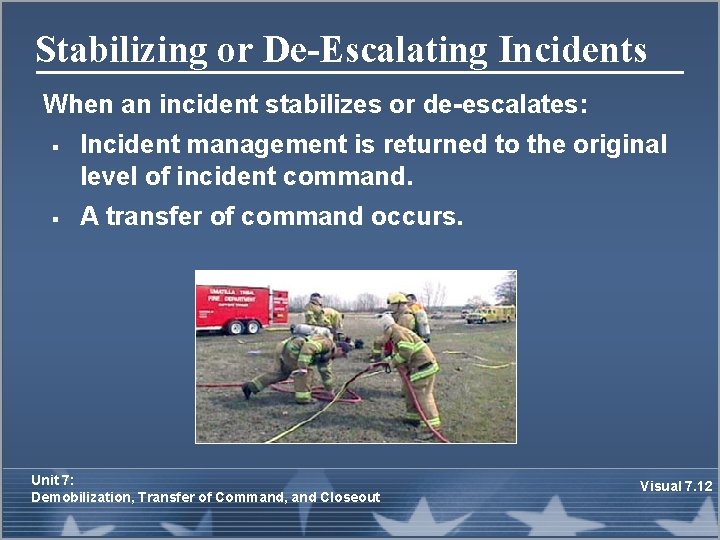
Stabilizing or De-Escalating Incidents When an incident stabilizes or de-escalates: § § Incident management is returned to the original level of incident command. A transfer of command occurs. Unit 7: Demobilization, Transfer of Command, and Closeout Visual 7. 12
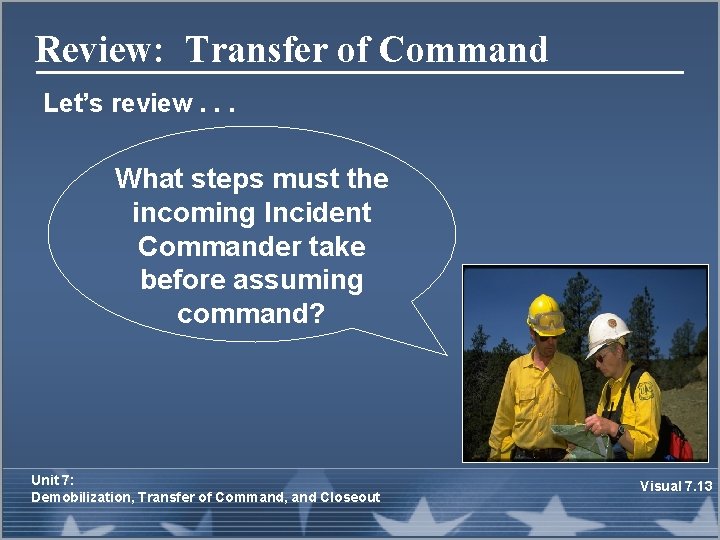
Review: Transfer of Command Let’s review. . . What steps must the incoming Incident Commander take before assuming command? Unit 7: Demobilization, Transfer of Command, and Closeout Visual 7. 13
Steps in Assuming Command § § Assess situation with current Incident Commander. Receive briefing from current Incident Commander and document the transfer. Determine appropriate time for transfer of command. Notify others of change in incident command. Unit 7: Demobilization, Transfer of Command, and Closeout Visual 7. 14
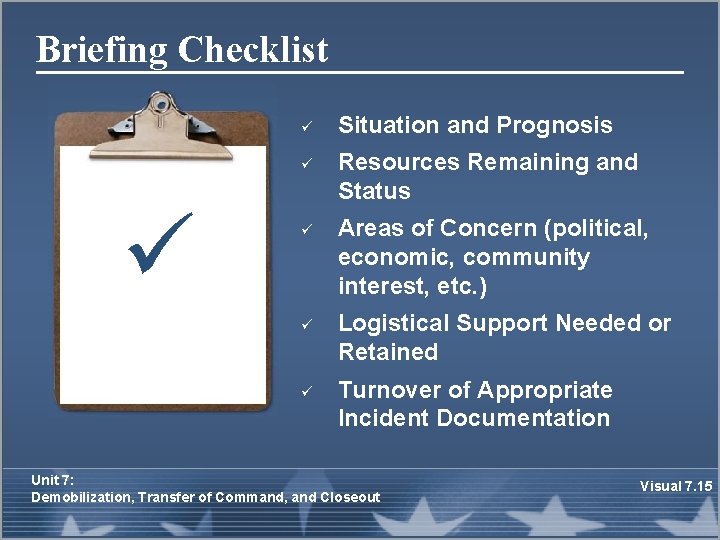
Briefing Checklist Situation and Prognosis Resources Remaining and Status Areas of Concern (political, economic, community interest, etc. ) Logistical Support Needed or Retained Turnover of Appropriate Incident Documentation Unit 7: Demobilization, Transfer of Command, and Closeout Visual 7. 15
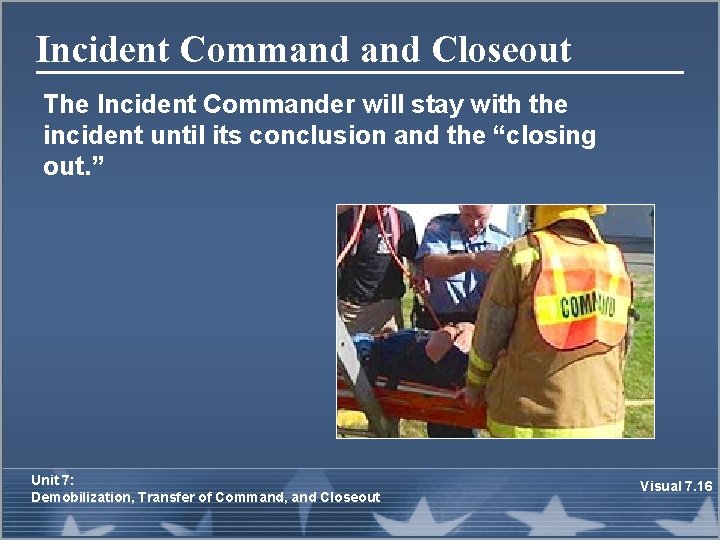
Incident Command Closeout The Incident Commander will stay with the incident until its conclusion and the “closing out. ” Unit 7: Demobilization, Transfer of Command, and Closeout Visual 7. 16
Agency Briefing The agency officials and staff receive a closeout briefing with the following information: § Incident summary § Major events that may have lasting ramifications § § § Documentation, including components that are not finalized Opportunity for the agency officials to bring up concerns Final evaluation of incident management by the agency executive/officials Unit 7: Demobilization, Transfer of Command, and Closeout Visual 7. 17
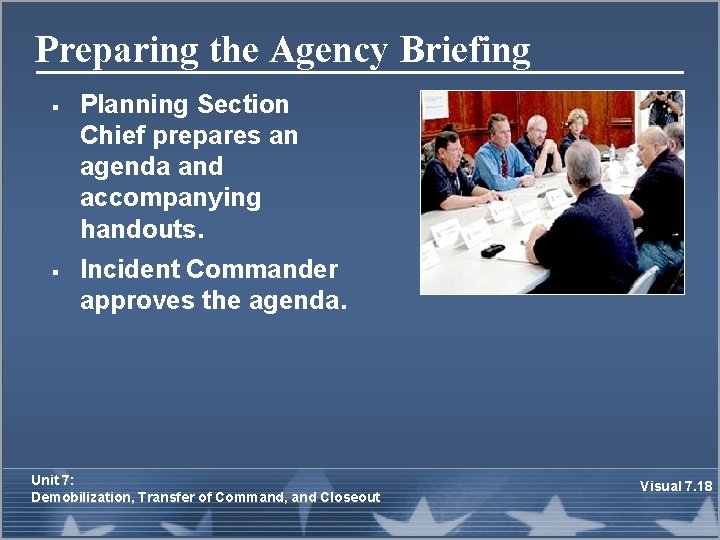
Preparing the Agency Briefing § § Planning Section Chief prepares an agenda and accompanying handouts. Incident Commander approves the agenda. Unit 7: Demobilization, Transfer of Command, and Closeout Visual 7. 18
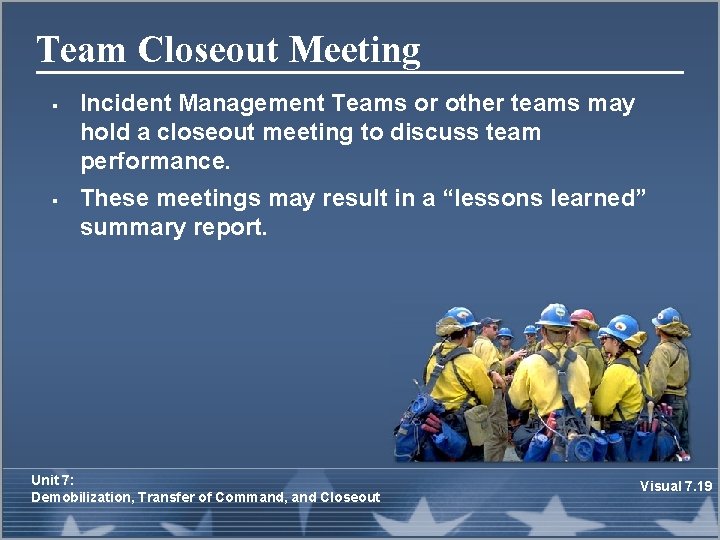
Team Closeout Meeting § § Incident Management Teams or other teams may hold a closeout meeting to discuss team performance. These meetings may result in a “lessons learned” summary report. Unit 7: Demobilization, Transfer of Command, and Closeout Visual 7. 19
Applied Exercise: Instructions: Working as a team: 1. 2. 3. 4. 5. Review the information you developed in all of the previous Crescent City scenario exercises and the scenario update. List five elements that you would include in your demobilization plan for this incident. List agenda items for the closeout briefing to be presented to the Mayor and the County Commissioners. List Transfer of Command briefing items to be presented to the incoming Incident Commander. Be prepared to present your work in 30 minutes. Unit 7: Demobilization, Transfer of Command, and Closeout Visual 7. 20
Applied Exercise: Scenario Update § § § It has been 48 hours since the controlled burn off has began. Enough phosphorus has burned off that it is now safe to move the tank cars involved in the derailment. The outer perimeter has been released. Evacuees have been allowed to return, and businesses to reopen. The National Transportation Safety Board (NTSB) has completed its on-scene investigations. Incident Command determines that the incident priorities will now be re-structured to focus on debris removal and cleanup rather than response. See the additional information in your Student Workbook. Unit 7: Demobilization, Transfer of Command, and Closeout Visual 7. 21
Summary (1 of 2) Are you now able to: § § § Describe the importance of demobilization planning? Identify the impact of agency specific policies, procedures, and agreements upon demobilization planning? Identify the ICS titles of personnel who have responsibilities in developing and implementing the demobilization plan and list their duties? Unit 7: Demobilization, Transfer of Command, and Closeout Visual 7. 22
Summary (2 of 2) Are you now able to: § § § List the major sections in a demobilization plan? Identify the need for transfer of command or closeout? Identify the process involved in a closeout meeting? Unit 7: Demobilization, Transfer of Command, and Closeout Visual 7. 23
- Slides: 23