
Unit 7 Atmospheric Pollution 7 6 Reduction of
- Slides: 35
Unit 7 Atmospheric Pollution 7. 6 Reduction of Air Pollutants
Methods To Reduce Air Pollutants • Regulatory Practices • Conservation Practices • Alternative Fuels ADD A FOOTER 2
LEGISLATION ADDRESSES POLLUTION Congress passed a series of laws starting in 1955 The Clean Air Act of 1970 • Sets standards for air quality, limits on emissions • Provides funds for pollution-control research • Allows citizens to sue parties violating the standards The Clean Air Act of 1990 • Strengthens standards for auto emissions, toxic air pollutants, acidic deposition, stratospheric ozone depletion • Introduced emissions trading 3
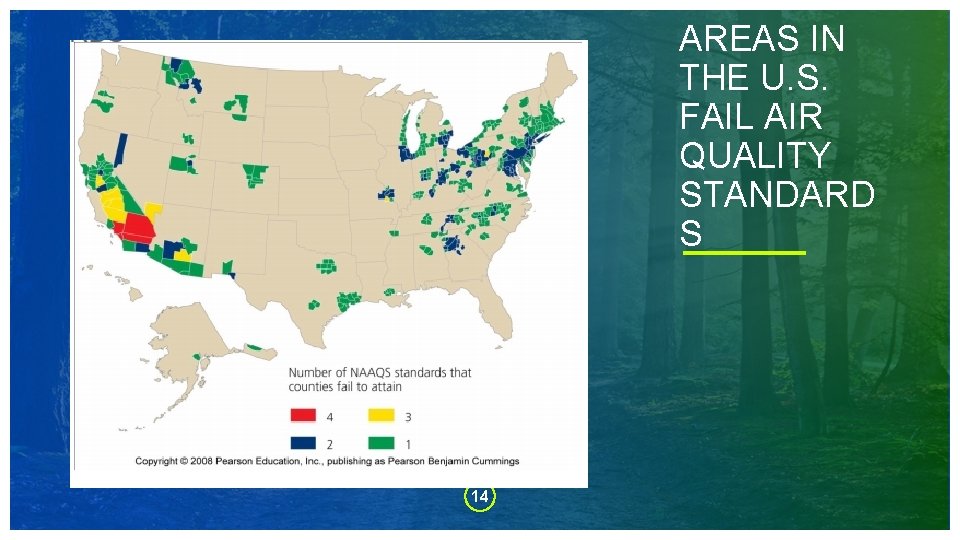
Clean Air Act History • In 1963, the Clean Air Act was first passed • Grants were provided for air pollution control agencies and established a pollution abatement conference procedure • In 1965, Congress added Title II, The Motor Vehicle Air Pollution Control Act which provided emission standards • EPA had the authority to establish regulatory goals and standards • Standards for 50 industrial processes were developed • 189 Pollutants were initially regulated • Permit requirements were established • Criminal sanctions for non-compliance were established • National Ambient Air Quality Standards (NAAQS): primary and secondary standards for each pollutant to protect public health. • Air Quality Control Regions (AQCR) were established • State Implementation Plans (SIPs): states were given the task of setting the regulatory structure to achieve the NAAQS • Attainment: If an area has achieved the NAAQSs for a parameter, it is considered to be in attainment status 4 • Nonattainment Areas: Those areas where the NAAQSs have not been achieved
NATIONAL EMISSION STANDARDS FOR HAZARDOUS AIR POLLUTANTS • NESHAP is the toxic equivalent to the NAAQSs • If a NESHAP is set for a pollutant, a facility must apply for governmental approval for operation • Asbestos, Benzene, Beryllium, Coke oven emissions, Inorganic Arsenic, Mercury, Radionuclides, and Vinyl Chloride • New Source or changes to an existing source must be approved by the EPA prior to bringing the process on-line 5
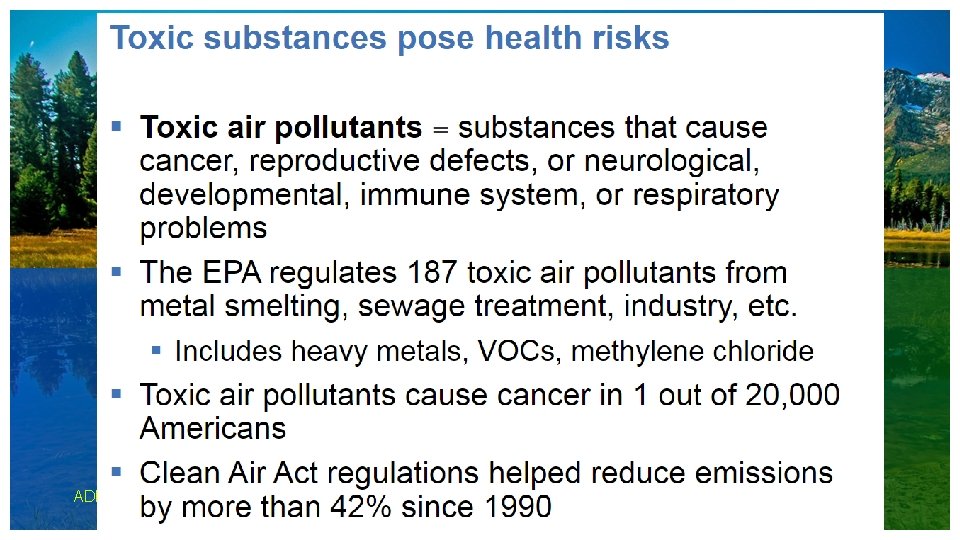
Environmental Protection Agency The EPA sets nationwide standards for emissions of toxic pollutants • NAAQs: primary standards to protect human health and secondary standards to protect from property damage. • NESHAP: 188 compounds, Toxic Release Inventory 6 • States monitor air quality and develop, implement, and enforce regulations within their borders • If a state’s plans for implementation are not adequate, the EPA can take over enforcement
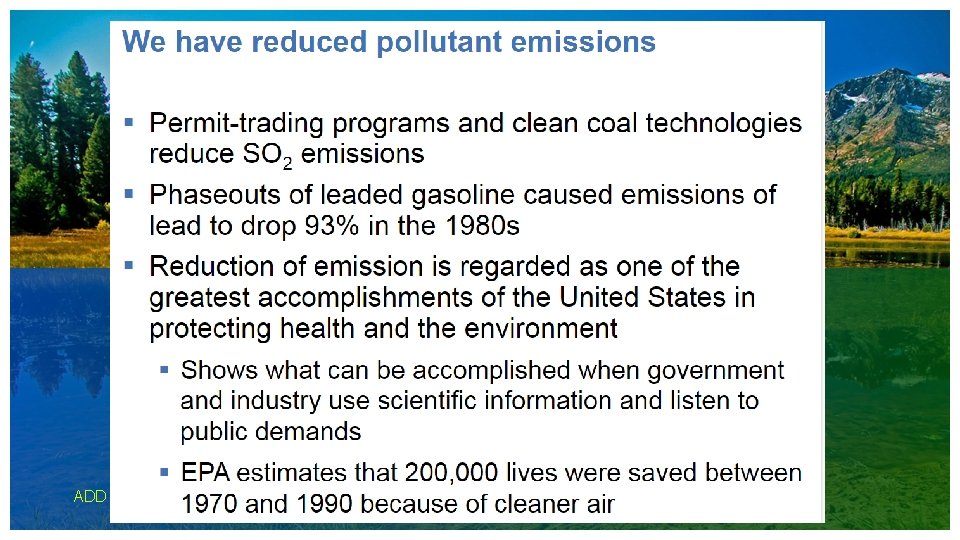
USING THE MARKETPLACE TO REDUCE OUTDOOR AIR POLLUTION with CAP and TRADE • To help reduce SO 2 emissions, the Clean Air Act (CAA) authorized and emission trading (cap-andtrade) program. • • • Enables the 110 most polluting power plants to buy and sell SO 2 pollution rights. Between 1990 -2002, the emission trading system reduced emissions. In 2002, the EPA reported the cap-and-trade system produced less emission reductions than were projected. • With a “cap and trade” provision of the CAA, companies can trade or sell their SO 2 rights.
Clean Air Acts Falls Short • The CAA has reduced emissions, but there are still gaps in the legislation • • The government cleans rather than prevents. Insufficient Emissions Standards on vehicles Fuel Efficiency Ratings Ocean going vessels Airports are exempt CO 2 not even covered No Indoor Air Quality regulations Enforcement
ADD A FOOTER 9
ADD A FOOTER 10
ADD A FOOTER 11
ADD A FOOTER 12
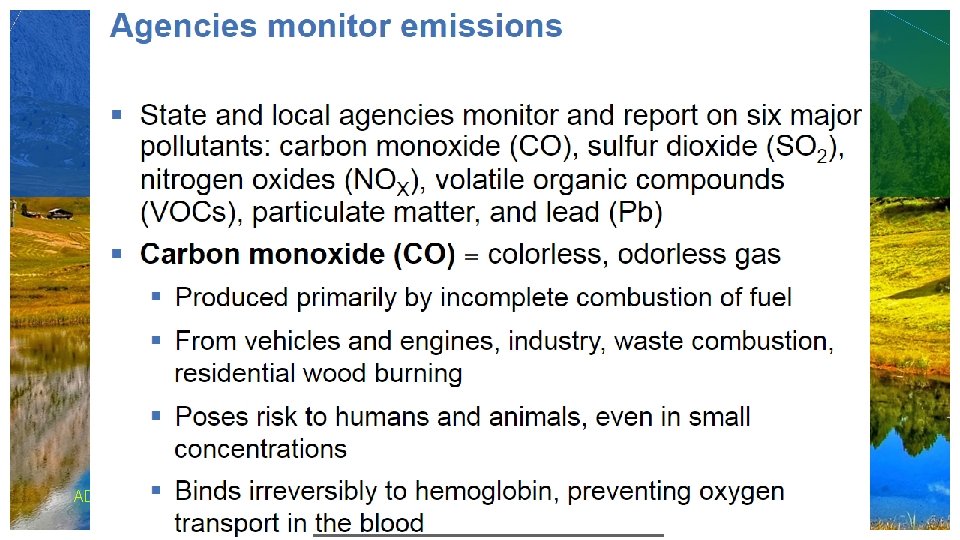
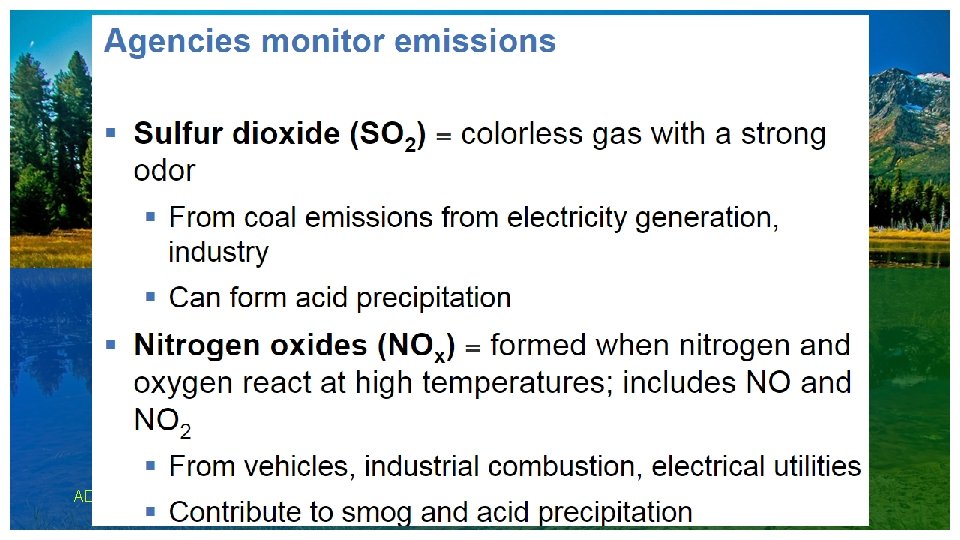
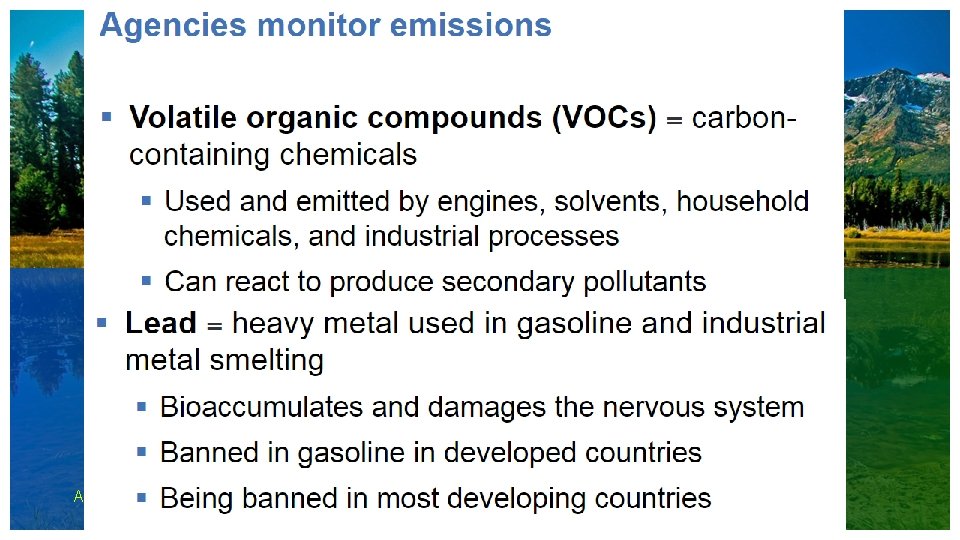
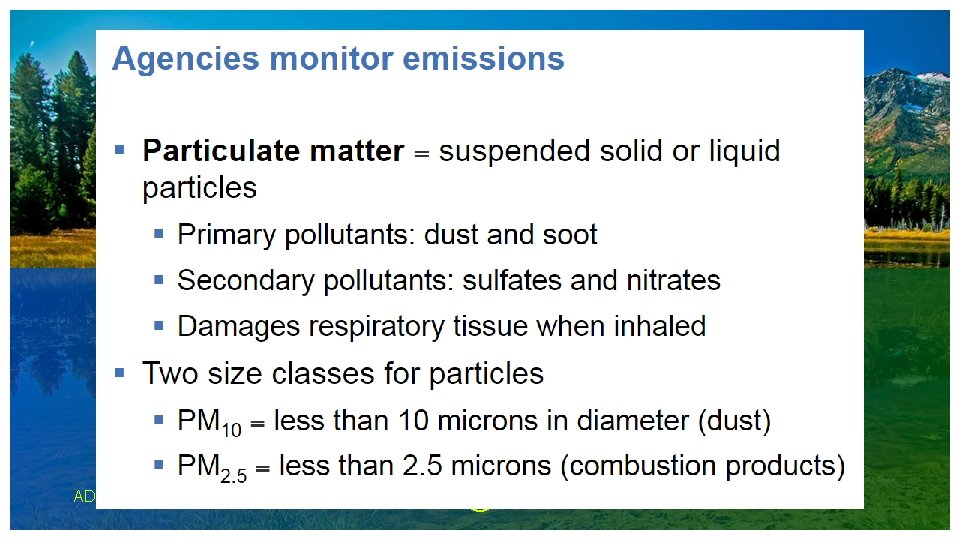
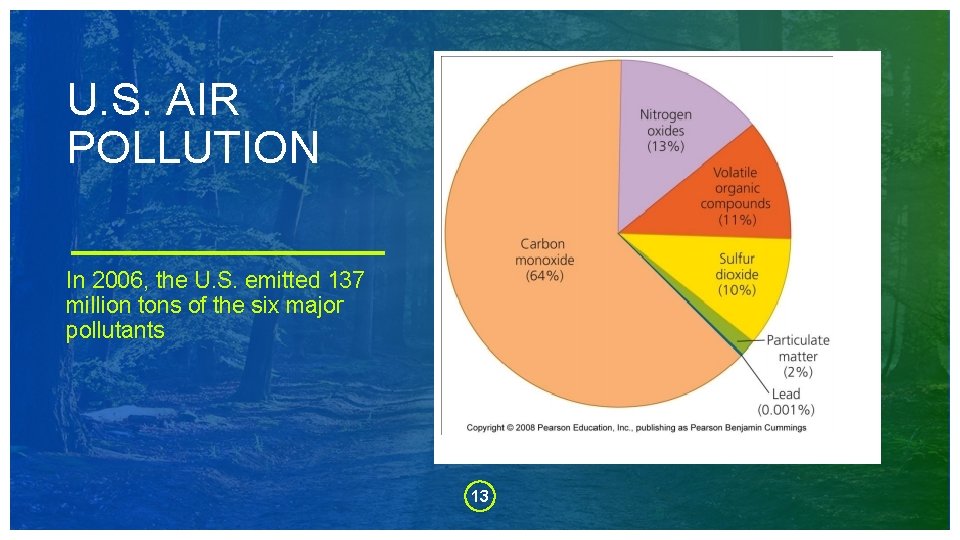
U. S. AIR POLLUTION In 2006, the U. S. emitted 137 million tons of the six major pollutants 13
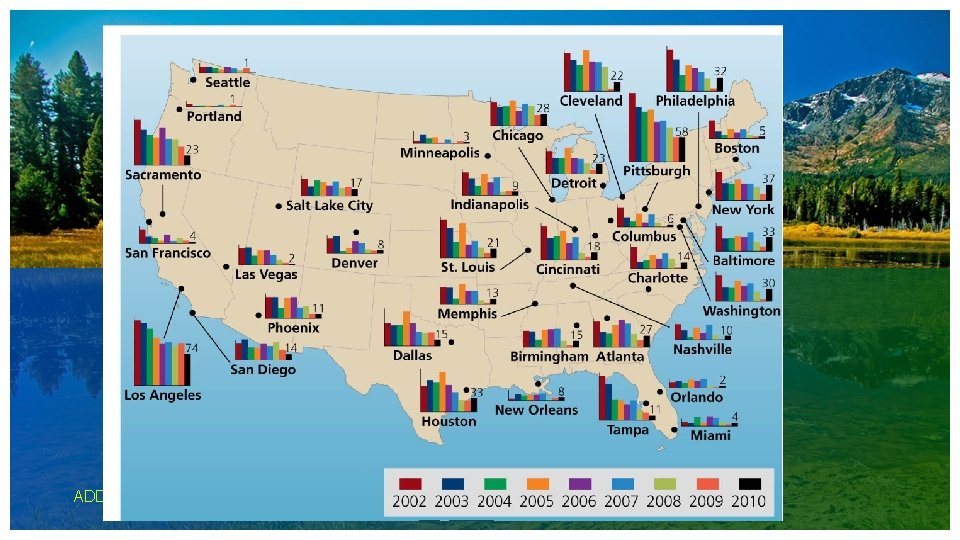
AREAS IN THE U. S. FAIL AIR QUALITY STANDARD S 14
ADD A FOOTER 15
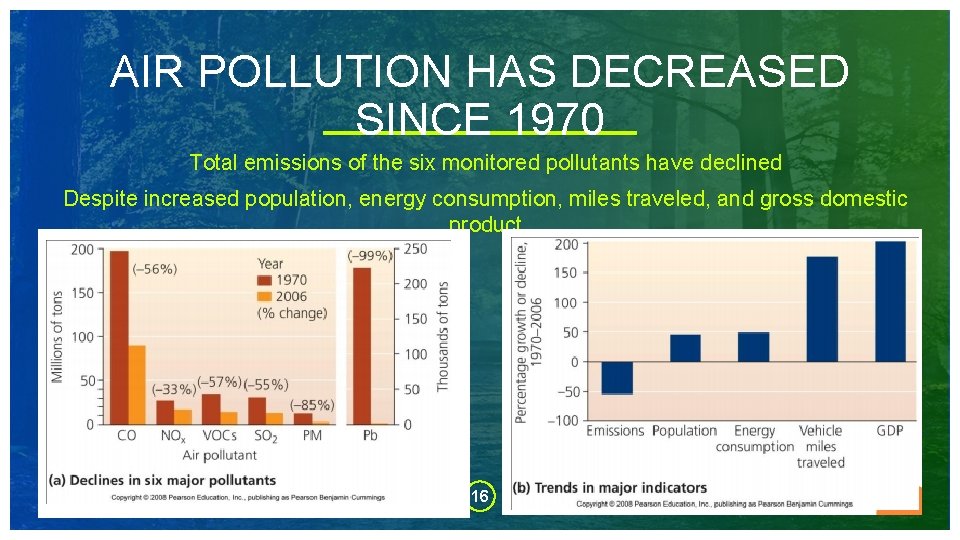
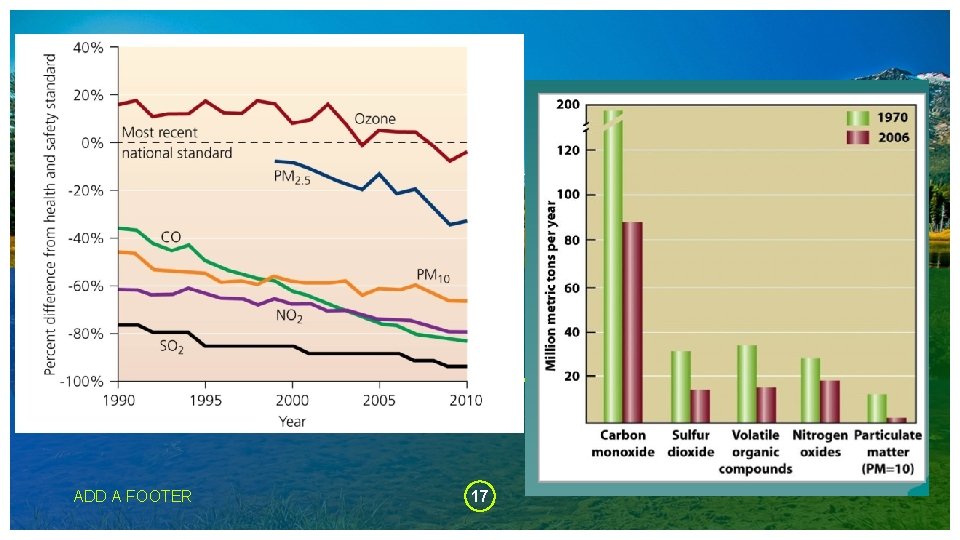
AIR POLLUTION HAS DECREASED SINCE 1970 Total emissions of the six monitored pollutants have declined Despite increased population, energy consumption, miles traveled, and gross domestic product 16
ADD A FOOTER 17
ADD A FOOTER 18
ADD A FOOTER 19
ADD A FOOTER 20
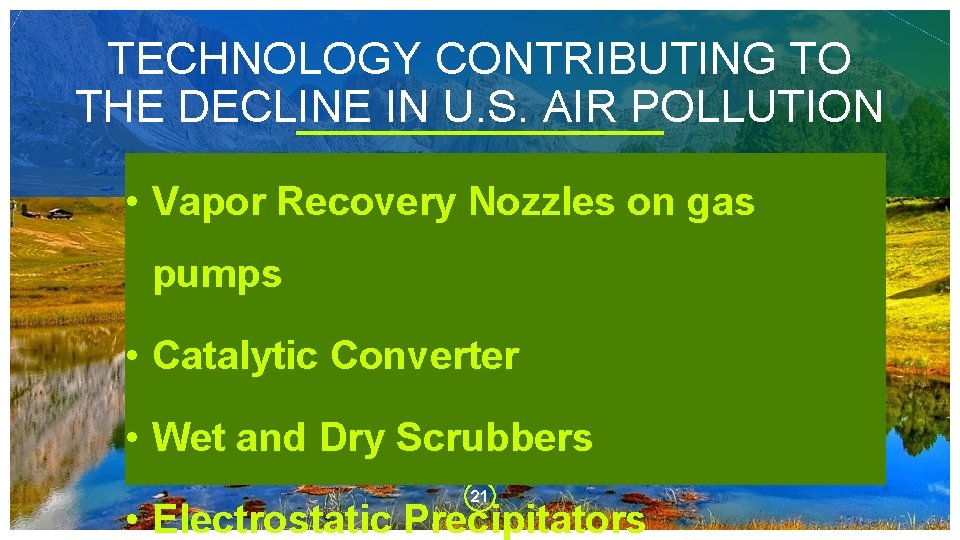
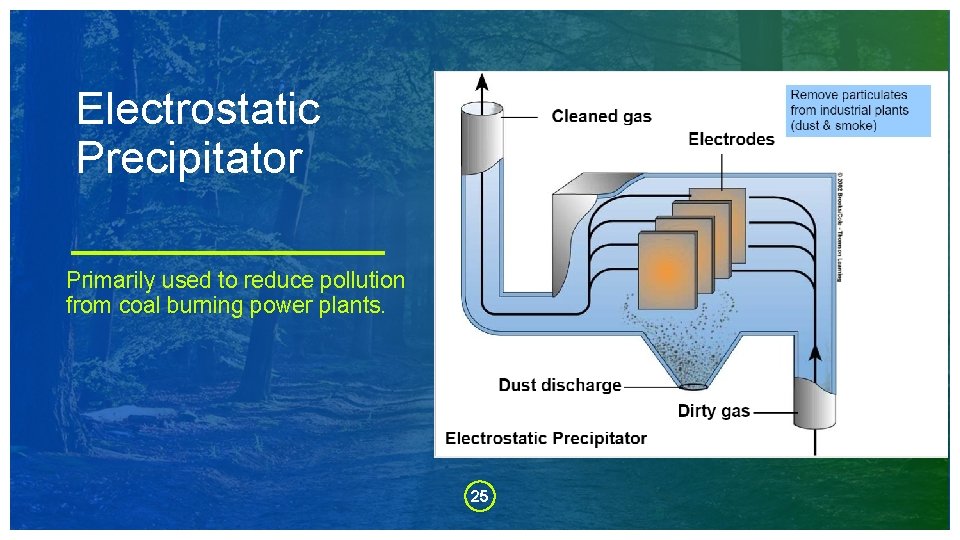
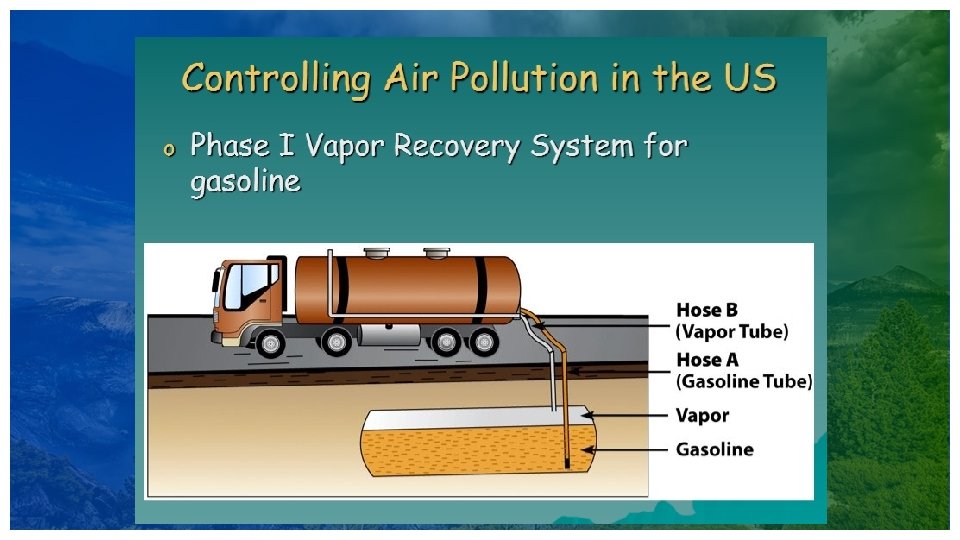
TECHNOLOGY CONTRIBUTING TO THE DECLINE IN U. S. AIR POLLUTION • Vapor Recovery Nozzles on gas pumps • Catalytic Converter • Wet and Dry Scrubbers 21 • Electrostatic Precipitators
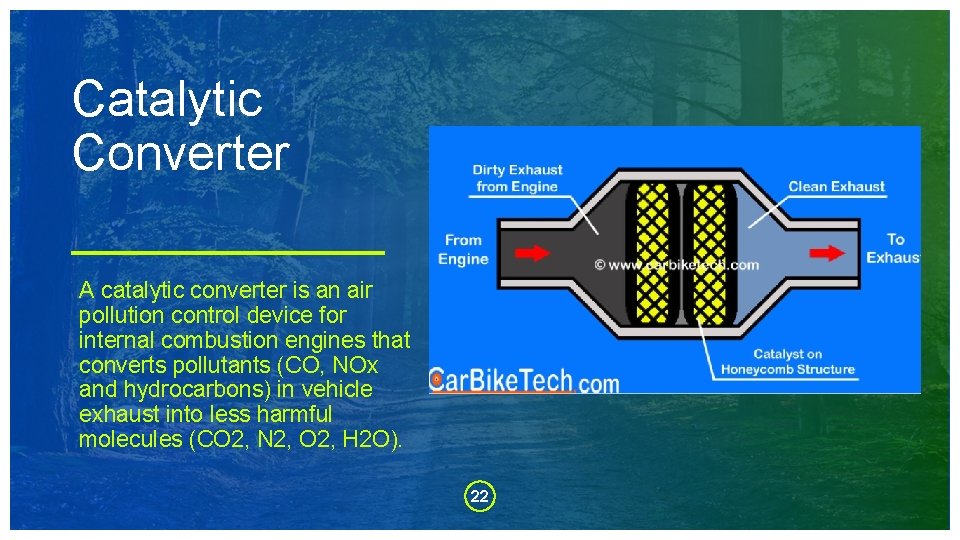
Catalytic Converter A catalytic converter is an air pollution control device for internal combustion engines that converts pollutants (CO, NOx and hydrocarbons) in vehicle exhaust into less harmful molecules (CO 2, N 2, O 2, H 2 O). 22
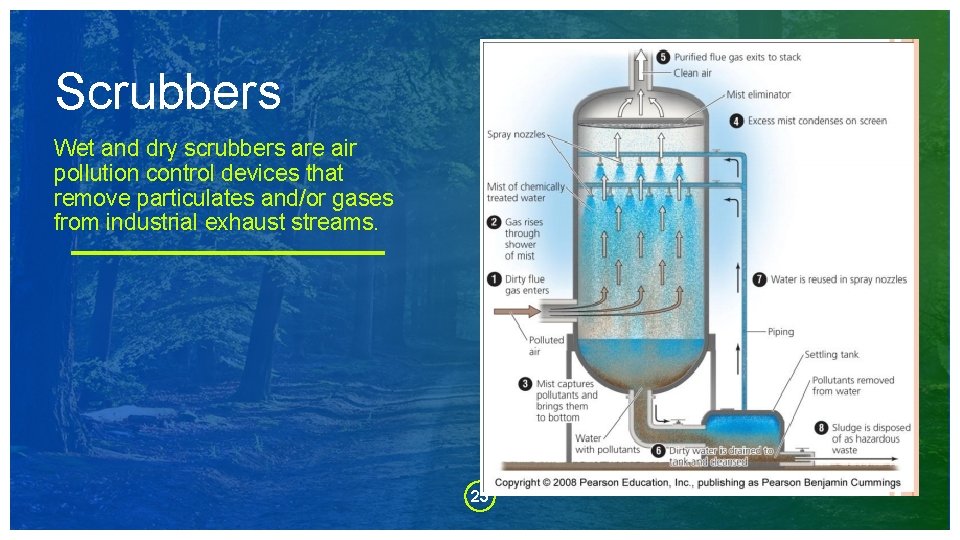
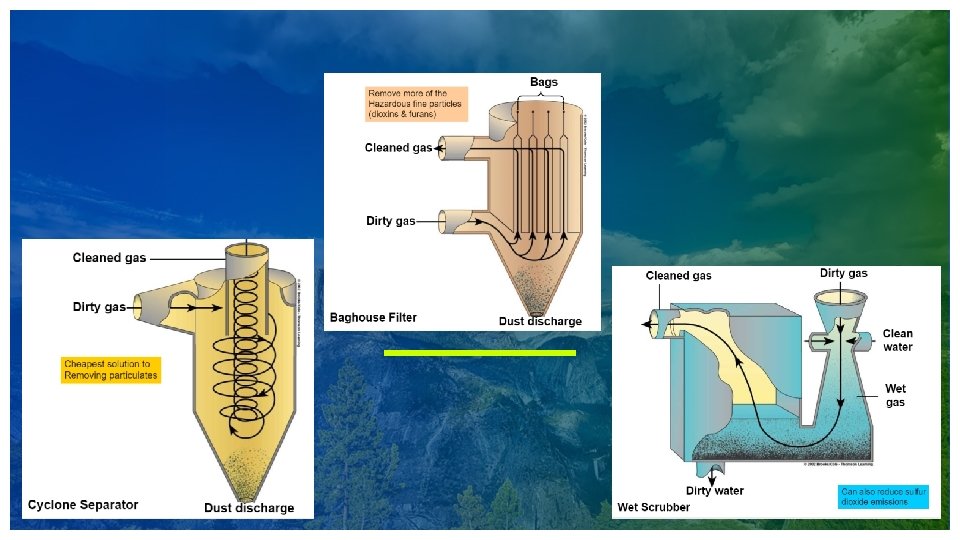
Scrubbers Wet and dry scrubbers are air pollution control devices that remove particulates and/or gases from industrial exhaust streams. 23
Electrostatic Precipitator Primarily used to reduce pollution from coal burning power plants. 25
ADD A FOOTER 27
ADD A FOOTER 28
ADD A FOOTER 29
ADD A FOOTER 30
ADD A FOOTER 31
ADD A FOOTER 32
ADD A FOOTER 33
ADD A FOOTER 34
ADD A FOOTER 35