
Unit 7 Atmospheric Pollution 7 1 Introduction to
- Slides: 17
Unit 7 Atmospheric Pollution 7. 1 Introduction to Air Pollution Sources and Types
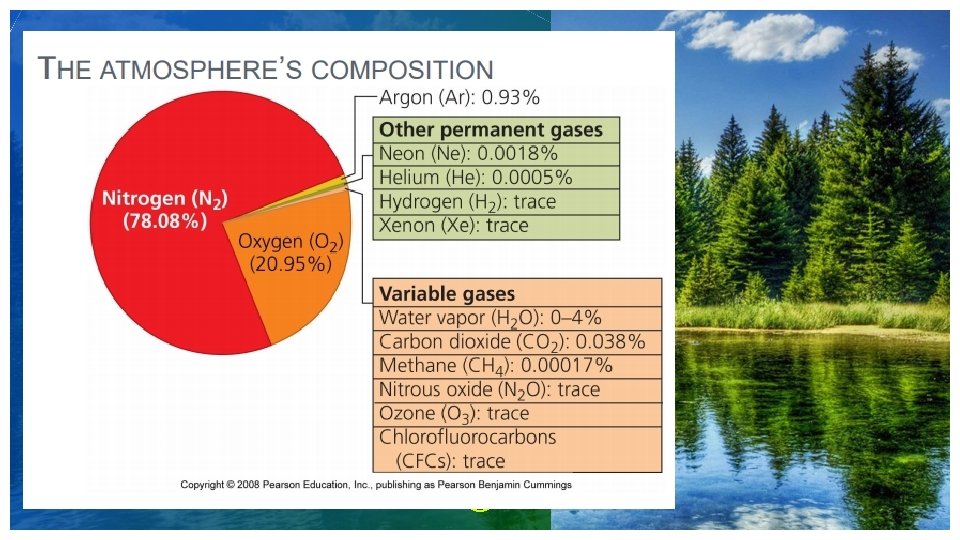
The Atmosphere = the thin layer of gases surrounding the earth § Absorbs harmful radiation from the sun § Maintains climate § Transports and recycles water and nutrients around the globe. Density = the number of gas particles per unit of air volume. • density decreases as you move higher in the 2 atmosphere.
TEXT LAYOUT 1 Lorem ipsum dolor sit amet, consectetuer adipiscing elit • Lorem ipsum dolor sit amet, consectetuer adipiscing elit. Maecenas porttitor congue massa. Fusce posuere, magna sed pulvinar ultricies, purus lectus malesuada libero, sit amet commodo magna eros quis urna. • Nunc viverra imperdiet enim. Fusce est. Vivamus a tellus. • Pellentesque habitant morbi tristique senectus et netus et malesuada fames ac turpis egestas. Proin pharetra nonummy pede. Mauris et orci. ADD A FOOTER 3
4
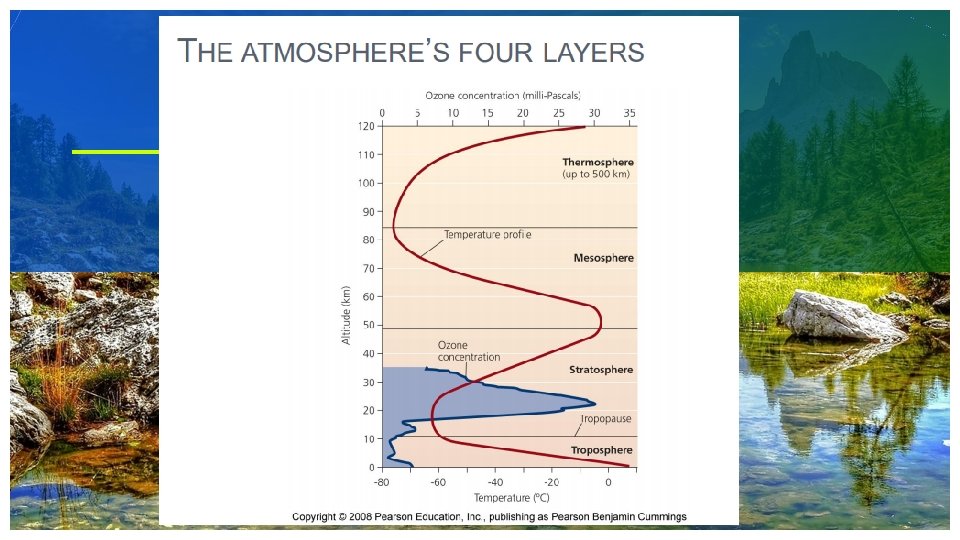
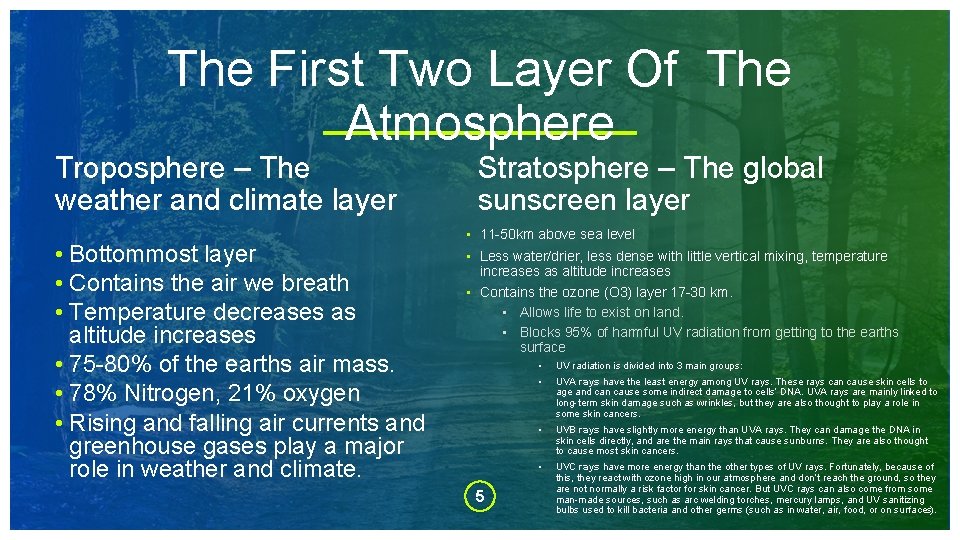
The First Two Layer Of The Atmosphere Troposphere – The weather and climate layer • Bottommost layer • Contains the air we breath • Temperature decreases as altitude increases • 75 -80% of the earths air mass. • 78% Nitrogen, 21% oxygen • Rising and falling air currents and greenhouse gases play a major role in weather and climate. Stratosphere – The global sunscreen layer • 11 -50 km above sea level • Less water/drier, less dense with little vertical mixing, temperature increases as altitude increases • Contains the ozone (O 3) layer 17 -30 km. • Allows life to exist on land. • Blocks 95% of harmful UV radiation from getting to the earths surface 5 • UV radiation is divided into 3 main groups: • UVA rays have the least energy among UV rays. These rays can cause skin cells to age and can cause some indirect damage to cells’ DNA. UVA rays are mainly linked to long-term skin damage such as wrinkles, but they are also thought to play a role in some skin cancers. • UVB rays have slightly more energy than UVA rays. They can damage the DNA in skin cells directly, and are the main rays that cause sunburns. They are also thought to cause most skin cancers. • UVC rays have more energy than the other types of UV rays. Fortunately, because of this, they react with ozone high in our atmosphere and don’t reach the ground, so they are not normally a risk factor for skin cancer. But UVC rays can also come from some man-made sources, such as arc welding torches, mercury lamps, and UV sanitizing bulbs used to kill bacteria and other germs (such as in water, air, food, or on surfaces).
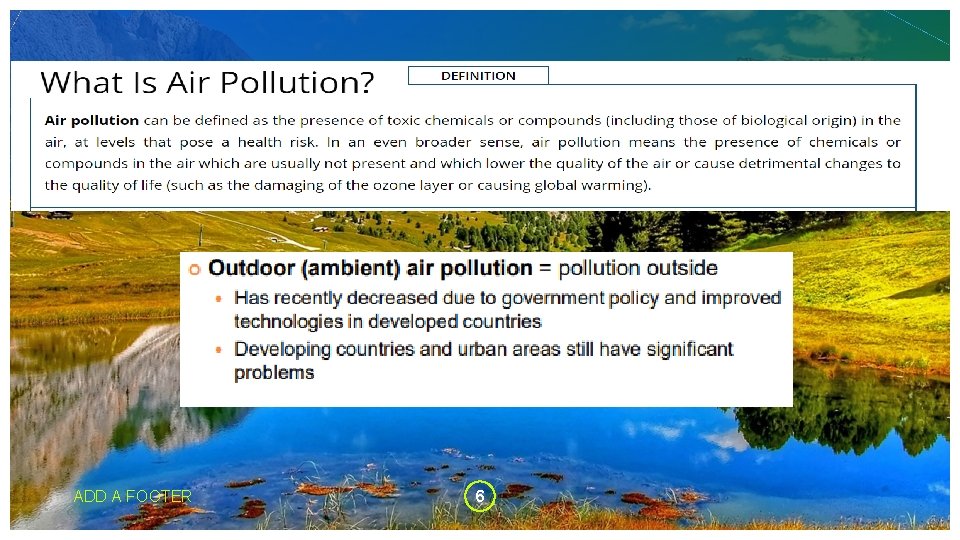
BIG IMAGE SLIDE Lorem ipsum dolor sit amet, consectetuer adipiscing elit ADD A FOOTER 6
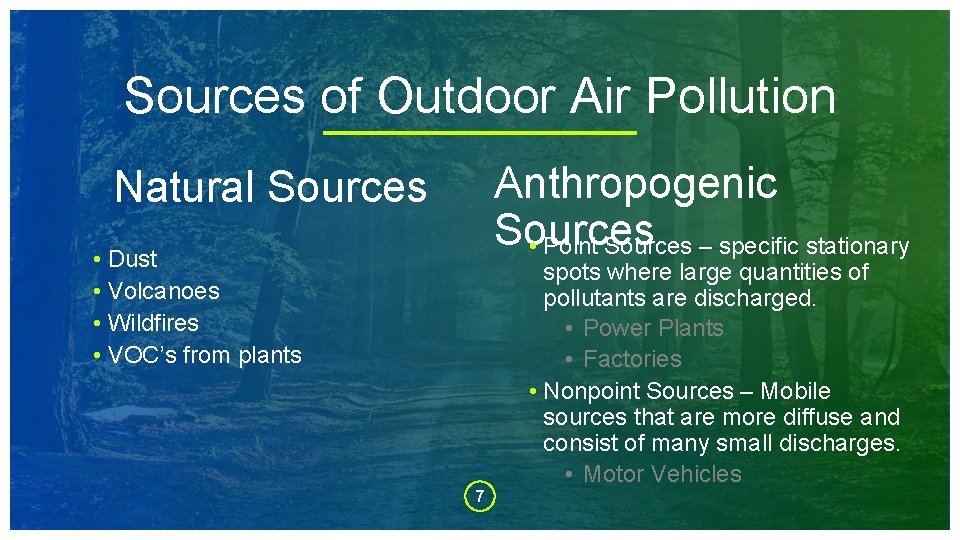
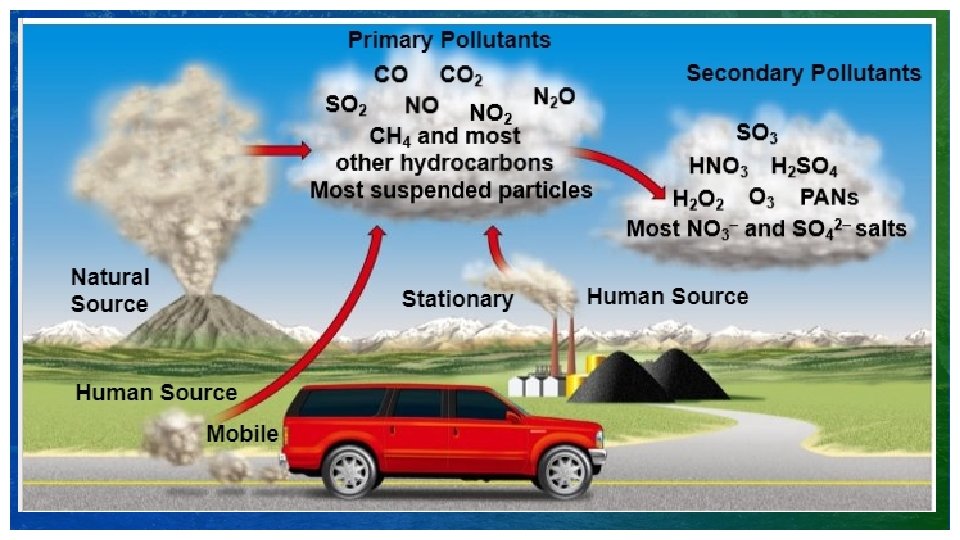
Sources of Outdoor Air Pollution Anthropogenic Sources • Point Sources – specific stationary Natural Sources • Dust • Volcanoes • Wildfires • VOC’s from plants spots where large quantities of pollutants are discharged. • Power Plants • Factories • Nonpoint Sources – Mobile sources that are more diffuse and consist of many small discharges. • Motor Vehicles 7
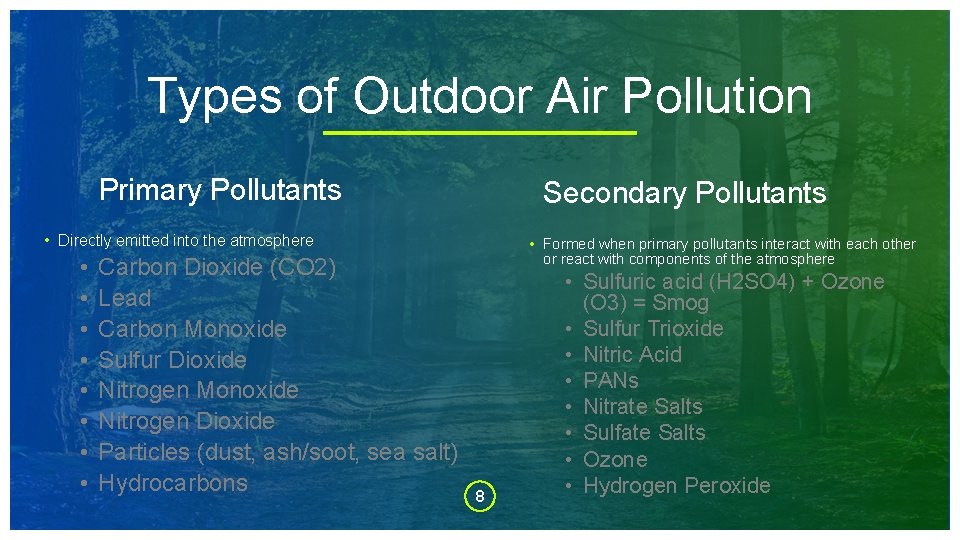
Types of Outdoor Air Pollution Primary Pollutants Secondary Pollutants • Directly emitted into the atmosphere • • Carbon Dioxide (CO 2) Lead Carbon Monoxide Sulfur Dioxide Nitrogen Monoxide Nitrogen Dioxide Particles (dust, ash/soot, sea salt) Hydrocarbons • Formed when primary pollutants interact with each other or react with components of the atmosphere 8 • Sulfuric acid (H 2 SO 4) + Ozone (O 3) = Smog • Sulfur Trioxide • Nitric Acid • PANs • Nitrate Salts • Sulfate Salts • Ozone • Hydrogen Peroxide
ADD A FOOTER 9
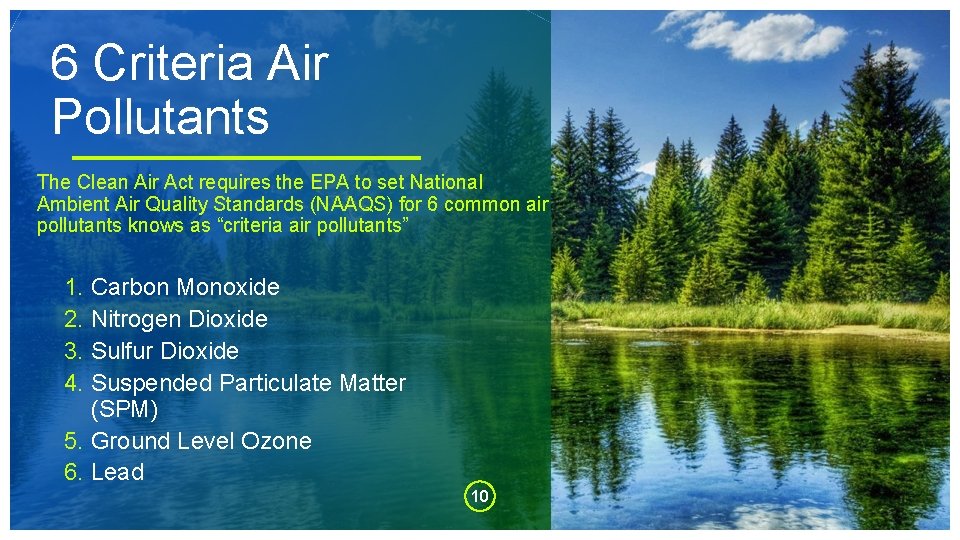
6 Criteria Air Pollutants The Clean Air Act requires the EPA to set National Ambient Air Quality Standards (NAAQS) for 6 common air pollutants knows as “criteria air pollutants” 1. Carbon Monoxide 2. Nitrogen Dioxide 3. Sulfur Dioxide 4. Suspended Particulate Matter (SPM) 5. Ground Level Ozone 6. Lead 10
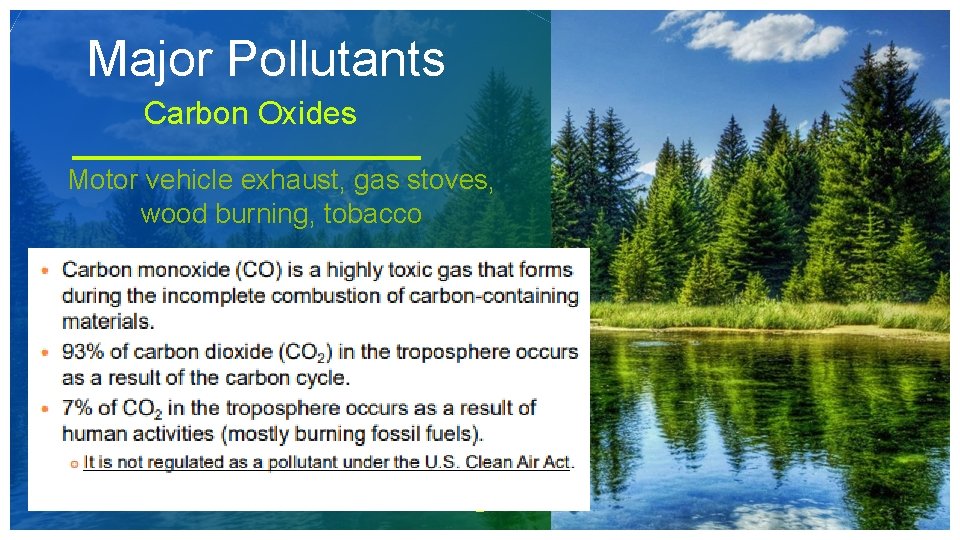
Major Pollutants Carbon Oxides Motor vehicle exhaust, gas stoves, wood burning, tobacco 11
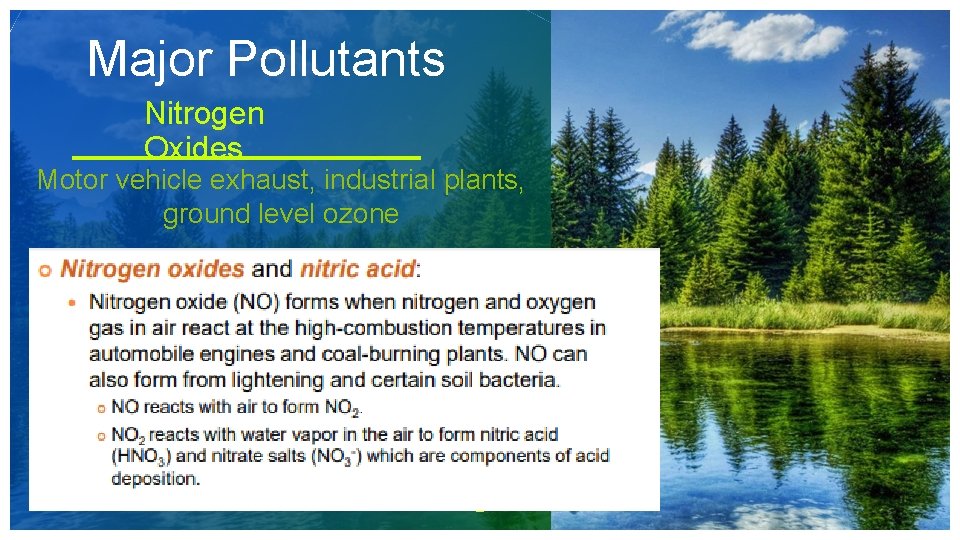
Major Pollutants Nitrogen Oxides Motor vehicle exhaust, industrial plants, ground level ozone 12
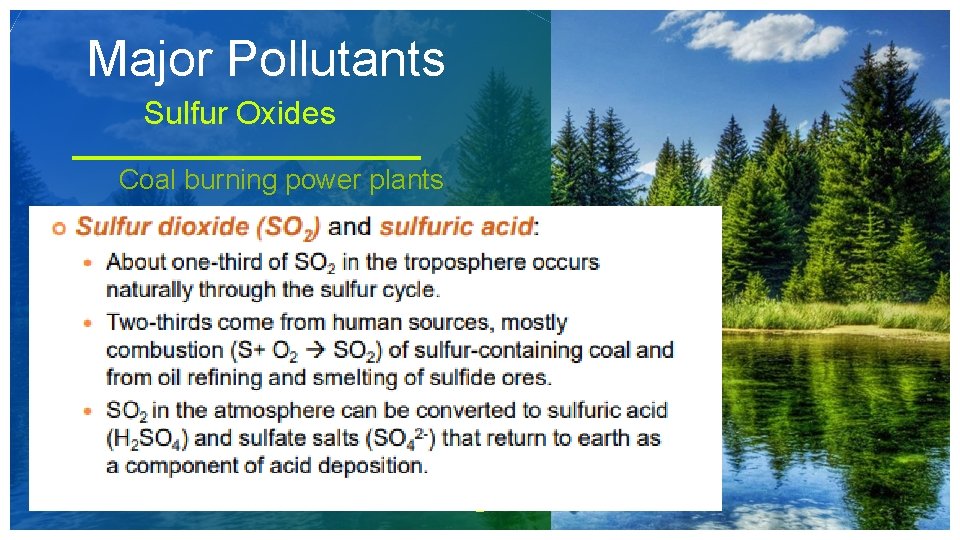
Major Pollutants Sulfur Oxides Coal burning power plants 13
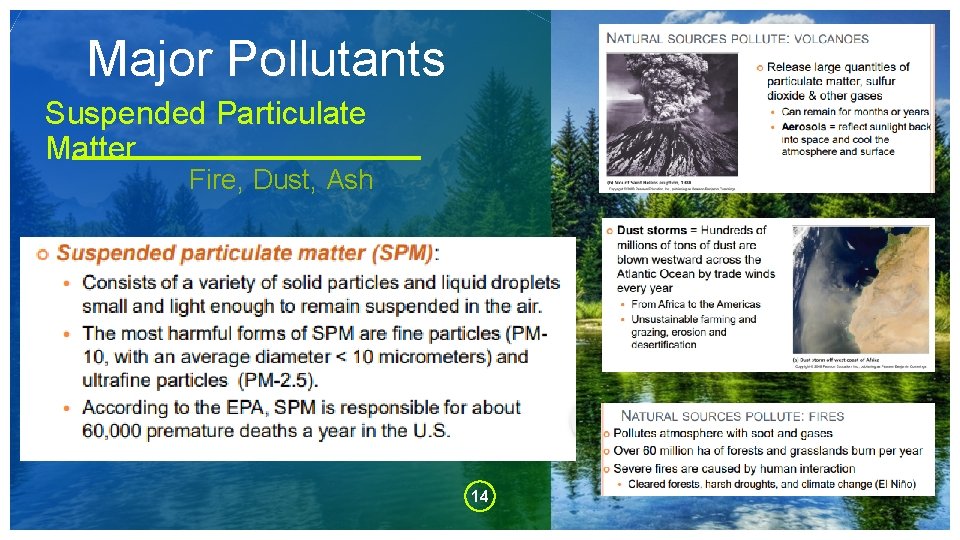
Major Pollutants Suspended Particulate Matter Fire, Dust, Ash 14
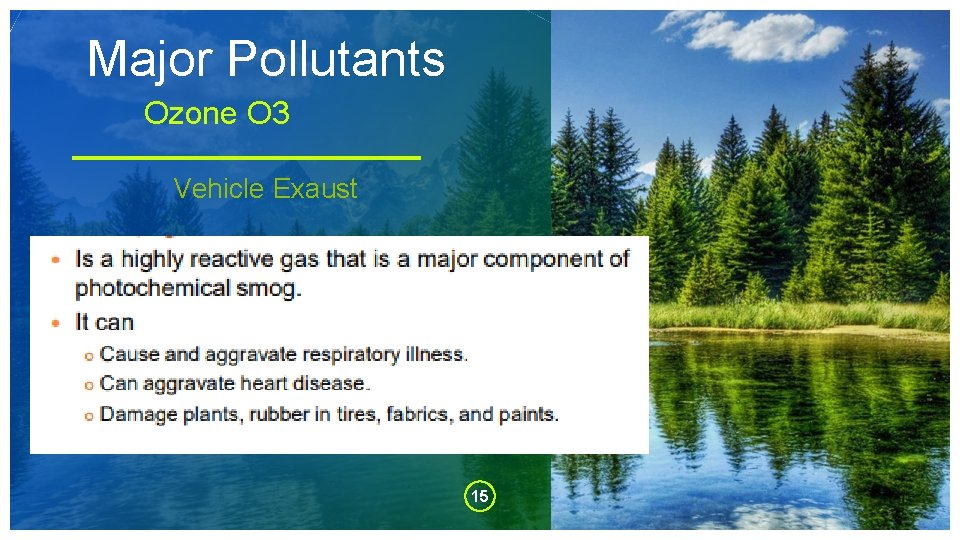
Major Pollutants Ozone O 3 Vehicle Exaust 15
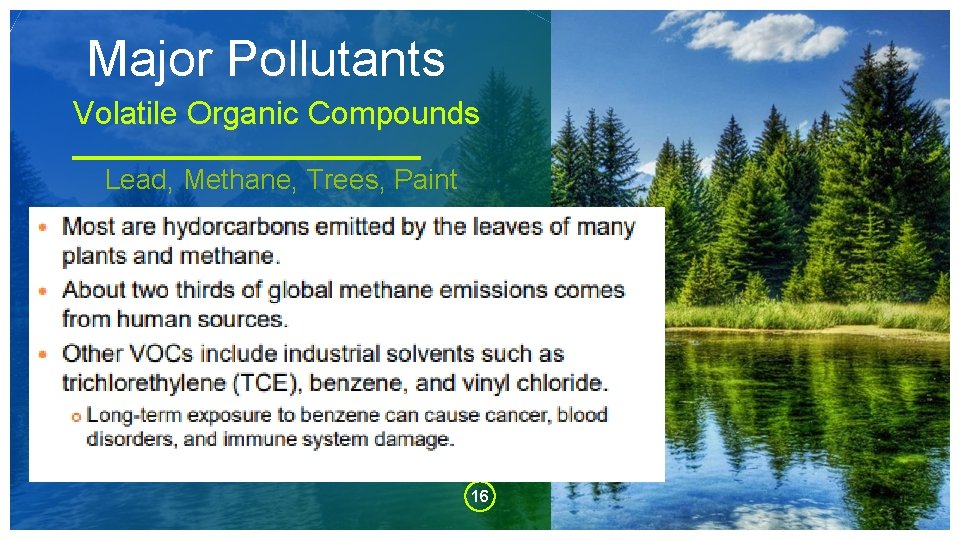
Major Pollutants Volatile Organic Compounds Lead, Methane, Trees, Paint 16
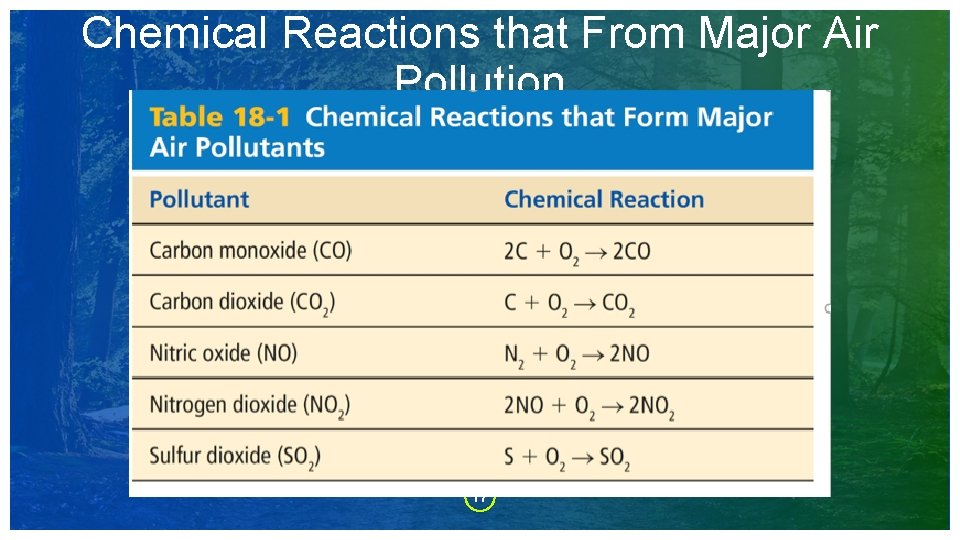
Chemical Reactions that From Major Air Pollution 17