
Unit 6 Test Review Complete Review Sheet Using
- Slides: 16
Unit 6 Test Review Complete Review Sheet Using the Slides
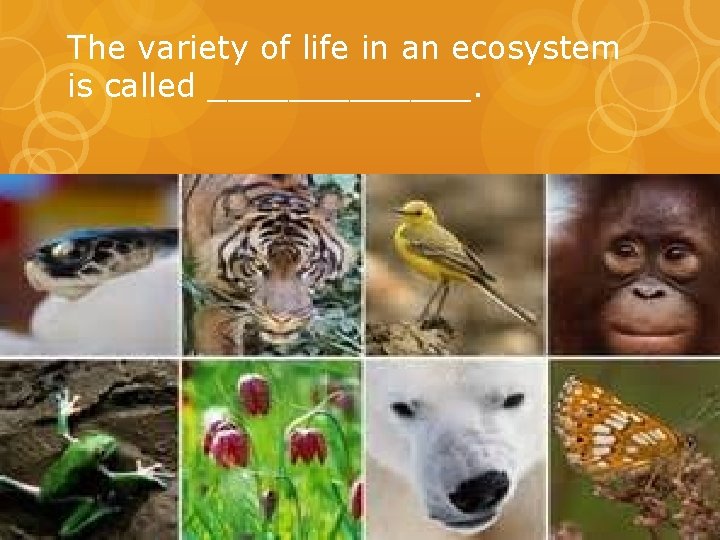
The variety of life in an ecosystem is called _______.
If a sustainable ecosystem means it is stable then: The _____ biodiversity there is in an ecosystem, the ____ sustainable it is.
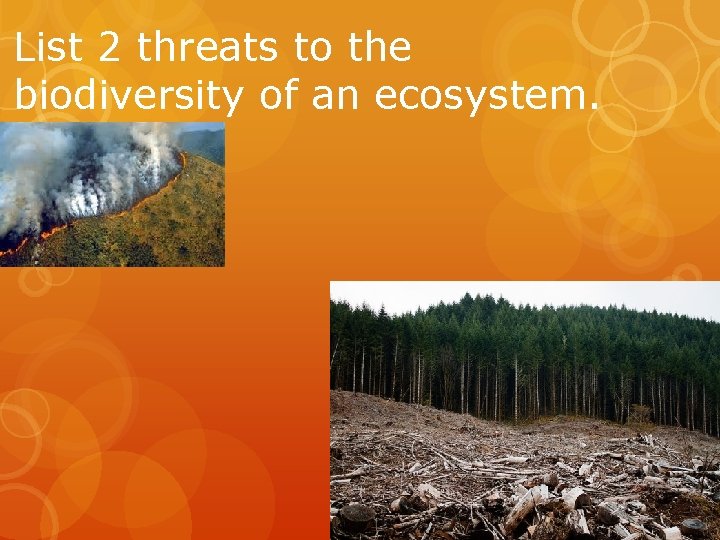
List 2 threats to the biodiversity of an ecosystem.
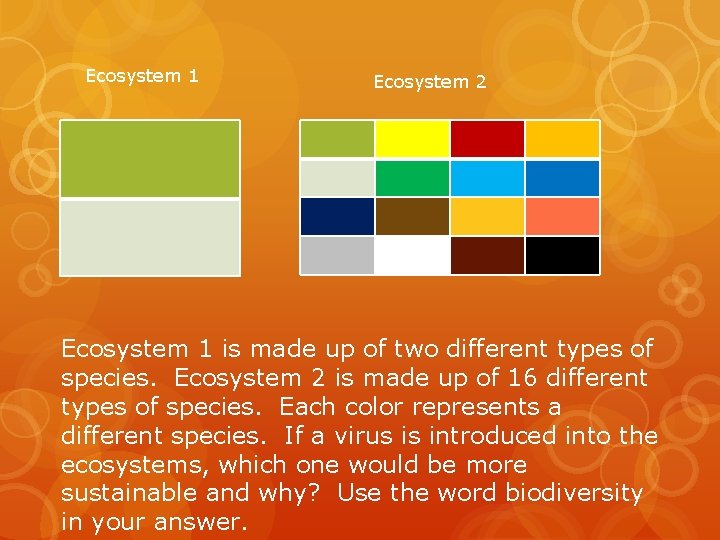
Ecosystem 1 Ecosystem 2 Ecosystem 1 is made up of two different types of species. Ecosystem 2 is made up of 16 different types of species. Each color represents a different species. If a virus is introduced into the ecosystems, which one would be more sustainable and why? Use the word biodiversity in your answer.
Ecosystem 1: grass, caterpillars, lizards Ecosystem 2: grass, sunflowers, various insect species, lizards, rats, snakes, mushrooms If a natural disaster occurred in the above ecosystems, which would be most sustainable? Why?
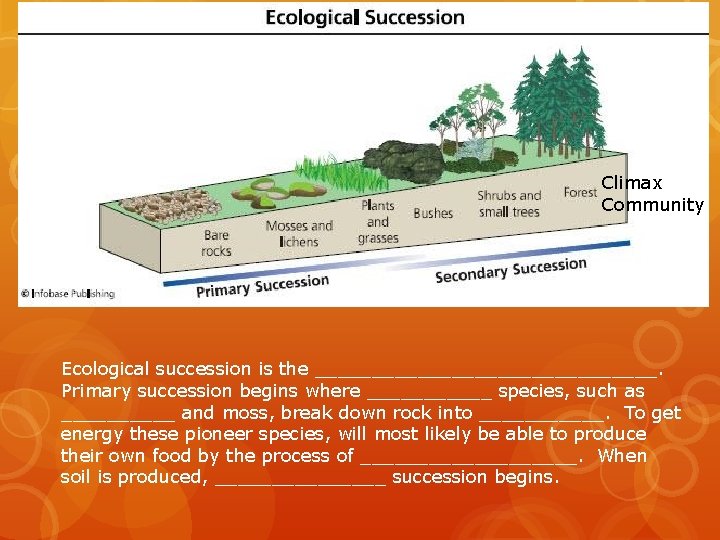
Climax Community Ecological succession is the _______________. Primary succession begins where ______ species, such as _____ and moss, break down rock into ______. To get energy these pioneer species, will most likely be able to produce their own food by the process of __________. When soil is produced, ________ succession begins.
Which of the following best represents secondary ecological succession? A)shrubs –>grasses-> trees-> flowering plants B)flowering plants -> trees-> grasses -> shrubs C)grasses-> flowering plants -> shrubs -> trees
Students wanted to observe ecological succession in a schoolyard. They cleared out planters and watched as organisms grew back in the planters. 1. What tool should the students use to examine the small organisms? 1. What organisms could the students add to the soil to make it more fertile?
Students plant a garden at the end of the school year, but no one takes care of it during the summer. What is most likely going to grow first?
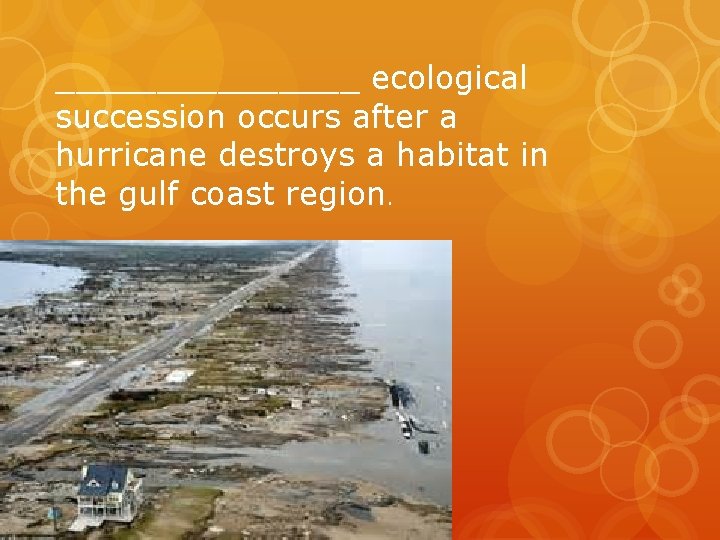
________ ecological succession occurs after a hurricane destroys a habitat in the gulf coast region.
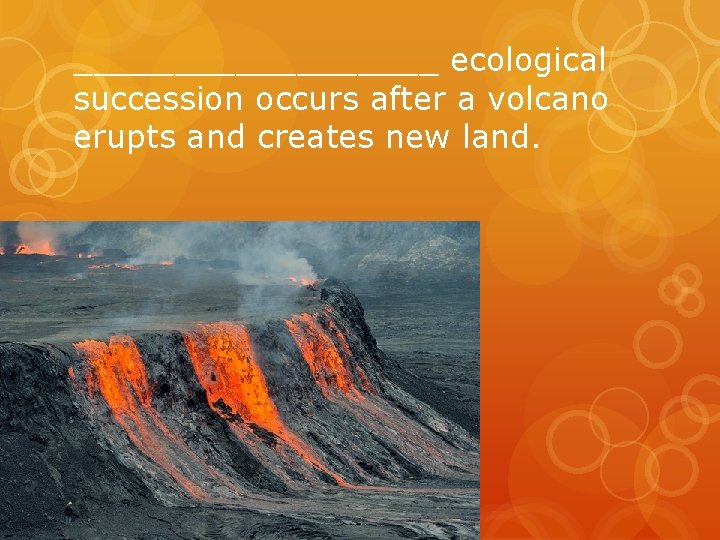
_________ ecological succession occurs after a volcano erupts and creates new land.
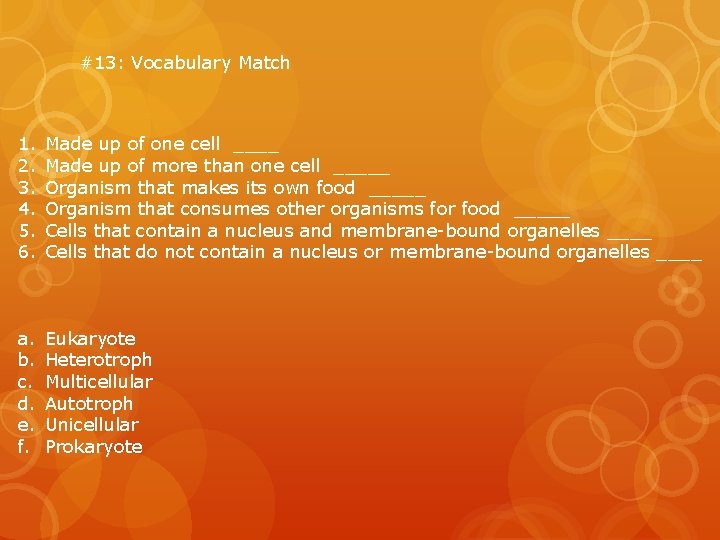
#13: Vocabulary Match 1. 2. 3. 4. 5. 6. Made up of one cell ____ Made up of more than one cell _____ Organism that makes its own food _____ Organism that consumes other organisms for food _____ Cells that contain a nucleus and membrane-bound organelles ____ Cells that do not contain a nucleus or membrane-bound organelles ____ a. b. c. d. e. f. Eukaryote Heterotroph Multicellular Autotroph Unicellular Prokaryote
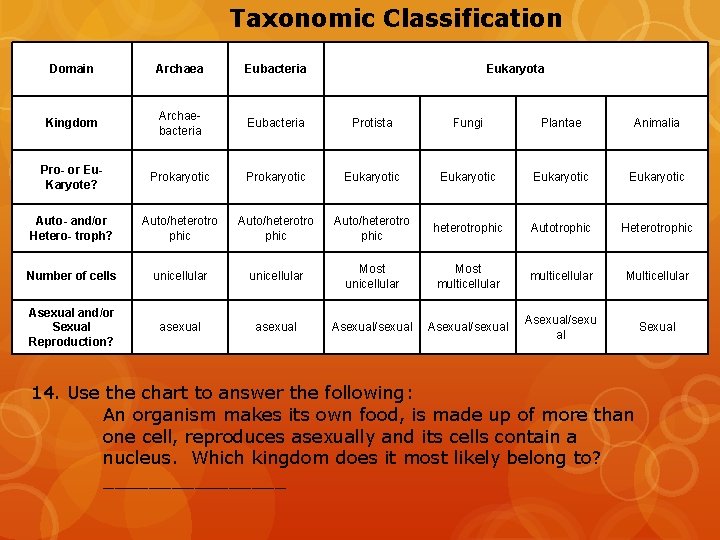
Taxonomic Classification Domain Archaea Eubacteria Eukaryota Kingdom Archaebacteria Eubacteria Protista Fungi Plantae Animalia Pro- or Eu. Karyote? Prokaryotic Eukaryotic Auto- and/or Hetero- troph? Auto/heterotro phic heterotrophic Autotrophic Heterotrophic Number of cells unicellular Most multicellular Multicellular Asexual and/or Sexual Reproduction? asexual Asexual/sexual Asexual/sexu al Sexual 14. Use the chart to answer the following: An organism makes its own food, is made up of more than one cell, reproduces asexually and its cells contain a nucleus. Which kingdom does it most likely belong to? ________
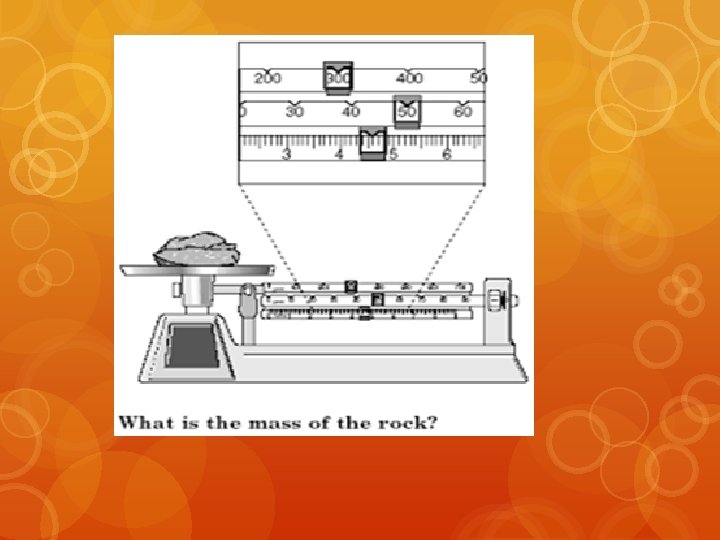
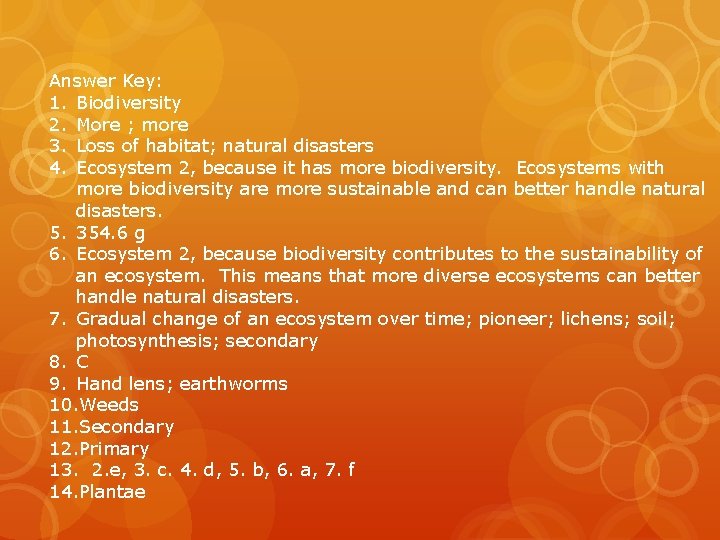
Answer Key: 1. Biodiversity 2. More ; more 3. Loss of habitat; natural disasters 4. Ecosystem 2, because it has more biodiversity. Ecosystems with more biodiversity are more sustainable and can better handle natural disasters. 5. 354. 6 g 6. Ecosystem 2, because biodiversity contributes to the sustainability of an ecosystem. This means that more diverse ecosystems can better handle natural disasters. 7. Gradual change of an ecosystem over time; pioneer; lichens; soil; photosynthesis; secondary 8. C 9. Hand lens; earthworms 10. Weeds 11. Secondary 12. Primary 13. 2. e, 3. c. 4. d, 5. b, 6. a, 7. f 14. Plantae