
Unit 6 Station Design Access Stop Station Design
- Slides: 44
Unit 6: Station Design & Access Stop/ Station Design & Access Materials developed by K. Watkins, J. La. Mondia and C. Brakewood
Three Main Considerations • Station Types and Configuration – Structure based on transit type • Vehicle Circulation – Number and movement of buses • Passenger Circulation – Number and movement of riders Materials developed by K. Watkins, J. La. Mondia and C. Brakewood
STATION TYPES AND CONFIGURATIONS Materials developed by K. Watkins, J. La. Mondia and C. Brakewood
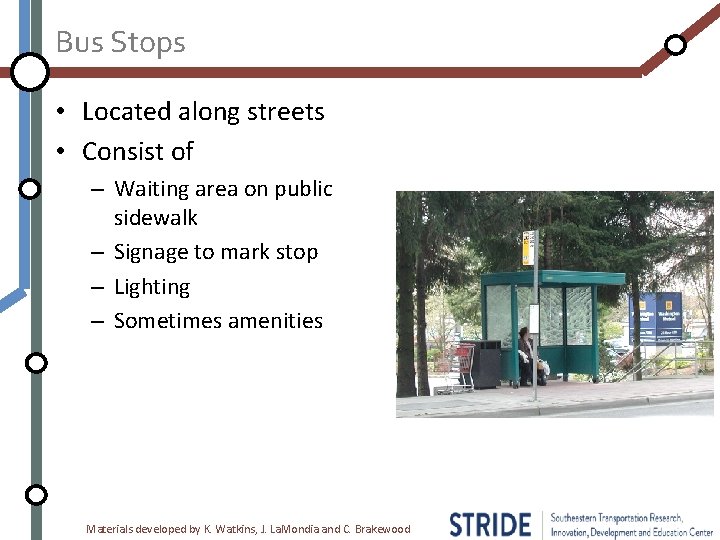
Bus Stops • Located along streets • Consist of – Waiting area on public sidewalk – Signage to mark stop – Lighting – Sometimes amenities Materials developed by K. Watkins, J. La. Mondia and C. Brakewood
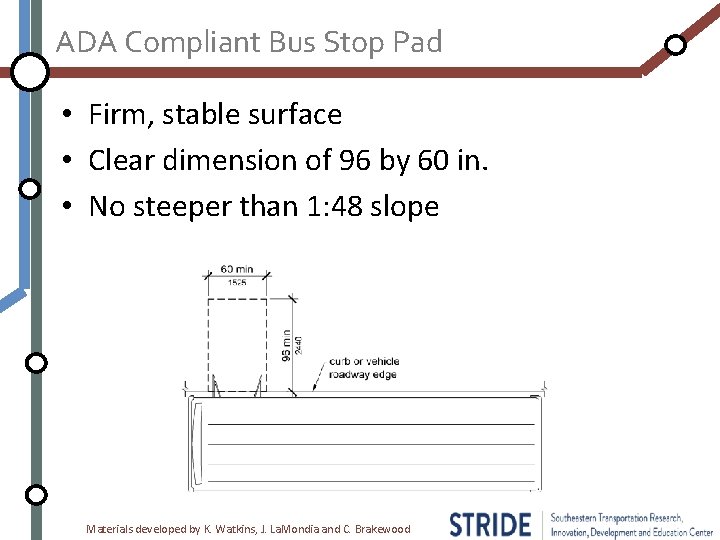
ADA Compliant Bus Stop Pad • Firm, stable surface • Clear dimension of 96 by 60 in. • No steeper than 1: 48 slope Materials developed by K. Watkins, J. La. Mondia and C. Brakewood
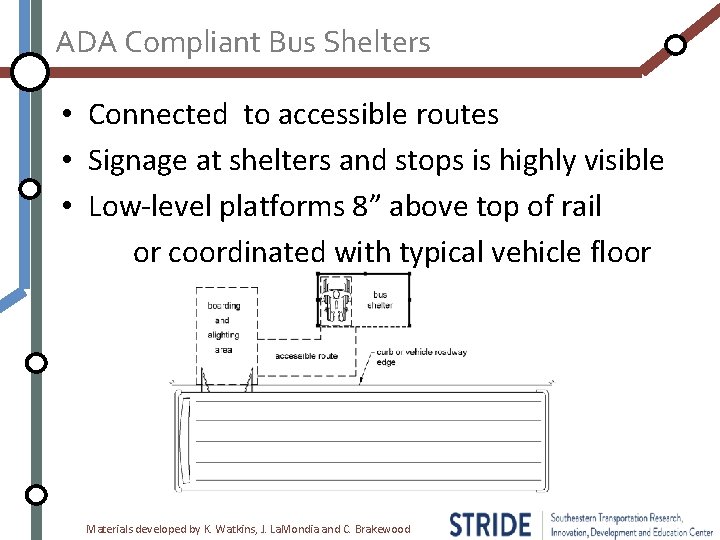
ADA Compliant Bus Shelters • Connected to accessible routes • Signage at shelters and stops is highly visible • Low-level platforms 8” above top of rail or coordinated with typical vehicle floor Materials developed by K. Watkins, J. La. Mondia and C. Brakewood
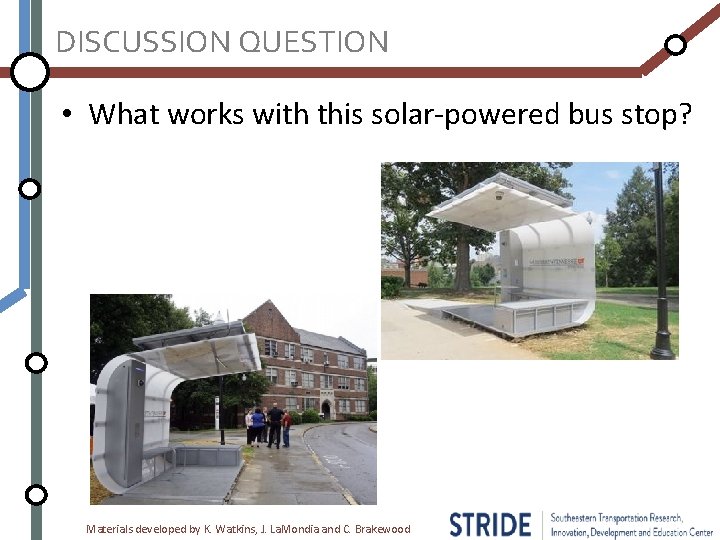
DISCUSSION QUESTION • What works with this solar-powered bus stop? Materials developed by K. Watkins, J. La. Mondia and C. Brakewood
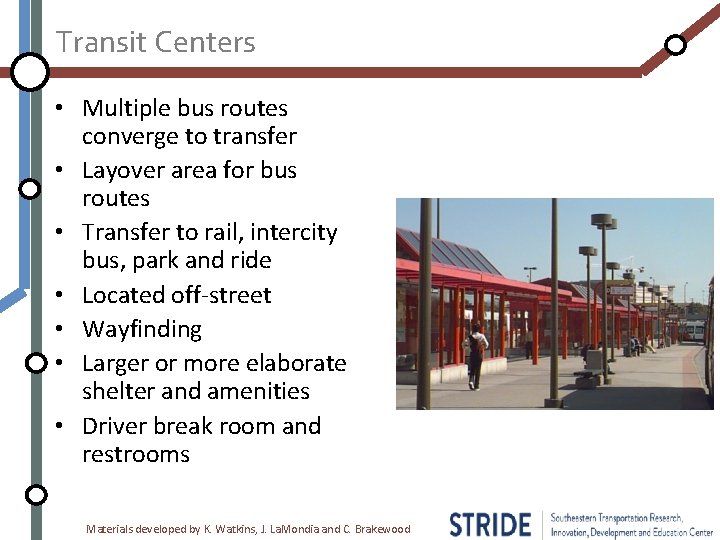
Transit Centers • Multiple bus routes converge to transfer • Layover area for bus routes • Transfer to rail, intercity bus, park and ride • Located off-street • Wayfinding • Larger or more elaborate shelter and amenities • Driver break room and restrooms Materials developed by K. Watkins, J. La. Mondia and C. Brakewood
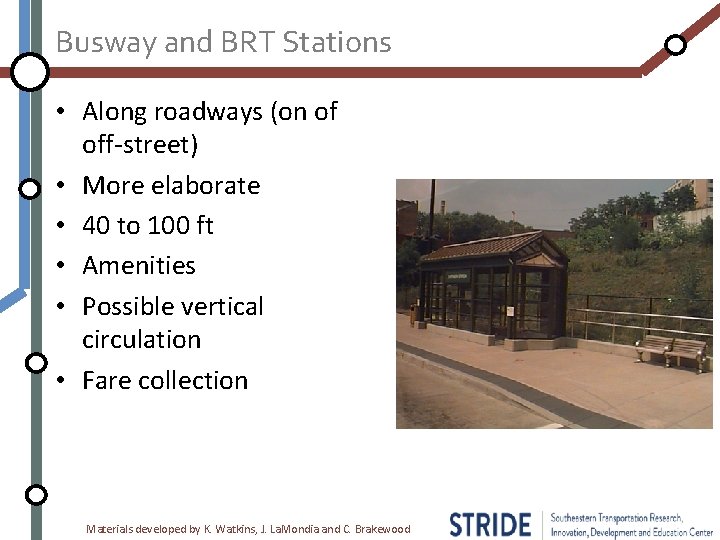
Busway and BRT Stations • Along roadways (on of off-street) • More elaborate • 40 to 100 ft • Amenities • Possible vertical circulation • Fare collection Materials developed by K. Watkins, J. La. Mondia and C. Brakewood
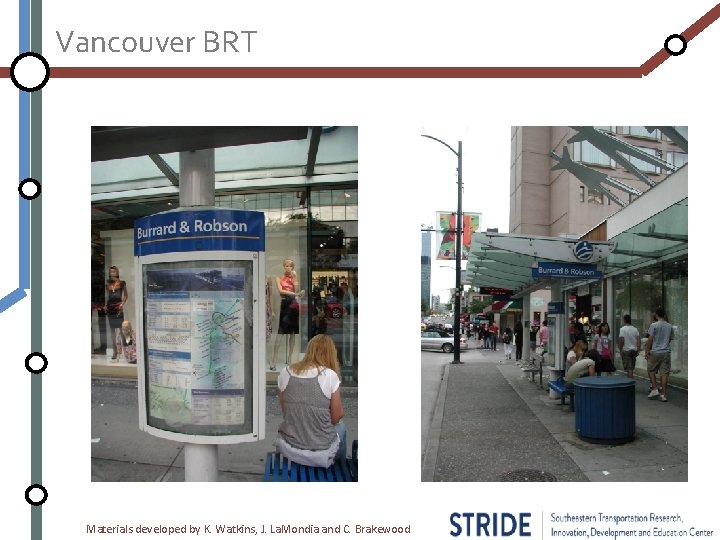
Vancouver BRT Materials developed by K. Watkins, J. La. Mondia and C. Brakewood
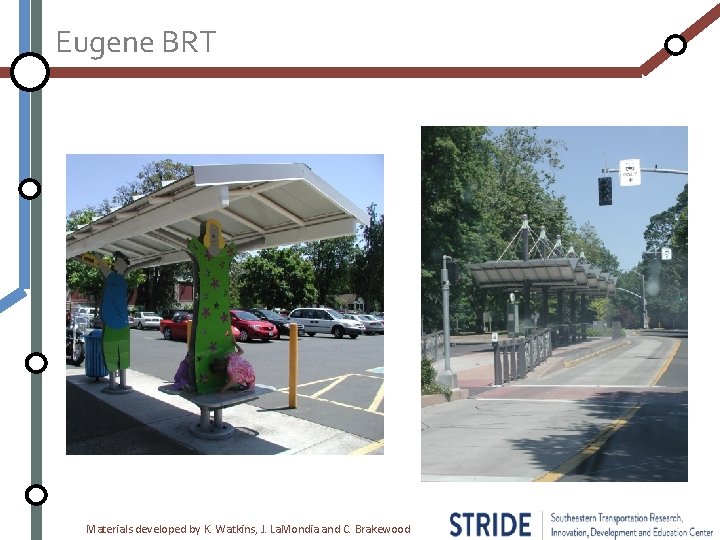
Eugene BRT Materials developed by K. Watkins, J. La. Mondia and C. Brakewood
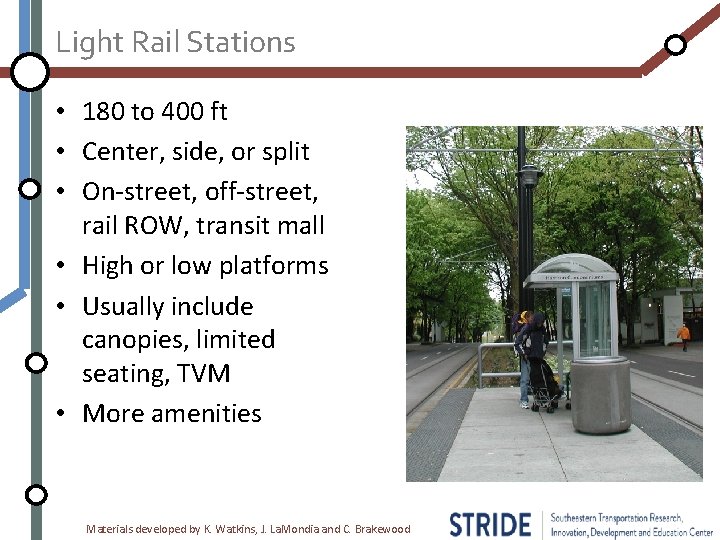
Light Rail Stations • 180 to 400 ft • Center, side, or split • On-street, off-street, rail ROW, transit mall • High or low platforms • Usually include canopies, limited seating, TVM • More amenities Materials developed by K. Watkins, J. La. Mondia and C. Brakewood
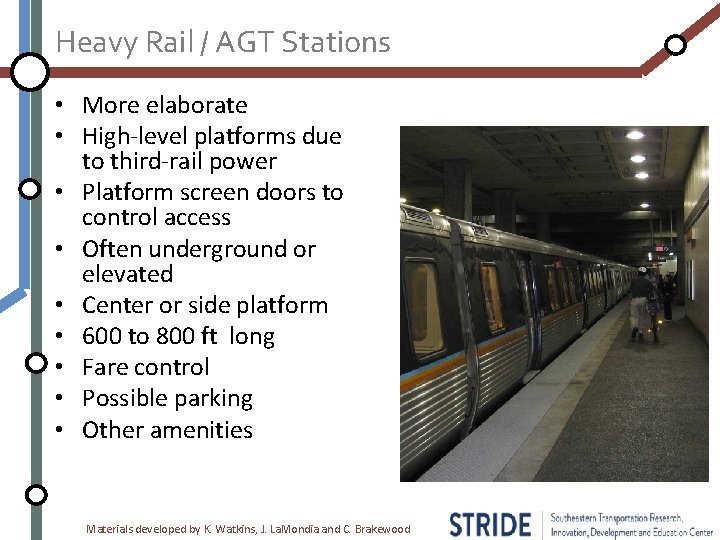
Heavy Rail / AGT Stations • More elaborate • High-level platforms due to third-rail power • Platform screen doors to control access • Often underground or elevated • Center or side platform • 600 to 800 ft long • Fare control • Possible parking • Other amenities Materials developed by K. Watkins, J. La. Mondia and C. Brakewood
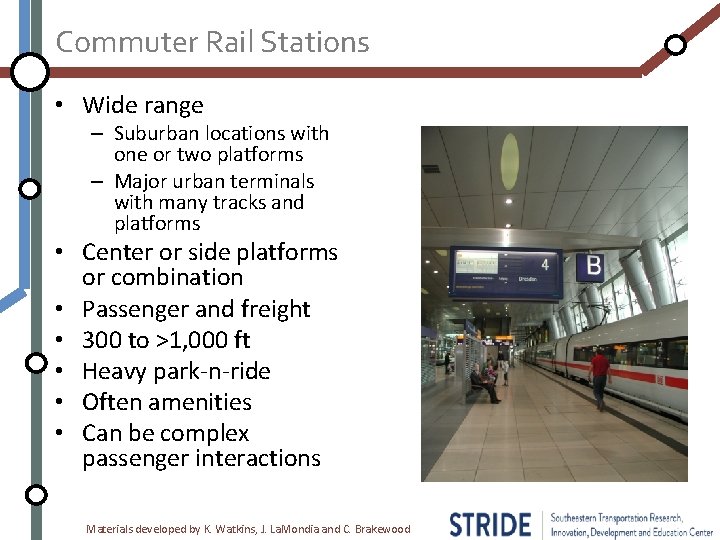
Commuter Rail Stations • Wide range – Suburban locations with one or two platforms – Major urban terminals with many tracks and platforms • Center or side platforms or combination • Passenger and freight • 300 to >1, 000 ft • Heavy park-n-ride • Often amenities • Can be complex passenger interactions Materials developed by K. Watkins, J. La. Mondia and C. Brakewood
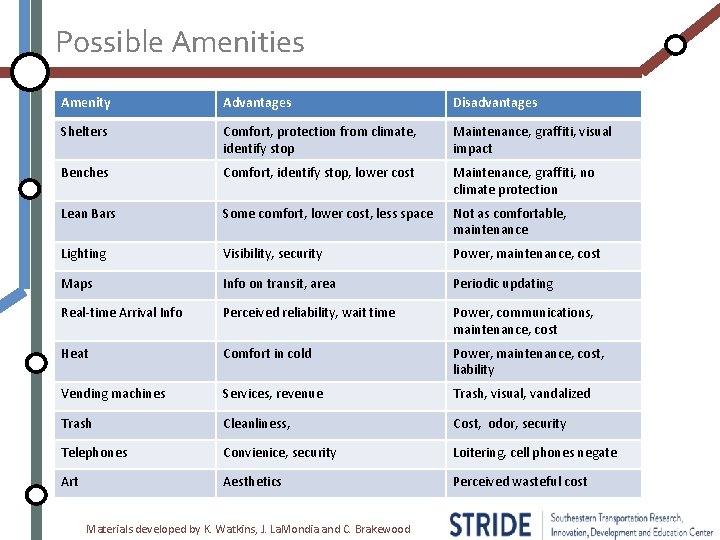
Possible Amenities Amenity Advantages Disadvantages Shelters Comfort, protection from climate, identify stop Maintenance, graffiti, visual impact Benches Comfort, identify stop, lower cost Maintenance, graffiti, no climate protection Lean Bars Some comfort, lower cost, less space Not as comfortable, maintenance Lighting Visibility, security Power, maintenance, cost Maps Info on transit, area Periodic updating Real-time Arrival Info Perceived reliability, wait time Power, communications, maintenance, cost Heat Comfort in cold Power, maintenance, cost, liability Vending machines Services, revenue Trash, visual, vandalized Trash Cleanliness, Cost, odor, security Telephones Convienice, security Loitering, cell phones negate Art Aesthetics Perceived wasteful cost Materials developed by K. Watkins, J. La. Mondia and C. Brakewood
VEHICLE CIRCULATION Materials developed by K. Watkins, J. La. Mondia and C. Brakewood
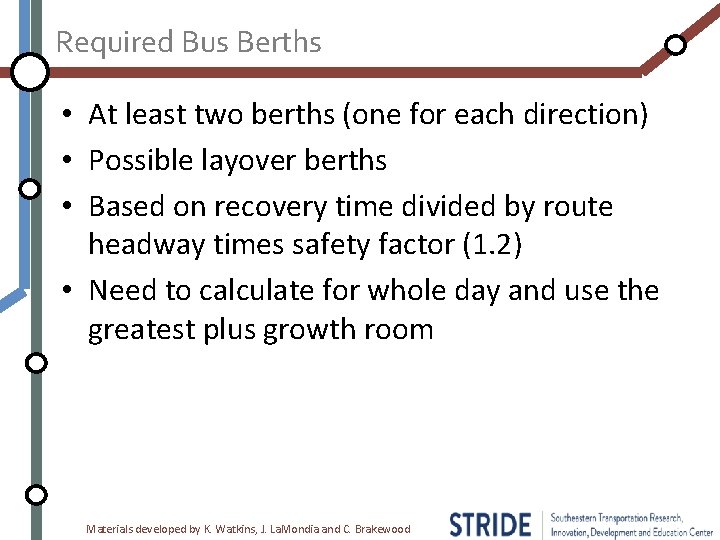
Required Bus Berths • At least two berths (one for each direction) • Possible layover berths • Based on recovery time divided by route headway times safety factor (1. 2) • Need to calculate for whole day and use the greatest plus growth room Materials developed by K. Watkins, J. La. Mondia and C. Brakewood
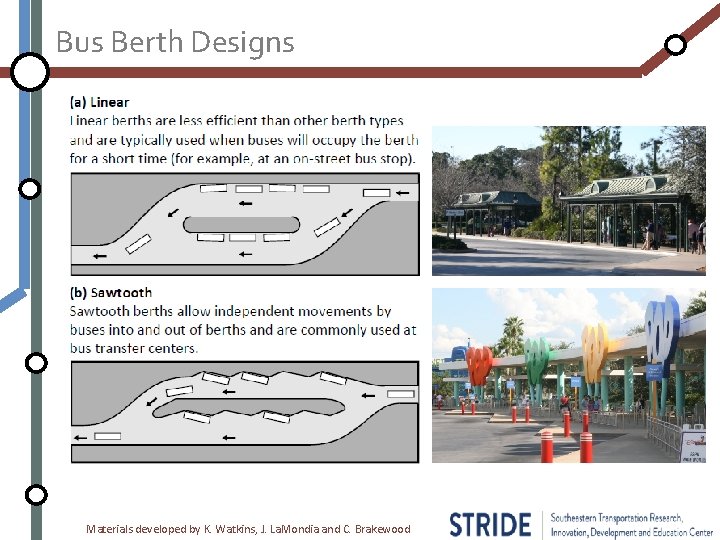
Bus Berth Designs Materials developed by K. Watkins, J. La. Mondia and C. Brakewood
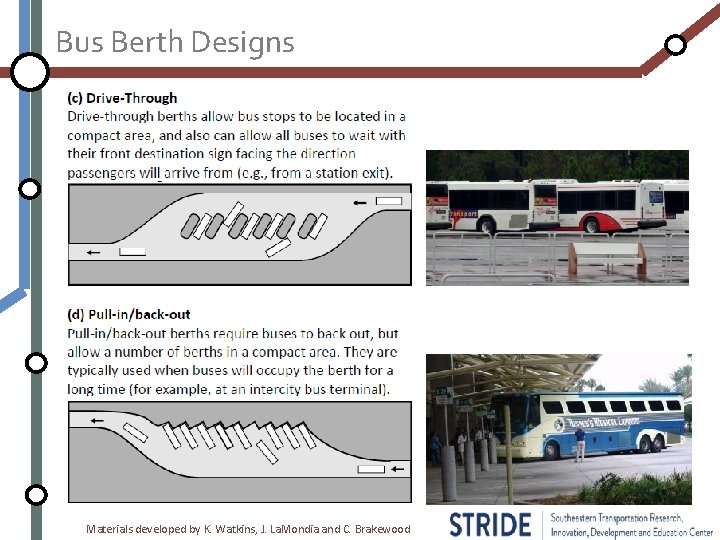
Bus Berth Designs Materials developed by K. Watkins, J. La. Mondia and C. Brakewood
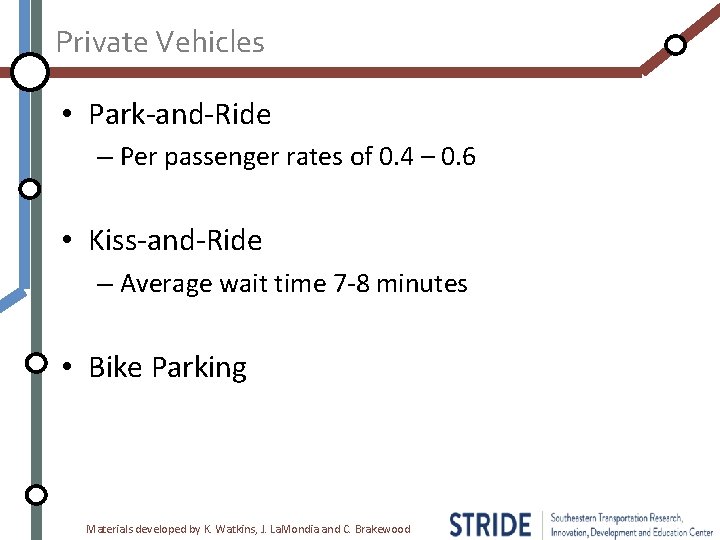
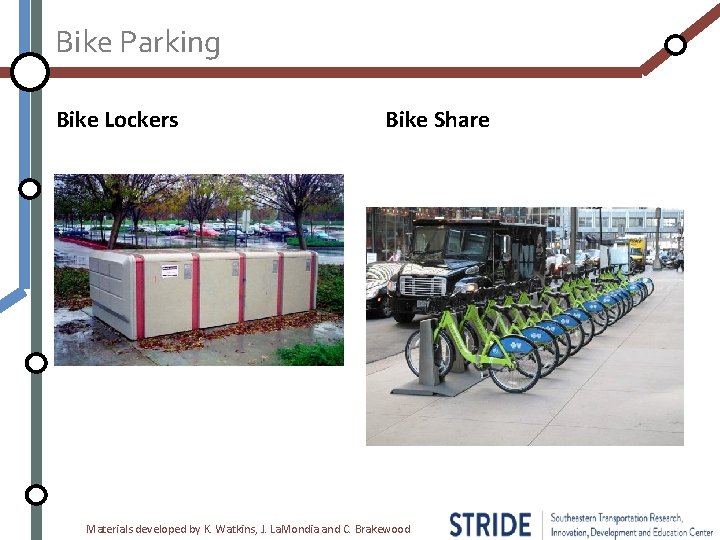
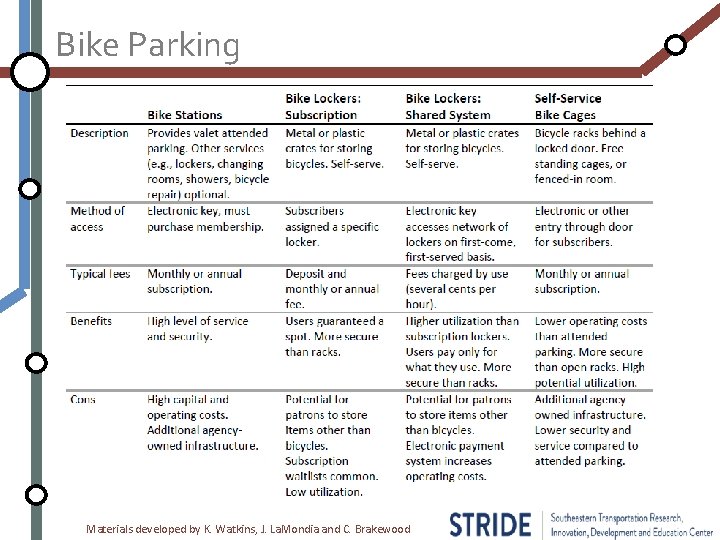
Private Vehicles • Park-and-Ride – Per passenger rates of 0. 4 – 0. 6 • Kiss-and-Ride – Average wait time 7 -8 minutes • Bike Parking Materials developed by K. Watkins, J. La. Mondia and C. Brakewood
Bike Parking Bike Lockers Bike Share Materials developed by K. Watkins, J. La. Mondia and C. Brakewood
Bike Parking Materials developed by K. Watkins, J. La. Mondia and C. Brakewood
PASSENGER CIRCULATION Materials developed by K. Watkins, J. La. Mondia and C. Brakewood
Station Access Includes Many Aspects • Sufficient safe space for movement – Horizontal Space • Corridor widths • Doorways – Vertical Space • Stairway widths • Escalators • Efficient time for purchasing and collecting fares – Number of ticket machines – Number of fare gates Materials developed by K. Watkins, J. La. Mondia and C. Brakewood
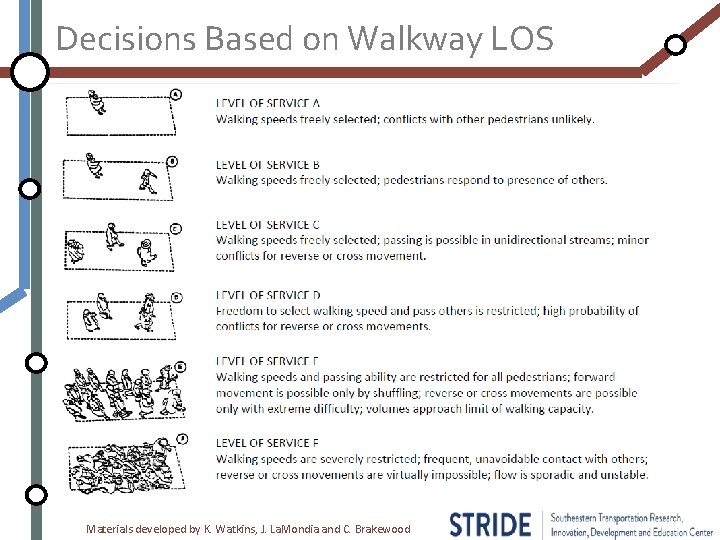
Decisions Based on Walkway LOS Materials developed by K. Watkins, J. La. Mondia and C. Brakewood
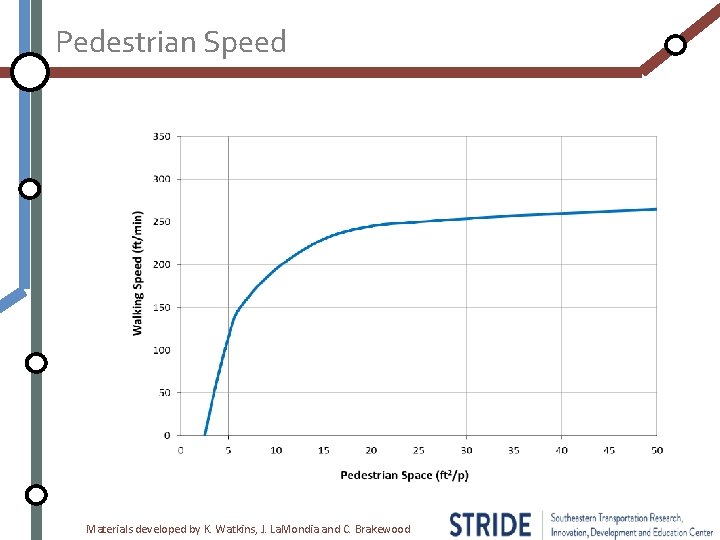
Pedestrian Speed Materials developed by K. Watkins, J. La. Mondia and C. Brakewood
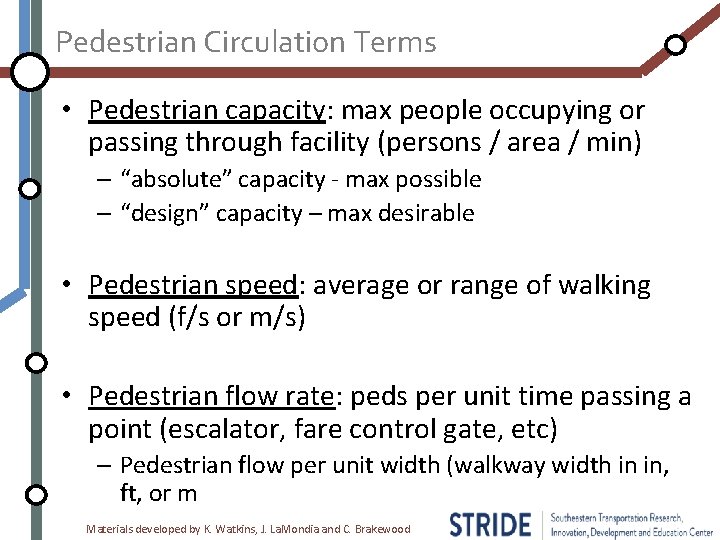
Pedestrian Circulation Terms • Pedestrian capacity: max people occupying or passing through facility (persons / area / min) – “absolute” capacity - max possible – “design” capacity – max desirable • Pedestrian speed: average or range of walking speed (f/s or m/s) • Pedestrian flow rate: peds per unit time passing a point (escalator, fare control gate, etc) – Pedestrian flow per unit width (walkway width in in, ft, or m Materials developed by K. Watkins, J. La. Mondia and C. Brakewood
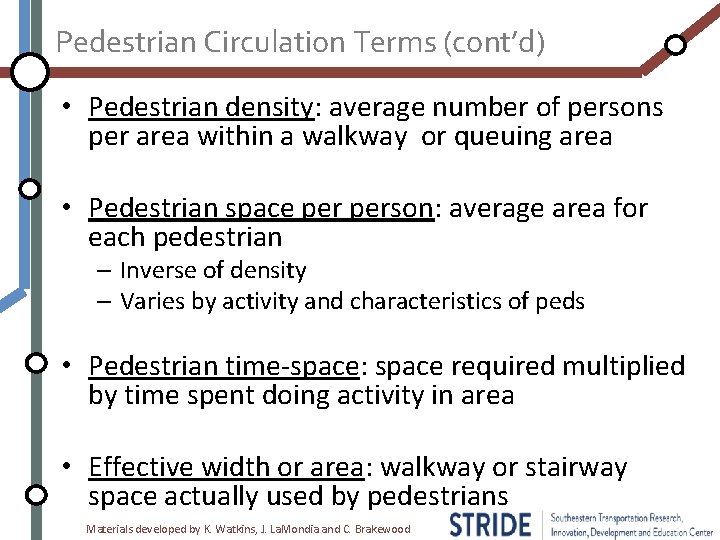
Pedestrian Circulation Terms (cont’d) • Pedestrian density: average number of persons per area within a walkway or queuing area • Pedestrian space person: average area for each pedestrian – Inverse of density – Varies by activity and characteristics of peds • Pedestrian time-space: space required multiplied by time spent doing activity in area • Effective width or area: walkway or stairway space actually used by pedestrians Materials developed by K. Watkins, J. La. Mondia and C. Brakewood
Design Capacities • Passenger demand volumes under typical peak-period • Additional demand from service disruptions and special events • Emergency evacuation situations • Breakdown in pedestrian flow occurs with dense crowding – Desirable pedestrian LOS – Not max pedestrian capacity Materials developed by K. Watkins, J. La. Mondia and C. Brakewood
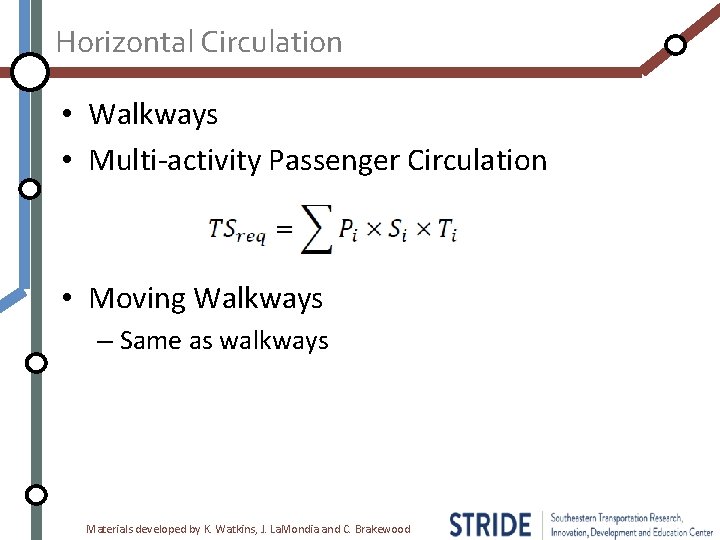
Horizontal Circulation • Walkways • Multi-activity Passenger Circulation • Moving Walkways – Same as walkways Materials developed by K. Watkins, J. La. Mondia and C. Brakewood
Steps to Determine Required Walkway Width 1. Choose analysis period (15 min or less) 2. Based on the desired LOS, choose max ped flow rate (p/ft/min or p/m/min) 3. Estimate ped demand 4. Compute design ped flow (p/min) by dividing the demand by # minutes. 5. Compute required effective width of walkway (in feet or meters) by dividing design ped flow by the max ped flow rate. 6. Compute the total width of walkway (in feet or meters) by adding 2 to 3 ft (0. 6 29 to 1. 0 m), with a 12 - to 18 -in. (0. 3 - to 0. 5 -m) buffer on each side to the effective width of walkway. Materials developed by K. Watkins, J. La. Mondia and C. Brakewood
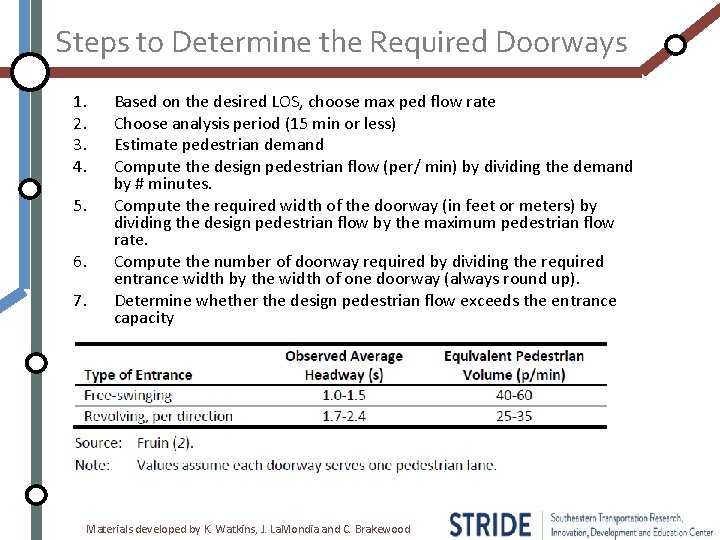
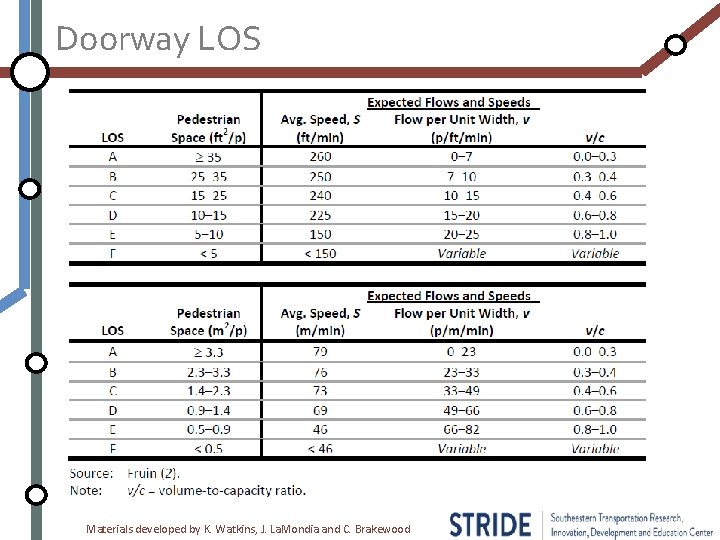
Steps to Determine the Required Doorways 1. 2. 3. 4. 5. 6. 7. Based on the desired LOS, choose max ped flow rate Choose analysis period (15 min or less) Estimate pedestrian demand Compute the design pedestrian flow (per/ min) by dividing the demand by # minutes. Compute the required width of the doorway (in feet or meters) by dividing the design pedestrian flow by the maximum pedestrian flow rate. Compute the number of doorway required by dividing the required entrance width by the width of one doorway (always round up). Determine whether the design pedestrian flow exceeds the entrance capacity Materials developed by K. Watkins, J. La. Mondia and C. Brakewood
Doorway LOS Materials developed by K. Watkins, J. La. Mondia and C. Brakewood
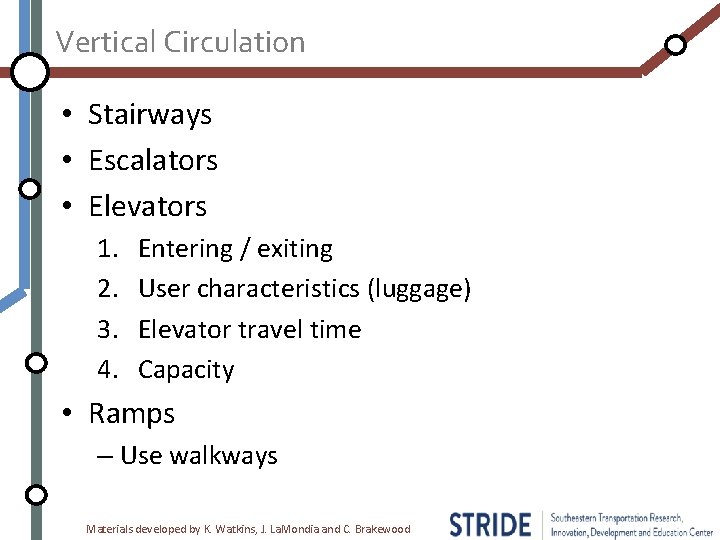
Vertical Circulation • Stairways • Escalators • Elevators 1. 2. 3. 4. Entering / exiting User characteristics (luggage) Elevator travel time Capacity • Ramps – Use walkways Materials developed by K. Watkins, J. La. Mondia and C. Brakewood
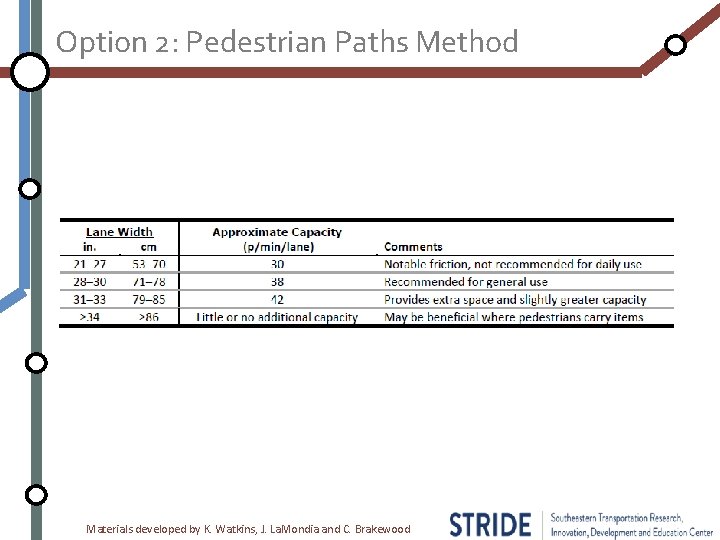
Steps to Determine Required Stairway Width Two methods: 1. LOS Method 2. Pedestrian Paths Method Materials developed by K. Watkins, J. La. Mondia and C. Brakewood
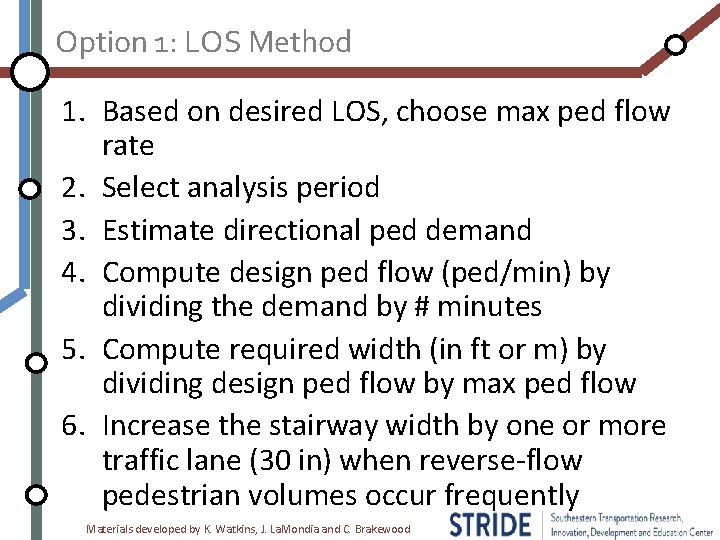
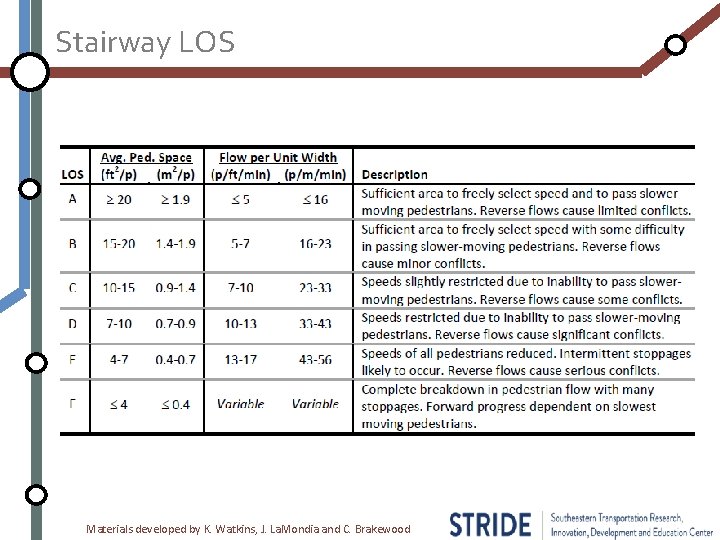
Option 1: LOS Method 1. Based on desired LOS, choose max ped flow rate 2. Select analysis period 3. Estimate directional ped demand 4. Compute design ped flow (ped/min) by dividing the demand by # minutes 5. Compute required width (in ft or m) by dividing design ped flow by max ped flow 6. Increase the stairway width by one or more traffic lane (30 in) when reverse-flow pedestrian volumes occur frequently Materials developed by K. Watkins, J. La. Mondia and C. Brakewood
Stairway LOS Materials developed by K. Watkins, J. La. Mondia and C. Brakewood
Option 2: Pedestrian Paths Method Materials developed by K. Watkins, J. La. Mondia and C. Brakewood
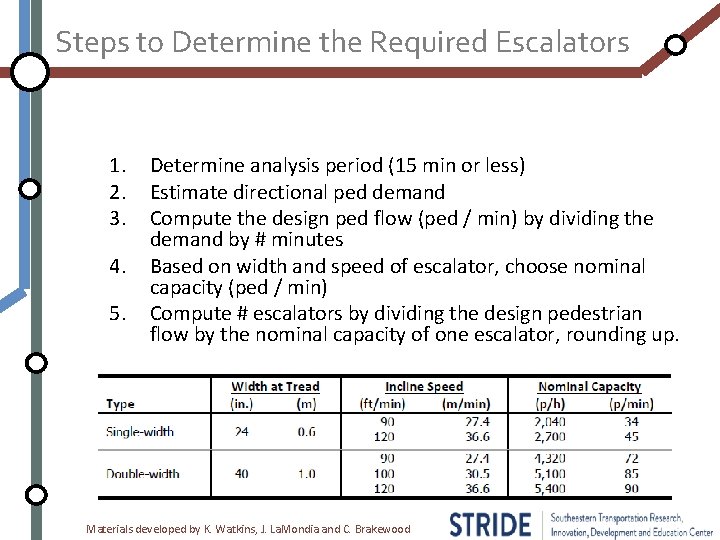
Steps to Determine the Required Escalators 1. 2. 3. 4. 5. Determine analysis period (15 min or less) Estimate directional ped demand Compute the design ped flow (ped / min) by dividing the demand by # minutes Based on width and speed of escalator, choose nominal capacity (ped / min) Compute # escalators by dividing the design pedestrian flow by the nominal capacity of one escalator, rounding up. Materials developed by K. Watkins, J. La. Mondia and C. Brakewood
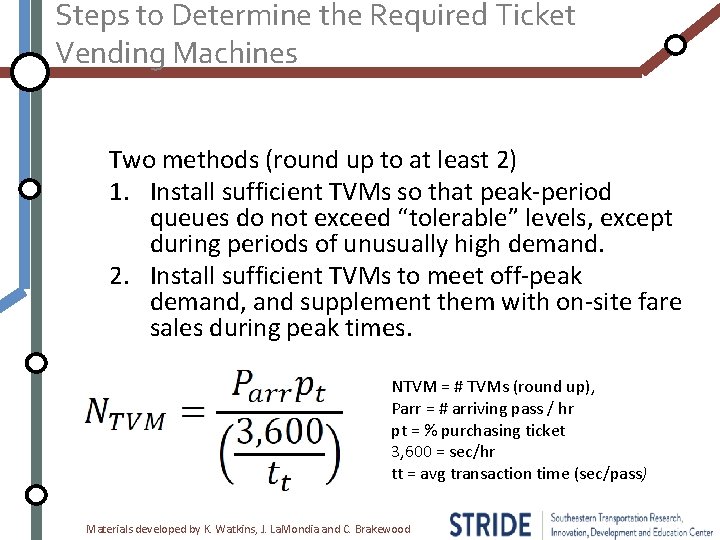
Steps to Determine the Required Ticket Vending Machines Two methods (round up to at least 2) 1. Install sufficient TVMs so that peak-period queues do not exceed “tolerable” levels, except during periods of unusually high demand. 2. Install sufficient TVMs to meet off-peak demand, and supplement them with on-site fare sales during peak times. NTVM = # TVMs (round up), Parr = # arriving pass / hr pt = % purchasing ticket 3, 600 = sec/hr tt = avg transaction time (sec/pass) Materials developed by K. Watkins, J. La. Mondia and C. Brakewood
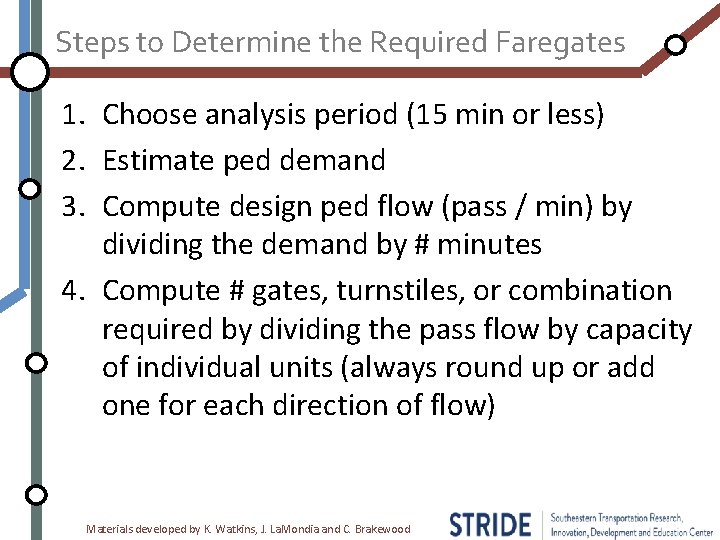
Steps to Determine the Required Faregates 1. Choose analysis period (15 min or less) 2. Estimate ped demand 3. Compute design ped flow (pass / min) by dividing the demand by # minutes 4. Compute # gates, turnstiles, or combination required by dividing the pass flow by capacity of individual units (always round up or add one for each direction of flow) Materials developed by K. Watkins, J. La. Mondia and C. Brakewood
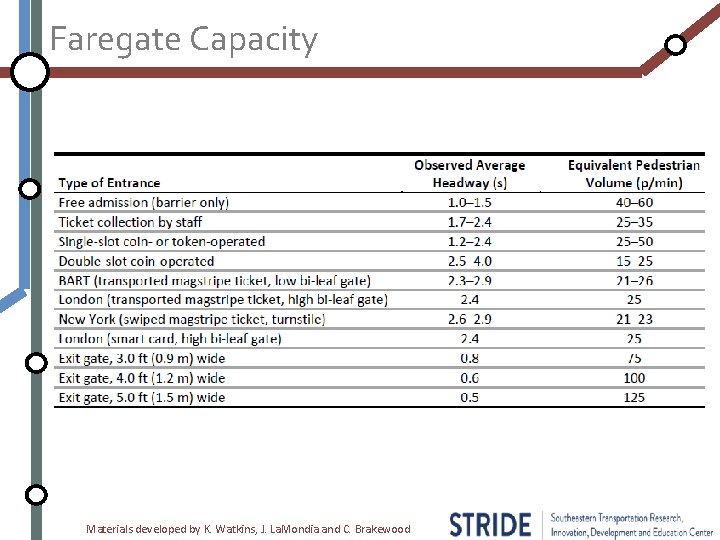
Faregate Capacity Materials developed by K. Watkins, J. La. Mondia and C. Brakewood
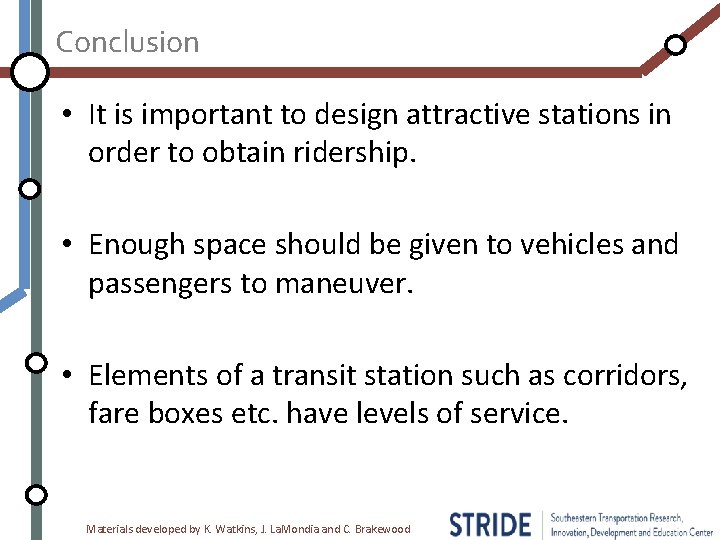
Conclusion • It is important to design attractive stations in order to obtain ridership. • Enough space should be given to vehicles and passengers to maneuver. • Elements of a transit station such as corridors, fare boxes etc. have levels of service. Materials developed by K. Watkins, J. La. Mondia and C. Brakewood
Reference Materials in this lecture were taken from: • TCRP Report 165, “Transit Capacity and Quality of Service Manual, 3 rd edition”, 2013 • TCRP Report 153, “Guidelines for providing access to public transportation stations” 2012. • Manual, Highway Capacity. "HCM 2000. " Washington, DC: Transportation Research Board (2000). Materials developed by K. Watkins, J. La. Mondia and C. Brakewood