
Unit 6 Periodic Trends 6 1 Basics of
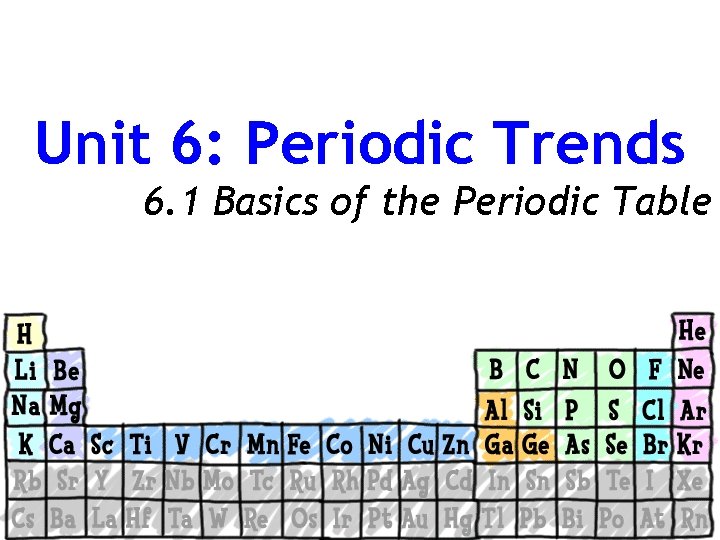
Unit 6: Periodic Trends 6. 1 Basics of the Periodic Table
After today, you will be able to… • Describe how the Periodic Table is arranged today • Explain basic similarities and differences among groups and periods on the Periodic Table • Locate and label common groups on the Periodic Table • Locate and list properties of metals and nonmetals • Describe what a metalloid is
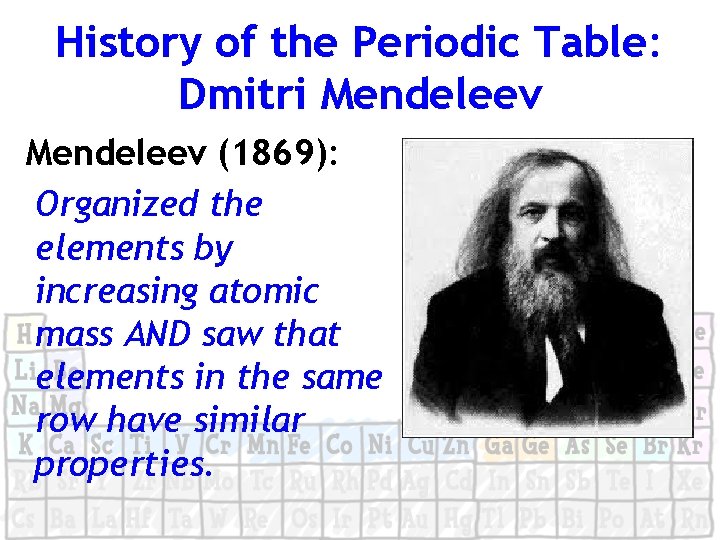
History of the Periodic Table: Dmitri Mendeleev (1869): Organized the elements by increasing atomic mass AND saw that elements in the same row have similar properties.
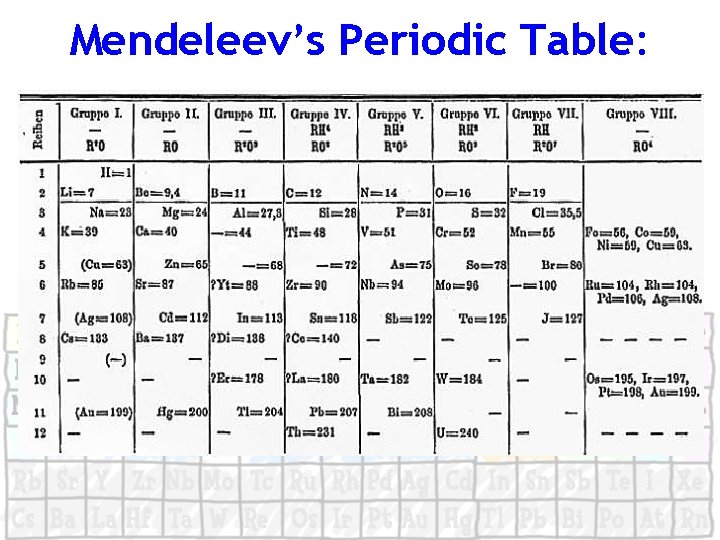
Mendeleev’s Periodic Table:
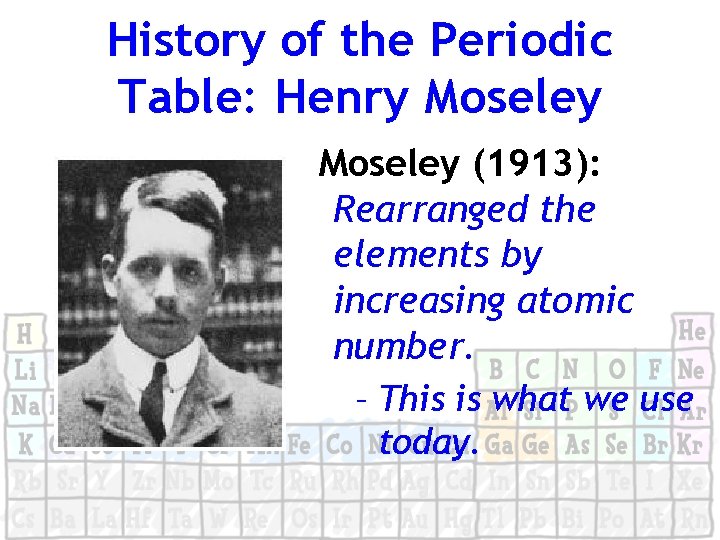
History of the Periodic Table: Henry Moseley (1913): Rearranged the elements by increasing atomic number. – This is what we use today.

Periodic Law “When elements are arranged in order of increasing atomic number, there is a periodic pattern in their physical and chemical properties. ”
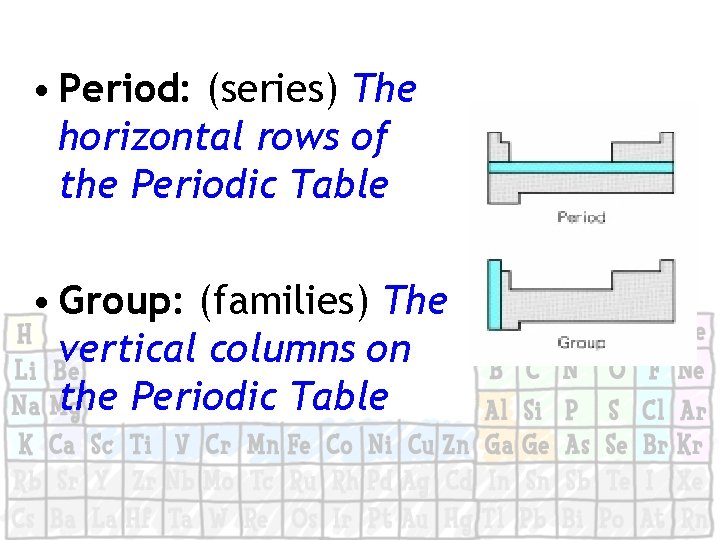
• Period: (series) The horizontal rows of the Periodic Table • Group: (families) The vertical columns on the Periodic Table
Elements in the same group have similar properties. • Groups are numbered 1 -18
Elements in the same period do not have similar properties. • Periods are numbered 1 -7 • But they do have the same number of occupied energy levels.
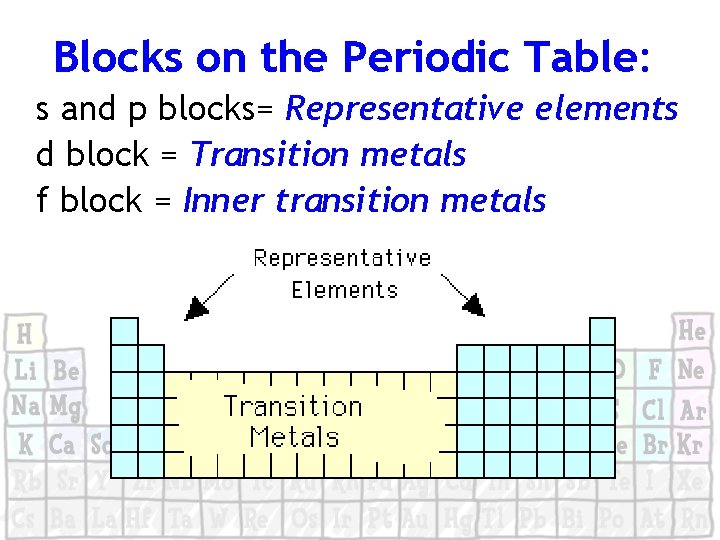
Blocks on the Periodic Table: s and p blocks= Representative elements d block = Transition metals f block = Inner transition metals
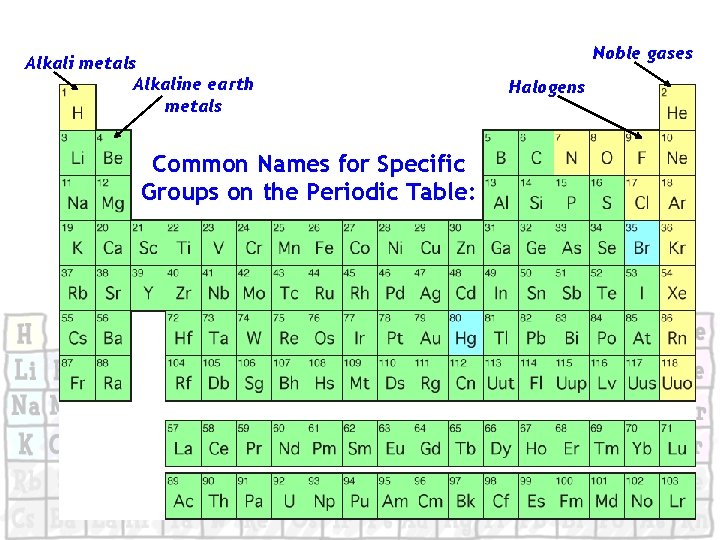
Alkali metals Alkaline earth metals Common Names for Specific Groups on the Periodic Table: Noble gases Halogens
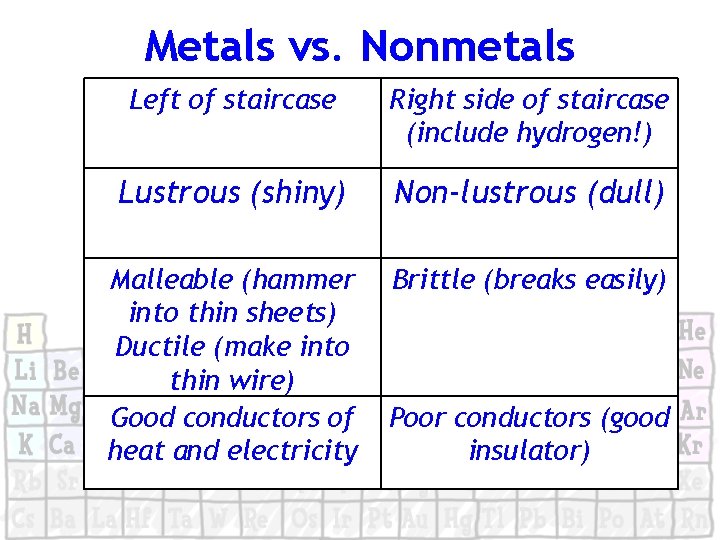
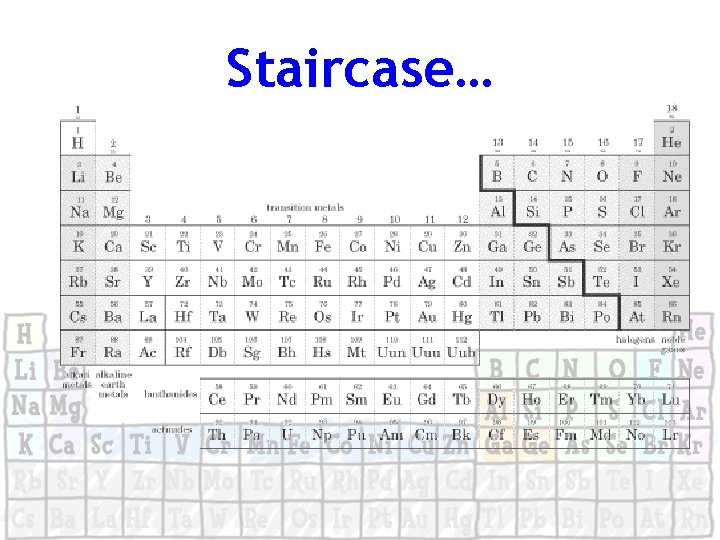
Metals vs. Nonmetals Left of staircase Right side of staircase (include hydrogen!) Lustrous (shiny) Non-lustrous (dull) Malleable (hammer into thin sheets) Ductile (make into thin wire) Good conductors of heat and electricity Brittle (breaks easily) Poor conductors (good insulator)
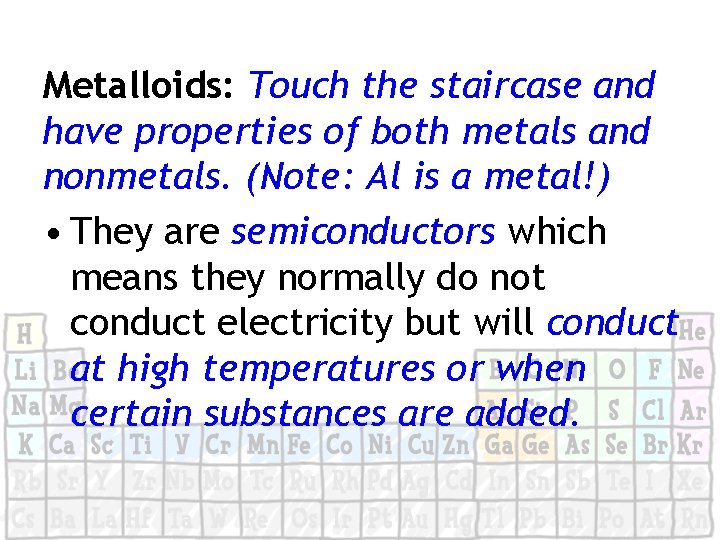
Metalloids: Touch the staircase and have properties of both metals and nonmetals. (Note: Al is a metal!) • They are semiconductors which means they normally do not conduct electricity but will conduct at high temperatures or when certain substances are added.
Staircase…
And now for your viewing pleasure… Do NOT try this at home!
- Slides: 15