
Unit 6 Learning Module 27 Operant Conditioning Comparing
- Slides: 18
Unit 6 Learning Module 27 Operant Conditioning
Comparing Classical and Operant �Both classical and operant conditioning use acquisition, extinction, spontaneous recovery, generalization, and discrimination. �Classical conditioning uses reflexive behavior that occurs as an automatic response to some stimulus. � Ask: Is the behavior something the animal does NOT control? YES. Does the animal have a choice in how to behave? NO. - Classical conditioning. �Operant conditioning uses operant or voluntary behavior – voluntary behavior that is shaped by consequences. � Ask: Is the behavior something the animal can control? YES. Does the animal have a choice in how to behave? YES. - Operant Conditioning.
Operant Conditioning �A type of learning in which the frequency of a behavior depends on the consequence that follows that behavior � The frequency will increase if the consequence is reinforcing to the subject. � The frequency will decrease if the consequence is not reinforcing or punishing to the subject.
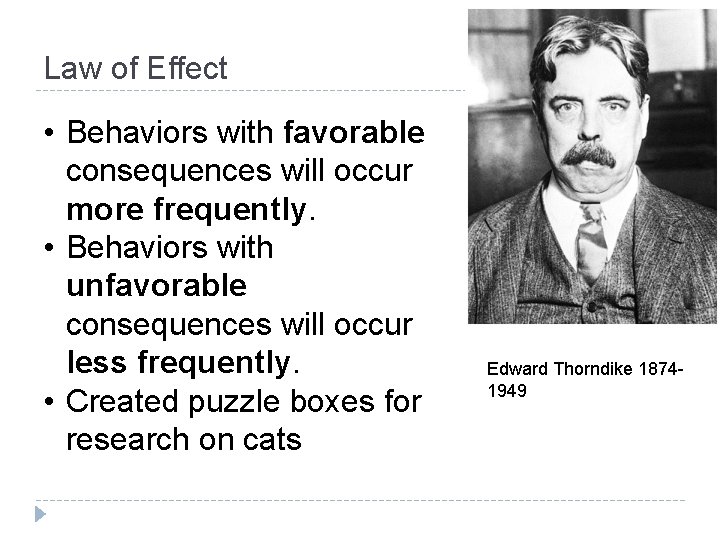
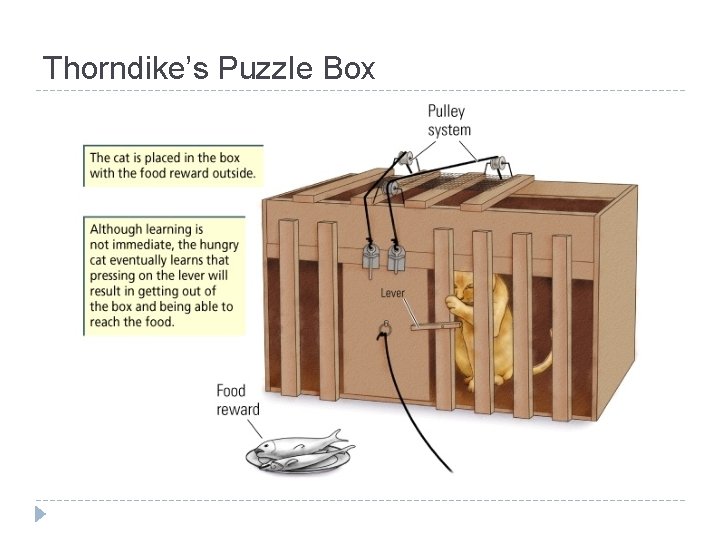
Law of Effect • Behaviors with favorable consequences will occur more frequently. • Behaviors with unfavorable consequences will occur less frequently. • Created puzzle boxes for research on cats Edward Thorndike 18741949
Thorndike’s Puzzle Box
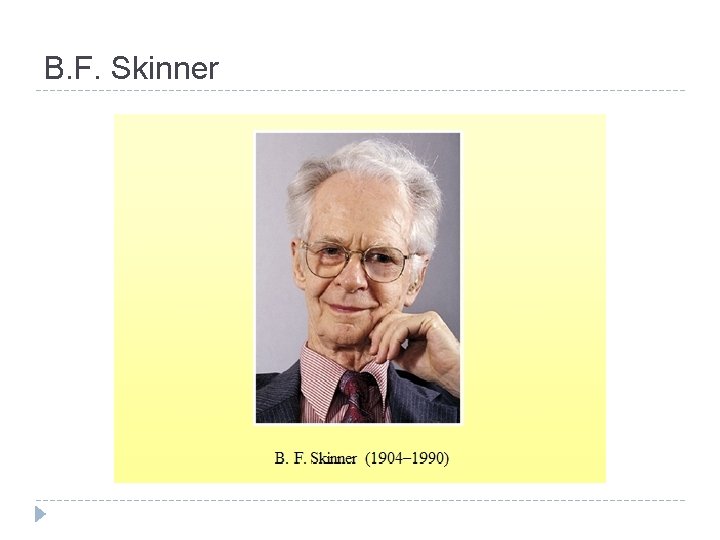
B. F. Skinner
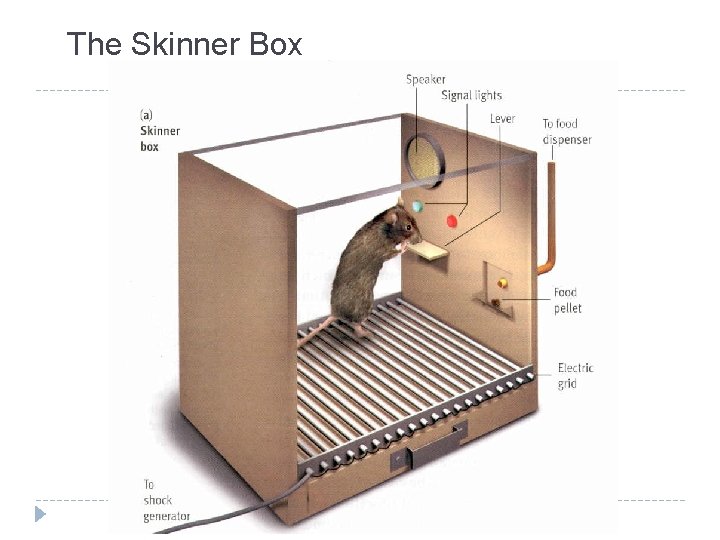
The Skinner Box
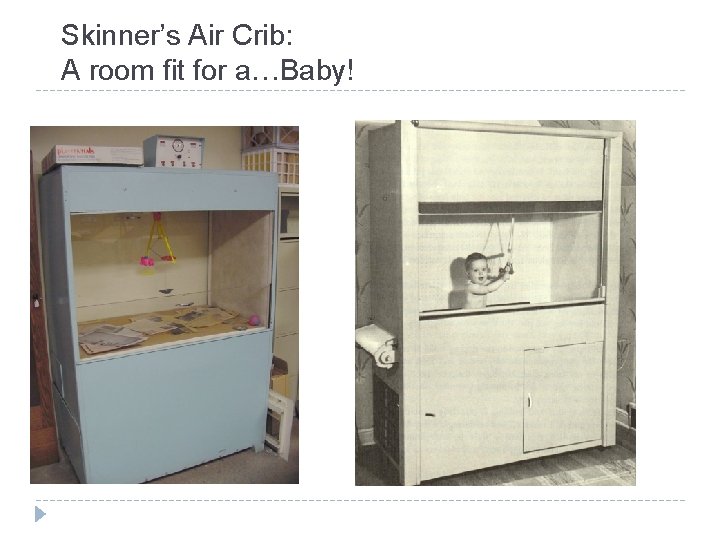
Skinner’s Air Crib: A room fit for a…Baby!
Skinner Cont. � Reinforcement - Any consequence that increases the likelihood of the behavior it follows � Reinforcement � Shaping is ALWAYS GOOD!!! Behaviors � Guide behaviors towards closer and closer approximations of the desired behavior � Build on existing behaviors � Discriminative stimulus: only respond to that particular stimulus and nothing else
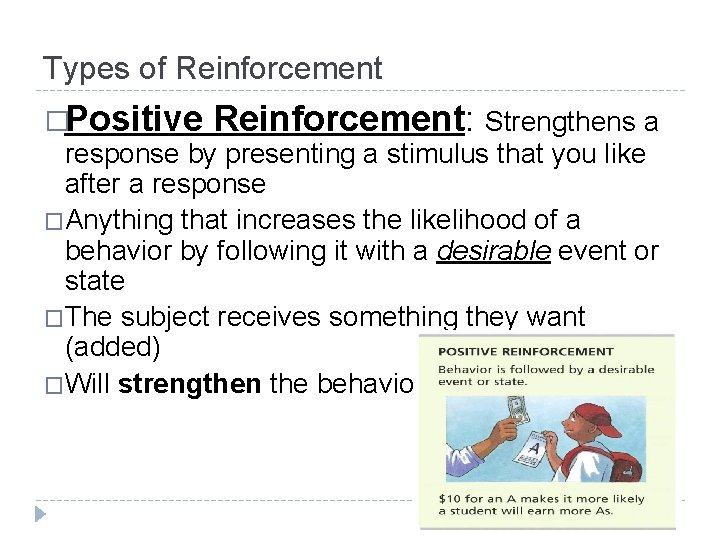
Types of Reinforcement �Positive Reinforcement: Strengthens a response by presenting a stimulus that you like after a response �Anything that increases the likelihood of a behavior by following it with a desirable event or state �The subject receives something they want (added) �Will strengthen the behavior
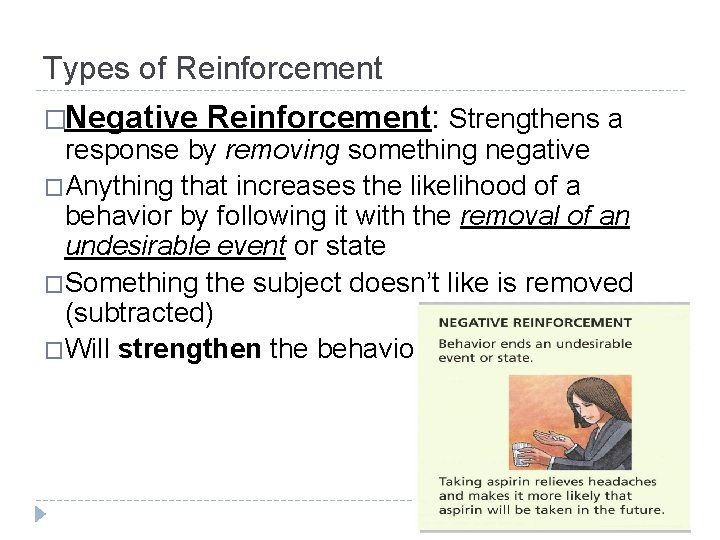
Types of Reinforcement �Negative Reinforcement: Strengthens a response by removing something negative �Anything that increases the likelihood of a behavior by following it with the removal of an undesirable event or state �Something the subject doesn’t like is removed (subtracted) �Will strengthen the behavior
Billy Throws a Tantrum � Billy throws a tantrum, his parents give in for the sake of peace and quiet. � How is this an example of positive reinforcement? � The child’s tantrum is reinforced when the parents give in (pos. reinforcement) � How is the an example of negative reinforcement? � The parents’ behavior will be reinforced when Billy stops screaming (neg. reinforcement).
Primary and Conditioned Reinforcers �Primary: Something that is naturally reinforcing �Food, warmth, water, etc. �Satisfies a biological need �Conditioned/Secondary: learned association through paring with a primary �Money, grades
Immediate and Delayed Reinforcement �Immediate reinforcers – behaviors that immediately precede the reinforcer becomes more likely to occur �Delayed Reinforcer: forgoing a small immediate reinforcement for a greater reinforcement later. ____________________ _ �Immediate reinforcement is more effective than delayed reinforcement �Ability to delay gratification predicts higher achievement
Reinforcement Schedule �A pattern that defines how often a desired response will be reinforced � Continuous: reinforce every single response � Rapid acquisition but rapid extinction � Partial/intermittent: reinforce part of the time � Slower learning but harder to extinguish � Includes the following types: �Fixed-interval and variable-interval �Fixed-ratio and variable-ratio
Cont. � Fixed-Ratio: reinforce after a set number of responses The faster the subject responds, the more reinforcements they will receive. � Ex…piece work: You get $5 for every 10 widgets you make. � � Variable Ratio: reinforcement after unpredictable number of responses This schedule is very resistant to extinction. � Sometimes called the “gambler’s schedule”; similar to a slot machine or fishing �
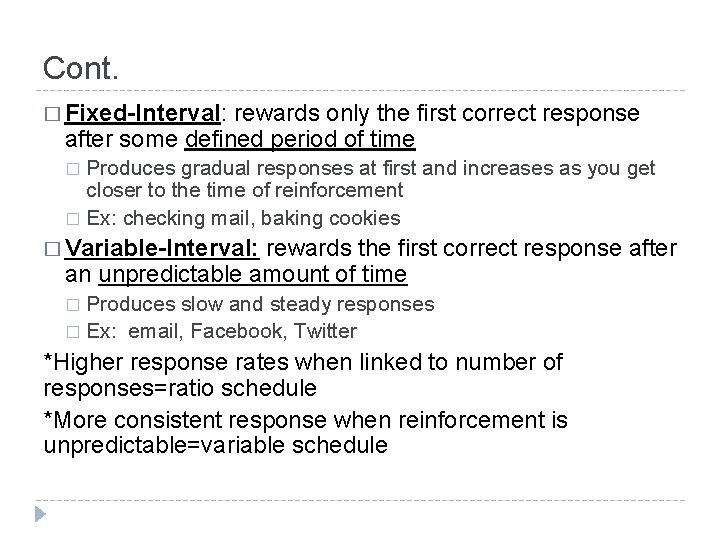
Cont. � Fixed-Interval: rewards only the first correct response after some defined period of time Produces gradual responses at first and increases as you get closer to the time of reinforcement � Ex: checking mail, baking cookies � � Variable-Interval: rewards the first correct response after an unpredictable amount of time Produces slow and steady responses � Ex: email, Facebook, Twitter � *Higher response rates when linked to number of responses=ratio schedule *More consistent response when reinforcement is unpredictable=variable schedule
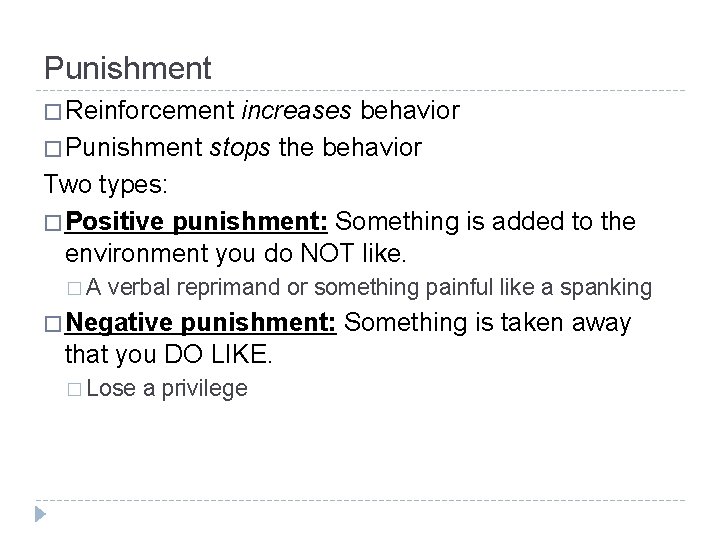
Punishment � Reinforcement increases behavior � Punishment stops the behavior Two types: � Positive punishment: Something is added to the environment you do NOT like. �A verbal reprimand or something painful like a spanking � Negative punishment: Something is taken away that you DO LIKE. � Lose a privilege