
UNIT 6 INFECTIOUS DISEASES Lesson 6 1 Bacteria
UNIT 6 INFECTIOUS DISEASES
Lesson 6. 1 Bacteria �During the 1960’s and ‘ 70’s, pharmaceutical companies and research laboratories turned their attention to cancer, heart disease, diabetes, and other non-infectious diseases. It was assumed that the threat of high numbers of human deaths due to infectious disease had been virtually eliminated by the production of medications, sanitation, and pest control �Infectious diseases are making a comeback as significant medical concerns. This is due in part to the development of antibiotic resistance in several strains of bacteria and the human exposure to new, more virulent viruses
Lesson 6. 1 Bacteria �Infectious diseases are caused by the entrance and reproduction of an infectious agent in a body. More commonly, infectious diseases are considered diseases that spread from person-to -person and have the potential to become epidemics Some diseases are spread from animals to humans, and these are referred to as zoonotic.
Lesson 6. 1 Bacteria �Bacteria is classified based on the reaction to the Gram stain, which is dependent on the structure of the bacterial cell wall. Bacteria with tightly formed cell walls consisting of multiple peptidoglycan layers retain the Gram stain’s iodine and crystal violet complex and appear purple. (Gram positive) Bacteria with a looser cell wall structure, which contains large amounts of lipids and fewer peptidoglycan layers, will not retain the iodine and crystal violet complex and will appear pink due to the safranin counterstain (Gram negative) �Bacteria have three basic shapes: cocci (spherical), bacilli (rectangular), and spirochete (spiral). The
Lesson 6. 1 Bacteria �The effectiveness of antibiotics is dependent on the mechanism of action of the drug and the structure of the bacteria. �penicillin acts by inhibiting the formation of the peptidoglycan linkages found in the cell walls of Gram positive bacteria. It has little effect on the formation of the cell walls of Gram negative bacteria, and hence has little effectiveness in treating infections caused by Gram negative bacteria
Lesson 6. 1 Bacteria �Streptomycin works by binding to the 16 S subunit of the ribosome and inhibiting protein production in the bacteria. Streptomycin is very effective against Gram negative bacteria. �Tetracycline, a broad spectrum antibiotic is effective against both Gram positive and negative bacteria. It binds to a subunit of the ribosome thus inhibiting protein production. �Neither drug inhibits protein production by human cells because the human ribosome has a different structure than the bacterial ribosome and the drugs do not interact with the human ribosome.
6. 1. 1 What Are Bacteria? �“Germ” commonly refers to any agent that can cause illness, even though the term technically means “grow” �One bacterial cell can divide to produce two new bacterial cells (binary fission) �Bacteria are living organisms and need an energy source (light, food) �Bacteria can harm human tissue 3 ways: Directly attach and digest Produce toxins Trigger immune response �Bacteria are smaller than human cells and require magnification of 1000 x to observe
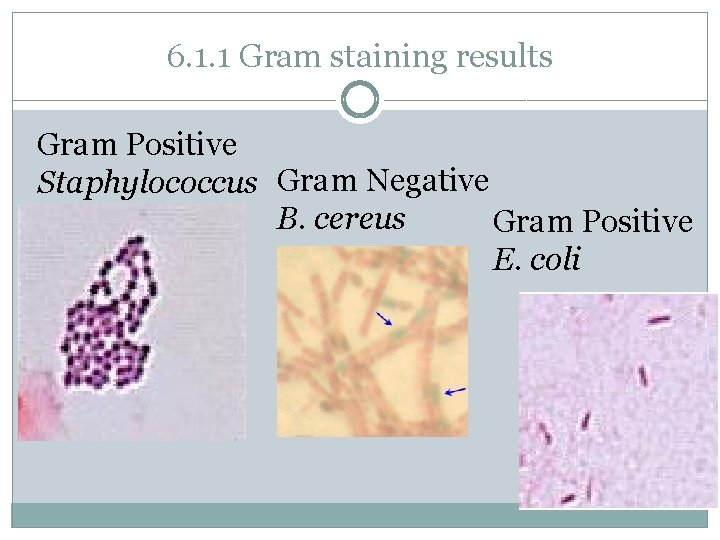
6. 1. 1 Gram staining results Gram Positive Staphylococcus Gram Negative B. cereus Gram Positive E. coli
6. 1. 2 How Do Bacteria In The Mouth Affect The Heart? �Anna Garcia had heart valve damage due to rheumatic fever. �Rheumatic fever is caused by Streptococcus, which also causes Strep throat. Damage to the heart is caused by the body’s immune response (antibodies) to the bacteria attacking the heart valve tissue �Other bacteria can get into the bloodstream and cause damage to the heart lining or valves, causing bacterial endocarditis. �Bacteria normally found in the mouth has been associated with build-up of plaque in the arteries, leading to atherosclerosis and increased risk of strokes and heart attacks.
6. 1. 3 Which Antibiotic Is The Best Choice? �The first antibiotic, penicillin, was discovered by Alexander Fleming in 1928 and was available for human use 15 years later. �Today there are many antibiotics available to treat infections Gram positive bacteria: penicillin, baciatracin, ethryomycin Gram negative: streptomycin Broad spectrum: cephalosporin, neomycin, tetracycline �Many bacteria are developing antibiotic resistance , decreasing the number of effective antibiotics available
6. 1. 3 Which Antibiotic Is The Best Choice? �In order to find which antibiotic will be most effective for a patient with a bacterial infection, hospitals will grow bacteria from the patient on a petri dish with discs that contain different antibiotics. �If effective, an antibiotic will inhibit the growth of the bacteria around it. �The more effective, the larger this “zone of inhibition” will be.
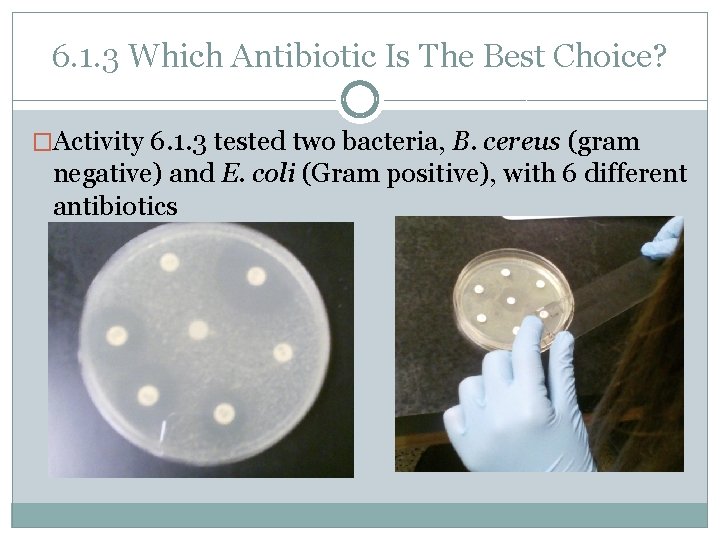
6. 1. 3 Which Antibiotic Is The Best Choice? �Activity 6. 1. 3 tested two bacteria, B. cereus (gram negative) and E. coli (Gram positive), with 6 different antibiotics
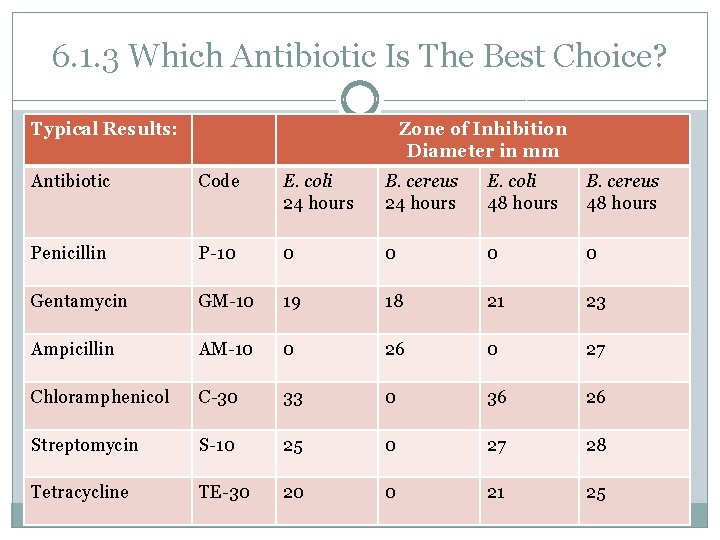
6. 1. 3 Which Antibiotic Is The Best Choice? Typical Results: Zone of Inhibition Diameter in mm Antibiotic Code E. coli 24 hours B. cereus 24 hours E. coli 48 hours B. cereus 48 hours Penicillin P-10 0 0 Gentamycin GM-10 19 18 21 23 Ampicillin AM-10 0 26 0 27 Chloramphenicol C-30 33 0 36 26 Streptomycin S-10 25 0 27 28 Tetracycline TE-30 20 0 21 25
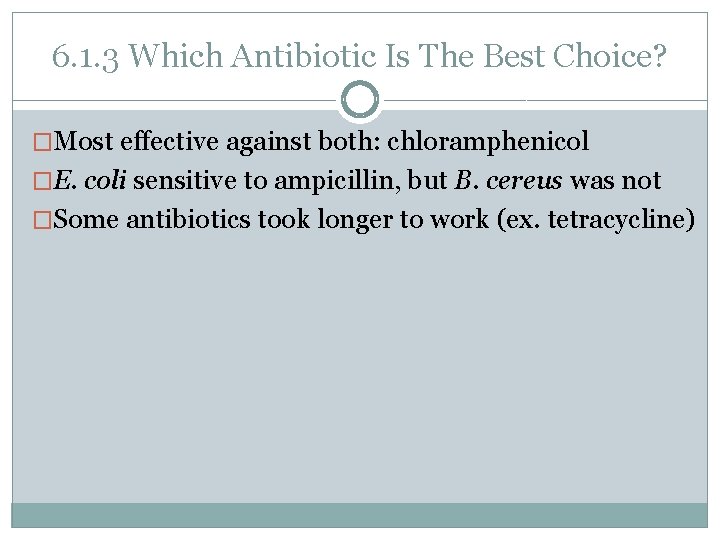
6. 1. 3 Which Antibiotic Is The Best Choice? �Most effective against both: chloramphenicol �E. coli sensitive to ampicillin, but B. cereus was not �Some antibiotics took longer to work (ex. tetracycline)
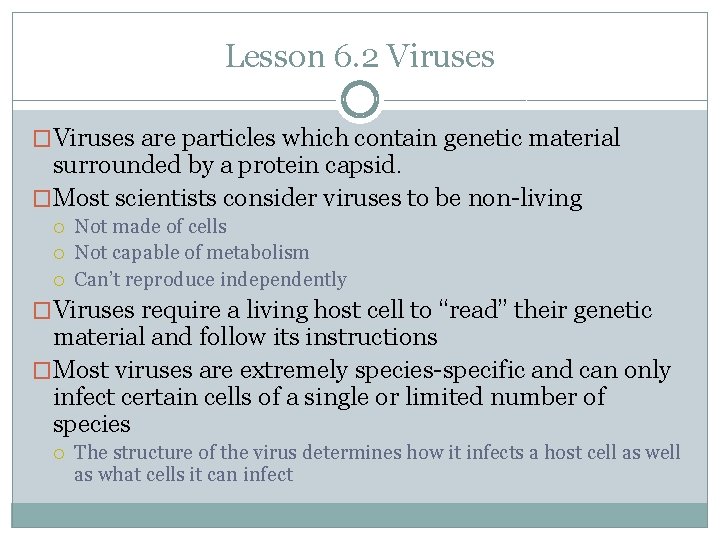
Lesson 6. 2 Viruses �Viruses are particles which contain genetic material surrounded by a protein capsid. �Most scientists consider viruses to be non-living Not made of cells Not capable of metabolism Can’t reproduce independently �Viruses require a living host cell to “read” their genetic material and follow its instructions �Most viruses are extremely species-specific and can only infect certain cells of a single or limited number of species The structure of the virus determines how it infects a host cell as what cells it can infect
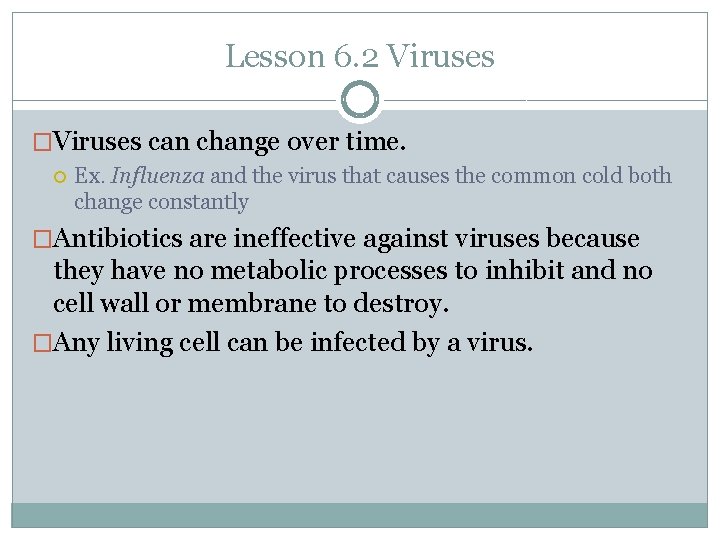
Lesson 6. 2 Viruses �Viruses can change over time. Ex. Influenza and the virus that causes the common cold both change constantly �Antibiotics are ineffective against viruses because they have no metabolic processes to inhibit and no cell wall or membrane to destroy. �Any living cell can be infected by a virus.
6. 2. 1 What Are Viruses �Viruses cause a number of human diseases including polio, chicken pox, measles, small pox, hepatitis B, and mumps. �You may not have heard of these diseases because there are vaccines to protect people from getting sick due to infections with these viruses. �Some viruses you may be more familiar with are rabies, herpes, SARS and HIV. �
Lesson 6. 3 Public Health Campaign �Throughout history infectious diseases have spread death and despair. From the Black Plague of the 14 th century to HIV and SARS in the 21 st century, epidemics and pandemics have killed millions of people. During the two years between 1918 to 1920, over 25 million people died due to an Influenza Pandemic—more deaths than during all of World War 1 �The development of the small pox, polio, measles, rubella, and chicken pox vaccines offered hope of eradicating the threat of viral diseases. U nfortunately, new viral diseases have developed over the past two decades and the rapid mutations of the causative viruses make the development of effective vaccines very difficult if not impossible.
America’s Forgotten Pandemic AND THE SEARCH FOR THE ELUSIVE KILLER OF 1918 JENNIFER INGRAM
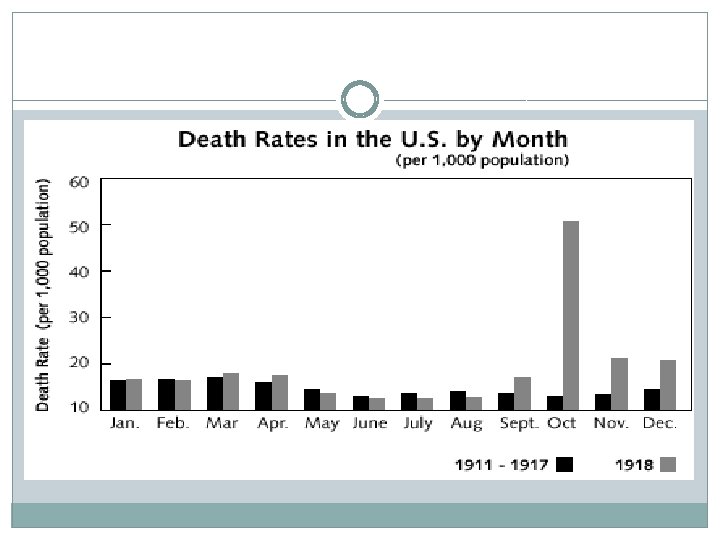
The Beginning �During the spring of 1918, Europe, Asia, and the U. S. was hit with an ordinary “ 3 day flu” �That fall it returned, killing 2. 5 % of its victims, reaching the remotest corners of the world. �The Spanish Flu, as it came to be called, arrived in Boston with a group of sailors in late August, 1918. It quickly moved throughout the country as it swept the world.
The Symptoms �This influenza was unlike any ever seen, attacking and killing young, healthy adults rather than elderly or very young favored by the ordinary flu. �Symptoms included: weakness, muscle and joint pain, headache rapid development of high (105 degrees F) fever, delirium, cyanosis, blackening of feet and hands, pneumonia lungs filled with bloody fluid
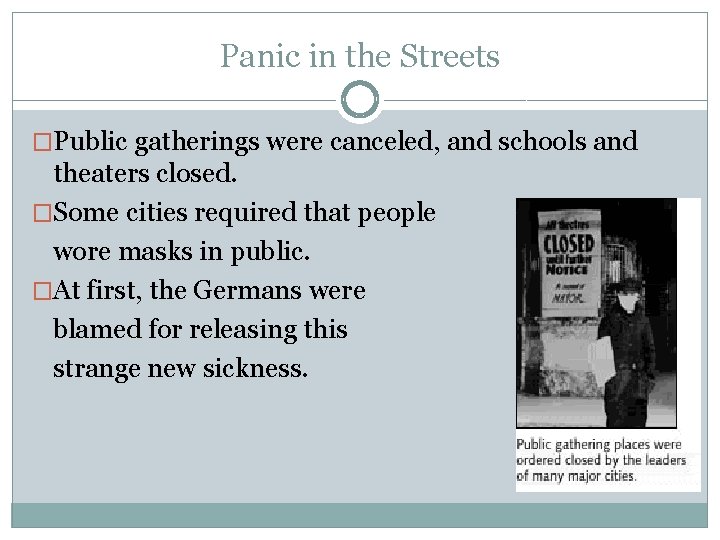
Panic in the Streets �Public gatherings were canceled, and schools and theaters closed. �Some cities required that people wore masks in public. �At first, the Germans were blamed for releasing this strange new sickness.
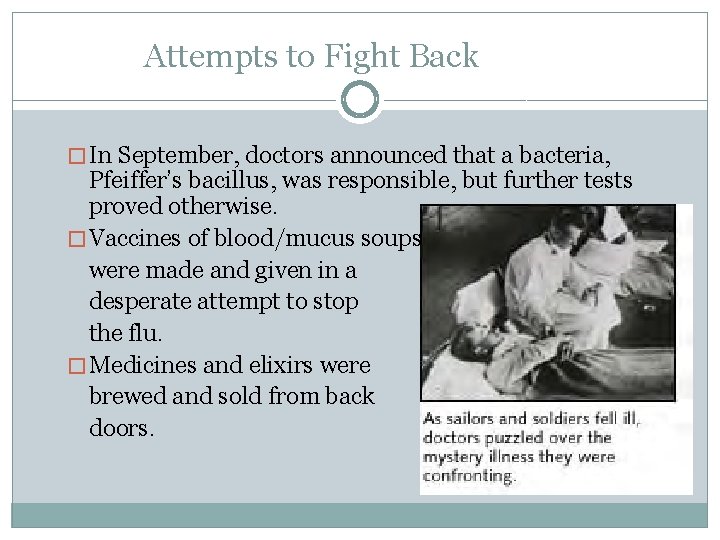
Attempts to Fight Back � In September, doctors announced that a bacteria, Pfeiffer’s bacillus, was responsible, but further tests proved otherwise. � Vaccines of blood/mucus soups were made and given in a desperate attempt to stop the flu. � Medicines and elixirs were brewed and sold from back doors.
The Death Toll �The 1918 influenza killed an estimated 20 -40 million worldwide, about 600, 000 in the U. S. alone. �This is more than both world wars combined, and more than any other illness or famine in a comparable time period (including Bubonic Plague).
The Death Toll �Coffins were piled up in funeral homes, doctors’ homes, even in the streets. When the coffin supply ran out, bodies were stacked in morgues. �Victims included: one of P. T. Barnum’s first midgets, “Admiral Dot” and Buffalo Bill Cody’s daughter Irmy Cody Garlow died of influenza. Presidents Franklin Roosevelt and Woodrow Wilson, as well as General John Pershing, contracted the flu and recovered.
Some Early Searches �Unethical studies with prisoners in 1918. �Continued study of Pfeiffer’s bacillus. �Studies with antibodies. �Spanish flu receded as mysteriously as it had appeared, taking the killer virus with it. �Scientists knew we needed to understand what made this flu so deadly, in case it ever returned. But what could they do without the virus itself?
Lesson 6. 3 Public Health Campaign �Infectious diseases can spread rapidly through a community as the bacteria or viruses responsible for the disease are passed from person-to-person. �One of the primary means of controlling the spread of the disease is public education. �If people know the symptoms and how the disease is transmitted, they can protect themselves from exposure and seek treatment quickly. � Public service campaigns have often been used to educate people about diseases.
Lesson 6. 3 Public Health Campaign �Public health campaigns usually present information to the public concerning a specific disease’s Symptoms Mode of transmission Treatment options �Effective public health campaigns are also aimed at preventing the spread of infectious disease and include these common components: Hand washing Surface cleaning Use and proper disposal of tissues
Videos �Flu Attack! How a Virus Invades Your Body
- Slides: 30