
Unit 6 Heredity Genetics Genetics The branch of
Unit 6 Heredity
Genetics • Genetics • The branch of biology that studies heredity • Heredity • The passing on of characteristics from parents to offspring through GAMETES (sex cells created in meiosis) • Traits • Characteristics that are inherited from the chromosomes you receive from each parent. (Review Meiosis)
Meiosis & Genetic Variety • Meiosis will result in the production of sex cells (gametes) which show an increase in genetic variety because of: • Crossing over during prophase I – Crossing over is when non-sister chromatids exchange genetic material • Random orientation of chromosomes during metaphase I – Random orientation is when the homologous chromosomes line up on the metaphase plate in a random order
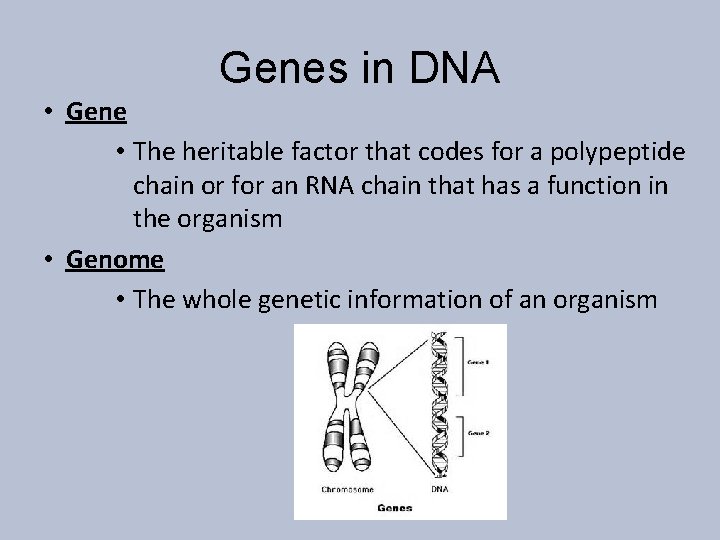
Genes in DNA • Gene • The heritable factor that codes for a polypeptide chain or for an RNA chain that has a function in the organism • Genome • The whole genetic information of an organism
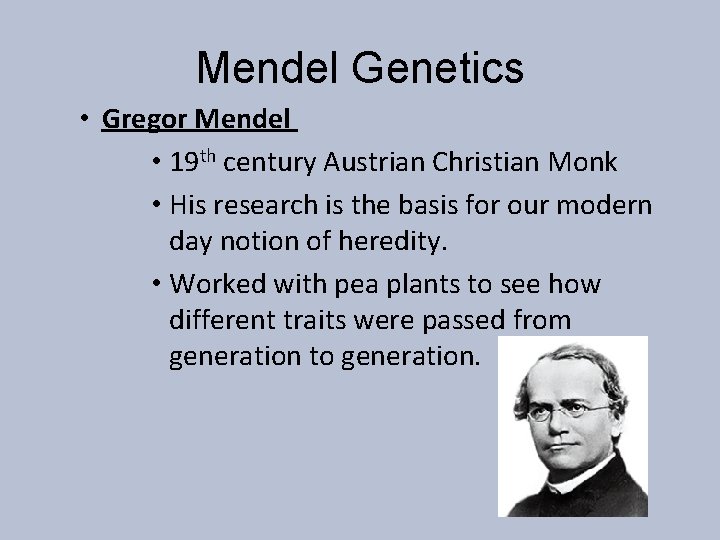
Mendel Genetics • Gregor Mendel • 19 th century Austrian Christian Monk • His research is the basis for our modern day notion of heredity. • Worked with pea plants to see how different traits were passed from generation to generation.
Mendel’s Monohybrid Crosses • Monohybrid Cross = 1 trait that differs in parents • Mendel created hybrids of pea plants from pure breeds – A Pure breed is an organism with no genetic variety • Mendel used pea plant height to determine how traits were passed on • He crossed One pure breed tall parent and One pure breed short parent • Each offspring had a combination of traits from each parents.
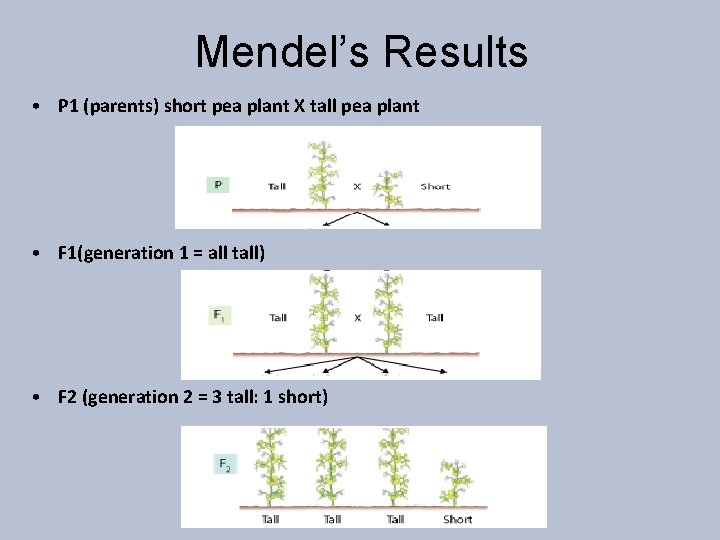
Mendel’s Results • P 1 (parents) short pea plant X tall pea plant • F 1(generation 1 = all tall) • F 2 (generation 2 = 3 tall: 1 short)
Mendel’s Law of Independent Assortment • The Law of Independent Assortment states that every individual has 2 alleles for each gene (trait) • During Meiosis, the chromosomes which carry the alleles for a trait will be randomly distributed to the newly produced gametes. • This means that every gamete produced will be genetically unique from the other gametes.
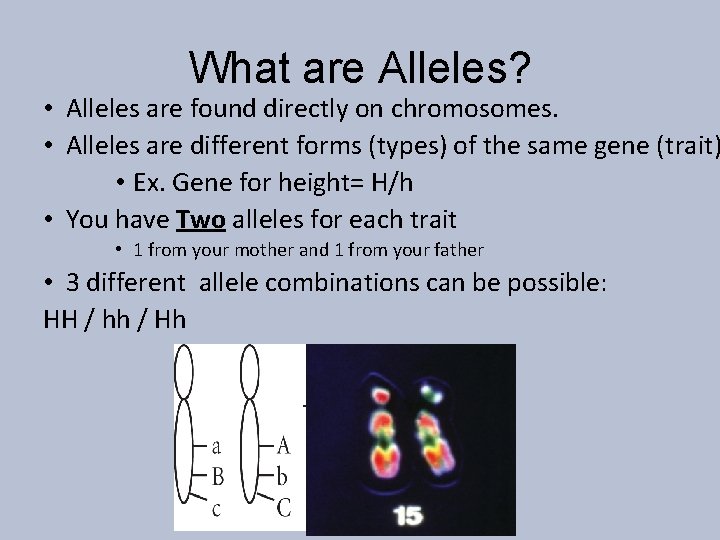
What are Alleles? • Alleles are found directly on chromosomes. • Alleles are different forms (types) of the same gene (trait) • Ex. Gene for height= H/h • You have Two alleles for each trait • 1 from your mother and 1 from your father • 3 different allele combinations can be possible: HH / hh / Hh
Examples of Alleles • Dominant • Trait that shows up and will hide the recessive allele • Examples: HH & Hh = Tall • Recessive • Trait that can be hidden by the dominant allele • Must have two recessive allele to show recessive trait • Examples: hh = short • Phenotype- What the organism looks like • Genotype- The allele combination an organism contains. [HH or Hh or hh]

Combinations of Alleles • Homozygous Dominant • Having 2 dominant alleles • Example: HH • Heterozygous • Having 1 dominant allele and 1 recessive allele • Example: Hh • Homozygous Recessive • Having 2 recessive alleles • Example: hh
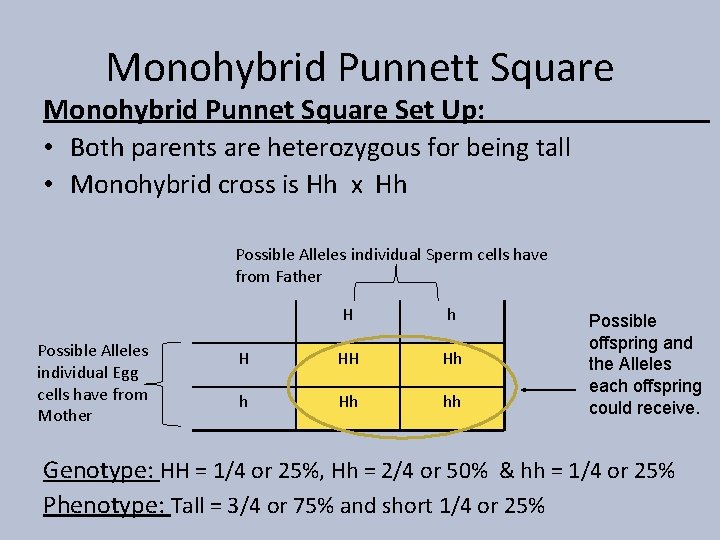
Monohybrid Punnett Square Monohybrid Punnet Square Set Up: • Both parents are heterozygous for being tall • Monohybrid cross is Hh x Hh Possible Alleles individual Sperm cells have from Father Possible Alleles individual Egg cells have from Mother H h H HH Hh hh Possible offspring and the Alleles each offspring could receive. Genotype: HH = 1/4 or 25%, Hh = 2/4 or 50% & hh = 1/4 or 25% Phenotype: Tall = 3/4 or 75% and short 1/4 or 25%
Dihybrid Cross • Dihybrid Crosses = (Creates more varied hybrids) – 2 traits that differ between parents – Example Traits: Height and shape – Each trait gets one letter = • Height = H is tall & h is short • Shape =R is round & r is wrinkled • One parent is heterozygous tall and heterozygous round (Hh and Rr) • One parent is homozygous short and homozygous wrinkled (hh and rr)
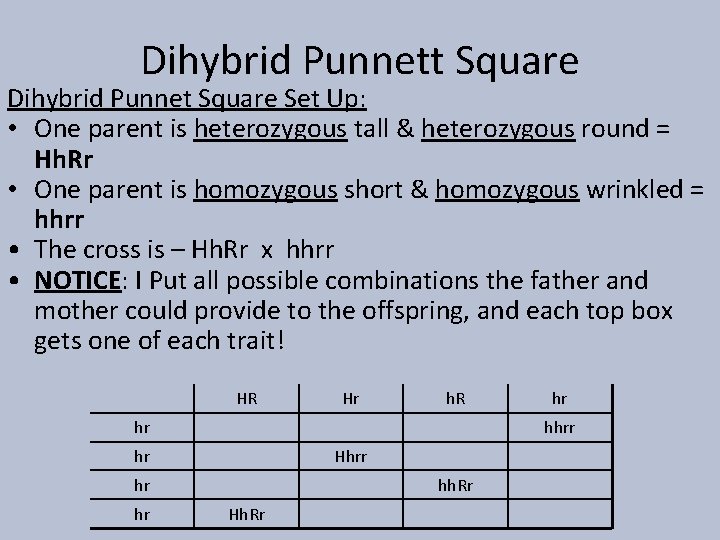
Dihybrid Punnett Square Dihybrid Punnet Square Set Up: • One parent is heterozygous tall & heterozygous round = Hh. Rr • One parent is homozygous short & homozygous wrinkled = hhrr • The cross is – Hh. Rr x hhrr • NOTICE: I Put all possible combinations the father and mother could provide to the offspring, and each top box gets one of each trait! HR Hr h. R hr hhrr hr Hhrr hr hh. Rr Hh. Rr
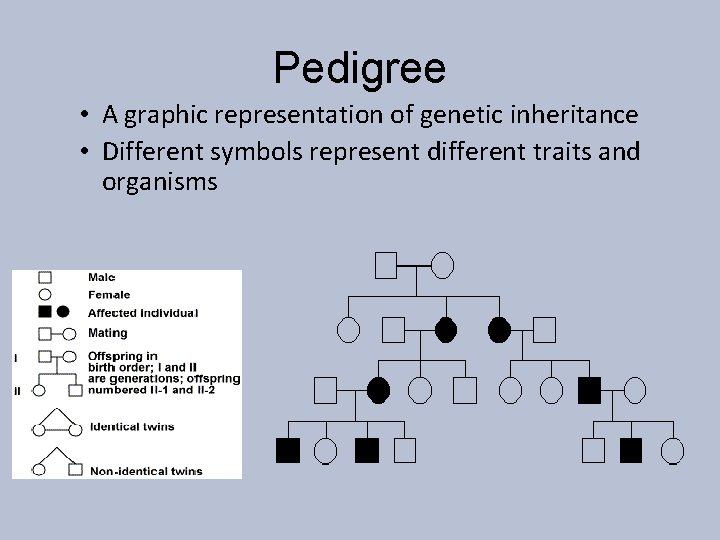
Pedigree • A graphic representation of genetic inheritance • Different symbols represent different traits and organisms
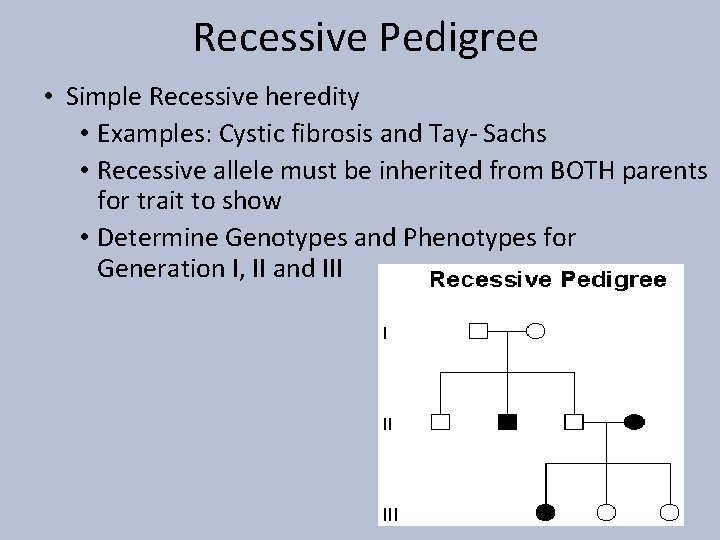
Recessive Pedigree • Simple Recessive heredity • Examples: Cystic fibrosis and Tay- Sachs • Recessive allele must be inherited from BOTH parents for trait to show • Determine Genotypes and Phenotypes for Generation I, II and III
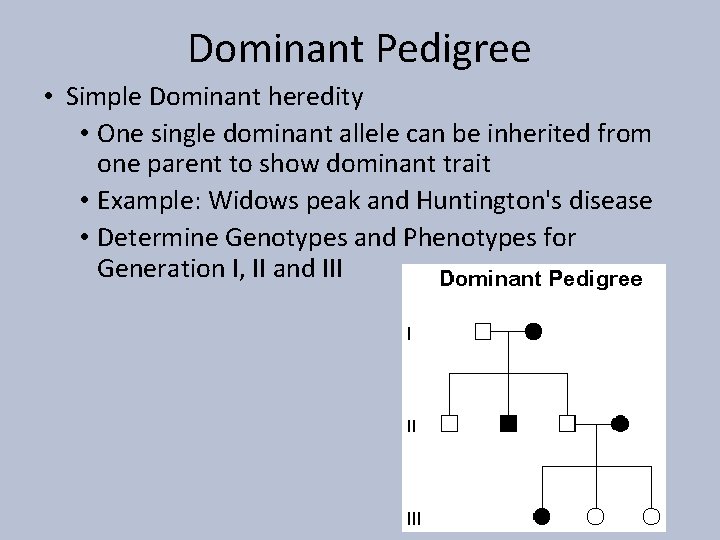
Dominant Pedigree • Simple Dominant heredity • One single dominant allele can be inherited from one parent to show dominant trait • Example: Widows peak and Huntington's disease • Determine Genotypes and Phenotypes for Generation I, II and III
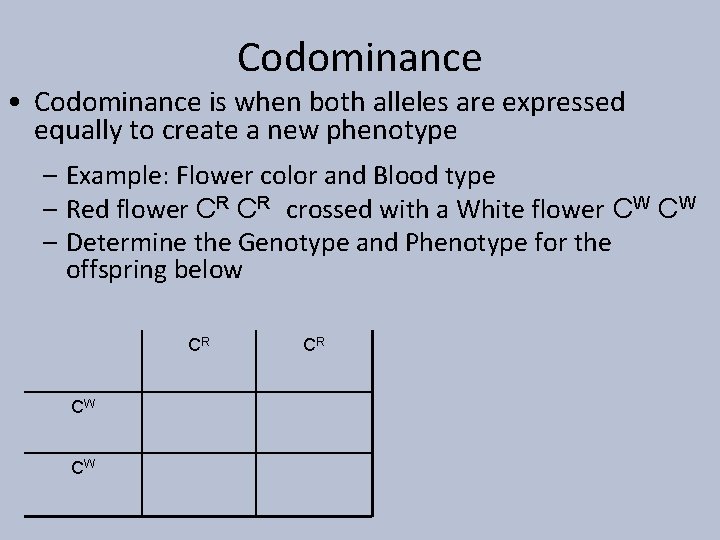
Codominance • Codominance is when both alleles are expressed equally to create a new phenotype – Example: Flower color and Blood type – Red flower CR CR crossed with a White flower CW CW – Determine the Genotype and Phenotype for the offspring below CR CW CW CR
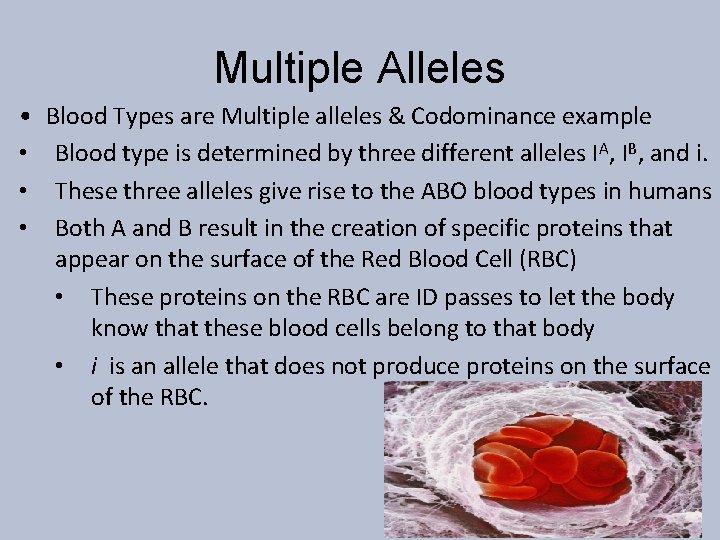
Multiple Alleles • • Blood Types are Multiple alleles & Codominance example Blood type is determined by three different alleles IA, IB, and i. These three alleles give rise to the ABO blood types in humans Both A and B result in the creation of specific proteins that appear on the surface of the Red Blood Cell (RBC) • These proteins on the RBC are ID passes to let the body know that these blood cells belong to that body • i is an allele that does not produce proteins on the surface of the RBC.
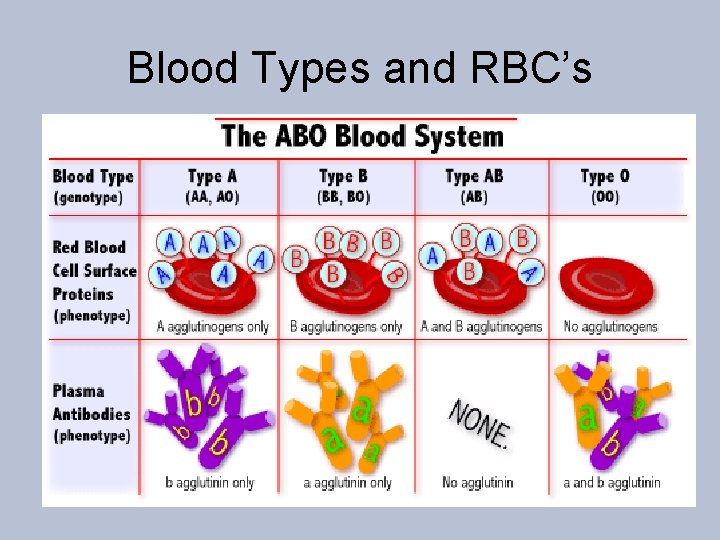
Blood Types and RBC’s
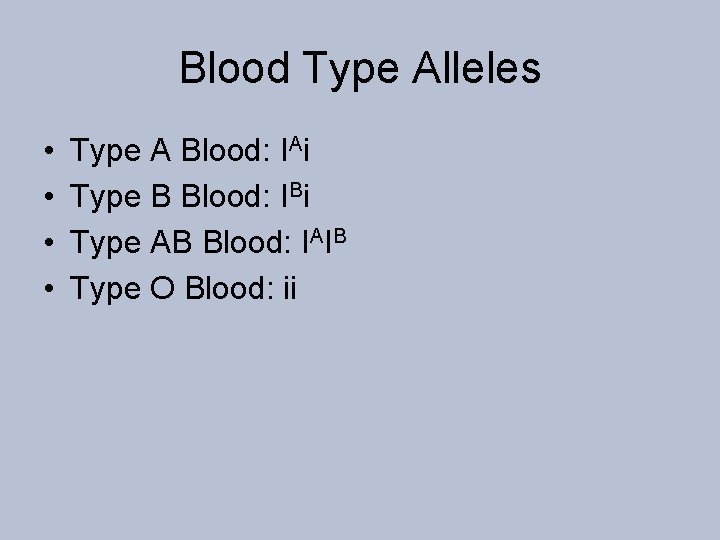
Blood Type Alleles • • Type A Blood: IAi Type B Blood: IBi Type AB Blood: IAIB Type O Blood: ii
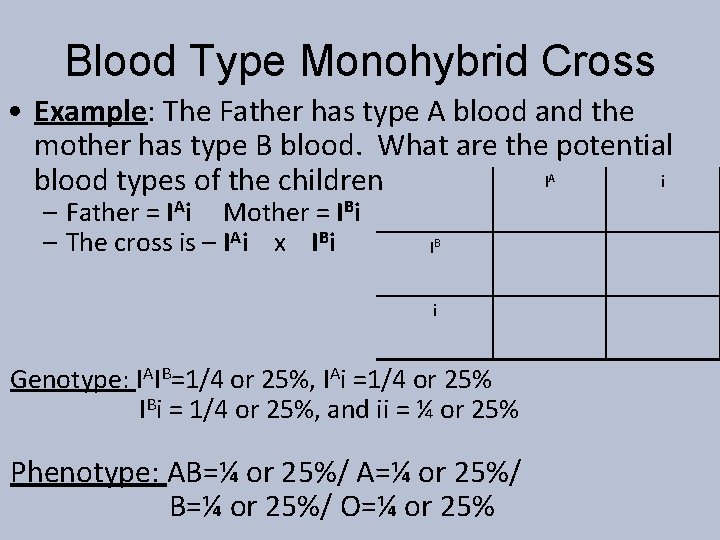
Blood Type Monohybrid Cross • Example: The Father has type A blood and the mother has type B blood. What are the potential I i blood types of the children A – Father = IAi Mother = IBi – The cross is – IAi x IBi IB i Genotype: IAIB=1/4 or 25%, IAi =1/4 or 25% IBi = 1/4 or 25%, and ii = ¼ or 25% Phenotype: AB=¼ or 25%/ A=¼ or 25%/ B=¼ or 25%/ O=¼ or 25%
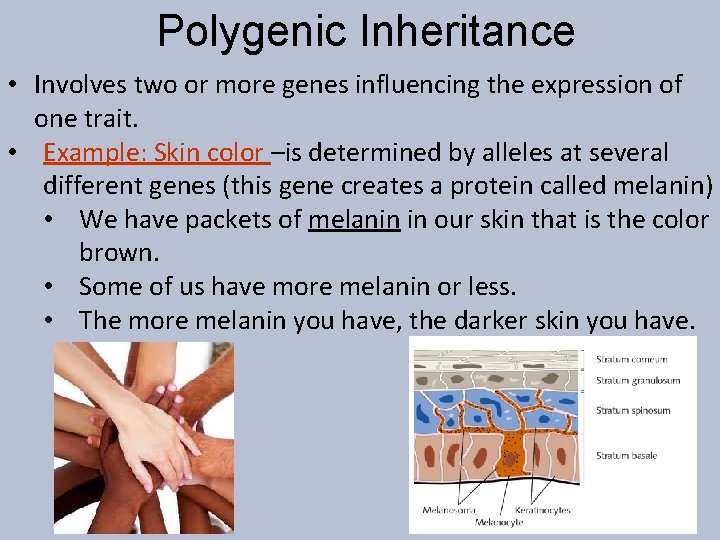
Polygenic Inheritance • Involves two or more genes influencing the expression of one trait. • Example: Skin color –is determined by alleles at several different genes (this gene creates a protein called melanin) • We have packets of melanin in our skin that is the color brown. • Some of us have more melanin or less. • The more melanin you have, the darker skin you have.
Types of Chromosomes • Autosomes – contain genes not associated with sex – In humans there are 22 pairs of autosomal chromosomes • Sex chromosomes – directly control sexual traits. – In humans there is 1 pair of sex chromosomes • Females have two X chromosomes • Males have one X and one Y chromosome
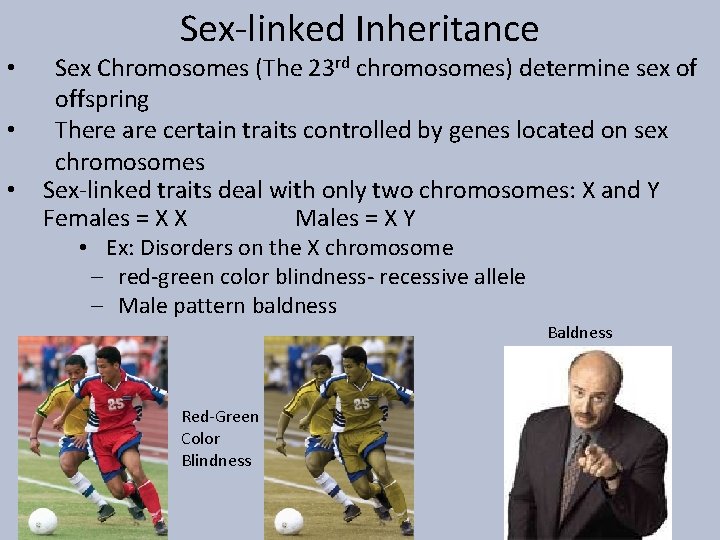
Sex-linked Inheritance • • • Sex Chromosomes (The 23 rd chromosomes) determine sex of offspring There are certain traits controlled by genes located on sex chromosomes Sex-linked traits deal with only two chromosomes: X and Y Females = X X Males = X Y • Ex: Disorders on the X chromosome ‒ red-green color blindness- recessive allele ‒ Male pattern baldness Baldness Red-Green Color Blindness
How Sex-Linked Traits are Passed on • If trait is a X-linked trait the mother and father can both pass the trait on • If the trait is a Y-linked trait only the father can pass it on • The trait in question gets written as a superscript: XH / Xh
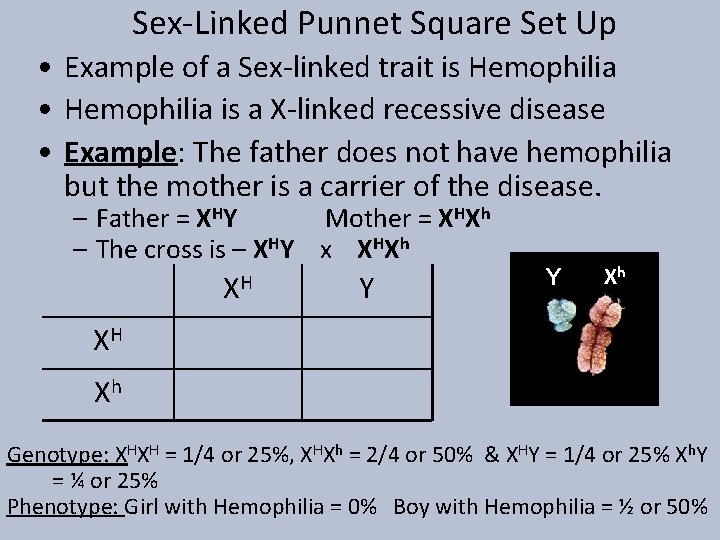
Sex-Linked Punnet Square Set Up • Example of a Sex-linked trait is Hemophilia • Hemophilia is a X-linked recessive disease • Example: The father does not have hemophilia but the mother is a carrier of the disease. – Father = XHY Mother = XHXh – The cross is – XHY x XHXh XH Y Y Xh XH Xh Genotype: XHXH = 1/4 or 25%, XHXh = 2/4 or 50% & XHY = 1/4 or 25% Xh. Y = ¼ or 25% Phenotype: Girl with Hemophilia = 0% Boy with Hemophilia = ½ or 50%
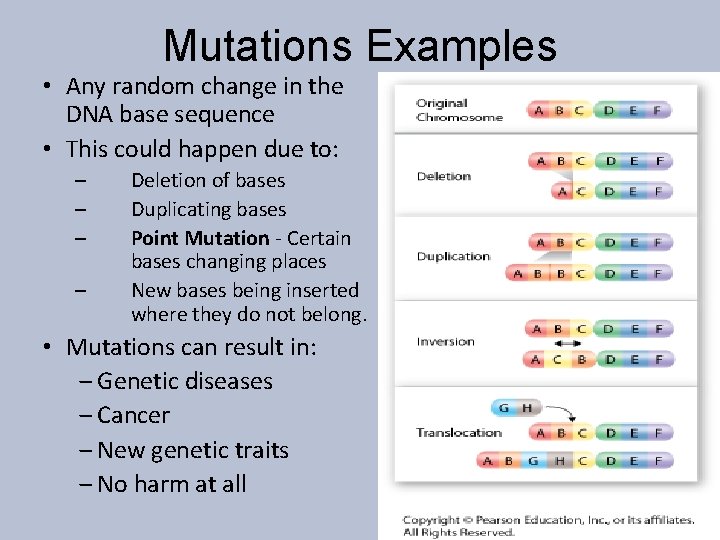
Mutations Examples • Any random change in the DNA base sequence • This could happen due to: ‒ ‒ Deletion of bases Duplicating bases Point Mutation - Certain bases changing places New bases being inserted where they do not belong. • Mutations can result in: ‒ Genetic diseases ‒ Cancer ‒ New genetic traits ‒ No harm at all
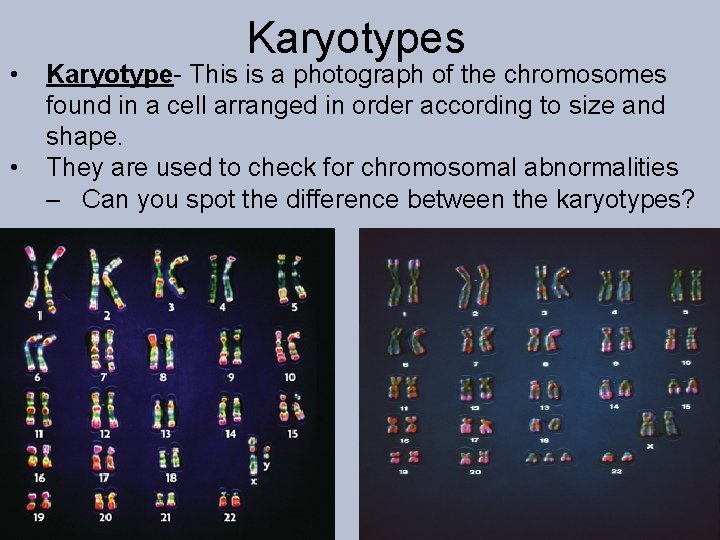
• • Karyotypes Karyotype- This is a photograph of the chromosomes found in a cell arranged in order according to size and shape. They are used to check for chromosomal abnormalities ‒ Can you spot the difference between the karyotypes?
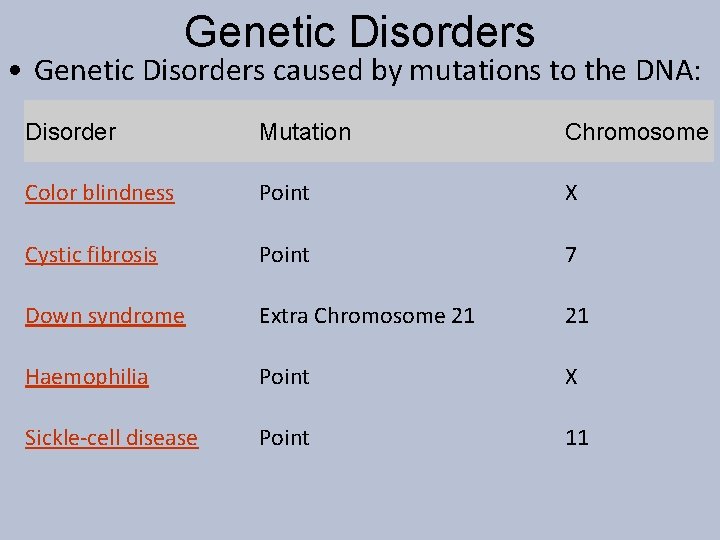
Genetic Disorders • Genetic Disorders caused by mutations to the DNA: Disorder Mutation Chromosome Color blindness Point X Cystic fibrosis Point 7 Down syndrome Extra Chromosome 21 21 Haemophilia Point X Sickle-cell disease Point 11
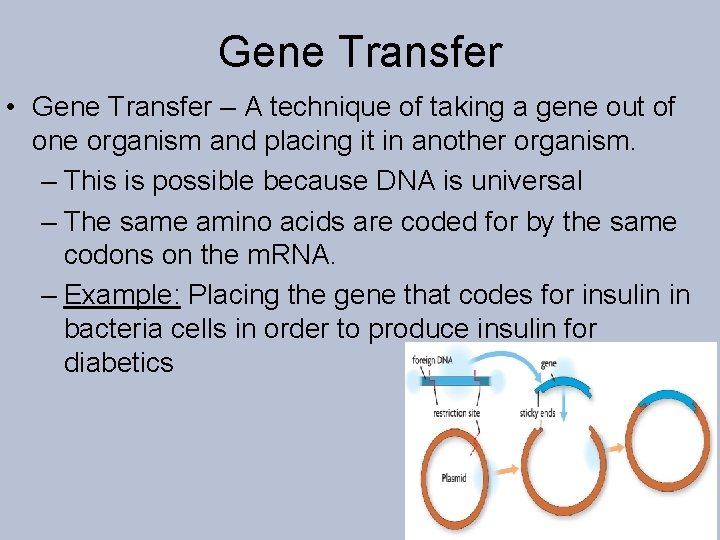
Gene Transfer • Gene Transfer – A technique of taking a gene out of one organism and placing it in another organism. – This is possible because DNA is universal – The same amino acids are coded for by the same codons on the m. RNA. – Example: Placing the gene that codes for insulin in bacteria cells in order to produce insulin for diabetics
Gene Transfer Process • Certain Base Pair sequences that want to be isolated are cut of the DNA through the use of proteins known as restriction enzymes – The cut happens at the end and beginning of a specific gene. • The Isolated gene is then pasted into the genome of the desired organisms using an enzyme called DNA ligase.
GMO’s • GMO is a Genetically Modified Organism – An organism that has had an artificial genetic change due to gene transfer. • Genes in certain plants may be removed and replaced with genes that are more desirable. • Genetically modified food has helped farmers to grow foods in various otherwise unsuitable conditions • Example: 85% of corn has been modified so that they are resistant to the herbicide glyphosate, which is used to kill weeds
- Slides: 33