
Unit 6 Harvesting and Processing Unit Overview This



- Slides: 13
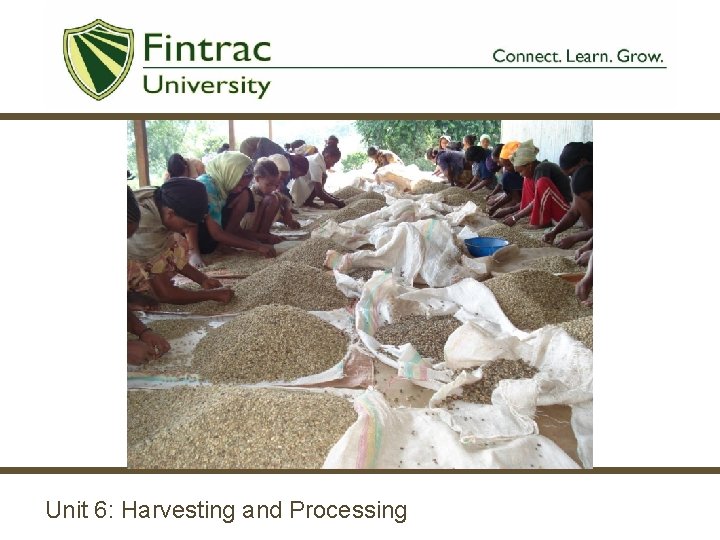
Unit 6: Harvesting and Processing
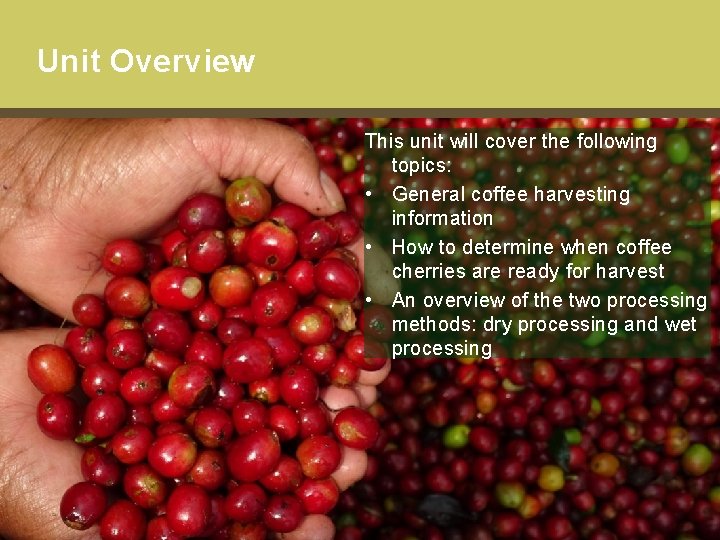
Unit Overview This unit will cover the following topics: • General coffee harvesting information • How to determine when coffee cherries are ready for harvest • An overview of the two processing methods: dry processing and wet processing
Coffee Harvest Overview Coffee cherries will be ready two to three years after planting. When harvesting coffee cherries, it is important to: • Only pick ripe red cherries by hand. Do not strip the branches or harvest a mix of overripe or under-ripe cherries. This can damage coffee beans during the pulping process as machines are calibrated to one type of cherry. Additionally, under-ripe cherries change the aroma and taste of brewed coffee. • Harvest ripe cherries using clean bags or baskets to prevent cross contamination from previous harvest or chemical residues from bags. • Always dry coffee cherries on top of a tarp or cloth to prevent soil microbial contamination and changes to the coffee’s aroma. • Remove any immature or unhealthy cherries and all extraneous materials such as stones, twigs, leaves, etc. • Fresh cherries need to be processed within 8 hours or less of being picked.
Sampling Coffee Cherries Fintrac agronomist conduct cherry sampling in the field to train farmers what cherries are ready for harvest, as demonstrated below in the photo.
Types of Processing There are two major types of processing: Dry Processing Wet Processing
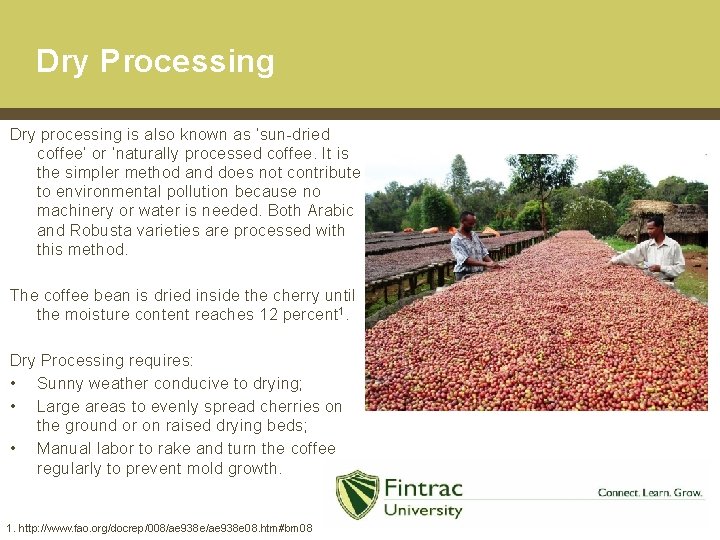
Dry Processing Dry processing is also known as ‘sun-dried coffee’ or ‘naturally processed coffee. It is the simpler method and does not contribute to environmental pollution because no machinery or water is needed. Both Arabic and Robusta varieties are processed with this method. The coffee bean is dried inside the cherry until the moisture content reaches 12 percent 1. Dry Processing requires: • Sunny weather conducive to drying; • Large areas to evenly spread cherries on the ground or on raised drying beds; • Manual labor to rake and turn the coffee regularly to prevent mold growth. 1. http: //www. fao. org/docrep/008/ae 938 e 08. htm#bm 08
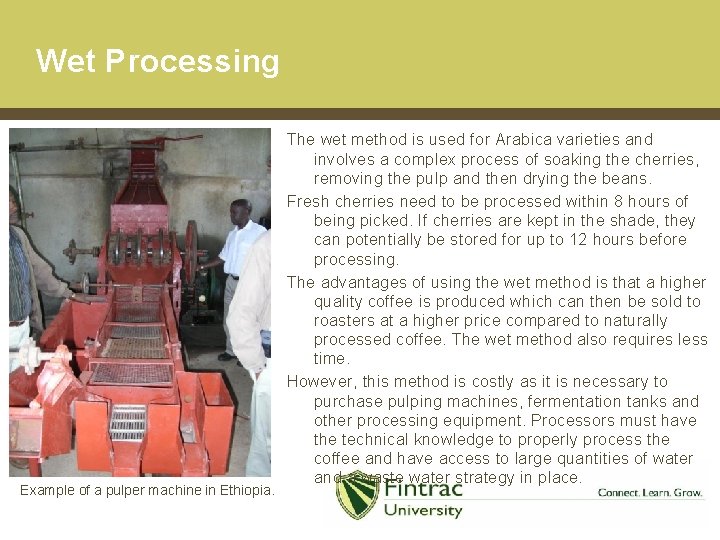
Wet Processing Example of a pulper machine in Ethiopia. The wet method is used for Arabica varieties and involves a complex process of soaking the cherries, removing the pulp and then drying the beans. Fresh cherries need to be processed within 8 hours of being picked. If cherries are kept in the shade, they can potentially be stored for up to 12 hours before processing. The advantages of using the wet method is that a higher quality coffee is produced which can then be sold to roasters at a higher price compared to naturally processed coffee. The wet method also requires less time. However, this method is costly as it is necessary to purchase pulping machines, fermentation tanks and other processing equipment. Processors must have the technical knowledge to properly process the coffee and have access to large quantities of water and a waste water strategy in place.
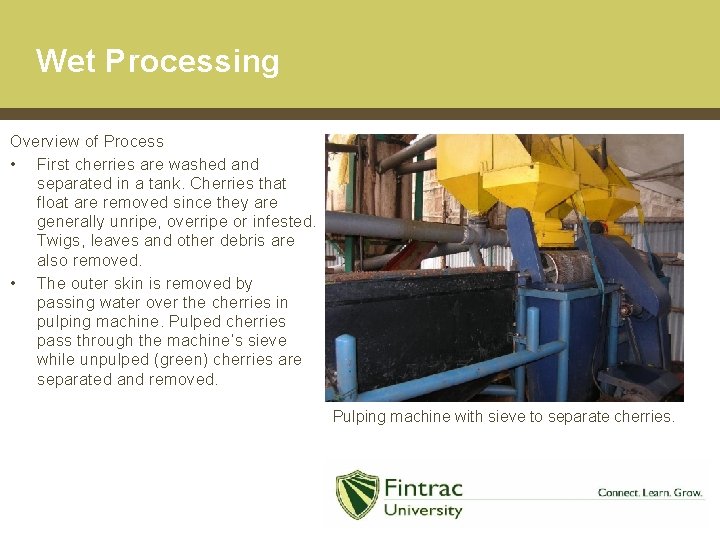
Wet Processing Overview of Process • First cherries are washed and separated in a tank. Cherries that float are removed since they are generally unripe, overripe or infested. Twigs, leaves and other debris are also removed. • The outer skin is removed by passing water over the cherries in pulping machine. Pulped cherries pass through the machine’s sieve while unpulped (green) cherries are separated and removed. Pulping machine with sieve to separate cherries.
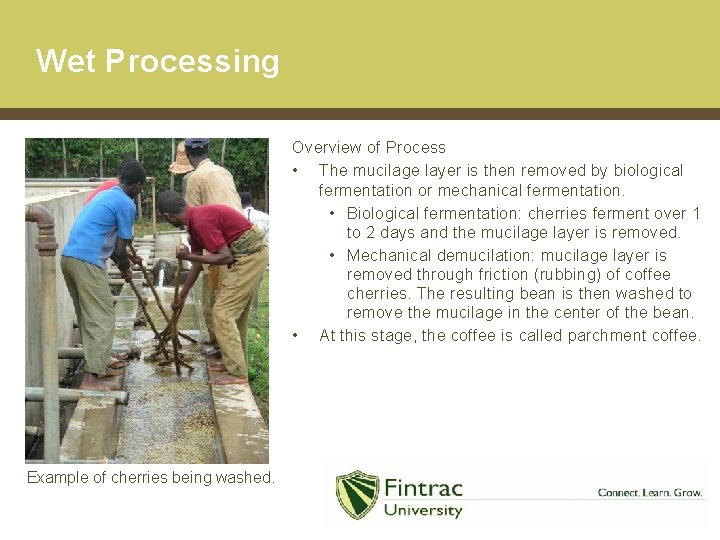
Wet Processing Overview of Process • The mucilage layer is then removed by biological fermentation or mechanical fermentation. • Biological fermentation: cherries ferment over 1 to 2 days and the mucilage layer is removed. • Mechanical demucilation: mucilage layer is removed through friction (rubbing) of coffee cherries. The resulting bean is then washed to remove the mucilage in the center of the bean. • At this stage, the coffee is called parchment coffee. Example of cherries being washed.
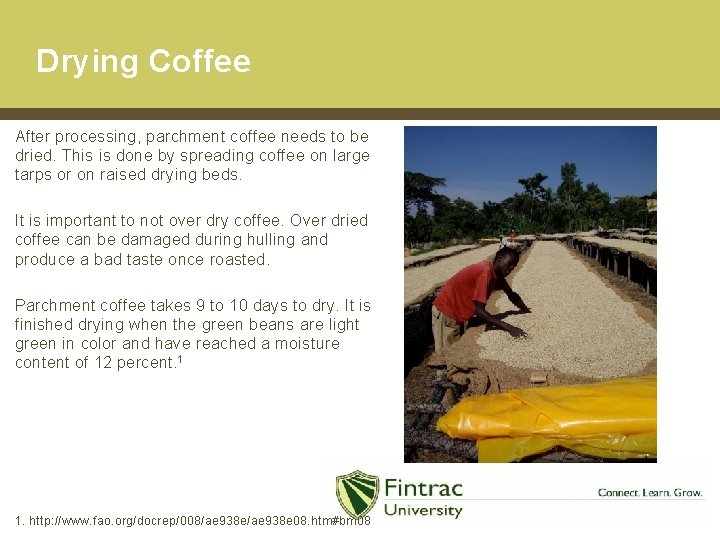
Drying Coffee After processing, parchment coffee needs to be dried. This is done by spreading coffee on large tarps or on raised drying beds. It is important to not over dry coffee. Over dried coffee can be damaged during hulling and produce a bad taste once roasted. Parchment coffee takes 9 to 10 days to dry. It is finished drying when the green beans are light green in color and have reached a moisture content of 12 percent. 1 1. http: //www. fao. org/docrep/008/ae 938 e 08. htm#bm 08
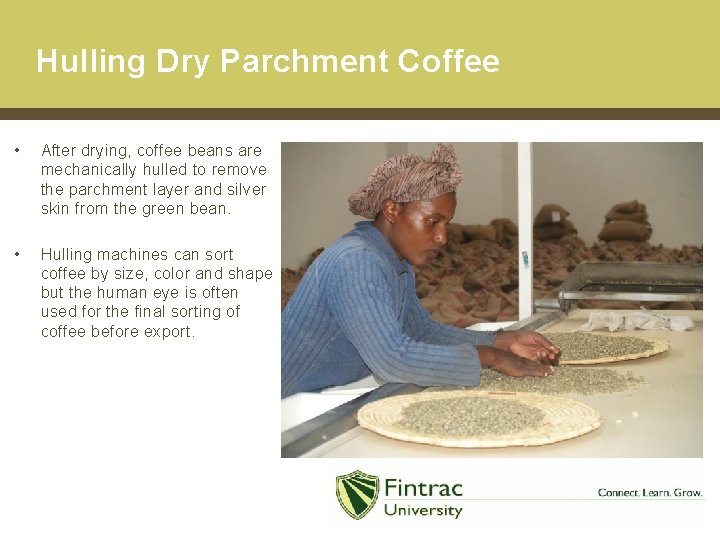
Hulling Dry Parchment Coffee • After drying, coffee beans are mechanically hulled to remove the parchment layer and silver skin from the green bean. • Hulling machines can sort coffee by size, color and shape but the human eye is often used for the final sorting of coffee before export.
Storage Considerations • • Green beans should be stored in clean jute bags on top of pallets. Beans should be stored in wellventilated areas with 65 percent humidity or less. Warm and humid conditions can contaminate the coffee’s flavors and create favorable conditions for mold growth. Never store coffee near fertilizers or agrochemicals.
Conclusion • • • When harvesting cherries, always hand select deep red cherries instead of strip picking which can damage the tree and reduce harvest yields. Always dry coffee on top of tarps or drying beds to prevent contamination from soil and pest. Coffee is processed either by the dry method or wet method. The dry method is more economical and environmentally friendly but produces lower quality coffee compared to the wet method. After drying, parchment coffee must be hulled to remove the parchment layer and silverskin. Coffee is then sorted and stored until transported for roasting.