
Unit 6 Dynamic Equilibrium The human body consists
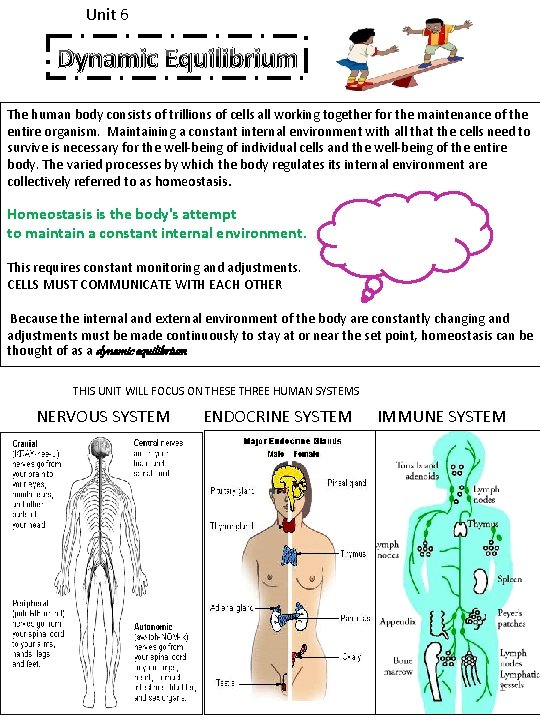
Unit 6 Dynamic Equilibrium The human body consists of trillions of cells all working together for the maintenance of the entire organism. Maintaining a constant internal environment with all that the cells need to survive is necessary for the well-being of individual cells and the well-being of the entire body. The varied processes by which the body regulates its internal environment are collectively referred to as homeostasis. Homeostasis is the body's attempt to maintain a constant internal environment. This requires constant monitoring and adjustments. CELLS MUST COMMUNICATE WITH EACH OTHER Because the internal and external environment of the body are constantly changing and adjustments must be made continuously to stay at or near the set point, homeostasis can be thought of as a dynamic equilibrium THIS UNIT WILL FOCUS ON THESE THREE HUMAN SYSTEMS NERVOUS SYSTEM ENDOCRINE SYSTEM IMMUNE SYSTEM 1
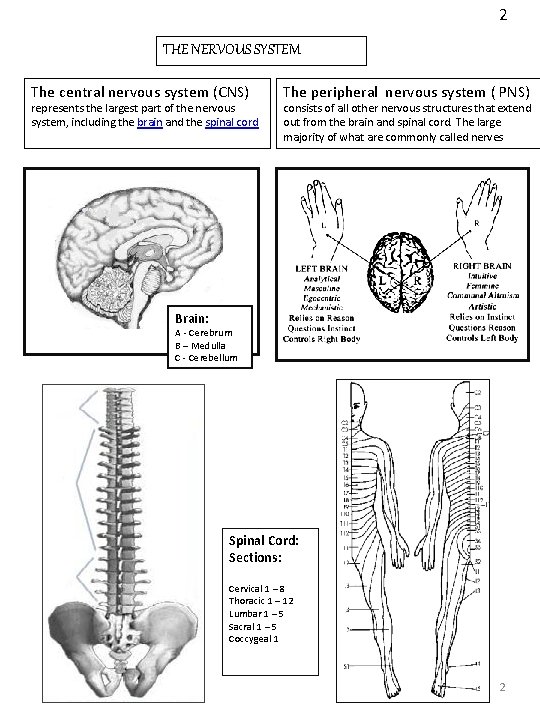
2 THE NERVOUS SYSTEM The central nervous system (CNS) represents the largest part of the nervous system, including the brain and the spinal cord The peripheral nervous system ( PNS) consists of all other nervous structures that extend out from the brain and spinal cord. The large majority of what are commonly called nerves Brain: A - Cerebrum B – Medulla C - Cerebellum Spinal Cord: Sections: Cervical 1 – 8 Thoracic 1 – 12 Lumbar 1 – 5 Sacral 1 – 5 Coccygeal 1 2
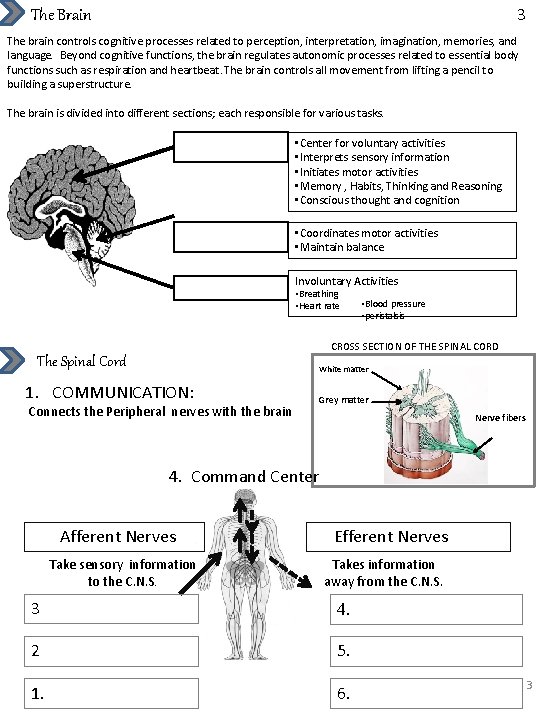
3 The Brain The brain controls cognitive processes related to perception, interpretation, imagination, memories, and language. Beyond cognitive functions, the brain regulates autonomic processes related to essential body functions such as respiration and heartbeat. The brain controls all movement from lifting a pencil to building a superstructure. The brain is divided into different sections; each responsible for various tasks. • Center for voluntary activities • Interprets sensory information • Initiates motor activities • Memory , Habits, Thinking and Reasoning • Conscious thought and cognition • Coordinates motor activities • Maintain balance Involuntary Activities • Breathing • Heart rate • Blood pressure • peristalsis CROSS SECTION OF THE SPINAL CORD The Spinal Cord White matter 1. COMMUNICATION: Connects the Peripheral nerves with the brain Grey matter Nerve fibers 4. Command Center Afferent Nerves Take sensory information to the C. N. S. Efferent Nerves Takes information away from the C. N. S. 3 4. 2 5. 1. 6. 3
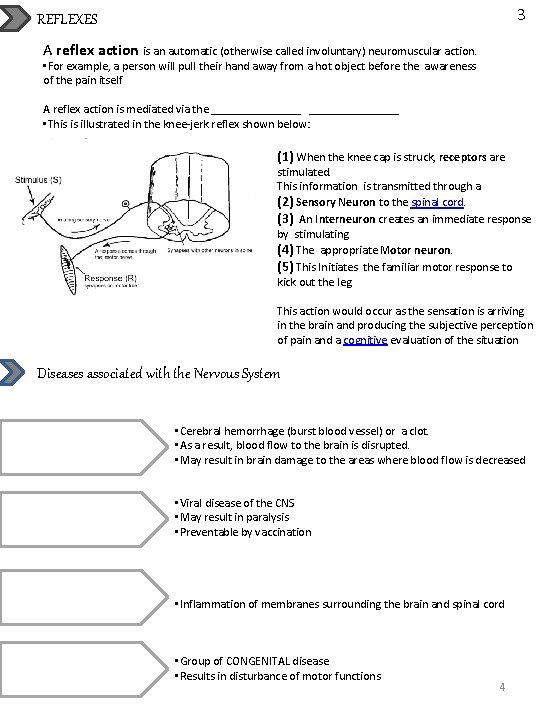
3 REFLEXES A reflex action is an automatic (otherwise called involuntary) neuromuscular action. • For example, a person will pull their hand away from a hot object before the awareness of the pain itself A reflex action is mediated via the _______________ • This is illustrated in the knee-jerk reflex shown below: (1) When the knee cap is struck, receptors are stimulated. This information is transmitted through a (2) Sensory Neuron to the spinal cord. (3) An Interneuron creates an immediate response by stimulating (4) The appropriate Motor neuron. (5) This Initiates the familiar motor response to kick out the leg. This action would occur as the sensation is arriving in the brain and producing the subjective perception of pain and a cognitive evaluation of the situation Diseases associated with the Nervous System • Cerebral hemorrhage (burst blood vessel) or a clot. • As a result, blood flow to the brain is disrupted. • May result in brain damage to the areas where blood flow is decreased • Viral disease of the CNS • May result in paralysis • Preventable by vaccination • Inflammation of membranes surrounding the brain and spinal cord • Group of CONGENITAL disease • Results in disturbance of motor functions 4
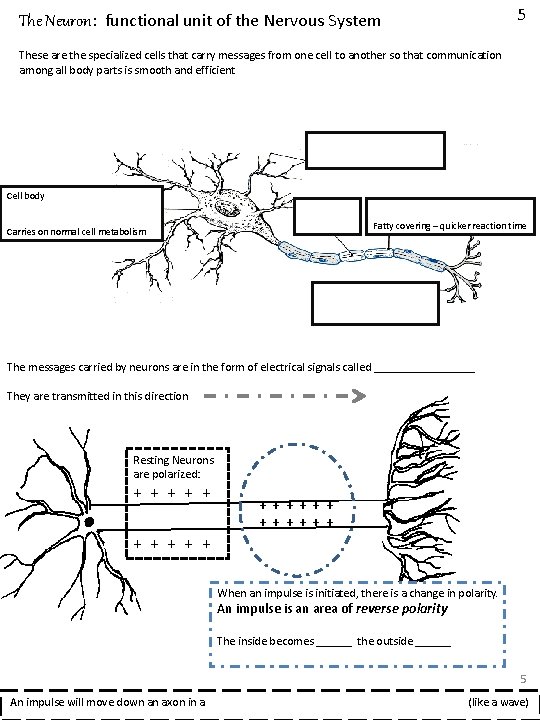
5 The Neuron: functional unit of the Nervous System These are the specialized cells that carry messages from one cell to another so that communication among all body parts is smooth and efficient Cell body Fatty covering – quicker reaction time Carries on normal cell metabolism The messages carried by neurons are in the form of electrical signals called _________ They are transmitted in this direction Resting Neurons are polarized: + + + + + + When an impulse is initiated, there is a change in polarity. An impulse is an area of reverse polarity The inside becomes ______ the outside ______ 5 An impulse will move down an axon in a (like a wave)
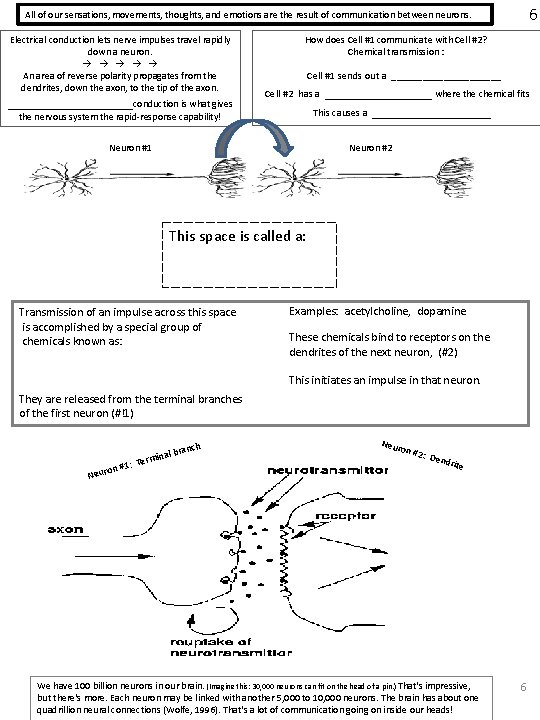
6 All of our sensations, movements, thoughts, and emotions are the result of communication between neurons. Electrical conduction lets nerve impulses travel rapidly down a neuron. An area of reverse polarity propagates from the dendrites, down the axon, to the tip of the axon. _________conduction is what gives How does Cell #1 communicate with Cell #2? Chemical transmission : Cell #1 sends out a ___________ where the chemical fits This causes a ________ Cell #2 has a the nervous system the rapid-response capability! Neuron #1 Neuron #2 This space is called a: Transmission of an impulse across this space is accomplished by a special group of chemicals known as: Examples: acetylcholine, dopamine These chemicals bind to receptors on the dendrites of the next neuron, (#2) This initiates an impulse in that neuron. They are released from the terminal branches of the first neuron (#!1) : T on #1 Neur ranch al b ermin Neur on #2 : De ndrit e We have 100 billion neurons in our brain. (Imagine this: 30, 000 neurons can fit on the head of a pin. ) That's impressive, but there's more. Each neuron may be linked with another 5, 000 to 10, 000 neurons. The brain has about one quadrillion neural connections (Wolfe, 1996). That's a lot of communication going on inside our heads! 6
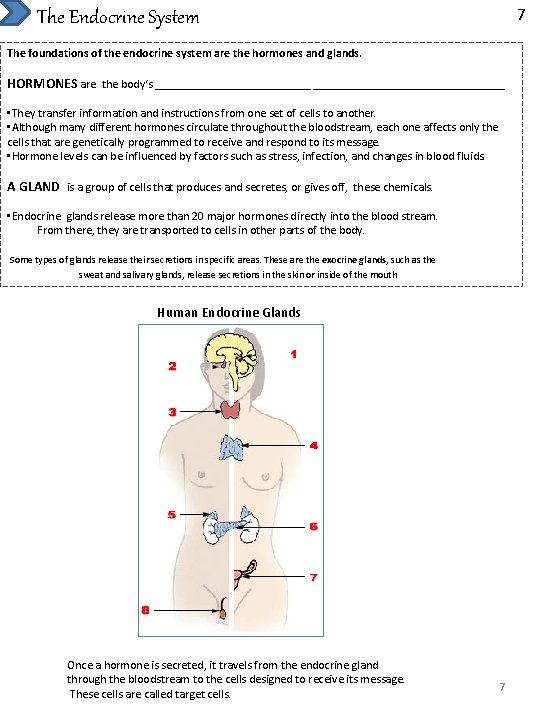
7 The Endocrine System The foundations of the endocrine system are the hormones and glands. HORMONES are the body‘s ________________________________ • They transfer information and instructions from one set of cells to another. • Although many different hormones circulate throughout the bloodstream, each one affects only the cells that are genetically programmed to receive and respond to its message. • Hormone levels can be influenced by factors such as stress, infection, and changes in blood fluids. A GLAND is a group of cells that produces and secretes, or gives off, these chemicals. • Endocrine glands release more than 20 major hormones directly into the blood stream. From there, they are transported to cells in other parts of the body. Some types of glands release their secretions in specific areas. These are the exocrine glands, such as the sweat and salivary glands, release secretions in the skin or inside of the mouth. Human Endocrine Glands Once a hormone is secreted, it travels from the endocrine gland through the bloodstream to the cells designed to receive its message. These cells are called target cells. 7
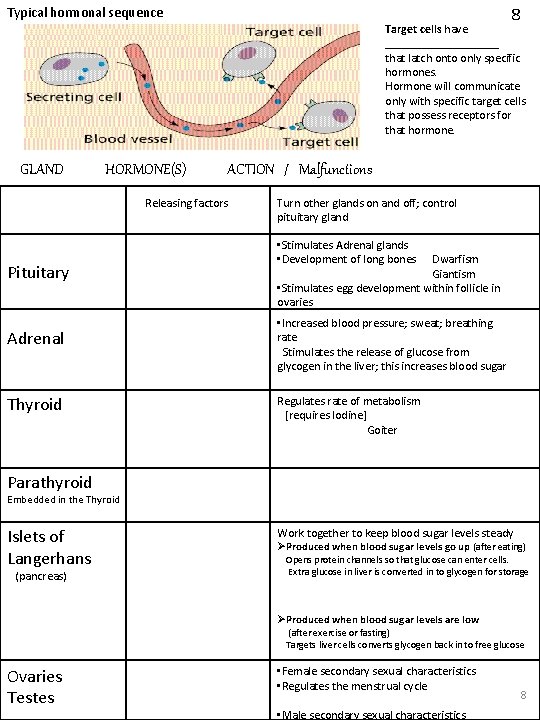
8 Typical hormonal sequence Target cells have __________ that latch onto only specific hormones. Hormone will communicate only with specific target cells that possess receptors for that hormone. GLAND HORMONE(S) ACTION / Malfunctions Releasing factors Pituitary Adrenal Thyroid Turn other glands on and off; control pituitary gland • Stimulates Adrenal glands • Development of long bones Dwarfism Giantism • Stimulates egg development within follicle in ovaries • Increased blood pressure; sweat; breathing rate Stimulates the release of glucose from glycogen in the liver; this increases blood sugar Regulates rate of metabolism [requires Iodine] Goiter Parathyroid Embedded in the Thyroid Islets of Langerhans (pancreas) Work together to keep blood sugar levels steady ØProduced when blood sugar levels go up (after eating) Opens protein channels so that glucose can enter cells. Extra glucose in liver is converted in to glycogen for storage ØProduced when blood sugar levels are low (after exercise or fasting) Targets liver cells converts glycogen back in to free glucose Ovaries Testes • Female secondary sexual characteristics • Regulates the menstrual cycle • Male secondary sexual characteristics 8
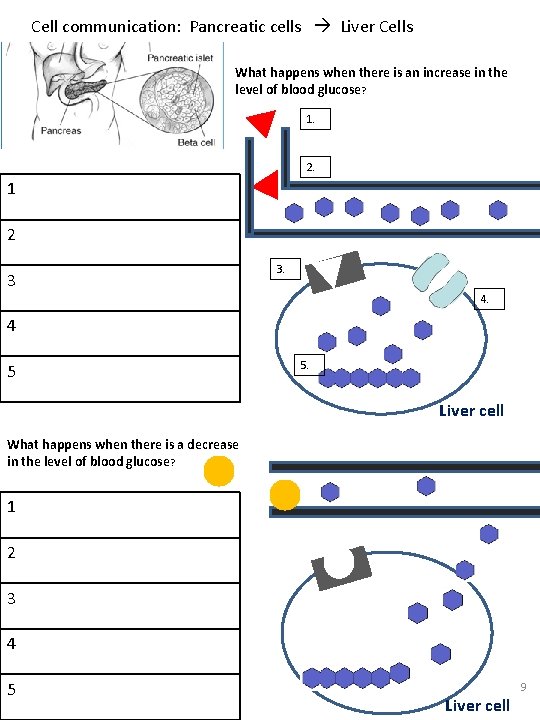
Cell communication: Pancreatic cells Liver Cells What happens when there is an increase in the level of blood glucose? 1. 2. 1 2 3 3. 4. 4 5 5. Liver cell What happens when there is a decrease in the level of blood glucose? 1 2 3 4 5 9 Liver cell
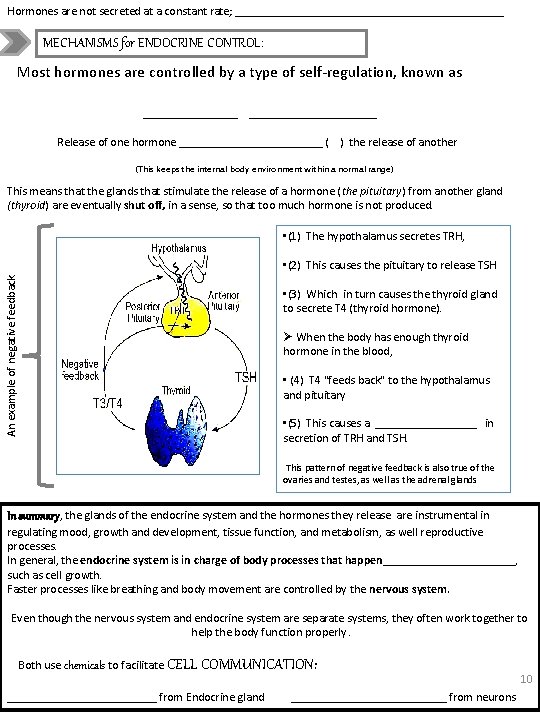
Hormones are not secreted at a constant rate; _______________________ MECHANISMS for ENDOCRINE CONTROL: Most hormones are controlled by a type of self-regulation, known as ________________ Release of one hormone ____________ ( ) the release of another (This keeps the internal body environment within a normal range) This means that the glands that stimulate the release of a hormone (the pituitary) from another gland (thyroid) are eventually shut off, in a sense, so that too much hormone is not produced. • (1) The hypothalamus secretes TRH, An example of negative feedback • (2) This causes the pituitary to release TSH • (3) Which in turn causes the thyroid gland to secrete T 4 (thyroid hormone). Ø When the body has enough thyroid hormone in the blood, • (4) T 4 "feeds back" to the hypothalamus and pituitary • (5) This causes a _________ in secretion of TRH and TSH. This pattern of negative feedback is also true of the ovaries and testes, as well as the adrenal glands In summary, the glands of the endocrine system and the hormones they release are instrumental in regulating mood, growth and development, tissue function, and metabolism, as well reproductive processes. In general, the endocrine system is in charge of body processes that happen___________, such as cell growth. Faster processes like breathing and body movement are controlled by the nervous system. Even though the nervous system and endocrine system are separate systems, they often work together to help the body function properly. Both use chemicals to facilitate CELL COMMUNICATION: _____________ from Endocrine gland _____________ from neurons 10
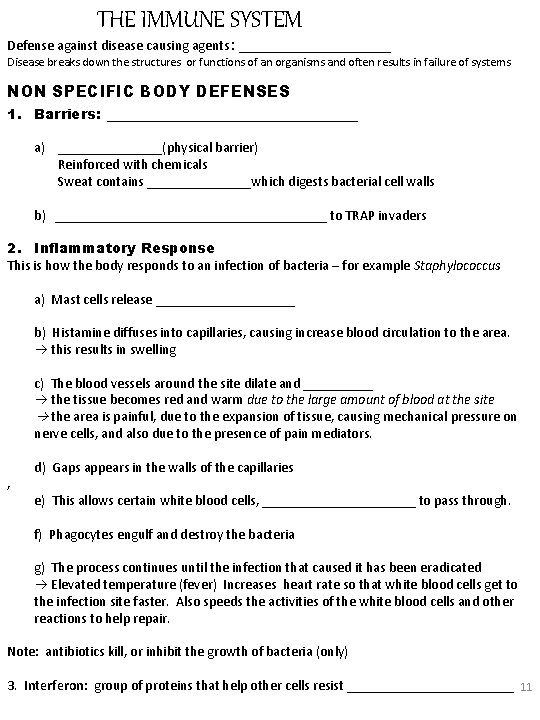
THE IMMUNE SYSTEM Defense against disease causing agents: _________ Disease breaks down the structures or functions of an organisms and often results in failure of systems NON SPECIFIC BODY DEFENSES 1. Barriers: __________________ a) ________(physical barrier) Reinforced with chemicals Sweat contains ________which digests bacterial cell walls b) ____________________ to TRAP invaders 2. Inflammatory Response This is how the body responds to an infection of bacteria – for example Staphylococcus a) Mast cells release __________ b) Histamine diffuses into capillaries, causing increase blood circulation to the area. this results in swelling c) The blood vessels around the site dilate and _____ the tissue becomes red and warm due to the large amount of blood at the site the area is painful, due to the expansion of tissue, causing mechanical pressure on nerve cells, and also due to the presence of pain mediators. , d) Gaps appears in the walls of the capillaries e) This allows certain white blood cells, ___________ to pass through. f) Phagocytes engulf and destroy the bacteria g) The process continues until the infection that caused it has been eradicated Elevated temperature (fever) Increases heart rate so that white blood cells get to the infection site faster. Also speeds the activities of the white blood cells and other reactions to help repair. Note: antibiotics kill, or inhibit the growth of bacteria (only) 3. Interferon: group of proteins that help other cells resist ____________ 11
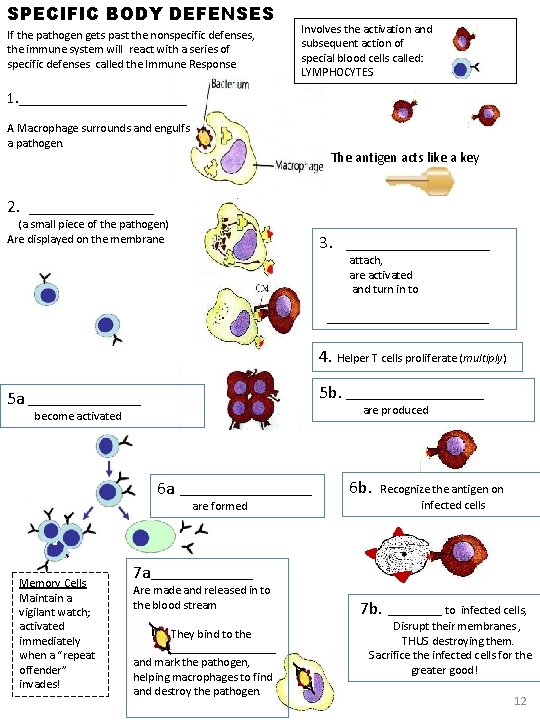
SPECIFIC BODY DEFENSES Involves the activation and subsequent action of special blood cells called: LYMPHOCYTES If the pathogen gets past the nonspecific defenses, the immune system will react with a series of specific defenses called the Immune Response 1. ___________ A Macrophage surrounds and engulfs a pathogen. The antigen acts like a key 2. _______ (a small piece of the pathogen) Are displayed on the membrane 3. ________ attach, are activated and turn in to ______________ 4. Helper T cells proliferate (multiply) 5 b. ____________ 5 a __________ are produced become activated 6 a 6 b. Recognize the antigen on infected cells 7 a_________ Are made and released in to the blood stream 7 b. _____ to infected cells, Disrupt their membranes , THUS destroying them. Sacrifice the infected cells for the greater good! Y They bind to the Y_________ and mark the pathogen, helping macrophages to find and destroy the pathogen. Y Memory Cells Maintain a vigilant watch; activated immediately when a “repeat offender” invades! ___________ are formed Y 12
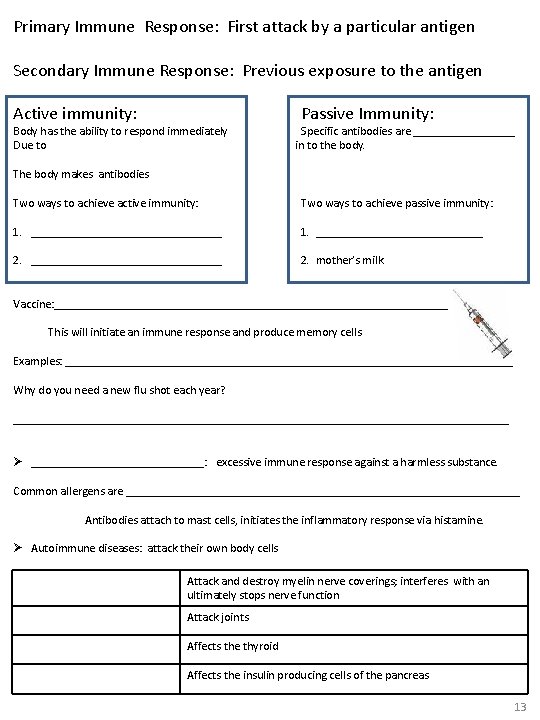
Primary Immune Response: First attack by a particular antigen Secondary Immune Response: Previous exposure to the antigen Active immunity: Body has the ability to respond immediately Due to Passive Immunity: Specific antibodies are _________ in to the body. The body makes antibodies Two ways to achieve active immunity: Two ways to achieve passive immunity: 1. ________________ 1. ______________ 2. ________________ 2. mother’s milk Vaccine: _________________________________ This will initiate an immune response and produce memory cells Examples: ______________________________________ Why do you need a new flu shot each year? __________________________________________ Ø _______________: excessive immune response against a harmless substance. Common allergens are _________________________________ Antibodies attach to mast cells, initiates the inflammatory response via histamine. Ø Autoimmune diseases: attack their own body cells Attack and destroy myelin nerve coverings; interferes with an ultimately stops nerve function Attack joints Affects the thyroid Affects the insulin producing cells of the pancreas 13
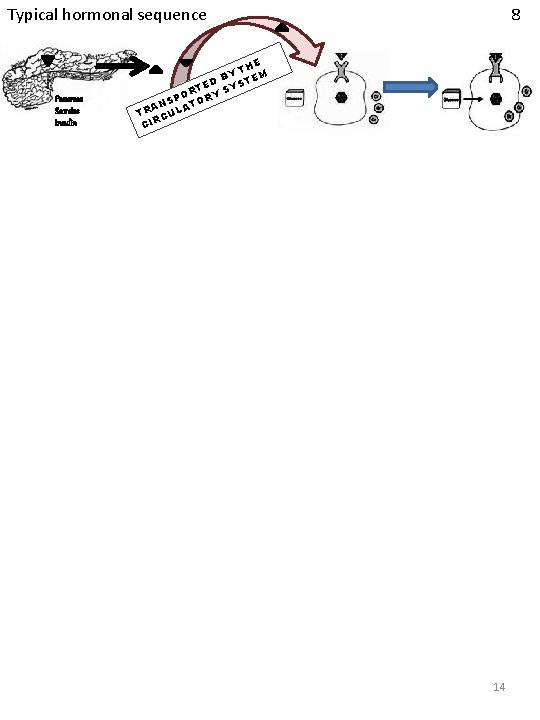
8 Typical hormonal sequence Pancreas Secretes Insulin E TH Y B EM ED SYST T OR Y SP TOR N A A TR CUL CIR 14
Johnson City Med-School Case Study #1 The Stroke Name: ________ A 77 -year-old woman was cooking a delicious dinner for two in the kitchen when she collapsed onto the floor. Her daughter heard the commotion and rushed in to see her mother on the floor. Alarmed, she called an ambulance and the woman was taken to the emergency room. After running some tests the doctors had determined that she had suffered a stroke, from which she slowly regained consciousness over the next two days. However, when she woke up, she had the following signs and symptoms: Paralysis of the right face and arm - loss of sensation to touch on the skin of the right face and arm - inability to answer questions but ability to understand what was said to her - ability to write down her thoughts more easily than to speak them 1) What is a stroke? Why does it result in the symptoms mentioned? 2) With these symptoms, what part of the brain (major section and hemisphere) must have been affected? 3) Would this woman still have a knee-jerk reflex? 15
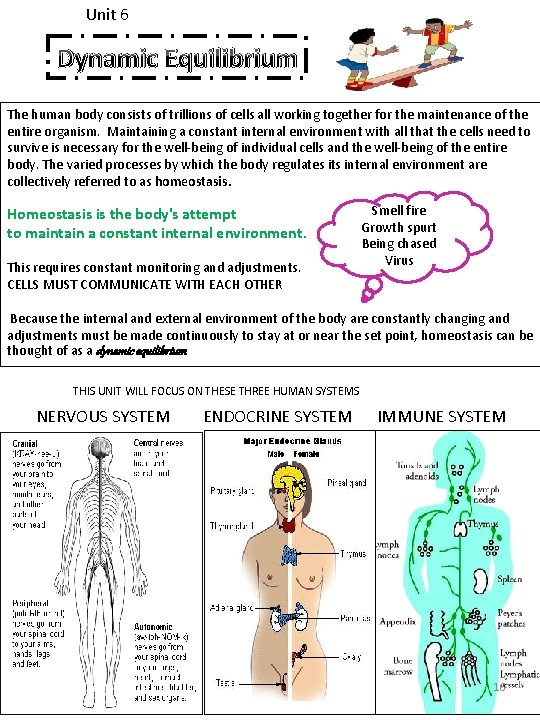
Unit 6 Dynamic Equilibrium The human body consists of trillions of cells all working together for the maintenance of the entire organism. Maintaining a constant internal environment with all that the cells need to survive is necessary for the well-being of individual cells and the well-being of the entire body. The varied processes by which the body regulates its internal environment are collectively referred to as homeostasis. Homeostasis is the body's attempt to maintain a constant internal environment. This requires constant monitoring and adjustments. CELLS MUST COMMUNICATE WITH EACH OTHER Smell fire Growth spurt Being chased Virus Because the internal and external environment of the body are constantly changing and adjustments must be made continuously to stay at or near the set point, homeostasis can be thought of as a dynamic equilibrium THIS UNIT WILL FOCUS ON THESE THREE HUMAN SYSTEMS NERVOUS SYSTEM ENDOCRINE SYSTEM IMMUNE SYSTEM 16
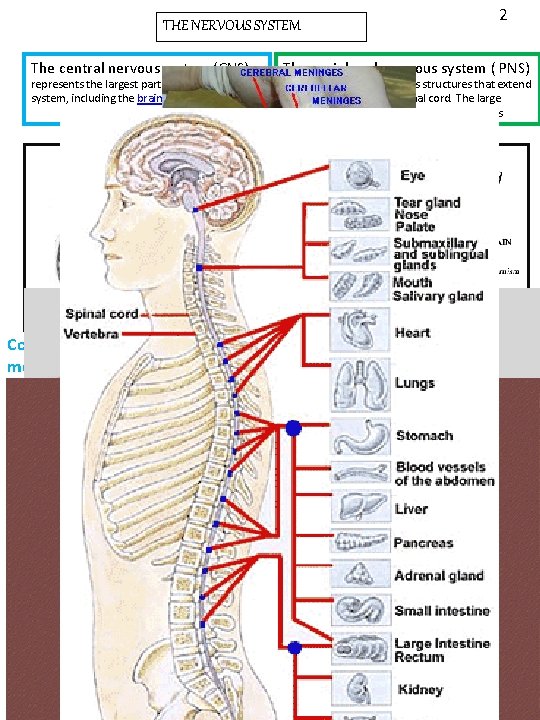
THE NERVOUS SYSTEM The central nervous system (CNS) represents the largest part of the nervous system, including the brain and the spinal cord 2 The peripheral nervous system ( PNS) consists of all other nervous structures that extend out from the brain and spinal cord. The large majority of what are commonly called nerves Brain: A - Cerebrum B – Medulla C - Cerebellum Covered by protective membranes: MENINGES Spinal Cord: Sections: Cervical 1 – 8 Thoracic 1 – 12 Lumbar 1 – 5 Sacral 1 – 5 Coccygeal 1 17
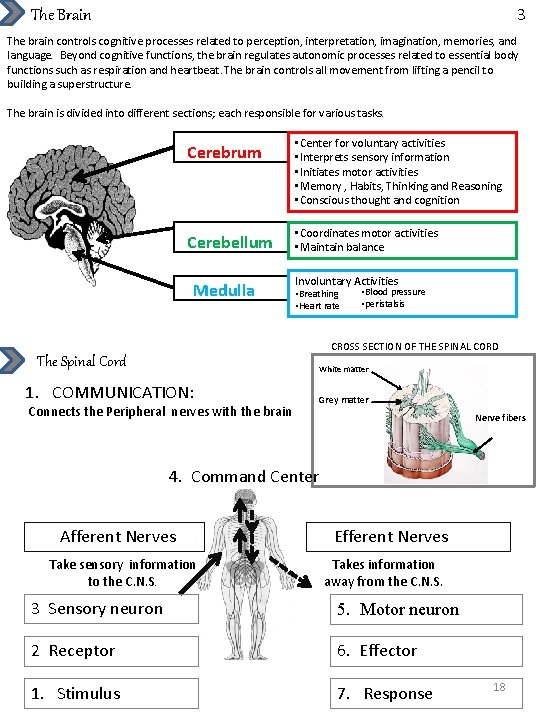
3 The Brain The brain controls cognitive processes related to perception, interpretation, imagination, memories, and language. Beyond cognitive functions, the brain regulates autonomic processes related to essential body functions such as respiration and heartbeat. The brain controls all movement from lifting a pencil to building a superstructure. The brain is divided into different sections; each responsible for various tasks. Cerebrum • Center for voluntary activities • Interprets sensory information • Initiates motor activities • Memory , Habits, Thinking and Reasoning • Conscious thought and cognition Cerebellum • Coordinates motor activities • Maintain balance Medulla Involuntary Activities • Breathing • Heart rate • Blood pressure • peristalsis CROSS SECTION OF THE SPINAL CORD The Spinal Cord White matter 1. COMMUNICATION: Connects the Peripheral nerves with the brain Grey matter Nerve fibers 4. Command Center Afferent Nerves Take sensory information to the C. N. S. Efferent Nerves Takes information away from the C. N. S. 3 Sensory neuron 5. Motor neuron 2 Receptor 6. Effector 1. Stimulus 7. Response 18
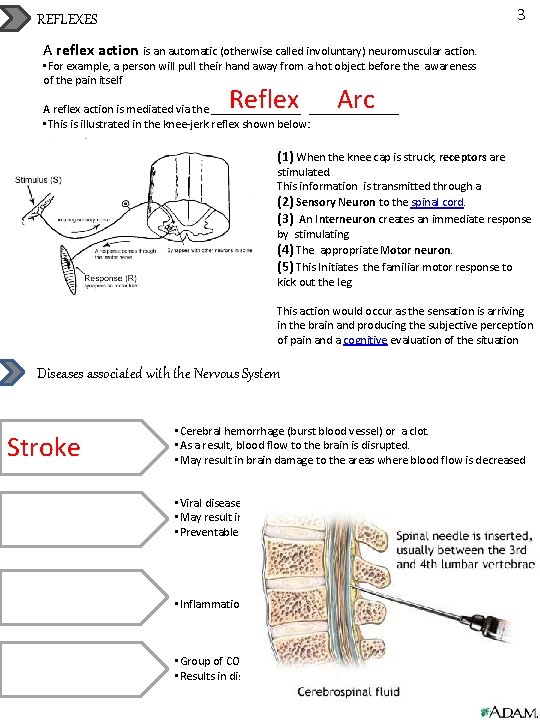
3 REFLEXES A reflex action is an automatic (otherwise called involuntary) neuromuscular action. • For example, a person will pull their hand away from a hot object before the awareness of the pain itself Reflex Arc A reflex action is mediated via the _______________ • This is illustrated in the knee-jerk reflex shown below: (1) When the knee cap is struck, receptors are stimulated. This information is transmitted through a (2) Sensory Neuron to the spinal cord. (3) An Interneuron creates an immediate response by stimulating (4) The appropriate Motor neuron. (5) This Initiates the familiar motor response to kick out the leg. This action would occur as the sensation is arriving in the brain and producing the subjective perception of pain and a cognitive evaluation of the situation Diseases associated with the Nervous System Stroke • Cerebral hemorrhage (burst blood vessel) or a clot. • As a result, blood flow to the brain is disrupted. • May result in brain damage to the areas where blood flow is decreased • Viral disease of the CNS • May result in paralysis • Preventable by vaccination • Inflammation of membranes surrounding the brain and spinal cord • Group of CONGENITAL disease • Results in disturbance of motor functions 19
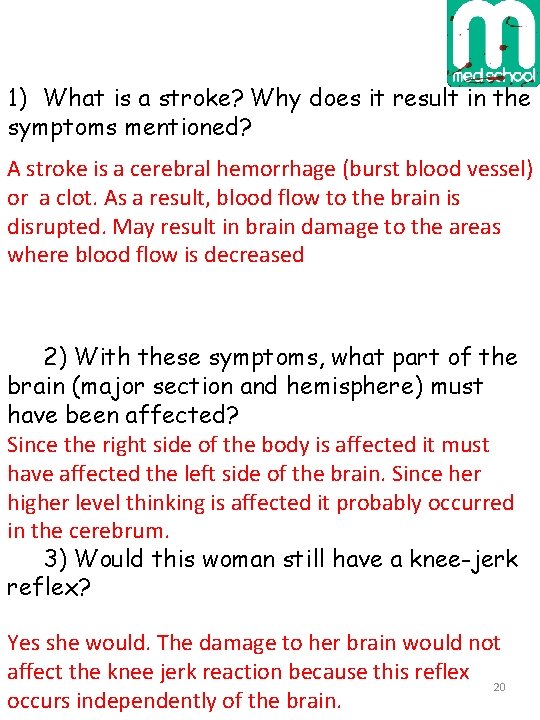
1) What is a stroke? Why does it result in the symptoms mentioned? A stroke is a cerebral hemorrhage (burst blood vessel) or a clot. As a result, blood flow to the brain is disrupted. May result in brain damage to the areas where blood flow is decreased 2) With these symptoms, what part of the brain (major section and hemisphere) must have been affected? Since the right side of the body is affected it must have affected the left side of the brain. Since her higher level thinking is affected it probably occurred in the cerebrum. 3) Would this woman still have a knee-jerk reflex? Yes she would. The damage to her brain would not affect the knee jerk reaction because this reflex 20 occurs independently of the brain.
Questions (Meningitis) • What is the cause of meningitis? Bacterial or viral infection • What are the symptoms? High Fever, severe and persistent headache, stiff neck, nausea and vommiting. • How does it affect the nervous system? Highlight the areas affected. The meningies are inflamed. The membranes around the brain and spinal cord are inflamed 21
Questions (Cerebral Palsy) • What is/are some of the causes of cerebral palsy? It is caused by abnormalities in parts of the brain that control muscle movements. • What are some of the symptoms? Lack of muscle coordination, stiff or tight muscles and exaggerated reflexes etc. • What are the common signs or indications of cerebral palsy? Same answers as the last question for the most part 22
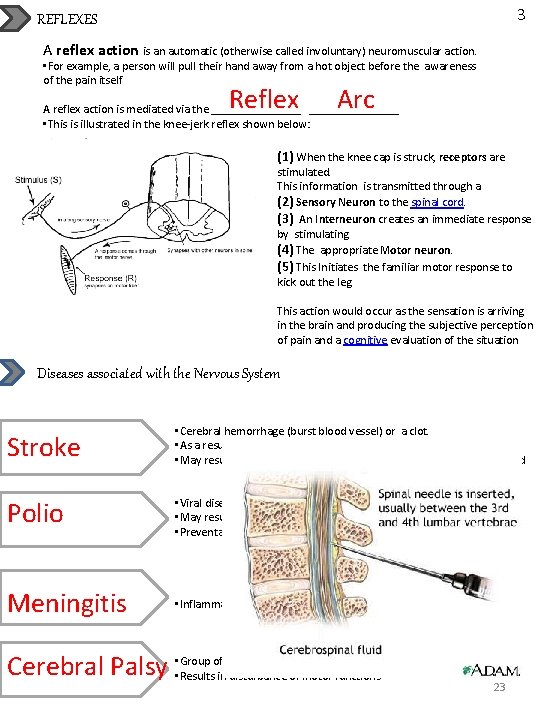
3 REFLEXES A reflex action is an automatic (otherwise called involuntary) neuromuscular action. • For example, a person will pull their hand away from a hot object before the awareness of the pain itself Reflex Arc A reflex action is mediated via the _______________ • This is illustrated in the knee-jerk reflex shown below: (1) When the knee cap is struck, receptors are stimulated. This information is transmitted through a (2) Sensory Neuron to the spinal cord. (3) An Interneuron creates an immediate response by stimulating (4) The appropriate Motor neuron. (5) This Initiates the familiar motor response to kick out the leg. This action would occur as the sensation is arriving in the brain and producing the subjective perception of pain and a cognitive evaluation of the situation Diseases associated with the Nervous System Stroke • Cerebral hemorrhage (burst blood vessel) or a clot. • As a result, blood flow to the brain is disrupted. • May result in brain damage to the areas where blood flow is decreased Polio • Viral disease of the CNS • May result in paralysis • Preventable by vaccination Meningitis • Inflammation of membranes surrounding the brain and spinal cord of CONGENITAL disease Cerebral Palsy • • Group Results in disturbance of motor functions 23
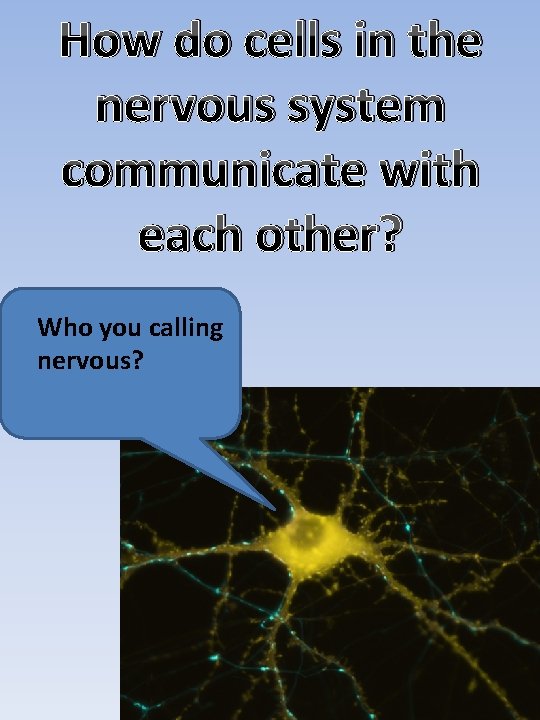
How do cells in the nervous system communicate with each other? Who you calling nervous? 24
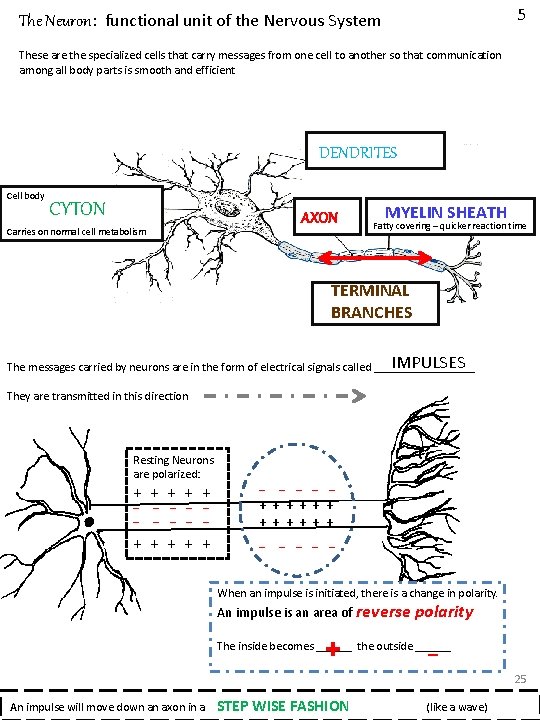
5 The Neuron: functional unit of the Nervous System These are the specialized cells that carry messages from one cell to another so that communication among all body parts is smooth and efficient DENDRITES Cell body CYTON AXON Carries on normal cell metabolism MYELIN SHEATH Fatty covering – quicker reaction time TERMINAL BRANCHES IMPULSES The messages carried by neurons are in the form of electrical signals called _________ They are transmitted in this direction Resting Neurons are polarized: +_ +_ +_ _ + + + _ _ _ _ _ + + + _ _ When an impulse is initiated, there is a change in polarity. An impulse is an area of reverse polarity + - The inside becomes ______ the outside ______ An impulse will move down an axon in a STEP WISE FASHION (like a wave) 25
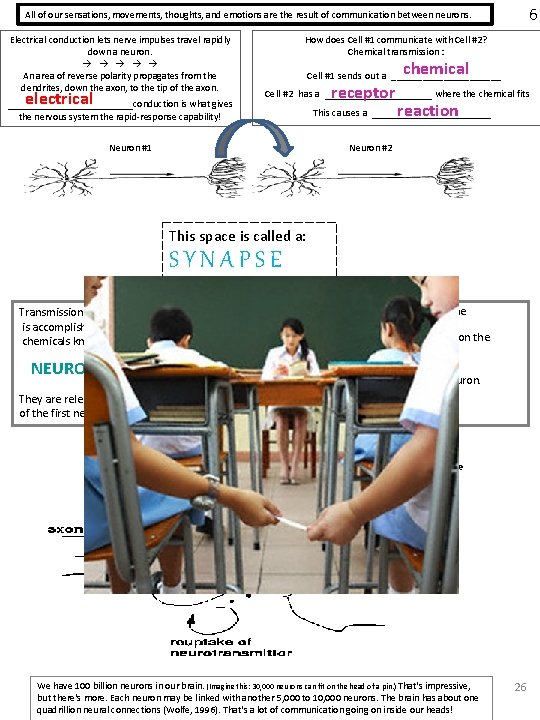
6 All of our sensations, movements, thoughts, and emotions are the result of communication between neurons. Electrical conduction lets nerve impulses travel rapidly down a neuron. An area of reverse polarity propagates from the dendrites, down the axon, to the tip of the axon. electrical _________ conduction is what gives How does Cell #1 communicate with Cell #2? Chemical transmission : chemical Cell #1 sends out a ___________ receptor _____ where the chemical fits This causes a ________ reaction Cell #2 has a the nervous system the rapid-response capability! Neuron #1 Neuron #2 This space is called a: SYNAPSE Transmission of an impulse across this space is accomplished by a special group of chemicals known as: NEUROTRANSMITTERS Examples: acetylcholine, dopamine These chemicals bind to receptors on the dendrites of the next neuron, (#2) This initiates an impulse in that neuron. They are released from the terminal branches of the first neuron (#!1) : T on #1 Neur ranch al b ermin Neur on #2 : De ndrit e We have 100 billion neurons in our brain. (Imagine this: 30, 000 neurons can fit on the head of a pin. ) That's impressive, but there's more. Each neuron may be linked with another 5, 000 to 10, 000 neurons. The brain has about one quadrillion neural connections (Wolfe, 1996). That's a lot of communication going on inside our heads! 26
How do cells in the nervous system communicate with each other? 27
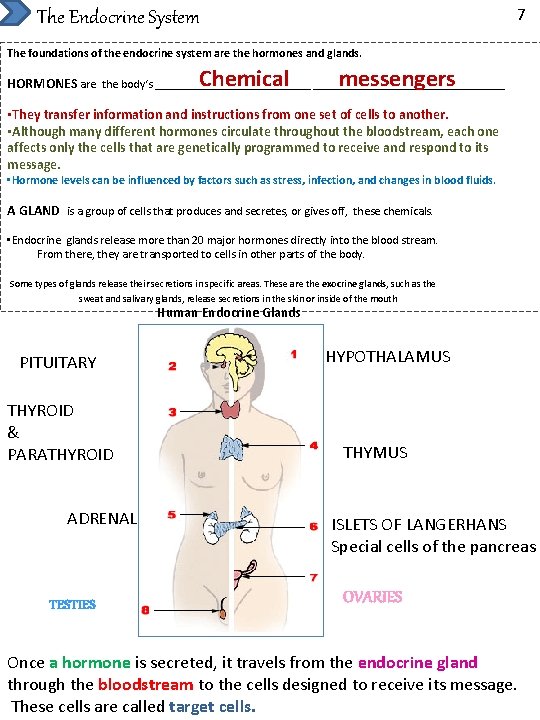
7 The Endocrine System The foundations of the endocrine system are the hormones and glands. Chemical messengers HORMONES are the body‘s ________________________________ • They transfer information and instructions from one set of cells to another. • Although many different hormones circulate throughout the bloodstream, each one affects only the cells that are genetically programmed to receive and respond to its message. • Hormone levels can be influenced by factors such as stress, infection, and changes in blood fluids. A GLAND is a group of cells that produces and secretes, or gives off, these chemicals. • Endocrine glands release more than 20 major hormones directly into the blood stream. From there, they are transported to cells in other parts of the body. Some types of glands release their secretions in specific areas. These are the exocrine glands, such as the sweat and salivary glands, release secretions in the skin or inside of the mouth. Human Endocrine Glands PITUITARY THYROID & PARATHYROID ADRENAL TESTIES HYPOTHALAMUS THYMUS ISLETS OF LANGERHANS Special cells of the pancreas OVARIES Once a hormone is secreted, it travels from the endocrine gland through the bloodstream to the cells designed to receive its message. These cells are called target cells.
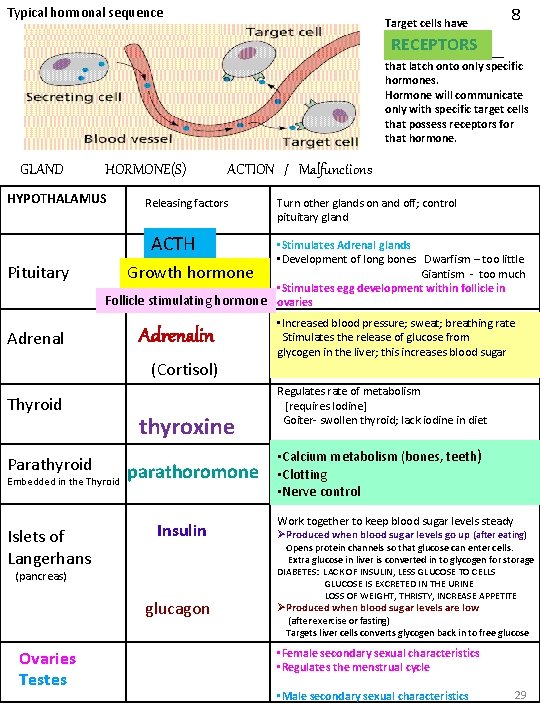
Typical hormonal sequence Target cells have 8 RECEPTORS __________ that latch onto only specific hormones. Hormone will communicate only with specific target cells that possess receptors for that hormone. GLAND HORMONE(S) HYPOTHALAMUS ACTION / Malfunctions Releasing factors Turn other glands on and off; control pituitary gland ACTH Pituitary • Stimulates Adrenal glands • Development of long bones Dwarfism – too little Giantism - too much Growth hormone • Stimulates egg development within follicle in Follicle stimulating hormone ovaries Adrenalin (Cortisol) Thyroid Parathyroid Embedded in the Thyroid Islets of Langerhans thyroxine parathoromone Insulin (pancreas) glucagon Ovaries Testes • Increased blood pressure; sweat; breathing rate Stimulates the release of glucose from glycogen in the liver; this increases blood sugar Regulates rate of metabolism [requires Iodine] Goiter- swollen thyroid; lack iodine in diet • Calcium metabolism (bones, teeth) • Clotting • Nerve control Work together to keep blood sugar levels steady ØProduced when blood sugar levels go up (after eating) Opens protein channels so that glucose can enter cells. Extra glucose in liver is converted in to glycogen for storage DIABETES: LACK OF INSULIN, LESS GLUCOSE TO CELLS GLUCOSE IS EXCRETED IN THE URINE LOSS OF WEIGHT, THRISTY, INCREASE APPETITE ØProduced when blood sugar levels are low (after exercise or fasting) Targets liver cells converts glycogen back in to free glucose • Female secondary sexual characteristics • Regulates the menstrual cycle • Male secondary sexual characteristics 29
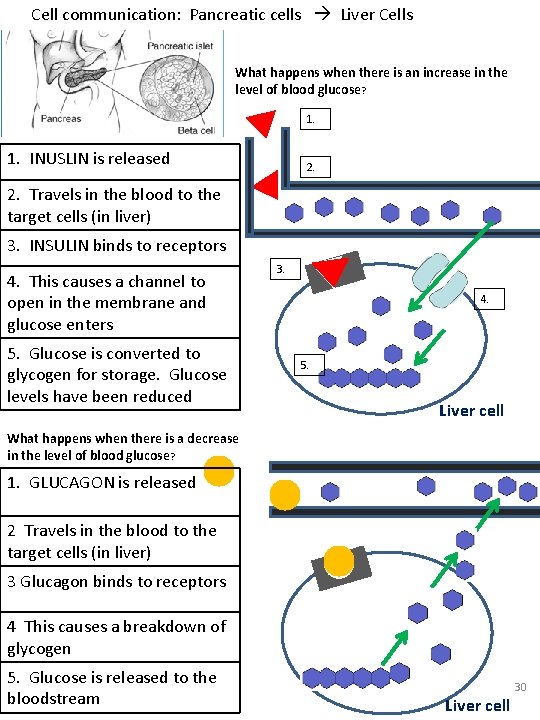
Cell communication: Pancreatic cells Liver Cells What happens when there is an increase in the level of blood glucose? 1. INUSLIN is released 2. Travels in the blood to the target cells (in liver) 3. INSULIN binds to receptors 4. This causes a channel to open in the membrane and glucose enters 5. Glucose is converted to glycogen for storage. Glucose levels have been reduced 3. 4. 5. Liver cell What happens when there is a decrease in the level of blood glucose? 1. GLUCAGON is released 2 Travels in the blood to the target cells (in liver) 3 Glucagon binds to receptors 4 This causes a breakdown of glycogen 5. Glucose is released to the bloodstream 30 Liver cell
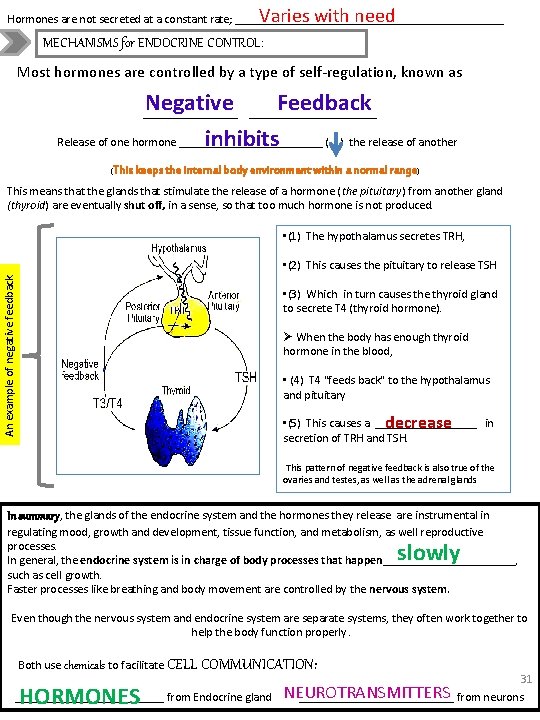
Varies with need Hormones are not secreted at a constant rate; _______________________ MECHANISMS for ENDOCRINE CONTROL: Most hormones are controlled by a type of self-regulation, known as Negative ________ Feedback ______ inhibits Release of one hormone ____________ ( ) the release of another ( This keeps the internal body environment within a normal range) This means that the glands that stimulate the release of a hormone (the pituitary) from another gland (thyroid) are eventually shut off, in a sense, so that too much hormone is not produced. • (1) The hypothalamus secretes TRH, An example of negative feedback • (2) This causes the pituitary to release TSH • (3) Which in turn causes the thyroid gland to secrete T 4 (thyroid hormone). Ø When the body has enough thyroid hormone in the blood, • (4) T 4 "feeds back" to the hypothalamus and pituitary • (5) This causes a _________ in decrease secretion of TRH and TSH. This pattern of negative feedback is also true of the ovaries and testes, as well as the adrenal glands In summary, the glands of the endocrine system and the hormones they release are instrumental in regulating mood, growth and development, tissue function, and metabolism, as well reproductive processes. In general, the endocrine system is in charge of body processes that happen___________, such as cell growth. Faster processes like breathing and body movement are controlled by the nervous system. slowly Even though the nervous system and endocrine system are separate systems, they often work together to help the body function properly. Both use chemicals to facilitate CELL COMMUNICATION: HORMONES _____________ from Endocrine gland 31 NEUROTRANSMITTERS _____________ from neurons
- Slides: 31