
Unit 6 Chemical Bonding Part III Molecular Compounds
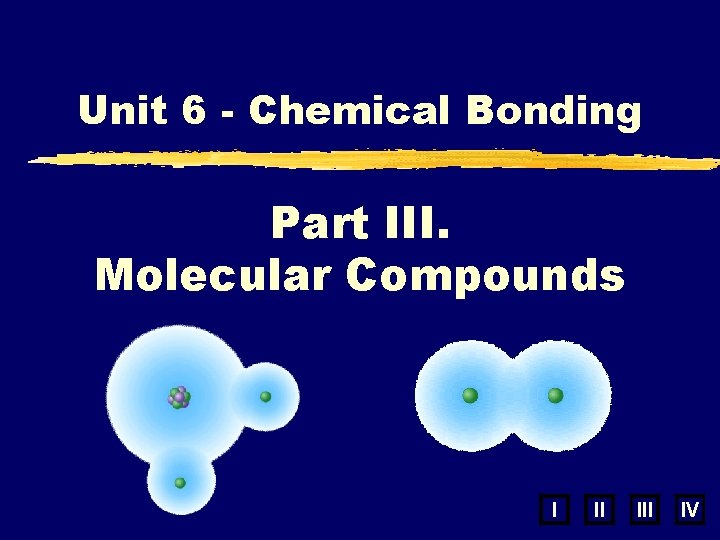
Unit 6 - Chemical Bonding Part III. Molecular Compounds I II IV
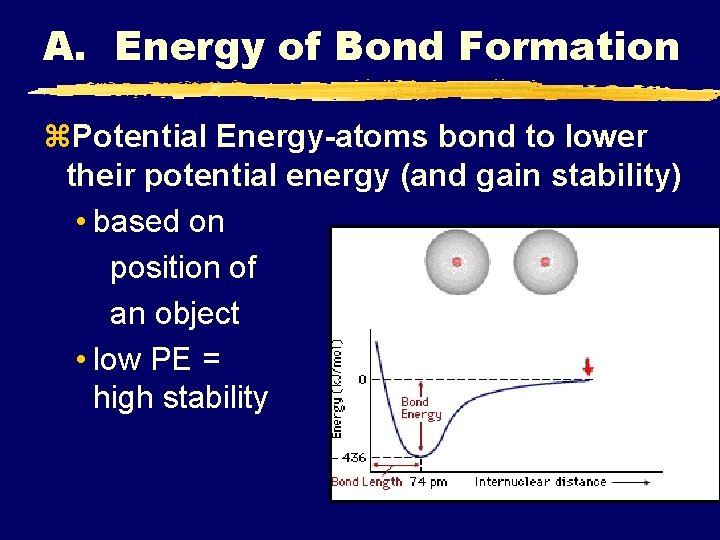
A. Energy of Bond Formation z. Potential Energy-atoms bond to lower their potential energy (and gain stability) • based on position of an object • low PE = high stability
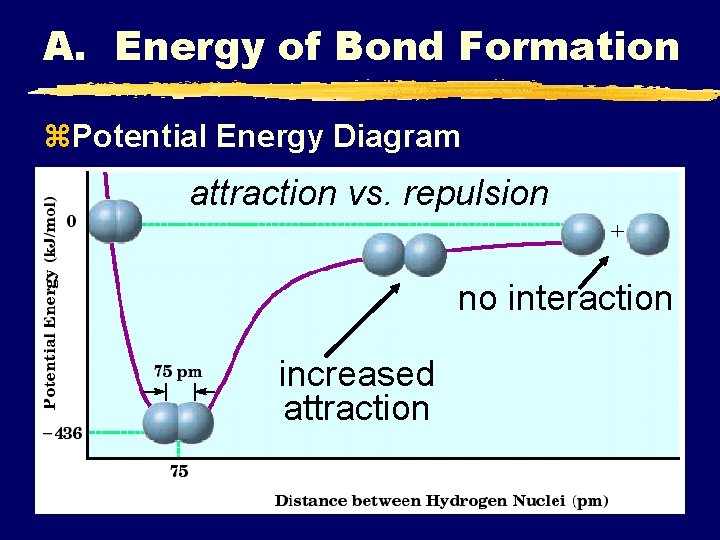
A. Energy of Bond Formation z. Potential Energy Diagram attraction vs. repulsion no interaction increased attraction
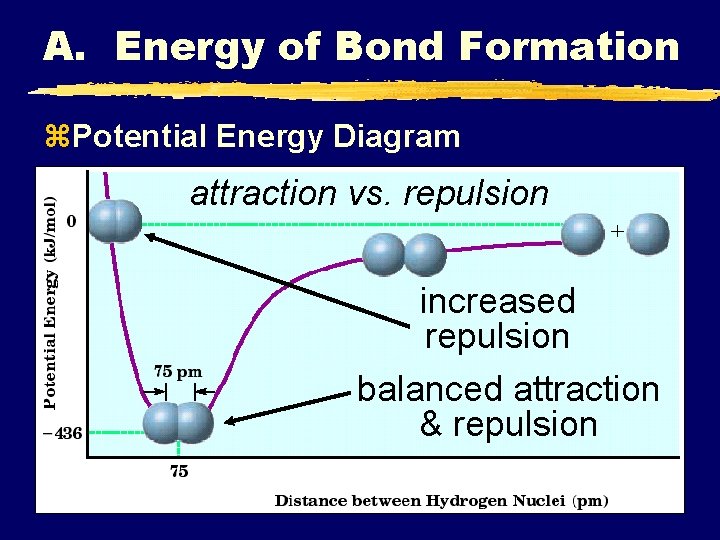
A. Energy of Bond Formation z. Potential Energy Diagram attraction vs. repulsion increased repulsion balanced attraction & repulsion
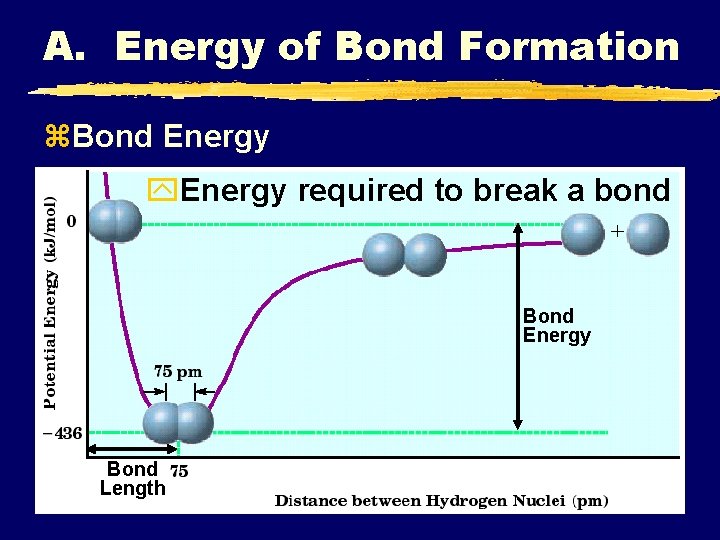
A. Energy of Bond Formation z. Bond Energy y. Energy required to break a bond Bond Energy Bond Length
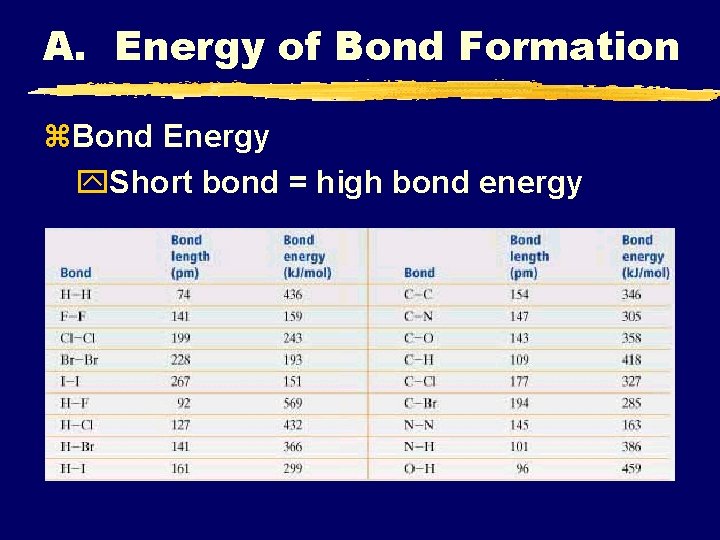
A. Energy of Bond Formation z. Bond Energy y. Short bond = high bond energy
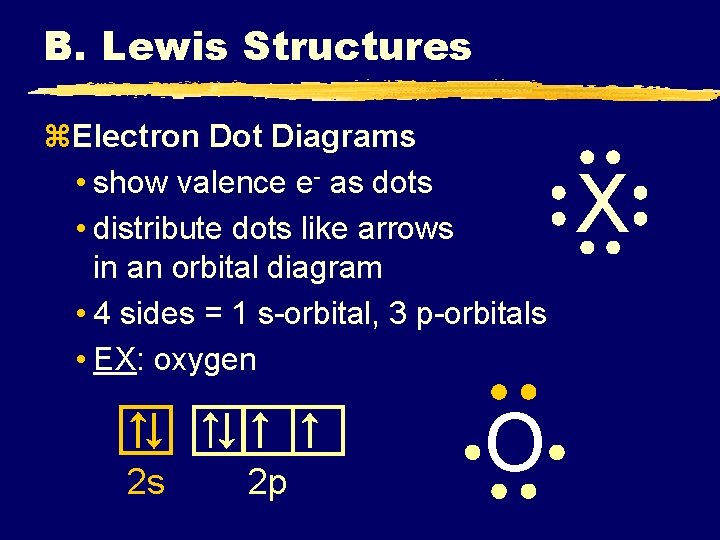
B. Lewis Structures z. Electron Dot Diagrams • show valence e- as dots • distribute dots like arrows in an orbital diagram • 4 sides = 1 s-orbital, 3 p-orbitals • EX: oxygen 2 s 2 p O X
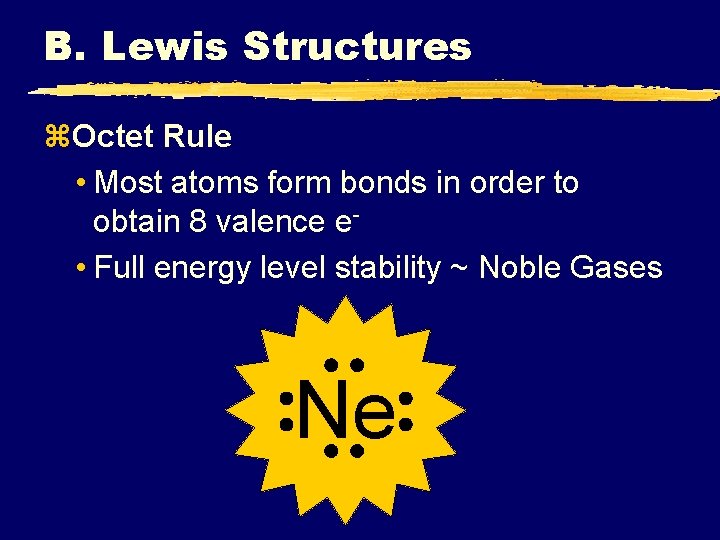
B. Lewis Structures z. Octet Rule • Most atoms form bonds in order to obtain 8 valence e • Full energy level stability ~ Noble Gases Ne
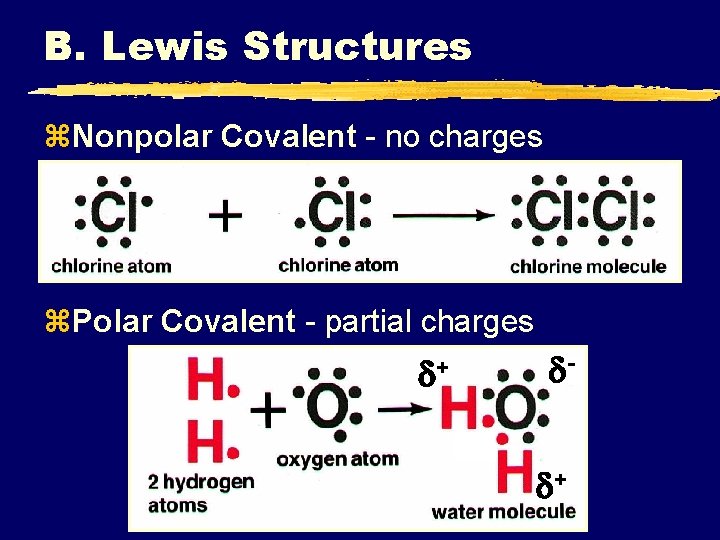
B. Lewis Structures z. Nonpolar Covalent - no charges z. Polar Covalent - partial charges + +
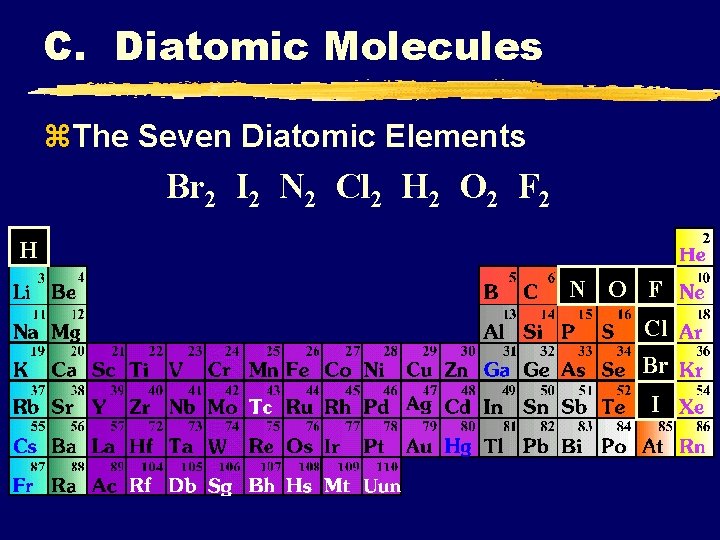
C. Diatomic Molecules z. The Seven Diatomic Elements Br 2 I 2 N 2 Cl 2 H 2 O 2 F 2 H N O F Cl Br I
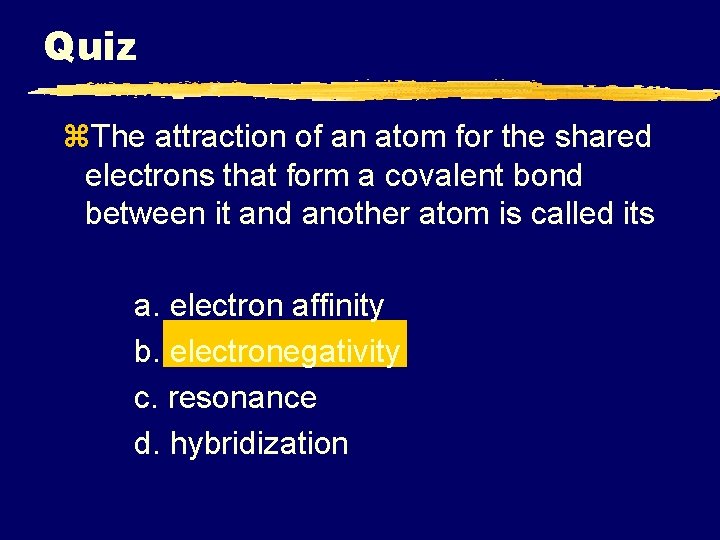
Quiz z. The attraction of an atom for the shared electrons that form a covalent bond between it and another atom is called its a. electron affinity b. electronegativity c. resonance d. hybridization
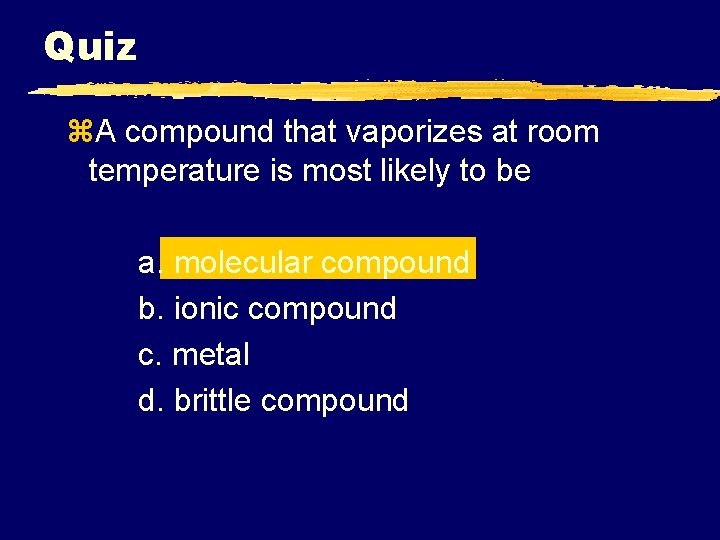
Quiz z. A compound that vaporizes at room temperature is most likely to be a. molecular compound b. ionic compound c. metal d. brittle compound
Quiz z. If 2 covalently bonded atoms move closer than a distance of the bond length, the potential energy of the atoms a. becomes negative b. decreases c. increases d. remains constant
Quiz z. There are ____ diatomic elements that are found in nature as diatomic elements. a. 5 b. 6 c. 7 d. 8 Name them: H 2, N 2, O 2, F 2, Cl 2, Br 2, & I 2
Quiz z. What information is provided in a molecular formula? y what elements y. Number of atoms of each element
Quiz z. What are the only elements that exist mostly as uncombined elements in nature? a. alkali metals b. transition metals c. transuranium elements d. noble gases
- Slides: 16