
UNIT 6 B OCEANIC ART Hiapo tapa Ntue

UNIT 6 B OCEANIC ART

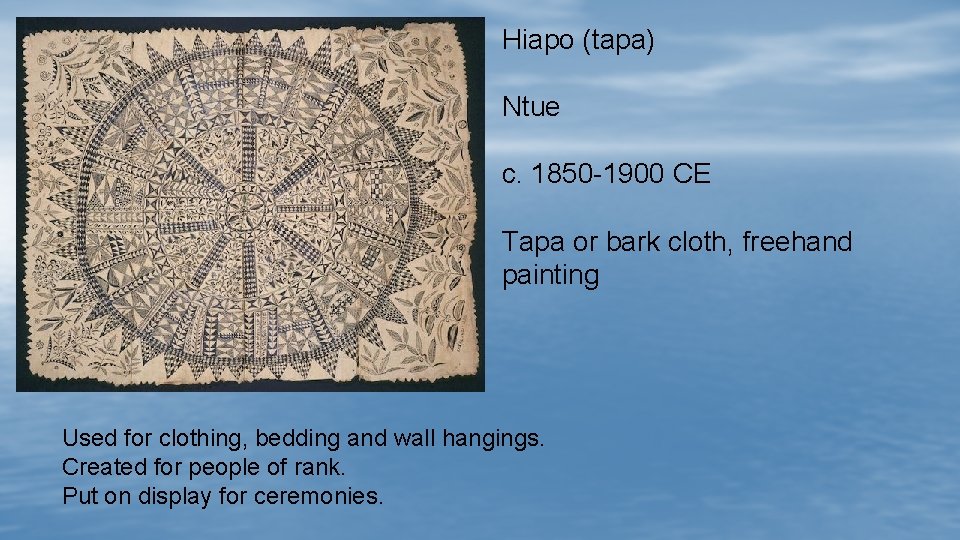
Hiapo (tapa) Ntue c. 1850 -1900 CE Tapa or bark cloth, freehand painting Used for clothing, bedding and wall hangings. Created for people of rank. Put on display for ceremonies.
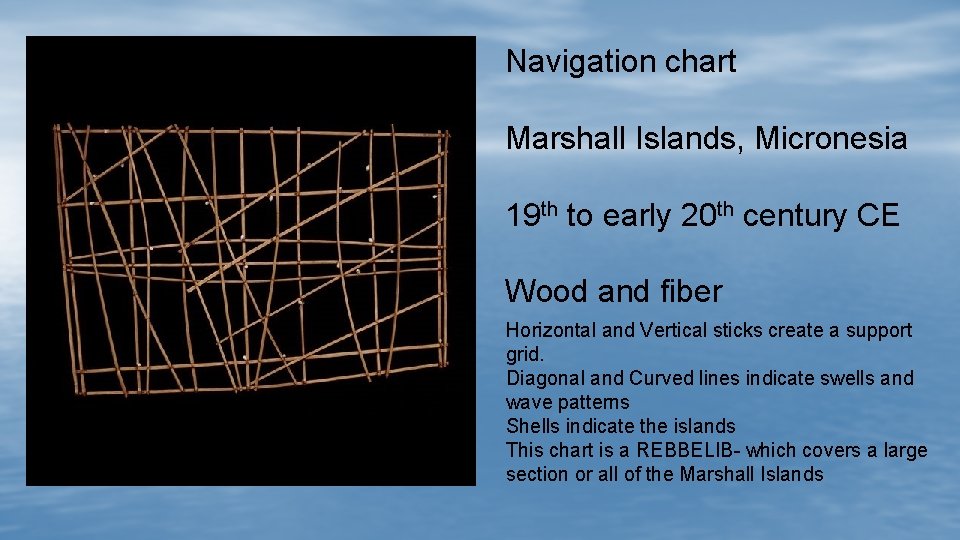
Navigation chart Marshall Islands, Micronesia 19 th to early 20 th century CE Wood and fiber Horizontal and Vertical sticks create a support grid. Diagonal and Curved lines indicate swells and wave patterns Shells indicate the islands This chart is a REBBELIB- which covers a large section or all of the Marshall Islands
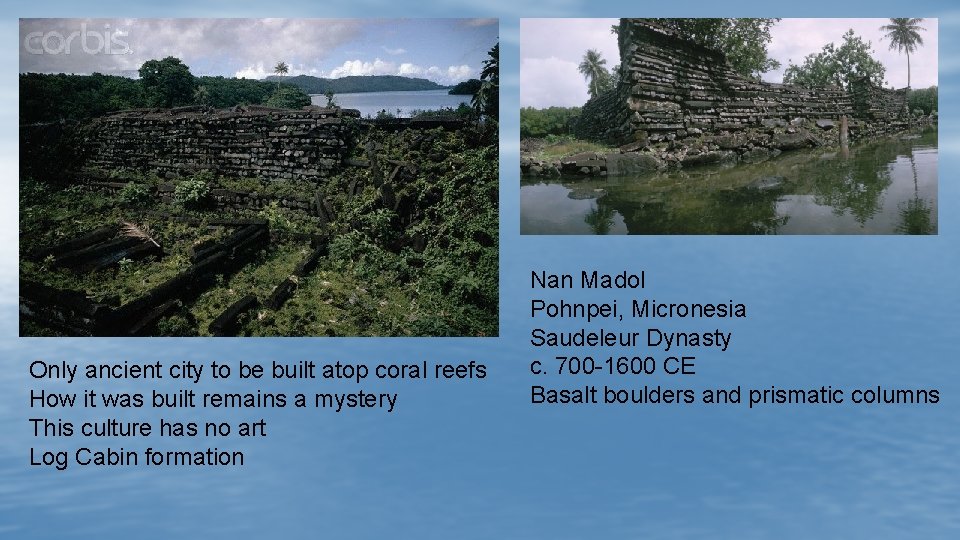
Only ancient city to be built atop coral reefs How it was built remains a mystery This culture has no art Log Cabin formation Nan Madol Pohnpei, Micronesia Saudeleur Dynasty c. 700 -1600 CE Basalt boulders and prismatic columns
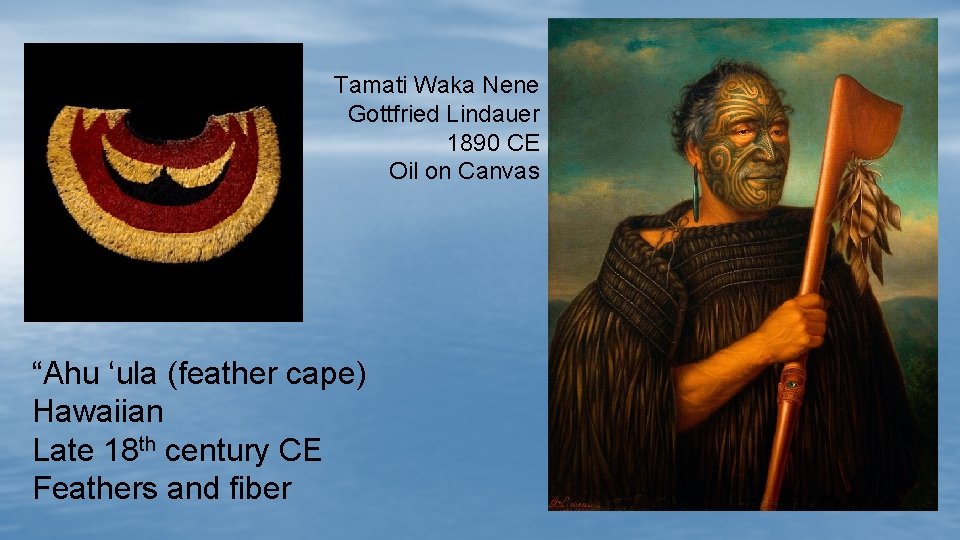
Tamati Waka Nene Gottfried Lindauer 1890 CE Oil on Canvas “Ahu ‘ula (feather cape) Hawaiian Late 18 th century CE Feathers and fiber
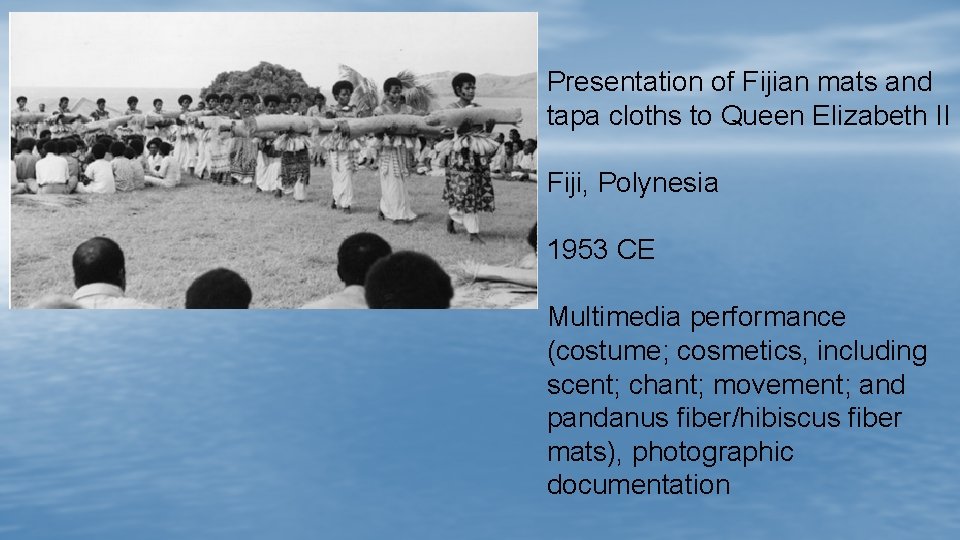
Presentation of Fijian mats and tapa cloths to Queen Elizabeth II Fiji, Polynesia 1953 CE Multimedia performance (costume; cosmetics, including scent; chant; movement; and pandanus fiber/hibiscus fiber mats), photographic documentation
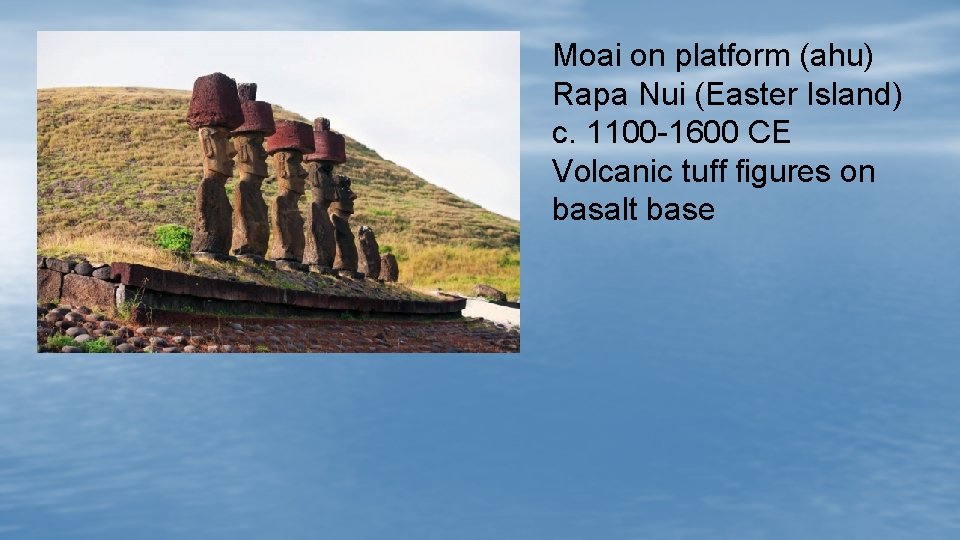
Moai on platform (ahu) Rapa Nui (Easter Island) c. 1100 -1600 CE Volcanic tuff figures on basalt base
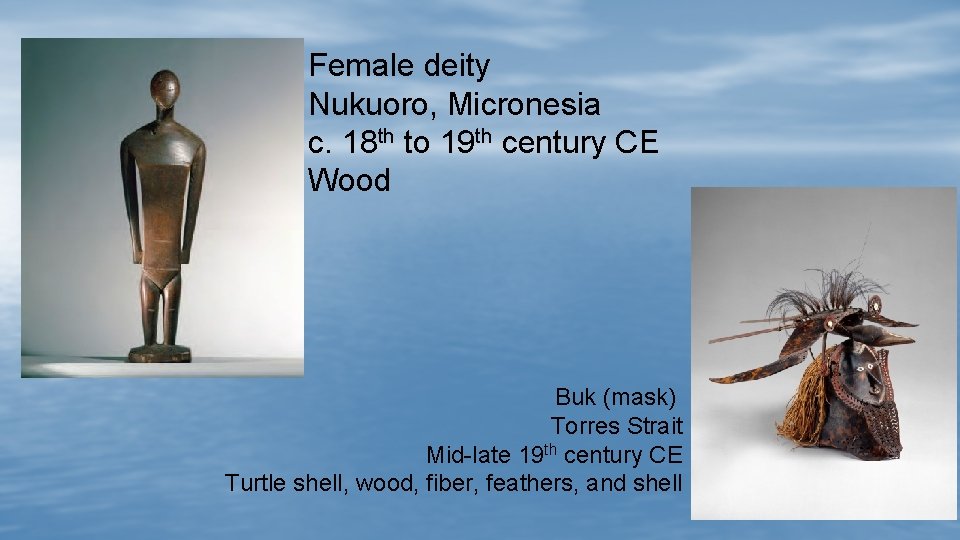
Female deity Nukuoro, Micronesia c. 18 th to 19 th century CE Wood Buk (mask) Torres Strait Mid-late 19 th century CE Turtle shell, wood, fiber, feathers, and shell
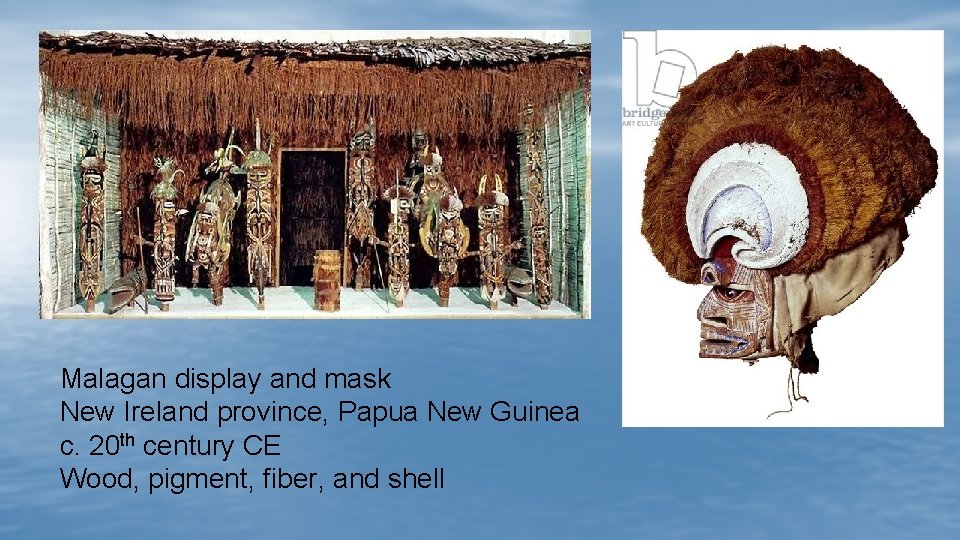
Malagan display and mask New Ireland province, Papua New Guinea c. 20 th century CE Wood, pigment, fiber, and shell
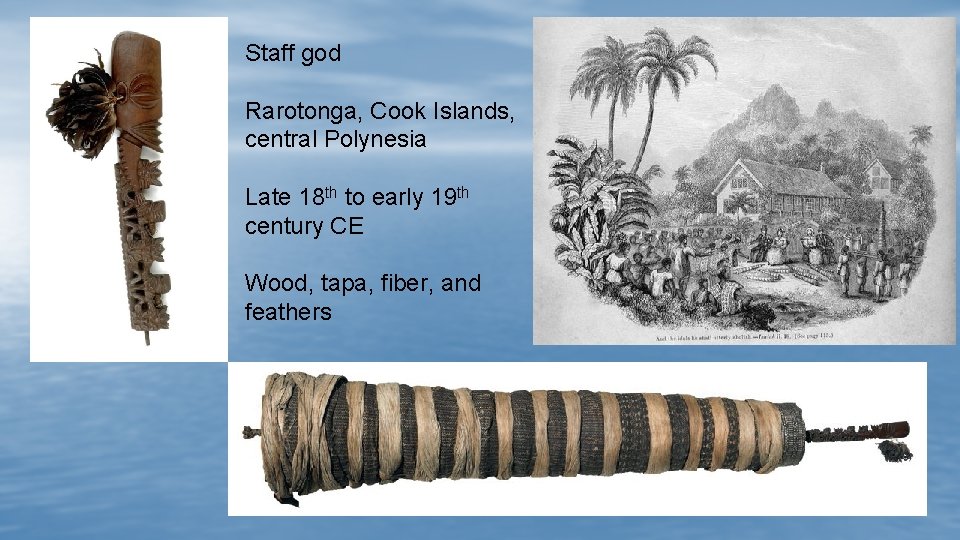
Staff god Rarotonga, Cook Islands, central Polynesia Late 18 th to early 19 th century CE Wood, tapa, fiber, and feathers
Choose a performative work of Oceanic art that has NOT been discussed. The performance could be an exchange, ceremony, or act of creation or destruction. Explain how the work is performed, including an explanation of the roles of performers, materials, and audience. Answer the question: How does the art object support the intent of the performance from a visual and contextual perspective? Compare your selected work with any work from the image set. The comparison should provide evidence of performance as a long-standing tradition of art-making and explain similarities and differences in how each elicits a response from its audience. 2 FULL pages. Typed Using your textbook as one source. MUST be submitted on Google Classroom
- Slides: 12