
UNIT 6 Astronomy Review Which 2 scientists believed
UNIT 6 Astronomy Review
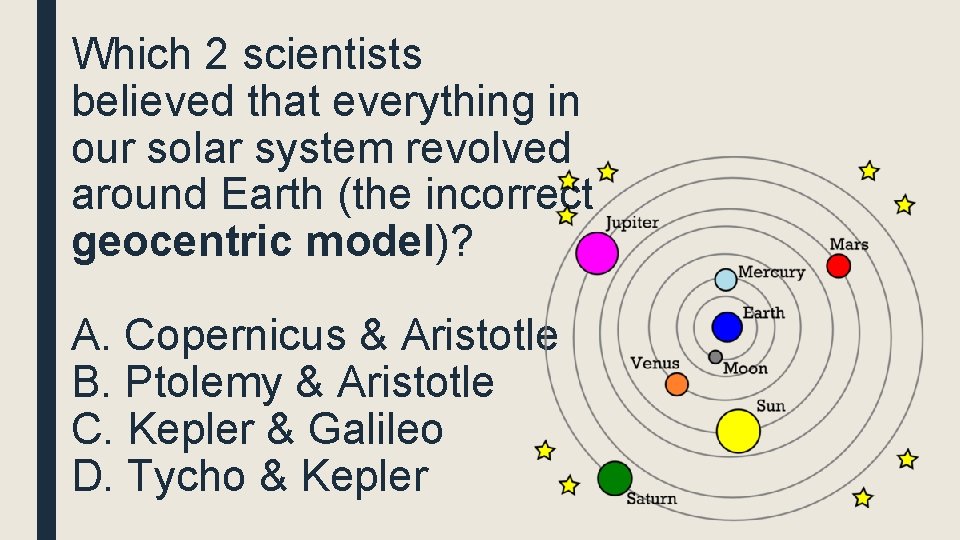
Which 2 scientists believed that everything in our solar system revolved around Earth (the incorrect geocentric model)? A. Copernicus & Aristotle B. Ptolemy & Aristotle C. Kepler & Galileo D. Tycho & Kepler
B. PTOLEMY & ARISTOTLE
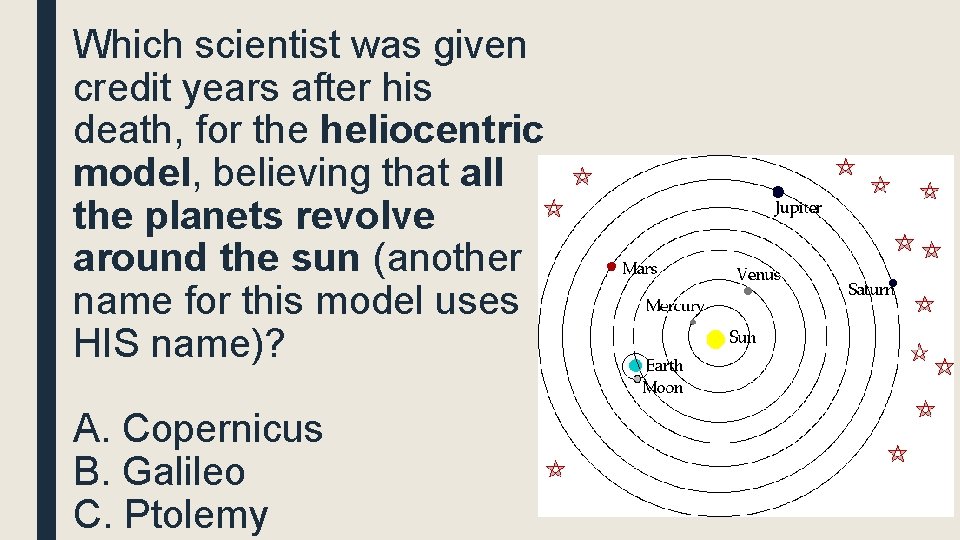
Which scientist was given credit years after his death, for the heliocentric model, believing that all the planets revolve around the sun (another name for this model uses HIS name)? A. Copernicus B. Galileo C. Ptolemy
A. COPERNICUS
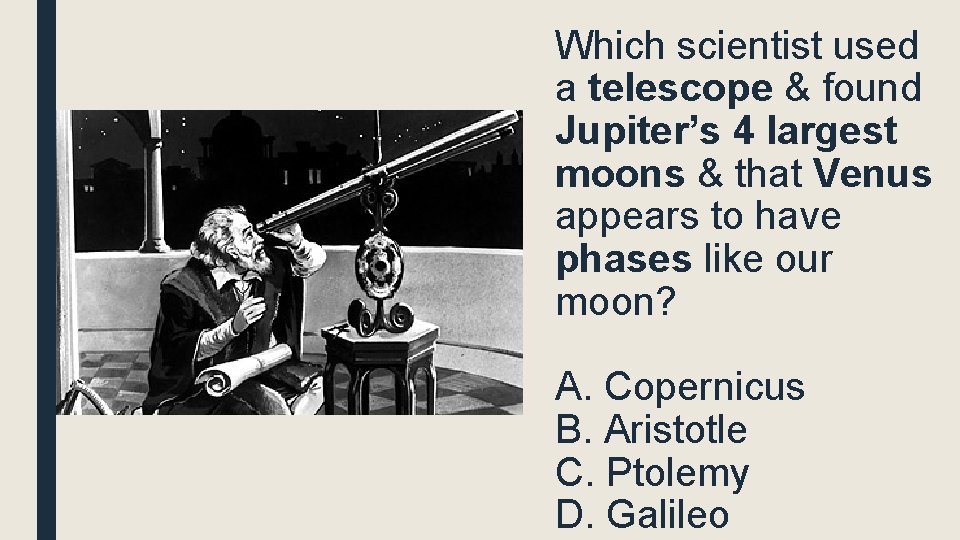
Which scientist used a telescope & found Jupiter’s 4 largest moons & that Venus appears to have phases like our moon? A. Copernicus B. Aristotle C. Ptolemy D. Galileo

D. GALILEO
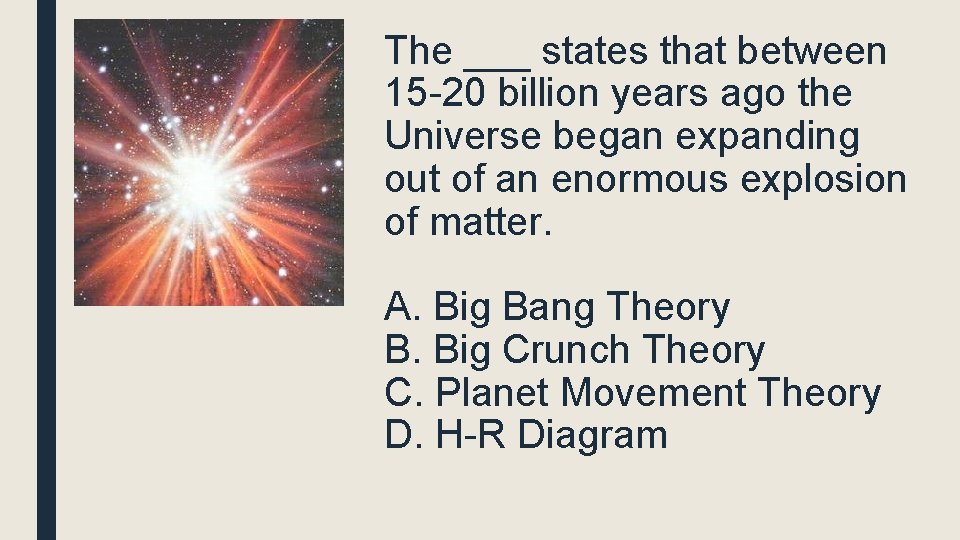
The ___ states that between 15 -20 billion years ago the Universe began expanding out of an enormous explosion of matter. A. Big Bang Theory B. Big Crunch Theory C. Planet Movement Theory D. H-R Diagram
A. BIG BANG THEORY
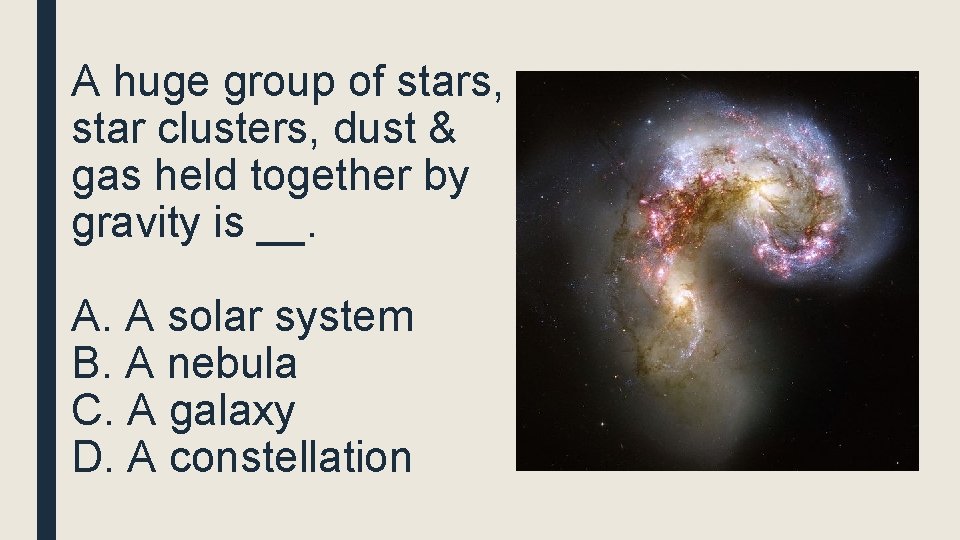
A huge group of stars, star clusters, dust & gas held together by gravity is __. A. A solar system B. A nebula C. A galaxy D. A constellation
C. A GALAXY
The shape of our Milky Way galaxy is described as ___. A. an oval B. a spiral C. a disk
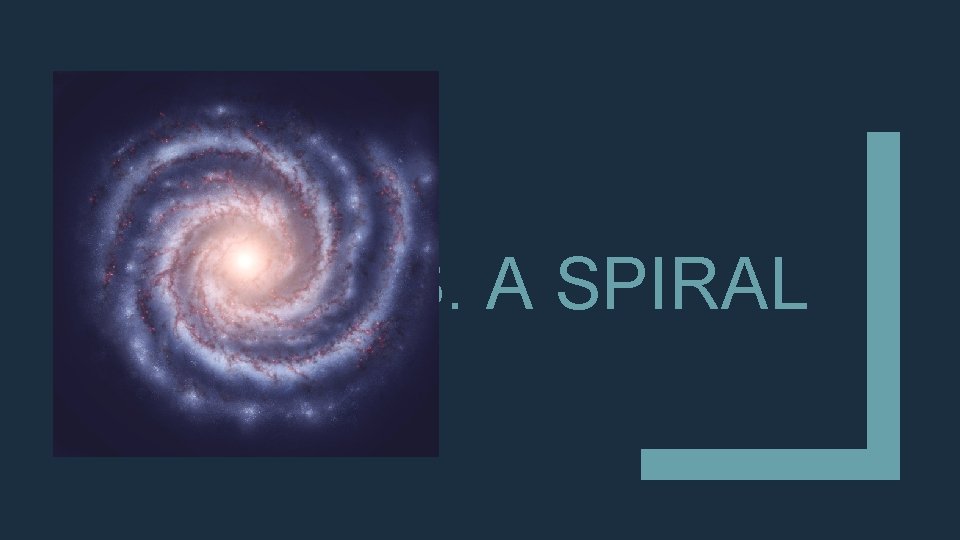
B. A SPIRAL
The shape of our galaxy cannot be seen from Earth because ___. A. We are located within one of its arms B. We are too high to see the shape C. Our view is blocked by the Sun D. Light pollution keeps us from being able to see it
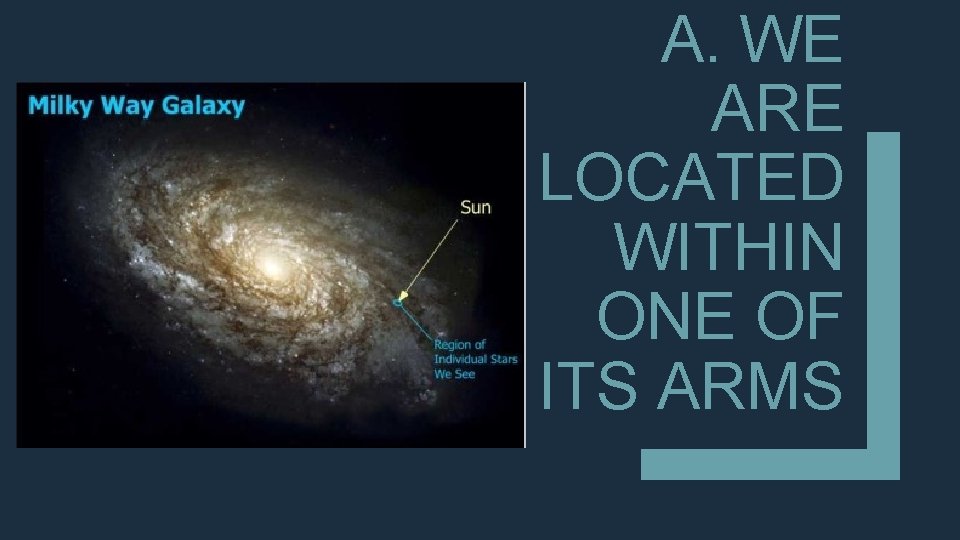
A. WE ARE LOCATED WITHIN ONE OF ITS ARMS
What 2 factors determine the amount of gravity? A. The size of the object & the distance between objects B. The shape of the object & how it formed C. The distance between objects & the atmospheres
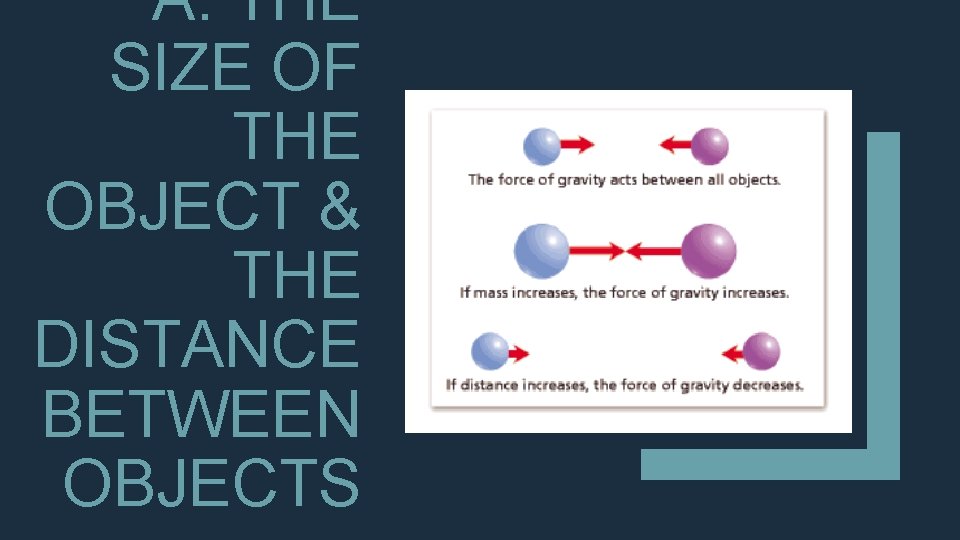
A. THE SIZE OF THE OBJECT & THE DISTANCE BETWEEN OBJECTS
___ attracts objects towards each other like Earth and the Sun, while ___ is a force that acts to push a planet away from the sun, staying on a straight path out in to space. A. Orbits, Velocity B. Gravity, Inertia C. Power, Strength
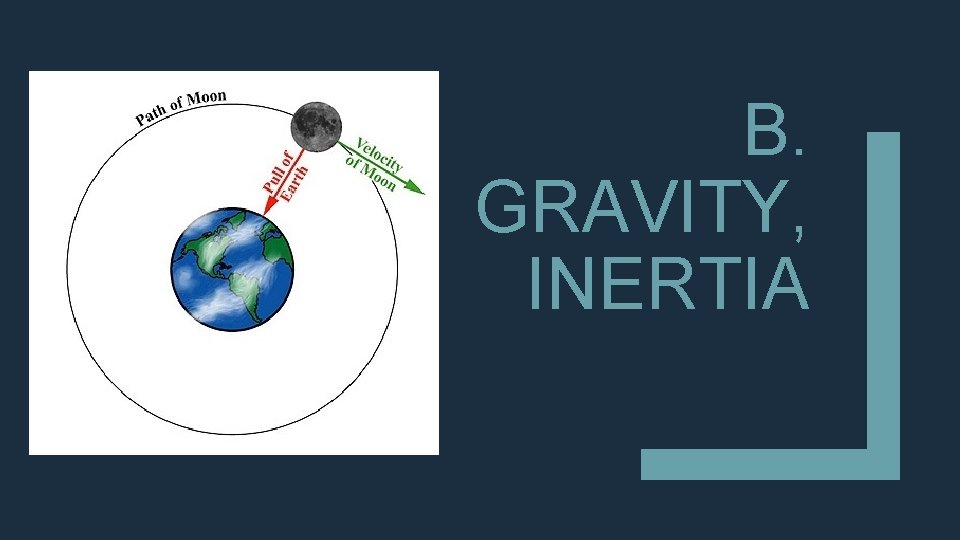
B. GRAVITY, INERTIA
Which of the following shows the correct order from LARGEST to SMALLEST? A. The Sun, The Milky Way Galaxy, Our Solar System, The Universe B. The Universe, The Milky Way Galaxy, Our Solar System, The Sun C. Our Solar System, The Sun, The Milky Way Galaxy, The Universe
B. THE UNIVERSE, THE MILKY WAY GALAXY, OUR SOLAR SYSTEM, THE SUN
Which is Rotation & Which is Revolution? When the Earth completely spins once on its axis in 24 hours = ___. When a planet moves around the Sun one full orbit in a year = ___.
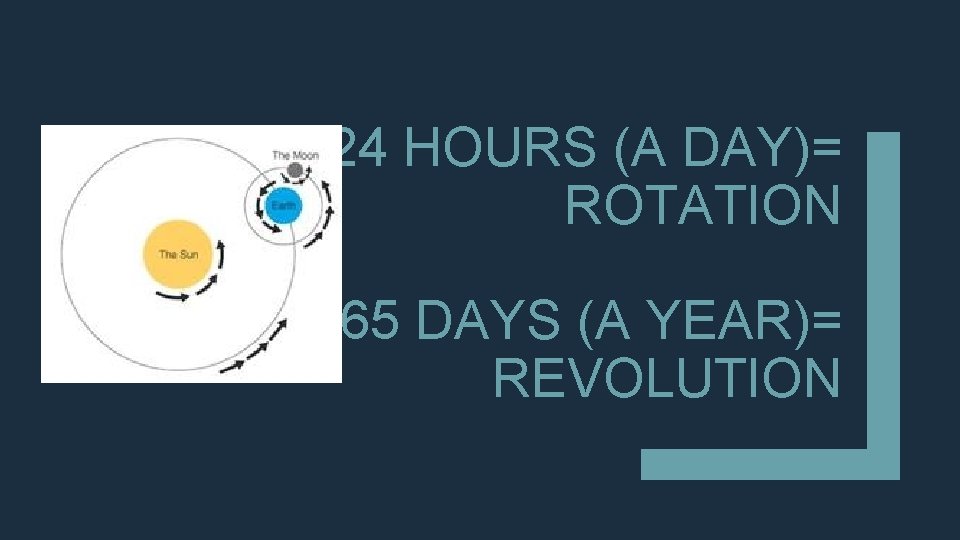
24 HOURS (A DAY)= ROTATION 365 DAYS (A YEAR)= REVOLUTION
List the INNER PLANETS in the correct order from the Sun
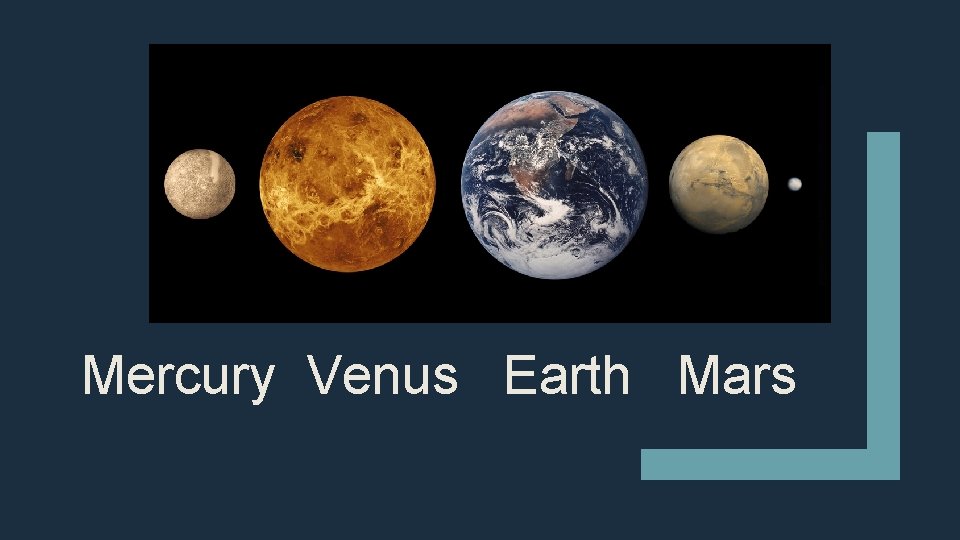
Mercury Venus Earth Mars
List the OUTER PLANETS in the correct order from the Sun
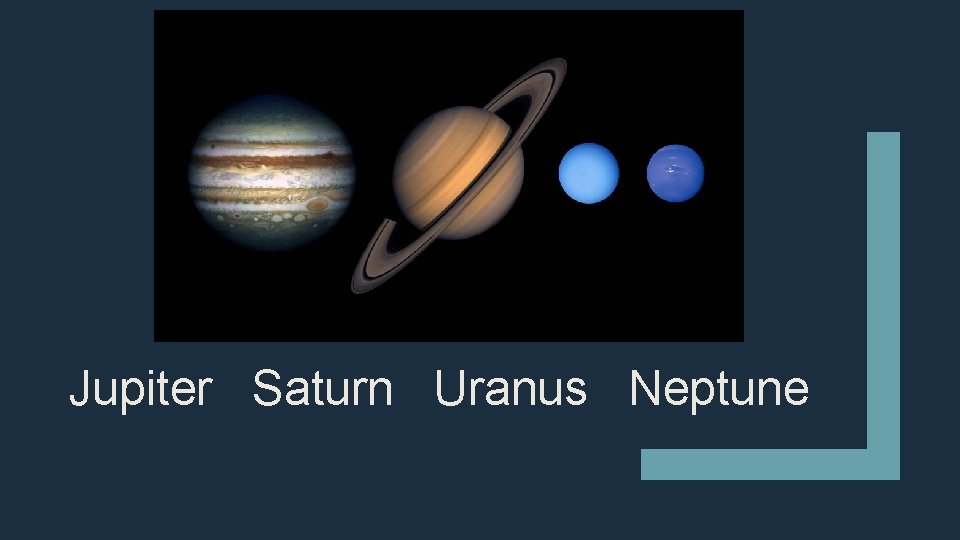
Jupiter Saturn Uranus Neptune
Venus cannot support life because ___. A. Its temperatures are too cold B. It has no atmosphere C. It has a thick, toxic atmosphere with extremely hot temps D. Its soil is full of oxidized iron
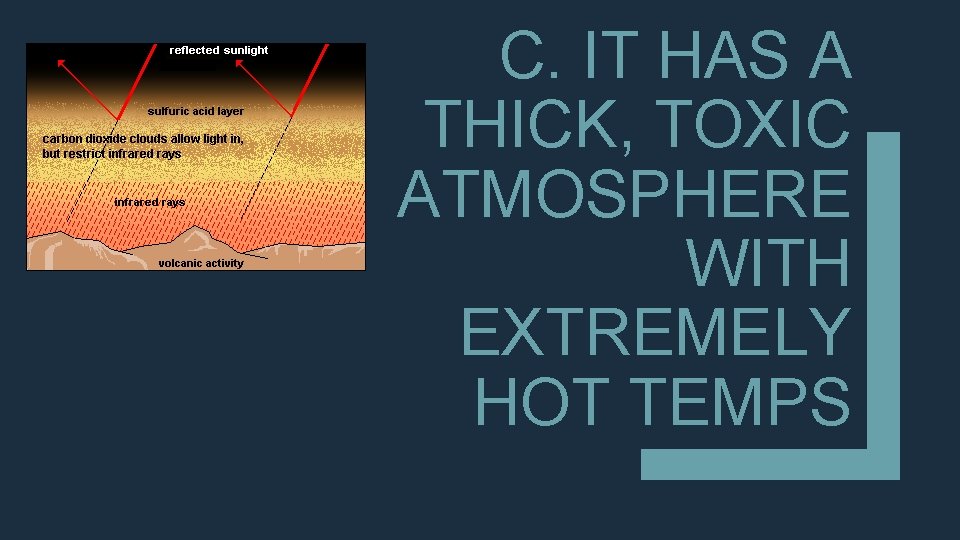
C. IT HAS A THICK, TOXIC ATMOSPHERE WITH EXTREMELY HOT TEMPS
Common characteristics of the outer planets include ___. A. Small, cold, no moons, rings B. Close together, short years, gassy, no rings C. Rings, gassy, many moons, fast days
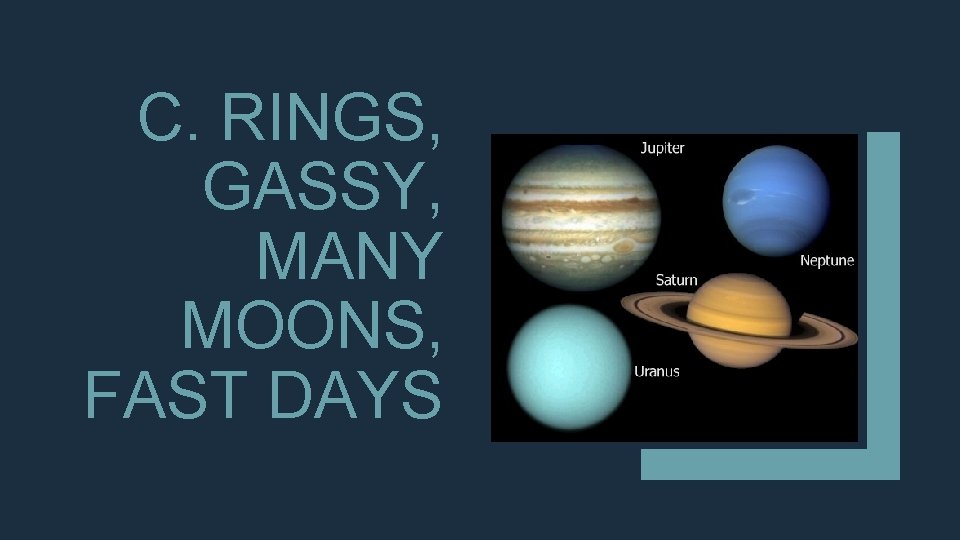
C. RINGS, GASSY, MANY MOONS, FAST DAYS
Which planet rotates completely on its side, like a wheel rolling around the Sun? A. Venus B. Saturn C. Jupiter D. Uranus
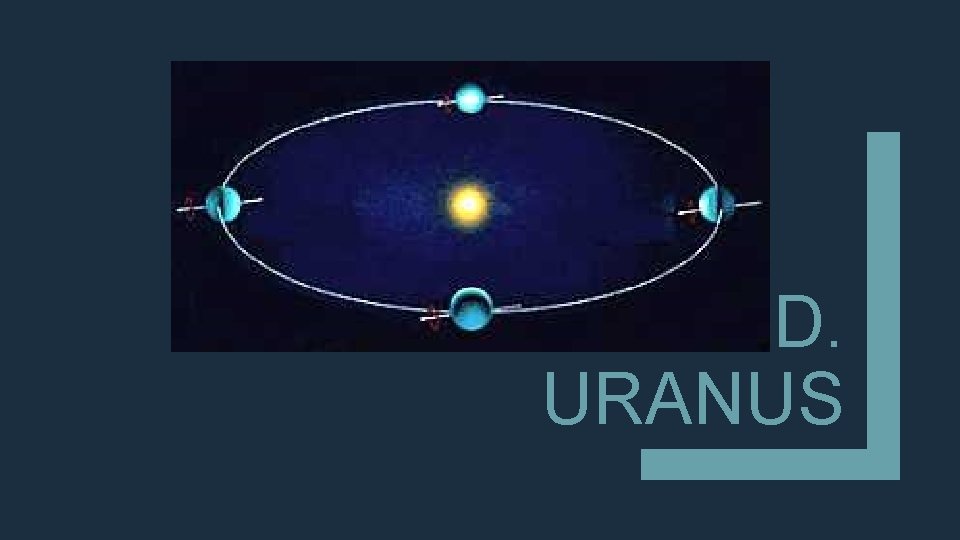
D. URANUS
Which planet has almost no atmosphere, its surface looks most like our Moon, and it has the fastest revolution around the Sun? A. Mercury B. Mars C. Venus
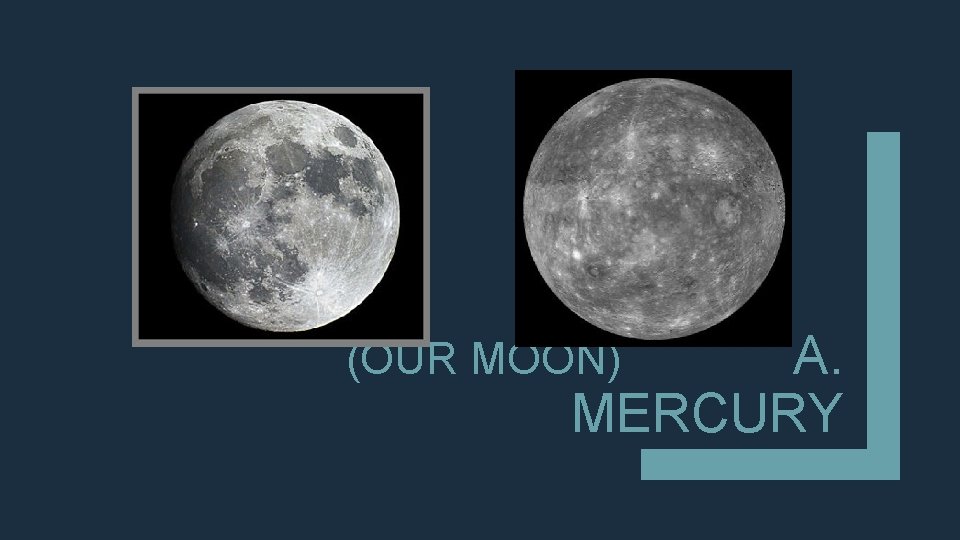
A. MERCURY (OUR MOON)
Which planet is the only one where there is liquid water, frozen water & water vapor? A. Venus B. Mars C. Earth
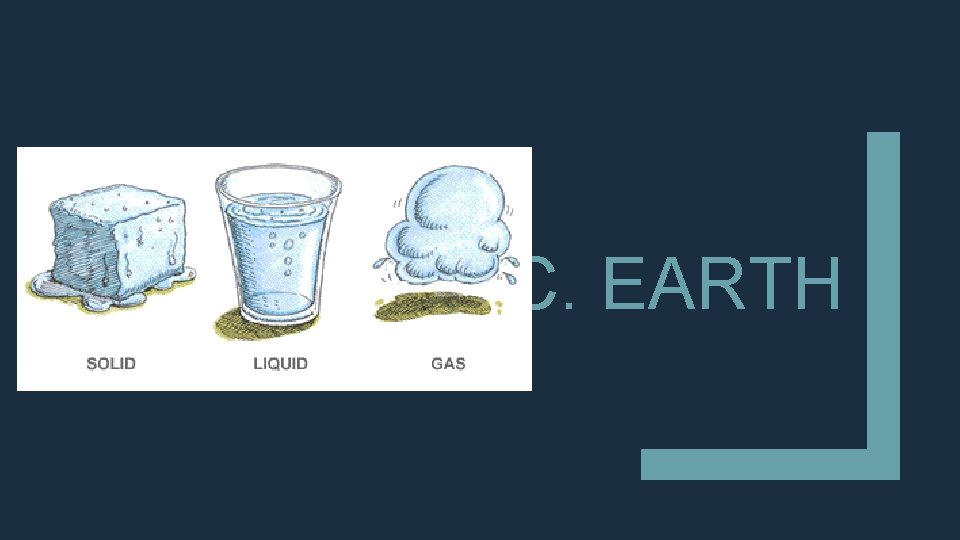
C. EARTH
If inertia did not exist, what would happen to the planets? A. They would continue to revolve around the Sun B. They would crash into the Sun C. They would float off into space
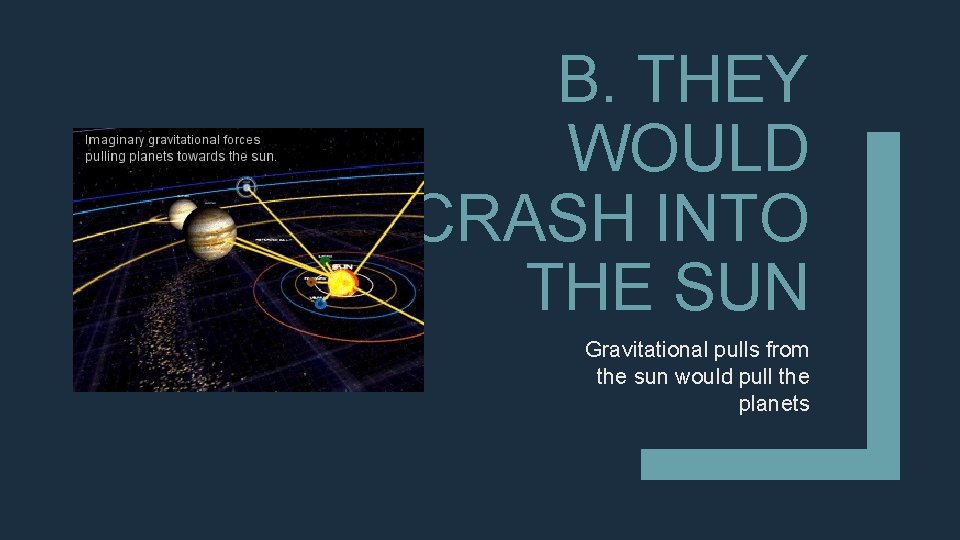
B. THEY WOULD CRASH INTO THE SUN Gravitational pulls from the sun would pull the planets
___ is the imaginary line that goes through the center of Earth, with the poles at each end. (Rotating on this creates day & night. ) A. Axis B. Ellipse C. Equator
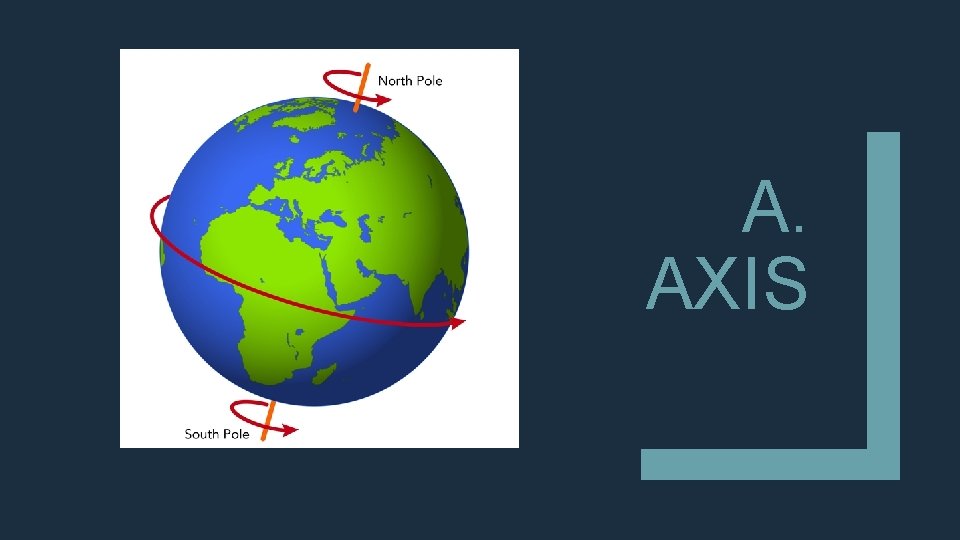
A. AXIS
___ are the different forms that the moon takes each night in its appearance, as seen from Earth. A. Ellipses B. Equinoxes C. Moon Phases
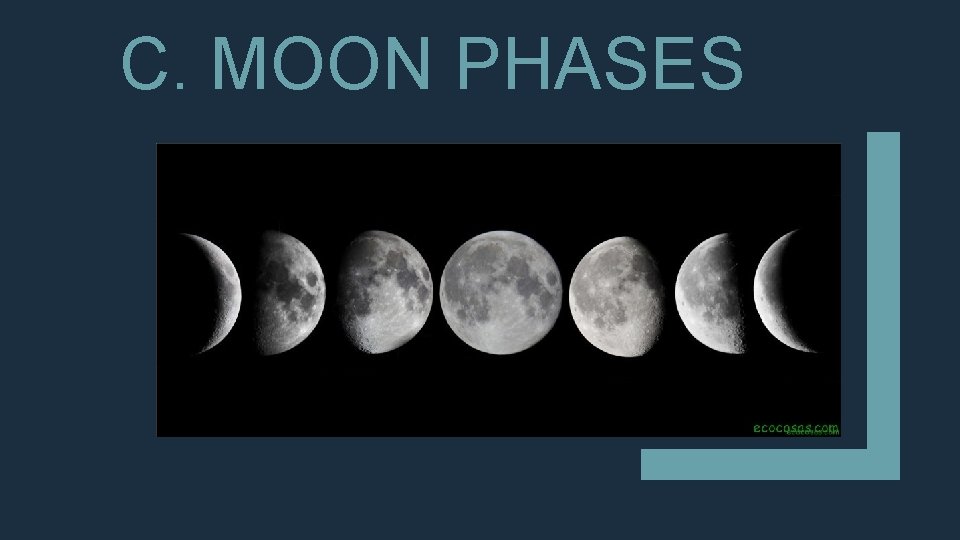
C. MOON PHASES
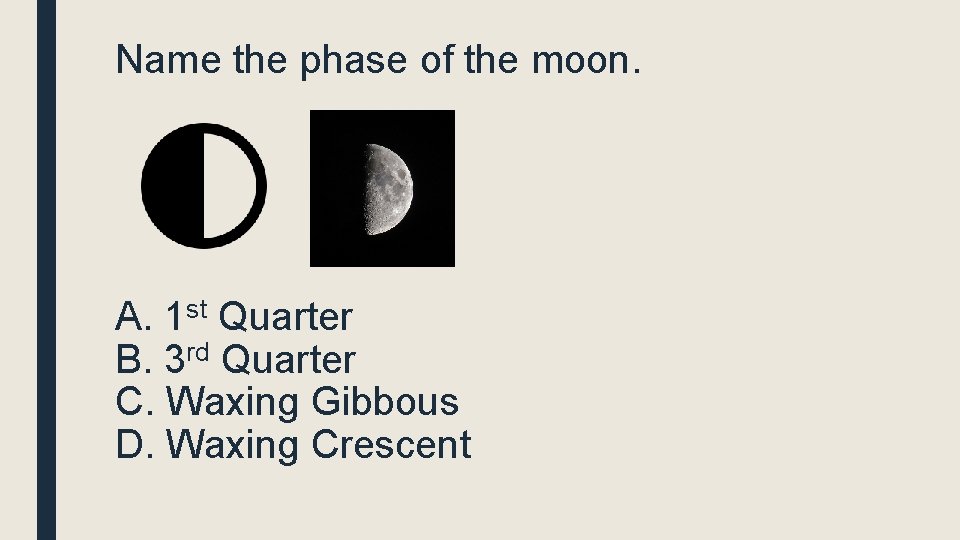
Name the phase of the moon. A. 1 st Quarter B. 3 rd Quarter C. Waxing Gibbous D. Waxing Crescent
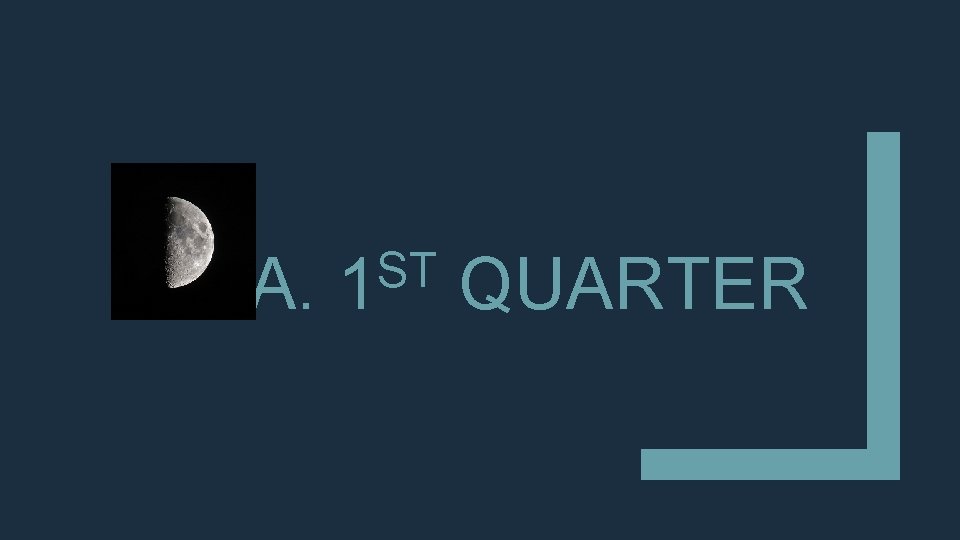
A. ST 1 QUARTER
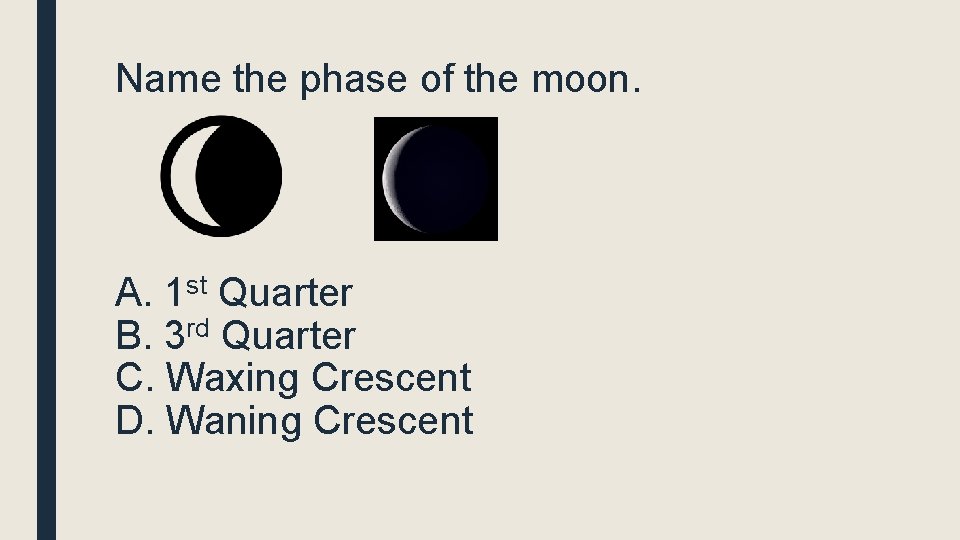
Name the phase of the moon. A. 1 st Quarter B. 3 rd Quarter C. Waxing Crescent D. Waning Crescent
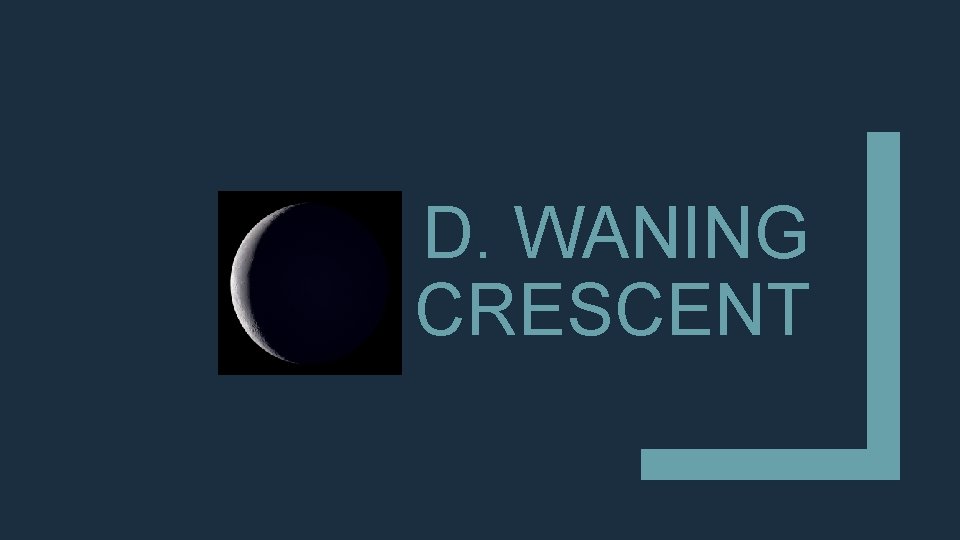
D. WANING CRESCENT
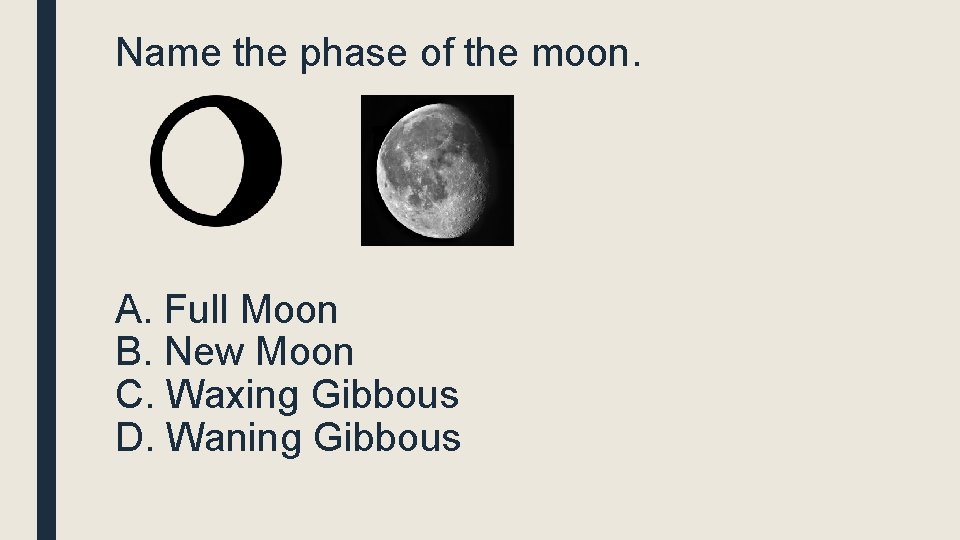
Name the phase of the moon. A. Full Moon B. New Moon C. Waxing Gibbous D. Waning Gibbous
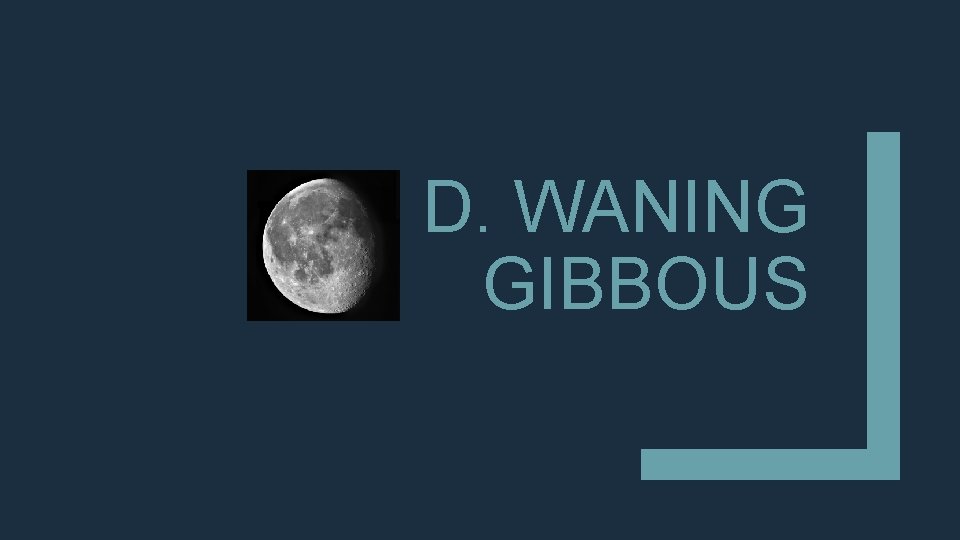
D. WANING GIBBOUS
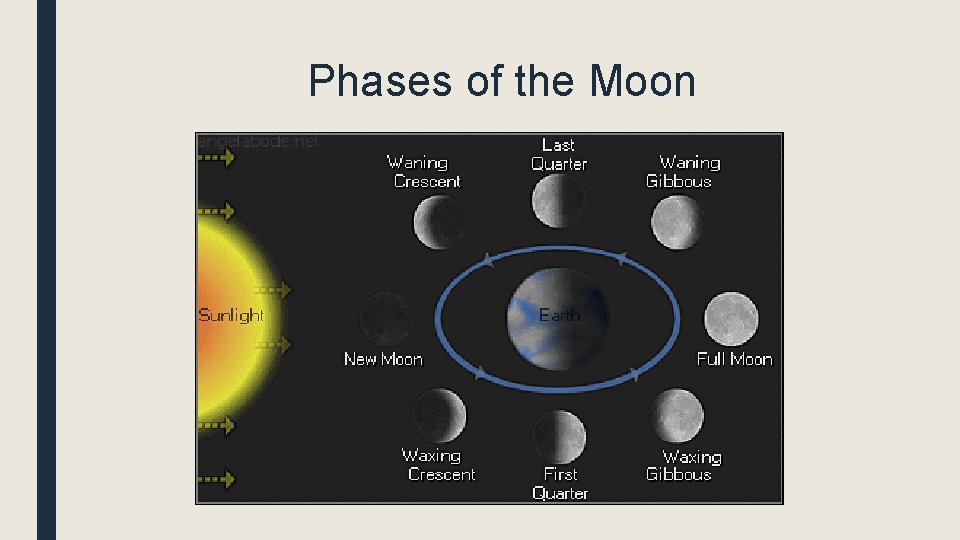
Phases of the Moon
When the moon moves directly between the Sun & the Earth, casting a shadow over part of Earth & blocking sunlight, we call this ___. A. A lunar eclipse B. The solstice C. A solar eclipse D. The equinox
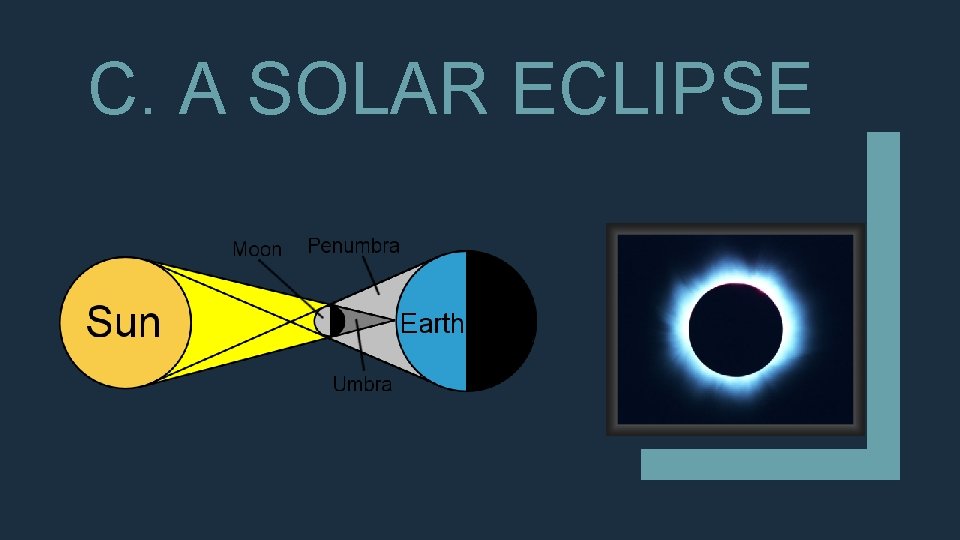
C. A SOLAR ECLIPSE
When all of the Moon’s surface facing Earth reflects light from the sun, it is called ___. A. The New Moon B. The Full Moon C. The Waxing Phases D. The Waning Phases
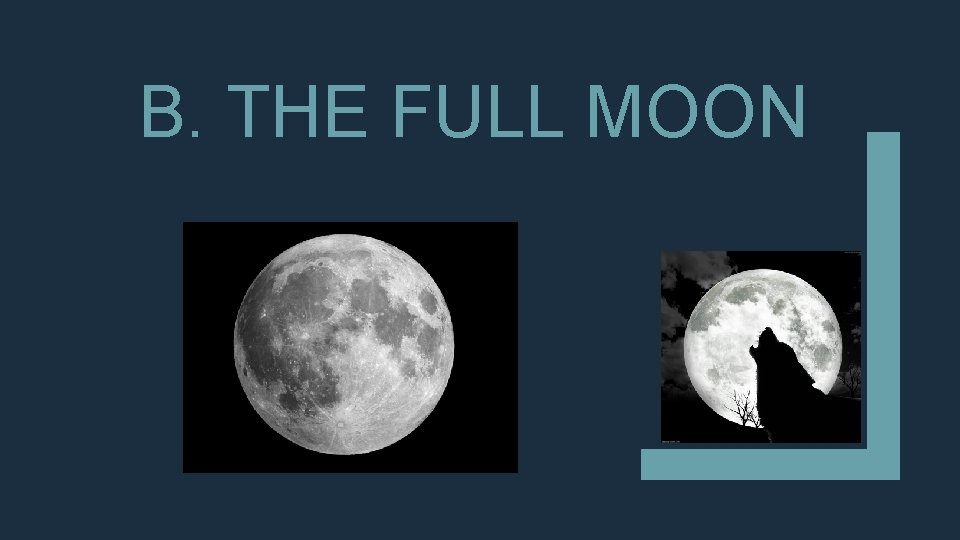
B. THE FULL MOON
An elongated, closed curve path (smashed circle) that most space objects take on their orbit around our Sun is called ___. A. An orion B. An ellipse C. Waxing D. Waning
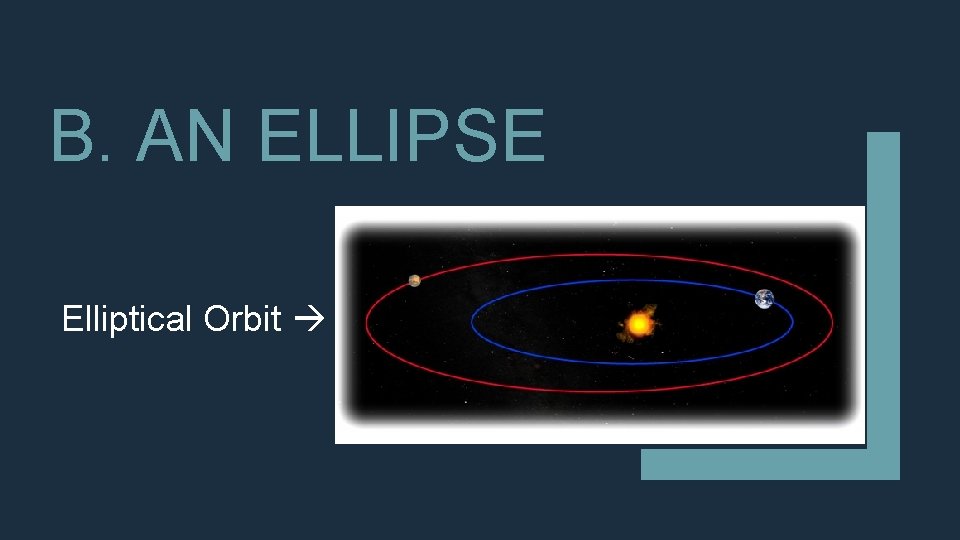
B. AN ELLIPSE Elliptical Orbit
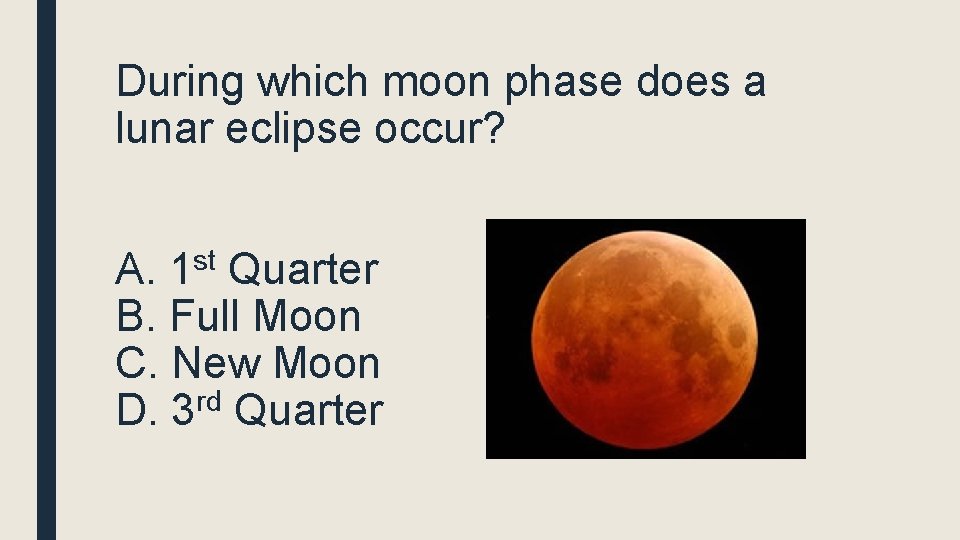
During which moon phase does a lunar eclipse occur? A. 1 st Quarter B. Full Moon C. New Moon rd D. 3 Quarter
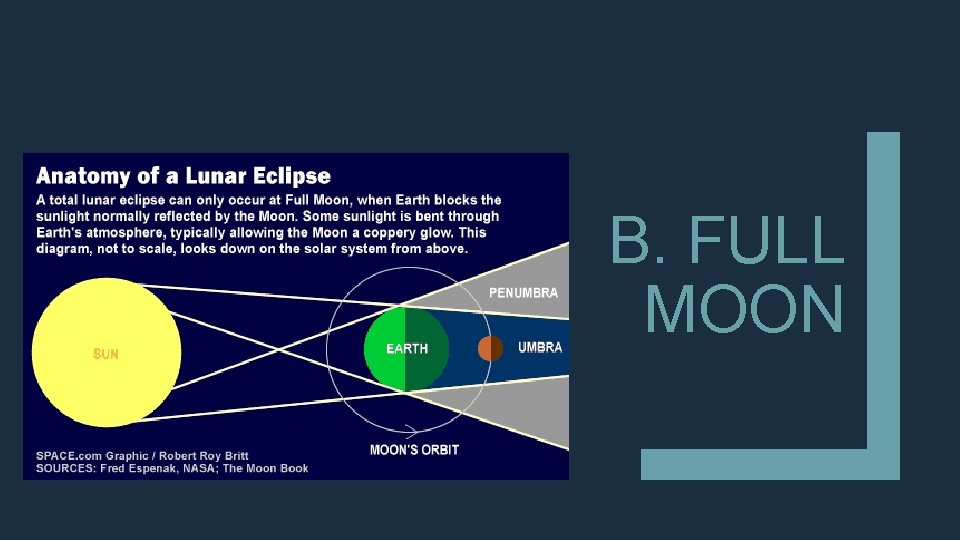
B. FULL MOON
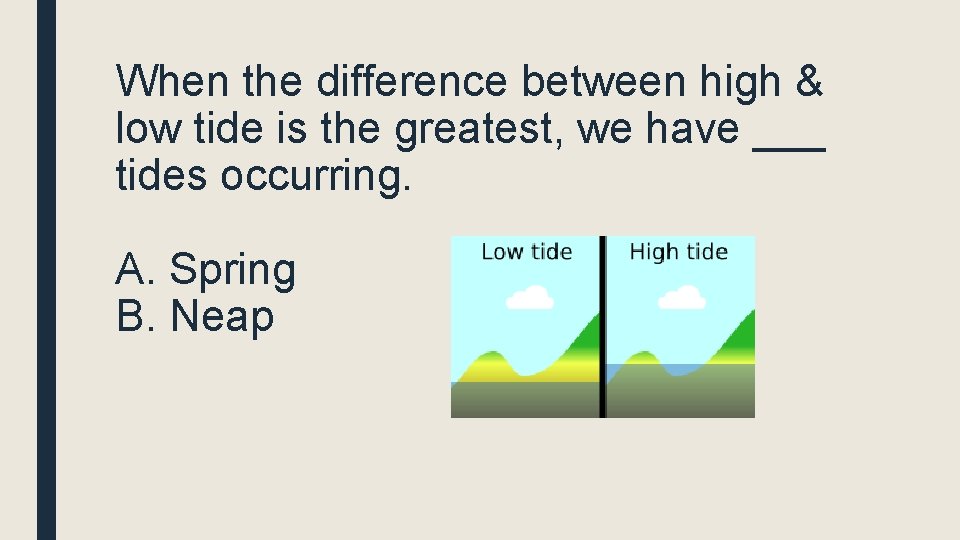
When the difference between high & low tide is the greatest, we have ___ tides occurring. A. Spring B. Neap
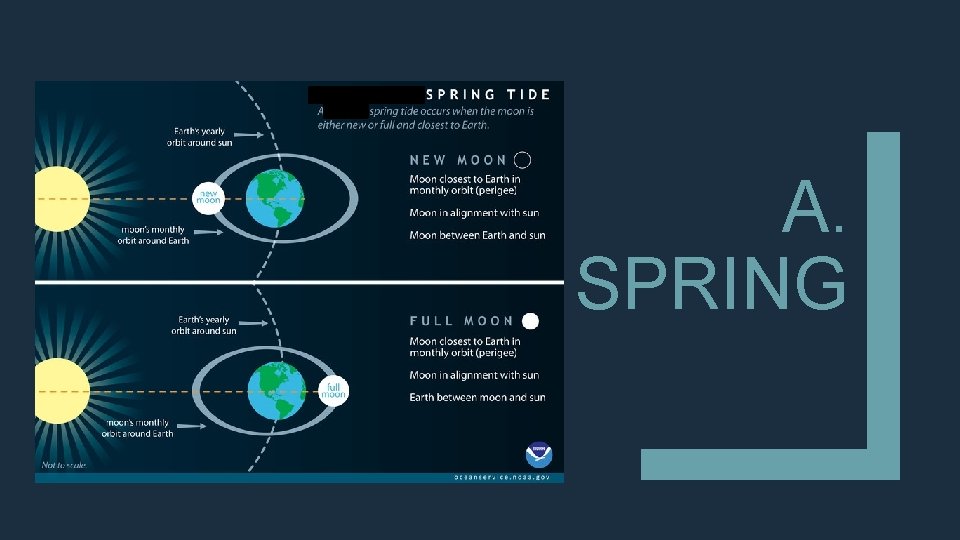
A. SPRING
During which moon phases do we have Neap Tides? A. Full & New B. Waxing Crescent & Waning Crescent st rd C. 1 Quarter & 3 Quarter D. Waxing Gibbous & Waning Gibbous
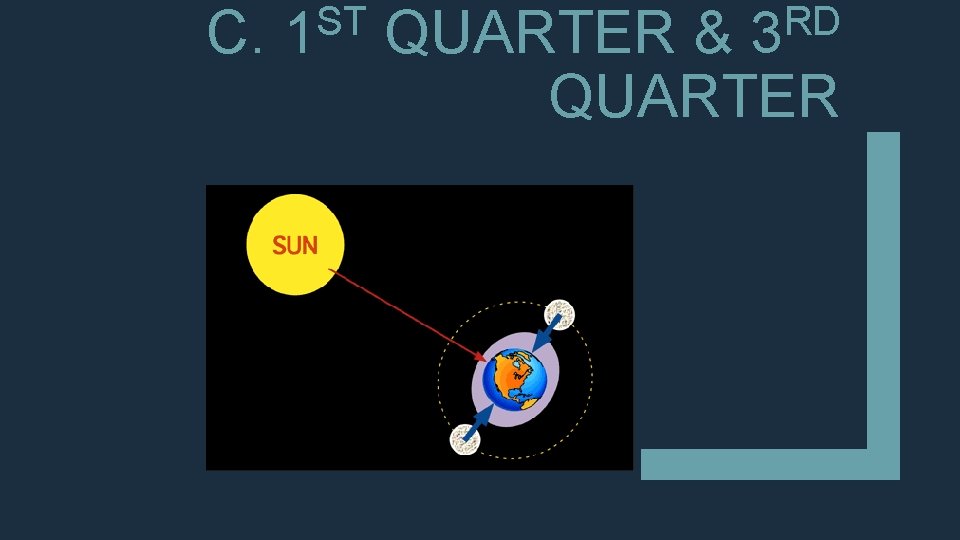
C. ST 1 RD 3 QUARTER & QUARTER
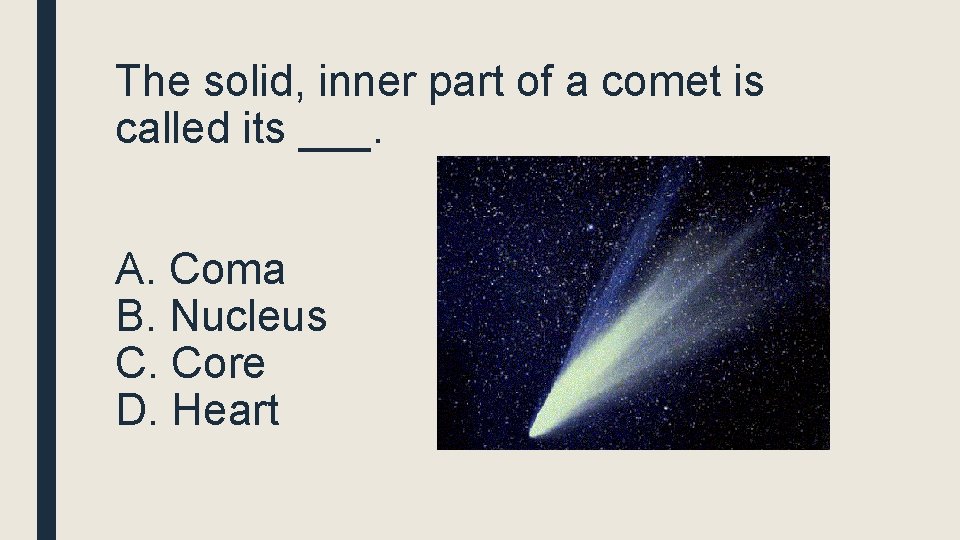
The solid, inner part of a comet is called its ___. A. Coma B. Nucleus C. Core D. Heart
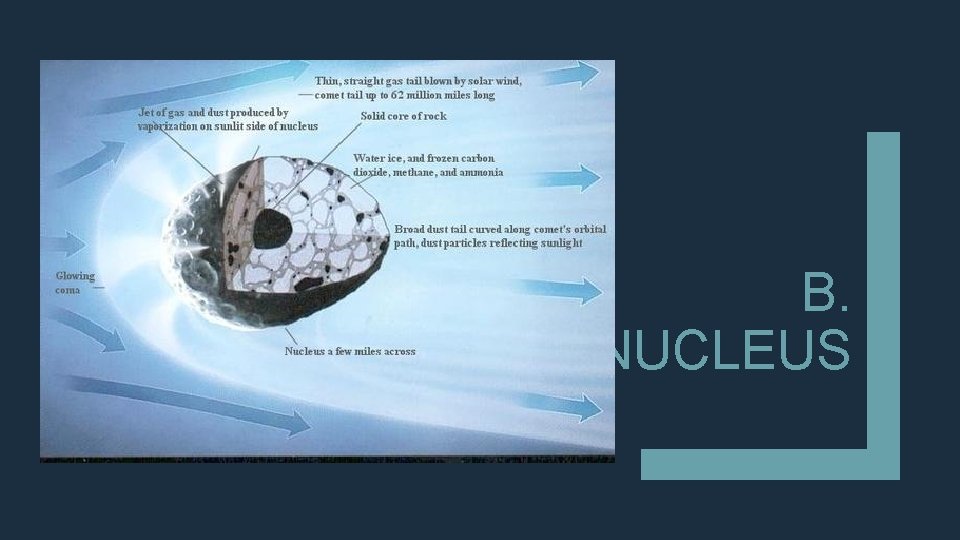
B. NUCLEUS
The cloud of gases around the solid part of a comet is known as the ___. A. Core B. Heart C. Coma
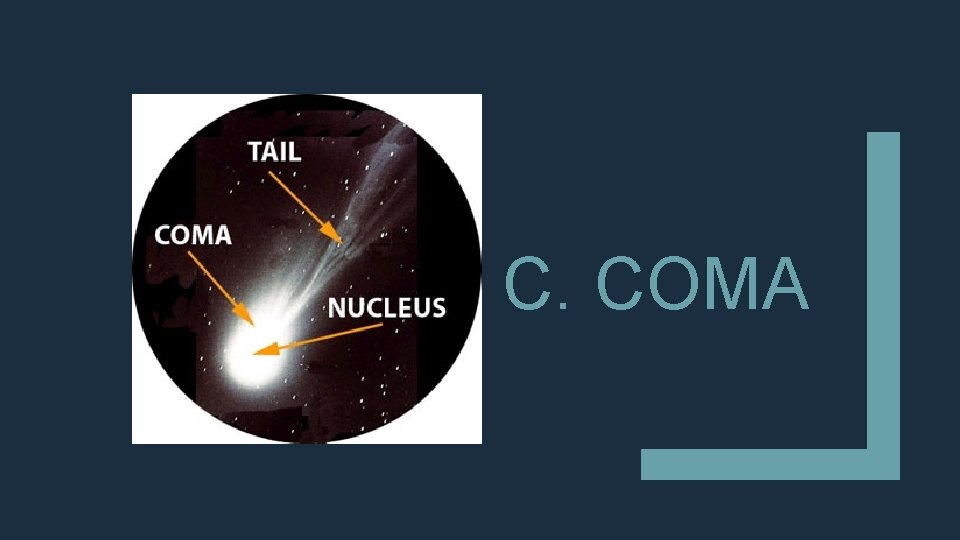
C. COMA
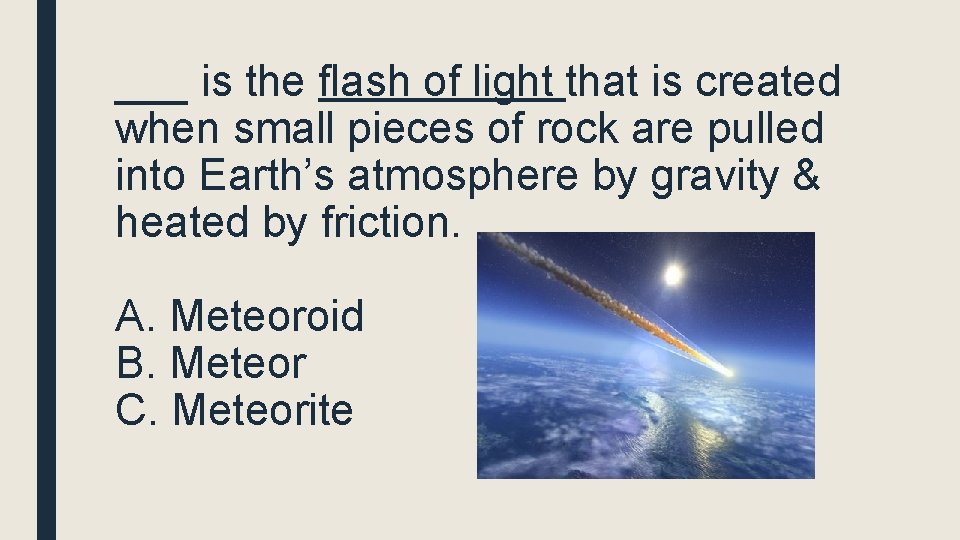
___ is the flash of light that is created when small pieces of rock are pulled into Earth’s atmosphere by gravity & heated by friction. A. Meteoroid B. Meteor C. Meteorite
B. METEOR
Pieces of space rock that actually strike Earth’s surface are called ___. A. Meteoroids B. Meteors C. Meteorites
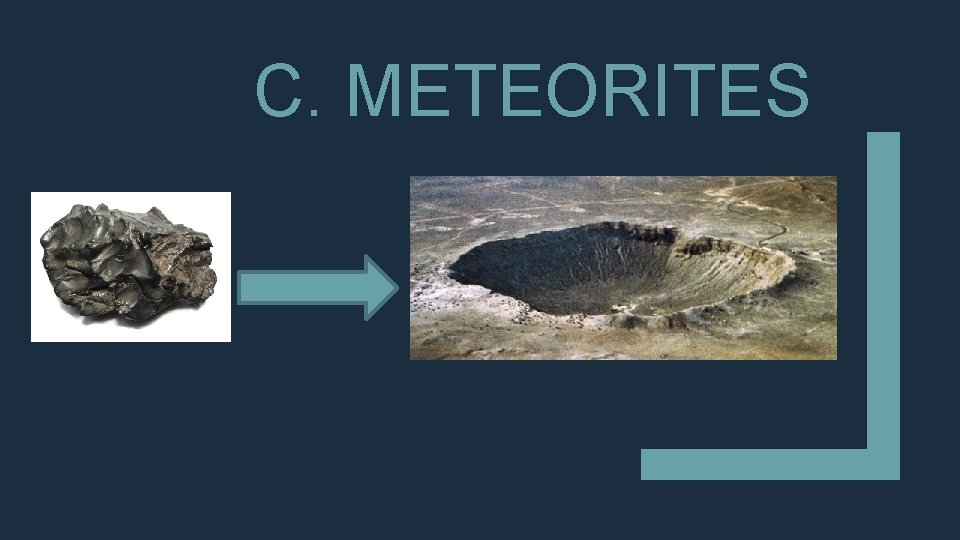
C. METEORITES
Most asteroids are located between the orbits of ___, in the “Asteroid Belt”. A. Mercury & Venus B. Earth & Mars C. Neptune & Pluto D. Mars & Jupiter
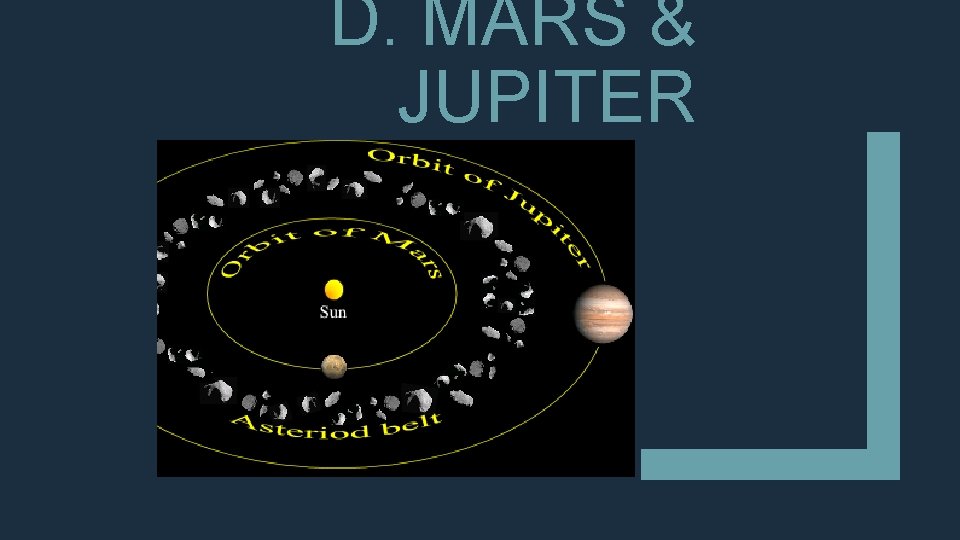
D. MARS & JUPITER
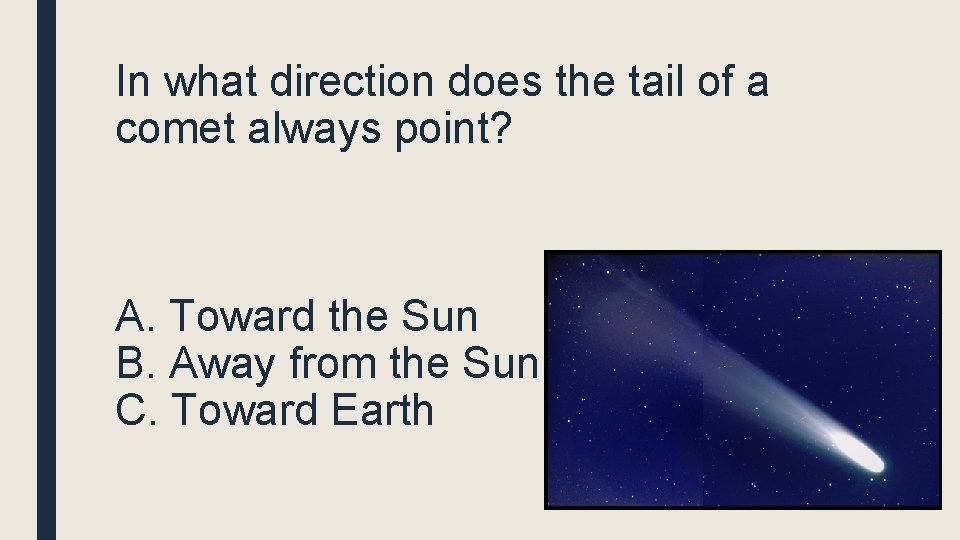
In what direction does the tail of a comet always point? A. Toward the Sun B. Away from the Sun C. Toward Earth
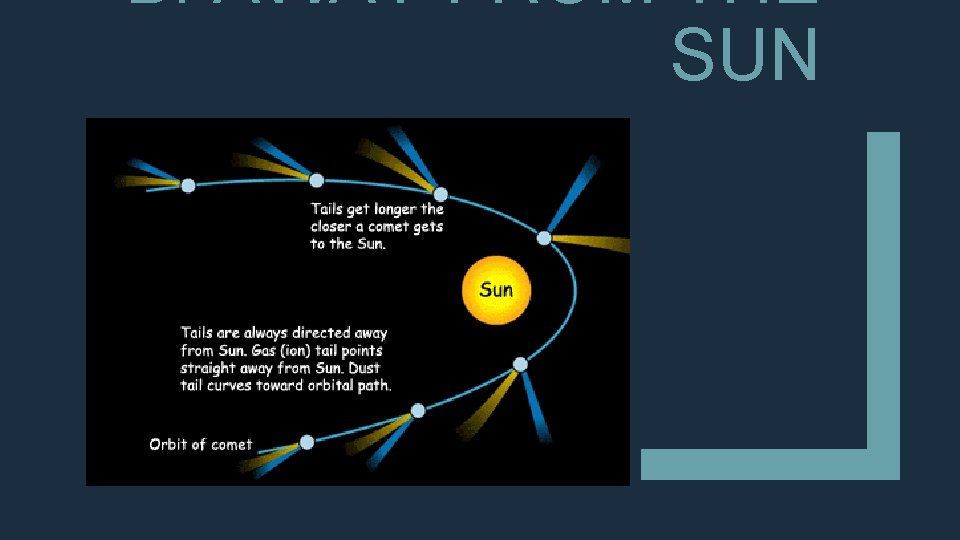
B. AWAY FROM THE SUN
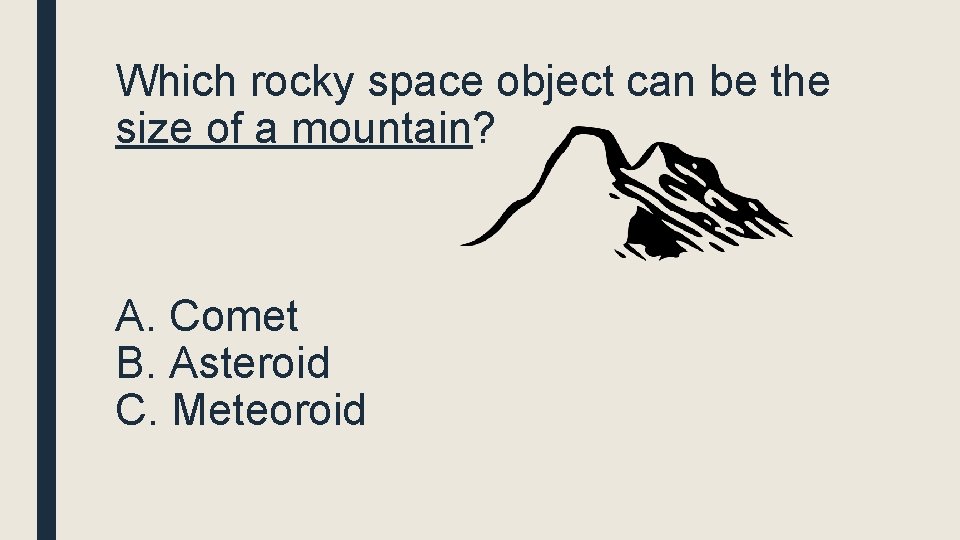
Which rocky space object can be the size of a mountain? A. Comet B. Asteroid C. Meteoroid
A. COME T
Earth has seasons because ___. A. It rotates on its axis every day B. It is an inner planet, close to the Sun C. It is tilted on its axis as it revolves round the Sun
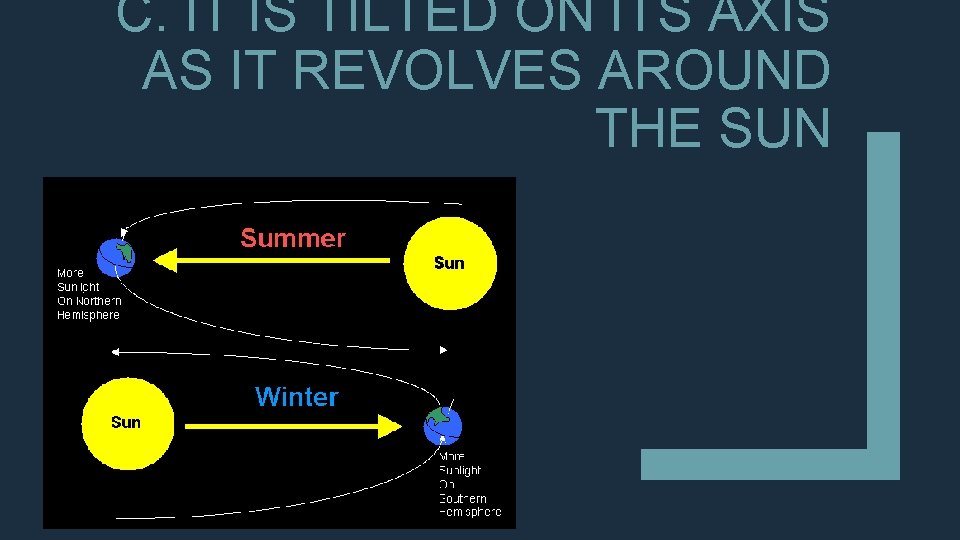
C. IT IS TILTED ON ITS AXIS AS IT REVOLVES AROUND THE SUN
The Solstice (when the Sun reaches its greatest distance North or South of the equator) marks the first day of which 2 seasons? A. Winter & Summer B. Spring & Fall
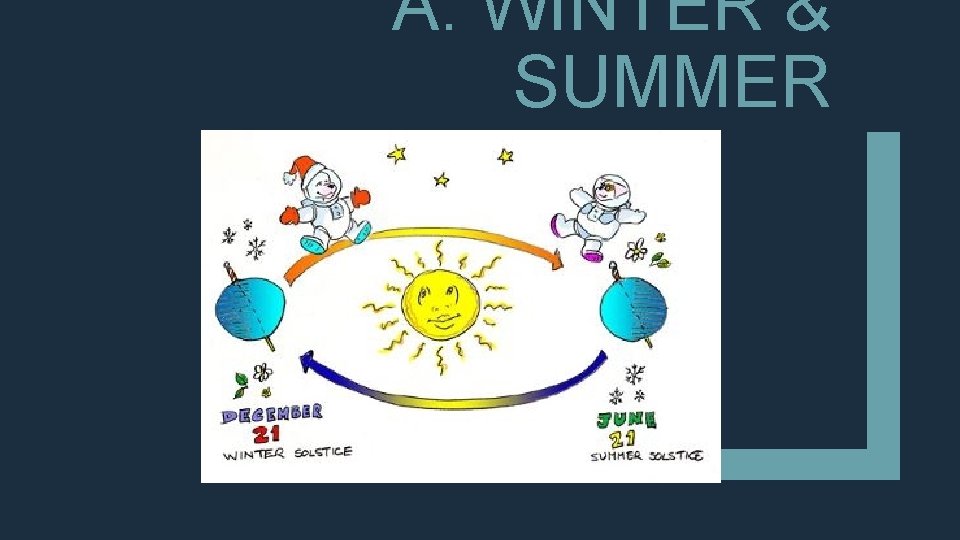
A. WINTER & SUMMER
The Equinox (when the Sun is directly above the equator) marks the first day of which 2 seasons? A. Winter & Summer B. Spring & Fall
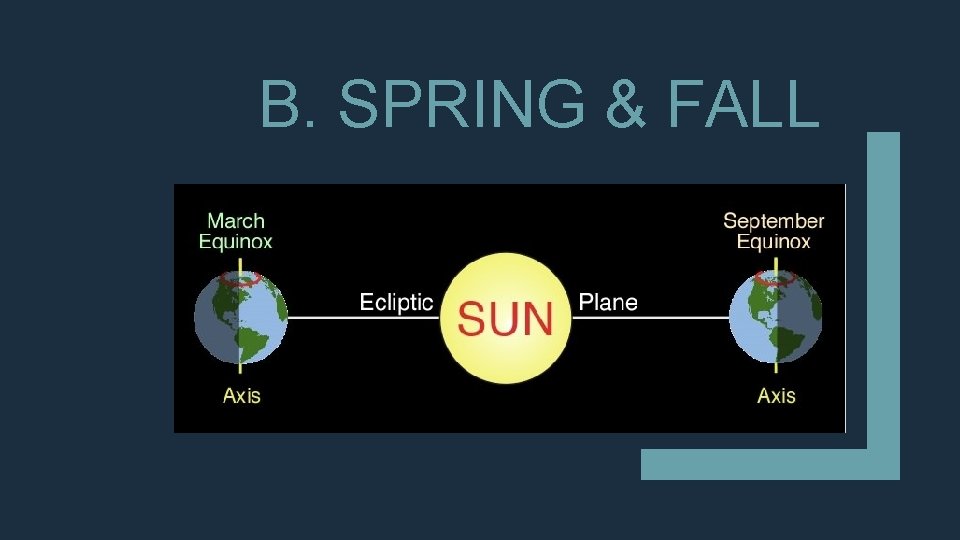
B. SPRING & FALL
- Slides: 82