
Unit 5 Thermochemistry Reaction Energy Diagrams slides 2
- Slides: 19
Unit 5: Thermochemistry Reaction Energy Diagrams: slides 2 -7 Specific Heat: slides 8 -13 Enthalpy and Hess’s Law: slides
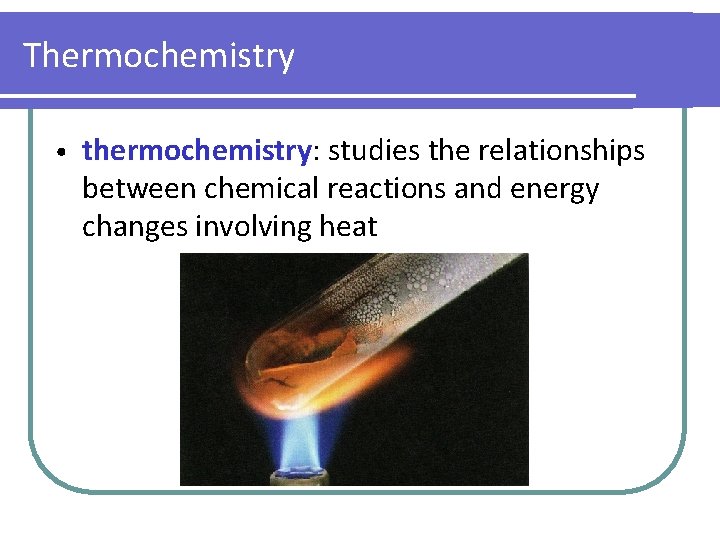
Thermochemistry • thermochemistry: studies the relationships between chemical reactions and energy changes involving heat
Thermochemistry Heat and temperature are NOT the same thing! l Heat: transfer/flow of energy due to a temperature difference (from high to low) l Temperature: a measure of the random motions of molecules (average kinetic energy)
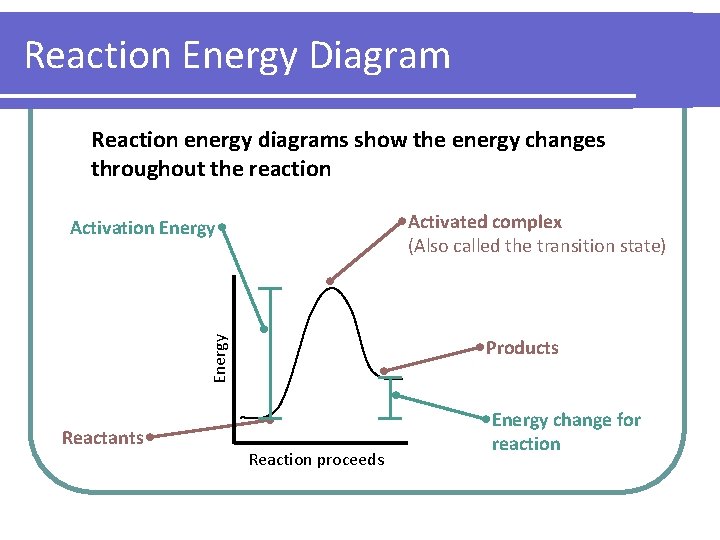
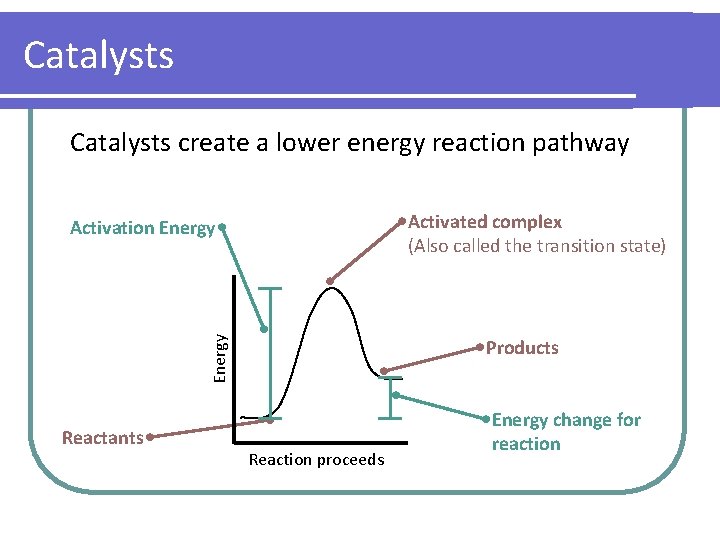
Reaction Energy Diagram Reaction energy diagrams show the energy changes throughout the reaction Activated complex (Also called the transition state) Energy Activation Energy Reactants Products Reaction proceeds Energy change for reaction
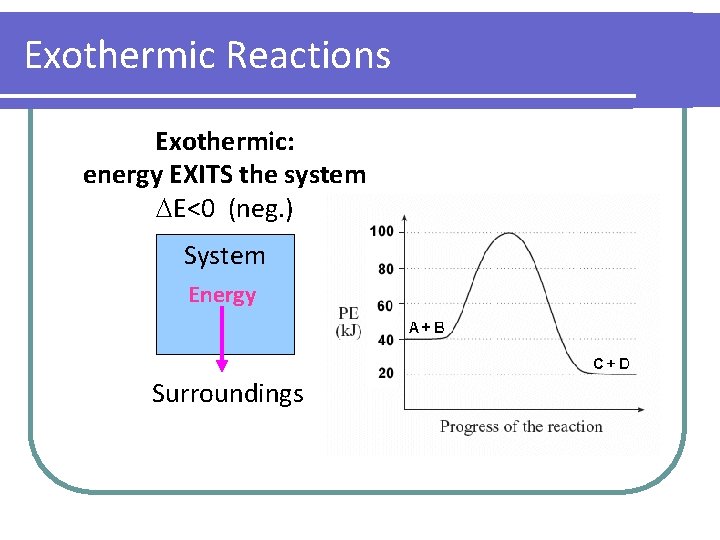
Exothermic Reactions Exothermic: energy EXITS the system E<0 (neg. ) System Energy Surroundings
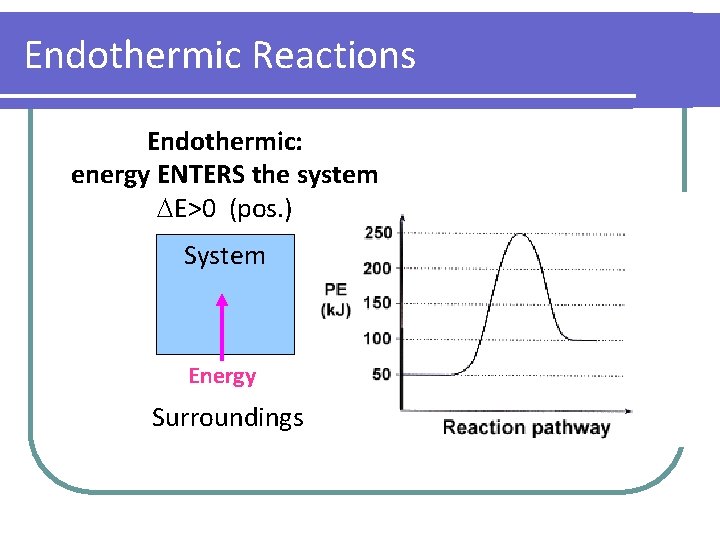
Endothermic Reactions Endothermic: energy ENTERS the system E>0 (pos. ) System Energy Surroundings
Catalysts create a lower energy reaction pathway Activated complex (Also called the transition state) Energy Activation Energy Reactants Products Reaction proceeds Energy change for reaction
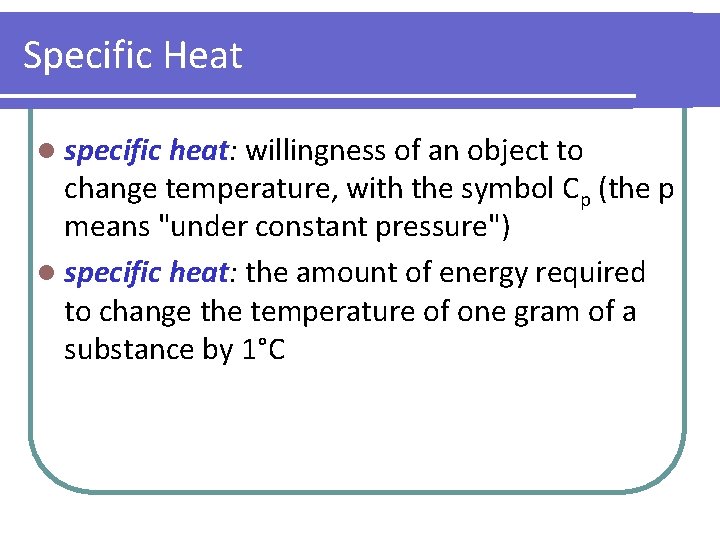
Specific Heat l specific heat: willingness of an object to change temperature, with the symbol Cp (the p means "under constant pressure") l specific heat: the amount of energy required to change the temperature of one gram of a substance by 1°C
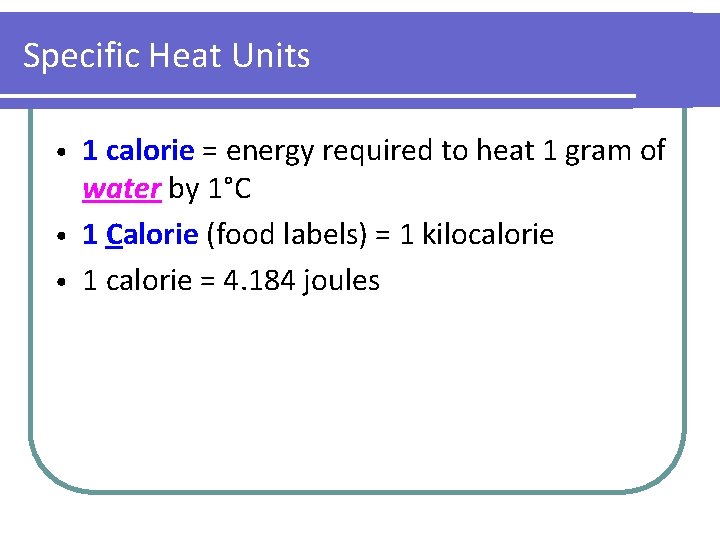
Specific Heat Units 1 calorie = energy required to heat 1 gram of water by 1°C • 1 Calorie (food labels) = 1 kilocalorie • 1 calorie = 4. 184 joules •
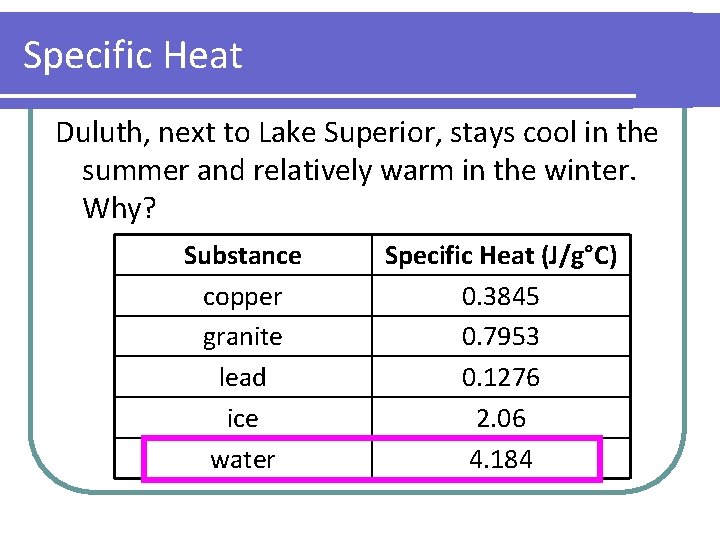
Specific Heat Duluth, next to Lake Superior, stays cool in the summer and relatively warm in the winter. Why? Substance copper granite lead ice water Specific Heat (J/g°C) 0. 3845 0. 7953 0. 1276 2. 06 4. 184
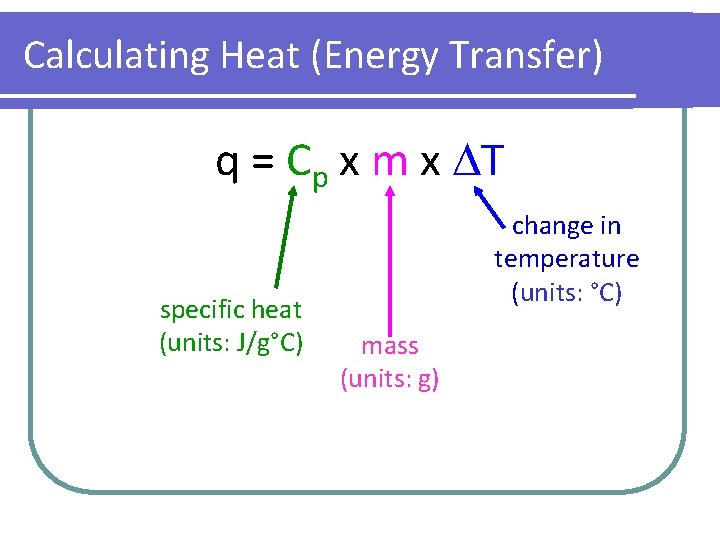
Calculating Heat (Energy Transfer) q = Cp x m x T specific heat (units: J/g°C) change in temperature (units: °C) mass (units: g)
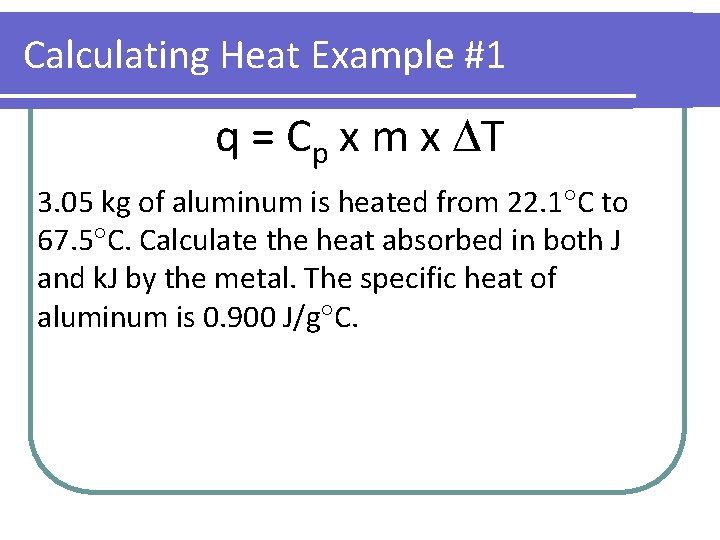
Calculating Heat Example #1 q = Cp x m x T 3. 05 kg of aluminum is heated from 22. 1 C to 67. 5 C. Calculate the heat absorbed in both J and k. J by the metal. The specific heat of aluminum is 0. 900 J/g C.
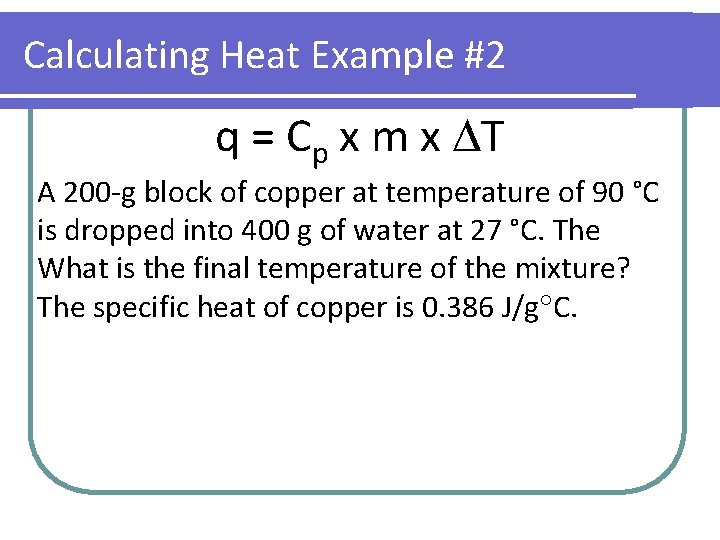
Calculating Heat Example #2 q = Cp x m x T A 200 -g block of copper at temperature of 90 °C is dropped into 400 g of water at 27 °C. The What is the final temperature of the mixture? The specific heat of copper is 0. 386 J/g C.
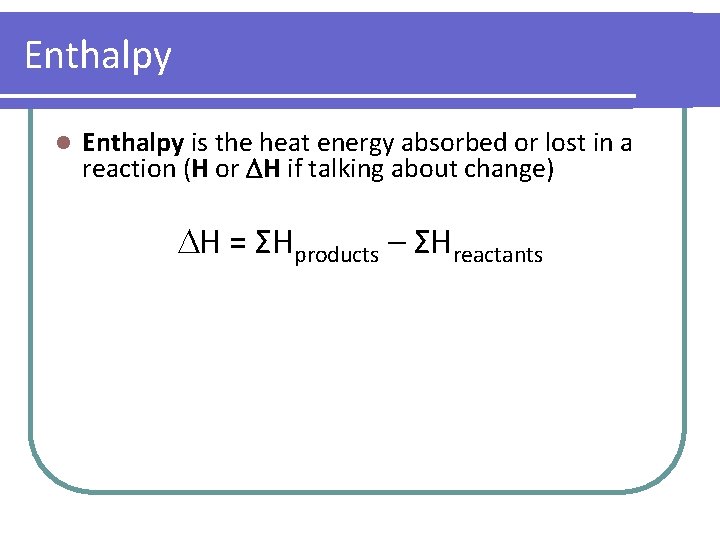
Enthalpy l Enthalpy is the heat energy absorbed or lost in a reaction (H or H if talking about change) H = ΣHproducts – ΣHreactants
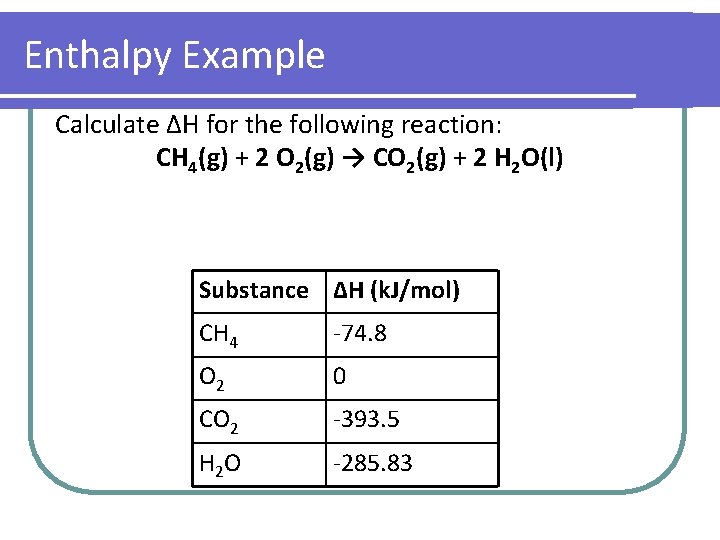
Enthalpy Example Calculate ΔH for the following reaction: CH 4(g) + 2 O 2(g) → CO 2(g) + 2 H 2 O(l) Substance ΔH (k. J/mol) CH 4 -74. 8 O 2 0 CO 2 -393. 5 H 2 O -285. 83
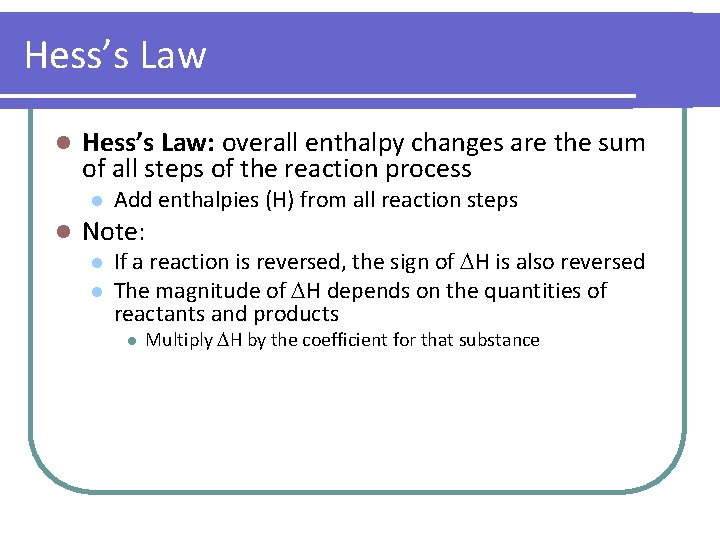
Hess’s Law l Hess’s Law: overall enthalpy changes are the sum of all steps of the reaction process l l Add enthalpies (H) from all reaction steps Note: l l If a reaction is reversed, the sign of H is also reversed The magnitude of H depends on the quantities of reactants and products l Multiply H by the coefficient for that substance
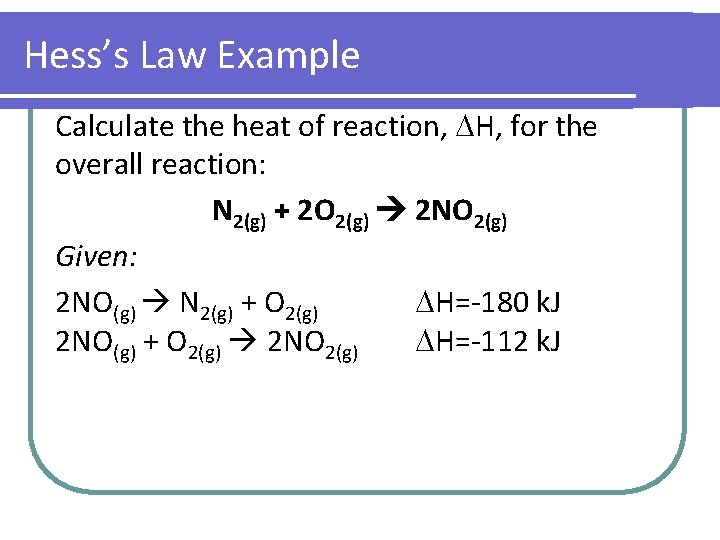
Hess’s Law Example Calculate the heat of reaction, H, for the overall reaction: N 2(g) + 2 O 2(g) 2 NO 2(g) Given: 2 NO(g) N 2(g) + O 2(g) H=-180 k. J 2 NO(g) + O 2(g) 2 NO 2(g) H=-112 k. J
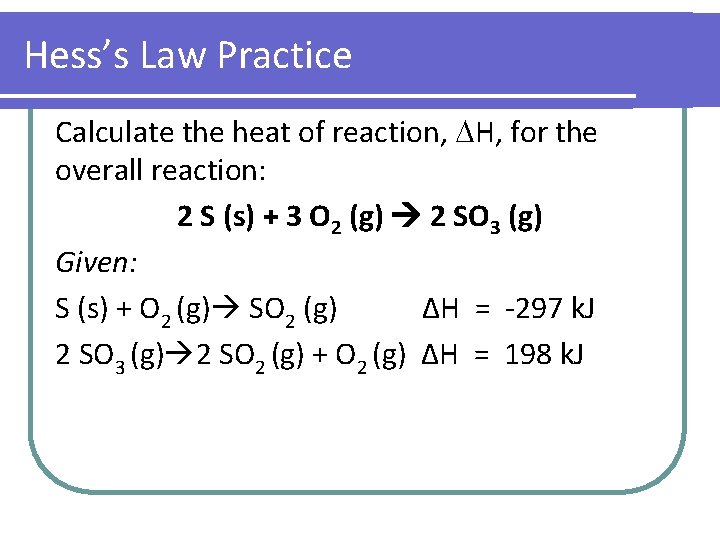
Hess’s Law Practice Calculate the heat of reaction, H, for the overall reaction: 2 S (s) + 3 O 2 (g) 2 SO 3 (g) Given: S (s) + O 2 (g) SO 2 (g) ∆H = -297 k. J 2 SO 3 (g) 2 SO 2 (g) + O 2 (g) ∆H = 198 k. J
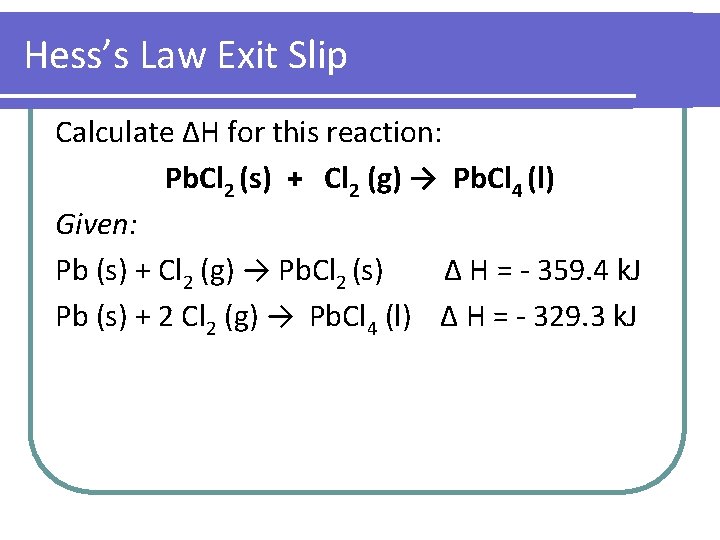
Hess’s Law Exit Slip Calculate ΔH for this reaction: Pb. Cl 2 (s) + Cl 2 (g) → Pb. Cl 4 (l) Given: Pb (s) + Cl 2 (g) → Pb. Cl 2 (s) ∆ H = - 359. 4 k. J Pb (s) + 2 Cl 2 (g) → Pb. Cl 4 (l) ∆ H = - 329. 3 k. J