
Unit 5 The New South THE BIG IDEA
Unit 5: The New South
THE BIG IDEA SS 8 H 7: The student will evaluate key �political, social, and economic �changes that occurred in Georgia �between 1877 and 1918. Evaluate- to make a judgment as to the worth or value of something; judge, assess
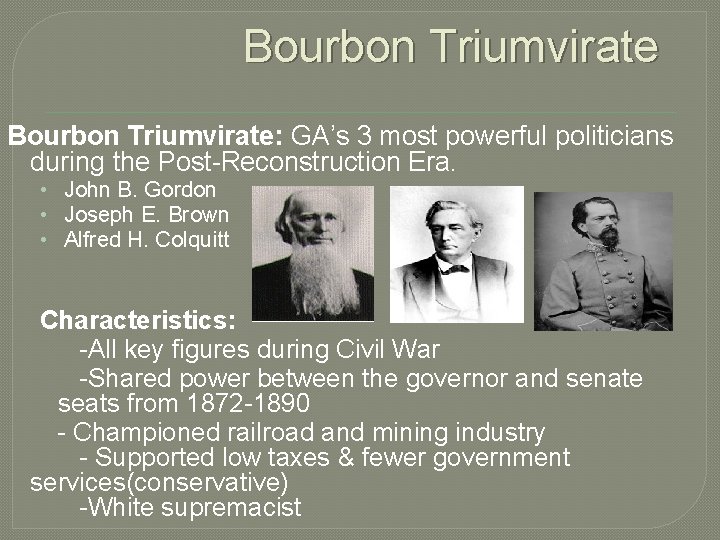
Bourbon Triumvirate: GA’s 3 most powerful politicians during the Post-Reconstruction Era. • John B. Gordon • Joseph E. Brown • Alfred H. Colquitt Characteristics: -All key figures during Civil War -Shared power between the governor and senate seats from 1872 -1890 - Championed railroad and mining industry - Supported low taxes & fewer government services(conservative) -White supremacist
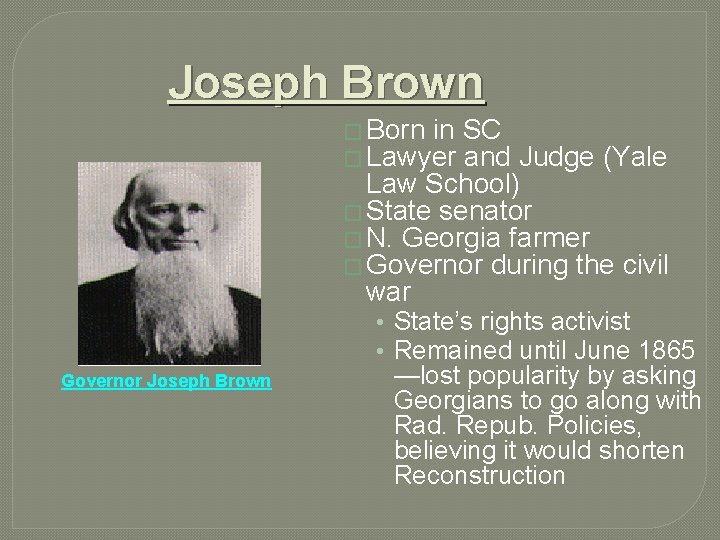
Joseph Brown � Born in � Lawyer SC and Judge (Yale Law School) � State senator � N. Georgia farmer � Governor during the civil war • State’s rights activist • Remained until June 1865 Governor Joseph Brown —lost popularity by asking Georgians to go along with Rad. Repub. Policies, believing it would shorten Reconstruction
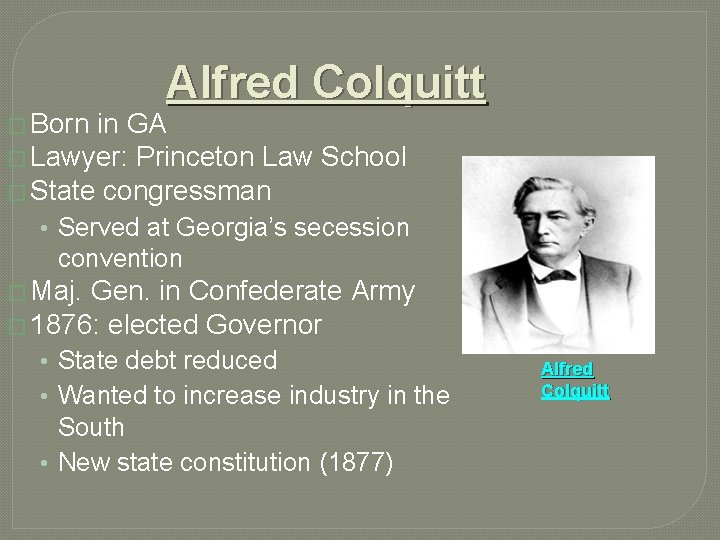
� Born Alfred Colquitt in GA � Lawyer: Princeton Law School � State congressman • Served at Georgia’s secession convention � Maj. Gen. in Confederate Army � 1876: elected Governor • State debt reduced • Wanted to increase industry in the South • New state constitution (1877) Alfred Colquitt

John B. Gordon � � Born in GA Took over father’s mine business � � Lt. Gen. in Confederate Army US Senator from GA: 1872 -1880 • Resigned 1880 due to scandal � Contributed to the Compromise of 1877 —gave Rutherford B. Hayes the presidency in exchange for the removal of Federal troops from the South � Rumored Head of Georgia’s KKK during Reconstruction � � 1886: elected Governor Brought new industry to Georgia Lt. Gen. John B. Gordon
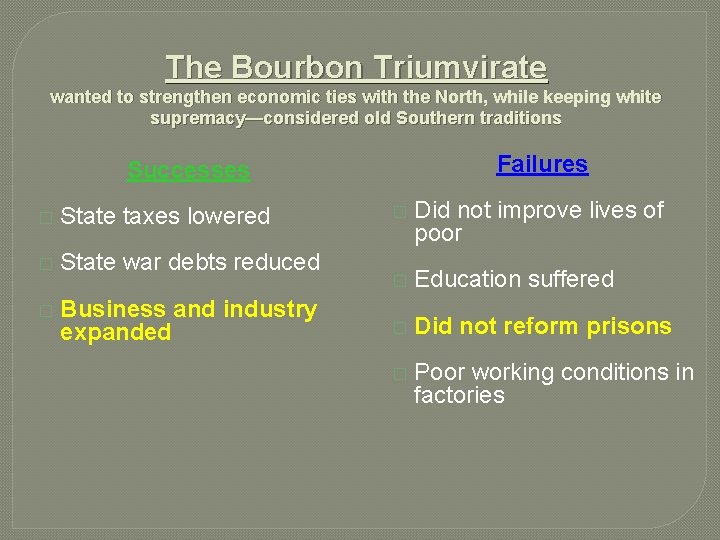
The Bourbon Triumvirate wanted to strengthen economic ties with the North, while keeping white supremacy—considered old Southern traditions Failures Successes � State taxes lowered � State war debts reduced � Business and industry expanded � Did not improve lives of poor � Education suffered � Did not reform prisons � Poor working conditions in factories
- Slides: 7