
Unit 5 SuspenseHorror Genre Introduction to writing horror
- Slides: 24
Unit 5 - Suspense/Horror Genre Introduction to writing horror stories History, Vocabulary, Elements, Structure
History of Horror fiction, horror literature and also horror fantasy are genres of literature, which are intended to, or have the capacity to frighten, scare, or startle their readers or viewers by inducing feelings of horror and terror. Literary historian J. A. Cuddon has defined the horror story as "a piece of fiction in prose of variable length. . . which shocks or even frightens the reader, or perhaps induces a feeling of repulsion or loathing. " It creates an eerie and frightening atmosphere. Horror is usually supernatural, though it can be nonsupernatural (good old-fashioned human serial killers). Often the central menace of a work of horror fiction can be interpreted as a metaphor for the larger fears of a society.
History of Horror Gothic fiction, is a genre or mode of literature that combines fiction, horror, death and Romanticism. The effect of Gothic fiction feeds on a pleasing sort of terror, an extension of Romantic literary pleasures. It originated in England in the second half of the 18 th century and had much success in the 19 th. The name Gothic refers to the (pseudo)medieval buildings, emulating Gothic architecture, in which many of these stories take place. This extreme form of romanticism was very popular in England Germany.
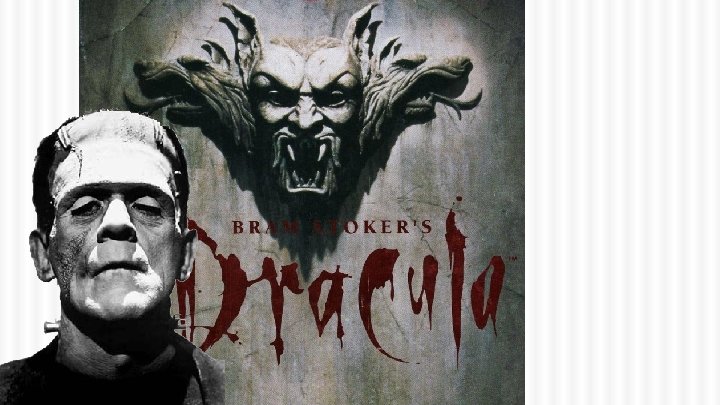
History of Horror The Gothic tradition blossomed into the genre modern readers call horror literature in the 19 th century. Influential works and characters that continue resonating with film and cinema today saw their genesis in such works as Mary Shelley's Frankenstein (1818), the works of Edgar Allan Poe, Oscar Wilde's The Picture of Dorian Gray (1890), and Bram Stoker's Dracula (1897). Each of these novels and novellas created an enduring icon of horror seen in modern re-imaginings on the stage and screen.
History of Horror Early cinema was inspired by many aspects of horror literature, and early horror cinema started a strong tradition of horror films and subgenres based on horror fiction that continues to this day. Up until the graphic depictions of violence and gore on the screen commonly associated with the 1960 s and 1970 s slasher films and splatter films, comic books such as those published by EC Comics (famous for series such as Tales From The Crypt) satisfied readers' quests for horror imagery that the silver screen could not provide.
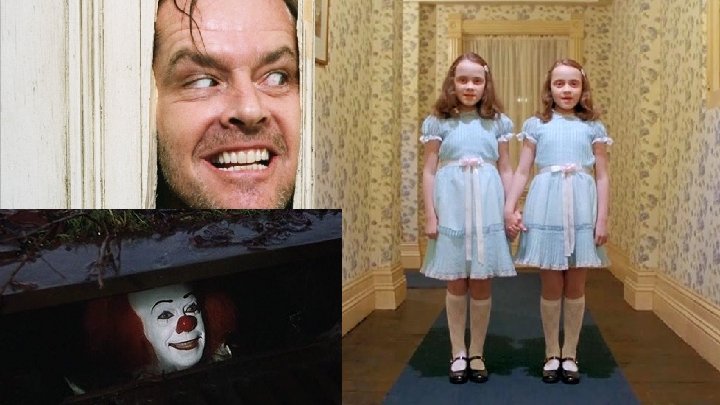
History of Horror One of the best-known contemporary horror writers is Stephen King, known for writing Carrie, The Shining, It, Misery and many more. Beginning in the 1970 s, King's stories have managed to attract a large audience, for which he was prized by the U. S. National Book Foundation in 2003.
Characteristics of Horror One of the defining traits of the genre of horror is that it provokes a response; emotional, psychological or physical, within readers that causes them to react with fear. One of H. P. Lovecraft's most famous quotes about the genre is that: "The oldest and strongest emotion of mankind is fear, and the oldest and strongest kind of fear is fear of the unknown. " In her essay "Elements of Aversion, " Elizabeth Barrette articulates the need by some for horror tales in a modern world:
Characteristics of Horror The old "fight or flight" reaction of our evolutionary heritage once played a major role in the life of every human. Our ancestors lived and died by it. Then someone invented the fascinating game of civilization, and things began to calm down. Development pushed wilderness back from settled lands. War, crime, and other forms of social violence came with civilization and humans started preying on each other, but by and large daily life calmed down. We began to feel restless, to feel something missing: the excitement of living on the edge, the tension between hunter and hunted. So we told each other stories through the long, dark nights. . . when the fires burned low, we did our best to scare the daylights out of each other. The rush of adrenaline feels good. Our hearts pound, our breath quickens, and we can imagine ourselves on the edge. Yet we also appreciate the insightful aspects of horror. Sometimes a story intends to shock and disgust, but the best horror intends to rattle our cages and shake us out of our complacency. It makes us think, forces us to confront ideas we might rather ignore, and challenges preconceptions of all kinds. Horror reminds us that the world is not always as safe as it seems, which exercises our mental muscles and reminds us to keep a little healthy caution close at hand.
Elements of Horror 1. Description - using adjectives and imagery to create mood 2. Characterization a. The backstories, or lack thereof, add to the element of suspense and mystery in horror stories. Think of villains in comic books - what makes them frightening? b. The Joker 3. Creating suspense through mystery a. You as the writer will have all the background information the reader does not. Do not give it all away at first. 4. Foreshadowing - subtle hints toward the outcome 5. Disbelief - the unknown
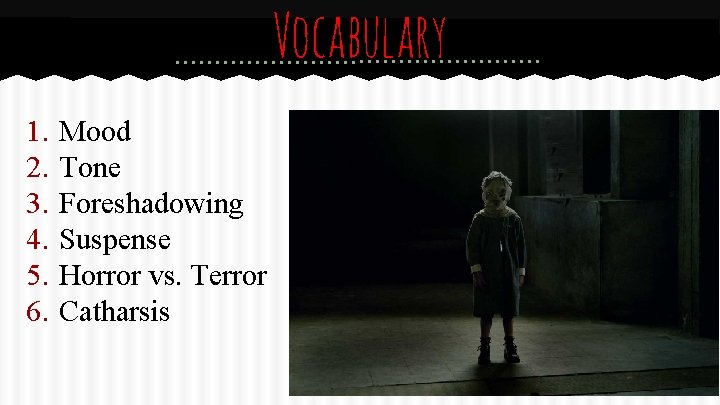
Vocabulary 1. 2. 3. 4. 5. 6. Mood Tone Foreshadowing Suspense Horror vs. Terror Catharsis
Vocabulary 1. Mood The atmosphere or setting created by a writer using descriptive wording/imagery. Evokes feeling or vibes in the reader. 1. Tone The author’s attitude on a particular subject, conveyed in the language used. 3. Foreshadowing Language, symbolism, or other literary techniques used to warn or indicate about an outcome (plot, character’s fate, etc. ). 4. Suspense State or feeling of excited or anxious uncertainty.
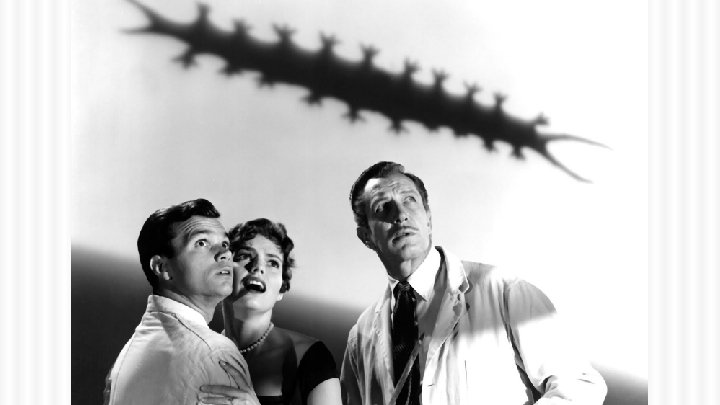
Vocabulary 5. Horror vs. Terror - 6. Catharsis - Terror - the feeling of dread anticipation that precedes the horrifying experience. Horror - the feeling of revulsion that usually occurs after something frightening is seen, heard, or otherwise experienced. Physical, emotional, psychological response and release; relief after an intense build-up. In other words, horror is more related to being shocked or scared (being horrified), while terror is more related to being anxious or fearful. Ex: A scream - Screaming is a release of tension (anger, frustration, fear). - The Tingler
Structure 6 part structure of a horror story: 1. 2. 3. 4. Establish a setting Establish a problem or conflict Build suspense Crisis point (panic, height of action and emotion, trapped, etc. ) 5. Adjustment (solutions or plans are beginning to form) 6. Resolution (happy or not so happy ending)
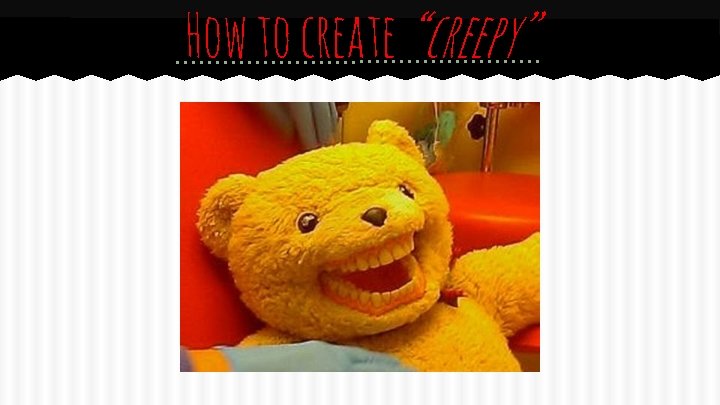
How to create “creepy”
What to Expect. . . During this unit, you will view examples of horror in literature and film, identify the elements and structure, and practice using it yourself. You will watch and write reviews on horror films, paying attention to how mood and atmosphere are created using various tools. You will write and illustrate your own horror story, and create a short movie trailer about your story.
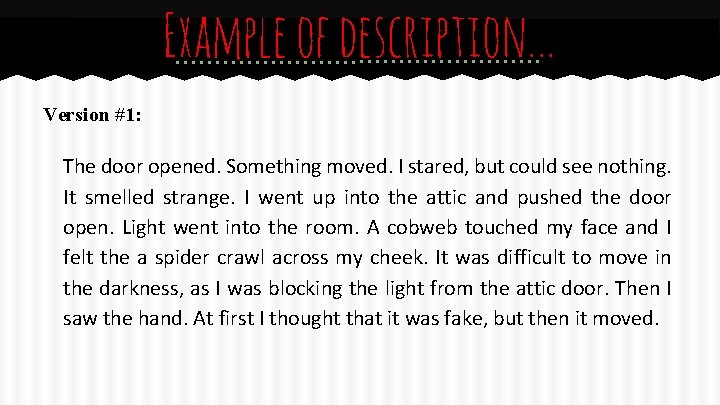
Example of description. . . Version #1: The door opened. Something moved. I stared, but could see nothing. It smelled strange. I went up into the attic and pushed the door open. Light went into the room. A cobweb touched my face and I felt the a spider crawl across my cheek. It was difficult to move in the darkness, as I was blocking the light from the attic door. Then I saw the hand. At first I thought that it was fake, but then it moved.
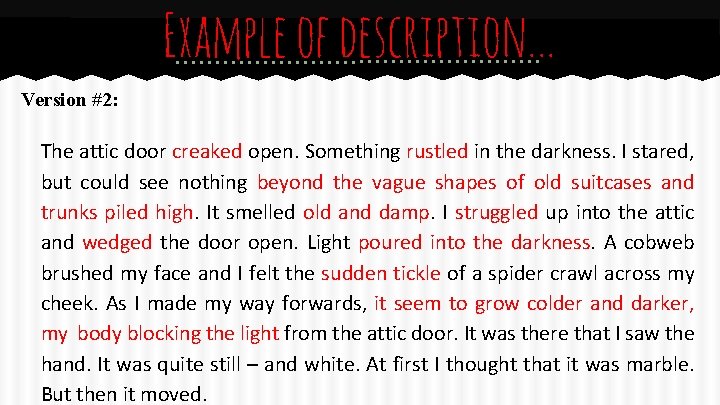
Example of description. . . Version #2: The attic door creaked open. Something rustled in the darkness. I stared, but could see nothing beyond the vague shapes of old suitcases and trunks piled high. It smelled old and damp. I struggled up into the attic and wedged the door open. Light poured into the darkness. A cobweb brushed my face and I felt the sudden tickle of a spider crawl across my cheek. As I made my way forwards, it seem to grow colder and darker, my body blocking the light from the attic door. It was there that I saw the hand. It was quite still – and white. At first I thought that it was marble. But then it moved.
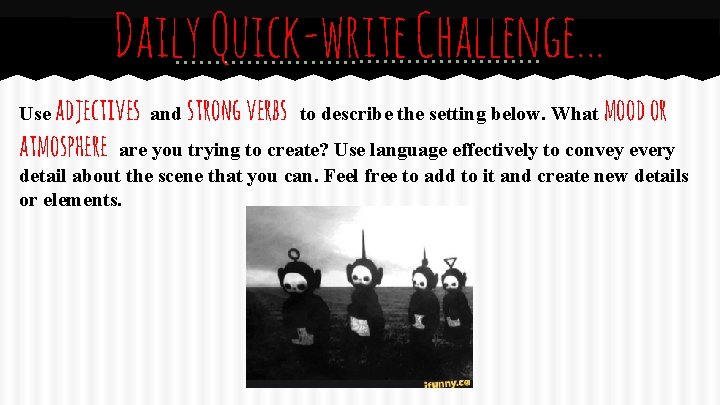
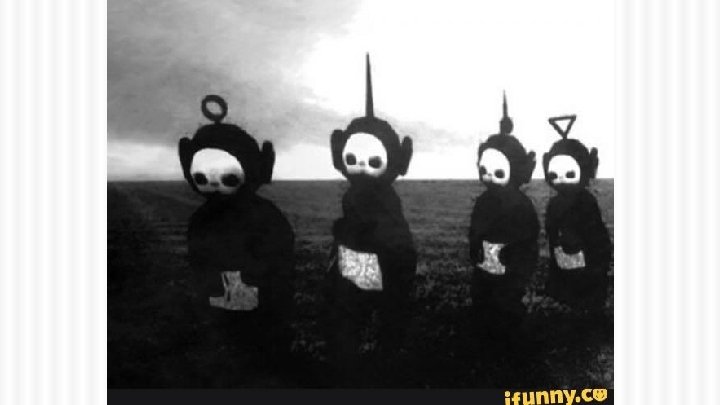
Daily Quick-write Challenge. . . Use adjectives and strong verbs to describe the setting below. What mood or atmosphere are you trying to create? Use language effectively to convey every detail about the scene that you can. Feel free to add to it and create new details or elements.