
Unit 5 Statistical Reasoning Why use statistics By
Unit 5: Statistical Reasoning
Why use statistics? • By using statistics we can find out general information for an entire population • To do this you need to survey small groups – Does it make sense to survey an entire population? • By surveying on small groups, will you get the exact response of the total population?
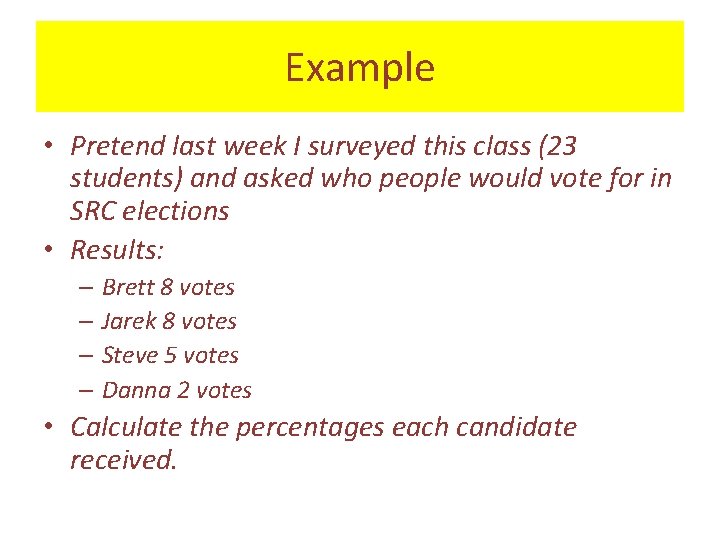
Example • Pretend last week I surveyed this class (23 students) and asked who people would vote for in SRC elections • Results: – Brett 8 votes – Jarek 8 votes – Steve 5 votes – Danna 2 votes • Calculate the percentages each candidate received.
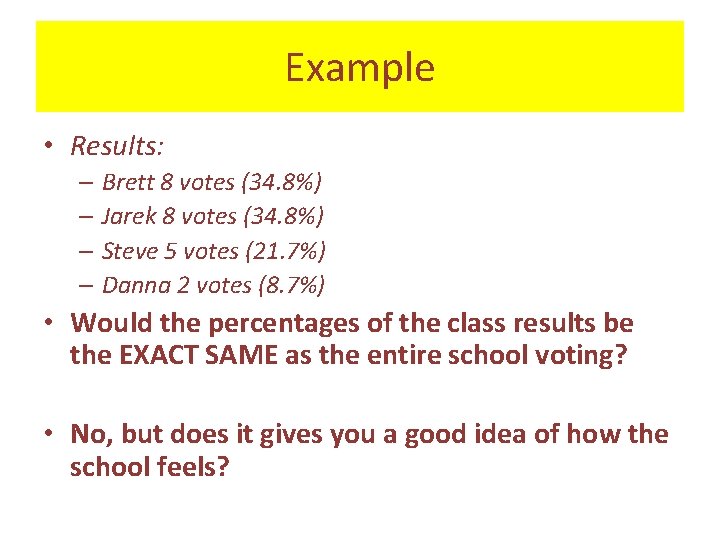
Example • Results: – Brett 8 votes (34. 8%) – Jarek 8 votes (34. 8%) – Steve 5 votes (21. 7%) – Danna 2 votes (8. 7%) • Would the percentages of the class results be the EXACT SAME as the entire school voting? • No, but does it gives you a good idea of how the school feels?
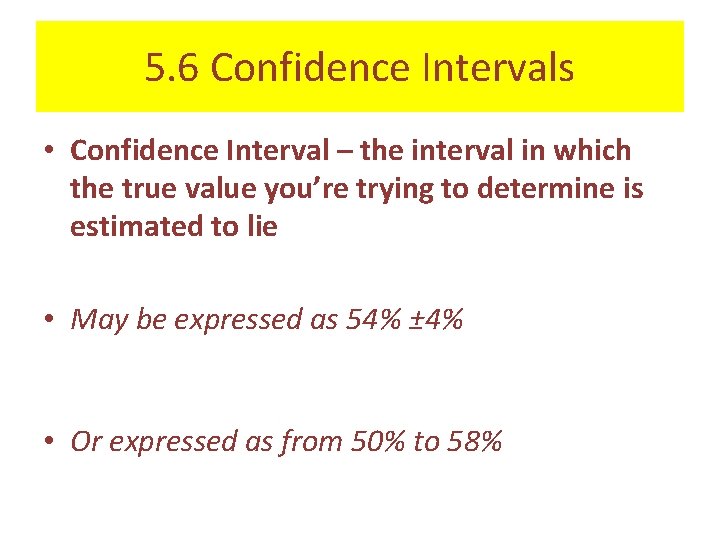
5. 6 Confidence Intervals • Confidence Interval – the interval in which the true value you’re trying to determine is estimated to lie • May be expressed as 54% ± 4% • Or expressed as from 50% to 58%
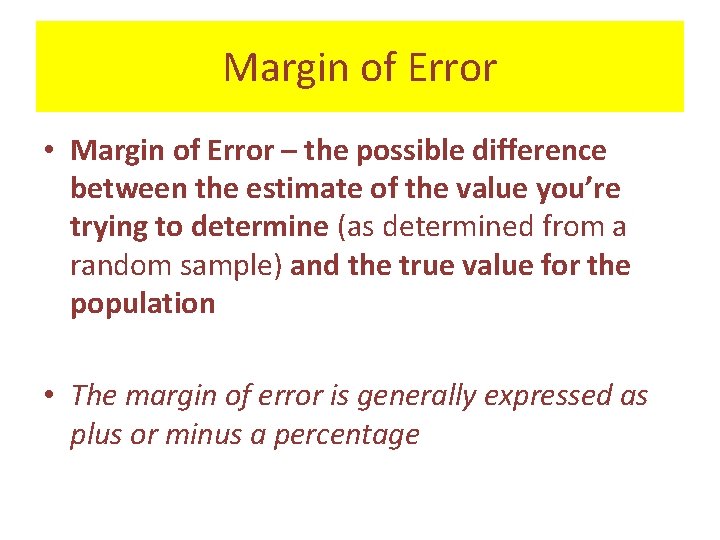
Margin of Error • Margin of Error – the possible difference between the estimate of the value you’re trying to determine (as determined from a random sample) and the true value for the population • The margin of error is generally expressed as plus or minus a percentage
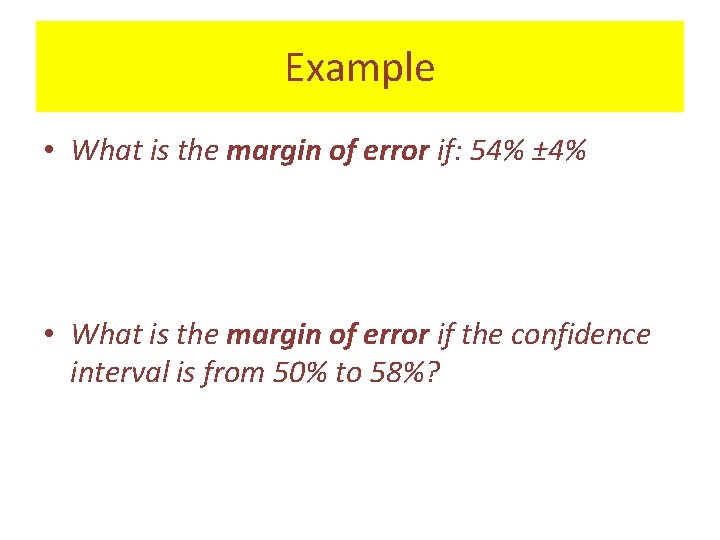
Example • What is the margin of error if: 54% ± 4% • What is the margin of error if the confidence interval is from 50% to 58%?
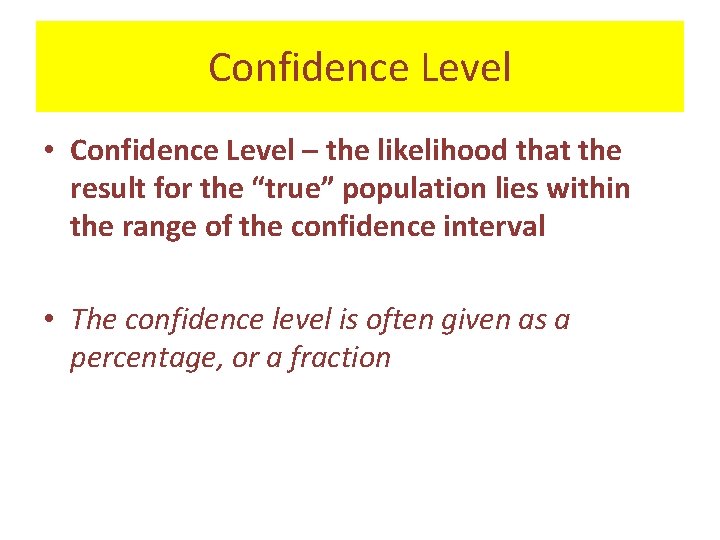
Confidence Level • Confidence Level – the likelihood that the result for the “true” population lies within the range of the confidence interval • The confidence level is often given as a percentage, or a fraction
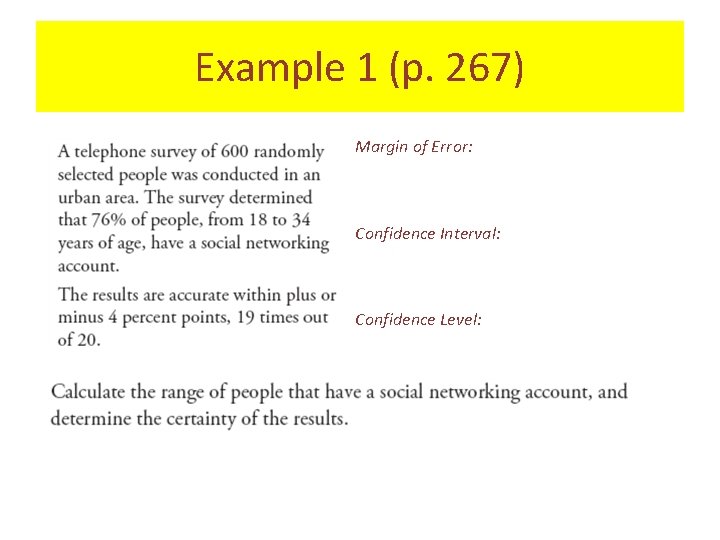
Example 1 (p. 267) Margin of Error: Confidence Interval: Confidence Level:
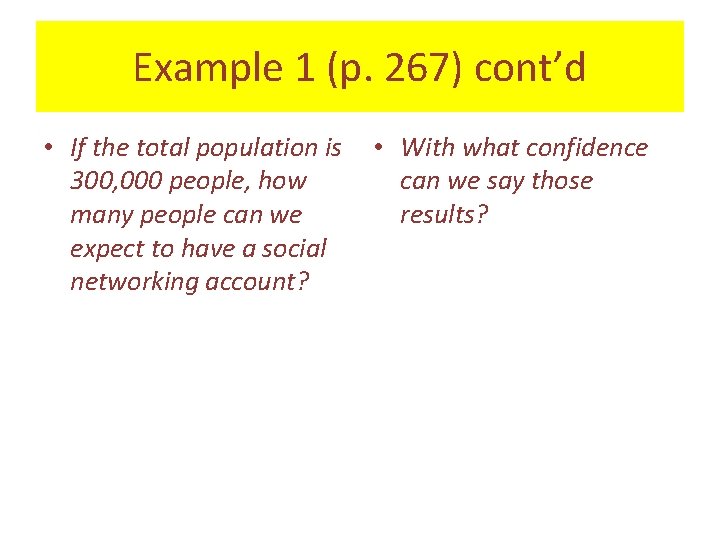
Example 1 (p. 267) cont’d • If the total population is 300, 000 people, how many people can we expect to have a social networking account? • With what confidence can we say those results?
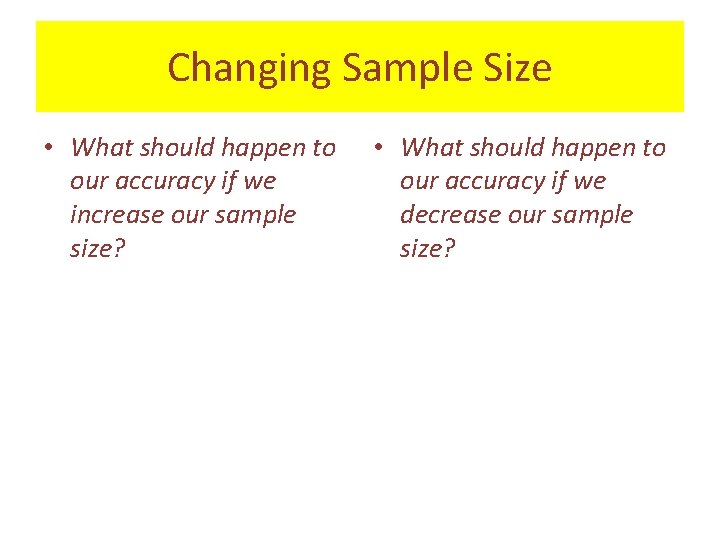
Changing Sample Size • What should happen to our accuracy if we increase our sample size? • What should happen to our accuracy if we decrease our sample size?

Example 2 (p. 268)

Example 2 (p. 268)
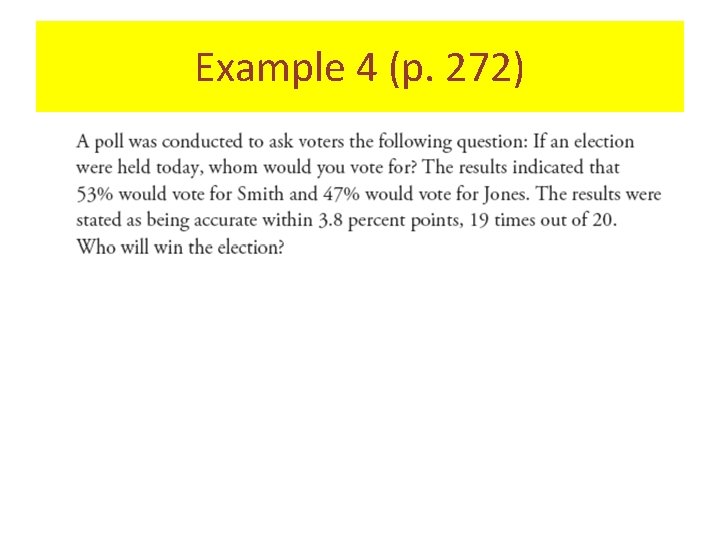
Example 4 (p. 272)
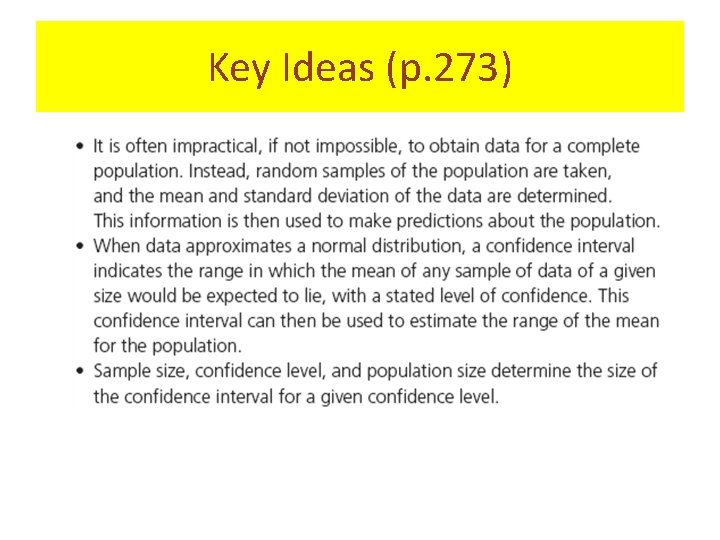
Key Ideas (p. 273)
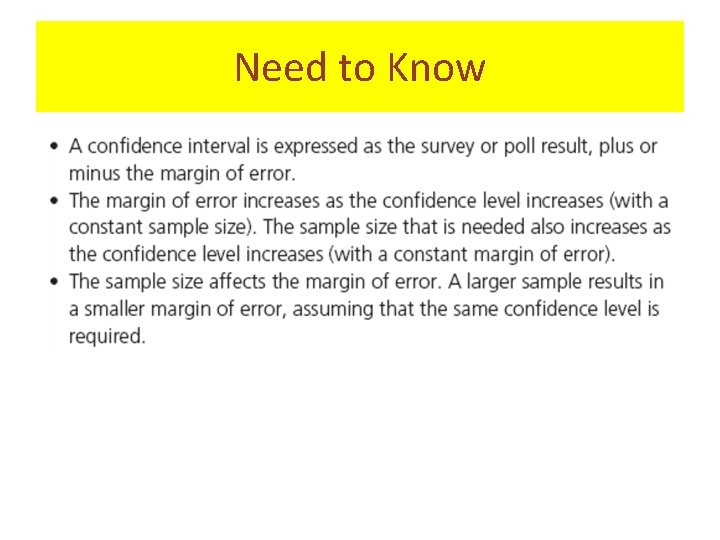
Need to Know
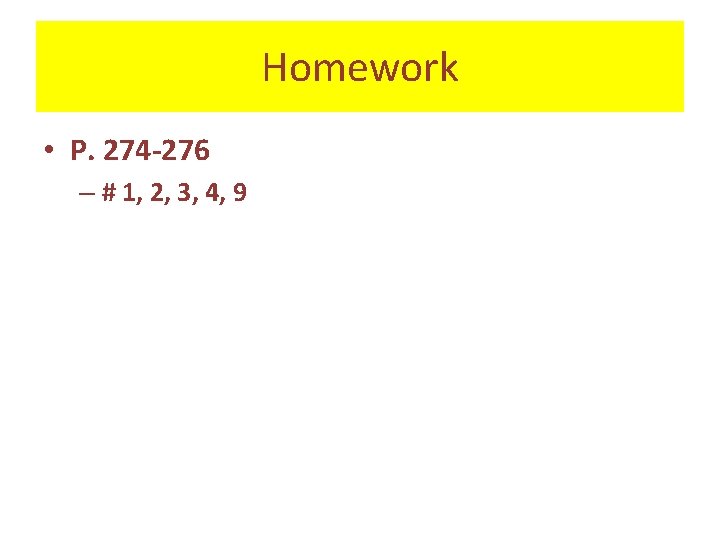
Homework • P. 274 -276 – # 1, 2, 3, 4, 9
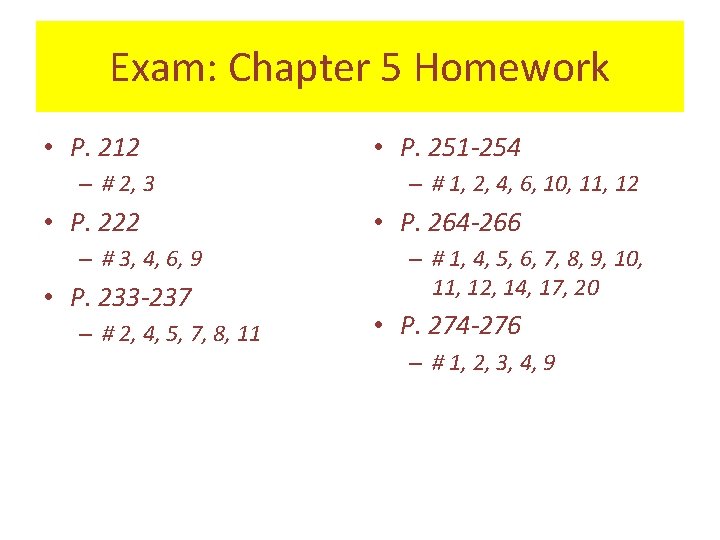
Exam: Chapter 5 Homework • P. 212 – # 2, 3 • P. 222 – # 3, 4, 6, 9 • P. 233 -237 – # 2, 4, 5, 7, 8, 11 • P. 251 -254 – # 1, 2, 4, 6, 10, 11, 12 • P. 264 -266 – # 1, 4, 5, 6, 7, 8, 9, 10, 11, 12, 14, 17, 20 • P. 274 -276 – # 1, 2, 3, 4, 9
- Slides: 18