
Unit 5 Plants Kingdom Plante Characteristics of plants

- Slides: 15
Unit 5 Plants
Kingdom Plante Characteristics of plants: • eukaryotic cells • multi-celluar • carry out photosynthesis • cell walls contain cellulose • develop from embryos protected by tissues of the parent plant mosses ferns gymnosperms angiosperms
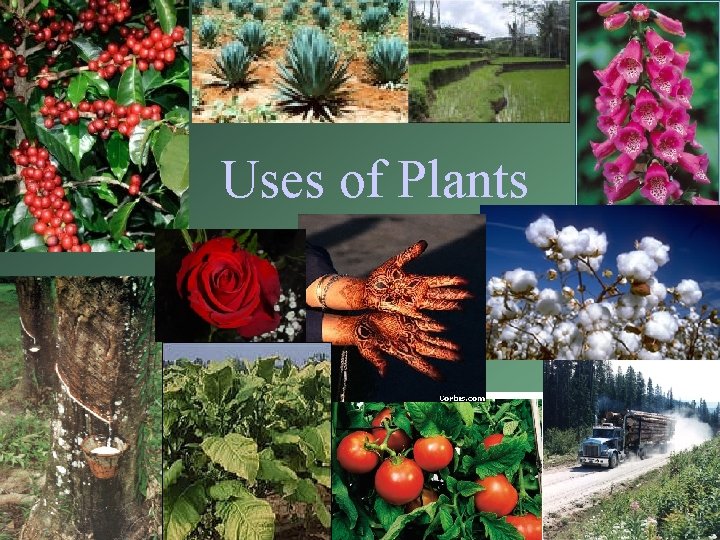
Uses of Plants
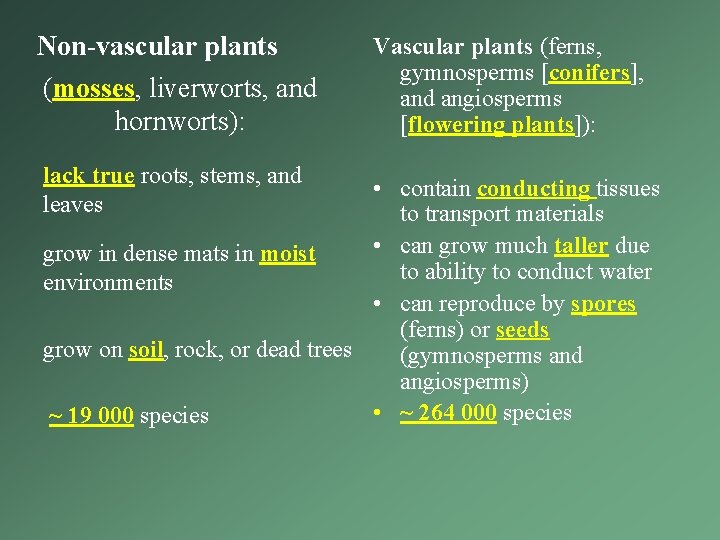
Non-vascular plants (mosses, liverworts, and hornworts): lack true roots, stems, and leaves Vascular plants (ferns, gymnosperms [conifers], and angiosperms [flowering plants]): • contain conducting tissues to transport materials • can grow much taller due grow in dense mats in moist to ability to conduct water environments • can reproduce by spores (ferns) or seeds grow on soil, rock, or dead trees (gymnosperms and angiosperms) • ~ 264 000 species ~ 19 000 species
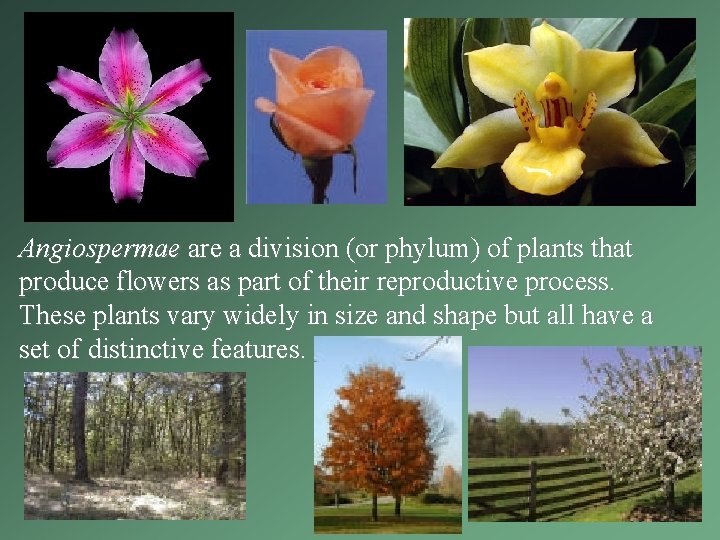
Angiospermae are a division (or phylum) of plants that produce flowers as part of their reproductive process. These plants vary widely in size and shape but all have a set of distinctive features.
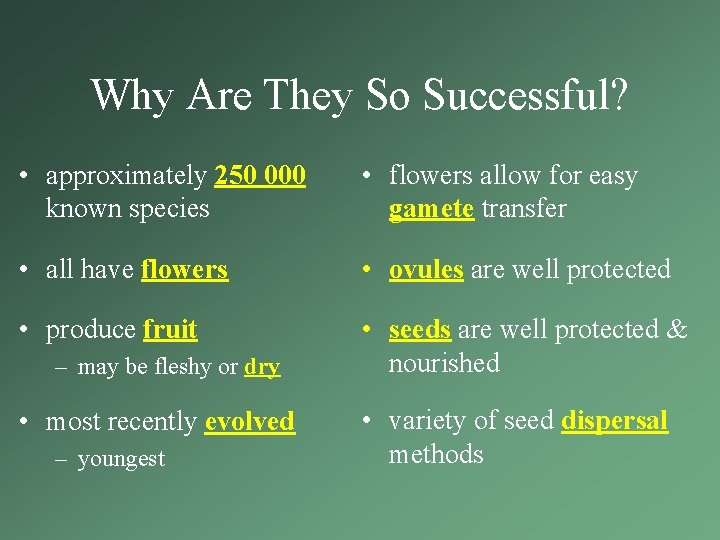
Why Are They So Successful? • approximately 250 000 known species • flowers allow for easy gamete transfer • all have flowers • ovules are well protected • produce fruit • seeds are well protected & nourished – may be fleshy or dry • most recently evolved – youngest • variety of seed dispersal methods
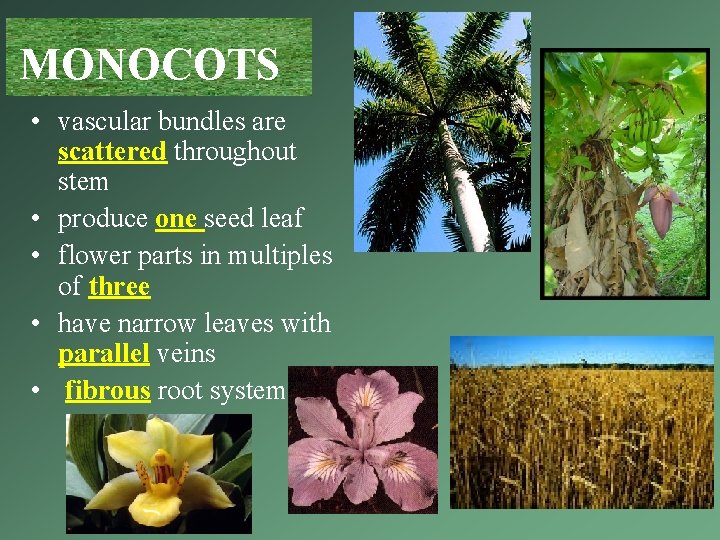
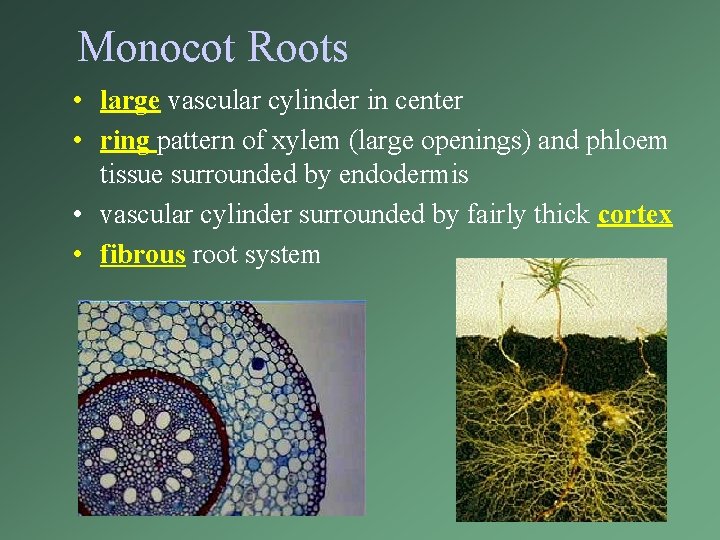
MONOCOTS • vascular bundles are scattered throughout stem • produce one seed leaf • flower parts in multiples of three • have narrow leaves with parallel veins • fibrous root system
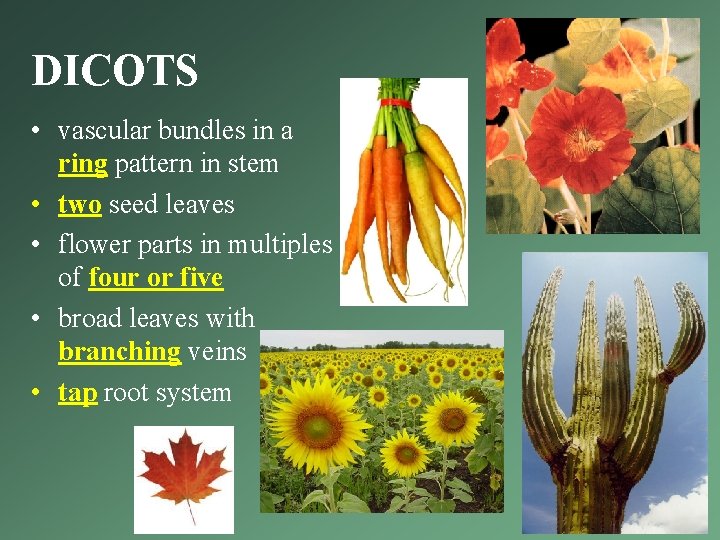
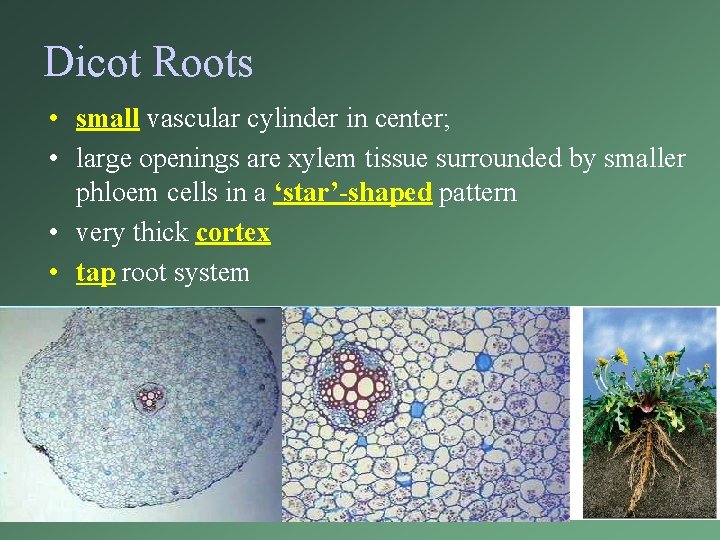
DICOTS • vascular bundles in a ring pattern in stem • two seed leaves • flower parts in multiples of four or five • broad leaves with branching veins • tap root system
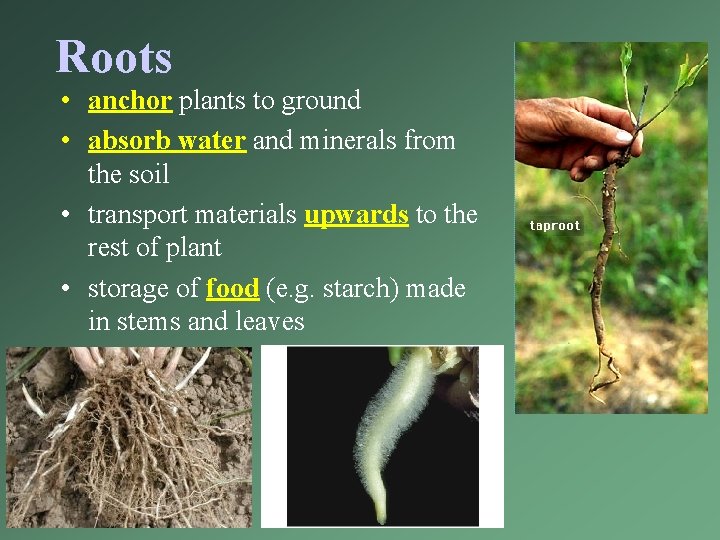
Roots • anchor plants to ground • absorb water and minerals from the soil • transport materials upwards to the rest of plant • storage of food (e. g. starch) made in stems and leaves
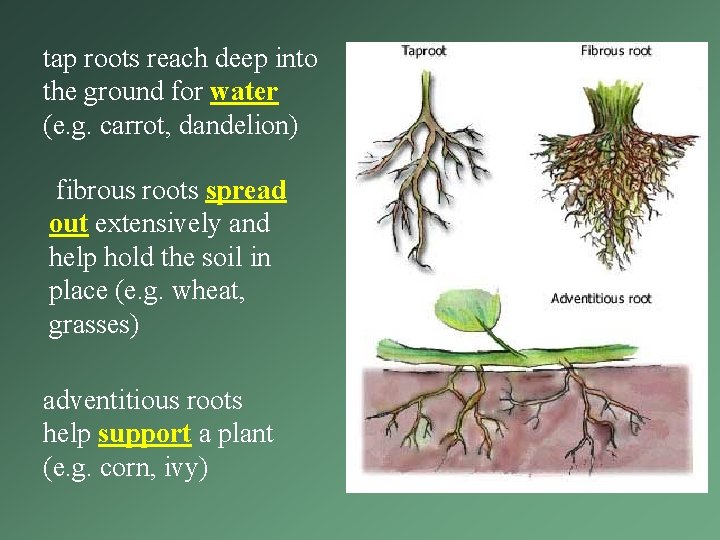
tap roots reach deep into the ground for water (e. g. carrot, dandelion) fibrous roots spread out extensively and help hold the soil in place (e. g. wheat, grasses) adventitious roots help support a plant (e. g. corn, ivy)
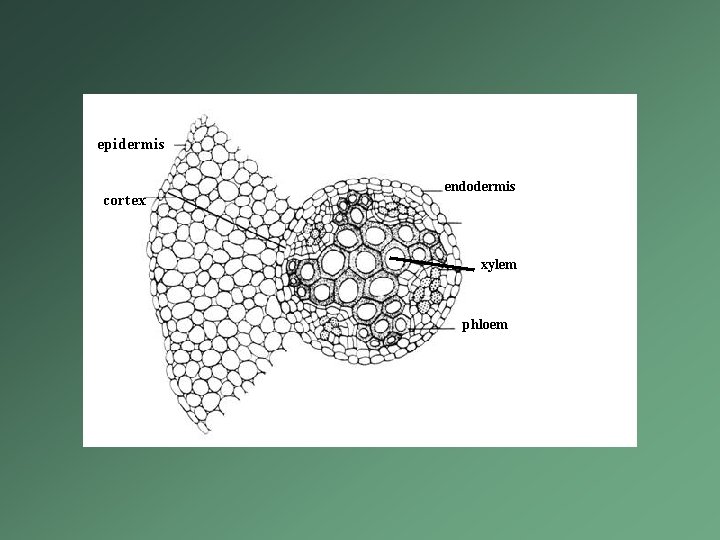
epidermis cortex endodermis xylem phloem
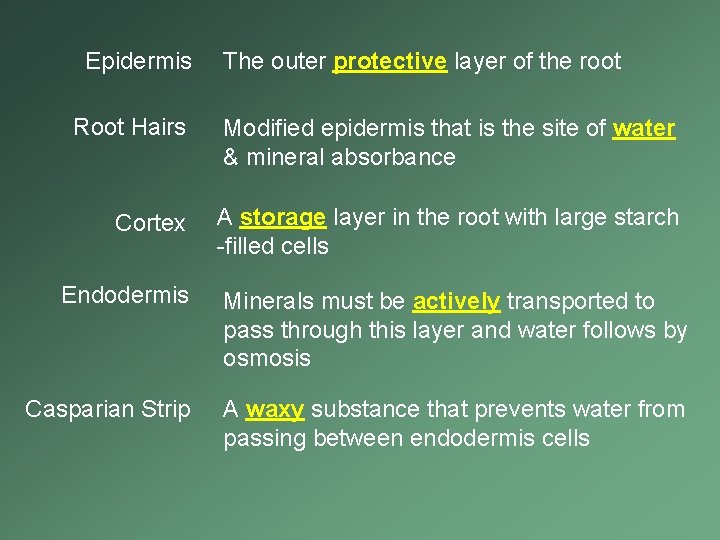
Epidermis The outer protective layer of the root Root Hairs Modified epidermis that is the site of water & mineral absorbance Cortex A storage layer in the root with large starch -filled cells Endodermis Minerals must be actively transported to pass through this layer and water follows by osmosis Casparian Strip A waxy substance that prevents water from passing between endodermis cells
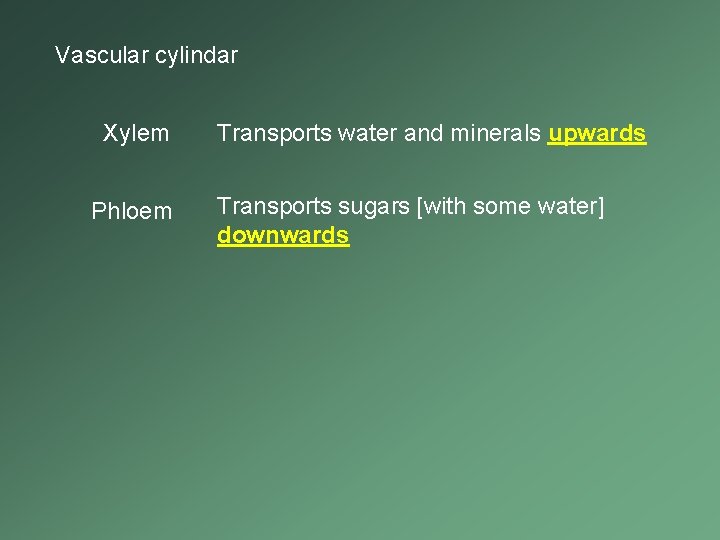
Vascular cylindar Xylem Phloem Transports water and minerals upwards Transports sugars [with some water] downwards
Monocot Roots • large vascular cylinder in center • ring pattern of xylem (large openings) and phloem tissue surrounded by endodermis • vascular cylinder surrounded by fairly thick cortex • fibrous root system
Dicot Roots • small vascular cylinder in center; • large openings are xylem tissue surrounded by smaller phloem cells in a ‘star’-shaped pattern • very thick cortex • tap root system